In short
Simply Fiber’s platform strategy to replace plastics with natural fiber-based materials that can scale like plastic manufacturing.
Guest
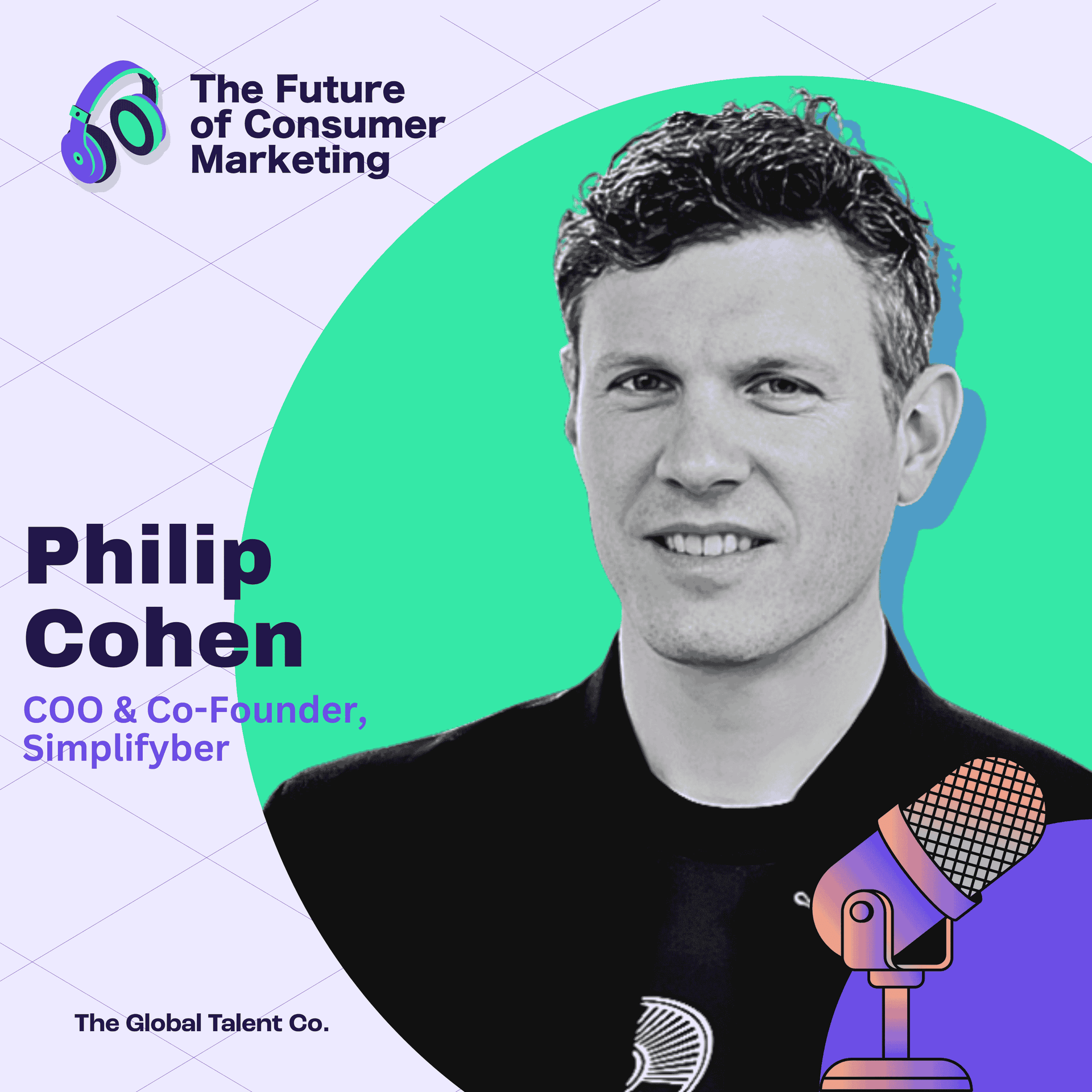
Phil Cohen, Chief Operations Officer at Simply Fiber; U.S. Air Force Academy graduate, served 7 years active duty running aircraft flight lines, later transitioned to business via an MIT Sloan full-time MBA; founded multiple companies (fourth is Simply Fiber) and focused on operational leadership.
Key claims
Sustainable materials fail because they can’t scale to compete with plastics; Simply Fiber engineered from the start for high-scale production. They use an invented natural-fiber liquid slurry and an invented molding system to produce a “family of materials” from soft/flexible to thick/rigid. They plan to diffuse the tech by selling equipment plus consumable slurry (printer/ink cartridge analogy).
Notable examples
re-engineering a thermoforming machine for full automation; targeting higher-margin durable goods (e.g., automotive interiors, shoe components) rather than single-use packaging; Raleigh, NC team scaling (about 20 people; nine departures).
Written by AI. May contain mistakes. Listen to the episode to check what was said.
Chapters
Tap a time to open that second in VOIntroduction to Phil Cohen and Simply Fiber
0:00 to 1:02
Learn about Phil Cohen's background and the mission of Simply Fiber.
“military, I transitioned to the business world through going to the MIT Sloan School of Management.”
Introduction to Phil Cohen and Simply Fiber
1:11 to 1:30
Learn about Phil Cohen's background and the mission of Simply Fiber.
“from Argentina, South Africa, and beyond.”
Phil's Journey to Entrepreneurship
1:30 to 4:24
Phil shares his journey from military service to entrepreneurship and operations.
“Chief Operations Officer at Simply Fiber, a company that's developing natural fiber liquids that can mold it into unlimited shapes and engineer to outperform or even replace traditional fabrics or classes.”
Simply Fiber's Mission Against Plastics
4:24 to 6:14
Understand how Simply Fiber aims to replace plastics with sustainable alternatives.
“a number of different vertical markets building businesses both in the U.S.”
Challenges in Scaling Sustainable Materials
6:14 to 8:13
Phil discusses the challenges sustainable materials companies face in scaling.
“So we're basically creating natural fiber based materials in a similar way to how plastics have been created for for many, many years now.”
Strategic Focus on High-Value Goods
8:13 to 9:41
Learn how Simply Fiber targets higher-priced goods to compete with plastics.
“And because of that, we are going to engineer a system that can go to very high levels of scale.”
The Entrepreneurial Roller Coaster
9:41 to 14:01
Phil reflects on the ups and downs of entrepreneurship and operational challenges.
“And then once it's done, it's like, okay, now what should we do?”
Operational Challenges in Scaling SimpliFiber
14:01 to 17:44
Learn about the significant operational challenges faced while scaling a startup, particularly in machinery and team dynamics.
“I'll do one that's like very classical CapEx machine driven operations.”
Innovative Machinery and Proprietary Technology
17:44 to 23:14
Discover how re-engineered machinery and proprietary material technology can revolutionize production processes.
“And over this past year, not only did we end up making the decision, but we ended up working with that machine builder to re-engineer this machine, and we'll have this machine on our floor.”
Team Building and Startup Culture
23:14 to 28:00
Understand the importance of building an ideal team and the challenges of leadership in a startup environment.
“And then I'd say really quickly on the team building front, like I was just, yeah, I was just talking with our executives the other day about, I'm always talking about our priorities.”
Show all 14 chapters
Startup Mindset: Getting Things Done
28:00 to 29:42
Learn about the essential attitude required to thrive in a startup environment.
“You have to find out right away that you, especially on a small team, there's nowhere to hide.”
Navigating Obstacles as a COO
29:42 to 31:15
Discover vital advice for COOs in fast-scaling brands and overcoming challenges.
“And then everyone's getting on the same page and you're sort of marching down to achieve the mission together, which is great.”
Go Around the Obstacles
31:15 to 32:50
Phil shares a powerful metaphor about overcoming challenges in life and business.
“When someone gets in your way, go around them.”
Building Connections and Mentorship
32:50 to 34:23
Phil emphasizes the importance of mentorship and being available to help others.
“I know personally I'll buy it and I empathize with that because I also agree with the fact that, yeah, if you have your goal set, you know where you want to go.”
Transcript
Automatic transcript. May contain errors.0:00And then after my time in the U.S. military, I transitioned to the business world through going to the MIT Sloan School of Management. So I did the full-time MBA program there. And I always knew I wanted to be an entrepreneur. What Simply Fiber does? We're trying to ensure that sustainable manufacturing can compete with plastic-based alternatives. Basically creating natural fiber-based materials in a similar way to how plastics have been created. Our mission is really to do away with plastics and replace them with natural fiber-based goods. So you created this whole new machine that's specifically tailored to Simply Fiber and what you guys want to accomplish.
0:42It is specific for our family of materials that we've invented. From soft and flexible all the way to super thick, durable and rigid that can be utilized and produced by using our liquid slurry in our machine.
1:02Hey, everybody. Thank you for tuning in. My name is Andres Figueira, and I'm going to be your host for the day. This show is brought to you by the Global Talent Company. We're helping fast-growing teams hire exceptional remote talent from Argentina, South Africa, and beyond. We connect companies with world-class professionals who bring skill, reliability, and global perspective to every role. So if your team's looking to grow with proven remote talent, head on over to theglobaltalent.co and see how we can help. And today, with me here, I'm speaking with Phil Cohen, Chief Operations Officer at Simply Fiber, a company that's developing natural fiber liquids that can mold it into unlimited shapes and engineer to outperform or even replace traditional fabrics or classes.
1:47So, Phil, how's it going? It's a pleasure to have you on the show. Yeah, it's so great to be here, Andreas. the weather is beautiful here and I'm just really excited for this call. And Phil, just so that we can start then with the episode and that we can get the audience a bit more in context in terms of who you are and how you got into operations, would you be able to tell us a bit more about your background? Yeah, sure. Actually, if I go back a number of years, I'm trying to think actually where to start the journey. I went to the U.S. Air Force Academy for my undergraduate education, which is located in Colorado Springs, Colorado of the United States.
2:32After four years there, I was commissioned a U.S. military officer and spent seven years active duty running flight lines, so aircraft operation. And then I transitioned to the business side of the Air Force. And I had a couple deployments, one to the Persian Gulf region, one to Afghanistan with the Army. And I would say in the U.S. military, I really sort of started my love of operations. I know that sounds kind of strange, but right out of college, I was put in charge of 250 men and women as my first officer assignment. And you really got an understanding of, you know, what it meant to be a leader at a very young age.
3:22I mean, you're just fresh out of your undergraduate bachelor's degree and you're put in charge of all these men and women. And you have to try to make some sense with what you've got and execute the mission and all that kind of stuff. And that's really where my love of operations grew and sort of started, I would say. And then after my time in the U.S. military, I transitioned to the business world through going to the MIT Sloan School of Management. So I did the full-time MBA program there. And I always knew I wanted to be an entrepreneur. So while I was doing my studies at MIT Sloan, I really went deep on the entrepreneurship front.
4:09And sort of the rest is history. So it's been, gosh, about 12 years since I graduated from MIT Sloan. This is now my fourth company that I built. So Simplifiber is my fourth. and between graduating from MIT and you know going on my journey with Simplifiber I've been in a number of different vertical markets building businesses both in the U.S. and primarily China as well so it's been a wild ride I've predominantly you know though I founded a bunch of companies. I've predominantly focused on the business side and on the operational side of the house, as opposed to more of the technical side or something like this.
5:01So that's a little bit about my past, but again, so happy to be here today. No, and Phil, that is a hell of a journey that you've had. And although I may not be from the States, um, mad respect to you for serving your country and for doing, um, that military service. That is, uh, it's, it's very intense from what I've heard. So I feel that's very cool, man. And how you were wearing and seeing, and seeing how that experience had led, has led you to a more logistical role within the business industry after your service in the military. It's very nice how you were able to like repurpose what you learned.
5:37Um, that's super impressive, man. And And in terms of SimpliFiber per se, I know you've mentioned that you also worked on this is the fourth one already. But would you be able to tell us in your own words so that the audience also can get a bit more context as to what SimpliFiber does and what it is actually? What do you guys sell? Yeah, yeah, absolutely. I'm glad you mentioned that. So, I mean, the big problem we're solving is we're trying to ensure that sustainable manufacturing can compete with plastic based alternatives. So we're basically creating natural fiber based materials in a similar way to how plastics have been created for for many, many years now.
6:26So we're taking a liquid slurry of natural fibers that we invented and we're pushing that into a system of molding that we also invented to create natural fiber goods at an extremely high level of scale. Again, the goal is to compete directly against plastics, whether it's softer plastics in the form of polyesters or it's more rigid plastic, sort of the traditional things that people would call plastic, like within the interior of your car or, you know, all the plastics we have around us. Our mission is really to do away with plastics and replace them with natural fiber based goods. Nice. So then the actual problem you're trying to solve is that there isn't any sustainable material that can be produced in the same massive way that plastic is done nowadays.
7:24That's exactly right. And that's sort of the problem with these sustainable materials companies that we've seen within the startup world. And some have had some success. But the point is they'll get to the stage of company development where they have to grow and scale the company and compete against plastics. Again, whether it's against polyester and softer goods or rigid plastics. And they're having a very hard time of sort of crossing the chasm, so to speak, and competing against those plastics. And we sort of approached the problem from the very onset, from the start of our company development differently than these other sustainable materials companies.
8:12We said, hey, listen, we know right out of the gates who we need to compete against, and that's plastics. And because of that, we are going to engineer a system that can go to very high levels of scale. And sort of we develop the company with that in mind from the beginning, as opposed to just saying, hey, listen, we want to develop a new material and not worrying about how we would get to that next level of scale. And I would say, you know, we came to that conclusion because, as I mentioned before, I've been around the startup world for quite a bit of time at this point. And it's like, you really have to begin with the end in mind.
8:56That was one mistake that I made early in my entrepreneurship career right outside of MIT. It's like you just get so excited about, you know, creating a new product and you want to run and do things however you want to do them to get this new product to the market. and you find that you probably should have taken a step back to start and really figured out what problems you're trying to solve for in the beginning such that when you start to execute, you know what the end game really is. And I think we've done a good job of that inside Simplifiber. It's like having everything a bit pre-planned and making sure you're prepared for what's to come because I do understand that when you're putting something new out into the market, the excitement of the novelty it has and how much you think it's going to work, you just might want to just go through with the first phase.
9:52And then once it's done, it's like, okay, now what should we do? Yeah, now what? And I also love, man, how you decided to tackle and compete against plastics in what I feel is a very uphill battle because I do feel that whenever something about a sustainable product comes out, it always loses to plastic because we have major players in the game, for example, China, who can just knock out a bunch of products with plastic at super cheap prices that it's just unbeatable. Even though you might want to help the world as much as you can, sometimes you don't have the spending power to afford the luxury of taking care because that's what I feel nowadays it's happening.
10:32It's like to do something that is recyclable or sustainable, it always costs a bit more, there's like this tax to take care of everything that isn't there with plastic or even with food. If you see it with brands like McDonald's, it's cheaper to eat badly than to eat well. So it's a bit ironic there. Yeah, but I actually love your point. And one of the things we've done almost from the start of the company is we've tried to associate ourselves with higher priced, higher margin goods such that, you know, plastics may not be able to compete with us directly at the level we're operating on. And I'll give you some examples of those.
11:23I mean, but to juxtapose my point with something that would be a lower end good. So, yeah, we're not talking about like with our our materials, you know, making a paper cup or something like that. We see a lot of sustainable materials companies and packaging or that's a great example, packaging in and of itself, doing packaging or or doing paper single use products or something like that. we're competing with durable goods at sort of a higher price point so we're talking about the top parts of shoes that need to last a long time or automotive interiors or something like that and again we see a lot of these sustainable materials companies and the posturing is more for sort of the lower end products and we feel like to get our name out in the market at least a start, we have to focus on, you know, the ability to drive value and sort of the higher end goods, and then we can back it into higher levels of scale.
12:32We've seen some precedent of that in the marketplace. And certainly with our scale up, we're at very large levels of scale here in early 2026. We're going to be making some products that will probably, they'll be higher scale but drive slightly less margin for us but it's just something to keep in mind and as I think about it on the operation side and the pure business side it's like you're always just looking for a way to differentiate between you know your company and the competition or or what you offer and the plastics industry is really is really our primary competition but it's a really good discussion and you know as i look at it it's like it doesn't matter how many companies i've created or anything like that it's it's like this company has its own its own craziness associated with it and i i joke around with my partners i'm like you think i would have learned by now to you know get out of the startup world and stop banging my head against the wall because you know when you start these companies it's like of course you have the experience to leverage from your your past entrepreneurial ventures and all that kind of stuff but in a lot of ways it's like you are going to encounter so many of the same problems over and over again regardless of how many companies you solve and it's always like this exciting little puzzle that that is amazing and it's a roller coaster ride though so like it's amazing one day and it's absolutely terrible the next and that never stops no matter how many companies you create it's as you say it's an up and down roller coaster you never know what what what's coming at the next turn but now that you're mentioning the puzzles that you you saw Phil and how if I also like how the light in which you see it because you can see it as as a challenge or something you don't want to do or an exciting puzzle that you want to solve that is going to move the company forward and that actually brings me to my next question which is which has been kind of like your toughest operational challenge while you've been scaling simply fiber or or during the growth journey do you have any any specific example you could tell us yeah I have a couple examples.
14:54I mean, I'll do one. I'll do one that's like very classical CapEx machine driven operations. And I'll do an example about something that's probably the most near and dear item to me, which is team composition. So I guess I'll start. I'll start with the CapEx and sort of equipment machinery um example and that is you know we we closed our latest we're a venture-backed startup company in our series a runway just to give an eye everyone an idea of exactly where we are uh we closed our our last round of of uh venture-backed funding in early 2025 and And really, the whole premise of this runway of funding has been to scale up operations, which we've been doing internally, and there's been a roadmap for that.
16:00But we always had the idea of working with a professional machine builder to sort of build the next very high level of production scale for us, which would be full automated, not semi-automated, but full automation production scale. And the pitfalls that we ran into while courting a number of different equipment, machine builders, etc., were very significant. I mean, we entered into negotiations with probably about five key players within our industry of interest. We sort of went into, you know, we scoped out different potential machine builders within the injection molding space, within the compression molding space, within the thermoforming space.
17:02And we ended up going deep within the thermoforming space and actually taking a machine and reengineering a thermoforming machine. and the amount of work that got us to the phase of being able to understand that we could even do the re-engineering work on a thermoforming machine as opposed to going hard within the compression molding realm or hard within the injection molding realm was very very significant so i would say the operational challenges around you know just figuring out the right path forward for scale-up was non-trivial and required, I would say, a lot more work than what we had originally planned for.
17:54And over this past year, not only did we end up making the decision, but we ended up working with that machine builder to re-engineer this machine, and we'll have this machine on our floor. It'll be at our home base here in Raleigh in mid-December. It's just a fantastic accomplishment but it there there were a lot of challenges you know setting expectations with our board of directors meeting those expectations you know um brainstorming with simplifiber shareholders that's you know not only our investors but also our internal team as everyone's a shareholder who works at SimpliFiber right now.
18:42And with all these voices, you're trying to synthesize the correct path forward. And again, operationally, it was a big challenge, and it was probably a bigger challenge than we thought it would be. So that's kind of my first example. I'll open it up if you have any questions on that, and then I'll talk about team building, which is very near and dear to me. I love that because I do want to just ask then, this machine that was re-engineered with the help that you guys got, it was then something that happened because you wanted to make the machine work better for what you guys needed, but is the re-engineered product, is it like, are you guys proprietary of that?
19:25So you created this whole new machine that's specifically tailored to Simply Fiber and what you guys want to accomplish? Yes, absolutely. And not, I mean, the bigger thing is it's not specific to an end product like the top parts of a shoe or something like that, which we do. And you can see in the video, I'm not sure our audience could see that. I love that you have a shoe right there. yeah i got yeah exactly it's always on my desk actually um but it's not it's not specific necessarily to the footwear industry it is specific for our family of materials that we've invented and that's really how we view simplifiber much like there's a family of materials that comes out of the plastic industry and that has been developed over the years we've developed a family of materials from soft and flexible all the way to super thick, durable, and rigid that can be utilized and produced by using our liquid slurry and our machines.
20:36So in the end, when we diffuse simple fiber technology around the world, really the game plan is to actually sell the equipment and then to sell our liquid slurry as a consumable. So you can think of the analogy as printers and ink cartridges, though we're not doing 3D printing, but just as a loose analogy or, you know, razor handles and razor blades. So that's sort of, that's how we're thinking about things on the inside. I love that because you're creating the need for this new, I want to say, composition of material and then also providing the machine to be able to do it. And that way it's like you got both things that you need.
21:21So there's no reason to not be able to do it. Yeah, that's exactly right. And we look forward to a day, I mean, this really is a true platform technology, and we look forward to the day where people in tier one factories around the globe have our technology on the floor, and they're creating products from simplifibers, material slurry, and our machinery that we had never imagined before. That's the beauty of sort of a true platform technology. And so that'll be really exciting to see where things grow and develop. I love it. It's like giving a bunch of people just Play-Doh and seeing what they do with it.
22:04And SimpliFiber is the one that created this Play-Doh. I love that. I love that. I need to use that one, the Play-Doh analogy. That's perfect. It's just imagine a bunch of business people just playing with it to see what comes out. But it's that possibilities that I understand must be exciting, because if you want to, what's it called, topple plastics as the way you're mentioning you want to, then you need to be able to give people the possibility of doing whatever you want with it as they do with plastic. Of course, that's I'm so glad you said that, Andreas, because that's sort of the thesis we have behind the scenes.
22:39It's like we're not going to be the ones like maybe we'll be the company that does it. But we, as our humble SimpliFiber team, are not going to be the only ones that, you know, ensure that SimpliFiber gets ahead of plastics. It's like we need to diffuse this technology. We need to showcase platform effects for the SimpliFiber technology such that everyone, to use your word, has the Play-Doh. And that's really how we get ahead of the plastics industry over time. And so it's really exciting. And then I'd say really quickly on the team building front, like I was just, yeah, I was just talking with our executives the other day about, I'm always talking about our priorities.
23:27It's like I am a broken record. If something is not quite right or if it's a priority in my mind, and that's like to, I'd say, younger entrepreneurs, I'm 46 years old now, so I've been around the sun a few times. But to younger entrepreneurs, that's what I'd say on the leadership front. It's like when you know something is right and it hasn't quite happened or the message hasn't gotten across to your team, don't get frustrated about it. Like continue to articulate that message. And so I would say I'm on this never ending pursuit to building a perfect team. And maybe you can never have a perfect, perfect team, but I will accomplish this or I will die trying.
24:16And it's very, very important. Because, you know, to me, to me, it's like the sun rises and sets with your internal team. And if you have the perfect team, you can accomplish anything. And I think we have a fantastic team. But again, I'm going to work every single day to make sure this is the perfect team. And so operationally, that comes with some challenges, too. Like, I mean, we were just talking about this. We haven't even been in. And, you know, this could be viewed as a good thing. It could be viewed as a bad thing. But we have a small team of about 20 people in Raleigh. And despite doing all the technology heavy lifting we're doing, we've been in Raleigh, North Carolina.
25:04It's kind of on the east coast of the U.S., but a little south, for those of you who don't know. And, yeah, we've just been relentlessly pursuing this ideal team to such a point where we're just looking at the numbers. We've had nine people who we've had to say goodbye to. And this was us, you know, I hate to say the dirty word firing, but that that's exactly what it was. So it's like, even though we have such a small team of 20 people, it's like we have to make sure that we're really operationally. we are holding people accountable and we are ensuring we have the ideal team to take this to the finish line.
25:57And again, when I'm talking to the younger entrepreneurs out there who maybe are doing this for the first time, you cannot be bashful on the leadership front and evaluating your team and you have to hold people accountable. You have to give people very clear expectations and hold people to account on those expectations. That's the only way you're going to bring these things across the finish line. And for a venture-backed tech startup, the finish line is an exit event. The moment you take venture capital funding is the moment you know you need to have some sort of exit event. But I could go on and on about entrepreneurship.
26:40This is very near and dear to me. I love this stuff. So, no, but I do also I empathize with you in that in that aspect of what you're mentioning, that your internal team is so important, but because it also is such a key factor in the culture for the company and in how much you can actually trust that team and having people that are held accountable for what they need to do is what allows you to also sleep well at night, knowing that the job is being done by somebody that you trust. Because if you're not able to trust the team that you work with and that you built, it's a very shaky place to be in because it's actually nerve wracking feeling that something is not going to be accomplished when you know it's absolutely needed.
27:26And that is also like it's making sure you weed out those raw apples from the company and making sure you bring in people that just are a plus and always give more than what they take. So that's nice. Yeah. And I want to say one more thing on that front. And it's an oversimplification to say that there are traditional industry people or startup people. But when you're operating within a startup company, it doesn't matter if you came from traditional industry and you're not a quote unquote startup person. You have to find out right away that you, especially on a small team, there's nowhere to hide.
28:16And you have limited time, limited resources. Nothing is ever ideal within the startup world. You're operating within enormous constraints. and to operate and be successful within the startup world, you have to have an attitude that you're just going to do anything to get shit done, anything to get the right thing done. And if you don't have that sort of attitude, very quickly in your time within the startup world, that will show its face and you won't be a fit. And if you have a strong founding team or a strong operational team at the executive level, those executives are going to identify those people who just can't get shit done the right way.
29:05And those people have to get out of your company. They have to. I agree with that. And the fact that the startup, I feel like the vibe is always just like roll up your sleeves and get it done. It doesn't matter. It just needs to be done because we're not that many people like in a in a very corporate setting where there's all this bureaucratic process of how to get things done you need to escalate what's it called delegate to the other department and then there's these bunch of levels to do things that in a startup it's like you notice something's wrong why didn't you fix it if it could happen you and instead of waiting or something like that that's exactly right that's a that's a great point andres and we say we say a lot like our culture is very focused on that and if you were to talk to anyone as a part of the simplifier team they would be able to they they would know that i mean to the point where it's like you know the printer some stupid shit in the office or something it's like the printer's not the printer's not working it's like don't tell me about that fix fix the printer just get it done and everyone knows that and the more you talk about that as a founder the more that becomes i think this is to your point, Andreas, the more that becomes a part of your culture.
30:21And then everyone's getting on the same page and you're sort of marching down to achieve the mission together, which is great. Uh-huh. I love that. And that it becomes like the status quo for how everybody feels like the standard in the company. And it's like, yeah, something's wrong. Fix it. And if you can't do it, look for help and we'll all work together. It's not like you'll do something bad for trying, but at least try. I know we're almost at time to end the episode, but I did want to ask you one final question. And I do know you have been giving us a lot of tips and advice during the whole show.
31:00But if you had to give one more piece of advice to a new COO that's stepping into a fast scaling consumer brand, what would that advice be? Or what would you have loved to know when you started out? I would say very simple. When someone gets in your way, go around them. That is my big advice to anyone in life. I don't care if they're starting a company or I don't know, maybe even having kids. I don't have kids, so I don't really know. But I like what what do you do when you're on the highway and you've got somewhere to go and you've got somewhere really important to go and someone pulls right in front of you in their car?
31:49You go right around them. And that's what everyone should do in life, period. like but I would say that is extremely important when you're building a company so many people are going to get in your way whether it's an internal teammate and those people should go like they should get out of the company or if it's you know investors you're courting or I mean or even you may have some family members sort of shitting all over your career path. Of course. You just gotta go around these people. You need to know where you're heading. You've got a really important place to be and you can never let anyone get in your way.
32:40Don't do it. Just go right around them. I think that's my biggest advice to entrepreneurs but this is advice that should go for everyone anywhere. I know personally I'll buy it and I empathize with that because I also agree with the fact that, yeah, if you have your goal set, you know where you want to go. And if you're starting out, it's you're bound to have a lot of obstacles. But I feel a lot of the momentum that people get at the beginning when they're starting, it's it's slowed down because they stop with these obstacles instead of just going around, as you're mentioning, and just making sure you push through and always go to your goal.
33:18there's a lot of ways that you can get distracted, lose the inertia then because of this you didn't move forward and that's what caused the company to not rise or to not happen so there's a million excuses one can find but you can always just go around and keep going so I really like that Phil I'll take that advice for myself even very cool, very cool but hey I just want to say I really appreciate your time and to the entire audience um you know i i'm really i'm really focused at this phase in my career as i mentioned i'm i'm not young i'm 46 year old 46 years old i i've mentored a fair amount of entrepreneurs i'm always happy to to help however i can um so you know if there's a way for people to reach out I'm available on LinkedIn primarily.
Read the full transcript
34:12Hit me up. I'm always around and I like to help as many people out as I can. But this has been really fantastic, Andres. That's amazing, Phil, and thank you so much. It really has been a pleasure for us to have you on the show, to hear your whole story and what you've done with Simply Fiber. At the beginning, when I saw the company, I wanted to understand better what you guys did. But you were able to paint a perfect picture for me and the audience. And I know that people will get a kick out of the show. So thank you very much, man. Thank you, Andres. Appreciate your time, man. No problem at all.
34:44And to everybody in the audience who has been listening with us, we really appreciate you being on the show. And also, we hope that you come back to learn from all the different personalities that we talk to and all the different industries that we're also learning about. So have a good one.
From the publisher
In this episode of The Future of Consumer Marketing, host Andres Figueira interviews Phil Cohen, COO and Co-Founder of Simplifyber. Simplifyber is tackling one of manufacturing's most entrenched challenges: making sustainable materials compete directly with plastics at scale. Rather than positioning themselves as a premium alternative that costs more, they've engineered a platform technology - combining proprietary liquid natural fiber slurries with custom manufacturing equipment - that can produce everything from flexible shoe uppers to rigid automotive interiors. By starting with high-margin durable goods rather than commoditized packaging, and by designing for scale from day one, Simplifyber is building a razor-and-blades business model where their technology diffuses globally through equipment sales and consumable material contracts.
Topics Discussed:- Designing sustainable materials companies for scale from inception
- Competing with plastics through strategic product positioning in high-margin categories
- Re-engineering industrial equipment to create proprietary manufacturing advantages
- Building platform technologies that enable unforeseen applications
- Maintaining ruthless team accountability in venture-backed environments
- Navigating complex technical decisions with multiple stakeholder voices