In short
Encantos’ bilingual children’s entertainment strategy (Canticos) for emotional connection, audience growth on YouTube, and culturally authentic marketing that blends education with entertainment.
Guest backgrounds
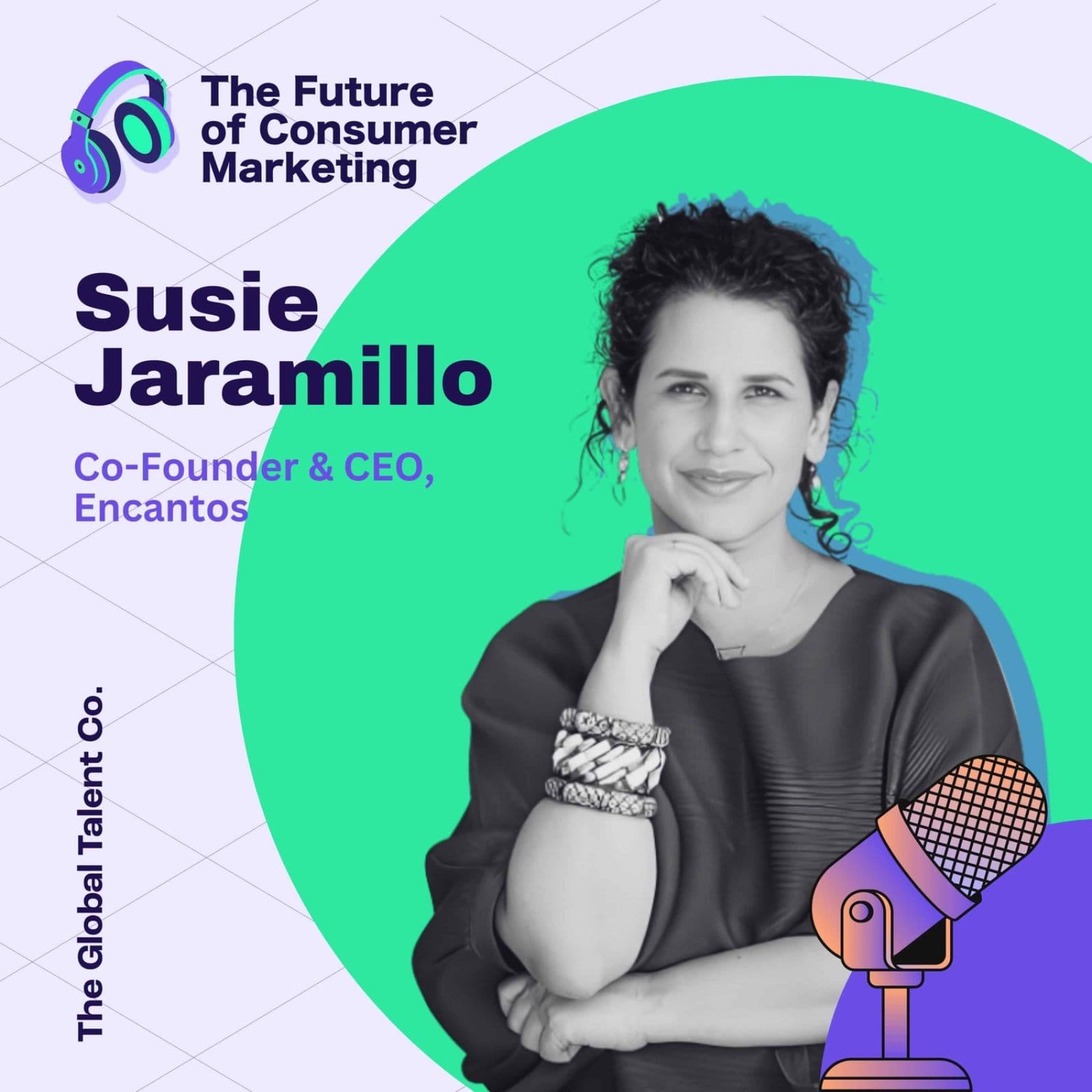
Susie Jaramillo, artist-trained; built and sold a top Latino advertising agency in the U.S.; CEO and co-founder of Encantos, an award-winning children’s entertainment and tech company making apps, books, content, and consumer products.
Key claims
Marketing is content—no separation. Social media is “real media,” so be responsive and less rigid with brand guidelines; raw, genuine videos can outperform overproduced ones. Canticos solves an audience problem for fragmented Latino families by offering English+Spanish and premium, joyful nursery-rhyme worlds built from familiar IP. Fans drive growth; YouTube metrics quickly validate characters.
Notable examples
“La Vaca Lola” (2M views in two weeks); “Chivita” (3x normal views). Reversible lift-flap books (Spanish one side, English the other). Cultural feedback example: 4th of July American flag criticism; Encantos responded with a Canticos heart-flag design.
Written by AI. May contain mistakes. Listen to the episode to check what was said.
Chapters
Tap a time to open that second in VOBuilding Emotional Connections
0:45 to 2:08
Susie discusses the importance of emotional connections in bilingual content.
“No, we have been so excited, Susie, to get you on the show because after we've looked at what Encantos does and all your experience of the different roles you've had, this is going to be a very interesting podcast.”
Challenges in Representation
2:08 to 4:14
Susie shares insights on the low representation of Latino content in media.
“And I built my career actually in advertising.”
Untapped Potential in Latino Audiences
4:14 to 6:11
Exploration of the Latino demographic driving growth and the opportunity it presents.
“The Latino market might not be expanding as before.”
Creating Family-Friendly Content
6:11 to 8:35
Susie explains how Encantos creates content that resonates with both kids and parents.
“And I know that Latino parents specifically love super sweet, super cute, and children love super silly, right?”
The Power of Music in Kids' Content
8:35 to 10:40
Discussion on the importance of music and production quality in children's content.
“It's hard to reach them because a lot of them here in the United States, they're watching HBO, right?”
Leveraging Cultural Roots
10:40 to 14:01
Susie talks about integrating Latino culture into modern brand experiences.
“It's like, you know, we, we love, we love design.”
The Impact of Repetition in Children's Media
14:01 to 14:57
Learn how repetition in children's songs aids language acquisition.
“And by the way, one of the things that we do is we take advantage of that repetition.”
Bilingual Books and Interactive Learning
14:58 to 15:55
Discover how bilingual books engage children through interactive learning.
“So if they're in Latin America, children are learning English with us.”
Testing New Characters in Content
15:56 to 16:56
Understand how audience feedback shapes character development in media.
“So that sets you apart from all the other brands.”
Balancing Education and Entertainment
16:57 to 18:08
Explore the philosophy of integrating education within entertaining content.
“And, okay, next question up is, Susie, is there a type of balancing that you need to do between the educational messaging, the Spanish, the English, and the entertainment that you make for the consumer market?”
Show all 24 chapters
Intuitive Learning Moments in Content
18:09 to 19:18
Learn how to create intuitive learning experiences in children's media.
“Now, on top of ground language acquisition, we might do something like the days of the week.”
Cultural Representation and Feedback
19:19 to 22:31
Examine the importance of cultural representation and community feedback.
“separation between educational curriculum and entertainment content, we see it as it's all entertainment.”
Nostalgia and Emotional Connections
22:32 to 24:49
Discuss how nostalgia in content creates emotional connections with audiences.
“Did you know that there are more Spanish speakers here than there are Canadians in Canada?”
Lessons from Bilingual Content Creation
24:50 to 28:04
Learn key lessons in marketing bilingual content effectively.
“I think that is the goal because you're going to leave a legacy if that happens.”
Consumer Insights Driving Growth
28:04 to 29:15
Learn about key consumer insights that are driving growth in various industries.
“it's in consumer products, whether it's in retail and automotive, it's really this audience that's driving, that's driving all the growth.”
Expanding Brand Offerings
29:15 to 30:40
Discover the various product lines and brands under Encantos.
“Because from my understanding, it's Encantos and Canticos is a product that is coming from Encantos, right?”
Skeletina: A New Storytelling Approach
30:40 to 32:57
Explore the concept behind Skeletina and its potential impact on children.
“And so she never helped me with my nightmares.”
Competing with Big Brands
32:57 to 36:39
Understand strategies to compete with larger brands using cultural authenticity.
“How do we disrupt and how do we compete?”
Cultural Authenticity in Marketing
36:39 to 39:41
Gain insights on the importance of cultural authenticity in consumer brands.
“And then they can send it to their friends.”
Partnership Over Programmatic Media
39:41 to 42:05
Learn why partnerships are more valuable than programmatic media for brands.
“I'm going to need to see what all of Canticos is about because I can't handle the curiosity.”
Building Long-Term Brand Value Through Partnerships
42:05 to 42:51
Learn the importance of partnerships that enhance brand equity.
“Really think partnership as something that will build long-term brand value, not to mention equity in your brand for the right customer.”
The Mainstreaming of Latino Culture
42:51 to 43:53
Explore how Latino culture has become mainstream in the U.S. market.
“So I wholeheartedly disagree that the notion of if you use culture, you're going to alienate the general market.”
The Hardworking Nature of Immigrants
43:53 to 44:49
Discuss the aspirations and work ethic of immigrants, especially Latinos.
“You know, the reality is the future of the market in the United States is bilingual, bicultural, and the big brands know it.”
Closing Remarks and Call to Action
44:49 to 45:47
A heartfelt conclusion encouraging audience engagement and support.
“and I think that's played out with Latino audiences in the United States.”
Transcript
Automatic transcript. May contain errors.0:00Today I'm speaking with Susie Jaramillo, Chief Executive Officer and Co-Founder at Encantos. We're doing what Disney did. We're taking ubiquitous IP and we're bundling them into a beautiful nursery rhyme world and we're presenting them to families as something that they can bash themselves with. As a result, we're solving an audience problem. What has been your biggest lesson from building emotional connections through bilingual content? Your marketing is your content and people should love it. Don't see a separation between the marketing and the content. It's all one thing. Social media is the real media.
0:34Also, being less rigid around your brand guidelines. In the world of social media, it just doesn't work that way. It's way more organic. And sometimes the most raw videos are the things that perform the best.
0:57Hey, everybody. Thank you for listening. Today, I'm speaking with Susie Jaramillo, chief executive officer and co-founder at Encantos, an award-winning children's entertainment and tech company that focuses on bringing diverse stories and characters to life through apps, books, content, and consumer products. How are you doing, Susie? It's a pleasure to have you here. Thank you so much for having me. It's a pleasure to be here, Andres. Ah, yes. No, we have been so excited, Susie, to get you on the show because after we've looked at what Encantos does and all your experience of the different roles you've had, this is going to be a very interesting podcast.
1:36So that we can put our listeners in contact, Susie, please let me know and tell us a little bit more just about yourself, what Encantos is, and anything you think would be appropriate to share. Sure. So a little background on myself. I'm a I'm actually an artist by training, believe it or not. I went to art school. And so creative is something and, you know, and content that that that inspires people and moves the needle of humanity in the right direction has always been something that's been very satisfying to my soul. And I built my career actually in advertising. I actually built and sold one of the top Latino advertising agencies here in the United States.
2:16And in doing so, I realized that there was this tremendous opportunity around this thing that we call the Latin market, right? This is the U.S. Hispanic market, which is, you know, 20 percent of people and 26 percent of kids. But when you look at the advertising spend, when you look at, you know, the content marketplace, you see that, oh, my goodness, the representation is really low. in the case of, you know, Hollywood representation, it's like under 2 % when it comes to kids content, even though it's 26 % of kids, it's under 5 % of media targeting kids. And, you know, at the same time, I was sitting here at these meetings with my with my retail partners that were like, how do we bring Hispanic families in and in my head, I was like, build a brand, build a brand, There's nothing out there.
3:07Own it, build it, you know. And so when the tech platforms came out and you and I realized you could go direct to consumer and build your own cohorts of audiences. I was like, OK, this is it. I as an artist, as someone who loves content, who loves culture, who loves people. This is an opportunity. It's low hanging fruit. And I need to do this. And so that's how that's how Encantos was born. Encantos is the product of, you know, two families that came together with passion around what is content, what is tech and what is, you know, children and especially specifically to solve the problem of representation for diverse kids.
3:49But we also think we're solving a huge retail opportunity because we know that stores are struggling and we know that Latinos are driving retail purchases and a lot of consumer product growth. So we think we're solving a problem on multiple levels. Oh, my goodness. No, I just leave us to Latinos to always get behind a product that represents us culturally or that even actually appeals to us. Because in the States, I know it's not something that is recurring and could even be diminishing nowadays. The Latino market might not be expanding as before. But that's amazing, Susie. And when talking about Encantos, how are you able to create content that kids love and that the parents will actually want to purchase or buy?
4:34Yeah. So believe it or not, our flagship brand with Encantos is Canticos, right? And so Canticos is the number one bilingual learning brand in the United States. If you think of like, you know, oh, what's a really well-known franchise, a kid's franchise, right, in your head, a show, you might think, oh, Dora the Explorer, right? But what you may not know is that Dora the Explorer is 27 years old and she is a multi-billion dollar brand. Right? And so that just goes to show you the power behind building a kids franchise that people love. And a lot of people don't realize that when you build a kids franchise that lands, these become like multi-billion dollar brands.
5:14I mean, Winnie the Pooh is worth something like$72 billion, right? Right. So this is the thing, like the business opportunity around children's content. And so I thought to myself, wait a second, Latinos. Did you know that Latinos drove 70 percent more, more than 70, 70 plus percent of births in this country as of last year? Yeah. So we are still driving the population growth and we're driving the population growth, not through immigration. It's because we're Catholic. We have four babies. we have bigger families we have bigger families and so it's something like 48 percent of latinos have kids versus 28 percent of general of non-latinos that have kids so we have more kids in our households here in the united states and we are completely driving the population growth of this country and if demographics are destiny i know that we're just destined for success so it's just a matter of time of course no and i understand that if latino families are driving the growth of the people and everybody at this and in the states and everywhere really where they are um it must be really interesting to create content for kids that parents like because i do not imagine anybody more loyal than a latino mother that this show or whatever you provide is actually works for her kids and is bilingual it's like something that must work so well like that's exactly right and so we you know our our look when you're little like people ask me what were your what was your favorite um character cartoon character when you were little and to be honest my favorite cartoon character was was uh pebbles from the flintstone because she was i know this is before your time but i always loved a super sweet and super cute and super sweet, super cute kind of appeared from the landscape of children's media.
7:09And I know that Latino parents specifically love super sweet, super cute, and children love super silly, right? And fun. So when you combine cute with silly and whimsical, and then add on to that layers of just fabulous Latino music, because we know we make the best music. Come on. we do we do we do come on every party who's ruling the world right now bad money shakita right so so um when you add on to this our our amazing music you really have a little a special something right that the market waves and and when you think about it we're doing what disney did i mean disney did it with um hans christian anderson's fairy tales right he took um ip that was in the public domain, you're right, The Little Mermaid, you know, Sleeping Beauty, Snow White, all of these like public domain nursery rhymes.
8:05And he bundled them together and put them in a world. We're doing exactly the same thing. We're taking ubiquitous IP, Los Pollitos, Un Elefante, you know, Este Pimpong, and, you know, La Vaca Lola. And we're bundling them into a beautiful nursery rhyme world. And we're presenting them to families as something that they can bash themselves with. And so as a result, we're kind of we're solving an audience problem, right? Because for it's really hard otherwise to meet to reach specific Latino families. It's really hard. It's hard to reach them because a lot of them here in the United States, they're watching HBO, right?
8:40They're watching. They're watching Hulu. They're watching mainstream TV. Only you'll find them on Univision only if they're Spanish dominant. They're on Univision. that's a classic no it's true it's true and they're more there for the sports like honestly if unibir sean killed its sports its audience would be like you know so it's really um and so we're all over the place we're a super fragmented audience that's really hard to reach with canticos you know we super serve latino families no matter their language dominance because what happens you're an english speaking latino um we first of all we do everything in English and in Spanish.
9:18So you're going to understand everything. Right. And secondly, you're going to value, you know, the ability of your children to speak to their cousins or grandparents. Right. And so that which is that's everything like the language is kind of the glue. You know, if your kids can't speak Spanish, they can't speak to their to your parents. And that becomes, you know, you get in trouble with your in-laws. So not to mention your parents um so so with that we knew we had something special with cantico so what we had to do was just execute it in an award-winning way to where it was a really premium brand because the other thing is you know latinos are ciprinos like we like we you know how do i say that in english latinos um we we're discerning we like we're discerning viewers we like high quality premium stuff that represents as well.
10:12And you know what? We overspend. So we overspend compared to our household income and compared to our demographic makeup. And so at a given point, I remember I was working with General Motors back in my agency days and the highest grossing, I'm sorry, the highest grossing dealership, GM dealership was Miami. Of course. Right. Of course. The place of birth with all Latinos. Yeah. So that's, that's the thing. It's like, you know, we, we love, we love design. We love beautiful things. Um, we love culture, we love music. And so we're creating a product, a brand, if you will, that, that really shows up for this market and also shows up for moms that want to expose their children to a second language, right?
11:00To parents that value bilingualism. Now, the educational plus of it being bilingual, and as you mentioned, bridging that gap between the grandsons and the grandparents and just making it a possibility for them to actually communicate well is something beautiful. And Susie, I'd love to know, how do you turn Latino nursery rhymes, or the ones I know as well? because if the audience is not aware here, Susie and me are both from Venezuela. So that's why I have been mentioning so much the Latino culture. But how do you turn these Latino nursery rhymes into an actual modern brand experience that will resonate behind even the fact that just because it comes from the Latino origin, I believe it will.
11:44But is there something else to that formula? Well, first of all, it's, you know, have world-class sensibilities when it comes to producing animation, right? So we work with the best studios and the best talent. I think the studio that put our initial package together was the same studio that did the Mickey Mouse reboot. Right. So we work with really great talent. That's number one. So work with great talent. Number two, work with great musicians. And so we work with, you know, Grammy winning musicians in Latin funk. Right. So Latin pop, Latin funk. So we're working with musicians that don't traditionally do children's music.
12:27They actually, they cater to more of the young adult market. Therefore, they bring a sense of cool to our music that most children's music doesn't have. And so if you think of one of the things that I love about what Disney did is that they might be giants did the hot dog, hot dog, hot diggity dog song for the Mickey Mouse Club. And if you don't have kids, you don't know it, but it's such a great song. Hot dog, hot dog, hot diggity dog. And we're like, wow, that's such a fun song. And it's because the Giants did it, you know? And so making sure that you work with talent that really is going to make music that parents are going to love too.
13:11Because if parents love the music too, then it's going to be even more on repeat in the house. And there are so many children's brands that parents hate. Like they really are. I'm not going to name any names. But I'm sure parents can think of a few brands that their kids like to watch that you just hate listening to. and we didn't want to be that brand we want to be the brand that brings joy to parents and to kids and so we'll see videos i have this is one video that i love of a woman that posted um uh on social and it's like her cleaning the house with her kids sound asleep and she's like this is me now cleaning the house to cantikos music the kids asleep but i'm still happily cleaning my house to cantikos music you know and that's a win for us i know and i totally get what you mean there because um some of my friendships are already having kids and their kids are not even a year old or maybe a little bit older but what keeps them calm is these tv shows or these things that they put on youtube and it's these songs that just get in their head and kids need to like repeat it endlessly and it's so funny that i go to these parents houses to see the kids and i talk to the parents because they're my friends and they're they only have in their heads the songs that their kids listen to and it's like yeah let's be here let's spend some time talking but we'll have uh now i'm gonna shill canticos and ask them to play it while we're there but they have anything else on and it was on repeat and the child was sound asleep but you can see the parents always like singing to the music and just have it in the back of their mind all time and it was a whole topic of conversation so now that i have better music that I can actually recommend to them that their kids would like, that would be amazing.
14:54And by the way, one of the things that we do is we take advantage of that repetition. So we'll do something, we'll do it in Spanish and then we'll repeat it in English with the insight that when you repeat it, when the child wants it again and again and you do it in that second language, you're really helping with the language acquisition skills. So if they're in Latin America, children are learning English with us. And if they're in the United States, their children are learning Spanish with us. That's amazing. because they know the melody and once they know the words to from one language they'll be able to make the connection to the other oh i that's such a genius idea susie it's so nice if you see our books just really quickly our books are reversible so this is in one side it's in spanish and then the other side it's in english and so right and you go through and it's it's interactive lift the flap and all this stuff right but it ends again in English.
15:50And so that's our whole thing. Again in Spanish, again in English. Wow. I had never seen a book like that. So that sets you apart from all the other brands. And, Suzy, is there any type of process for testing the characters or the products that will make you make sure it's going to connect with the audience? So because we're YouTube brands, we don't have to worry about that. The audience will let us know in all of like, you know, two hours, whether it works or not. We put out the Vaca Lola and she was a hit. I was so thrilled. We got like 2 million views in two weeks, right? And so we were like, amazing.
16:32Like the Vaca Lola is a hit. And now we just put out Chivita, sale ahí Chivita, Chivita. And already it's taking off. We're getting, you know, three times the amount of views we normally get. And it's just only been on the air for a couple of hours. so viewers will let us know quickly if they like a new character or not and if they like we lean in and if they don't you know move on it's the beautiful of the two million views in two weeks that was for la vaca lola i love it and yeah metrics are the best way to know what's happening and what's not i i think after this show after we finish the episode i'm gonna put canticos on youtube and just listen to everything because it just needs to be so interesting.
17:21And, okay, next question up is, Susie, is there a type of balancing that you need to do between the educational messaging, the Spanish, the English, and the entertainment that you make for the consumer market? So I have a core philosophy that if you're not entertaining, you're not educating, you're boring. Okay. because if a child is not engaged, you will not be able to teach that child anything. So you need to start by engaging, entertaining the child, and then you sneak in the learning. Now, our songs are always going to have a little, a little bit of learning because there's always the literacy component, right?
18:00So there's always like, you know, there's, they're always going to be learning words and they're going to be learning vocabulary and they're going to be learning it in two languages. So there's always our number, our sort of ground floor is always going to be language acquisition. Right. Now, on top of ground language acquisition, we might do something like the days of the week. Like, for example, in Sol Solocito, we teach the days of the week or with Dale, Dale, Dale, we teach, you know, we'll teach shapes. And so what we do, we figure out if there's a moment where intuitively it makes sense to teach learning.
18:34um por ejemplo it's like oh we broke a piñata well what comes out in the piñata oh triangles you know you know rectangle little dollar bills with a face you know what i mean so we'll come up with um intuitive ways to do the learning and then sometimes it really is just a nursery rhyme like it's kind of a little lesson about like stubbornness because it's a little stubborn chivita and she does not budging with peer pressure and everybody tries to make her do stuff and she's not budging but then you know when everyone leaves she decides to budge on her own terms wait a second i do want to go play no everyone's leaving let me go you know what i mean so i think i think we um we we don't follow traditional formulas in terms of of of the separation between educational curriculum and entertainment content, we see it as it's all entertainment.
19:35And we're going to leverage this, this, this content body to teach as much as we can. So if we do an oopsie, I'm sorry song, it's really about teaching children, hey, something goes wrong, you can say you're sorry and make things better. Or thank you song where you, you can just meditate on the fact that being grateful for things makes you happy right so we have a very uh 21st century approach to education um and and our parents seem pretty grateful for it it seems and i really like it like because what you're saying are like core values with which i was even raised with and that was 30 years ago so it's something that i believe is always timeless and it's what people want their kids to learn so if that's embedded there and it doesn't feel forced within the entertainment i think you got a perfect formula there
20:32and suzy um i'm not sure if this has ever happened to you but since you actually um what's it called since your brand has representation of latino culture and i believe there must be some stories that are more specific to other cultures, like Latino ones, how do you manage the feedback from communities when you try to represent them? Is that something that happens? You know, okay. So normally everyone's just thrilled. Like we did Wheels on the Bus, but we did a chivita, a chiva from Colombia. You know how those chivas are super colorful and they have all this stuff on the top? We did that. And then we, you know, ping pong is obviously Mexican, but I will give you an example.
21:13We did a little celebration, a little coloring video for 4th of July. And we got some feedback of like, hey, you know, the flag isn't so great. Why are you showing us the American flag? The American flag isn't very popular right now in the Hispanic community. Okay, of course. Because, you know, the American flag is, you know, instilling fears in certain communities, right? And so we had to respond to that because, and in no moment are we ever going to relinquish the American flag. And in fact, we've designed our own canticles version of the American flag when we take our stars and we turn it into a heart.
21:47And so it's a heart in the corner. Because we put the heart in this country. And so I, as the CEO, made a video to talk about the fact that, listen, we have to own this flag as Latinos here in the United States, as proud Latinos in the USA. We need to own this flag and we need to show people who we are. And I understand that certain communities may feel like this flag is now a symbol of exclusion, but it's not. For us Latinos in the United States, we need to keep the integrity of the flag. And we need to keep emphasizing that the flag should represent our values as Latinos in the United States.
22:30And so that was probably the first time we ever got real feedback of that that wasn't positive for what we do. um and so i i would say in general people love it when we put you know we we we put little mexican details or colombian details or puerto rican or we're about to do something that's very cuban right um and you'll see it's a son um but um i think that's the beauty of the u.s hispanic market it's this just mix it's a cacophony of different you know latino cultures all mixed up and it's unique to the USA. Like the USA is its own Latino country. Did you know that there are more Spanish speakers here than there are Canadians in Canada?
23:14I did not know that. Did you know that Spanish is the longest continuously spoken European language in this country? That the Spaniards were here before the pilgrims and that the entire Southwest of the United States was colonized by Spain before it was colonized by the British or any other of the European countries. So the reality is the United States is a Latino country. It's just a Latino country. Of course. I do get that when you mentioned that the Colombian family, if you put something that's Colombian there, they'll get excited or the Cuban families. But it must be true because you and me both know, since we've lived away from our homes at certain points in our lives, that whenever you see a representation of what was your home anywhere else, when you're not there, it just feels like a safe space.
24:09And it feels like somewhere you want to return to. Yeah. I think that's, that's one of our, that's a core value. It's, it's nostalgia, you know, in the same way in American, American family might see curious George or good night moon. And it reminds you of your childhood. People see canticles and it'll remind them of their childhood. Even though canticles didn't exist 30 years ago, they'll hear our songs and we get passionate love letters from families that are like oh my god you gave my child my childhood you know like i excuse myself for comparing canticos to wine but it just seems like it's gonna age so well with time and as the kids grow those kids are gonna remember it for their childhood and they'll play it for their kids so it's like an endless uh business Mark my words, mark my words.
24:55Canticos will last longer than I do. And that makes me very happy. I think that is the goal because you're going to leave a legacy if that happens. And that is amazing, Susie. That's amazing. And tell me something else. What has been your biggest lesson from building emotional connections through bilingual content? So I think that, you know, I've learned a lot. And it's just it's just it's not a single lesson. Remember, I came from traditional advertising to building an entertainment tech startup, you know, leaning into educational content that would reach families in a direct to consumer way.
25:36Right. So one, the responsive ecosystem that all marketing has to live in now. Right. You've got to be plugged in. You've got to be responsive. You have to understand what audiences are looking for and you have to deliver. number two really just thinking that people just have to enjoy like your marketing is your content and people should love it right and so don't see a separation between the marketing and the content it's all one thing i like i used to you know i used to say oh social media takes away from making real media but now it's like no no no social media is the real media you know it is it is the real media.
26:15It's content. It's content snippets. It's just shorter and it's just as important. So really seeing everything, marketing and the content that we make, I see it as kind of all one thing with different formats and different, you know, calls to action. And then also being less rigid around, you know, things like, you know, your brand guidelines and all these things that we used to be really, really rigid about back in the day. In the world of social media, it just doesn't work that way. You know, people... Yeah, it's more organic. It's way more organic. And sometimes the most raw videos are the things that perform the best.
26:57That's true. So it's like almost when you try to be too, you know, controlled, people don't, they're like, ah, this is corporate speak, you know? Uh-huh, yeah. so yeah people don't fall for the overproduction of the content you make it needs to be like genuine and made in the moment and they must know that you're not lying to them so um a lot of that and then you know what else um the we're very clear on our audience and i think that part of what gives us clarity as a business and as a brand is that you know we're inspired by culture and we're starting with latino families because it's the low-hanging fruit and what we know best eventually hopefully we'll expand into other cultures i would love that um every time you say long-hanging fruit all i think of is mango bajito so you gotta go yeah that's right that's right but the truth is that this is this is the this is also the the the audience that's driving most business growth whether it's in you know telecom telecom whether it's in consumer products, whether it's in retail and automotive, it's really this audience that's driving, that's driving all the growth.
28:10And we need bigger cars because we have bigger families. It's like, this is an, and we, we spend more on phones because we're on the phones all the time. And we over, you know, and we're over indexing on social media and we're buying more online because we're on our phones all the time. You know what I mean? And so these are just consumer insights that if you understand it, and if you happen to be both a marketing expert like myself, but also from the culture, and also from the general market, like I've presented to many a CEO, sort of like laying out what is the Hispanic market or a CMO plan, you know, what where the opportunities are, how their shopping habits, their their media consumption habits.
28:53So we're just taking everything that we've learned from from marketing to this demographic. And we're supersizing it with a content-led brand that also has products that they can subscribe to or buy. Oh, wow. Okay. You have it all thought out, Susie. It seems like such a flawless plan. Oh my goodness. And is there any plans to have? Because from my understanding, it's Encantos and Canticos is a product that is coming from Encantos, right? That's right. Of course. And are you guys expanding beyond canticos and or like is there anything else underway yeah we have we you we have a brand called tiny travelers which is slightly smaller and it's it's a it's mostly books um and it basically the idea was to help raise citizens of the world and so it introduces countries and cultures to children at a very young age so they're beautiful we have you know we have Colombia, we have India, we have China, Japan.
29:53So we have a myriad of different countries. And those books have done especially well in libraries and classrooms. People really love that series. We have another series called Skeletina and the In-Between World. And Skeletina helps children deal with their fears and nightmares. So she's a little girl who lives in the in-between world. and when kids come and they're having nightmares and scary dreams Skeletina helps them diffuse their nightmares and she does that with humor and she just helps them figure out this really crazy in between nightmare world and so we've put out two Skeletina books and now we're in conversations to do the series or the movie so that's there A series or a movie for Skeletina?
30:39I love the name it's just so cute but now think about it do you remember your dreams are you the type that remembers or not i do i do remember my dreams i actually try to write them down because i want to astral project but that's another story so so i used to have really intense nightmares and um when i was a very catholic family and so i would wake up and i would go to my mom and i would say mom i had a nightmare and she'd Did you do something bad? And say, you know what I mean? And so she never helped me with my nightmares. And then I finally I was like, I'm just going to let myself drown because I had this constant nightmare that I was drowning.
31:19And so I let myself drown. And then I discovered that I could breathe underwater. And then once I discovered that I could breathe underwater, I learned to fly. And then I learned to reverse time. so once you let go of your fears inside of your dreams you can lucid dream and and like control them and like i my nightmare stopped right there and so i was like and then my daughter has the same thing wouldn't it be cool if if you know there was a girl that would help kids kind of let go of their fears and like let the worst happen i'll be okay and isn't that a great lesson for life you know just letting it flow and making the best i refuse to make decisions based on fear let it flow i'll say that right no no no it really is and i love how it started to sound like a superhero movie suzy because you learned how to breathe underwater you learned to fly reverse time i'm like oh my god in every in your in your dreams you are a superhero and that's part of what a skeleton of teams gets it's true no literally you said that and like a month ago i had a dream i was underwater making friends with different fish so and i knew i was underwater so i think it was a lucid dream but it was you are ahead of the curve you are you are ahead of the you are already breathing underwater my friends aqua money got nothing honest you're good all right okay and bringing it back to the topic at hand suzy is there any strategy that you have because since you're telling me you're creating books you have canticos you have maybe a series or movie in the in the picture for squelettina is there like a strategy used to compete with brands that have bigger budgets or have more time in the market but maybe less cultural authenticity?
Read the full transcript
33:16So that's such a great question. How do we disrupt and how do we compete? So every single big studio brand wants to work on YouTube. Nickelodeon wants to work on YouTube. Disney wants to work on YouTube. They're all launching content now on YouTube first before they launch it on their channels. Right? And so like it or not, for good, the tech industry has permanently disrupted the media industry right and so brands that work on youtube and brands that are fan fueled win just hands down because in the past you had a monopoly on eyeballs right and you could just make hits right and something would only flop if it was bad because you had a monopoly on the eyeballs.
34:09Nowadays, you have no monopoly on the eyeballs, right? And so the ones that develop a following are the ones that are solving an audience problem, right? And so Canticos solves an audience problem and therefore has organically grown to just under a million subs. And we get about 15, actually, when you throw in music, it's about 18 million streams a month, right? that's actually larger than the eyeballs that most cable channels will get okay and and that's crazy because like i imagine the monopoly you referred to in the past was that disney would put out a movie and they just put it in every cinema and that was the only way to watch it so it was like now so many screens and the youtube channels and free content even just even just um i mean i mean look let's put it this way i want to say and i i'm not really good with time frames I think 20 years ago, maybe the broadcasters were like real players, right?
35:07You have the big five or whatever. And, you know, you know, kids were watching TV, right? So 20 years, 20 years ago, if you wanted to launch a piece of IP, you would launch it on TV and it would be a big thing. Right. Nowadays, you can launch it on TV and nobody will care. Nobody, nobody will. Like, it's just kids aren't watching TV. Right. Right. So what is the average? What's the biggest kids brand right now? It's Coco Melon. Right. Where did Coco Melon come from? It came from YouTube. Wow. Right. And so that's just that's just the reality of where at 90 percent. I think there was a slide was like 90 percent of kids viewing comes from YouTube.
35:48So we already have a competitive advantage of the fact that we are on YouTube and we work on YouTube and we grow organically on YouTube. our competitive advantage after that is our community. The fact that we're in real time in touch with our fans, our fans write us, we respond. We're currently creating creator tools on our website for our community because Fantico's birthday parties are really popular. And we've actually struggled to find a birthday party partner like a Party City or a Target or a Walmart that wants to carry our birthday party supplies. And so people are going to Etsy. and they and then si te metes en etsy and you type canticos you'll just see all plethora of stuff on etsy and so we're like okay this is this is fan made it's all fan made yeah so that is community it's all fan made and so i'm like okay wait a second and then they write us we're gonna get a canticos cake where can i get a canticos piñata where can i get you know blah blah blah and so i'm like we're gonna create birthday party central on our website so that people People can come to us and they can actually make interactive invites with a tool that we're going to create.
36:57Right. And then they can send it to their friends. And by the way, that'll bring all of their friends to our website, too. Right. So it'll be traffic growth for the website. But then we can also sell them digital products. Right. And we can help them get give like make personalized T-shirts and make personalized birthday banners. So it's like we need to be smart about how we leverage today's tech tools to get people to play with our assets and our content to make things for their kids. If that makes any sense. No, no, it makes complete sense. And just leave it to a Latino mother to want to give her kid a themed birthday party of whatever is the fever they have of the moment.
37:43they're weddings these parties i swear to god they're weddings you see them when you're like oh my god and also i never did a huge party like that for you what are venezuelan birthday parties like right what are venezuelan kid birthday parties like there's the blow-up castle there's the clown there's the mini teca the reality is let's go all out on birthday parties. Just do it. It's crazy. It's crazy. I remember my grandma making birthday parties for me when I was younger and it was like her whole house was the birthday party place and there were kids everywhere. Oh, no. Going up in the States, my mom would invite people to my garage and we would play musical chairs.
38:26When I went to Venezuela to my cousin's birthday, they had an ice cream person just giving out free ice creams that they would make on the spot. i was like oh my goodness i have never talking about this it takes me back and it's like hot dogs and frescolita which is and then there was a clown that would entertain the kids there are all these cutouts and you know my my aunt so fun fact my aunt was one of the top three cake makers in venezuela so she made Really, really. She died recently, but she made really elaborate cakes, whether it was a quinceañera, a baptism, a birthday. She would make really fabulous cakes.
39:12And as a kid, I used to bring her like things like record covers or like, you know, or whatever I could find that had like Disney or Nickelodeon or character art. And then she would base her designs on the character art that I would bring her. This is ages ago, right? Oh, my God. When there was no Internet. So if you wanted beautiful Disney poses, you had to have a picture file where you save stuff, right? Okay. But yeah, it's, you know, fast forward, you know, 40 years and, you know, she's making Canticos cakes.
39:50Beautiful. No, no, no. I'm going to need to see what all of Canticos is about because I can't handle the curiosity. Like I need to know because I looked up Encantos, but I didn't go that deep into Canticos. and now I bet by next week I'm going to at least have one song memorized just because it's not going to leave my head. You're the right H demo. You're the right H. I bet if you ask some of your peers, you'll see that they're familiar with it, hopefully. No, no. I can't wait to go to any of my friends' houses now where their kids are at and just like subtly just play canticos without anybody knowing and seeing if it works.
40:25I'm going to die if those kids start to speak English as well. Exactly. And Susie, I know we're almost a little bit over time, so I don't want to keep on taking any more of yours. But if you could give one piece of advice to marketing leaders, CEOs or anybody who's trying to actually build a culturally authentic consumer brand, what would you tell them to prevent them from getting it wrong? I would say drop the mindset that programmatic media is where it's at. okay i think that we need to think more partnership versus programmatic i think that the the algorithm will not necessarily deliver the soul and the brand loyalty that a partnership will really deliver i think that people um rely on programmatic because they think oh it's fast and it's scalable but the reality is you got you get a lot of irrelevant impressions there's a ton of spillage and there's a lot of like wasted money on bots but i think that partnerships and partnerships with brands really deliver long-term value.
41:29And I think that people need to look at media less as a media spend and more as a media build. Like, stop just throwing money out there. The media landscape has been completely disrupted. Build something. Support something with meaning. Support something that delivers on your brand promise that's going to make you look good. So I think that, you know, supporting, partnering with brands that create the right cultural context for their brand that read the right media, I think that is really how brands, how leadership brands should be thinking. That's probably my most poignant piece of advice for the CMO today or the senior level brand people.
42:15Really think partnership as something that will build long-term brand value, not to mention equity in your brand for the right customer. Okay. No, that's perfect. That's perfect. And I'm also taking away from this whole conversation the fact that create something that solves your audience's problem. So that's where Canticos Bilinguality came in and how you show these kids and present them the cultures that they're away from. So that really is beautiful. And now we are going to listen to Susie's second recommendation for everybody. So go ahead, Susie. Yeah. OK, so my second record. So I wholeheartedly disagree that the notion of if you use culture, you're going to alienate the general market.
43:07this notion that if you do something that's you know latino or using black culture you know white folks who feel like they don't belong the reality is that if you look at the billboard top hits or on the streets of any major u.s city you're going to see diversity um i you know i like to say in the year of our lord bad bunny who is topping the charts globally go to any major club in the united states you're going to hear latin music go to any conference in the united states you're going to eat Mexican food. The reality is Latino is mainstream. That's that's one. And then the other thing I wanted to say is this notion that, you know, we're a niche audience.
43:42You know, when when one in every four American kids is Latinos, and nearly half of all millennial parents come from Latino backgrounds, that's not niche, that's mainstream. You know, the reality is the future of the market in the United States is bilingual, bicultural, and the big brands know it. If you You look at what PepsiCo does, Coca-Cola, Kellogg's, General Mills, McDonald's. They're leading in this area because they understand this. So there's a reason they're category leaders. Okay. And that is true. It keeps on growing because Latinos are also moving away from their home country and trying to go abroad, looking for better opportunities.
44:23So I think it's a little bit unavoidable that we become mainstream. And plus, we're so nice. What can we do? Honestly, when you think about who are people that pick up and they move away from everything they know and love and they learn a new language and they build again from scratch, that's a very hardworking individual. That's a very ambitious individual. That's an individual that most likely will go far. And so I feel like immigration in itself is a filter of a really hardworking individual that just has high aspirations for themselves and their family. and I think that's played out with Latino audiences in the United States.
45:04True. I totally agree with that and as a fellow immigrant I must say I believe I passed that filter so I am proud to be a Latino and be an immigrant and be where I am at because it was not easy and that is something that I believe it creates a lot of fortitude in people so that's beautiful. That's a beautiful message. Thank you so much and well to all the audience Thank you so much for listening. We please ask of you to go and listen to Canticos. If you love it, give it a like and subscribe. And also, if you like this podcast, please do subscribe as well. Susie, it has been a pleasure and I hope you have a great rest of your day.
45:43Oh, thank you, Andres. Muchísimo gusto. Igualmente, Susie. Chao, chao.
From the publisher
In this episode of The Future of Consumer Marketing, host Andres Figueira interviews Susie Jaramillo, Co-founder and CEO of Encantos, an award-winning children's entertainment and tech company. Susie built and sold one of the top Latino advertising agencies in the US before recognizing a massive gap in Hispanic representation in children's content - despite being 26% of kids, they represent less than 5% of media targeting children. Through Encantos' flagship brand Canticos, she's created the #1 bilingual learning brand in America, generating 18 million monthly streams and nearly a million YouTube subscribers by treating content and marketing as one unified strategy.
Topics Discussed:- Building culturally authentic content that serves underrepresented audiences
- Leveraging YouTube as the primary distribution platform over traditional TV
- Creating reversible bilingual products for language acquisition
- Using real-time audience feedback to validate new characters and content
- Developing creator tools and community-driven marketing strategies
- Partnering with premium talent to elevate children's content production quality