In short
Episode topic: Sonical founder/CEO Gary Spittle discusses building “hearing computers” (ear-worn hardware + software) to create a new headphone category where users control features, plus Sonical’s B2B licensing and D2C accessory strategy, fundraising, and tinnitus/health applications.
Guest background
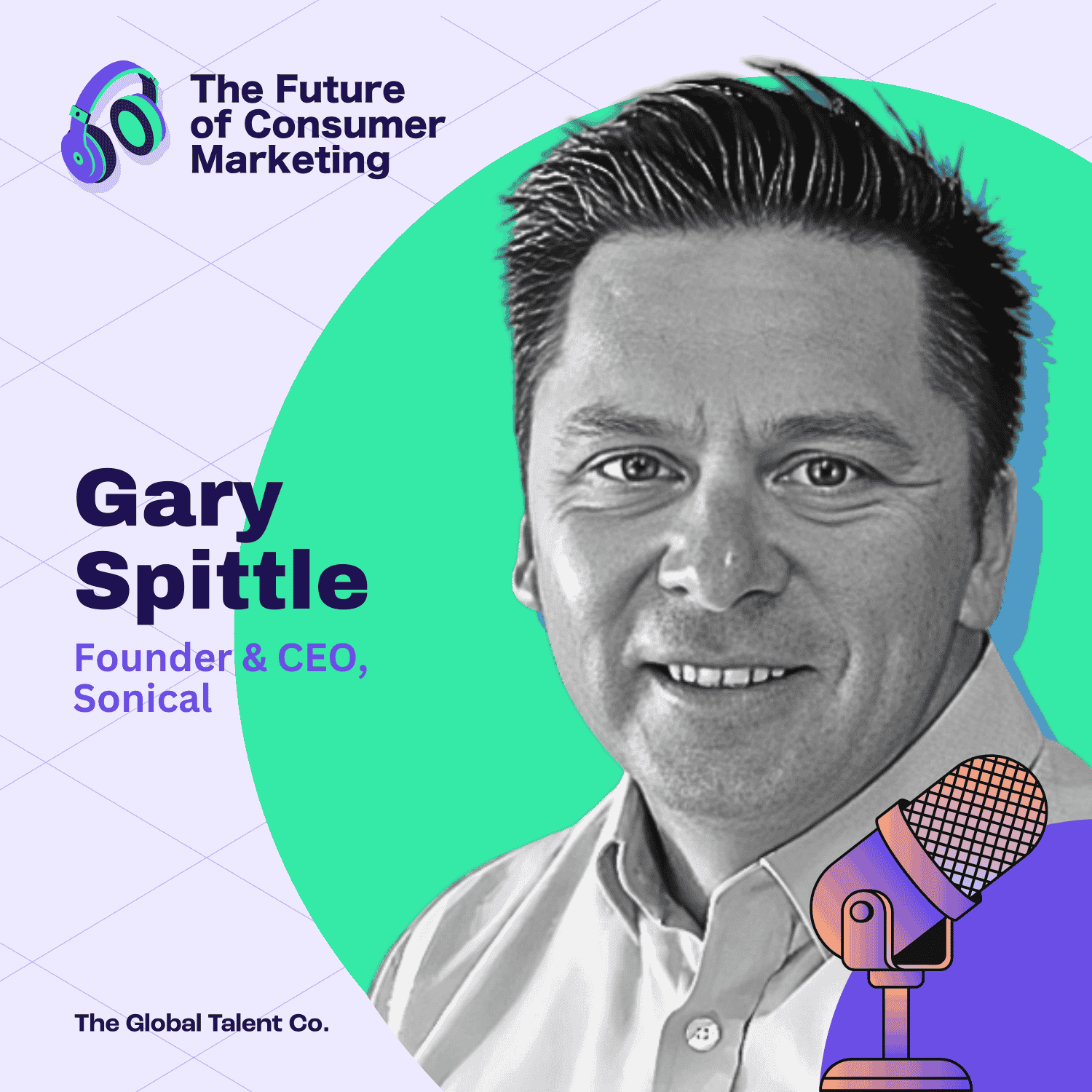
Gary Spittle is founder and CEO of Sonical; moved to the Bay Area ~14 years ago; studied music technology/digital audio after playing keyboards in a band.
Key claims
ear is a prime biometric listening location; competitors are “smartphone for your ear” wearables; B2B licenses an ear operating-system platform to headphone/earbud/smart eyewear/hearing-aid makers; D2C uses a Bluetooth/wired accessory to add Sonical benefits to existing AirPods/headphones; education improves by “app-like” concepts; crowdfunding via WeFunder was harder than expected.
Notable examples
tinnitus prototypes; mission-critical users like DJs, broadcast/pro audio, construction/industry, enterprise workers; “Headphone 3” as the third evolution stage.
Written by AI. May contain mistakes. Listen to the episode to check what was said.
Chapters
Tap a time to open that second in VOGary's Journey to the Bay Area and Tech
0:45 to 3:48
Discover Gary's background, his move to the Bay Area, and early tech interests.
“And so my wife and my kids thought we would take on this adventure.”
Understanding Sonical's Innovative Technology
3:48 to 6:19
Explore what Sonical does and the technology behind their hearing computers.
“and hundreds of brands that want to add new tech to those products.”
The Market Landscape and Consumer Insights
6:19 to 9:00
Insight into B2B versus D2C strategies and consumer needs in audio tech.
“You know, they would develop noise reduction systems or spatial audio systems or speech recognition, translation.”
Navigating Crowdfunding and Investor Relations
9:00 to 11:22
Learn about Gary's experiences with crowdfunding and advice for founders.
“So maybe there's a potential to partner with someone to actually build a device just like that.”
Impact and Future Vision of Sonical
11:22 to 13:56
Discuss the impact of technology on health and the future vision for Sonical.
“So I know being an entrepreneur, being a founder, it always sounds cool, but some days it sucks.”
Transcript
Automatic transcript. May contain errors.0:00This show is brought to you by the Global Talent Co, a marketing leader's best friend in these times of budget cuts and efficient growth. We help marketing leaders find, hire, vet, and manage amazing marketing talent for 50 to 70 % less than their U.S. and European counterparts. To book a free consultation, visit globaltalent.co. Hey, everyone, and thanks for listening. Today, our guest is Gary Spittle, founder and CEO of Sonical. Gary, what's going on today? Hi, thanks for having me on. Looking forward to an interesting chat. Of course, super excited to have you on as well. And let's talk about your journey to the Bay Area.
0:35So we're both here in the Bay Area. I didn't come here. I can tell from your accent, you didn't come from here. You're not from here originally. So tell us about your big move to Bay Area. Yeah, so we moved out here about 14 years ago. And so my wife and my kids thought we would take on this adventure. And we originally thought we'd stay here for maybe six months to a year and ended up being here a lot longer than that. and we're now at the point now where our kids have almost all left home. So yeah, we're looking forward to the next chapter. What's the next chapter? Are you going to leave the Bay Area or are you here for good?
1:06I really like California, but maybe not stay exactly where we are. It can be a little bit intense. Yeah, it's very, very intense, especially down there. I feel like it's intense. If you go to San Diego or even like parts of LA, it's a very chill life. Right. Now let's talk about your journey into tech. So growing up, were you fascinated by tech? Did you love tech growing up? What was your first kind of encounter with tech? It was actually way back when I was at school and I was playing keyboards in a band and I got really interested in music recording and the whole studio environment. And so, you know, like a lot of teenagers, I thought, right, I'm going to become a rock star.
1:42But I quickly realized that that probably wasn't going to happen. And so I ended up going to college and taking courses on the sort of foundations of music technology and digital audio. Amazing. And then for Sonical, let's focus on that. What does the company do at a high level? So we build hearing computers. So they're little tiny devices that people can use to enhance how they listen to content, music, audio, but also how we listen to the world. And what we've discovered is that the ear is also a fantastic place to listen to your body. There's a lot of biometric data there. So having a computer near your ear makes a lot of sense.
2:22And what's the competitor for you? Like when you think about competitors, who would be, or not who, but like, what are the buckets of competitors for you? Well, we get compared to basically a smartphone for your ear. And so as smartphone technology gets smaller and smaller and becomes wearable, that's where we see the most likely competitors to come from. It's from that type of device. I see Meta just recently came out with their new AR glasses. Like, is there a world where you view that as a competitor or is that more a partner for your technology that can use your technology? No, we think smart eyewear is an excellent place for our tech.
2:56It's a device or a product that people are happily going to wear all day long. It makes a lot of sense to put some technology inside it. It's a great place to gather biometrics. You can play audio from it. You can have microphones on it to pick up your speech. So yeah, it's an excellent form factor for exactly what we build. And for you, I know that there's two different parts of the business. there's B2B, there's consumer focused or direct to consumer. Let's maybe talk for a minute about the B2B and then we'll dive deeper into the consumer side of things. So what's the B2B, you know, what does that offering look like?
3:27Right. So we built our technology, which is centered around an operating system for your ear. So it's a whole software stack that runs on various host processors. And so we licensed that entire platform to product makers. They could be headphone companies, earbud companies, smart eyewear, hearing aids or headsets. And there's hundreds and hundreds of brands that want to add new tech to those products. So the B2B place is really where most of my team have spent the last sort of 20 years. It's developing technology for those devices. And then what about on the direct consumer side? Can you talk us through what that looks like?
4:05Absolutely. So as part of our journey, we wanted to speed up the access that people need to get in front of some new technologies. There's a lot of amazing things being developed and we didn't want to wait for the product makers to integrate everything. And so we developed our own accessory that allows people to use the current device they have. You know, it could be their AirPods or a pair of headphones connected to our little hearing computer and get some of those benefits. And how does that work? How does it connect? So I have, you know, AirPods here. Like, how does it connect exactly? What does that look like from a user perspective?
4:41Yeah, that was actually one of the initial challenges because we have to be able to connect to different types of products. So Bluetooth is obviously a big one. So our little device has a Bluetooth connection. So you just pair your AirPods with the unit and it will then provide benefits to your earbuds. Likewise, if you had a pair of wired headphones like I'm wearing, you can just plug the headphones straight in and you'll get those same benefits. And what's that look like in terms of the marketing program or the marketing strategy to reach consumers and get consumer awareness? We've been mostly targeting what we call mission critical end users.
5:17And so these are people that use these devices to do a particular job. It might be DJs or professional audio people working in studios or in broadcasts. It could be people that work in industry. They may be construction workers, or it could be people that work in enterprise. But they need this device to do their daily work. And what we noticed is most of those products are very limited in how much innovation can happen because of the tech that's inside them. And so it almost predefines what those products can do. And we saw an opportunity to completely change that and detach the performance of the audio from the product that you actually wear.
5:59And that's where we're seeing the biggest traction at the minute. And what was that for you to have that insight? It seems like, I don't want to say a random insight, but where were you and how do you have that insight in the first place? It was actually two things that came together at the same time. So the first thing was we observed amazing things happening inside tech companies. You know, they would develop noise reduction systems or spatial audio systems or speech recognition, translation. There was all this amazing things happening, but none of it was getting into the products. And so we looked at that and said, I wonder why that is.
6:35So we started going to a bunch of trade shows where these product makers would hang out. And then the second thing that we realized is that the end users wanted these products to do something completely different. And every user was asking for different features. And so if you join those two things together, you've got a massive pool of customers that want to do custom things. And you've got a huge amount of innovation. We decided, why don't we join them together? that. Let's give them a platform that does exactly what they need whenever they need it. And so, you know, we all walk around with a device in our pocket that does exactly that.
7:11You know, we have a device that we define to do what we want it to do. So we just took that concept and moved it to our ears. And how much education is required with like the consumers that you're reaching or you're on the direct to consumer route? Like, do they just get it right away or does it require a lot of education to make them really get it? The first few, it was a struggle. And we took a lot of feedback from people because, you know, we're engineers, so we designed it how we like it. And then after a few iterations, we realized that we could make it a lot simpler and actually use the smartphone as a template.
7:45So, you know, people understand how you can download apps into a phone. And so with our model, we simply say, well, now that app, you can send it to somewhere else. You can send it to your headphones or your earbuds or a little dongle that you happen to be carrying with you. And so people understand this concept of moving apps to another device. And now the app is inside it. I don't need to use my phone. And once we cracked that, then people really started to get it. And now we get unbelievable feedback from our customers about what they wanted to do next. What new features do they need? What enhancements would benefit them the most?
8:19I see. That makes a lot of sense. And long term, if you look at the business, Do you think it'll eventually become like mostly B2B and just a small portion of D2C? Do you think it'll be like a 50-50? What are you thinking in terms of focus there? Well, what we see at the minute is it's almost like the Tesla model. You know, Tesla built the tech for electric vehicles and they ended up building the whole thing rather than licensing the technology to other car manufacturers. They said, well, why don't we just build the car? And so right now we're looking at both paths. We're working with product companies because they're experts in building acoustics and tiny ear worn devices.
8:59But there's also a number of form factors that people aren't using today. And smart eyewear is one of them. So maybe there's a potential to partner with someone to actually build a device just like that. And let's talk about fundraising. I know that you did crowdfunding or I believe you did crowdfunding. Can you talk to us about that journey and for founders who are listening in or marketers are listening in? Like what advice would you have for them to navigate that process? I guess my initial reaction is it's much harder than you think. It looks simple when you see the website, but a lot of work goes into the preparation.
9:31And we obviously used WeFunder and they were very good at kind of walking us through all the steps to make sure we were properly prepared. So yeah, it's a lot harder than you would expect, but it does make you rethink your story and your messaging and how you're going to attach to different customer groups. So that whole process was actually extremely valuable. Yeah, I could imagine. Were there any things that you learned there that you would want to just like scream to a founder? Like if you had a friend that says like, all right, I'm going to go pursue this. Like what would be like the number one piece of advice that you'd yell to them on their journey?
10:03Probably to build your own network and bring them on the journey with you. Don't just rely on these funding sites with their investor connections. Bring a lot of people on your own because then it builds up momentum pretty quickly. And did you have that early on? Like, did you have a group of investors that you were able to bring in? Or were you largely dependent on their audience and their existing network? No, they advised us to bring in a whole crowd of people from day one. And so we started building that network very early on, months before we launched. So we had a lot of people kind of waiting in the wings so that when it launched, we'd have this initial influx of investors.
10:42What else did you do there to market the company specifically to investors? We did a lot of trade show events. I spoke at a lot of conferences. We partnered with lots and lots of people. So one of the critical things about our platform is having this large ecosystem of third party developers. They are the super smart people that create the technology to run on our computer. And so we built a lot of very strong relationships with a lot of tech companies and got them to talk about us to others as well. So the message kind of rippled out through that network. I see that makes a lot of sense. And you're moving the last couple of questions here.
11:20What excites you most about the work that you get to do every day? So I know being an entrepreneur, being a founder, it always sounds cool, but some days it sucks. At least for me, it sucks some days. What gets you through the hard days? Yeah, if only it was just some days. So yeah, what gets us through the hard days is just seeing the positive impact our technology can have on people. So if you take an example, like some people have this hearing condition called tinnitus, which is like this ringing in the ears, and it's simply caused by the brain. There is no external sound to cause it. It's just your brain responding an unnatural way.
11:55And it turns out that hundreds of millions of people suffer with this condition. And we've done some very early prototypes for people to try and reduce that impact. And it's those projects where you can really change somebody's life for the better and actually break into some very untapped spaces. So we're doing a lot of overlap between sound and health and wellness that I think will be really impactful in the future. So that's what really keeps us going is focusing on those customers. And when you think ahead to the future, we can go out five years, we can go 10 years, we can go 20 years. What's the big picture vision for everything that you and the team are working so hard to build?
12:34It's really to create this whole new product category that we name it Head phone three is the third stage of evolution. So if you think back, the first headphones, you know, with the Sony Walkman, where they just played music and they were wired. And then we evolved back in the sort of early 2000s with Bluetooth, where everything became wireless and digital. But those devices still had very fixed functionality. Well, the third stage is to give the user control, is to let them decide what the product does. And that's exactly what smartphones phones did for the phone industry. We're planning on doing the same for the hearing industry.
13:13And so in five years time, it would be great if everyone is using these hearing computers that can go and access whatever features they need. Amazing. I love it, Gary. Well, that's where we're going to end things. Before we wrap, if there's anyone that's listening in that just wants to follow along with you and they want more, where should we send them? Where should they go? You can connect to me on email or on LinkedIn. And yeah, we're really keen to get people's feedback. Amazing. I love it. Well, really appreciate you taking the time. I always have a lot of respect for founders to go out and build physical things and hard things.
13:45I think the saying is hardware is hard and sounds like you're definitely doing hard stuff, but a lot of respect and a lot of admiration for founders to go out and tackle those types of problems. So Gary, wish you the best of luck and thanks so much for joining. Thanks very much.
From the publisher
In this episode of The Future of Consumer Marketing, host Brett Stapper interviews Gary Spittle, Founder and CEO of Sonical. Sonical is pioneering the "Headphone 3.0" category—building hearing computers that transform how consumers interact with audio technology. Rather than accepting the fixed functionality of traditional headphones and earbuds, Sonical created a platform that lets users customize their audio experience through downloadable apps, applying the smartphone model to wearable audio devices. Gary shares how his team navigated the challenge of building both a B2B licensing platform and a direct-to-consumer hardware product, using crowdfunding, ecosystem development, and mission-critical user targeting to carve out a new market category in the competitive audio technology space.
Topics Discussed:
- Building a dual-business model: B2B platform licensing and D2C hardware
- Targeting mission-critical end users (DJs, audio professionals, construction workers, enterprise users)
- Using crowdfunding as both capital and marketing strategy
- Creating a developer ecosystem to drive platform adoption
- Simplifying complex technology through familiar mental models (smartphone app concept)
- Positioning a new product category ("Headphone 3.0") in an established market
- Leveraging trade shows and conference speaking for investor marketing