
In short
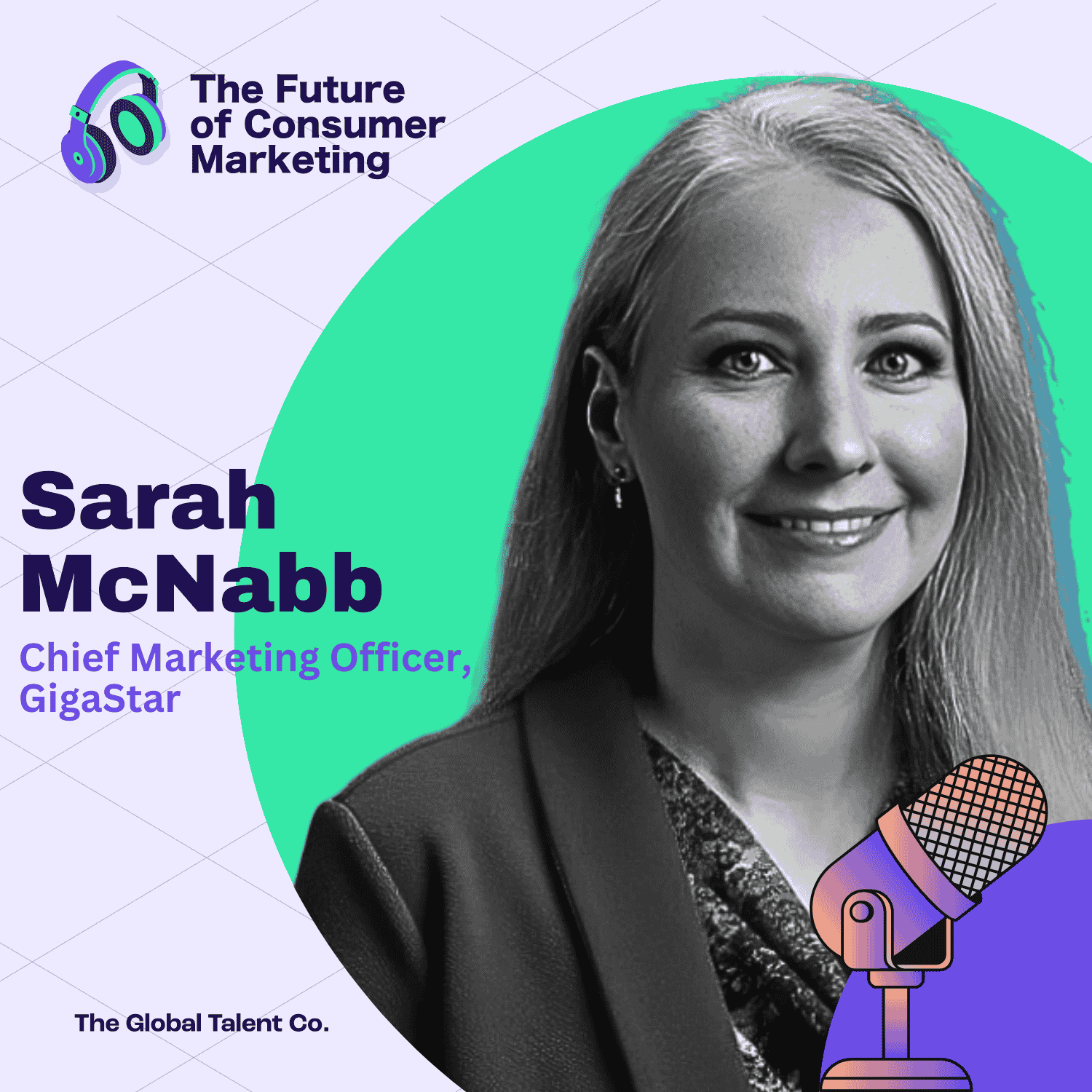
Sarah McNabb, CMO of GigaStar, explains how a lean marketing team builds trust in regulated markets by simplifying SEC-registered crowdfunding for YouTube creators and retail investors.
Guests
Sarah McNabb, Chief Marketing Officer at GigaStar; 22 years in financial-technology marketing (Chicago securities/brokerage, futures startup, institutional trading software, financial marketing agency).
Key claims
GigaStar is “purpose-built” to let creators raise capital via revenue-sharing securities without giving up control or IP; investors receive only a portion of monthly YouTube AdSense revenue (not merch/brand deals). It’s SEC-registered crowdfunding and “Patreon on steroids,” with low minimums (as low as ~$42) and investor KYC/age 18+.
Notable examples
creators with strong audience engagement and consistent posting; AdSense revenue threshold of at least ~$30,000/year; future plan for a secondary market after 12 months to enable trading.
Written by AI. May contain mistakes. Listen to the episode to check what was said.
Chapters
Tap a time to open that second in VOSarah's Journey in Marketing
0:30 to 1:17
Sarah shares her extensive experience in financial technology marketing.
“So how would you like to begin these conversations with the big question of why and how did you end up in this world of marketing?”
Evolution of Marketing Strategies
1:17 to 2:17
Discussion on the major changes in marketing approaches over the years.
“What would you say are some of like the biggest changes when you reflect back on those early days and how you were approaching marketing?”
Understanding GigaStar's Mission
2:17 to 3:26
Sarah explains GigaStar's platform connecting YouTube creators and investors.
“So at GigaStar, we bring YouTube creators and investors together.”
The Target Audience for GigaStar
3:26 to 4:32
Discussion on the types of investors interested in the GigaStar platform.
“Because I have to imagine that this is a new asset class, what's the like kind of persona?”
Creators and Investment Opportunities
4:32 to 6:23
How GigaStar enables creators to engage their audience as investors.
“So it depends on the tier that the investor wants to purchase for the creator because each tier is attached to a little bit higher of a percentage of their revenue.”
Marketing Playbook for YouTube Creators
6:23 to 7:52
Insights into GigaStar's marketing strategy and process for creators.
“Is there a certain subscriber size where it starts to really make sense for them to work with a platform like yours?”
AI in Marketing Operations
7:52 to 9:51
Discussion on the role of AI in streamlining marketing processes at GigaStar.
“I mean, we ultimately have the first financial platform that will allow YouTube creators to raise capital without putting their channel at risk, without putting their IP at risk.”
Building Relationships with Creators
9:51 to 10:49
Advice on how brands can effectively work with YouTube creators.
“And for those who are listening in who want to work with creators, so this would be the CMOs who want to go and build partnerships and sponsor creators.”
Reuniting with a Familiar Team
10:49 to 12:01
Sarah discusses her history and collaborations with her current CEO.
“And from your side, something you mentioned pre-interview that I thought was really interesting is the idea that this is your second time working with the CEO that you're working with.”
Future of the Creator Economy
12:01 to 13:01
Predictions for the evolution of the creator economy and GigaStar's role.
“And final question for you, if we just look at this space as a whole, like where do you see it headed?”
Transcript
Automatic transcript. May contain errors.0:00This show is brought to you by the Global Talent Co, a marketing leader's best friend in these times of budget cuts and efficient growth. We help marketing leaders find, hire, vet, and manage amazing marketing talent for 50 to 70 % less than their U.S. and European counterparts. To book a free consultation, visit globaltalent.co.
0:22Brett Stapper:Hey, everyone, and thanks for listening. Today, we're speaking with Sarah McNabb, Chief Marketing Officer of GigaStar. Sarah, hello, how are you? I'm great. Thanks for having me. Of course. Really excited to have you here. So how would you like to begin these conversations with the big question of why and how did you end up in this world of marketing? Oh, my goodness. So I've been in financial technology marketing for, at this point, 22 years. I started out in marketing in a securities and brokerage firm in Chicago. And from there, stayed within that ecosystem, worked for a futures trading startup, worked for institutional trading software companies.
0:59And yeah, just came into the role of chief marketing officer for a financial marketing agency. And then now I'm in this role. So, you know, it's what I've been doing for a long time. And it's really exciting to me. And it's exciting to see how everything has evolved in the financial space over time.
1:16Brett Stapper:Yeah, I bet. I would imagine it's changed a lot. What would you say are some of like the biggest changes when you reflect back on those early days and how you were approaching marketing? What are some of those big evolutions of your approach? Well, I got my graduate degree in what was at the time called new media studies. It's not new anymore, but really kind of theoretical communication and social media and how everybody within the social media and internet route communicate. And that has definitely evolved and you have to evolve with it. you have to continuously learn. I've also, you know, been able to get into the world of like understanding what crypto and blockchain and how that has really evolved within the financial systems and how it's becoming more of an acceptable method.
1:59So yeah, this is exciting to kind of leverage everything that you learn into a position that I've held for so long. You know, things keep changing.
2:08Brett Stapper:And let's talk a little bit about the company. So at a high level, what is the core product and then who is that core audience that you're trying to reach, you're trying to market, you're trying to influence? Yeah. So at GigaStar, we bring YouTube creators and investors together. So YouTube creators, we feel, should have access to raise capital just like traditional entrepreneurs do. We're the only financial platform purpose-built to help creators raise capital without giving up control or IP. So we have a primary marketplace called GigaStar Market. And it's where YouTube creators can list an offering on our platform to share a portion of their YouTube channel's future AdSense revenue with investors.
2:52And that's in the form of revenue sharing security. So YouTube creators, anybody who is looking to grow their channel, maybe pay down debt, pay off a creator loan, just gain some peace of mind or hedge any risk that they have. if they would like to offer their audience a way to support them, but also receive a return. It's kind of like Patreon on steroids. So my team has a background in financial technology and regulation. So we are an SEC registered crowdfunding platform. And we're really the first of its kind.
3:27Brett Stapper:And who is this asset class for? Because I have to imagine that this is a new asset class, what's the like kind of persona? Are these institutional investors? Are they retail investors? Who's interested in these types of opportunities? Yeah, retail investors. So if you have a YouTube creator who, let's say they have a Patreon, you know, those are individuals who are paying them a certain amount of money for content as a means of support. But in this scenario, their fans can be their investors and purchase a small percentage of their future revenue as a security and receive a return each month from their YouTube AdSense account.
4:06So it's really more of a meaningful win-win framework that we're establishing. Yeah, not only enabling creators to raise funds in a community around, but now individual investors have a lower barrier of access to the creator economy. So you just have to be over 18 and be able to pass, you know, a KYC when setting up an account. And yeah, the amounts of investments are fairly low. I think the lowest that we've had is maybe$42. So it depends on the tier that the investor wants to purchase for the creator because each tier is attached to a little bit higher of a percentage of their revenue. But definitely creators, when they list an offering on our platform, are excited to invite their community to come and share in something new.
4:55Brett Stapper:Yeah, what I find just so fascinating about this model is kind of what you were just alluding to earlier. It's really like a chance to just like supercharge your customer base or your fan base and you give them an incentive to love what you're doing and want to support it. So it's just a very, very smart model that you have here. Yeah, and it fits for YouTube creators who are emerging, who are looking to, you know, if they need to buy equipment or rent studio space or anything like that. I mean, there's always a reason to raise funds, right? And that, of course, if there are very established creators who are claiming they don't need their money, they can definitely leverage giving back to their community in a way that like innovates engagement in a new way.
5:37Brett Stapper:Who is like your, you know, maybe average or typical YouTube creator? Because I feel like it's shifted so much now and everyone, there's all these different ages. But is there a sweet spot for the type of creator that you're working with? So we like to have a diverse type of creator on our platform. So it's not like we're just going for financial channel genres or anything like that. But we definitely look for YouTube creators who have that really strong audience engagement. We found that channels that have a face do really well. People love to support other people and creators who have gotten into the cadence to be able to consistently post.
6:16So if they have a good rhythm and they have a good output, chances are they'll continue that going forward. So they would be, you know, ideal investments.
6:25Brett Stapper:Is there a certain subscriber size where it starts to really make sense for them to work with a platform like yours? Or does it just depend on the niche? Yeah. So we do look for YouTube creators who meet certain thresholds. And one of the thresholds that we look for is YouTube creators who earn at least$30 ,000 per year in YouTube AdSense revenue. We found that that's kind of like the floor and that going up. So, you know, if creator has 25 ,000 followers, 50 ,000 followers, obviously, depending on the genre and the niche that they're in, that's going to impact what their CPM is. But yeah, we have kind of an array of size of creators right now on our platform.
7:05Brett Stapper:And for you, if you were to unpack your marketing playbook, what does that marketing playbook look like? So we are trying to simplify a pretty complex process. us. So what we're really doing is setting up a securities offering for a YouTube creator. If they tried to do this on their own, it would cost them tens of thousands of dollars in legal fees. They'd have to wade through all kinds of regulatory red tape. And we've done that already. So we have tried to streamline as much as possible and make the lift as light as possible for YouTube creators. And we have a team that provides white glove concierge service to kind of pulled their hand through the process.
7:45So really boiling down, simplifying, educating, and meeting them where they're at. I mean, we ultimately have the first financial platform that will allow YouTube creators to raise capital without putting their channel at risk, without putting their IP at risk. People who invest in YouTube creators on our platform don't have a say in their channel or any type of control. It's just they are purchasing rights to a small portion of revenue that the creator is putting forth. So, you know, it's also educating the investor too.
8:22Brett Stapper:So they don't get access to like merch sales, for example. It's just the AdSense. That's what they're essentially getting access to for the investors. Correct. So it is just the YouTube AdSense revenue that is being monetized. So if a YouTube creator has brand deals going on on the side, that's all there is to keep. I see. That makes sense. That's probably a lot cleaner, a lot easier to run that way. Yes, absolutely. And when we look at your marketing team, how big is your marketing team? So we are lean and scrappy. So as a startup, it's myself and I have a senior marketing manager. And we have a couple of consultants who help us out on the side.
8:58But ultimately, we are, you know, full of grit and just trying to get our hands dirty and execute and be strategic while we do so.
9:09Brett Stapper:Has AI contributed to the fact that you're able to run a very lean team like this? Like if you look at, you know, pre-ChatBT, would it have been possible for the marketing team to operate in the way that it's operating? So, you know, we're using more AI in our operations. So on the back end, when we have operations that do intake of creators and help assist with evaluation and onboarding, we do leverage AI in that fashion. But as far as the marketing part of the program, I mean, we use AI here and there. It makes things more efficient, but we don't lean too hard into it. We don't rely on it solely.
9:46Obviously, we want to have a good, genuine business, good relationships with human beings. And so it's important that we have those conversations and not lean too hard with AI.
9:56Brett Stapper:And for those who are listening in who want to work with creators, so this would be the CMOs who want to go and build partnerships and sponsor creators. What advice would you have to them? I would imagine that you've spent a lot of time with creators. Like, what do brands get wrong? What do they maybe misunderstand about the creator ecosystem? Well, what's worked for us has been participating in in-person events and creating those relationships and developing those ties face to face, shaking hands, answering questions. At the end of the day, it's a people business. And to be there with them in person has helped.
10:32It's helped establish relationships with YouTube creators and with referral partners, too. So we also talk with agencies, reps, talent, you know, representation, anybody who is in the ecosystem of YouTube creators, we're open to have conversation with.
10:49Brett Stapper:And from your side, something you mentioned pre-interview that I thought was really interesting is the idea that this is your second time working with the CEO that you're working with. Talk to us about that and just getting the band back together again for a second time. Yeah, sure. So I mentioned that I've been in financial technology marketing for over 20 years. And part of that time was spent at a company called Option City Software, where the CEO is the CEO of Gigastark now. And a few of the management team members that I worked with at Option City are working at Gigastar. So this isn't our first rodeo.
11:22We've gotten the band back together to really focus on putting together something that we think is really innovative, new. The COO on our team has had a career as being CEO of the largest YouTube MCN in the Middle East. And this is his brainchild. The Gigastar model is his brainchild. and Hazem Dhawani, who's our CEO, was CEO at Option City. And I've always been in the orbit, in the financial technology orbit in Chicago. And in 2022, he reached out to me and said, I have this really cool model and I want to tell you about it. And once I heard about it, I was like, this is going to be a game changer.
12:00I have to be part of this. So we got the band back together.
12:03Brett Stapper:I love that. And final question for you, if we just look at this space as a whole, like where do you see it headed? you know, the creator economy, where is it going? You know, what's it going to look like five years from now, from your perspective? Yeah, so we're really hoping to make inroads to build the creator capital markets of the creator economy. So our primary market is GigaStar Market, and that's where YouTube creators can list a portion of their YouTube channels, future AdSense revenue to investors. We're also working on building out and launching the secondary market. So after investors hold their securities for 12 months, after the secondary market launches, they'll be able to trade them and somebody else can purchase those YouTube creator securities.
12:47So we're looking to really build out the full ecosystem for the creator economy. So the Wall Street of the creator economy. So I foresee in five years, you know, that this will be up and running and liquid and active.
13:01Brett Stapper:Amazing, I love it. All right, we're gonna wrap here. Before we do, if there's any marketers that are listening in that just want to follow along with you and your journey here. Where should we send them? Where should they go? Yeah, LinkedIn, all social platforms, Facebook, X, Twitter, Instagram, Discord. But I can be found on our website at gigastar.io. And yeah, I'm happy to answer any messages on LinkedIn as well. Amazing. Well, really nice to meet you. Thank you so much for taking the time. Thanks, Brett.
13:35you
From the publisher
In this episode of The Future of Consumer Marketing, host Brett Stapper interviews Sarah McNabb, Chief Marketing Officer at GigaStar. GigaStar is pioneering a new asset class in the creator economy by building the first SEC-registered crowdfunding platform that allows YouTube creators to raise capital by offering investors a share of their future AdSense revenue—without sacrificing creative control or IP rights. Operating with a lean team in a highly regulated fintech environment, Sarah shares how GigaStar is simplifying complex securities offerings, targeting the right creator profiles, and building what they call "the Wall Street of the creator economy" through both primary and secondary markets for creator-backed securities.
Topics Discussed:- Democratizing capital access for YouTube creators through revenue-sharing securities
- Building trust in a regulated fintech environment with SEC compliance
- Evaluating creator investment potential based on engagement, consistency, and revenue thresholds
- Operating lean marketing teams in complex, regulated industries
- Leveraging in-person events to build relationships in the creator ecosystem
- Developing both primary and secondary markets for creator securities
- Balancing AI efficiency with human relationship building in B2B creator marketing