In short
Kudos challenges legacy disposable diaper brands by replacing the skin-touching lining’s plastic with a 100% cotton liner, arguing this improves breathability, comfort, and baby skin safety while reducing landfill plastic waste. The episode also covers how Kudos competes in a crowded, price-sensitive market using education, influencer partnerships, and detailed “comparison/swap” guides to counter greenwashing.
Guest
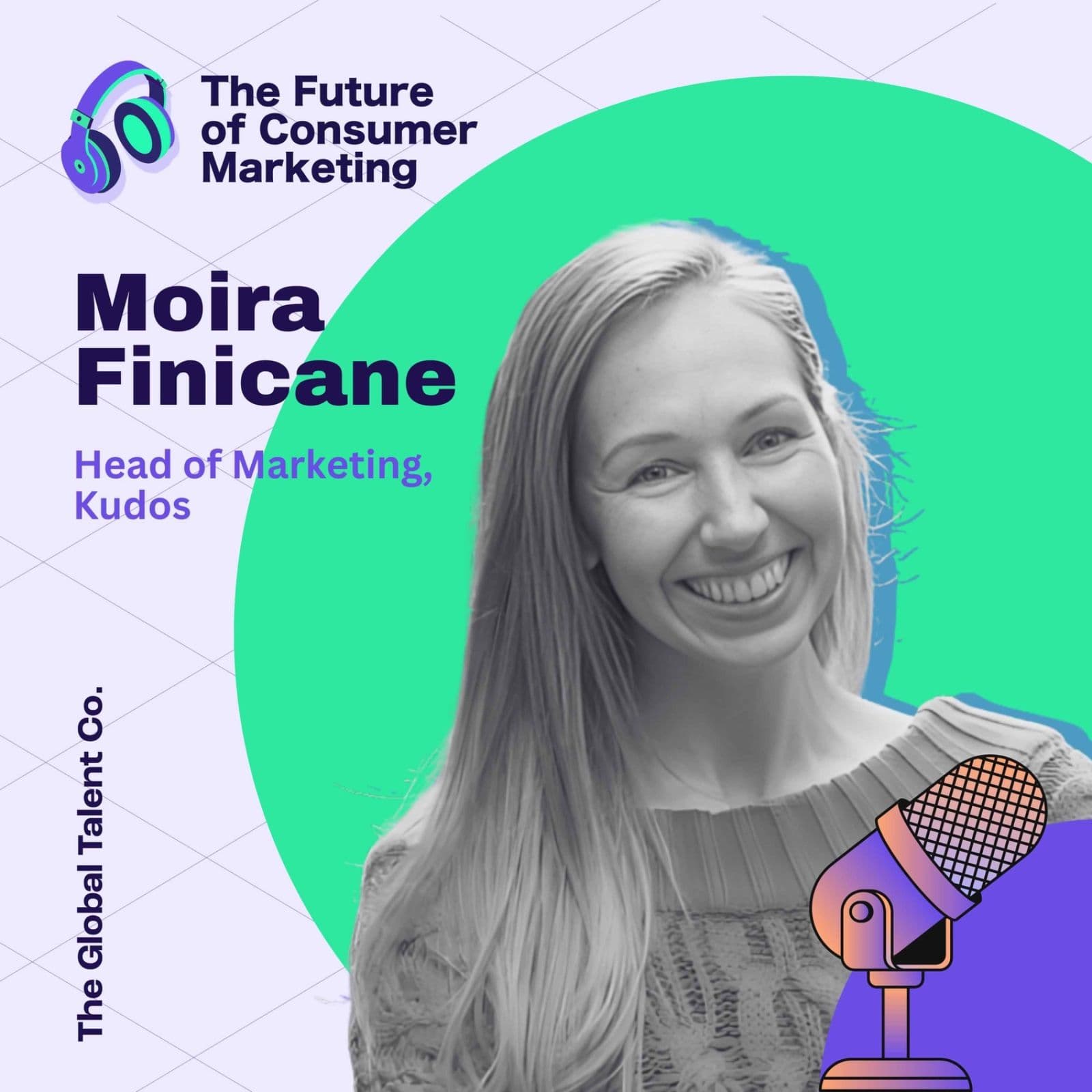
Moira Finnecane, head of marketing at Kudos (employee ~3; joined ~6 years ago; also a parent of two). Background includes being first global product marketing manager for couriers at Uber Eats, scaling from ~40 to thousands of cities, and prior exposure to consumer absorbency at Procter & Gamble via the founder.
Key claims/examples
Traditional diapers have plastic lining; Kudos says cotton is doctor-recommended for rash/eczema. Founder previously worked at P&G; Kudos worked directly with suppliers to develop new materials. Influencers in the “non-toxic mom” space drove growth, especially when comparing chlorine pulp claims (total chlorine-free vs elemental chlorine-free). Kudos is “premium but accessible” vs Pampers/Huggies; no diaper is fully biodegradable/compostable yet.
Notable examples
Kudos family testers; daughter’s photo in Fast Company; nephew on Shark Tank set; post–Shark Tank inbounds about adult diapers.
Written by AI. May contain mistakes. Listen to the episode to check what was said.
Chapters
Tap a time to open that second in VOUnderstanding Kudos
0:47 to 2:48
Moira explains Kudos' mission and unique cotton diaper product.
“And today with me, I have Moira Finnecane, head of marketing at Kudos, a brand of sustainable, disposable baby diapers that is known for its 100 % cotton liner that touches the baby's skin instead of plastic.”
Competing with Legacy Brands
2:48 to 5:36
Moira shares how Kudos differentiates itself from major diaper brands.
“So you guys are the first diaper that's actually using cotton lining and not plastic.”
Transition from Tech to Consumer Products
5:36 to 7:36
Moira discusses her shift from marketing at Uber to Kudos.
“Like what's touching baby's skin matters, especially when you have these potential exposures to chemicals.”
Building Marketing Foundations
7:36 to 12:40
Moira reflects on establishing marketing strategies at Kudos from the ground up.
“Then I expanded to cover restaurants globally as well.”
Personal Experiences with Kudos
12:40 to 14:03
Moira shares how her personal journey as a parent shaped her marketing efforts.
“Like, can you bear witness to their activity?”
Marketing Insights and Product Development
14:03 to 18:09
Explore how personal experiences drive marketing strategies and product innovation.
“that marketing and product have to be so intertwined because you need those insights.”
Differentiating in a Crowded Market
18:10 to 24:16
Learn how Kudos navigated the competitive diaper market through unique strategies.
“mother, that's first time I've ever said that.”
Addressing Greenwashing and Consumer Education
24:17 to 28:00
Understand the challenges of combating greenwashing and educating consumers about product authenticity.
“Or has it been just general acceptance from everybody?”
Building a Strong Marketing Foundation
28:00 to 29:29
Learn the importance of setting a solid foundation for marketing strategies.
“But take the time to build your foundations correctly.”
Promoting Kudos for New Parents
29:30 to 29:52
Discover where first-time parents can find Kudos products and resources.
“And Moira, one last thing is for anybody that's listening to us, that's a first time parent that has a newborn kid, where can they get kudos?”
Transcript
Automatic transcript. May contain errors.0:00This show is brought to you by the Global Talent Co, a marketing leader's best friend in these times of budget cuts and efficient growth. We help marketing leaders find, hire, vet, and manage amazing marketing talent for 50 to 70 % less than their U.S. and European counterparts. To book a free consultation, visit globaltalent.co. Hey, everybody. Thank you for listening. My name is Andres Figueira, and I'm going to be your host for the day. This show is brought to you by The Global Talent Company, a company that's connecting top remote professionals from Argentina, South Africa, and all over the world with leading tech companies worldwide.
0:37So if your team is looking to hire world-class talent from South America, from South Africa, or anywhere really, just head on over to theglobaltalent.co and see how we can help. And today with me, I have Moira Finnecane, head of marketing at Kudos, a brand of sustainable, disposable baby diapers that is known for its 100 % cotton liner that touches the baby's skin instead of plastic. So this offers a breathable and natural alternative. So Moira, thank you so much for hopping on. How are you doing? I'm doing really well. How are you doing? I'm excited to be here. I'm doing very well as well. Can't complain.
1:14Happy that it's Friday and happy to be learning all about you and what you're doing at Kudos, Moira. So could you tell us a little bit more about what this company is, how you guys set yourselves apart being just a diaper company is my understanding. Yeah, no, absolutely. So most people don't realize this, but with traditional disposable diapers, baby skin is touching plastic all day. That lining that is touching baby skin is 100 % plastic most of the time. I know that was a shocker to me. It's one of the reasons I joined Kudos. I learned that diapers are the third largest consumer item in landfills, which is just unbelievable.
1:49It's not actually unbelievable when you think about when you're a parent like I am and you see how many diapers you go through in a given day, but it is unbelievable when you think of like the waste and the plastic that is going into the environment. So Kudos is on a mission to get as much plastic out of the disposable diaper as possible, especially when it comes to what's touching baby's skin. So we are the first disposable diaper on the market where the lining is 100 % cotton. So not only is cotton soft and sustainable and better for the environment, it's also the number one doctor recommended material for rash and eczema.
2:28So we're all about being safer for baby sensitive skin, safer for the planet. And because we're founded by an MIT engineer and like overall badass, like not compromising on performance because no parents are gonna use this if it's leaking through the night and not providing that reliability. so parents never have to compromise on that performance either. That is crazy. So you guys are the first diaper that's actually using cotton lining and not plastic. So this is excellent for, now my understanding is, breathability. And how have you guys been able to compete with legacy brands in diapers that from my head I could just name like Huggies or Pampers that I feel are the most known, but apparently they're not the best to use?
3:10Yeah. And our founder actually started her career off at Procter & Gamble. This is where she kind of got exposed to the consumer absorbance world and got exposed to just how much plastic is in the consumer absorbance products that we're using. And we're able to compete because we are truly differentiated. And because we are small, it allows us that flexibility to do things a little bit differently. So cotton is a natural material, which is great for skin, not so great always for the traditional like diaper equipment that is used to working with synthetic plastic based materials. So we really had to partner very closely.
3:49And I think this is something that we did really differently. And for context, I'm employee number three. Kudos. I've been there for almost six years. On the first day I started, I found out I was pregnant with my first. Now I have two. I call it my third baby. Kudos is my third baby. So I feel like even just the product development side is so special to me because I think we did it so differently. Instead of letting our manufacturing partner make all of the decisions and source all of the suppliers, you know, our team was the one making those relationships with the suppliers, working with suppliers on their innovative pipelines to develop new materials so that we could do things differently.
4:30And that's why we're able to compete because we've been small enough to kind of work with these suppliers directly, use materials that no one is using, and then communicate that story to consumers. And what we found is consumers really want safer alternatives for their baby. And we're able to fill that gap. And there's been a really strong resonance with that. Wow, that is amazing. And I totally empathize. Like, I'm not a parent just to make that happen. But I understand that as a parent, like usually they want to give the best to their children. And if you know that the plastic lining is going to give them rashes or maybe it's just not as comfortable or whatever, and you can find this new alternative, that's so cool that you're able to provide that too.
5:13Yeah, I think what our audience really cares about too is, you know, plastics are harmful for the environments, but plastics can also contain harmful chemicals that can absorb into your skin. So when you think about diapers, diapers are the item that your baby is sitting in the longest, you know, two and a half years, like that's two and a half years of baby sleeping in, like playing around in this diaper. So that's why it's so important to us. Like what's touching baby's skin matters, especially when you have these potential exposures to chemicals. Of course, of course. And Moira, I saw from your experience that you also worked as, I believe it was marketing manager at Uber for a while as well.
5:53Yeah. And now you're marketing with Kudos, which is diapers. Like, could you elaborate on the difference between marketing for a tech giant and now for, I believe it's more, I want to say, like a common product for the everyday use? Because it's something that we'll always need, like we'll all be babies. Babies will keep coming. Diapers will always be needed. So how did that change? Yep. No, it has definitely been a big transition. A lot of things are similar. Like I've always gravitated towards working in startup environments. So I moved to New York for my husband's residency and I got this amazing opportunity at Uber Eats while it was still in its infancy to head global product marketing for couriers.
6:34I was the first global product marketing manager dedicated to couriers for the company during a time of like tremendous growth for Uber Eats. So I think when I started, I think Uber Eats was live in about like 40 cities, maybe globally. And by the time I left, we were live in like thousands of cities globally. And as you saw from my background, I have only worked prior to Kudos. I had only worked on sort of marketplaces. So these kind of like the tech world going to a consumer product was like definitely new for me, but I've really loved it. And while there are like differences, I've had to learn like how you deal with like material outages and inventory like constraints.
7:18And that has definitely been a boot camp and like a learning curve for me. But there's so much that I like take from my Uber Eats experience. It was just an incredible experience. I worked with incredible people to be part of a rocket ship like that is just, you know, a really unique experience. And what I credit Uber Eats with is I got such amazing exposure to both the eat side of the business and the ride side of the business because I was working initially on Courier. Then I expanded to cover restaurants globally as well. But because I got exposure to both, I got to see like all of the marketing teams across all of the companies.
7:57So in this more startup environment of like the Uber Eats side where we're super, super scrappy and Uber is just scrappy in general. But then on the more established like driver side. So it was like my foray into seeing like all of the like marketing teams that come together to make it happen and understanding like what their roles were, how they work. And I had access to those teams, but I also wasn't on like the consumer side. So I had more limited access to those teams and I had very small team myself. So I had to be super prioritized around like what my asks were for those teams, which meant that if I couldn't get prioritized with those teams, I had to do it myself.
8:40So I feel like I got a really great exposure to like, OK, what PR can do for you, what a big agency can do and what a big kind of like, you know, million dollar like brand campaign can do. And I got to work on some of those in conjunction with the driver team, but then also like how you can just kind of send an email out yourself and like do scrappy things and create presentation, like an educational presentation for restaurants yourself and like still have like a big impact. So I got just exposure to a ton of marketing teams and what they did at Uber, but then also recognize, okay, what can I do since I can't have access to all those resources all the time?
9:19And I think that really positioned me well for going into mega startup life at Kudos, where I was employee number three, where I started before we had a product and a website. and, you know, you need to go from like zero to, you know, now live and thousand target stores. It means that you really have to kind of prioritize what you're going to do yourself and what you're going to get outside resources for. Okay. So like being in the startup environment at Uber actually prepared you to get even more scrappy, as you mentioned, with Kudo, because like talk to me about startup life and I totally get it.
9:53Sometimes teams don't have time to help you out with something and it's better to just do it yourself in order to get it done in time. But it's so nice that that served as like a proper training for what you were about to live with kudos. And tell us a bit more about how it was at the beginning, like marketing a product that you didn't even know. And I imagine that Uber Eats and Uber in general, it has more of like a general demographic. But I feel like parents may fall. Yeah, there's all ages for parents. I feel there's more like a general between like 25 to 35, maybe. I'm not sure if I'm hitting it correctly.
10:25But yeah, if you could elaborate on that, it would be amazing. Yeah, no, it is really wild to look back on like where we were at Kudos and just like all the foundations that had to be laid to where we are now. And I think in those early days, if I like look back and kind of see what was important, you know, I really think it's important. And what we did well was setting the marketing foundations from the start. And by marketing foundations, I mean, okay, what is your product? What makes it different? What are your value props? Like, why do customers want to buy this product from you? Like, so in our case, the diaper, what do we stand for?
11:04You know, what our mission is and what don't we stand for? So that values kind of messaging was really important for us. And then that allowed us to really hone in on who our target audience was. And you're right, Uber and Uber Eats has a very general audience. Like with Kudos, we're targeting those expecting parents, we're targeting new parents. And we got even further into a niche early on that has been expanding. What was really successful for us early on was kind of honing in on the niche of like natural minded parents, parents who do so much research before they buy a product for their babies because they really care whether it's like what their baby's eating or what's being put on their skin.
11:49They really care about all of the ingredients that are going into that product. And so the approach we took was, okay, we have to educate around why we're different. We have to be super transparent about our materials because we know this is what our customers care about. And we have to be very clear on why we are different. How you're babysitting in plastic all day, kudos is the only one where you're babysitting in cotton all day. So we took an educational and kind of content-based strategy, blog posts, our website, our own channels like email and social to communicating that message. And then we partnered with leaders, particularly influencers in that target niche that we were looking for, the non-toxic mom space so that they could be educators for us and really spread that message.
12:39Wow. So in terms of education, you guys used user-generated content with influencers to get people going and have, I imagine is more of like a testimony online that the diaper is actually good and that it works because I imagine you as a starting mother, when you entered kudos, did you get to try them out? Like, can you bear witness to their activity? My kids are like the OG kudos tester for sure. They're also like all over our social media because we're a very like scrappy, like low budget team, especially at the beginning. So we were like, we can't do a photo shoot, but I can get my sister who's a videographer to like some like professional video and photos of me and my kids and my nieces and my nephews.
13:22Like we joke so much because like my daughter has like, her picture has been in Fast Company. Like my nephew, his picture was on our Shark Tank set when we were on Shark Tank. Yeah. Like Amritha's two kids like have been on like CNBC and TechCrunch. Like we are just like keeping it in the family. But like also like being, it is so helpful to be so close to the product that year. Like I joined Kudos because like I am a natural minded mom, like a crunchy mom who cares, who is exactly the target audience. So that helps me in connecting with them. But it also helps me kind of give feedback on how we need to make like the diaper better.
14:02And I'm such a strong believer that marketing and product have to be so intertwined because you need those insights. I mean, obviously I'm talking about my own insights, but marketing can also deliver those customer insights that help develop, you know, the product and kind of continue to improve it. No, of course. And I imagine like at a personal level, as you're mentioning, you as head of marketing, it's like you're using the diaper. You saw that it worked with something and you're like, oh, my God, this is amazing. It's like, this could be a marketing idea. It's like maybe we can tell this to the audience and we'll get more buyers.
14:32Absolutely. And I'm going through all the same shared experiences as our target audience, because like I said, I found out I was pregnant the first day I started. After three years of trying, by the way. So I took that as like a very serendipitous sign. But I was going through. Congratulations. Now that you're on your second one and everything, that's cool. Yeah. And okay, I have another question because I feel that like, and I only have these, like your two main competitors in my mind because it's the only brands I've ever known. But I feel it's like kind of a crowded market with all those diapers that already exist.
15:04But did you have like a go-to strategy for cutting through the noise when you launched Kudos and when you wanted to like make a stand and mark yourselves apart? and make a difference. Was there like a standard procedure for that that you guys could elaborate on? Yeah, I mean, it goes back to really being honed in and super focused on communicating our differentiation and also being aware of what other like diapers in the market were bringing to the table, like why people were using them, what their kind of value props were, and then being super clear on how Kudos stood out. So I think in terms of what has been most successful for us in growing the brand and cutting through the noise has been partnerships with influencers, particularly on Instagram, particularly moms who are leaders in the non-toxic space.
15:58And actually, like because of our content strategy, because of the blogs that we put out, because of the organic social content that we put out that was so focused on education, on building credibility around our product and on differentiation, what we found was these people, a lot of our key influencers that ended up driving so much growth for us early on, they actually reached out to us. And that's not to say that I wasn't like doing so much Instagram research and Google and like DMing like everyone I could like think of. And I will say cold DMs go a lot farther than you think. But to be honest, many of our initial influencers actually reached out to us, which I do credit with that educational content strategy that we set as like our initial priority, because they do so much research.
16:51They identify that there was a real true gap that like natural diapers were just not as natural as they were saying they were. They came across our messaging, it resonated with them, and then they worked us into the guides that they were putting together. And so what we found was when people were just talking about kudos, it did well. But when people were talking about kudos versus how they compared really specifically, like we're getting very technical here, like whether we have total chlorine-free pulp, a lot of our competitors were switching to elemental chlorine-free pulp, which meant that there was still an element of chlorine, which is really toxic for kids in the diaper.
17:32And so kind of like narrowing in on these very specific elements of our diaper and allowing these influencers and educators to tell that story for us in the form of these swap guides and these comparison guides. I would say that that really allowed us to gain momentum early on. Okay. So it's even digging into minute details in such a detail-oriented audience that brought the success and the growth because it's like, yeah, this that differentiates them from the other competitors. Okay. Our consumer is very detail oriented and it's just kind of meeting them where they like giving them those details was really important.
18:08Okay. If I were a non-toxic mother, that's first time I've ever said that. I think I would also be pretty detail oriented because it is important and more so nowadays because I remember my mother and my times when I was younger and it was like, yeah, let him get in the mud and just give him like a t-shirt. I'm putting it around his waist and that's it. It's like I felt I was like a little Tarzan being from Minnesota. Also, interesting point, Tarzan was my favorite movie ever. So I love it. That's a great movie. But I do understand how that detail orientation then brought even more of an audience.
18:45And now this is just from my curiosity on top of mind. Morgan, are you guys thinking of maybe putting out other products. I'm just thinking now, like, I don't know, adult diapers, because I don't even know if that's a market you guys want to get into, but it's diapers still. Oh, yeah. No, absolutely. Yes. No, we definitely have a whole kind of roadmap of additional products that we hope to expand into. I think like within the baby space and I'll get to adult diapers because adult diapers, like absolutely super interesting market for us. Within the baby space, I see, we see swim, we see training pants.
19:18We really want to kind of like give our consumers like what they're asking for. They're asking us every day for those products, especially training pants so that we can extend the life of the consumer and really kind of be with our consumers for a longer period of time. I apologize for the interruption, just so that I understand better. It's training pants for the kids once they grow up. But yeah, training pants is for the kids who potty training. So yeah, so my daughter's almost three, she's like, ha? She's like 75 % potty trained. So she's like only wears training pants. So now it's training pants that are touching her skin all day and all night, you know?
19:55But she wants that autonomy of being able to like, you know, pull them up and down like I did. So yeah, so we're going to be working on training pants. And then that also bring this kind of, we have our cotton liner and our patented absorbency technology that really is what like is a secret sauce to like why they are able to work so well. I love secret sauces. Yeah, secret sauces are the best. And secret sauces with MIT engineers at the helm are like really sophisticated. And it's like an aura of mystique around the rock. Everybody will just want to get their hands on it, see what's up with this.
20:32Don't pour water on it just to check out. Yeah, no, we get a lot of that. But adult diapers are 100 % on our radar. Our adult diapers are a huge market. And we know that our whole premise is that there's a reason that the doctor recommends cotton underwear for adults. We want to bring that to the diapering world. Your skin should touch cotton all day. And so, yes, absolutely. We want to bring this to the adult market as well. We see that as a huge opportunity. Actually, after our Shark Tank airing, where we got to deal with Mark Cuban and Gwyneth which was so exciting and just a real wild ride.
21:09Yeah, we got so many inbounds asking about whether we were getting into the adult diaper market. Cool. Now, and I even think of it in a narrative style, like it would be so, so wholesome to have kudos accompany somebody from the moment they were a baby with diapers until they meet adult diapers. It's like you've been with me your whole life. That's how you turn into a crispy brand. I love it. Okay, we'll do it. It's so, so nice, for real. And Moira, in terms of this product that I feel the diaper you guys offer is a bit more premium than the plastic one that they must put in stores that must be so cheap to manufacture and make in bulk and everything like that.
21:48Is there like a specific approach in how you market this premium product in such a price sensitive category? Because I imagine if you guys make it much more expensive than a regular diaper, then maybe the audience or the general audience won't be able to buy that? Yeah, so our whole approach has always been we want to make our diapers premium but accessible. We do have to offer a higher price point than your Pampers or your Huggies because we are using premium natural materials that cost more. Our goal is that, you know, these materials become so mainstream that we kind of increase supply of them and the prices are able to go down.
22:28Like, honestly, like that's what we're working towards. Like we are in it to make this as accessible as possible, but at a premium price because of the premium materials that we're using. But we are much more affordable than a lot of our competitors in the natural space. And we really try to keep our price point more accessible than some of the other offerings, like so that everyone can have access to diapers that are better, honestly, for your baby's health and your baby's skin because skin health when you're that young and your like skin organ is still developing is really important towards other health.
23:07Like studies have shown that, you know, exposures to chemicals like can disrupt reproductive and endocrine systems. So like we are all about that premium but accessible strategy when it comes to our price. Okay, no, no. And I imagine that it is a premium product, but it happens, I believe, nowadays with everything when you try to go a bit more natural or a bit more greener, it's like it's more costly to shop for healthy food than to buy a fast food at a restaurant. And like you just want to do something better because it's healthier than it's a bit more expensive. So I imagine that was like that.
23:41But it's cool that you're measuring yourself against your direct competitors and just making yourself cheaper and not just like making it like the other guys. Let's say plastic diapers to different. That's fair. Yeah. And we do know that like, you know, more and more millennials are becoming parents. And like, we know that that millennial parent values non-toxic products, values environmentally friendly products, and is willing to pay a bit of a premium for that. Of course. Of course. And Moira, have you guys, like from the way you've talked to me about the story of kudos, have you've marketed yourselves?
24:13I think this hasn't been an issue, but have you had to keep your guard up with greenwashing with skeptical consumers that say, hey, this isn't like this or this is not legit? Or has it been just general acceptance from everybody? Yeah, well, I think one of our biggest educational challenges to date is the prevalent greenwashing that we see in the industry in general. So what we've been discovering is a lot of people actually just assume that their diapers were already caught in. They're like, it's soft. And we have to kind of explain like it's engineered to feel soft. It's engineered to feel that way.
24:47It's actually plastic that's engineered to feel soft like cotton. When you go out in a field and you touch cotton, it's naturally soft. It doesn't need to be engineered to feel that way. So the greenwashing that is prevalent in the industry does like bring with it a lot of misconceptions about like what's actually like in diapers. And a lot of people just aren't aware. We ask people like if they thought there were diapers out there that were biodegradable or compostable. And a lot of the answers we got back were, yeah, these natural diapers like are biodegradable and compostable. And we also try to be really transparent, like no diaper is biodegradable or compostable yet.
25:25Kudos is not biodegradable or compostable yet. We have more biodegradable and compostable parts than most diapers, but no diaper is that way. And our mission is to create a fully biodegradable and compostable diaper yet, like come with us on that journey. So trying to tell people the truth and get them involved in the journey. So that has been a real challenge for us. We definitely do get a lot of inbounds. Like I said, our customer is reading everything on our site. I love, yeah, I'm like, bring it on. It's amazing. We really love it. And because of this sort of just misinformation and just lack of education around what's in diapers, You know, a big marketing focus for us moving forward is not just focusing in on like, okay, yeah, hey, kudos, we're 100 % cotton lined.
Read the full transcript
26:12But what we've discovered is like, that doesn't resonate to people until you tell them, oh, and with all other disposable diapers, it's 100 % plastic lined. So really setting up this plastic versus cotton, that's a huge focus for us moving forward. Like, hey, you were today years old when you learned that most disposable diapers are lined with plastic. I love it. So you're like creating this narrative of choosing sides. Are you on the cottage side or the plastic side? And if you're on the plastic side, just let me tell you, you're not on the right side of the street. Right, easy choice. Yeah, kudos for a better choice is what we say.
26:45Yeah. Right now when I was hearing you speak, like I'm not a native English speaker, but I was like, tonight I'm going to say biodegradable and compostable as many times as I can. I could not say it. And I say it all the time in my job. I was like, what is this word that is tripping me up? Yeah. I love that. I was like, what is this tongue twister that she's dealing so well? Oh, my God. Barely. And Maura, I know that we're almost at time, but I did want to ask you one more question. And this one is more for anybody in the audience that is listening and that might be a founder or CEO who's launching their first consumer product.
27:19But what would be some marketing advice that you give to somebody that's creating their first consumer product that you would have loved to know when you were starting out? I love it. I might have a couple. One is take the time to build your foundations correctly. And I feel like I sound like a broken record here, but I've been a part, I've been in marketing for 20 years and I feel like prior to kudos, like I was in environments where the foundations were already laid, but I felt like they were a bit shaky. And so you're always like constantly playing catch up. And what kudos was super scary, but like, it's also really liberating to set the foundations out from the start.
27:55So like take the time early on. You do not need a big budget or like marketing team. I was a team of one up until last year. I just want to be clear about that. But take the time to build your foundations correctly. And foundations are your value props, your core brand, who your target consumer is, because that is going to make decision making so much easier. It's going to mean that you don't have to reinvent the wheel every time a new request or a new partnership or a new campaign comes up. You sort of have those foundations set. I just can't emphasize that enough. And then the second piece of advice is like, don't be afraid to be scrappy.
28:32I think that's another thing. I think I used to take this like approach to marketing that I had to be like perfect and that I needed like this whole big team like that specialized in all these different things. But what I'm realizing is that like you can have fun with it. You can do things fast and you can learn fast from them. If it's not perfect, like get it out there because you're going to get like good insights from it that are going to lead you to even better kind of ideas moving forward. So don't be afraid to just kind of try things and iterate. And you can do that with limited resources or you can just create it yourself and get it out there.
29:09I love that. And I totally agree. And I feel like when you're mentioning how important it is to have the foundation set at the beginning, it's like this French term, mise en place about cooking, where you need to have everything ready in the moment that you're actually having to do things quickly. everything's all set and you don't have to waste extra time. So I think that is super, super wise. And hopefully anybody in the audience will be able to take that away. And Moira, one last thing is for anybody that's listening to us, that's a first time parent that has a newborn kid, where can they get kudos?
29:42Yeah. So you can find us on mykudos.com. And we're also in about a thousand Target stories nationally and on target.com. Nice. That is so cool. Congratulations. Thank you. But awesome. Without further ado, thank you so much, Moira, for hopping on the episode. It has been a pleasure and it has been super interesting to hear everything from your experience to what Kudos is. So thank you once more. Yeah, no, so great talking with you. So great to be on here. And thank you so much.
30:19I'll see you next time.
From the publisher
In this episode of The Future of Consumer Marketing, host Andres Figueira interviews Moira Finicane, Head of Marketing at Kudos, the first disposable diaper brand to feature a 100% cotton liner instead of plastic touching baby's skin. As employee number three at Kudos, Moira has guided the brand's marketing strategy from pre-product launch to nationwide Target distribution across 1,000 stores. Drawing from her experience scaling Uber Eats globally during its explosive growth phase, she shares how Kudos disrupted the diaper category by targeting natural-minded parents with educational content marketing and strategic influencer partnerships.
Topics Discussed:- Building marketing foundations for a consumer product startup from zero
- Transitioning from tech marketplace marketing to physical consumer products
- Competing against legacy brands through differentiation-focused messaging
- Leveraging educational content strategy to attract organic influencer partnerships
- Navigating greenwashing challenges in the natural products space
- Scaling scrappy marketing tactics from startup to national retail distribution