In short
Fury Sport’s “credibility before scale” approach—building an authentic tennis streetwear/equipment brand rooted in city culture, product innovation, and community impact before expanding marketing and distribution.
Guest
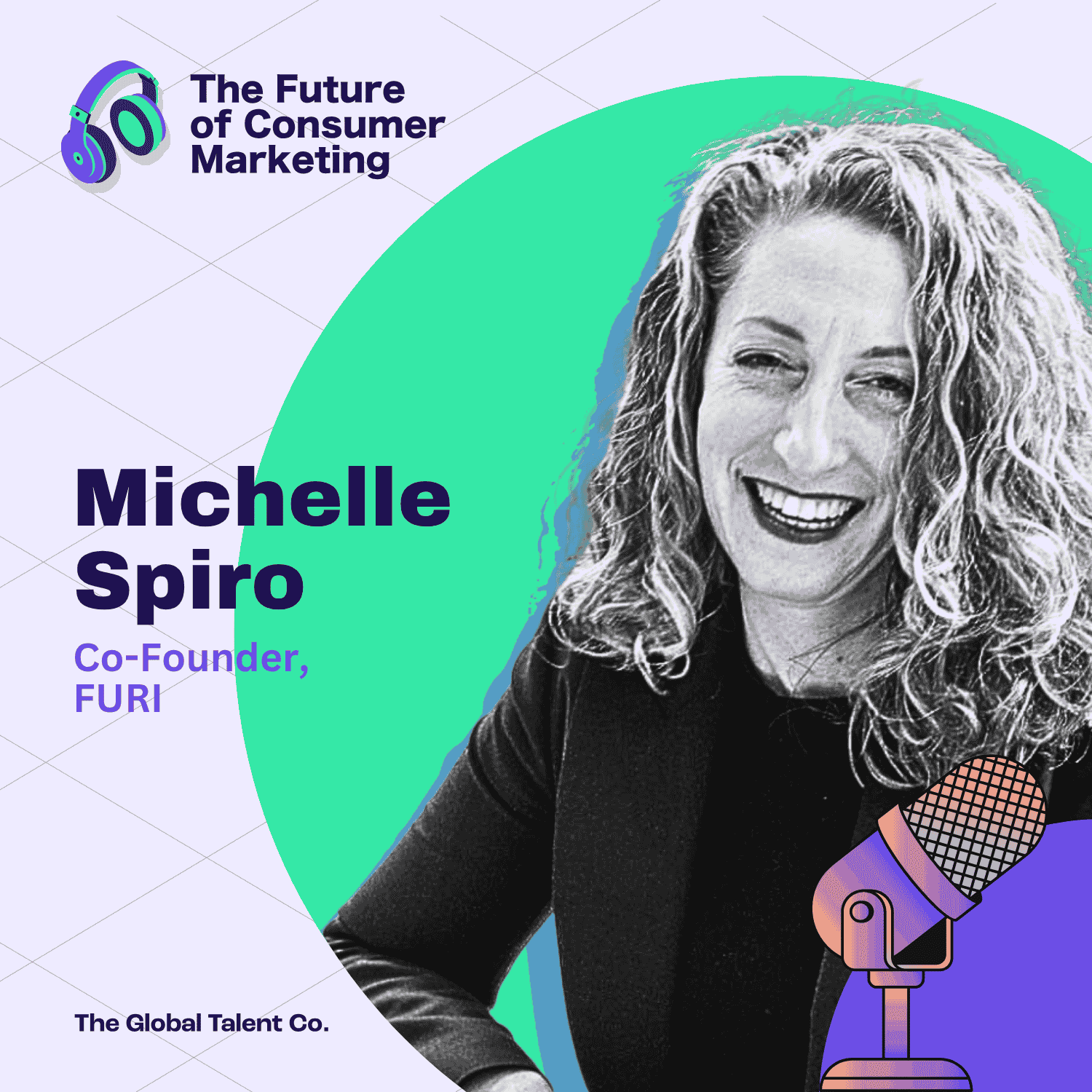
Michelle Spiro, co-founder of Fury Sport. Background: 30-year fashion executive (Macy’s; Donna Karan, Ralph Lauren, Calvin Klein). After Superstorm Sandy and a move to Paris, she shifted from corporate to entrepreneurship, later partnering with Eric Mathalier.
Key claims
Tennis growth is driven largely by diverse communities (2019–2024: +33% overall; Latino +105%, Black/African American +63%). Fury earns credibility via grassroots word-of-mouth, credible press (Financial Times/New York Times), and reviewers—not paid ads yet. Authenticity requires “technology with a reason,” not trend-chasing.
Notable examples
Black “city tennis” balls (painted black when Eric’s team lacked courts). Free Instagram string/grip tests; grips resonated. Racket design: New York skyline in the “V.” Activewear uses weave-based wicking that strengthens with washing. Donations/equipment to Girls Rule the Court (USTA) and Kings County Tennis League (Marcy Projects).
Written by AI. May contain mistakes. Listen to the episode to check what was said.
Chapters
Tap a time to open that second in VOMichelle's Background and Transition
0:45 to 2:52
Michelle shares her journey from fashion executive to entrepreneur.
“And then I was beginning to start to think, what's my next chapter?”
The Importance of Evolving
2:52 to 4:09
Discussion on the necessity of personal and professional evolution.
“Now, and I must say, Michelle, I totally empathize with that because I'm originally from Venezuela and I've been here in Argentina for seven years already.”
Starting FURI and Initial Challenges
4:09 to 6:15
Michelle recounts the founding of Fury and the challenges faced.
“And basically, I was consulting when I was in Paris, and I really enjoy consulting, and I love doing it as an additional piece of whatever I'm involved in.”
Cultural Influences on Fashion
6:15 to 7:41
Exploration of how cultural shifts influence fashion brands.
“I had a consulting firm with a with a actually a former colleague from Calvin.”
Redefining Tennis and Inclusivity
7:41 to 12:10
Discussion on making tennis more inclusive and relatable.
“And what it allowed is for this new inclusive exclusivity to be created.”
Quality and Accessibility in Design
12:10 to 14:00
Insights on maintaining quality while being relatable in design.
“bringing tennis and other racket sports, ultimately, as we grow out of the country club and into the city and everything we make has flexibility because we're not building for a club culture.”
Exploring the Value of Fury's Tennis Products
14:00 to 15:01
Discover how Fury positions its tennis products as a unique value proposition.
“They range from 50 to 100 dollars more than we charge.”
The Story Behind the Black Tennis Balls
15:01 to 16:02
Learn about the symbolism and story behind Fury's unique black tennis balls.
“And so really they are our symbol for city tennis.”
The Journey of Building Fury
16:02 to 18:56
Hear the founders' journey from concept to creating a new tennis brand.
“Adding that lore around the black tennis ball, it just gives more substance to the brand and more things that people can identify with.”
Innovative Technology in Tennis Apparel
18:56 to 20:04
Explore the unique technology behind Fury's upcoming active clothing.
“We are not making something just to make it.”
Show all 25 chapters
Authenticity in Branding and Marketing
20:04 to 21:13
Understand why authenticity is crucial for modern brands in a savvy consumer world.
“although it is becoming similar to the word curated, so I try not to use words that are becoming so common.”
Marketing Strategies for Grassroots Engagement
21:13 to 24:29
Learn about Fury's grassroots marketing strategies and community engagement efforts.
“The first question everyone asks us is which pro are you?”
Fury's Vision for Impact and Legacy
24:29 to 26:37
Discover how Fury aims to make a social impact through its business model.
“But with sophistication also comes a smaller reach.”
Building a Community Around the Brand
26:37 to 28:00
Explore how Fury plans to develop a strong community and its future marketing initiatives.
“So we've actually done a rebrand that we've not executed yet.”
Establishing Credibility Before Growth
28:00 to 29:26
Learn how establishing credibility can drive customer acquisition and brand expansion.
“What we now need to do is grow our new customers.”
Modernizing Tennis: Design and Branding
29:26 to 31:06
Discover how FURI is modernizing tennis through innovative design and branding strategies.
“But if I ever see a Fury Sport racket like around here in Argentina, there are a lot of tennis pro shops.”
Streetwear and the Tennis Experience
31:06 to 33:12
Explore the connection between streetwear and the tennis spectator experience.
“So if you're watching Roland Garros or Wimbledon or U.S.”
Creating Inclusive Sportswear
33:12 to 35:12
Learn about FURI's approach to designing inclusive sportswear for diverse body types.
“But I have a dear friend who I did it with.”
Marketing Strategies for Authentic Engagement
35:12 to 37:18
Understand the importance of storytelling and authentic marketing in building a brand.
“What if you do if you just want to be part of the fury community, but you don't play a sport?”
The Journey from Corporate to Entrepreneurship
37:18 to 37:54
Hear about the transition from corporate life to building a brand and the rewards it brings.
“especially for the price that we're charging.”
The Shift Towards Sustainable Business Practices
37:54 to 42:00
Examine the changing landscape of business valuations and the focus on profitability over growth.
“And it's very chic and comfortable, which is what we wanted to do.”
The Shift to Sustainable Business Practices
42:00 to 43:56
Learn about the importance of profitability over rapid growth in business.
“And that'll get you a sale, but it won't continue a sale.”
The Decline of Retail Creativity
43:56 to 46:46
Understand the changing landscape of retail and the loss of brand uniqueness.
“I just can't wait till we raise money so I can do what I do best.”
Reconnecting With Consumers Post-COVID
46:46 to 49:06
Explore how brands can engage with younger generations in a post-pandemic world.
“There's a 1976 60 Minutes that anyone in the retail business or vendor business should really Google.”
Building Community Through Brand Storytelling
49:06 to 51:24
Discover the role of storytelling in creating a sense of community for brands.
“But we need to bring them into our brand first.”
Transcript
Automatic transcript. May contain errors.0:00My name is Andres Figueira and I'm going to be your host for the day. And with me right here is Michelle Spiro, the co-founder of Fury Sport, a direct-to-consumer sports lifestyle brand that develops high-quality gear that lets you play harder and play longer. So, Michelle, it really is an honor to have you come on the show with us. And just so that we can start giving the audience a bit more context as to who you are, what Fury Sports actually is, would you be able to give us a bit of your background and how everything started? Oh, of course. I am actually a recovering fashion executive who worked in the fashion industry for 30 years.
0:38And I worked for a big brand, started at Macy's, but worked for big brands like Donna Karan, Ralph Lauren, and Calvin Klein. And then I was beginning to start to think, what's my next chapter? As in corporate, you're running teams and it's super exciting and you're running big businesses. But I also was running really high operating profit margins and not really seeing, I didn't see the benefit of that. If I'm going to grow high profit margins for a company, I'd like to have more of a piece of it. So in thinking about that, Superstorm Sandy hit the New York City area in 2012. And my building was surrounded by six feet of water.
1:21And I was on the roof, because that's all we could do to see what was going on. And the National Guard was rescuing people off my street. And I got a text that the company that owned Calvin Klein underwear, which I ran men's underwear, was being sold to PBH. and I thought this is mother nature's way of saying it's time to move on it's time to make your life extraordinary it's time to take a risk and I had fallen in love with Paris years before I'd gone back every year for my birthday I built an intentional community there and I said why not what do you got to lose so I my last day was February April 7th of 2013 and I was in an apartment in Paris by May 15th, 2013.
2:08And I did that for three years, which was super exciting. And if I gave advice to anyone and people have asked me, you know, if I could, if I could tell someone one thing that they should experience in their life, that is definitely living abroad. It changes you in a way that you didn't even know that you could be changed. It opens your eyes to things you didn't know you weren't seeing. And it gives you a whole new perspective on how you look at everything, including business and including communicating with consumers and people. And what are you doing as a business, especially in marketing? You're building a community.
2:44And so you need to do that intentionally in business, but doing it intentionally, personally really just enhances that. Of course. Now, and I must say, Michelle, I totally empathize with that because I'm originally from Venezuela and I've been here in Argentina for seven years already. But me and my family, when I was four years old, We moved and I've lived in England, Ecuador. I studied a while in the States. So I've been around. And I must say that living abroad really does open your mind. And it gives you a different perspective on everything else. Just because you've known so many different people that it's like you're able to place yourself in a lot of people's shoes.
3:21And experience different cultures because things are different. Exactly. I agree. It's nice to get best practices from different cultures because it'll only enhance your existence. And I have a core belief about getting older, and that is that we don't need to ever get older. We need to continue to evolve. And if you continue evolving, then you will never get older. And I am fortunate enough in my life to have really amazing women who are in their 80s who are continuing to evolve and doing cool things. And I aspire to be them. And I think it's always important to always have a North Star, no matter where you are in your life or in your career or where you're going, because once you stop evolving, you stop living.
4:08So that transitions well into me starting Fury with my co-founder, Eric Mathalier. And basically, I was consulting when I was in Paris, and I really enjoy consulting, and I love doing it as an additional piece of whatever I'm involved in. But I really like building. And when you're consulting, you're in and out, and you don't know whether they're following what you're building, and you don't get to reap the benefits of the results of the strategies that you're putting together. And I had a dear friend at the time who drew me a diagram because coming from corporate, I needed structure. And the diagram was an ellipse like your eye.
4:49And if you're starting here, he allowed me, he advised me to networking is so incredibly important and such an incredible skill to really master and to enjoy. A lot of people dread networking and don't know the right way to do it. So he said, cast your net out into two roads. And one of the roads was being a consultant or working for a corporation. And if I did that, then living abroad was perfectly fine. But if the other was starting a business, which I would have been doing for the first time, living in a foreign country for the first time and starting a business at the first time is too many first times.
5:30So I kind of tested my net and had tons of meetings and I split up my ellipse in three month time periods. So once I got to the middle of casting my net wide, I then started to narrow the net. And then by the end of six months, I had to pick which road I was going on. And the road I picked was to start my own business. And that's when I moved back to the States. I'm listening to your story and I'm loving it because it's such a nice progression of how you got like the main trigger was this natural catastrophe that occurred in the States of Perkins Sandy. And then it all matched up with the email you received and how your life took a few turns.
6:12But just continue because I'm just enjoying the story. Oh, thank you. Thank you. So I met Eric in 2014. I had a consulting firm with a with a actually a former colleague from Calvin. and we were working with different brands and I knew that I wanted to start my own thing. And I met Eric and I knew we became friends and I knew his story. And his story is that he's first generation Haitian American, born and raised in Brooklyn, found tennis at 10, got his first plane ride at 14 to a tournament in Bermuda and ultimately got a division one scholarship to college. And that coupled with, like I said, when you move abroad or even when you leave corporate, when I was in corporate, I had tunnel vision.
6:59I knew my business. I knew my category. I knew what was going on in the fashion industry for the most part from the luxury lens, but I didn't know what was going on from the cultural lens. And once I left and moved to Paris, which was not the haven of this, but I at least have my eyes open to see it, I became obsessed with streetwear. And the reason why I became obsessed with streetwear is because it changed the currency of fashion. In the luxury market, you need to have money. That is your only point of entry that you need. It's the only barrier and it's the only ticket. If you have money, you can go into the luxury market, no problem.
7:39But if you are a streetwear consumer, the way that you get into that market and into that community is by being in the know. And that is a huge shift in currency. And what it allowed is for this new inclusive exclusivity to be created. And there's something about that was really resonated with me. And I became very, I started to study Supreme and North Face and Carhartt and Vans. And so I really started to look at all of those cultures and see what are these brands doing that make them so important? And what they were doing is that they were all authentically a part of the communities that they were representing in their brands.
8:31Supreme and Palace and Vans, they're all skateboarding people. I'm a skateboarder and those are like my favorite brands. Now, I am totally empathizing with what you're saying right now because their logos and everything they represent for, they truly are ingrained in their specific cultures and in their niche cultures. And it's a given that they'll be there because they've always been there. Exactly. They're not jumping on a trend. They're not doing something because it's popular. This is truly who they are. And the other thing I love about it is that I have a Supreme sweatshirt that I bought, not resale.
9:07And when I wear that sweatshirt, because it's a Comme des Garcons collab. So for me, from being in the fashion, the Comme des Garcons collab with Supreme, it wasn't me faking it. It's something that I'm really interested in. So basically what Supreme has done is it's taken clothing and invited other people, even if they don't skateboard, into their community. And when I wear that sweatshirt, I'll get an 18-year-old who'll give me a head nod. I'm a middle-aged white woman and it doesn't matter It doesn't matter what color you are. It doesn't matter how much money you make. It doesn't matter where you come from All that matters is that you're in the know And that if you have this on you're in the know and I just Loved it and then I thought about eric And tennis and tennis has always been married to fashion since its start Tennis sweater tennis shoe tennis bracelet tennis skirt tennis dress There actually hasn't been a sport that has been more married to fashion than tennis.
10:09But for some reason, they never brought it out of the country club. It's always been white, affluent, country club exclusive. Here, Eric has this amazing tennis story that has nothing to do with any of those things. And how do we build a brand around that? And if we want to have a streetwear part of the brand, and we want to do it right, then we really need to make equipment because we want to be credibly part of the culture and part of the sport and not just a trend. And as we see, tennis has really expanded since COVID. So many people are jumping onto the bandwagon and trending with the clothing.
10:52They're all keeping it very country club, very preppy, very one sort of the side of the track. When in actuality, if you look at the growth in racket sports, tennis in particular, but we are looking at all racket sports. If you look at tennis in particular, in the United States, participation grew by 6 million players from 2019 to 24, and it still continues to grow. That's really impressive, and it's 33%. But if you break it down, it's mind-blowing. The percentage increase is coming pretty much solely from diverse communities. So in that same time period, the amount of Latino Hispanics that started playing tennis increased 105%.
11:41Black and African Americans, 63%. And Asian and Pacific Islanders, 49%. 99%. That means that what's driving that 33 % increase are diverse communities, because if you take them all out, the other, so basically the white community, increased by 17%. So who's talking to those people? And who understands their story better than someone who lived it? And so we are bringing tennis and other racket sports, ultimately, as we grow out of the country club and into the city and everything we make has flexibility because we're not building for a club culture. For example, our bags are flexible because when you live in a city, you go from work to your workout or to playing, whatever you do, to the bar or to dinner or to brunch.
12:37You don't go home between each thing and you don't have a car to throw your bag in from place to place. so we knew when we were making our bags that they had to be flexible, that you could use them for work even if you weren't playing tennis. You could stick your racket in there if you were going to play tennis that day. Eric was a Prince racket player when he was growing up, and he had a Prince bag, and he said he wouldn't be caught dead with that bag in his neighborhood. And so we really needed to make them cool. We needed to make our clothes be able to be worn in any environment. And so we did do a streetwear capsule and we did it in a high quality way because we don't love the word accessible.
13:24And this really targets how we talk about and voice the message of the brand. Accessible gives a connotation that certain people from certain places can't afford certain things and don't deserve the same quality. Because normally when you're making something accessible, you're taking something away from the quality. So we have an intention around using the word relatable and the word approachable. And we give a high value for the quality that we are producing. For example, the rackets that are in our category of quality are all at least 50 to 100. They range from 50 to 100 dollars more than we charge.
14:06So you're not getting less quality. you're getting a value a better value quality relationship a brand that you can identify with better and feels more genuine to you and that goes for everybody and then we wanted to use the clothing to allow people who don't play tennis in because the fan base is huge no it really is and tennis i feel racket sports in general because it's the way a great way how you framed it like specifically in Venezuela per se, paddle has become... That's what we're actually prototyping a paddle racket, a paddle right now. And what I'm seeing is that a lot of people learn how to play paddle.
14:45They love it because it's easier. It hits, it's less impact on the knees and stuff, but they're hopping on over to tennis when they get too good at paddle because it's like a new challenge they can tackle. But like I'm hearing you speak about Fury and I checked out Fury's website before the podcast and I must say that I loved it. the main thing that caught my eye it wasn't even the rackets or the bags it was just the fact that you have these black tennis balls that look so different from every other tennis ball i've seen and i'm like okay if i see a black tennis ball then that would be fury but that's cool let me tell you about the black tennis balls so the black tennis balls are not for playing they are they are symbolic and what they are symbolic for is the fact that when eric was in high school the tennis This team did not have its own tennis courts and they had to paint lines on the asphalt and the yellow balls turned black.
15:38And so really they are our symbol for city tennis. OK, that makes it even better. So that that is what's behind the black tennis balls. And they're just they're great gifts. Chanel makes a black tennis ball. Bulgari has got made a black tennis ball, but they're just all for there's no story and authenticity around them. Whereas we really do have a story behind it. Adding that lore around the black tennis ball, it just gives more substance to the brand and more things that people can identify with. So I believe that is just amazing, Michelle. Okay, I didn't want to cut your story, so please continue.
16:14No, thank you. No, we met in 2014. And we, in 2015, the end of the year, I was talking to some kids about tennis rackets and then and streetwear and it just came together in my head and Eric had his own media company and was actually doing an event with Airbnb for Art Basel in Miami. and I call him and I'm like, I've got this random idea. I had to call you. And so when he got back, we just started mulling it over for probably a year. Then we went to a, so Eric grew up playing at Prospect Park Tennis in Brooklyn. So for anyone from Brooklyn, shout out to Prospect Park Tennis. And one of his, he had a reunion the year before of all the people who played there growing up.
17:01And one of the people that he reconnected with actually had become a certified master racket technician and at the time had two pro shops. So we went to him and said, what do you think? He said, you're out of your mind. And to be honest with you, had we known what we'd have to go through to get here, we were out of our minds. It's actually good to be, sometimes it's good to be ignorant. And exactly. So he said, why don't you guys start with strings and grips. See if there's even an appetite for a new tennis brand. So he introduced us to a vendor of his. We bought$6 ,000 of strings and grips and we gave them out for free on Instagram.
17:42And we asked people, what do you like? They actually didn't love the strings and we didn't go forward with that vendor for the strings, but they did like the grips. So at that point we did go forward with grips, over grips from that vendor. But the vendor was from Japan. And he knew we wanted to make a racket. And he said, we can white label a racket for you. And I was like, I just didn't give up my 30-year career to start over to have someone white label something for me. If we're doing this, Eric and I were like, we're doing this. We're creating a new technology. We're creating something new in the market.
18:15Otherwise, why bother? So this guy took, we just got lucky. And he said, my boss knows someone in Japan that I should introduce, that hopefully I can introduce you to. and this was someone who worked for Wilson and Head for 30 years in Japan and he is our equipment guru and he designed our rackets and he got us all our factories and he manages all our quality control and testing along with Eric and he's a huge part of who we are today and without him I'm not sure we would be able to have the quality of product that we have in that we were we got runner up for new racket of the year in 2022 by the foremost global tennis racket reviewer in the world the tennis nerd and it was up against the yonix e-zone which yonix is one of the four legacy brands in tennis so we really have created something that the market needed and that's always what we think about when we do something.
19:18We are not making something just to make it. It's why it's taking us so long to launch our active clothing, like technology clothing that you can play in, which we'll be doing next year, is because everyone has wicking properties. And so if we weren't going to do something new, we weren't going to do it. And we actually found a technology where the technology is in the weave. It gets actually stronger as you wash it and it brings the moisture to the top so it evaporates versus moving it from side to side like regular wicking does. Wicking is also a finish, so it gets weaker as you wash it. So we're very intentional.
19:53It may take us a little longer, but we have to be doing it. Everything has to have a reason. Otherwise, what marketing story are we going to put behind it? Because being genuine and being authentic, although it is becoming similar to the word curated, so I try not to use words that are becoming so common. But authenticity is the reason why streetwear brands succeed. And also with social media and with the increased education that consumers can get on products, it's that much more important to be truthful and honest and bring something that's necessary and not just more stuff, because the last thing we all need is more stuff.
20:34I totally agree with that, Michelle. And as I hear you speak about the brand, I can totally understand where your background in fashion has come in so handy and helpful. because as you're describing the wicking properties of the clothing and how you want it to be different because you know how it works and then you don't want it to just be the same. I'm like, wow, this lady really does know her stuff and that way you can provide an excellent product that doesn't add on up to the whole fast fashion trend that's going on nowadays because people can't find clothing that is different and makes you feel authentic, but it's fast fashion so it gets damaged easily and it's not that functional and me as a person like what I'm looking for right now is exactly white sweatshirt that I can use to play sports that'll last me four years that I can even give to my little brother later because it doesn't get old it gets better with time with what I heard you say so that is crazy and it sounds super cool so congratulations for that and okay Michelle and in terms of theory per se in and in at the present moment what marketing channels are working for you guys because I imagine you are trying to be more in contact with a more youthful demographic and more of like the upcoming tennis players and because I feel like the more pros are already sponsored by these other legacy brands and everything like that.
21:54The first question everyone asks us is which pro are you? And I'm like okay Wilson got Roger Federer at 12. Babalock got Rafa at 12. You don't just get them unless you want to give them millions of dollars to change and I will give you a big secret about the rackets that the pros use. They are all custom. So any tennis players out there who think that they are playing with the Roger Federer racket or the same racket as Joka or the same racket as Rafa, you're not. They changed it for commercial people. And then they paint them like the rackets that you can buy. Wow. Okay. Because racket customization is, of course, for the pros, an automatic.
22:40They need to perform at the very best. And they also use much heavier rackets than any regular player could use. They really have it completely tailored. So it's the paint job that you're singing. It's not the racket that you're buying. Wow. I did not know that at all. I'm just learning so much about tennis that it's blowing my mind. So that is my secret to whoever's listening today. Okay. Okay. And in terms of exactly how you're using your marketing channels to find new prospects or to even get people to start using your product even more? What's working for you guys? Believe it or not, really grassroots and word of mouth and reviewers.
23:17What we're finding is that when we are in the Financial Times, which we were, or in the New York Times, those like blew our website up. So truly credible people talking about is what brings us the most audience. it's not so much fluffy little advertising or showing people playing tennis when we collaborate with other brands and events and non-profits that's another way that people seem to really reacting when we get the most engagement on social media believe it or not because we are a small company and are starting a raise of capital to intensify primarily our marketing we've not done any paid marketing to get to where we are and i will say that that is something that i always thought was a mistake but with things changing so much and algorithms changing so much it's almost like a heroin paid media and i'm glad that we haven't become addicted to that and we can use it with strategically with ai thinking more clearly about targeting because it's all become so much more sophisticated.
24:30But with sophistication also comes a smaller reach. So being able to put that into our strategy for going forward, and also creating a part of our business that is just about content. Because we want to be building a community and be part of a community. And yes, am I here to do commerce? Am I here to make money? Am I here to do a profitable business that I can make money for my investors, but also really important to me, especially at this point in my life and Eric's, is to have an impact. And so the bigger we get, the more we're going to be able to give back to helping to restore city courts, for creating youth programs, for supporting youth programs.
25:14We've already done that with equipment just because we don't have the resources financially to start our own, and nor do we need to reinvent a wheel that's working well. So we already give rackets to Girls Rule the Court for the USTA and for Kings County Tennis League, which is a program that was started in the Marcy Projects where Jay-Z is from. And a guy put up a sign saying, if you want to play tennis, I'll give you free tennis lessons. And like three kids showed up. And today it's in five different projects with over 400 kids. and so these are the things that we want to be supporting we want to help refurbish we want to do that and we're too small to do that now but it is absolutely a huge part of our strategy because this is where we come from this is eric's story i was born in queens so i true too am a born new yorker and it's not just new york but we definitely have our core here and working in youth and city environments is what we are here for too.
26:15This is my legacy. I'm not 23 years old trying to make my first, sell my company. One day, I hope that it does, but it's also at this point in my career, in my life, this is my legacy. And I want this business and this company and this community to mean something. And so that goes behind everything we do and is a big part of how we market. So we've actually done a rebrand that we've not executed yet. So watch in the next few months, because you're going to see a total difference. I appreciate your compliments on the website, but it's going to blow your mind when we're done with it. And so we are really plugging into content that our customer and our community will find interesting.
26:58And it may not make them buy anything from us at that moment. But just being part of our community and spreading the word and being a voice and encouraging more people to care about communities and grow things authentically. That's really what we're about. And I come from corporate, so I know how to build a business. I can grow a business by$50 million in four years, been there, done that. And I know the right way to do that. I know the right teams to build it. I know how to make a team, a family, to ensure that happens so we're all enjoying the ride. And I think that when that bleeds into your marketing, the voice of a company and the way in which you communicate with your audience has to match with your content.
27:43And when you see that disconnect, that's when people get confused about a brand and don't understand where you're coming from. And so we want to make everybody who uses our product an ambassador for what we do because they believe in what we're doing and want to spread the word. And we've been fortunate enough and blessed enough to have a returning customer rate of 45%. What we now need to do is grow our new customers. And that's when paid marketing is going to come in. But we needed to establish our credibility first. And we've reached that, which is now why we're raising money, is so that we can take that credibility and get it to more audiences and also look to distribute in other countries.
28:28Because of our articles and our reviews, we've sold in 15 countries without a distributor. And that means the customer has to pay for shipping, pay for whatever taxes their country charges, because we're not distributed there yet. Okay. And that means they believe in your mission, like they're willing to pay even more. Exactly. And that's really important to us. And so we want to start highlighting people who are doing similar things, people with similar stories to Eric, people with similar stories to me, becoming thought leaders that help brands become more authentic, that think about diversity communities, that think about how to build an audience in an authentic way and really believe in what they're doing.
29:12and I come from corporate. Bottom line is ingrained in me. I ran P &Ls for the biggest companies in the world. That is incredibly important, but there's a way to do that with authenticity and emotional intelligence. And I love how you've already walked this path before, but now you're trying to do it in a much more, I want to just say, in a much more respectful way to the customer and the consumers and just making sure that you bring them along for the ride as well with you because that is how you create more what's it called people they start to believe in the brand and they won't leave it and that is why you're getting such a nice return of consumers for what they buy and that is so cool michelle i really am impressed with the whole story it is unbelievable how it started and to where it's gotten and i can't wait to check out the new website once it's done and if i get march and i think it's okay okay it's closing up the year for Q1, we should be expecting it.
30:11Exactly. But if I ever see a Fury Sport racket like around here in Argentina, there are a lot of tennis pro shops. I'm just going to be so glad. There actually are some. And the way you can recognize it is we're very intentional about how we come off in the market. And so in the V of the racket is the New York skyline with all of the numbers, like the weight, All the statistics on the racket are in the New York skyline. And it is a clean black racket with just color coming from the name of the racket and the brand. So we're trying to modernize tennis. And preppy is fine, but we're trying to take that and modernize it.
Read the full transcript
30:58And if you look at our streetwear capsule that we have online now, that was really designed as a kit. So what tennis players wear during tournaments is a kit. So if you're watching Roland Garros or Wimbledon or U.S. Open or the Australian Open or other tournaments, you might wonder as the player keeps advancing why they keep wearing the same thing. It's their kit from their sponsor. And I really thought, what about the spectators? Don't we deserve a kit? Don't we deserve a uniform to look chic and cool at these tennis tournaments? and I only know the numeric statistics around the U.S. Open, but the U.S.
31:39Open is the most attended annual sporting event in the world. It did over a half a billion dollars in the three weeks, and I don't know the number for this past year, but they surpassed it. But they made 12 million dollars from the Honeydeuce drink alone during those three weeks. So the fan base for tennis is just incredible and growing. And what I'm also finding is professional athletes in other sports are also beginning to play tennis. And so we really want to get into their hands too. Yes, eventually we'll get a professional player. We'll find the perfect junior that can grow up with us. And that's super important.
32:26But we're really we look at on running, we very much admire them. And we want to be the on running of tennis and ultimately become the next generation sports brand to go into other sports as well, and bring this same genuine authenticity and community to those sports because sports brings people together and tennis right now is having its It's a basketball moment. So what happened in basketball in the 90s is it became relevant from a culture and a fashion standpoint. That has never ended since then. And that is what is happening to tennis right now. I actually just came back, what, the weekend before last.
33:05I went to my first Formula One in Austin. It was so great. Oh, my goodness. I want to go to one of those. Oh, my gosh. It's so great. But I have a dear friend who I did it with. And she did all the work. and she used TikTok to figure out the way to enjoy it the most. So we knew to have fans. We knew to have clear bags. We knew where the better bathrooms were. Like, incredible. So if you do go, whichever one you go to, look up TikTok videos on people who've been to the event before because you'll have a much better time. We had an umbrella for the sun because it was like 95 degrees. But I will tell you what I noticed that proves that this tennis aesthetic is going nowhere.
33:46And that is that probably 10 to 15 percent of the women that were at the Formula One race were wearing tennis outfits, either a tennis skirt or a tennis dress. Just because of the sporty daytime look, just to be there. And because it's comfortable, it's cool. You're at a sporting event. But this summer, we did a pop-up with SoulCycle, which is a spinning exercise community pretty big in America. I know it's in other countries, but I don't know how many other. And they think that our performance really, you can wear a tennis skirt on a bike. And you can wear a tennis dress on a bike. And what we did was we actually sold our Apre sportwear, which is this kit.
34:33because if you think about it, the only sport that has a true apres is ski. And so when I say apres ski, I don't ski. I know it's a bit of big sweater and it's in front of a fire and I've got really awesome boots on and I'm having a hot toddy and it's a way for me to celebrate the sport of skiing without actually skiing, which goes back to where we started with streetwear, which is the inclusive exclusivity. So apres allows people, just like apparel, to be part of a culture that they might not physically be a part of and be welcome. And so the streetwear that we're making also creates this apres.
35:14What do you do after? What do you do if you're a fan? What if you do if you just want to be part of the fury community, but you don't play a sport? And I, because I lived in Paris, I have a best friend who designed for Kenzo in the 90s, Christian Lacroix, and Paco Rabanne, and he designs all of our clothing. And the prints on our clothing were designed by a man, our designer's name is Luis Santos, and he brought in a graphic designer to do the prints named Yannick Gregor. And Yannick does prints, graphic designs for scarves for Hermes, Dior, and Lacroix. And what Luis did was he pivoted to uniforms.
35:59And he's done the uniforms for Clarins Cosmetics. He won a contest and did the uniforms for the salespeople for one season at Hermes. he's done for Montblanc he most recently finished the collaboration design between Air France and Christian Lacroix and so we, what I, the reason why, not just because he's my friend because that's not a business decision the reason why I felt he was perfect is because if you have to design uniforms for people representing a brand, then you really have to understand that brand's DNA and we were creating ours and I wanted someone who knew how to tap into that. But what we got as a bonus, which we didn't expect, is because he's a uniform designer, the way that he designs and the way that his designs fit, fit many different body types.
36:51Because you're not designing for a demo, you're designing for people of all different shapes and sizes who are working for a brand. So the fit behind our brand is so thoughtful and so enhancing to all different body types, which is also critical for diverse communities. And so there's that bonus on top of it. And we did make all of our streetwear in Europe. So it's incredibly high quality, especially for the price that we're charging. Because right now we just, we want to get on people. And that's what I feel. Like I'm hearing you talk and you knew the best quality is from Europe. You have these networking connections that people you've met that you know come from very educated backgrounds in the fashion world.
37:36And I also saw the uniforms, like the different clothing you have on the website, and I did feel that the fit was different. But now that you frame it that way, I understand it's a more standard fit for everybody rather than a more tailored fit for a specific demographic that you want to serve. Exactly. And it's very chic and comfortable, which is what we wanted to do. And if anyone looks at it, you'll see ribbing on the ends of the sleeves. One of the collection, one of part of the drop has a blue, black and terracotta ribbing. And those actually represent the four Grand Slams. The two blues are for the U.S.
38:19Open and the Australian Open. The white is for Wimbledon and the terracotta is for the clay courts at the French Open or Roland Garros. Oh, my God. I love all the little details. It's all in the little details. It is all in the little details. So as far as marketing goes right now, we're teaming up with someone who has an incredible background from Widening Kennedy and Spring Hill, which was LeBron's advertising agency, who really has street cred. and that's what we want to bring continue to bring to the brand we want to use elevated journalistic photo photography not perfect gritty like the city our colors are our main colors are black and gray originally they were black and white but white is too clean for city we are grit we scrap but we also are high quality and that has to come through in everything we do so including our messaging, which is why content and more sophisticated, intense content is going to be what's so important.
39:25And also having our ambassadors. Believe it or not, the majority of our sales come from coaches themselves. Okay. And it's because they tell the students about the brand and then it's something that just it's word of mouth and it creates this organic flow of buying? Or is it mainly the coaches that are buying for themselves? No, it's the coaches selling to their students and recommending our product. And so it's really, we're still in that if stage. Clearly to scale, we need to move past that. And that's why we're raising money to become more prominent on social media, to be messaging more, to get Eric and I out there with the story of the brand, because storytelling is the key to everything we do.
40:10As you hear, we have a detail around every single thing. We have a thought that goes into everything we do. And if we don't tell that story, then that's wasted. And the consumer doesn't get to engage in it with us. It's true. And it even makes, I don't even have anything from Fury Sports, but I'm an ambassador for the brand now. And listening to the story, it makes it even more fun and more entertaining to be a part of it. Because if somebody asks, oh, what about that shirt? And you're like, oh, yeah, you like the colors? This means this. and you give them that little bit of lore. And it's just that inclusive exclusivity that you mentioned.
40:44It's so cool. It really is amazing. I really feel how, even though you have this very ambitious project, it's luck that you've had, because I call luck, I believe it's when preparation meets opportunity and you are very prepared to tackle this because you know exactly what you're doing. So it's really cool. It's quite a journey and switching from corporate to being a founder at certain points in your life life is definitely a risk and it's like jumping off the building. But I will tell you that it is the hardest and most rewarding thing I've ever done. And I don't regret it for a second. As I have friends now that are planning their retirement and looking to retire, I'm like, that's just not me.
41:25I want to keep building. I want to keep evolving. I want to, I don't want to ever stop. And I'm fortunate enough to have guides in my life that do that. But coming back to the marketing piece of it, I think brands really need to start having a point of view again. And having a point of view is really important. And if you want to change your point of view at some point, then communicate that. Consumers get smarter and smarter every day. They have so much at their fingertips that they can find out about you and your brand. And so trying to deceive them or being wishy-washy about things or not being genuine, that shines through.
42:01And that'll get you a sale, but it won't continue a sale. The other thing that I see happening is the pendulum is swinging back to healthy business and not being judged on, oh, what's your valuation and how much are you raising? Because there was a period right before COVID that companies were valued on how much they were raising. Like it meant you were successful if you were raising this much money versus how profitable you were. And coming from corporate, it was really hard for me to understand and I just couldn't grasp it. And now I'm feeling like the climate is coming back to you got to be healthy.
42:37You got to be profitable. It's not about growing at all costs, because we're watching what happened to those companies that grew at all costs, and they're disappearing. And so the longevity is going to come from having a point of view, having a strategy, driving toward profitability, and really being intent on how you're marketing and spending that money and talking to your customers and not just hoping and praying for a viral moment to make for you to make it. Because one of the things that a lot of the things that people who have not run businesses for long times don't think about is the word anniversary.
43:15So if you have a viral moment and you do incredible, if there's no way to anniversary that, then that growth is not sustainable. So you want to be creating moments that are just like building a house. You have to start with the foundation, and then you get to do your first floor, and then you get to do your second floor. And then eventually you get to pick the colors of what you're going to paint your shutters and your doors. But you don't just get to start with painting your shutters and doors, because then there's only air behind that. That's why we see a lot of companies that are not making it that where like everyone was talking about them and it was crazy and now more sophisticated business people are coming in and cleaning it up but that also ends their authenticity and their genuineness and the way that people associate and engage with them and one of the things that are unique about eric and i is that eric is a serial entrepreneur i am not so we have that scrappiness and that serial entrepreneur and of course his him being an athlete and then you have me who's an operator and a founder because most founders are not operators.
44:23I just can't wait till we raise money so I can do what I do best. It's a lot of times when founders raise money, they need to find the skilled people to be able to help them navigate that. I'm waiting to be able to navigate that because that's what I do. Yeah, you've been working in things that you're not that comfortable in at the beginning and you can't wait to do what you know best now. that's also part of evolution if you don't try new things and you don't do things that you're scared about and you always stay in your comfort zone that would lead to me having regrets and i don't want to have any regrets and the changes that i see in what's going on with brands right now is number and stores and retailers is number one a point of view in the days when store when department stores were huge and they were everybody's go-to they were a social meeting place.
45:15They had their own point of view. They had their fashion offices that were scouring the world so that they would look different. When I was at Donna Karan in the 90s, we would never sell the same look to Neiman Sachs and Lord & Taylor. They each got their exclusive things that they had their own point of view so everything didn't look the same. You go anywhere today and everything looks the same and the vendor is paying for that versus there being any creativity or risk taking. Stores used to be proud to be bringing new brands to their consumers. They're no longer doing that. When you go to try to sell your brand to a bigger store, even like a Dick's, they're going to tell you if people aren't already searching for your brand on our website, we can't take you.
46:07What about being the people that discover new brands? What about bringing that to the table? The same is true with department stores. They look at your social following. What if you're part of that? You used to be the ones that made brands what they were. And now you're just trying to live off of them. And I think that's why the industry is hitting a mode where it's getting a little boring. And people are looking for new, genuine, authentic brands that are engaging them. because the shopping experience is not engaging right now. It's why people are looking for activations. They're looking for events.
46:43They're not looking to just go in and see what's in the store. There's a 1976 60 Minutes that anyone in the retail business or vendor business should really Google. And it is about Bloomingdale's and how it was a social center and the way that their department called Saturday's Generation came to be is because they were the happening place to be on a Saturday evening. People would get dressed up. They were going there to see who's who. It was basically not a club in that you were drinking, but it was the place to be seen when you were in the fashion world or if you just loved fashion. That excitement needs to come back and it's the brands are going to have to bring it back because the retailers aren't.
47:31And so it's really interesting to watch this. The world works in cycles. So we're going to come back to a cycle where they do become important again. And it's going to be up to the brands to help encourage that. There used to be spaces called swing spaces. And those are places where stores would pick a theme. And they would go to different vendors and collect things around that theme to make a world and a message to their consumer. That's not happening anymore. No, and I think it's also because of so much online purchasing. It's not happening in the physical retail. And that used to be where you had to go to find something.
48:09And now it's just so easily found in the cell phone that you got to build a community and you got to make a feel them have a space within this little device that everybody has now, which is it's a different pivot to what used to be. And an invitation because Gen Z and Gen Alpha really want to be outside. They were really affected by COVID. Not that we all weren't. But socially, it was when they were growing and developing. And it really, it hit them hard in a way that they don't have the resources to bounce back the way adults did. And we're seeing the result now from 12 to 15 year olds who don't make eye contact when they speak.
48:45And that's because of the phones. And so what I see is this genuine, as they exit college and start adulting, they want to be out there. They have the freedom now to experience and live and be out there. And what we need to be using social media and on our online presence to do is to give them a place to get it again. But we need to bring them into our brand first. And that is through content and storytelling and making them feel like there's a place where they belong and that they identify with. I agree with that. And I think that is the best way that you can achieve that goal that you have and creating this community for Fury Sports and for other brands as well.
49:25But it's making these generations that haven't had that much of social experiences feel welcomed and prepared to have them because you're creating this space for them. Exactly. And a way for them to connect. They can connect on Fury, just like they connect on Supreme, just like I get my head nod. It's just cues. And I think that it's really important as we are fortunately in the beginning stage of a more advanced marketing strategy to be able to work that all into what we're doing and also partner with other brands that are complementary. So we're creating the worlds that the retailers are no longer creating for us.
50:08I love that. I love that. And Michelle, I'm just noticing that we have run over time for the episode. Oh, I'm so sorry. Okay. No, I did not even notice because I was so invested in everything you were telling me and showing me. So it's fine. But I did want to give you one chance before we finalize the episode to let anybody who's hearing know, Michelle, how they can look up for the equipment you guys have. If they want to buy the merch, if they want to sell the shirts you mentioned, if they want to buy the shirts you mentioned, how can they access all of that? Sure. So you can access everything on our website, which is furysport, F-U-R-I, sport.com.
50:47We also are on Instagram at furysport. We will ultimately be coming out with more contact. I am actually in the midst, and I should say it out loud so that it makes me continue it because one article is done of starting my own substack to be able to start communicating my experience, strength, and hope around business and around transitions and around fury. And so I will start to be doing that. And so be on the lookout for that. And I also have Michelle Sarah with No H Spiro is my public Instagram that I am just starting. And I haven't done anything about that. I thought it's now time. I think it's really important for brands that are growing to have people who are connected to them that want to be a part of society and be a part of helping people and be visible.
51:36Now, it's true. And that way you're able to be in the trenches and be scrappy with the public that you're catering to and just make sure that they know who you are. And that way they can empathize with your brand and with you even more. Yes. And if you are a tennis player in America, we do have a demo program. So you can always go on set line and for$30 you can try out a racket and also definitely look at our Fury wear because it's really special and it's very limited. So there's less than 60 pieces of each thing. So if you have it, it really is a collector piece. And so I encourage people to check it out.
52:11And please feel free to reach out to us on Instagram. Amazing. Amazing. I know for one, I'm certain that I'll become a follower of Fury Sports on Instagram shortly. Shortly. And I'll also make sure to let my... I have several friends who are coaching and they coach tennis specifically. They went and they had scholarships in college and everything. I just want to tell them about Fury Sports because... I would love that. And we have a program where they can make money from selling our rackets. So it's not just a gift. We definitely know that coaches need to also make money. So we give them a wholesale price that they can sell the rackets to their students.
52:46Okay. Now, that is so cool. I will certainly do, Michelle, because I didn't know about Fury Sports. But from all of our conversation, I know at least I fell in love with what you guys are representing. And to anybody who was hearing, I really do hope that you guys enjoyed all of the story that we heard and the different personalities we bring on and keep on tuning in just so that you can hear the different industries that we talk to as well. And without further ado, Michelle, thank you so much for hopping on. Thank you. Have a wonderful day. You too, Michelle. I hope you have a great rest of your Wednesday.
From the publisher
In this episode of The Future of Consumer Marketing, host Andres Figueira interviews Michelle Spiro, Co-Founder of FURI Sport. After 30 years building billion-dollar businesses at Calvin Klein, Ralph Lauren, and Donna Karan, Michelle left corporate to create a tennis brand that challenges the sport's country club exclusivity. FURI Sport is democratizing racket sports by centering their brand around authentic city tennis culture—inspired by co-founder Eric Mathalier's story of learning tennis on painted asphalt courts in Brooklyn. Through grassroots marketing, authentic storytelling, and refusal to compromise on product quality, FURI has achieved a 45% repeat customer rate and sold in 15 countries without paid marketing or traditional distribution.
Topics Discussed:- Transitioning from corporate fashion executive to startup founder
- Building authentic brand narratives rooted in founder stories
- Creating inclusive exclusivity through streetwear marketing principles
- Leveraging grassroots and word-of-mouth over paid advertising
- Developing proprietary product technology to earn market credibility
- Using coaches as primary distribution and ambassador network
- Designing content-first marketing strategies for Gen Z and Gen Alpha
- Structuring brand collaborations to create cultural worlds
- Balancing profitability with social impact mission