In short
Cheeky’s journey entering D2C oral-health categories (starting with 3D-printed night guards/retainers) with “zero experience,” then scaling via credibility, branding, and diversified acquisition beyond Meta/Google; later expanding into products like water floss and mouth tape, plus how they use AI for logistics/P&L and creative testing.
Guest
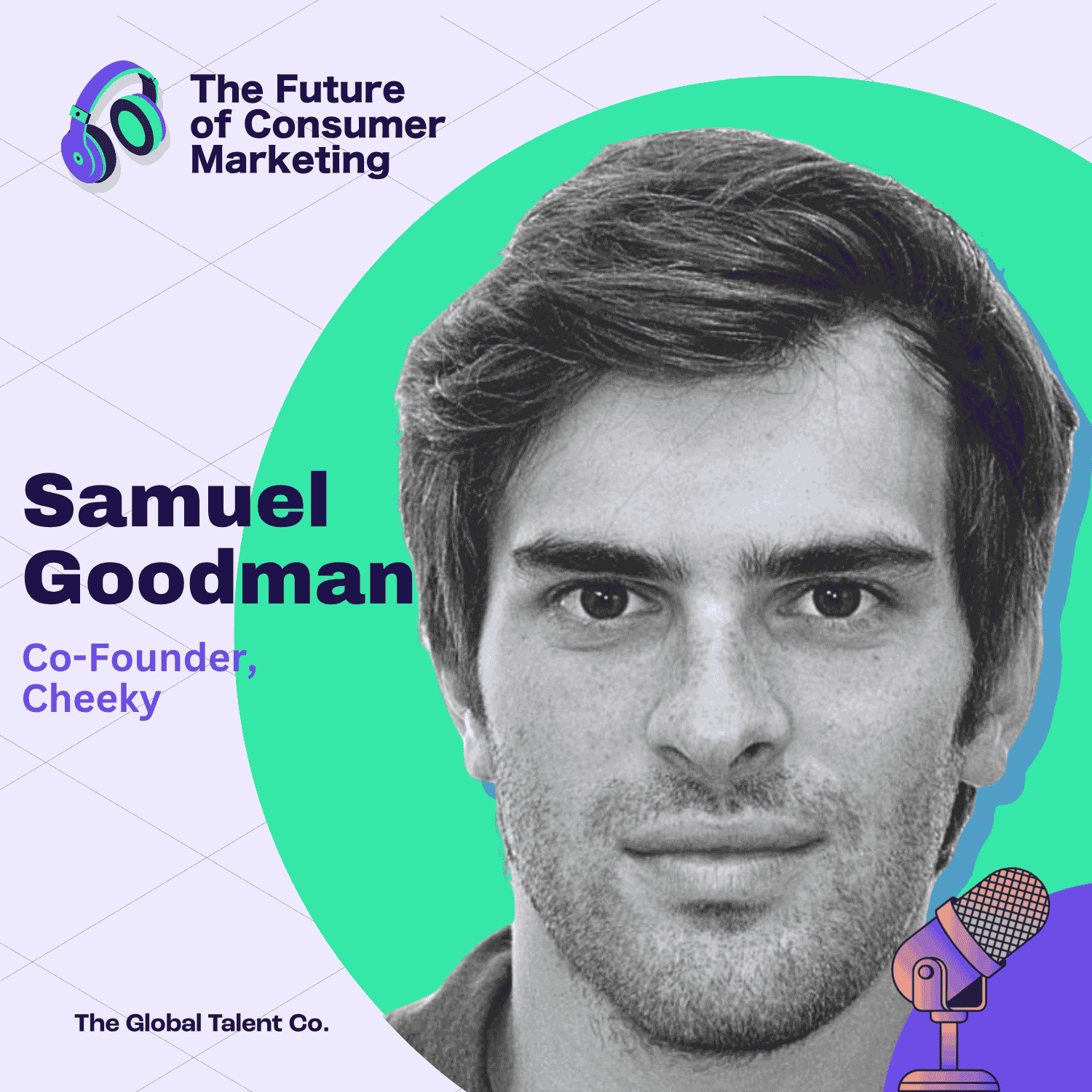
Samuel Goodman, co-founder of Cheeky. Background: grew up in London (half Italian), lived in Milan, studied economics in Boston; started Cheeky in his final year with co-founders Kevin and Jack after researching affordable night guards.
Key claims
3D printing made production cheap; dentist markups were “insane.” They validated demand via a landing page + Meta/Google ads and email calls before launching. Scaling required dentist/technician credibility, distinctive “cheeky” branding, and subscription excitement. Meta ads got harder post-COVID; they now test more creative and add direct mail.
Notable examples
night guard pricing ($800–$1,000 at dentists vs affordable online); 3D-print convention in Chicago; Walmart retail expansion; cease-and-desist from legacy brand Waterpik; mouth tape benefits (reduced mouth breathing/snoring) and upcoming launch.
Written by AI. May contain mistakes. Listen to the episode to check what was said.
Chapters
Tap a time to open that second in VOSamuel's Background and Cheeky's Origin Story
0:45 to 1:23
Samuel shares his journey from education to founding Cheeky.
“So Samuel, it's a pleasure to have you on the show.”
Identifying a Market Gap
1:23 to 2:53
Discussion on discovering a gap in affordable night guards and the initial steps taken.
“I grew up in London for about eight years.”
Challenges in Product Development
2:53 to 4:19
Samuel explains the challenges of creating affordable dental products.
“Keep in mind, the three of us had no dentistry background.”
Building Customer Relationships
4:19 to 6:34
The importance of customer feedback in shaping Cheeky's services.
“Because like the bravery you need to enter an industry and an area where you have practically no idea of what you're doing, it really is taking a big step forward.”
Navigating Competition and Credibility
6:34 to 7:59
How Cheeky gained credibility and dealt with competition from legacy brands.
“Or did you have to actually educate your consumers?”
Capitalizing on Wellness Trends
7:59 to 10:34
Discussion on how wellness culture has influenced Cheeky's marketing strategies.
“I must also say, obviously, when we first started, I think it was late 2018, acquiring customers on Meta was fairly easy.”
Marketing Channels and Strategies
10:34 to 13:33
Samuel shares insights on effective marketing channels for Cheeky.
“So legacy brands are now fearing you guys, and this is getting them to start speaking up towards you.”
Team Structure and Operations
13:33 to 14:01
Overview of Cheeky's team structure and operational strategy.
“We've been seeing amazing returns on that.”
Cheeky's Growth and Team Structure
14:01 to 15:10
Learn about Cheeky's lean operational model and team structure.
“I know that Cheeky is seven plus years old.”
Expansion Plans and Customer Engagement
15:12 to 16:18
Discover Cheeky's plans for growth and the importance of customer interaction.
“And in terms of the projection you guys have, do you expect to stay and remain lean for the next few years or do you have any ideas or plans of expansion?”
Show all 14 chapters
Leveraging AI in Business Operations
16:20 to 18:21
Understand how Cheeky uses AI for logistics, financials, and marketing.
“That's why I love to take a look every day, actually be in contact and speak with some of our customers.”
Challenges of AI in Creative Content Creation
18:22 to 20:30
Explore the limitations of AI in video creation and the need for human input.
“in the future, you know, they'll be able to refine on that and you can produce videos that you can even tell we're AI.”
Innovative Content Strategies in Wellness Marketing
20:32 to 22:08
Learn how Cheeky differentiates its content in a crowded wellness market.
“So what we want to do is, you know, when we display content on meta, we obviously don't want someone to just keep strolling.”
Insights for Marketers in Crowded Categories
22:10 to 24:42
Hear valuable advice for marketers on adapting strategies in competitive fields.
“Yeah, that's what I was imagining right now when I was hearing you.”
Transcript
Automatic transcript. May contain errors.0:00This show is brought to you by the Global Talent Co, a marketing leader's best friend in these times of budget cuts and efficient growth. We help marketing leaders find, hire, vet, and manage amazing marketing talent for 50 to 70 % less than their U.S. and European counterparts. To book a free consultation, visit globaltalent.co. Hey, everybody. Thank you for listening. My name is Andres Figueira, and I'm going to be your host for the day. This show is brought to you by the Global Talent Company, a company that's connecting top remote professionals from South America, South Africa, and anywhere really with fleeting tech companies worldwide.
0:36So if your team is looking to hire world-class South American or South African talent, just head on over to the Global Talent Co. and see how we can help. And today with me here, I have Samuel Goodman, co-founder at Cheeky, a sleep and wellness company that's making oral care affordable. So Samuel, it's a pleasure to have you on the show. How are you doing today, man? It's great to be here, Andres. Thanks so much for having me. I look forward to chatting and having a great conversation about Cheeky and what we've been building. For sure. For sure. Now, it really is an honor to have you hop on.
1:10And just so that we can get the audience a bit more in context now that we've started, Samuel, would you be able to tell us a bit more about your background, where you come from and what Cheeky does? Sure. Yes. So I'm originally from London. I'm half Italian as well. I grew up in London for about eight years. I then moved to Milan, lived there until I was 14. I then moved to New York for high school and went to Boston for college for my undergrad. I studied economics and I spent four years in Boston. And basically that's when Sheiky started my final year in college. I was actually driving back from New York to Boston with one of my good friends, my co-founder as well now.
1:52His name is Kevin. He had just purchased an expensive night guard from his dentist. In New York, they can cost like anywhere from$800 to over$1 ,000. He had just lost his night guard. He bought it. He lost it over the weekend. So he was talking to me about it and he's like, I don't really want to spend another$1 ,000 on a new one. I've been researching the market for night guards. There isn't really a service or anywhere where I can get a custom one online or that's affordable at the dentist. The only options were really going to CVS or your local drugstore, buying a one size fits all guard, which is bulky and doesn't really fix the issue.
2:30Or going to your dentist again and, you know, buying a really expensive guard. So he asked me to do some research with him and his twin brother as well, Jack. And we quickly found that there was a new technology in 3D printing, which would allow to really cheaply manufacture dental night guards, retainers, and these devices and get them to people affordably. What we found out two days later, we get back to Boston and we see there's a dental convention in Chicago. Keep in mind, the three of us had no dentistry background. They were marketing majors. I was an econ major. But we decided, you know what?
3:07let's fly out to Chicago, go check out this convention. It was specifically about 3D printing in the dentistry space. So we go out there, we're sitting there in lectures, meeting with different suppliers. We had no idea what we were doing. We end up buying this really cheap printer with some savings that we had. We bring it back and we start like testing different residents and different types of retainers we could print. Long and behold, a few years later, this is where Cheeky is now, we've served a few hundred thousand customers. We're one of the largest night guard manufacturers in the US. And our whole mission and goal is to make night guards, retainers, and now we've expanded into other products affordable for the millions of people who suffer from TMJ, Bruxism, or sleep apnea.
3:53Wow, that is amazing, man. Like the whole story of how you guys came together, found a gap in this whole market, and then just went to a whole convention without knowing a thing. That's inspiring, dude. That feels like anybody could actually create something, even though they don't know anything about it. You got to just get rid of the imposter syndrome. Yeah, it was definitely a fun experience looking back, but I don't know how we decided to do that or even get into it. That's another story in itself. But yeah, it's been quite the ride. No, no. Respect for that, man. Because like the bravery you need to enter an industry and an area where you have practically no idea of what you're doing, it really is taking a big step forward.
4:31and a great leap of faith. But it's great to see that you guys, after all these years, are still here and working and have gotten to make it a more affordable product for everybody. And Samuel, just a quick question. So was it really challenging while testing the resins and getting the 3D printer to actually make the products you guys sell affordable? Or was it from the get-go that you knew that it was going to be a lot cheaper than what was being found in the market. So we knew right away that the actual cost to produce the product was like really cheap and the margins that dentists give them to their clients too are insane, like a thousand fold plus.
5:09So we knew there was an opportunity over there. So Jack, Kevin and I, my two co-founders decided to do right before we launched was set up this landing page, try to put a few bucks into meta ads, Google ads, try and collect some emails. Once we collected those emails, we were asking just simple questions. Do you grind your teeth? How much do you pay at the dentist? These types of questions. Once people gave us their emails, we set up one-on-one phone calls, video calls with them. And we really asked them like, what do you need? Do you have to change your night guard every few months? Cause they get gross, sturdy.
5:43Would you like a subscription? Does insurance cover it? any like points where we could help and we took all of that feedback and that's really when we launched cheeky and started to produce based on the feedback of all these people we had spoken to so really we knew price was the main point people are price sensitive but how can we make the experience better for example now you could do it from your home using our dental impression kit you don't have to go to the dentist it's quicker you save time money and really that was our sole purpose there was to make it affordable and accessible. Wow. Cool, man.
6:18And was it a challenge getting people to understand that your product was really more accessible? Were they quick to, I want to say bite, no pun intended, when you actually had the product ready? And did you just have to tell them that the price point was lower and you already started getting conversions? Or did you have to actually educate your consumers? And did you have to get, I don't know, a dentist his second opinions and like, yeah, what Cheeky is selling actually works, guys. Take this cheaper option. It doesn't lose any of its value. It's just a lot more accessible. Did you have that experience?
6:53Yeah, definitely. I mean, originally the whole goal here was to acquire customers on price and be the cheapest, but we quickly learned that's not enough. We need credibility. We had to bring dentists on board, you know, actually approve the product, approve the the dental technicians who are manufacturing it, the processes, be the spokesperson for the company. And then on the other side, when it comes to branding, you need to stand out. So we tried to build Cheeky to be, you know, this cheeky brand sort, sort of to say, that's a British word that we like to encompass in our branding. We wanted to make it fun, special, different.
7:27And when people think about nightguards or retainers, which can be seen as boring things, you know, they're excited when they get their next package. And since we're a subscription service, whenever people get it three months, every six months, we want them to be excited. The package arrives, really cool branding. They're happy to open that box. And that was really our goal between getting the dentist to approve the product and be the spokesperson, winning on price, and really building an amazing customer experience and brand. I think those three things together really let us scale and grow. I must also say, obviously, when we first started, I think it was late 2018, acquiring customers on Meta was fairly easy.
8:07I wish, you know, could go back to those days. And then throughout COVID, we were scaling really fast, acquiring customers really fast. We're still growing really well now, but I can't say, you know, that acquisition has stayed the same. You know, we have two or three extra acquisition costs over these platforms. I think many other brands are experiencing the same issue. That's why we're trying to diversify and find new creative ways of acquiring customers that don't just solely rely on Meta or Google. Okay, I get that. And Samuel, in terms of building your brand, I know you guys have been already seven years in the market, but how has it been competing against legacy brands with massive marketing budgets that must surpass yours?
8:51Have you felt that there's a lot of, I want to say, pushback from these brands or consumers that they prefer? I want to say Colgate or something like that, but they don't have retainers or mouth guards. But do you find yourself having to compete against those big brands or is it a different type of market? So really for the night guard market, which is the market we first started in, there wasn't really a major player doing it direct to consumer. So we were actually the first company to go into the space and offer a subscription offering for this. When we went to raise our seed round originally, we got a lot of interest, a lot of excitement around it.
9:29Even so, I'm not going to name names or mention brands that one of the VCs we actually spoke to, their associate, ended up, while doing due diligence about us, learning and taking all of our information and then starting a competing brand, which is in the space one of our biggest competitors today. But since then, we've moved on into other products as well. For example, our Water Floss, we recently got into Walmart stores that's performing really well. And we're trying to become in America an oral healthcare brand that people can have in their home, be proud of and want to use our products. And we never thought we would get to the point where we have to start dealing with these other more legacy brands.
10:09as you mentioned before for example waterpick now is starting to send us cease and desist for different marketing and branding things we're using we're amicably working with them we're going to change anything that needs to be done but once you get into walmart target and the biggest box retailers you start getting attention and that's when the legacy brands start reaching out to you and you know wanting to make sure you're not going to eat their lunch okay i get that so So legacy brands are now fearing you guys, and this is getting them to start speaking up towards you. Okay. And in terms of, I feel there's been a big rise in wellness culture and taking care of oneself.
10:51I believe people are placing a lot more importance on that nowadays than before. Has that changed the way you've had to market your oral care products? Or have you just like rode on the coattails of that in order to just make sure people are also taking care of their oral health as well as all the other aspects of health we need to pay attention to. Yes, I think that's one of the things that's been going in our favor. You know, it's a market that's growing, especially on the female side. When it comes to oral care, they really want to take care of their oral health. We've been seeing so many new brands emerge doing different products.
11:25Mouth Tape, for example, being one of them. Cheeky itself, we're launching our mouth tape product within the next month or two. That's a segment that's growing super fast. And it goes back to, you know, people wanting to not just look at their oral care, but what can they do for their full holistic health? Just by, for example, wearing a piece of mouth tape on or on your mouth, even though it has a breathing hole, it can lead to better posture. It reduces mouth breathing. You're not snoring at night and a lot of other health benefits, including bad breath. And I think people are realizing this either through education, through ads or through their doctors or dentists.
12:03And this is giving us and other brands in the space an opportunity to both educate, but also give these products, again, at an affordable price, because that's our goal here. So we've been targeting different types of customers, whether it's for the night guard, retainer, whitening, based on their needs and using ad creative to really show them what our product does and why it would be beneficial to them. Wow, that is so nice, man. And in terms of marketing, do you have any channel that you feel or you know is working best for Cheeky right now? Or is it all kind of like the same thing? We've always been, most of our budget's been on Meta since we started.
12:42Of course, it's become more expensive, but it's still a great way to acquire customers. I think the only challenge is you need enough diversified creative to be able to, you know, test different customer segments and acquire as many customers as you want. So now we've upped our creative spander, moved a portion of our budget towards creative. And let's say we're doing 10 concepts, even if only one sticks and work and you have to end up throwing out the other nine, it's worth it because you could drive for a few months, you know, conversions on that one piece of creative. So creative is something that we've been fully focused on now and trying to every month regenerate new ideas and new brand creative.
13:22Another marketing channel that we've had a lot of success in recently that we've just dipped our toes in is direct mail. Just sending cards to either old customers, prospective customers, abandoned cards. We've been seeing amazing returns on that. So we're super excited to start scaling a direct mail as well. Nice. I'm hearing a lot of buzz. Like some people, I want to say a few months ago, were saying that email marketing was dead. But nowadays I'm listening that it's being a lot more effective than people think. and it's something that we shouldn't quit on just yet. So I love that that's working for you guys as well because I'm just hearing it all around nowadays.
13:58And Samuel, in terms of your team, I know that Cheeky is seven plus years old. So how big is the company right now? Like for example, how big is your marketing department or in general, just how many people do you have under you? So Cheeky, we're a seven plus figure company right now, but we're a very small, lean and efficient team. Right now, it's just myself, my two co-founders, Jack and Kevin. We have our head of our scan team, Kyle, based in New York. But most of our teams, from marketing to email, which are overseen by my co-founders, they're external agencies. We decided it would be best for us to keep a lean in-house team and work with people who are great at what they do, whether it's email marketing, media buying, content creation.
14:44So instead of bringing everyone and doing it in-house, we decided to pursue the strategy of working with different agencies and keeping the team really small and really lean. Okay. Now, that's great because I believe it allows you to also pivot to whatever direction you need the company to go to. And that way you don't have to take care of as much people. And working with agencies just allows you to delegate some of the work, make sure they're doing what you like. So I totally understand that angle. And in terms of the projection you guys have, do you expect to stay and remain lean for the next few years or do you have any ideas or plans of expansion?
15:23So obviously growth is our number one objective, but growing profitably is the most important thing to us. I think with our expansions into retail with Walmart, we're in talks also with some of the other big box retailers. I think it's just going to happen that we're going to have to expand the team, especially on the sales side and dealing with those big box retailers. But other than that, when it comes to, you know, marketing or ops, myself and my co-founders are well equipped to, you know, manage the external teams. Our manufacturing, which we used to do in-house, we built a lab with over 40 people producing our nightguards, retainers, sports guards.
16:01We ended up moving to more of a robotics firm to get better accuracy, also for product management, pricing. And so we don't have to manage that team that's outsourced as well, which gives us more time to focus on growth than what really matters. And for us, speaking to our customers is something I do every day. I'll even still answer some chats and emails, even though we have, you know, a full-fledged customer service team, because I think it's important for the founders to know what's going on, what your customers feel, what they're thinking. That's why I love to take a look every day, actually be in contact and speak with some of our customers.
16:39Nice. Now, I agree with that because you got to stay in the trenches sometimes just to know how everything is working, because it's also a thing that how can you ask somebody to do something you haven't done yet? And doing that allows you to understand what you're properly asking for and what your requirements and your standards are for the agency that you're working with. So I think that's pretty nice, bro. And OK, I also have another question. So the trending topic of right now is AI. And I would love to know how you guys are using AI to help you out in your day to day. I'm not sure if there's AI that you guys are leveraging to help you with the manufacturing of the mouth guards and the different products you guys make.
17:20But could you maybe shed some light as to what you guys are doing in that area? Yeah, I mean, definitely. And today's world, so much is going on with AI. I think it's the best time to be an entrepreneur, to start a business, since you can use it to help with so many things. For example, we're using it on the upside, whether it's logistics coming in from overseas countries we're using ai to leverage one is the shipment gonna arrive one's the tariff do all of those sort of logistics we're using it as well on our pnl side it takes you know all of our expenses everything we've been doing cash coming in and out and ai is able to reconcile and create pnls balance sheets for us and all of that more financial stuff i think on the marketing side we've honestly tried using ai on the creative side there are some platforms which are good but it's not there yet.
18:11We still think we need to manually film because if you want 10 out of 10 A plus content, it's just not going to cut it using some of these AI services. I really do hope in the future, you know, they'll be able to refine on that and you can produce videos that you can even tell we're AI. But also on the media buying side, I think it isn't something that's common yet. We're not using it yet, but I do think media buyers are going to transition into using AI that can maybe 24 hours a day monitor the budgets, you know, look at CPCs and the more granular level things that they could sort of high level manage that AI.
18:49I think that could be super helpful and will help brands in the long run, you know, increase returns. Of course. And I do understand and I see it as well that AI isn't there yet when it comes to video creation and how it shows the prompt that you gave it. It does help with the more monadas task and with the back end and with things that you will actually revise and then trust it. But I agree that in the future, and I believe it won't be that far, but in the future, we will have it be able to help us with all that other creative aspect that people are trying, but it's not there yet, as you said.
19:24I hope so. No, I'm almost sure. I play with OpenAI, Soda, and with the other ones. I try to make videos, but it just comes out weird. It just looks weird still. It does, right? It's not ready yet. It's not. And if it's a hand and it goes to grab something, it was five fingers and that changed to three. And like people can tell, they can still tell. It's so funny to me when I'm in social media and I'm just scrolling and I see something and it's like, oh, AI. And I go into the comments just to make sure I'm right. And I usually am. So until it's able to fool us, then I think it won't be what to call a reality just yet.
19:59But I think, though, for statics, it's a great tool. We've been using it a lot for statics. You know, there's no movement within the image. It can be great to test on meta for different campaigns, different things. That's true. Now, with static images, it really is different. Having it not move can allow you to place the angle or the image how you want it just perfectly so no one notices. But video is the whole other story. And Sam, how do you guys create content that cuts through like all the static when I believe everybody in wellness is talking about self-care? How do you guys get your content to be different?
20:33So what we want to do is, you know, when we display content on meta, we obviously don't want someone to just keep strolling. I think that's obvious. So really coming out with ideas that are somewhat crazy, maybe like something that will make you stop. We've been testing a few things in our next match. Hopefully you guys can see it when it's out. But I think going with more controversial ideas and like testing different things that maybe other companies wouldn't test, or different points of view that really is an eye stopper and gets, you know, the user to stay on their phone and not just scroll to the next thing.
21:08I think in today's day and age, you really need to stand out and just like having some UGC video of someone posting your product, that's not going to do anything right. You need some sort of moat around it. Yeah, of course. And do you guys find yourself looking for a lot of influencers to create content or do you guys prefer to take another angle. So we're working with one of our content creation agencies, which we've been having great results with. They're actually sourcing our creators for us and helping us with the scripts and the creative we've been working with. Things are going great, but we're always on the lookout, you know, for creators, especially influencers, micro influencers who are in the space, who might have a small following, but a following that really needs our product, or that would love to buy it and then share it with their following.
21:56So we're also, instead of trying to just find these big influencers, we're always targeting those smaller micro-influencers, maybe females who are in the oral care space or dental hygienists or anyone in the space who has a following that wants to promote and share products. Yeah, that's what I was imagining right now when I was hearing you. It's like, I imagine these guys must have a lot of dentistry influencers, people who are showing their day-to-day while they're working at the, what's it called, at the clinic or anything like that. So that's pretty cool. Getting somebody that's already in the industry to vouch for your product must be a good way to get conversions and new customers.
22:33That must help. And okay, Sam, I know we're almost at time, but I did want to ask you one last question. And it is that if you had one piece of advice you'd give to marketers who are trying to build a consumer brand in a crowded category such as the one that you guys are in? I know that the dental mouth guards was you were the first, but I believe that like the dentist industry and the mouth industry is the whole thing. What would your advice be? Like what would you have loved to know when you started out? Right. So I think starting today is very different from starting when we started Cheeky.
23:09We had meta to just drive all the fuel and the growth. But I think today for a new a brand to come into the space and just be like, even let's say we raised a million dollars, we're going to go spend it all on meta and Google. I don't think that's the best way to grow or to get the word out there. I think you really need to target specific people. Again, going back to micro influencers who could promote, spread word of mouth and really be role models for your brand. I think going after them, thinking out of the box, doing organic creative that maybe you're not spending on the media buying side that could go viral.
23:49I think just doing things again that are out of the box, different going after people that can help you and not just throwing money at Matt, I don't think that works anymore. We've learned that the hard way as well. You know, we've had months which were just, we were spending too much to acquire customers. So you always have to change strategy. And I think to any new marketer who's starting out now, I think it's important to be adaptable. And whenever something hits you, you might have to change strategy the next day. So don't give up if something's not working. Okay. No, I understand that. And it's true.
24:23If something's not working, some people might feel the urge to just stop everything on their tracks because it didn't work. But maybe pivoting is always a better option just to make sure you've exhausted all your other ideas before calling it quits. So I think that's a very valuable insight and it really is inspiring. And Samuel, before I let you go, I would also love to give you the opportunity to let anybody who's listening know. And if they're in the States, because I believe you guys aren't global yet, but if they want to look at your products, if they want to try something out, do the quiz to see if they need anything you guys offer, how would a consumer or anybody that needs that go about learning from your products?
25:03Yeah. So just going to get cheeky.com. All our products are there. We also offer a 30 day full money back guarantee. So you get to try the product risk-free. We're here to help people who grind their teeth, suffer from sleep apnea, want wider teeth, need a flosser, whatever it is, we're here just for that to make it more affordable and accessible. We're running a great 40 % promotion right now with the holiday season and coming in. And we'd love you guys to whoever's listening to go check it out. Oh my goodness. That's amazing. If you guys shipped to Argentina and worked with us here, I would totally use your product for my girlfriend.
Read the full transcript
25:38She grinds her teeth every night and it's been a whole... Oh, we'll get you. I care. Definitely send one over to you. It really has been a whole thing. And I'm just listening to you guys like the idea you have and the business you've created. It's like, oh my God, this would be so useful if it existed here because it really is a very untapped and expensive market. So kudos to you, man. I really hope the company keeps growing and you guys keep realizing that you really tapped into something beautiful here. Well, thanks so much, Andres. I hope to meet you soon in person. Thanks for having me on the podcast.
26:10No, it really was a pleasure, Samuel. If I'm ever in Philadelphia, I'll hit you up just so that we can meet. And really just know that if we're ever doing another podcast, if Cheeky keeps on growing, I'll contact you to see if we have you on another episode to just check out what's been happening with you guys. So thank you so much for hopping on. For sure. Let's do it. Thanks. Thank you.
From the publisher
In this episode of The Future of Marketing, host Andres Figueira interviews Samuel Goodman, Co-Founder of Cheeky, a sleep and wellness company disrupting the dental care industry. Cheeky pioneered the direct-to-consumer night guard market by leveraging 3D printing technology to create custom dental devices at a fraction of traditional dentist prices—turning what was an $800-1,000 purchase into an affordable subscription service. Starting with zero dental industry knowledge and a cheap 3D printer purchased at a convention, the three co-founders have scaled to a seven-plus figure business serving hundreds of thousands of customers while maintaining a lean team of just four people in-house, supported by specialized external agencies.
Topics Discussed:- Entering and dominating an untapped D2C market with no industry background
- Scaling a hardware subscription business with 3D printing technology
- Building credibility through dentist partnerships in a trust-heavy category
- Navigating the evolution of Meta advertising from 2018 to today
- Managing 2-3x increases in customer acquisition costs while maintaining profitability
- Expanding from D2C to major retail (Walmart) and dealing with legacy brand competition
- Operating a seven-figure business with a four-person core team plus external agencies
- Using direct mail marketing for customer retention and reactivation
- Leveraging AI for operations and finance while keeping creative production human