In short
ResQ’s restaurant facilities management targeting strategy—how it markets to the right operators and uses events and AI to drive pipeline. ResQ installs QR codes and asset tags on restaurant equipment, tracks every repair/maintenance work order, and reports costs, warranties, and repair frequency (e.g., a DeepFryer repaired five times in three months may warrant replacement). It also connects operators to third-party trade vendors across 40+ categories in the US, Canada, and parts of the UK.
Guest
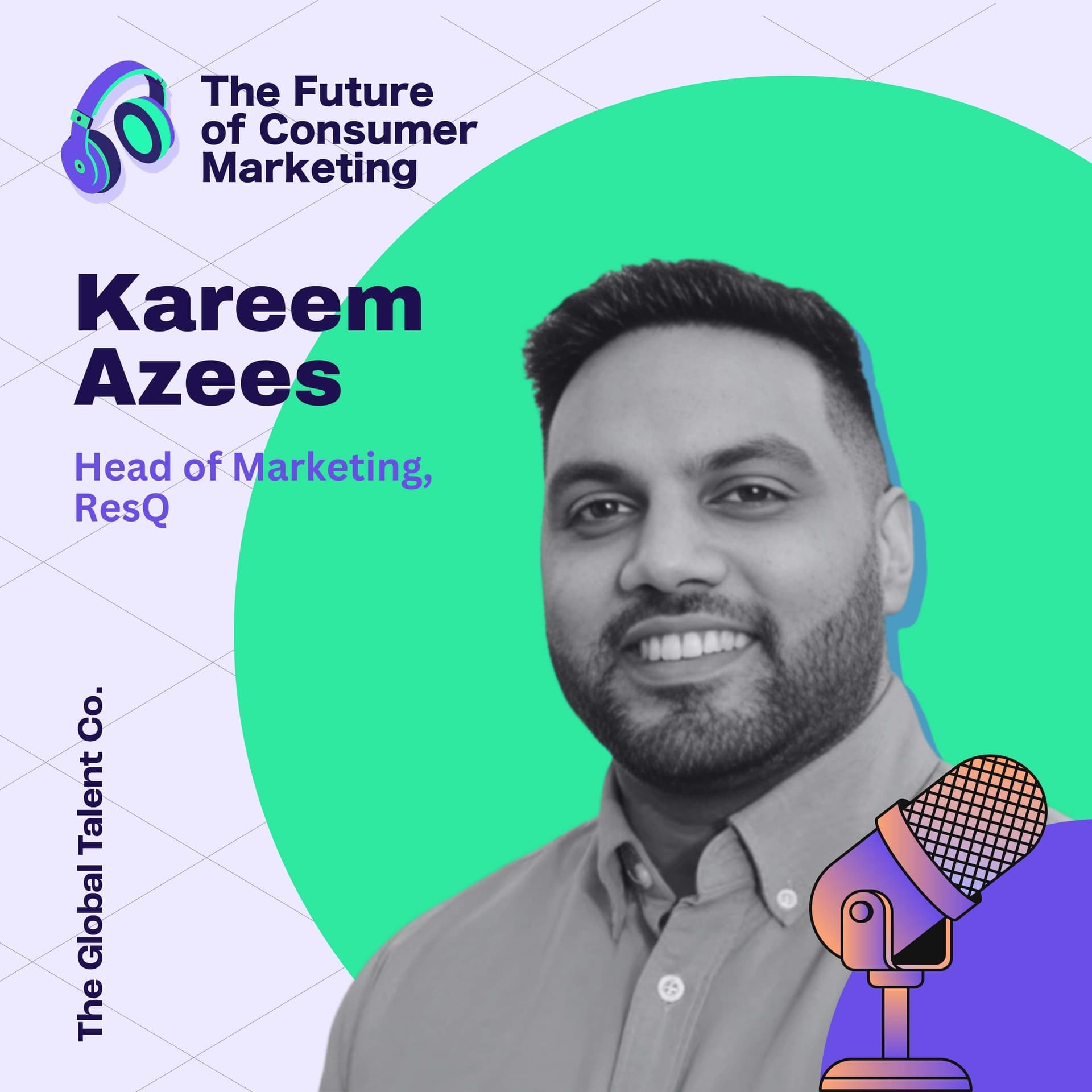
Kareem Azees, head of marketing at ResQ. Background: 10+ years in B2B SaaS; joined ResQ about two years ago; first restaurant-tech role.
Key claims
define ideal customer profile (mom-and-pop vs scaling franchisees); big national brand conferences can be wrong audience; brand-specific franchisee events work; small lean team (2 marketers) plus AI and freelancers enables fast execution.
Notable examples
KFC national franchisee conference driving pipeline and contacts; shift away from large national events; other brand conferences mentioned (Dave’s Hot Chicken, Jack in the Box); Paris Pergett uses ResQ for corporate stores and recommends to franchisees (not mandated).
Written by AI. May contain mistakes. Listen to the episode to check what was said.
Chapters
Tap a time to open that second in VOUnderstanding ResQ and Its Offerings
0:45 to 2:17
Kareem explains ResQ's services for restaurant maintenance and repair.
“Just very glad that we got you on the podcast and we're going to be able to talk about your experience and what you do.”
Kareem's Marketing Philosophy
2:17 to 3:50
Discussion on Kareem's approach to marketing solutions for restaurants.
“And then the other thing that we provide is we have a network of trades vendors that we can also connect you with.”
Impact of Equipment Malfunction on Customer Experience
3:50 to 5:43
Exploring how equipment issues can affect restaurant operations and customer satisfaction.
“And then from there, kind of like redefine sort of our ideal customer profile in terms of the scaling up sort of operators.”
Success Stories in Marketing Campaigns
5:43 to 6:44
Kareem shares insights on successful marketing campaigns and events.
“It also leads to customer dissatisfactoring.”
Challenges and Learning from Past Events
6:44 to 9:06
Kareem discusses the challenges of attending large events for brand operators.
“that you'd like to mention to us as an example?”
Refining Customer Profiles and Go-To-Market Strategies
9:06 to 14:01
Kareem explains the process of determining customer profiles and strategies.
“Getting these huge brands to actually just say, hey, everybody, this is a new SOP.”
Team Structure and AI in Marketing
14:01 to 16:27
Learn how to efficiently structure a small marketing team using AI tools.
“So there's Dave's Hot Chicken, Jack in the Box.”
Defining the Ideal Customer Profile
16:28 to 18:32
Understand the importance of defining ideal customer profiles in marketing.
“And I see you also eliminate a lot of like the verticality in the way of getting things done and the bureaucracy of I got to ask permission here so that this person can approve it.”
Leveraging AI for Efficiency
18:33 to 21:01
Discover innovative ways to integrate AI into marketing workflows and enhance productivity.
“I don't have a restaurant, but that's noted.”
Trends in Restaurant Tech Marketing
21:02 to 23:28
Explore current trends in restaurant technology and the importance of staying agile.
“It's like, there is no excuse for paralysis for analysis or mental blockage when you just got ChatGPT or whichever is your AI of preference in your pocket.”
Transcript
Automatic transcript. May contain errors.0:00This show is brought to you by the Global Talent Co, a marketing leader's best friend in these times of budget cuts and efficient growth. We help marketing leaders find, hire, vet, and manage amazing marketing talent for 50 to 70 % less than their U.S. and European counterparts. To book a free consultation, visit globaltalent.co. Hey, everybody, and thank you for listening. Today, I'm speaking with Kareem Azees, head of marketing at ResQ. the only facilities management platform designed to streamline repair and maintenance operations for restaurants. How is it going, Kareem? It's a pleasure to have you here.
0:39It's good to meet you, Andres. Doing well. How about yourself? I'm doing pretty well, pretty well. Can't complain. Just very glad that we got you on the podcast and we're going to be able to talk about your experience and what you do. And yeah, just let's dive right into this. Tell me a little bit more about yourself, Kareem, like about your role and your background. How did you get into the restaurant tech industry? Yeah, for sure. So I've been in B2B SaaS for 10 plus years now. I landed in my current role at Rescue two years ago now, and that was my first role in restaurant tech. It's been a lot learning about the industry, restaurant tech, and how to serve and market towards restaurant operators.
1:18The company that I work for right now, as you mentioned, helps restaurants with repair and maintenance operations. So what we actually do is we go on site, put QR code, asset tags on equipment, take inventory of what assets have warranty, and then we make it super simple. It's for people, operators on the front line, to be able to submit equipment for repairs and maintenance. And then we support with all the tracking and reporting so that people can make better decisions around the context about what each piece of asset or equipment has gone through. So for example, if DeepFryer has been repaired five times in the last three months and you know you spent X amount of money on it, maybe it might make more sense to replace that asset instead of repair it.
1:54Yeah, I've been in this industry now for two years, but being in B2B SaaS more generally for 10 plus. Okay, that's so interesting. And just to make sure I understood it correctly, then you guys help restaurants get metrics on their machinery, their equipment. You place a QR code that then gets scanned every time you have to fix it, or if somebody comes to make sure it's working properly, then that is what provides that insight? Yeah, exactly. So you can imagine every single time a work order is put in through the QR code for a piece of equipment, we then track that piece of equipment going through their repair and maintenance so that we can give you all the information about how much money was spent on that piece of asset, replacing it, et cetera.
2:34And then the other thing that we provide is we have a network of trades vendors that we can also connect you with. So let's say, for example, you're opening as a restaurant operator, you're opening up a new location in, I don't know, in New York City and all of your locations today are in Dallas. What you were able to do is before even going on site into New York City and like finding trades vendors, you could plug right into Rescue and access and leverage our network of trades vendors to find new ones that can help you service and set things up at your restaurant facility in New York. Okay, that is so cool.
3:05And do these people that you have on the platform that actually come to the restaurants and fix it and scan the QR code on lack of a better term, are those guys from ResQ or are they like independent contractors that go and work on the issues at hand? Yeah, so they're not internal teammates to our team. They are third-party contractors or third-party trade vendors that we bring out. And so we have a network of them across the United States, Canada, and parts of the UK. So, you know, across 40 plus different categories. So if you need someone for HVAC, you can find someone. If you need a plumber, you can also find that.
3:39Dude, that is amazing. That is amazing. Okay. And in terms of, well, let's continue with what this podcast is. What has been your philosophy since you've already been two years within the space? when you make an approach to marketing and to try and sell this app or this platform to restaurants mainly? Yeah, I would say that our approach has been very focused on, you know, deeply understanding the operators that we want to work with, understanding at what point of a restaurant's or a restaurant operator's journey doesn't make sense for them to invest in sort of a solution for this. So you can imagine like, you know, small mom and pop operators, you know they probably manage each repair by themselves you know they're very hands-on they have one or two locations they don't really need access to a full platform to manage it where these things get more difficult and cumbersome is when you're scaling from 5 to 20 locations and opening things up aggressively and you know things keep breaking and you're not able to have and keep track of what's broken most recently when you got it last repaired is there warranty on asset and whatever else and so our philosophy really is to think about who we want to operate and who we want to service.
4:46And then from there, kind of like redefine sort of our ideal customer profile in terms of the scaling up sort of operators. So that's the first layer of it, being very, very clear about who we want to go after and who feels the pain most around repairs and maintenance when it comes to restaurant operations. And then the second part of it is figuring out, you know, what are the channels that will work for us to get in front of these people? We found our playbook to really be focused on three. One is pillar. The first pillar is events. The second pillar is outbound. And the third pillar really is nurture and social proof.
5:14So, you know, helping people to see other operators that are using this software and platform and helping them understand how other people are using it. Okay. Yeah. It's like them seeing that it's working for somebody else and picturing themselves working for them too. That's fucking awesome. Especially as companies scale up, you know, your key as a restaurant operator is to be servicing customers, providing a great customer experience. And like, you know, the minute that a piece of equipment breaks, that takes away from servicing your customer. And it could, you know, cause a lot of downtime.
5:43It could cause a lot of issues. And I feel like every single one of our customers have stories that they've told us of like, hey, this really big thing happened where my piece of equipment broke or something happened, a plumbing issue on a really big weekend. And that leads to downtime. It also leads to customer dissatisfactoring. And these are all things that impact your brand and the experience, especially as a restaurant operator. No, of course. And I'm totally imagining kitchen environment like, for example, the series The Bear that is very high speed, very aggressive. And the people in the kitchen, if something breaks, it's like, OK, get it fixed.
6:17But they don't actually remember how many times it's broken because they're so in the moment of doing exactly what you're mentioning, servicing their customers, making sure the satisfaction is at its highest, that it's something that's very easily forgettable. So I really like how you guys are tackling that issue there and solving a problem for restaurants. I think that's really cool. Really cool. Kareem, have you guys had any recent marketing campaign with ResQ that performed really well that you'd like to mention to us as an example? Yeah, for sure. Let's go deeper into one channel, I think.
6:50You can imagine one of the channels that I mentioned we invest heavily in is events. So historically, you know, there's many different types of events that you can go to. You can go to the broad industry events, you know, National Restaurant Association events. You can go to the small local, you know, dinners and that type of thing. One of the things that I particularly invested in as I've been at Rescue is brand specific events. And you can imagine a brand specific event. Think of like KFC as an example. KFC is a brand, but KFC as a brand is not like buying Rescue in itself because they're made up of a whole network of franchisees.
7:26And so they're not very similar to a lot of other companies from that or they're not very similar to a lot of other companies from that perspective, where like, you know, for us, we don't actually sell. I mean, very rarely do we sell to the brand. We sell to the franchisees that make up the network within the brand. And so for us, finding those franchisees has become really, really tough. You can't go and buy access to a database like ZoomInfo and get it because we've tried that and they don't have the best data when it comes to all of the franchisee network. And so one of the things that's worked really well for us and we're continuing to invest in right now is brand specific events.
8:01So KFC actually has a national conference for all of their franchisees where they go, they throw big parties, they help them understand what's working for other operators. So we want, and historically we have showed up to some of these brand specific events where the franchisees are at, where the owners, the operators, the general managers are at learning from other owners and operators of the same brands that they have. And so that as you know, on the walk has worked really well for us in terms of like, one, finding the right accounts for us to go after. And then two, being able to drive sizable quantity of pipeline as well as close significant quantity of pipeline.
8:37Because historically, finding those operators and getting the right contact data, finding out who they are, where they operate, et cetera, has been really, really tough without these franchise brand events. Okay. No, no, no. And I totally see that because it's the franchisees with this umbrella, huge brand above them, but they're independent people. So they can actually use your service. And if it works for them, they could recommend it to another one of the franchisees. Have you? And I hope I'm not overstepping here, but have you guys got into like the real KFC to use Rescue or is that like the goal?
9:08Getting these huge brands to actually just say, hey, everybody, this is a new SOP. Please use Rescue. Yeah, I would say that it depends. So you can imagine there's different software technology across different operators. And this is like very, very fluid in the restaurant tech space. So like some operators, they mandate downward software that is a requirement as part of like their franchising contract. Oftentimes it's not mandated down. Repairs and maintenance is generally three to five percent of our restaurant's P &L or three to five percent of their expense line item. And so being that percentage, usually the corporation or like the larger brand doesn't have a mandate downwards across all of their franchisees to use some sort of software.
9:50Whereas comparatively, you look at a company like Toast where they have a POS, generally speaking, a POS probably would be mandated because you want that to standardize across all of the storefronts, across all the franchisees. So I think it depends on the category. For us, in the category that we're in, we find that most of the brand operators don't mandate download software or solutions or a platform. They will sometimes suggest it. So another customer of ours, Paris Pergett, they use us for all of their corporate stores and they, you know, speak publicly about Rescue. They push it towards their franchisees, but it's not a hard requirement that all of their franchisees must use it.
10:27I mean, it's up to the franchisee to decide whether or not they want to use it. The brand does find a ton of value in it, but, you know, mandating it downward is not something that they do, though they heavily, like, suggested and recommend it as a platform solution for their franchisees. Okay, okay, that's beautiful. That's beautiful. And as you mentioned, that the attendance of the franchise events was something that went very well and helped you close a lot of pipeline. Do you have an example of something that hasn't been as successful as that or that you expected and what you learned from that?
10:57Yeah, for sure. It's actually the exact opposite on the events angle. When I first joined Rescue, we used to spend a lot of money going to these big, big events where all of the kind of brand operators would be there. And as I mentioned before, for us, selling to some of the brand operators is really, really challenging because they don't mandate it downwards. And it took us quite some time to learn that, that, you know, going to these big national conferences where all of the like headquarter brand operators may be was probably not the right event for us. It was probably not the right part of our event strategy and our event playbook.
11:35Because, you know, we still at the end of the day have to go through their franchisee network. And the franchisees may generally are not showing up to the large national conferences because it may not be the best event for them. And so that was a huge learning for us. You know, when I first joined Rescue, we're spending lots of money, you know, because these big events, you know, they usually charge and command more money in sponsorship dollars. And so we would burn through a large quantity of our budget on these like really big events that didn't drive the ROI for us because they were just the wrong audience.
12:06And that's why I go back to, you know, as I mentioned, our philosophy and approach is really important. So like defining what is a good fitting customer for us is truly, really, really important. so that we can define the right go-to-market activities where we find the right operators that would find value in our product. Okay, okay. And when determining a good customer's profile or a go-to-market strategy, what is your team's process from the beginning or the inception of the idea to when it's finally actually executed that you go for the customer or the go-to-market strategy is implemented? Yeah, so usually as a team, we try to be mindful and hear opinions from across the organization.
12:44So anyone on the team can provide insights and intel into, you know, this channel or this event is something that they think we should try. And then from there, we sit down every week and we just kind of like think about all of the ideas that have bubbled up and surfaced and we prioritize them. From there, if we have a conviction that something is worthwhile trying, we look at, you know, what is the cost of this thing? Is it, you know, just financial? Is it time? Is it a mixture of financial and time? Do we have the team skill set and acumen internally to do this or would we need to hire someone else?
13:17So we try to like prioritize all of the ideas that come to the table across the organization based on those things. And then from there, we make a go or no go decision and try to deploy it. So, for example, making the shift in our events strategy from going to big national events to now focusing more on these brand specific events was something that came up just because someone did bring a KFC conference to the table. And then we discussed it and we said, you know, how do we pilot or test this out with one event? And we tried it with the KFC convention. We drove a massive amount of pipeline, true pipeline from that event, as well as we got really good contact data for these franchisees.
13:55And now we're saying, OK, this works really well for us. Are there other brand conferences that we can go and explore? Right. So there's Dave's Hot Chicken, Jack in the Box. Like, what are the other brand conferences that we can start investing in? And over time, that's where we, you know, when we make budget allocation decisions, we start to allocate more money into these other buckets versus the ones that we used to. Cool. Okay. No, that's totally wise. And when building out your team, did you keep anything in mind or when did you know it was time that you needed to expand internally? And how do you even know which roles to hire for?
14:28Yeah, I personally think that there's a lot that can be done today in 2025 in the age of AI with leveraging AI tools and leveraging the tech stack to be able to do a lot more. So I've actually believed that we don't need to hire a ton of people internally on the team. The way that our team is structured is we have two marketers, myself and one other. I'm more of a generalist covering multiple different areas, but specialty is in product marketing and sort of demand generation. And then the other person on our team, sort of demand generation more broadly, but very focused and has an expertise in field.
15:02So events, which is, you know, as I said before, one of the biggest channels for us. So, you know, there's lots of other things that we need to do. We need to update our website. We need to write our newsletter, nurture prospects. We need to edit videos, you know, all of these things that fall under marketing. The way that I structure building teams is to figure out first if there's freelance resources or other people within our network that we can tap into, because it makes more sense for us to do that financially, especially if the bandwidth is not there. Especially if we don't have enough quantity of work for a full-time hire.
15:34And so for me, the way that I've really structured the team is thinking about what is the work that we need to go and do? Is there people within our network that we can trust and are really good? Or is there an AI tool or some kind of new methodology that we can be trying to be able to do something? And then from there, making the decision whether or not to hire, use AI, or use a freelancer of sorts. And that has worked really well for us. I feel like our team of two has been able to ship a lot at high velocity because we're not spending a lot of time discussing, debating, arguing over ideas. Instead, we align on the ideas.
16:10We figure out what needs to happen. We assign an owner and then we go and do it. And when we need support with graphics, with website development or design, video editing, all this other stuff, we have people in our corner that we can just basically tap on the shoulder and pay them for their support as needed. Okay. Okay. Now, that's beautiful. And I see you also eliminate a lot of like the verticality in the way of getting things done and the bureaucracy of I got to ask permission here so that this person can approve it. And then it finally executed. So it's nice that you have a team that is cohesive and is on the same page all the time.
16:43That's super nice. And Kareem, do you know of any or do you think of best practices that you would recommend or that you think everybody should be getting right when talking about the restaurant tech industry? Yeah, I would say this goes back to what I mentioned at the top of this, which is the definition of the ideal customer profile is very, very important. Really understanding the nuances within the restaurant industry is very, very important. As I mentioned, some software will be mandated downwards from the corporate level, right? So the brand will decide, hey, we need a POS. We want the POS to be standardized because we have financial reporting, et cetera.
17:18And it'll be really hard to do if everyone's using a different POS system. The category that we're in, it's not mandated downwards. I mean, it's recommended sometimes, but not mandated downwards across all franchisees. So really understanding the types of companies within the restaurant industry, you know, defining, do you really want to focus on mom and pop shops, one to two location operators? Do you want to focus on the scale ups, the fast growing brands? Do you want to focus on franchisees? Do you want to only focus on corporate groups, the groups that only have corporate locations? I think defining the ideal customer profile, particularly as you think about your solution that you're bringing to market is very, very important because that will dictate a very different goal of market motion.
17:56As an example, you know, for us, as I mentioned, like we go to a lot of brand specific events because that works really well for us. But another company might find a lot of success with the national restaurant events because they bring a lot of the brand owner and operators. And so a different platform solution might be better for a different type of strategy depending on who their ideal customer profile is. So I think there's a lot of nuance within the restaurant industry in itself. and I think really thinking about what solution to bring to market, who do you want to take the solution to, and then figuring out where do these people go?
18:27How do I get in front of them? How do I put something compelling in front of them? But that all starts with, you know, defining the ideal customer profile. Okay. Okay. No, that's noted. I don't have a restaurant, but that's noted. And Kareem, I've heard you mention it several times when speaking about your team of how you guys can be more efficient and not need extra people. But how are you using AI, if I may ask, and how are you leveraging it so that it works for you? Yeah, for sure. I would say that AI is embedded into multiple different parts of our workflows now. The first thing is in 2025, I don't think there should be a concept of mental block any longer.
19:05You have this like assistant in your pocket or on your computer that you literally can have a conversation with. And that oftentimes releases the mental block aspect where if you're trying to solve a problem or figure out how to work a problem, you now have this thing that you can be a, you know, a thought partner to engage with to try to figure out how do I think through a problem or what are ways that I can approach this problem? So I think that is a huge part for us when it comes to problem solving and trying to figure out what we should do or deciding on certain things, using AI to help guide, you know, not ultimately make the decision, but guide the decision by helping us to unblock like these mental blocks that happen, I think is really, really the first piece.
19:45The second piece is embedding AI into specific parts of our workflow. So as I said before, social proof, very, very important part of our go-to-market strategy. Restaurant operators love to see other restaurant operators, what they're doing, what they're using, how they're using it, how it's helping them. So we do a lot of this. And what we do, we do it in two forms. One, you know, we do a video call, we record. The second way is to go on site. We actually get a film crew out there. We record physical conversations with people at some of the restaurant locations, tell their stories and how they're using the software.
20:14What we then do is we take that. We take the transcript. We transcribe those transcripts or we transcribe the videos and we get the transcripts. We feed those transcripts through AI. That now can tell us, you know, 10 different directions that we can take these case studies and also help us to write a script, which we can then use for editing. So it's, you know, instead of manually triaging 30 to one hour worth of content, you're now able to shorten the amount of time that that takes and be able to streamline the process of getting these case studies out. And in a team of two, we probably shipped over a dozen case studies over the last year just based on using AI for streamlining our social proof and our case study kind of workflow.
20:51So I think those are two really big ones. You know, using it as a thought partner, using it and embedding it into different parts of your workflows. One example is, of course, the one that I mentioned on social proof and customer stories. Okay, no, and I have never heard that perspective on AI before. And it's totally true. It's like, there is no excuse for paralysis for analysis or mental blockage when you just got ChatGPT or whichever is your AI of preference in your pocket. It's like, it's so true. It's happening to me now and I feel blocked. And if I feel like I don't know what to do, I'll always go ask ChatGPT first.
21:25It's crazy. I know. I also think that like, you need to be someone as a marketer to stand out going in towards the future. Like you need to be someone who is always tinkering. I truly do believe that like, I found so many efficiencies in ways that we can like, grow our business or do more with less through AI just by tickering with new tools, going on product on learning about what exists, trying to figure out like other alternatives that exist in the market, just staying afloat of like AI news and trends. I think that is also really important for as a marketer, because oftentimes it's not just chat.tp.
21:59Yeah, chat.tp is great. And like cloud is great. But there's a whole slew of other AI solutions that are coming to market that can, you know, streamline workflows, help to do things in a much more efficient manner. Yeah, that's completely true. And besides AI, Kareem, are you guys excited about any other trends? It could be technological or within the restaurant tech industry that you would like to tap into. Yeah, I would say the biggest one, the biggest trend right now that I see is less on the restaurant industry side. I mean, the restaurant industry has the same business model. It kind of operates the same way and has for the last hundreds of years.
22:38I would say that the bigger shift in the market right now, especially as a marketer, is leveraging AI. I think it's really, really important to think about all the tasks that you're doing and then just having conversations and finding new tools and embedding AI into every part of your workflow. That can allow you to operate much more efficiently. And then I think the second part here is really to stay small. I think a lot of times you want a bigger team or you want to manage more people, you want more resources, you could do a lot more. And I do believe, you know, at some point you need more resources, but I think smaller teams can ship a lot faster because there's less bureaucracy.
23:17And so I do truly believe that. And I also truly believe that, you know, as a result of having a small team, we're able to ship a lot more and a lot faster since we're not in that state of, you know, constantly like debating ideas, discussing ideas, trying to figure out what's best and more. We're in the mode of, Hey, we made a call. Let's draw a line of the sand. Let's do this. Let's use AI as a thought partner to help us make that call. And then now let's use AI in our workflows to go and ship or execute on that thing really, really quickly. So pair those two things together and you get a lean team that is able to accomplish a lot.
Read the full transcript
23:49Okay. Okay. No, I like that. I like that. It's being more efficient and not having to sacrifice that efficiency for excessive growth for the time being, because I believe if it were necessary, you guys would get thinking about growing and expanding. But that really is super nice. And I'm noticing that we're at time, Kareem. So I just wanted to let our audience know that we are very grateful that they have been listening to us and that if you're a restaurant owner and you want to make sure that your equipment is always okay and to keep proper metrics of how everything is going, make sure to just go and use Rescue, please, since they have an excellent solution provided for you guys.
24:28And without further ado, it has been a great episode and it's been a pleasure to meet you, Kareem. Thank you for having me. It's been great. Likewise. Have a good one.
From the publisher
In this episode of The Future of Consumer Marketing, host Andres Figueira interviews Kareem Azees, Head of Marketing at ResQ, the facilities management platform streamlining repair and maintenance operations for restaurants. ResQ revolutionizes restaurant equipment management through QR code asset tracking and a network of trade vendors, helping operators make data-driven decisions about their equipment lifecycle. Through strategic franchise-focused marketing and lean team operations, ResQ has carved out a unique position in the restaurant tech space by solving a critical operational challenge that costs restaurants 3-5% of their P&L.
Topics Discussed:- Transitioning from broad industry events to brand-specific franchise conferences
- Building efficient marketing teams using AI and freelance networks
- Understanding the franchise ecosystem vs. corporate restaurant decision-making
- Leveraging customer success stories and social proof in restaurant tech
- Implementing AI workflows for content creation and case study production
- Defining ideal customer profiles in the complex restaurant industry landscape