
In short
How Flipside Crypto markets and grows by replacing crypto hype/word-of-mouth with on-chain, data-driven intelligence; also covers positioning technical products, marketing to non-crypto audiences, and using AI for content and demos.
Guest backgrounds
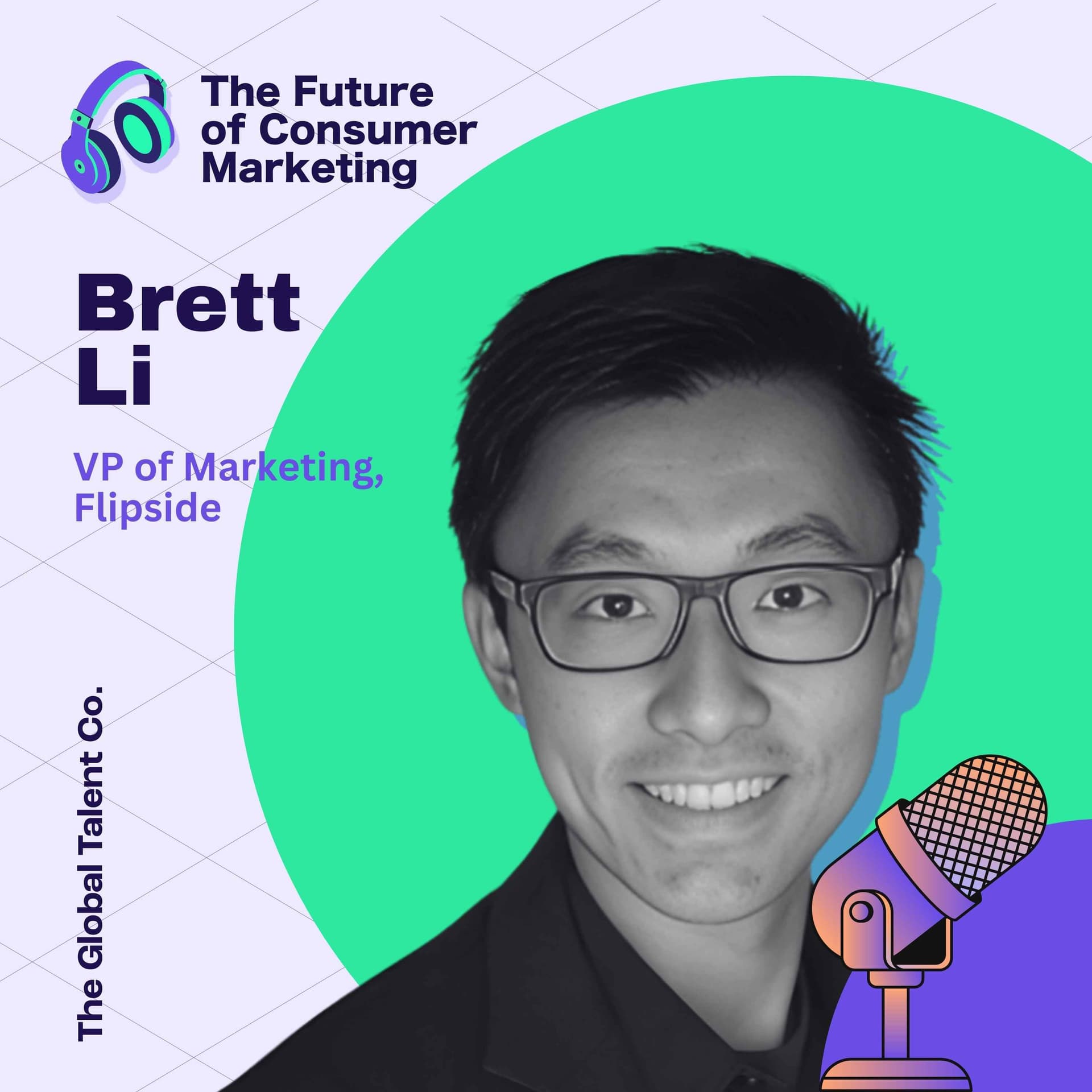
Brett Lee, VP of Marketing at Flipside Crypto. Web2.5 marketer with B2B tech marketing experience; entered crypto around 2015 (Ethereum), worked at ConsenSys on product marketing, then returned to Web2 to scale a 7-person automation startup (Tonkin) to ~100 and built its marketing team before leading marketing at Flipside.
Key claims
Crypto marketing should target “hearts” (why/impact) not just “minds” (features). Non-crypto talent is crucial in crypto marketing to avoid echo-chamber jargon. Flipside is not an exchange; it’s an AI blockchain intelligence platform that surfaces insights across 35+ chains.
Notable examples
Twitter-follow hype vs higher-value on-chain behaviors (staking, bridging, DeFi activity). Measuring success via user “stickiness” after incentives/airdrops; user scoring (0–15) where higher scores correlate with 3–5x higher likelihood to remain after 3 months; cited “3600% ROI” from targeting right activities/users. Mentions using Flipside AI via MCP integrations (Claude/Gemini/ChatGPT) and guardrails against AI hallucinations.
Written by AI. May contain mistakes. Listen to the episode to check what was said.
Chapters
Tap a time to open that second in VOUnderstanding Flipside's Role in Crypto
0:00 to 0:59
Learn how Flipside helps demystify the crypto ecosystem through data.
“Even if you're not a crypto expert, you can use Flipside to understand more what's going on in the ecosystem.”
Brett Lee's Background and Flipside's Mission
1:30 to 2:14
Discover Brett's journey into crypto marketing and Flipside's mission.
“And also right here, I have as a guest with me, Brett Lee, who is the VP of Marketing at Flipside, a company that orchestrates blockchain growth through a powerful mix of data, science and community.”
The Power of Data in Crypto Marketing
2:14 to 6:02
Explore how data transforms marketing strategies in the crypto industry.
“So starting with myself, I consider myself a Web 2.5 marketer.”
Transforming Data into Growth Strategies
6:02 to 6:18
Learn how blockchain data can create effective marketing strategies.
Maturing Marketing Strategies in Web3
6:18 to 9:10
Understand the evolution and maturity of marketing strategies in Web3.
“There's a lot of insights that you can draw from what's happening on chain in the data.”
Accessing Crypto Information for Non-Experts
9:10 to 10:46
Discuss how Flipside aims to make crypto intelligence accessible to all.
“grow up and have more mature marketing strategies based on data, based on users, based on LTV and those things that matter.”
Creating Demand for Unknown Products
10:46 to 11:43
Discover how to market a product that consumers are unaware of.
“From a person just touching crypto for the first time to the crypto expert that just needs faster insights into what's happening on chain.”
Crafting Content for Diverse Audiences
11:43 to 14:00
Learn how to create engaging content for both beginners and experts.
“Just imagining all the possibilities and how we're seeing this bloom from when it was, I don't know, just like the first white paper that Satoshi put out for Bitcoin to what it is now.”
Creating Engaging Content for Crypto Audiences
14:00 to 18:00
Learn how to develop content that appeals to both beginners and blockchain companies.
“And you guys don't manage any type of exchange on FlipSide, right?”
The Role of AI in Content Generation
18:00 to 20:40
Discover how AI tools can streamline content creation and enhance insights.
“That will continue to improve exponentially, frankly, as we go and move forward.”
Show all 17 chapters
Navigating AI Hallucinations and Trustworthiness
20:40 to 22:00
Understand the challenges of ensuring AI-generated content is accurate.
“You know, I can figure out a bunch of things like, you know, NFTs, more and more people know, But, you know, L1 and L2, like the layman will not know what that means.”
Communicating Crypto Concepts to Non-Natives
22:00 to 27:20
Learn strategies for explaining complex crypto concepts to a broader audience.
“And so you do need to be a bit more crypto native to excel in that.”
Shifting Demo Strategies in a Remote World
27:20 to 28:01
Explore how the shift to remote work has changed product demonstration methods.
“It can transform a lot of governmental services.”
Measuring Marketing Success in Crypto
28:01 to 31:28
Learn how to evaluate the impact of marketing in billion-dollar ecosystems like crypto.
“So it does get like, there's this gray area where it's too much or too little.”
Understanding User Behavior and ROI
31:28 to 33:39
Discover how user scoring and targeting can significantly boost marketing ROI.
“And it's creating millions of dollars of on-chain value.”
The Importance of Emotional Connection in B2B Marketing
33:39 to 36:42
Explore the necessity of capturing emotions over mere facts in marketing strategies.
“And so understanding what those behaviors and patterns are becoming more and more critical for driving success for companies and for individuals.”
Accessing FlipSide's Crypto Insights
36:42 to 37:18
Find out how to start using FlipSide to gain insights into the crypto market.
Transcript
Automatic transcript. May contain errors.0:00Even if you're not a crypto expert, you can use Flipside to understand more what's going on in the ecosystem. And so that's what we do. Information about crypto is based on word of mouth, hype. With Flipside, it's all based on data. How are you able to market what Flipside does and get people? It's important to infuse non-crypto talent into crypto, especially in marketing, so that you don't lose the ability to communicate to non-crypto native people. What is one of the most counterintuitive things about positioning highly technical products? Keep it simple, stupid. If you have to give one piece of actionable advice to marketers, you want to capture people's hearts, not just people's minds.
0:43The why behind what you're doing, what you're doing. What impact is it having on people?
0:59Hey, everybody. Thank you for listening. My name is Andres Figueira, and I'll be your podcast host for the day. I'm currently located in Buenos Aires, Argentina, and this show is brought to you by the Global Talent Company. We are connecting top remote professionals from South Africa, Argentina, and everywhere around the world with leading tech companies worldwide as well. So if your team is looking to hire world-class South Americans, South African, or any type of talent, just head over to globaltalent.co and let us know how we can help. And also right here, I have as a guest with me, Brett Lee, who is the VP of Marketing at Flipside, a company that orchestrates blockchain growth through a powerful mix of data, science and community.
1:43So without further ado, how's it going, Brett? How are you doing? It's going well, Andrus. Thanks for having me. No, thank you for hopping on the episode. We're very excited to have this here. We don't usually get that many cryptocurrency companies. And honestly, I am a big crypto fan. And I've been looking at Bitcoin since 2016 or something like that. So I'm personally very excited for this episode.
2:06So just so that you can give us a bit more context and the audience, Brett, would you tell us a little bit more about yourself, about what Flipside does, what its mission is? Sure, absolutely. So starting with myself, I consider myself a Web 2.5 marketer. I've spent the first, I would say more than half of my career in tech marketing, B2B mostly, companies. And then got into the crypto rabbit hole as early as 2015, especially when Ethereum was starting to take off. Because Ethereum was the first blockchain where you could build apps on top of it. Whereas Bitcoin is a bit more specific in its use cases.
2:50And I was fascinated by it. And so I went down that rabbit hole, joined a company called ConsenSys, which was an early and still around, but Ethereum ecosystem builder doing product marketing for them. Went back into Web2 for a little bit, actually, and helped build a startup from 7 people up to 100, a company called Tonkin. It was in the process automation space. And that's where I got my first kind of marketing team building experience. I was the first marketing hired by the time I left. had a full-blown B2B marketing team that covered communications, PR, content, demand generation slash growth, product marketing, et cetera, and then went back into Web3.
3:38And so now I am leading marketing at Flipside Crypto. In short, Flipside Crypto is an AI blockchain intelligence platform. So what we do is we help surface insights and intelligence from 35 plus blockchains. The top ones, including Bitcoin, Ethereum. And for those that are not as crypto native, Solana, Nier, Avalanche, those that probably not many have heard of, but are up and coming kind of blockchain. And allow people in just by asking questions to surface insights from what's happening in these ecosystems. you know how many users are coming in what are they doing on chain um what types of protocols or apps are people using uh decentralized apps or dApps are people using um what are the token flows stable coins are a big thing right now you know what are the flows with stable coins um which chain has the most stable coin activity uh real world asset tokenization is another big thing you you know, those type of insights.
4:42And so even if you're not a crypto expert, you can use Flipside to understand more what's going on in the ecosystem. And so that's what we do. Okay, nice. So it's like a way of informing people and help them get educated further about crypto with, I believe, is a more trustworthy source. Because in the crypto world, it's like the Wild You never know what you're reading, what's actually true, what's not. It's crazy. Exactly. Yeah. And that's the thing, right? Because crypto data is so difficult to analyze and understand, and you have to have very specialized skills and not many people in the world can do it.
5:21most information about crypto is based on word of mouth, hype, certain people tweeting and a lot of views. And so you follow what they're saying. And whereas with FlipSide, it's all based on data at the end of the day. It's all based on data of activities that are happening in these ecosystems. And you're drawing insights from that data and that activity. So So it's not based on hype. It's not based on a person's opinion and word of mouth and social kind of engagement. It's based on what's happening on chain. So it's much more trustworthy sources of intelligence or information. Okay, that is so cool.
6:04And now that we're talking a bit more in depth about this, how have you been able, Brett, to turn a blockchain data, like to turn blockchain data that people sometimes can't understand or can't trust into marketing strategies that actually drive growth for flip side? Yeah, absolutely. So a number of things. There's a lot of insights that you can draw from what's happening on chain in the data. You can tell from ecosystems, you know, what users are doing and what's creating longer term value for users and for ecosystems. There are certain behaviors in blockchain that creates a lot more sticky users than others.
6:44For example, the simplest thing you can do in blockchain is follow somebody's Twitter account. And that, for a lot of people, you know, that for a lot of people is... Guilty. I'm guilty. You'll look based on how many Twitter followers a certain chain account has. Oh, they have more followership than other people. So they must have more traction and more hype than other people. Right. However, that's not true at the end of the day, because a lot of that hype doesn't translate into real behavior in the blockchain itself. Of course. Being able to acquire the token of that blockchain, being able to transact in decentralized finance.
7:26There's things like bridging where you're basically bridging certain assets to other assets. There's something called staking, which is like you're basically depositing your assets to generate additional or just help to secure the network and your earning yield as part of that, etc. Those types of activities create a lot more long-term value for any ecosystem than just simply following a Twitter account, right? You can imagine. So based on that data, we see all of this activity. And you can understand as an individual, right, what ecosystems have more of these high value behaviors and high value users than others.
8:06And they're probably going to have longer term traction than other ecosystems that maybe have more short term hype. It's also valuable to the blockchains themselves because they can analyze and understand what are the activities that are creating longer term value than others. and what they can do is build marketing strategies and marketing programs that attract more people to do those types of higher value behaviors than simply following your twitter account right i'm not going to get a bunch of spend a bunch of budget um just to get people to follow my twitter account what i'm going to spend budget doing is getting more people to stake on my network and so those are things that you're turning data into uh marketing strategies that create long-term value Right.
8:50And so like in traditional industries, there's a lot more maturity for this type of stuff. Right. You're tracking TV, you're understanding conversion rates and customer acquisition costs and et cetera, et cetera. That in Web3 is just starting to mature. It's been a bit of the wild, wild west. But because of the recent kind of, I would say, mainstream wave of adoption, regulatory clarity, et cetera, et cetera, stable coins, transactions, payments, all of that stuff, you're getting that maturity now in Web3 where people are starting to grow up and have more mature marketing strategies based on data, based on users, based on LTV and those things that matter.
9:31Yeah, of course. And even with the fact of, I don't know, last year, Bitcoin being accepted as, I believe it's an ETF and Ethereum as well. And this is now allowing for much more industrialized money to enter the crypto market. So it needs to be regulated a lot better. And I love how FlipSite is actually trying to convey a sense of trust via the data you guys show and some real insights instead of just the speculation it has always been. even if it is on Twitter or whatever, it's always speculation. So I really like this new side of it because I hadn't heard of anything like that in everything I've seen.
10:09I've just dipped my toes into the crypto world, but I just love it. I'm reading everything about it all the time. And a lot of people have, a lot of people are starting to. I was talking to my mom the other day and she was like, how should I get some crypto exposure? I'm like, I need ETF for now, right? Until you know what's going on, just go get an ETF. However, it shows kind of the importance of providing user access to this type of information and this type of intelligence to a broader audience, people who are not necessarily crypto native, so-called, right? People who haven't been in the crypto industry for the last 10 years, people just starting to look at it.
10:46Like Flipside is about creating easier access to that type of intelligence and information for users across the board. From a person just touching crypto for the first time to the crypto expert that just needs faster insights into what's happening on chain. That's what Flipside is trying to do. Okay. Okay. So funny. Your mom asking you about Bitcoin because that literally happened to me last year. My mom was like, oh, where can I get some crypto? So I'm like, Mom, we're supposed to do this question like three years ago. It would have been a lot better, but here's how. Not too late. Even though the crypto industry has been around for what call it 15 years now, we're just getting started still.
11:33I think there's a lot of revolutionary changes that are coming down the road with crypto. And so it's still early. Yeah, it's exciting. Just imagining all the possibilities and how we're seeing this bloom from when it was, I don't know, just like the first white paper that Satoshi put out for Bitcoin to what it is now. It's like, oh, my God. Sure. OK. And Brett, how have you been able to create a demand for a product that consumers don't even know exists? Like, how are you able to market what FlipSite does and get people to want to sign in, subscribe, just use the platform? Yeah, I mean, I think this comes down to just very standard, basic marketing principles, which is to know your audience.
12:21Okay. I'm a big believer in first principle marketing. No matter what industry you're in, people are people at the end of the day. They're driven by certain motivations, intrinsic and extrinsic motivations. So what you got to do is understand how your product or service impacts their lives. For us, our audience, core audience are other crypto companies, right? They're protocols, they're blockchain that want to understand what's happening in their ecosystem in order to drive better strategies for growth, operations, etc. And then beyond that are individuals outside who are looking at these networks and protocols and change the better, understand them to know what they should be investing in, what they should spend their time in, et cetera, et cetera.
13:14So because of that, we've built marketing strategies and content and narratives that fit those users. And so even though it's not something that the mainstream audience would know and love, there is still narratives that you build to attract the users that are targeted for your product. Okay. Okay. No, yeah. That sounds totally logical. And I really like the fact that, yeah, you're appealing to other blockchains. Like your tool is something that another coin would use to just know how they're doing and see their own insight. So, OK. That's a primary, right? And then our additional expansion is the individuals who are looking at these chains and protocols.
14:05Of course. Of course. Of course. And you guys don't manage any type of exchange on FlipSide, right? It's not like you can buy crypto or change coins there. No, we're not an exchange. There are plenty of decentralized exchanges and centralized exchanges that exist. We are focused on providing intelligence. Okay. Okay. And how do you go about creating content for Flipside to then have it serve both the beginners that don't know and these blockchain companies that are also using it? How are you able to manage not boring any of those groups? Yeah, there's a lot of different types of content that you can create, which is really exciting, actually.
14:48You know, there's definitely thought leadership content that we can create. All of those things where we're talking about, you know, relying less on word of mouth and hype and hearsay and guesswork, more data driven, intelligence driven, you know, etc. etc. That's the type of thought leadership content that you can create that is both, depending on the topic, relevant to the everyday person, all the way to the most advanced growth strategist at a crypto company. What's also quite interesting is that with AI, you can create content with the AI itself. And so one of the things we have our own kind of LLM chat, but we We can also plug in FlipSide AI into Claude and Gemini and ChatGPT using something called Model Context Protocol or MCP.
15:41And all of these platforms can generate really rich dashboards and reports and blogs and articles simply by asking a question. I can literally just go into the tool and say, what are the latest trends happening on Ethereum? What are people doing in Ethereum? and it'll generate a dashboard that you can share publicly. And so content is a lot easier to create now, actually. And those things create itself. You don't have to spend hours and hours creating that content, which is super, super powerful. And then finally, there's a set of content about teaching people how to use the tool, which is easy to access.
16:21What types of questions should you be asking that gets you the most interesting intelligence and insights? AI is a burgeoning field. And this thing called prompt engineering is something people are just starting to scratch the surface up, right? It's like, how do I ask the right questions? How do I make sure that the AI is not giving me the wrong answers or making things up, something called hallucinations, right? All of these things are, yeah. I mean, it's really interesting to be at the intersection of blockchain and AI, right? Which is exactly where we're at because it's two emerging, you know, fast moving field that people are just starting to scratch the surface of.
17:00And so it's quite interesting. And there's a lot of rich content that can be built because of that. And have you guys placed any type of parameters for the AI or guardrails to make sure that whatever it spits out to the user when they ask it a question, you certify that that is an appropriate answer? Because since it's not financial advice, but it dabbles in finances. So I believe it's a delicate area to correct. Yeah, absolutely. So, you know, we put a lot of focus and attention on making sure that the answers that come out of our engine are right and trustworthy. The one thing to say is AI platforms can and will hallucinate.
17:42They will make up things. And so there is onus on the user to make sure that they're scrutinizing the outputs of AI. Of course. With that said, AI is only going to get better. There's a saying that the worst version of AI that you'll ever use is the one you use today. Wow, that's a nice one. That will continue to improve exponentially, frankly, as we go and move forward. So what we do in our engine to also kind of make sure that the results are accurate is we create something called – we basically train the AI agents that are in our engine. Oh, okay. You have like AI tutors that probably... Yeah, basically sort of workflows that like based on the questions that we're getting, we'll train the AI agents to better answer the common questions that people are asking.
18:35Okay. Whether it's for specific change, whether it's for specific behaviors, specific types of comparisons, all of those things, like we'll train the AI agent to be better at those questions than others. And so we also guide the user on what are the questions that we have these workflows or the AI agents are trained on. And they'll know that these questions are going to be more trustworthy than others. So it's a balancing act, right? I think there's onus on the users to know that they should be questioning and understanding how to read the outputs generated from AI. but also us as a provider as an intelligence platform.
19:10We are also training the agents to be better able to handle certain questions than others so that the questions can be more trustworthy. Okay. Okay. No, totally. I believe that's the way that people are getting AI to work better for them because in the end, I feel AI is like a toddler that was born about a year ago and now it's just beginning to crawl and people are showing it. Hey, don't fall here. you can take another step here and that way it's learning it's crazy but have you had uh the feeling brett with for example i don't know your marketing team um have you needed to find specialists in crypto in order to market these complex products because i feel sometimes the audience may know may know even more than your own team does about crypto if they're not crypto specialists sure Sure.
20:00There's definitely value to hiring people who've been in crypto for a while. With that said, I think crypto can benefit from an infusion of non-crypto native markets. because when you're in crypto for quite a time, quite a while, you get this echo chamber phenomenon. Okay. Talking to other crypto people. And over time, you forget how to communicate crypto to people who are not native. Right. And you end up using terminology that's very specific and only crypto native people will understand it. You know, I can figure out a bunch of things like, you know, NFTs, more and more people know, But, you know, L1 and L2, like the layman will not know what that means.
20:50What is that? I have no idea. Right. And so it's important to continue infusing kind of non-crypto talent into crypto, especially in marketing, so that you don't lose the ability to communicate to non-crypto native people. There are those certain roles that I think require more crypto native versus non-crypto native kind of talent. I think product marketing is actually one place where I think every product marketer who's interested in crypto should be looking at trying to get in. Because product marketing is one of those things that I would have preferred to actually hire somebody who's maybe not crypto native or maybe balance the team with half crypto native, half non-crypto native people.
21:33Because, again, it's about explaining product. It's about explaining your platform. And so if you can use terminology that everybody understands, it's going to be much more effective than if you only use terminology that crypto native people understand. Of course. Comparatively, though, if a social media manager, you probably want somebody crypto native because there's a very specific audience of communication, right, that you're trying to attract on crypto Twitter or on social. And so you do need to be a bit more crypto native to excel in that. So I think it's a mix, right? But I think it's healthy to have non-crypto native people in marketing for crypto.
22:10No, you're completely right. Because there is a thing as being too close to it and being in the industry for too long. Because it did happen to me. At one point, I was like, I was speaking crypto terms and jargon that like the people who didn't understand would just like their eyes would glaze over. They would start thinking about something else. And it's like, OK, I lost you, man. So it's not the way to go here. it's very easy to do that like every time i try to explain crypto to you know to to an everyday person like i really have to check myself to make sure that i'm not losing them number one question that is so hard to explain easily or at least it was for me a few years ago it's like what is blockchain and i'm like let's go down this but d.a can you take a coffee can you sit down yeah yeah how deep do you want to get exactly i could just tell you it's like a ledger and everything it's like it's a basic thing like that we can go deeper
23:06and um brett tell me about uh what do you think is a way that you can demo complex products that has changed since everybody went remote because demoing products and everything used to be different before when everybody went to the office and stuff but now that it's a more digitalized world, AI and all of this, how do you demo your product to be able to do it right? The way I would answer this question actually is I think how people understand or get to know products and companies is shifting because of remote culture, because of social media. It used to be, especially in B2B, you would fly to a prospect and book two hours in a conference room, kind of a room full of people and kind of just walk through from top to bottom what your platformer is, how it functions, the way it functions, et cetera, et cetera.
24:02Nowadays, people consume information in bite-sized chunks. Nobody sits... Frankly, I think webinars are starting to kind of lose its place in even B2B marketing because people don't have the attention span to sit for an hour. you know if it's longer than a minute nowadays they usually just swipe out exactly so i think that's something that's important to take into account when you're talking about demoing a product which is like focus on a more short form content you know talk about something that like is chapterized and something that immediately captures somebody's attention as to why they should be paying more attention to your product and then pull them down the rabbit hole um on with additional videos that like highlight a specific capability or highlight a specific use case or highlight a value proposition, right?
24:54And if you can do that, like, especially for inbound marketing, like that's the magic is having the right set of video content that can capture people's attention. So I would say that's really important. Okay, okay. No, and I agree, because it's better to have them go into a flip side social media profile because they found this how-to series of different little pieces of the platform that they can use and they find the one that they're looking for than to have an hour-long video with all the how to do it like they'll never watch it completely they won't even scroll because it happens even to me when i'm looking to learn something if i find a a fast quick way to learn it by chunks i'll optimize my time doing that rather than thinking, okay, I got to sit here for an hour.
25:39I got to make time to look at this. And I would say it's also more experiential now. The way people get to know products is like, you know, people want to have their hands on a product and try it and test it and see it for themselves. So whenever you can have like a demo version or a trial version of your product, I think that works very well. We see it with our, you know, flip side AI product. Just like people just try to ask some questions and they're like, oh, that's amazing. I would never be able to answer this type of question before. Right. And that's that's really, really important. OK.
26:16OK. And OK, now that we talked about how you would demo and that stuff, what is one of the most counterintuitive things that you've learned about positioning highly technical products? Keep it simple, stupid. It's really true. It's really true. I think this goes for highly technical products. It goes for B2B marketing in general. It's very, very easy to overcomplicate what your product does. And people tend, especially highly technical products, to immediately start diving into the technology rather than talking about what it does, why the world needs it. I think going back to the what is blockchain question, like I wouldn't answer that question actually with what here's how blockchain works.
27:08You know, it's you answer the question like here's why blockchain matters and here's what it is. It is a universal open measure. Why is that important is because it can transform things like payments. It can transform a lot of governmental services. It can transform how people exchange value on chain, you know, from peer to peer. and things like that. Like that's how you explain it rather than, you know, it's a blockhead and it connects together and there's, you know, validators or miners. You know, you can get into the weeds very, very quickly with something as technical as blockchain. Yeah. No, and it does happen with crypto that you want to explain what it does and how it works.
27:55But sometimes when people are skeptical, then you go into like the technical aspect to just make sure you prove them right. like you prove that the fact that it does work, but people don't understand that. So it does get like, there's this gray area where it's too much or too little. So you got to know how to navigate it. That's exactly right. And okay, let me see what else I have here. Oh, how have you been able to measure the marketing success of Flipside when your product impacts billion dollar ecosystems since you're talking about the different blockchains and everything? How has the measurement for success been?
28:27Yeah, so I think one thing we look at, especially with our, what we call partners, basically our customers, enterprise customers, other protocols, other chains, we see the impact that they're producing on their ecosystem. And so one of the key areas that we deliver outcomes for, that people derive outcomes for with our intelligence platform is growth. There's a lot of incentive-based programs in Web3 where, you know, basically you're earning incentives to do certain actions. And that's how people attract users to their ecosystem. I'm going to reward people for staking on my chain. Yeah, like if you subscribe to this new coin, you'll get the airdrop when it launches.
Read the full transcript
29:14Exactly, airdrops. Yeah, exactly, exactly. There's a lot of incentive-based mechanism when it comes to growth. What's challenging about that is you don't know if those incentives are attracting the right people for your ecosystem, especially with airdrops a lot of times. Heck, for a lot of people, it's free money. It's like, of course, why wouldn't I go after free money, right? But the challenge with that is you have a lot of these what we call airdrop farmers in the ecosystem that basically are mercenaries that go from airdrop to airdrop trying to farm as much of the airdrop as possible. And once they get the token, they dump it and they leave.
29:49Yeah. As soon as it comes out, they just like they do a mini-rug. Yeah, exactly. They convert it into a stable coin, whatever, right? That creates a lot of downward pressure on ecosystems for airdrop. Right after the airdrop, you can see the token price just goes way down, right? And so if intelligence can be delivered to these projects to optimize their airdrop distribution to people who are going to stick around for a longer period of time, that's intelligent that creates business impact. And you can see the difference. We have this proprietary user scoring methodology that basically looks at behavior on chain.
30:30Okay. And summarizes it into a 0 to 15 number. The higher the number, the higher the quality of that user, right? Okay. And there's correlation, like very deep correlation, where if a user is 8 plus on this user score, they will have a 3 to 5x more likelihood to stick around after three months in the ecosystem and not immediately dump. Okay. Dang. They're not one of those snipers. Exactly. So if you can analyze your airdrop distribution and know the users in that distribution and only focus on or give the majority of that drop to people who are higher quality, that's going to massively increase your likelihood of having people stick around on your train after that.
31:12And there's countless of these examples with other incentives, you know, where you can drive incentives. And we saw like a 3600 % ROI on incentives based on targeting the right activities, the right users when you drive those incentives. And it's creating millions of dollars of on-chain value. So those like that impact of the ecosystem is what we look at when it comes to success metrics, right, on the customer side. Okay. For us as a company, we obviously look at the traditional B2B metrics, right? How many pipeline bills, customers, conversion rates, all of that stuff. We also measure how many people are using our FlipSite AI platform as a user.
31:56Are they sticking around or are they bouncing after one question? Why if they are doing that? And so looking at those stickiness metrics is important as well. so yeah it's really interesting right what flip side is that you have like kind of a b2b you know part of it and also kind of a more 2c area of end users using the product and the metrics that you look at are different depending on the side that you're in okay yeah no that's why i've noticed it in a conversation like it's it's one part is for companies and blockchains and all that and then it's for the proper users which is so interesting but i love how you're mentioning that yeah you can you can then um like pinpoint who the best users are and that generates It's this crazy amount of ROI.
32:37But it's just that if you are able to tap into those specific users, like crypto users, in my opinion, they've always been so ride or die with the technology since the beginning. So if you get those old school guys who really believe in it, then you'll probably be okay. But it's this new age that it's all about just trying to buy the coin cheap, then sell it as soon as it goes out. There's a saying in everything. It's like, what is it? Buy the rumor, sell the news. and it's like always like that. Sure. And like, and like, I think just like any market, right. You have it in stock markets as well as that, like there's people calculating, there's people trying to find alpha or opportunities to buy low, sell high, you know, to get an airdrop and dump it and make a quick buck.
33:24But I think more and more with crypto, there is a move towards, you know, actual value creation for users. There's a lot of really interesting use cases that millions of people are using in the world. And it's creating billions and trillions of dollars of value. And so understanding what those behaviors and patterns are becoming more and more critical for driving success for companies and for individuals. Of course. Yeah. It's understanding those insights. Well, FlipSight gets insights and you get insights through FlipSight, which you ask. So it's just like a little domino effect. Okay. And Brett, I have one final question before we close out the podcast, since I see we're almost at time.
34:08And this one is more for the audience. So if you have to give one piece of actionable advice to marketers that are trying to build the next breakthrough B2B tech product or something like that, what would it be? Like, what would you tell somebody that's trying to start in a venture such as Flipside? So what I would say is you want to capture people's hearts, not just people's minds. Okay. And that's especially true in B2B marketing is that I think people tend to worry about capturing people's minds and not hearts. What do I mean by that? it's very easy to start communicating about features and x's and o's and you know capabilities even and that doesn't capture people's hearts the capture of people's hearts is the why behind what you're doing what you're doing what impact is it having on people right i'm a big believer in uh you know, a big cliche, but Simon Sinek's start with why.
35:13Like, I think it's very, very important, especially in B2B marketing, where people tend to lose that a lot of times. That's the one thing I would tell people is like, you know, capture people's hearts, you start with the why. That's how you communicate and you build your entire strategy around that as the starting point, rather than trying to explain your product as the starting point. Yeah, I love it. And going back to like the crypto world, you can get this product and put it out and just express all the features in a cold way that people get it. Okay, it works. But if you say with this feature, this person was able to do this, or we help this company do that, then it's like a more probable use case.
35:55And it gives like the testimony of somebody else that it's actually working. So it does provide a lot more trust. Yeah. And sorry, let me add one more thing. If you're not looking at AI and integrating AI into your marketing strategy or work stream, you're behind. Simple as that. Start now. Honestly, AI is revolutionizing how marketers work, how they market with strategy implement. Even something as simple as like, it's no longer necessarily about SEO. It's about GEO. you know and like optimizing for for for search may get you left behind because ai is where people are getting their information now um so that's the other thing i would say is like if you're not looking at ai as a marketer you're behind and make sure you you're looking at it right now you're completely right like seo is dying with even the fact that i don't know if i google something now i don't even get the articles or the links to the pages that give that info it's more of the AI summary and I don't even have to click anything anymore.
36:59It's just great. Totally right. And okay, Brett, before we close out the episode, which has been amazing, would you be able to tell everybody that's listening, if they're interested in FlipSide, how they can access the platform, what they need to access it, if there's any region locking that you can't go there? But yeah, no, everyone can access it. Just go to FlipSideCrypto.xyz to find out more information. uh we do have a free version of the flipside ai chat so anybody can go in and start asking questions and learning more about crypto um once you start becoming a power user that's when um we do have a a monthly fee for it but yeah everyone can get started everyone should get started i encourage everyone who's curious crypto curious i take a walk and see what they find no yeah i i can assure you that i'm going into this i'm going to try it out i'm just going to chat and to see what it tells me.
37:54Because I'm a big Solana fan, so I'm just going to ask you to see what it tells me about Solana. There we go. There we go. Excellent, Ben. Brett, I really appreciate you being able to come on the episode. This has been amazing. And everybody, if you liked what you heard, if you liked this story, please don't hesitate to press subscribe and to follow this podcast so we can learn more about the different guests we have on. And you heard it here first, go to flipsidecrypto.xyz if you're curious about how AI can help you get insights in the crypto world.
From the publisher
In this episode of The Future of Consumer Marketing, host Andres Figueira interviews Brett Li, VP of Marketing at Flipside. Flipside is an AI blockchain intelligence platform that transforms raw blockchain data into actionable insights across 35+ blockchains including Bitcoin, Ethereum, and Solana. As a "web 2.5 marketer," Brett brings traditional marketing expertise to the emerging crypto space, helping both blockchain companies and individual users make data-driven decisions in an industry historically driven by hype and speculation. Through Flipside's platform, users can ask natural language questions to uncover ecosystem trends, user behaviors, and value flows without needing deep technical expertise.
Topics Discussed:- Building trust in crypto through data-driven insights versus hype-based information
- Marketing complex technical products to both crypto-native and mainstream audiences
- Balancing crypto-native talent with traditional marketers to avoid echo chambers
- Adapting B2B demo strategies for the short-attention-span digital era
- Using AI to democratize access to blockchain intelligence
- Measuring marketing success when your product impacts billion-dollar ecosystems
- Developing user scoring methodologies to optimize incentive programs