In short
SoFar Sounds’ scaling playbook for turning intimate living-room concerts into a global network (400 cities, 78 countries) while keeping experiences hyper-local, culturally relevant, and operationally consistent.
Guest backgrounds
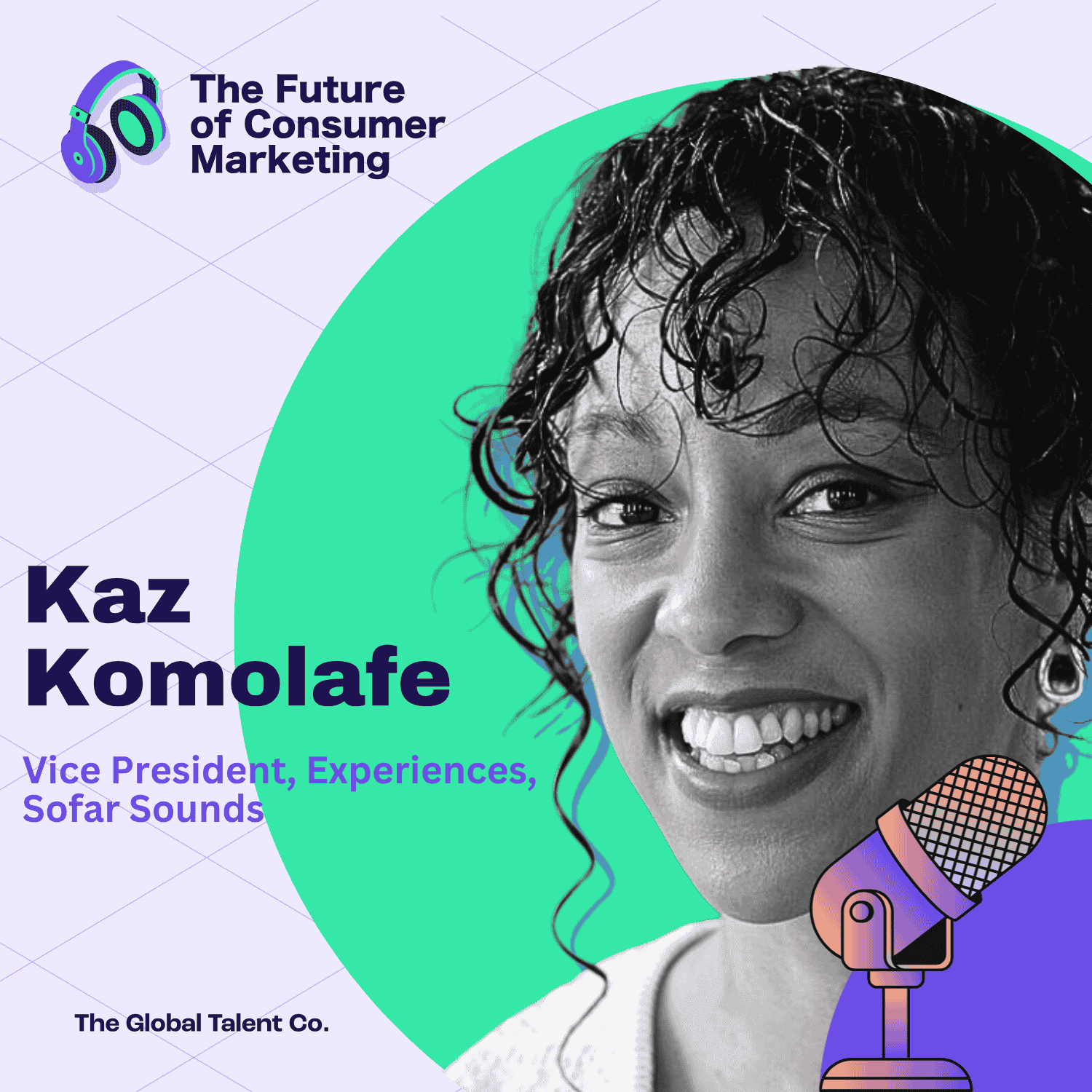
Carolyn Kamulafi is Vice President of Experiences at SoFar Sounds; she previously worked as a consultant and has a background in sustainable growth thinking. (Host: Andres Figueira.)
Key claims
Scaling depends on hiring the right local leaders; standardization should be paired with customization; artist curation is guided by “local and good” plus strict inclusion targets (50/50 gender split, diverse ethnicities/sexualities/backgrounds); quality is maintained via digital artist references (YouTube), performance monitoring, customer feedback, and coaching local leaders; AI is used for productivity/customer support, not to replace creativity.
Notable examples
East London–based “SoFar Next” festival; Latin America Spanish-language emphasis; Yeba’s viral SoFar YouTube performance; O2 activation in the Scottish Highlands live-streamed to central London; partnerships with Universal and O2.
Written by AI. May contain mistakes. Listen to the episode to check what was said.
Chapters
Tap a time to open that second in VOExploring SoFar Sounds
0:43 to 2:41
Carolyn shares the story and mission of SoFar Sounds, a global live music movement.
“And today, with me here, I have Carolyn Kamulafi, Vice President of Experiences at SoFar Sounds, an event company that's leading the source of unique cultural experiences in unexpected places.”
Challenges in Scaling Operations
2:41 to 4:05
Discussion on the operational challenges faced while scaling SoFar Sounds globally.
“Because that person is going to be so important for, you know, quality, you know, quality of experience, but also the strength of the community, because they are really central to building that community.”
Cultural Nuances in Music
4:05 to 6:34
Carolyn explains the importance of cultural understanding in music across different regions.
“is music is so different from culture to culture.”
Localizing Experiences and Festivals
6:34 to 8:11
Kaz discusses approaches to making SoFar events feel hyper-local and relevant.
“And Kaz, talking about the fact that it's like you look for the specific person from the community to help you expand.”
Artist Selection and Diversity
8:11 to 11:28
Insights into the guidelines for selecting artists and promoting diversity at SoFar Sounds.
“And I think everyone is just really happy with this idea of kind of, yeah, super apps, the growth.”
Maintaining Quality While Scaling
11:28 to 14:01
How SoFar Sounds ensures quality in artist selection as they expand.
“Like if you're nobody and you are a little bit shy to sing or anything, this is like the best place to lose that.”
Maintaining Quality Across Cultures
14:01 to 17:09
Learn how Sofar Sounds maintains high standards while adapting to local cultures.
“So it gives them like this stage, a different one, a bit more, I want to say a bit more elegant to what doing it at home could look like.”
Sustainable Growth vs. Pure Scale
17:10 to 18:28
Discover the importance of sustainable growth in today’s business landscape.
“And from when we were looking up SoFar Sounds, we also investigated a bit more of your background, Carolyn, as well.”
The Role of AI in Creativity
18:29 to 21:09
Explore how Sofar Sounds uses AI without compromising creative integrity.
“Because I think if you're doing that, it's not necessarily there's a lot of way to fake that.”
Partnerships with Industry Giants
21:10 to 22:48
Understand how Sofar Sounds collaborates with major brands while keeping authenticity.
“Yeah, and I think that's actually a really good way of putting it that I haven't thought about.”
Show all 11 chapters
Advice for Aspiring Entrepreneurs
22:49 to 25:07
Gain insights on building a strong team for success in the music industry.
“It's making it a little bit more original.”
Transcript
Automatic transcript. May contain errors.0:00This show is brought to you by the Global Talent Co, a marketing leader's best friend in these times of budget cuts and efficient growth. We help marketing leaders find, hire, vet, and manage amazing marketing talent for 50 to 70 % less than their U.S. and European counterparts. To book a free consultation, visit globaltalent.co. Hey, everybody. Thank you for listening. My name is Andres Figueira, and I'll be your host for the day. This show is brought to you by The Global Talent Company, a company that's connecting top remote professionals from Argentina, South Africa, and all over the world with leading tech companies worldwide.
0:36So if your team is looking to hire world-class South American or South African talent, head on over to The Global Talent Co. and see how we can help. And today, with me here, I have Carolyn Kamulafi, Vice President of Experiences at SoFar Sounds, an event company that's leading the source of unique cultural experiences in unexpected places. And this is built by and for local communities. So without further ado, welcome, Carolyn. It's a pleasure to have you here. I'm so excited. Carolyn, I know that we just got you on this episode. And before I actually got on this interview, I looked at SoFar Sounds and what you guys doing is looking super cool.
1:12Would you be able to put the audience a little bit more in context to what SoFar Sounds is and what you guys do, your mission? Yeah, yeah. So I think the way that I like to tell the SoFar stories, I kind of talk about it as it kind of started and I think it started from a place of wanting to really think about the live experience space and what was not working about it you know in that day so I think our founders really thought about the fact that people were connecting with artists and going to gigs but they weren't really living in the moment and really connecting with each other or with the artists they'd be sitting watching the gig but they'd be kind of you know looking at their phones or going to the bar and kind of not really living in that moment.
1:56And so we wanted to create a space particularly for up and coming emerging talent to, you know, make fans connect with new music lovers and also more importantly for music lovers to connect with each other. So what started in a tiny little living room in North East London kind of grew into this global movement that's now in 400 cities all over the world. 78 countries. And I think the thing that connects all of those is love of experience, love of community, but also really a commitment to the local culture and local grassroots arts and culture. So every single market has a local leader who's responsible for building so far in their city.
2:40And that's the way that we really keep it kind of vibrant and local. Wow. And what has been, Carolyn, the biggest operational challenge in scaling from living room concerts to 78 countries is what I heard or my goodness it's a lot that's a lot it's a lot yeah and I think the biggest challenge is one which I think a lot of people will really identify with which is how do you think about finding that right person for kind of taking forward your mission and taking forward your culture I think particularly considering music and arts and culture is something which is so personal to everyone so I think the thing that we really think about is, are we working with the right people in every city?
3:23Because that person is going to be so important for, you know, quality, you know, quality of experience, but also the strength of the community, because they are really central to building that community. No, and I would totally understand why a person that's like native or somebody that knows the country where So Far Sounds is expanding in is so important, because that way you can also cater to the cultural likes and avoid the dislikes of the community of that place that maybe if it were you or somebody else from the UK or anything would not be aware of. So it's the best way to like get down and dirty with that country and understand it without being in.
3:57I want to say it's like reducing the space for mistakes by the person. Yeah, and I think it's actually kind of completely. And I think one of the things that's really interesting about music in particular is music is so different from culture to culture. Yes, maybe there's been a little bit of kind of homogenization because you've got streaming platforms and kind of the rise of kind of global artists. But it is so specific place to place. It's even specific city to city. So when you're thinking about the UK, it's like spoken word is massive in London, but it's probably not as big or it isn't as big in Edinburgh.
4:34You know, so we don't do a lot of spoken word in Edinburgh, but we do a lot of spoken word in London. So that sort of cultural nuance doesn't just exist country to country, but it also exists kind of place to place. And I think we really want to pay almost tribute to that, I think, with the way that we operate. No, I think that's beautiful. And I think it's very savvy in terms of strategy because it's the best way, as mentioned, to like be one of the people where you're entering and not be just like an outcast who's trying to do something. But it's more like being understood. And Kaz, what's one operational insight that goes against conventional wisdom when you've scaled this brand?
5:09Yeah, I mean, I think actually that one is kind of one of the things I would say, right? Because I think so many companies really think about how do we create standard processes, standard models, standard systems. And I think this kind of runs a bit counter to that because actually so every single city looks a little bit different. And I think the way that we interact with them, obviously we have a standard kind of operating model. But I think we allow for a huge amount of customization and innovation within that model. And I think that's kind of something which I think if I were, you know, earlier in my career, because I started my career in consulting, if I was kind of putting my consulting hat on, I kind of think that would actually be quite challenging.
5:52And it does obviously have its challenges, but I think what it brings with that is a huge amount of innovation. Okay. Which I think is so important when you're thinking about how to maintain cultural relevancy, which is, you know, such a critical piece when you're thinking about experiences because they are at their core kind of cultural. Well, no, and innovation in terms of maintaining relevance, it goes hand in hand because people have, and nowadays even more, like very low attention span. So you got to make sure you're always in the spotlight being heard of something different, because if not, people just get bored so easily.
6:31And if it's too much of the same thing, they'll just move along. So that's totally true. And Kaz, talking about the fact that it's like you look for the specific person from the community to help you expand. And have you noticed any specific differences in building consumer communities in the U.S. versus Europe versus Asia? Do you have any sort of examples, weird quirks that we might not be aware of that you've learned of? Yeah, yeah. No, I think, you know, before I started so far also, I actually worked in Jakarta, so Southeast Asia. And I think there's a huge amount of variance, kind of really first and foremost, obviously culturally, right?
7:09I think there's a big kind of significant nuances across the different cultures. I think Asia, younger, generally a bit more mobile savvy. The UK, US, generally get older. So really the way that you kind of think about speaking and relating to those audiences is very different. Wow. I think there's a bit more, at least kind of how I think about it, is there is, I think, even though the traditional marketing model is changing, in kind of the UK and the US too. I think there's still a little bit more, yeah, more open to kind of traditional ways of marketing. Whereas I think in Asia, it's definitely more, yeah, more Moelle first, more open, I think, to e-commerce as a concept in general.
7:55I feel like I remember that when I moved, this was sort of 10 years ago now, but when I moved to Jakarta, the very, very first thing that I did was like, oh, it's been a long flight. I'm going to have a rest. Maybe I'm going to book a massage, you know? I opened up this app, this app called Gojek, and they have, you can book a massage, you can book a taxi, you can book food delivery, all in this one app, which is, I just couldn't imagine that developing. And I think everyone is just really happy with this idea of kind of, yeah, super apps, the growth. which is not something that i think is i could see happening in the us and so i think when we're thinking about launching kind of experiences or new products at so far i think we are really thinking about how do we make it feel hyper local so we just launched our very first festival actually at so far so next month and i think we've really thought about how to make it feel not even just London kind of centric but even East London centric because the festival's based in East London okay so thinking about how we kind of make it feel local so working with local businesses working with local not even just local businesses but also local kind of organizations who whether it's you know business groups or whether it's kind of community groups to try to kind of make it feel like it's as authentic as possible and you know we are talking about kind of almost franchising this concept and launching it in other markets.
9:24And so that's where this local person would come in because we'd really want to think about how do we make it feel unique to Berlin or unique to Chicago, whether it's music or kind of the way that we think about working with the organizations in that city. Okay, I understand. And Kaz, this is more of this curiosity of my own. In terms of music and the genres you guys place in your festivals or the events you create do you have a specific set of i don't know i want to say guidelines that so far sounds wants to make events for these specific genres or is it something that you cater to locally because this genre is what's listened to the most like how do you guys go about choosing and catering the music you guys showcase it's a really really good question because i think it's something that we think a lot about because it is i think it is really tempting particularly for something like music, you have your own preferences.
10:17So I think it could be really easy to only book a certain type of music because it's the music you like, right? And so I think, you know, there are a couple of ways that we think about it. I think the first is absolutely we try to make it as catered as possible to the local market. So like I said, there are types of music that we wouldn't put in a city just because it wouldn't necessarily be as significant. I would also say, for example in our Latin American countries we'll have a lot more people singing in Spanish than we would in the UK right which is hard yeah I think it is it bears repeating so we try to make sure that we're obviously working with local artists so that's the first thing I think the second thing that we are quite clear and quite I don't want to use the word strict because it makes me sound sort of like a headband is thinking about kind of not necessarily genre but diversity of artists that we work with so we always try there's a 50 50 gender split that we're working with artists from a range of ethnicities range of sexualities range of backgrounds so that's something that we are quite strict about but honestly i think for us really it's just is it local and is it good so really and kaz like you mentioned latin america are you guys making events in argentina we do yeah is there anyone that's coming up soon because i gotta go check this out live like this is a crazy honestly i don't know the exact next show happening but i can definitely send it over to you afterward i can get you on that i just want to go check out the so far sounds experience it must be so nice and i love the fact that you're mentioning that it's really a way to showcase the local talent for all these up-and-coming artists because personally me i make music as well like i like to make music and produce so i have like a few songs I've played a few gigs up and around in Buenos Aires because this city is beautiful in terms of the musical circuit that it has.
12:14Like if you're nobody and you are a little bit shy to sing or anything, this is like the best place to lose that. That's a call to the public because it's so cool. We were just talking about Banner Cyrus a couple of weeks ago, actually. So, yeah, I'll definitely send over the show listings to you and you can. Oh, my God, that's so fun. And OK, Kaz, in terms of the operation perspective as well, you mentioned that the filter is kind of the artist being local, the artist being of a certain demographic, just to make sure we have these very included and a whole spectrum of different type of people within the SoFar Sounds experience.
12:49and how do you make sure that the talent you guys discover is still curated well without losing the quality as you scale up because i imagine the outreach and looking for artists it must be at one point you must feel like you're running out or maybe not no i think that's a really really good question and i think the thing that i would say is there's no lack of talent in the world so I think a lot's supposed to run out but I do think we have a very active digital presence particularly on YouTube a lot of content about the artists that we work with on there and so I think what that does is that's a really clear bar on the quality of the artists that we work with so I think people have a really clear reference point of kind of yeah what a good so far artist looks like yeah now i think the second piece obviously we kind of have to put in place you set that bar but then you kind of almost have to have belt and braces where it's thinking about how you monitor and track kind of how artists are performing and we do collect that data too so we get customer feedback on the artists afterward and kind of we track that internally to see whether you know there are specific artists who maybe aren't performing as well and then we speak to the local leader to kind of talk through if they're consistently looking at a level of quality that we wouldn't expect we think about how we can kind of coach that local leader to think about what good looks like so wow i think it's me setting that bar but then also kind of leveraging days to think about making sure that it's not getting off track that's so nice and when you mentioned that like you guys have like a very what's it called like a bigger presence in youtube and that you're creating content for that channel i couldn't help but like kind of compare so far sounds to what I feel Tiny Desk is because you guys, if you're having artists showcased in your channel, it must be like a certain standard of production that the artist, if they don't have it personally or in their own professional world, So Far Sounds provides this for them as well.
14:48So it gives them like this stage, a different one, a bit more, I want to say a bit more elegant to what doing it at home could look like. I think we have artists who will, you know, they blow up on YouTube. I think the artist, I don't know if you know the artist Yeba, one of her tracks blew up on Sofar Sounds YouTube and she kind of still references it as something which was, you know, really significant for her. And I mean, you should go back and watch it. It's a wild, wild performance. She is phenomenal. The level of emotion is just. What? I'm going in YouTube right now and I'm just leaving this tab open for after our call.
15:27I'll have a Sofar Sounds concert while I work on a Friday. That's going to be beautiful. Well, that's what I do. It's so good. I just, yeah. Okay, Kaz, in terms of the brand authenticity and what so far sounds, how you represent yourself with your image. Now we've talked about how you guys provide a standard for all these different local artists, but is it difficult to maintain like the same standard while catering to so many different local cultures and customer preferences? Like what is the anchor you guys have that allows for the brand to remain homogenous but change a little bit between the countries?
16:06Yeah, I think we spend a lot of time with those local leaders kind of setting standards, best practices. From your side, right? From our side, yes, yes. So we have a community team that works with them. And I think that's where a lot of the magic happens. I think that team does a really amazing job of thinking about how do we make sure to set standards and set processes but allow for people to kind of be themselves and put that local spin on it so you know I think there are a couple of really key points the onboarding process because obviously that's kind of where you set the process and then they've built some amazing kind of tooling that is kind of full of references for people to go back to kind of see what does a good artist look like?
16:55How do I set up a show? How do I think about leveraging the brand online? And so it's sort of that two-pronged approach, but that team is really responsible for kind of setting that and making sure that quality is still maintained. And I think, yeah, that's where a lot of the magic happens. Okay, okay. No, I understand that. I understand that. And from when we were looking up SoFar Sounds, we also investigated a bit more of your background, Carolyn, as well. And we saw that you have kind of a financial background too. Is that correct? I think you mentioned you were a consultant at one point as well.
17:28Yes, I was a consultant. Okay. And from those previous work experiences, how has that changed how you think about sustainable growth versus pure scale? Like what is some things that has brought to you in your position nowadays? Yeah, I think the world has really changed, I think, in the last 15 years. I think, you know, companies like the Ubers of the world where, you know, they took 15 years to get profitable and it was just about how do we grow? How do we grow? How do we acquire new customers? I think that's something which I think is not how people think about it today. So I think I have maybe never really thought about it in that way.
18:07I think I always found that a bit strange because I think so much of my background is working with kind of much more established companies that really think about how do we grow sustainably. And so I think that is has kind of always been how I've thought about it. So I don't know if that's massively changed. I think this is such a non-answer, but it honestly hasn't really changed for me. I think, you know, when you're thinking about sustainable growth, I think it opens up the world of possibility for you so that you aren't just running it pure scale. Because I think if you're doing that, it's not necessarily there's a lot of way to fake that.
18:43I think you can spend a lot of money on performance marketing. You can spend a lot of money on kind of big, flashy out of home ads and you get that brand awareness that way. But I don't think it is. I think you can hide. it can cover up a lot of bad i think so now i understand that but i do also get the fact that if you've worked with previous companies that did well while sustainably growing then nothing needs to actually change because you know the process so it's just like maintaining that standard because you know it works if it ain't broke don't fix it okay okay and do you guys i imagine you are but i would love to know this because i'm not sure how it works within like the musical industry but is so far sounds leveraging AI to help your processes in the maybe day-to-day task?
19:26Or do you have a specific use for AI that is something that people might not be aware of or could be very... Yeah. So I think AI is such a tricky topic when you're thinking about the crazy space. Tricky and trending, the double T's. Tricky and trending, yeah, the double T. Be smart, if you will. But no, I think it is something that we think about. I think we are using it much more to think about how we improve our productivity. So for example, we have our customer support team. We do have an AI agent that we have, which supports our customer support team. We use it to think about, you know, for trying to kind of analyze data, we use it for that.
20:07But what we are really careful, I think, about making sure it never replaces creativity. I actually think it actually could never replace creativity. I think by its definition, by its definition, it can only ever repeat creative ideas that other people have had. And I think that's something that I hope people realize sooner rather than later. But I think we would never use it to replace a creative's work. I've tried it out. I've used AIs to see what songs they can create. And it's never the same thing, or at least it never relays the same type of feeling that a song written by somebody that's actually experiencing what they're singing about could apply to the person that's hearing it.
20:48So I understand that. And I'm glad that SoFarSounds isn't thinking about replacing creativity because it's true. I don't think AI is anywhere close to that. And even AI allow us to, it's more like taking away those menial or monotonous tasks from the everyday to allow us to create even more. and give us a headspace to be in the proper feeling for creation. So I think that's something that's really going to help us out. Really going to help. Yeah, and I think that's actually a really good way of putting it that I haven't thought about. It's actually almost giving us that space to be more creative, which I think that's a really good way of thinking about it.
21:22Yeah, no, no. It's like if I don't have to worry about doing this for three hours, maybe I could just practice guitar then or something like that. I think it's more about what the person does with their time after AI helps them out. and carolyn have you guys in seeing what so far sounds is have you done or do you have like partnerships with big streaming platforms for music or more known brands or do you want to remain a little bit more independent and just in your own lane yeah so we do have partnerships with kind of the more established kind of industry players so a couple of the big record labels we've got a partnership with universal so yes yeah so we definitely do have kind of those bigger partnerships.
22:03I think we also, you know, we actually do a lot with brands. So I think brands come to us really to kind of, when they're thinking about how do we build something that is really culturally resonant. So, you know, we just finished an activation with the telecom company O2 in the UK, where we took a hundred people to the middle of the Scottish Highlands and we did a kind of mini festival and it was all live streamed using the power of O2 into the middle of central London. So that was an amazing activation. And I think really a testament to how we can build something really exciting that really grabs the kind of cultural zeitgeist, if you will.
22:39But I think we definitely do work with brands, but I think we are always thinking about how to do that in a way that still feels authentic. Okay. Not just like a product placement thing that you have an ad for the brand in the concert or something. Okay. It's making it a little bit more original. I love that. I love that. And Kaz, I have one final question. This one is more for the audience than for us. But if you were an up-and-coming entrepreneur that's entering this music industry and you just got the vice president of experience position and you have a brand like Sofar Sounds, what would be some advice that you'd give somebody in your shoes when you were beginning that you would have loved to know?
23:21Oh, my goodness. That's a great question. I didn't mean to put you on the spot, but I... No, that's so good. I love it because I think this is actually, I'm so terrible at introspection and that is actually, it's my fatal flaw. I'm so bad at introspection. No, I think the thing that I would probably say is you have to think about how you build a great team around you so that you are 10x'd. I think one of the things that I feel like I made the mistake of particularly early on in my career is holding things too close. And I think one of the things that you learn over time is that's not good for you and that's not good for your team either.
24:08So I think that is something that I definitely feel like it bears repeating because I think when you're trying to operate in hundreds of cities all over the world, different time zones, different languages, different cultures, I think you have to place a huge amount of trust in the teams to deliver and show up every day. And so I think that's something which is kind of a personal lesson. But I think if I was to think about what people could take away from that, I think it's making sure that you build a really great team that you feel like you can do that for. You can do that, kind of make yourself multiple.
24:44No, that's like 100 percent because it has happened to me. And it's like even more so when you have a company that you started since it was just like living room concerts to now 78 countries. At the beginning, you have it real close and you feel you can do everything. And when it starts scaling, that's when the real issues appear because you can't be everywhere at once. So you heard it here first, peeps. Make sure you can trust your team. Make sure you build it nicely so that then you have no issue delegating and life is a little bit easier. My mom is actually also a small business owner and she always says, you want to delegate yourself?
25:16I have a job. I don't know. I don't know. Oh my God. Oh, and Kaz, before the show ends, I did want to provide also a small space for you to let the audience know to whoever's listening, if they're interested in knowing or hearing a SoFarSounds concert, if they want to check out, if there's any SoFarSounds events in their city where they're at, how would they go about doing so? Yeah, yeah. So go on our website, SoFarSounds.com. It will automatically push you to your nearest so far city. So no matter where you are in the world, if you're in London, definitely check out our festival happening in a couple of weeks.
25:56But really excited for that. You'll see me probably at the door checking people in. So if you're in London, definitely check that out. And I think if you're not just if you're a music lover, I think we kind of appreciate and welcome all arts and cultures. So a lot of our cities also do experiences that are not just music centered. They might be comedy. It might be dance. Some cities do dance. So definitely don't hesitate to check out that if you are arts and culture lover more generally. Of course, that's so cool. It's not only that musical experiences, but a several range of different cultural experiences.
26:31So everybody just check out Sofa Sounds and see if there's something in your city. And Kaz, it has been a pleasure. Thank you so much for hopping on the episode super interesting conversation and i really just hope that so far sounds keeps expanding and that we can get to see you guys do more concerts and events everywhere yeah i mean the show that's the number one thing we need to make that happen
From the publisher
In this episode of The Future of Consumer Marketing, host Andres Figueira interviews Kaz Komolafe, Vice President of Experiences at Sofar Sounds. Sofar Sounds has scaled from intimate living room concerts in North East London to operating in 400 cities across 78 countries, building a global network of culturally-resonant live experiences. Rather than standardizing operations across markets, Sofar empowers local leaders to curate hyperlocal experiences while maintaining quality through data-driven systems and strategic content distribution. Their approach to scaling community-driven experiences offers critical lessons for consumer marketers navigating the tension between growth and authenticity.
Topics Discussed:- Scaling hyperlocal community experiences across 400 cities and 78 countries
- Building location-specific cultural programming versus standardized operations
- Using YouTube as both a quality benchmark and artist discovery platform
- Leveraging data to monitor quality across distributed operations
- Transitioning from grassroots events to brand partnerships and festivals
- Maintaining authenticity while working with major labels and corporate sponsors
- Applying AI to operational efficiency without compromising creative integrity
- Delegating effectively when scaling across multiple time zones and cultures