In short
Podcast Episode Notes: From Medtech to Public Safety - A Category Reframe That Worked
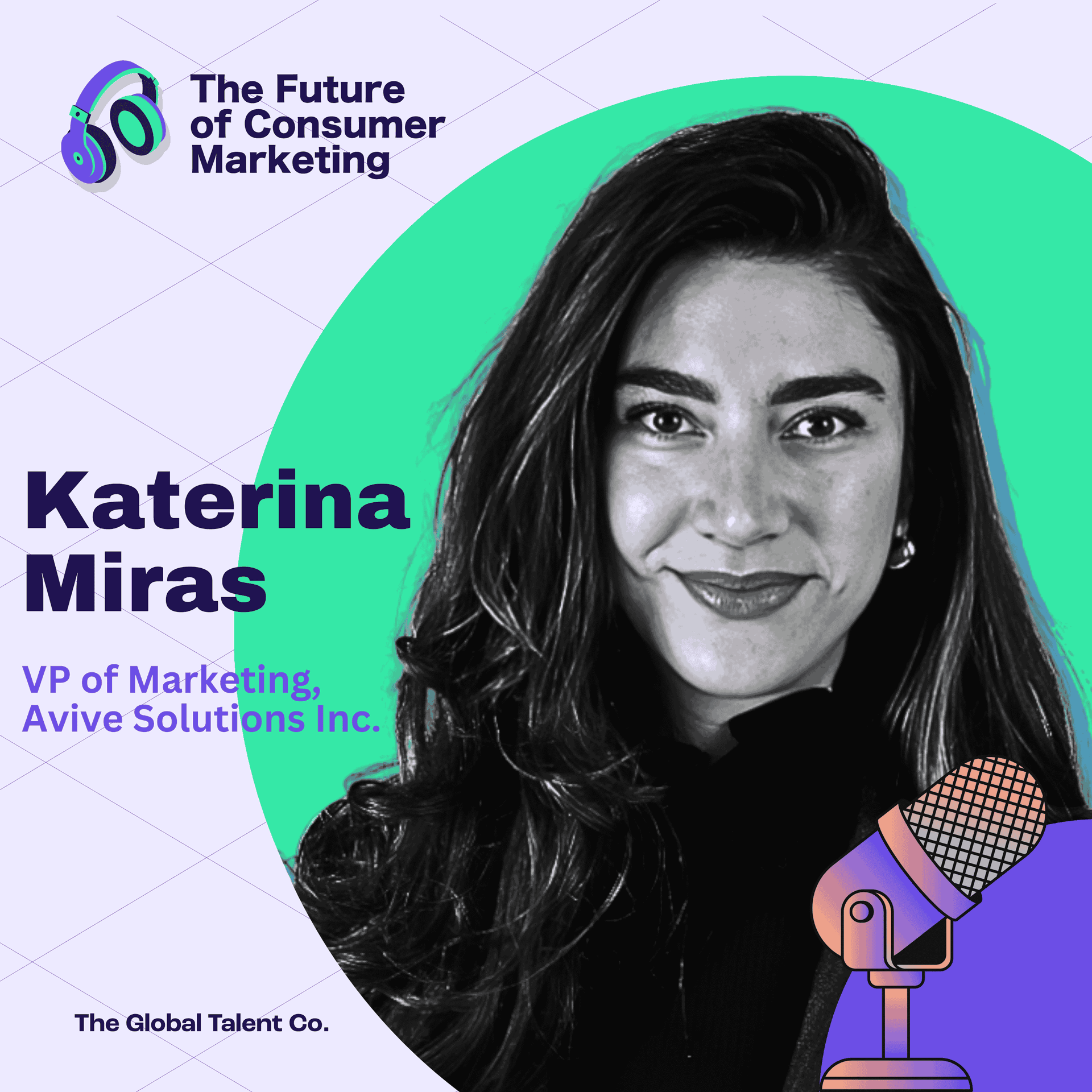
Podcast Overview Podcast Title: Future of Consumer Marketing Episode Title: From Medtech to Public Safety: A Category Reframe That Worked Host: Andres Figueira Guest: Katerina Miras, VP of Marketing at Avive Solutions Description: This episode discusses how Avive Solutions is revolutionizing emergency cardiac response through technology, emphasizing the importance of connectivity in public safety.
Key Topics Discussed
- Repositioning the Category
- Shift from Medtech to Public Safety: Avive Solutions reframed its identity from being a medtech company to a public safety technology provider.
- Addressing Connectivity Issues: The company identified that the real problem in sudden cardiac arrest survivability was not the availability of devices (AEDs) but rather the lack of effective connectivity and rapid response systems.
- Building Institutional Trust
- Overcoming Resistance to Change: Strategies for gaining the trust of institutions that typically resist change, operating under the mantra of “if it ain’t broke, don’t fix it.”
- Community Ownership Programs: Developing initiatives that empower communities to take ownership of public safety programs, making the technology part of local culture.
- Champion-led Initiatives
- FOMO-driven Adoption: Utilizing influential community members to create urgency and excitement around adopting advanced AED solutions.
- Neighborhood Heroes Program: Engaging citizens in training programs to help in emergencies, thereby promoting local heroism and community involvement.
- Storytelling as Strategy
- Implementing Effective Storytelling: How storytelling is a pivotal marketing strategy that fosters emotional connections and drives action among target audiences.
- Operationalizing Stories: Learning to communicate the narrative effectively so that it resonates with the community, enhancing understanding and engagement with the AED technology.
- Narrowing the Ideal Customer Profile (ICP)
- Targeting SLED Markets: Focusing on state, local government, and educational institutions as primary customers to ensure deeper and faster adoption of technology.
- Community Engagement: Building relationships with organizations that can amplify the message and promote the device's benefits within their networks.
Key Takeaways
- Survivability Rates: Sudden cardiac arrest survivability has remained stagnant, highlighting the urgent need for innovation in emergency response mechanisms.
- Importance of Community: Building a strong community partnership is vital in maintaining a safe environment and ensuring quick emergency responses.
- Technology as an Asset: By integrating technology with existing emergency response systems (like 911), Avive Solutions enhances the efficiency and reliability of life-saving interventions.
- Empowerment through Education: Training community members not only empowers them but also fosters a culture of preparedness and responsiveness during emergencies.
Insights from Katerina Miras
- Background: Katerina shares her unconventional journey from art history to tech and emphasizes how her passion for creativity and storytelling influences her marketing strategies.
- Vision for Avive: Katerina expresses a strong commitment to saving lives and changing perceptions around public safety technology, highlighting the human aspect of their work.
- Personal Connection: The emotional stories of survivors and the impact of their work serve as a core motivation for her and the Avive team.
Conclusion The episode emphasizes the transformative potential of Avive Solutions in the realm of public safety through innovation in AED technology and community outreach. By effectively communicating their mission and involving local stakeholders, Avive is paving the way for enhanced emergency response capabilities that can genuinely save lives.
Contact Information
- Website: [Avive Solutions](http://www.avive.life)
- Contact Form: Available on their website for inquiries and community program participation.
---
This markdown file serves as a comprehensive overview of the podcast episode, encapsulating the discussions and insights shared by the host and guest.
Written by AI. May contain mistakes. Listen to the episode to check what was said.
Chapters
Tap a time to open that second in VOIntroduction to Avive Solutions
0:00 to 0:45
Learn about Avive Solutions' mission and their innovative approach to public safety.
“We're really this public safety technology company that's rethinking the most important 10 minutes of your life.”
Host Introduction and Sponsorship
0:45 to 1:18
Andres introduces the show and the sponsor, the Global Talent Company.
“My name is Andres Figueira, and I'm going to be your host for the day.”
Katerina Miras Introduction
1:18 to 2:10
Katerina Miras shares her role at Avive Solutions and the company's focus.
“in an effort to significantly increase survival rates from sudden cardiac arrest.”
The Importance of the First Minutes in Emergencies
2:10 to 3:48
Discover why the first ten minutes in a cardiac arrest situation are critical for survival.
“We entered into the space MedTech, but I think our company has taken a little bit of a shift.”
Support for EMS and Community Impact
3:48 to 4:50
Understanding how Avive Solutions aims to support EMS and enhance community safety.
“Funny enough, the birth of our AED was actually a capstone design project at MIT by some of our co-founders.”
Katerina's Journey in Tech and Design
4:50 to 7:43
Katerina shares her unconventional path into tech and her passion for design.
“Somewhere along the way, Andres, I realized, hey, I don't want to just talk about creators.”
The Power of Design and Simplicity
7:43 to 11:58
Explore the significance of design simplicity in creating impactful products.
“And somehow, some way, I landed in places like the Metropolitan Museum of Art, one of the greatest museums in the world.”
Avive's Innovation in AED Technology
11:58 to 13:05
Learn about the innovative AED technology from Avive and its role in public safety.
“And that is what I think the deepest why here at Avive is, is we give you a second chance at life.”
Connecting AEDs with Emergency Services
13:05 to 14:02
How Avive's AEDs are connected to 911 services to improve emergency response.
“Like there's 300, 400 ,000 AEDs that get sold into the market every single year.”
Connecting AEDs to 911 for Quick Response
14:02 to 15:10
Learn how integrating AEDs with 911 enhances emergency response times.
“So when 911 gets a call, let's say you're part of our four minute community on this.”
Show all 23 chapters
Understanding Cardiac Arrest vs. Heart Attack
15:10 to 16:02
Discover the critical differences between cardiac arrest and heart attacks and the importance of defibrillation.
“And now what we're seeing is the use and eyes of the world are getting to a scene before EMS, before law enforcement, before fire.”
Training Communities for Emergency Preparedness
16:02 to 18:18
Explore how community training initiatives empower individuals to use AEDs effectively.
“And so that's really our big why here at Avive and something that I think really is changing, not just the way we take this technology and put it out into the world, but the way we bring communities together.”
The Role of 911 Operators in Emergencies
18:18 to 20:39
Learn how 911 operators guide citizens during emergencies and coordinate AED responses.
“It walked me through just like anything else that I have modern day electronics, right?”
Real-Life Success Story of AED Utilization
20:39 to 21:35
Hear a compelling story demonstrating the life-saving potential of AEDs in community emergencies.
“We had this incident in Forsyth County, Georgia, where a former Marine, he's part of the care team.”
The Journey to Market AED Innovations
21:35 to 23:18
Understand the challenges faced when marketing innovative AED technologies to communities.
“So that critical zero to 10 minutes is everything when it comes to surviving a sudden cardiac arrest.”
Building Community Support for AED Programs
23:18 to 25:41
Find out how to foster community engagement and support for AED initiatives.
“And when you think of this space, sometimes people don't want new.”
Leveraging Partnerships for Public Health
25:41 to 28:00
Learn how strategic partnerships enhance public health initiatives surrounding AEDs.
“These are the bodies of organizations and institutions that are really driving and pushing things forward.”
Trust and Community in Public Safety
28:00 to 29:50
Explore how trust is built within communities to enhance public safety initiatives.
“who are disruptive, who are sort of at the avant-garde thinking a new visionaries, right?”
The Growth of Vive Solutions
29:50 to 31:02
Learn about the growth trajectory and organizational structure of Vive Solutions.
“But as you guys came into the scene and you're like the new kid on the block, there must have been some doubts at the beginning.”
Innovative Emergency Response Solutions
31:02 to 33:03
Discover how advanced technology is transforming emergency responses in public safety.
“You know, I started August of last year and again, even a full year in or actually maybe it was like almost a year and a half ago.”
The Role of Data in Medical Emergencies
33:03 to 35:08
Understand the importance of real-time data during cardiac emergencies and its impact on patient care.
“You need a special cable or a special wire, a Windows 10 Explorer, specific, very specific software to, like, extract that EKG out of the system.”
Storytelling as a Marketing Strategy
35:08 to 37:18
Learn how storytelling enhances trust and engagement in marketing and community outreach.
“And just by the fact of that, the raw data being sent so the patient is already understood what is happening with them before they arrive.”
Contacting Vive Solutions for AEDs
37:18 to 39:52
Find out how organizations can connect with Vive Solutions for life-saving AED devices.
“And in our world, right, action saves lives.”
Transcript
Automatic transcript. May contain errors.0:00Katerina Miras:We're really this public safety technology company that's rethinking the most important 10 minutes of your life.
0:05Andres Figueira:Did you have a hard time or did you have to think about how to market this in order to get the people to understand?
0:11Katerina Miras:We're not just a box on a wall. We're a connected ecosystem. This white device is the defibrillation device. What we innovated is this black part. The system here is what gives us the innovation and allows us to do more frequent updates.
0:25Andres Figueira:There must have been some doubts at the beginning, but the way that you're mentioning that you were able to create this organic acceptance of the product.
0:32Katerina Miras:Yes, this device can be used by everyone. Yes, we want everyone to feel this approachability. But what I would say from a marketing standpoint is you don't want to be everything to everyone. You want to be something to someone.
0:46Andres Figueira:Hey, everybody. Thank you for tuning in. My name is Andres Figueira, and I'm going to be your host for the day. This show is brought to you by the Global Talent Company, helping fast-growing teams hire exceptional remote talent from Argentina, South Africa, and beyond. We connect companies with world-class professionals who bring skill, reliability, and a global perspective to every role. And if your team is looking to expand and maybe hire through the Global Talent Company, just make sure to head on over to theglobaltalent.co, click Start Hiring, and then just get in touch with us. And with that said, I am here speaking today with Katerina Miras, VP of Marketing at Avive Solutions, a venture-backed medtech company that has developed an award-winning next-generation automated defibrillator and software solutions in an effort to significantly increase survival rates from sudden cardiac arrest.
1:37Andres Figueira:So with that said, Katerina, it's a pleasure to have you on the show. How are you doing today?
1:42Katerina Miras:And it's such a pleasure as well. Thank you for having me. Super excited to dive in and discuss all the great things that we're doing here at Avive Solutions.
1:50Andres Figueira:I love that. And I must say that we're also very excited from this side as well, since MedTech is always a super interesting industry to talk to. And just to understand a bit more, Caterina, and get the audience a bit more in context, would you be able to tell us your background, what you do at Avive Solutions and what Avive Solutions is in your own words?
2:10Katerina Miras:Yeah, absolutely. I think let's actually start there. You mentioned MedTech. We entered into the space MedTech, but I think our company has taken a little bit of a shift. So the way we think about ourselves, Andres, is we're really this public safety technology company that's rethinking the most important 10 minutes of your life, right? So the moment when time stops, your heart stops, the clock starts, and we're thinking about this as sudden cardiac arrest, not just as a healthcare issue, but really a public safety problem. So what we're building are solutions that sort of intersect 911 with public safety, with health sort of outcomes.
2:46Katerina Miras:Because saving a life really doesn't start when EMS arrives. It actually starts moments when someone collapses. And we know that every minute or what I want you guys all to take away with today is every minute that goes by, you are a 7 % to 10 % decrease in surviving sudden cardiac arrest. So time is everything, literally everything. And to be clear, we're not here to replace EMS, right? We're here to support them. So in fact, we sort of have this deep respect for incredible work EMS sort of does. And they're one of our key audiences, right? Verticals that we sell into, that we partner with. But the truth is they're understaffed, right?
3:23Katerina Miras:They're overworked. They're carrying a weight of every kind of emergency call from trauma to transport. And the system isn't broken because of the people. It's actually strained because of the pressure. So here at Avive, right, we want to bridge the gap. We want to get help faster before EMS can even arrive on scene. We want to sort of be the buffer of response powered by connectivity. And you'll hear me say this, connected citizens, smarter technology, so that when first responders do arrive on scene, you know, you actually have what you need when you need it and in a timely manner. So, yes, we entered into the space.
4:01Katerina Miras:Funny enough, the birth of our AED was actually a capstone design project at MIT by some of our co-founders. And they wanted to achieve three things. The first, it's got to be a small device, easily accessible anywhere. The second, it should be connected to 911. And the third, how can this device be less intimidating? I'll kind of hold it up here for you so you can see. Yes, it's small. It's approachable. It sort of looks like the devices we know here, a touchscreen device. And we want it to be approachable and not intimidating because this is literally the most stressful moment of your life. Someone has collapsed before you.
4:37Katerina Miras:What do you do? But a little bit about me as well. I think I didn't take the traditional path into tech. If we have a few minutes, I'm happy to walk you through. It's kind of a fun story to share. For sure, for sure. I actually have a master's degree in our history, right? I was on a fast track to get a PhD. Somewhere along the way, Andres, I realized, hey, I don't want to just talk about creators. I want to be a creator myself. The love and craft of building things has sort of always been inside of me. And I didn't really have a name for it back then. But to be honest, I almost dropped out of the grad program.
5:11Katerina Miras:So I went to the Institute of Fine Arts in New York City. It was supposed to be one of the best. Very few people get chosen, but I don't quit. So I wasn't going to go do that. But I had lost my why a little bit. And I will probably touch on the why piece a little bit later because I think it's so integral in marketing and storytelling and everything we do here in consumer marketing. But, you know, my master's thesis was like the works of Golzius and Dürer in the Quattrocento and the antique art, you know, like something that I felt, how is this actually helping humanity. I mean, I love it. I'm an artist myself.
5:43Katerina Miras:I paint, I draw, I do printmaking, but I had a disconnect and I'm not someone who quits. So I finish it. And along the way, I think sometimes when you feel you are off your path, you start to do a side hustle or you start to do something on the side that makes you get that fire in the belly again. And so I started a blog. I said, I love writing, connecting with people and with my best friend. And she goes, so who's going to build our website? And I said, well, I will. And that moment changed everything, right? I taught myself Photoshop, always been a tech geek, basic HTML and CSS. Really kind of got deep into design.
6:20Katerina Miras:I was the first in my family who sort of fell in love with Apple products at the age of like 14, 15. I think my older brothers still tease me about that today because they're like, hey, but those button is on the left side, not the right side. Like it's on the wrong side. But I think I saw what they didn't yet. And that's the power of design and the power of simplicity, right? And how those things can sort of change how we interact with the world, right? My favorite quotes, and maybe this is where I got some benefit from my art degree with my master's degree is, you know, Leonardo da Vinci said, simplicity is the ultimate sophistication.
6:56Katerina Miras:And I think in the world of marketing and brand and design, isn't that the truth, right? Like simpler something is more refined. A simpler product is more intentional, but it's hard. It's more human, but it's hard to go do. And it takes sort of restraint. It takes clarity. It takes vision really to get the essence of something. And so I think product and brand and even a life-saving device like this AED here is really about how do we obsess over building something powerful enough to save lives, but simple enough that anyone can use it in a moment of total chaos and crisis. So that sort of led me, that design, kind of that input of, hey, I'm not really happy where I am.
7:39Katerina Miras:Let me go take my creativity. Let me go take my love for tech and my geekiness out of tech. And let me mash that together. And somehow, some way, I landed in places like the Metropolitan Museum of Art, one of the greatest museums in the world. And what's funny about that is here I am coming with a master's degree, working at a museum and doing design, right? Like totally something different than I even thought was possible, which led me into the New York Times, Google, and then in walks in sort of med tech and startup land for me for the last almost decade. So I got a knock on the door by Butterfly Network, portable ultrasound device.
8:19Katerina Miras:And that why piece again kind of clicked for me, right? This is about people. It's about saving people's lives. Then I walked in Medivis. It's an augmented reality sort of neurosurgery. They found me and they said, who built the brand for Butterfly? We need her. We need that person. They need to go help build our brand. So I went, built their brand, built the sales sort of playbook from scratch. It was a sub 20 in its group of a startup, really small, tight knit. And then a Varsum And Finn's knocked on my door and said, hey, we need someone to come in. How do we think about brand? How do we think about telling these stories?
8:53Katerina Miras:And sort of here I am for the last almost two years now, really thinking about how do we go get this technology in the hands of the right people at the right time? And, you know, Samir Jaffrey, our CEO and co-founder here at Avive, if you have any blessing or luck to have five minutes of his time, it'll turn into five hours in the best way possible. And I was just hooked. I had a conversation with him and I was like, Samir, where do I sign? Let's go. I'm ready. Because it brought me back to a deeper why, which is how do we go help humanity and how do we go do something that is long lasting?
9:28Andres Figueira:Wow. Like, I love the story and how you actually began with what made you like it gave you a lot of passion to know and learn about art and what your major and your master's was. But then I understand that that you felt that you strayed away from what actually made you happy. And I vibe with that because it happens to me sometimes when I feel like I'm not taking care of what my aspirations are. So, for example, every day after work, I just go and I play guitar or I try to write songs because I'm an artist as well, but more on the, what's it called, on the auditive side and the audio side. But I also feel like you've been able to find something that I believe it's really important for people.
10:06Andres Figueira:It's a Japanese term that's called ikigai, which refers to having what makes you passionate, what helps the world and also makes you money. And if you are in the center of those three things, you'll be fulfilled and you'll be happy with your life. So I'm getting that vibe from you. And I congratulate you a lot for being able to find that sweet spot.
10:24Katerina Miras:I love that you said that, Andres. I think I'm familiar with that. And what an honor to hear that from you. I think, you know, and what I want to say is, you know, my background, it's a little different. Yeah, but maybe that's why I care so much about telling these stories, right? To make you feel something. Because when you feel something, you act, right? And when you act, in our case here at Evive, you can actually save a life. And that's sort of what gets me to wake up every morning, work every day. And honestly, I wouldn't change it for the world because I get the pleasure and the benefit and the complete honor to sit in front, kind of do what you're doing with me, sit in front of survivors of sudden cardiac arrest who are alive today because of our device.
11:09Katerina Miras:Got there when it was needed. Streamlined all of their sort of health protocol and their clinical decision making all the way into the ER because of that connectivity. and I'm talking to their children and what that means to have their father still. I'm talking to their wife and what that means to have their husband still. And I get the chills even saying that back to you because it's everything. I mean, I always say this. There's lots of differences in the world, right? And there's a lot of things that we can or cannot do. But I think there's genuinely one streamlined kind of foundation between all humans, no matter what you believe in, what your ethnicity is, what you do for a living.
11:49Katerina Miras:And that's simply, how can I spend more time with the people I love around a dinner table making memories? Like, if we can't all agree to that, I mean, we're doing something wrong. And that is what I think the deepest why here at Avive is, is we give you a second chance at life. We're part of that narrative. and when you save a life, you're not just saving that person's life, you're saving the community around them. You're saving their, if they're a student, the teachers around them, their colleagues, their athletic team, their friends, their cousins, their family. I mean, like, we all know when we lose someone, it's the people left behind that feel something, right?
12:28Katerina Miras:And so when you save someone, it's really that community that is saved more. And I mean, that kind of gets us into like our form in a community program here at Avive. It's just game changing and how we're thinking about taking this device and not just putting it on a wall. I mean, how many of us know AEDs? You go to a different airport, you see the big sign that says AED, AED, AED. Some people don't know what it does. Some people don't know what it's used for. Can I open that box and use it? And what we're trying to do is, hey, there's a problem, right? And the problem isn't AEDs are not out in the world.
13:04Katerina Miras:They are, right? Like there's 300, 400 ,000 AEDs that get sold into the market every single year. And yet survivability has not changed in the last few decades, right? And so Avive actually has entered the space as the newest FDA approved AED in over two decades too. So that just signals innovation in this space has just remained stagnant. And so has survivability. So our founders said to themselves, okay, it's not a device issue. This has to be a connectivity issue because we have AEDs. It's in our school, you know, athletic trainer. I work with athletic trainers with, you know, the Bengals or Miami Marlins or whomever, like lots of sports team leverage AEDs.
13:45Katerina Miras:But it's not just that it's not there or in a time of need. It's just that it's not connected properly. And so when we think about every time, every minute that goes by and you're decreasing survivability, you think to yourself, well, how do I get speed to this conversation? And what we've done is we've actually taken our device, connected it directly into 911. So when 911 gets a call, let's say you're part of our four minute community on this. And for the sake of this, you're in New York City, right? And our county or our city has a four minute community. Well, if we have thousands of these units across Fifth Avenue and Broadway and Seventh Avenue, you will, there will be sort of a ping that goes off that 911 basically sends an alert and says, cardiac arrest nearby take this AED.
14:33Katerina Miras:So you as a lay rescuer basically take your AED, it fires off a signal just like you would your Uber or your DoorDash, right, saying your food is on the way. Your AED is on the way. So now you get a GPS coordination like a Google Maps or an Apple Maps, go right onto this device and it'll take you. Hey, there's a cardiac arrest on Broadway 22nd Street. You as the lay rescuer will take your AED, you arrive on scene, you put pads on patient And you're getting there within minutes because what we're doing is we're placing these AEDs in areas that are residential that don't have actual coverage. And now what we're seeing is the use and eyes of the world are getting to a scene before EMS, before law enforcement, before fire.
15:17Katerina Miras:And that is signaling positivity of survivability because I want to make it very clear. The only thing that keeps you alive in a sudden cardiac arrest is a shock to the heart. Most people think, well, if I do CPR, perfect form CPR for 10, 20, 30 minutes, like they'll be okay, right? The answer is no. You need a shock to the heart. And so people sort of confuse this idea of a heart attack. You went down to sudden cardiac arrest. A cardiac arrest is your heart literally stops. A heart attack is you have plumbing issues, right? So your heart's still working, but there's a plumbing issue happening.
15:53Katerina Miras:This is the only thing, a defibrillator, a shock to the system that can keep you alive in a sudden cardiac arrest. And we just want to get there faster. And so that's really our big why here at Avive and something that I think really is changing, not just the way we take this technology and put it out into the world, but the way we bring communities together. Because again, back to this idea of a community and coming home to your loved ones on a family table dinner. Like, that's what it's all about. Everyone feel connected into this system, that they're part of a safe and they're part of extending another family's loved one's life.
16:33Andres Figueira:Wow. Like, first of all, that is such a noble cause. And I love how you guys are just updating what has happened with automatic defibrillators, as you mentioned. Like, in 20 years, if I heard correctly, it was that nobody had entered and obtained an FDA approval for a new automatic defibrillator. And then my question is, Katerina, when you mentioned that you're having this like formative community, you're taking people like you and I, as you mentioned, and you're instructing them and teaching them how to use it properly so that in a time of need, somebody who is certified or at least understands how to use the AED, they can then just rush on over and wait until the proper health assistance or anybody gets over there.
17:15Katerina Miras:100%. So I think this is a really great distinction, right? Our AED is sort of for trained and untrained users. Now, on the formative community initiative that we're doing, we call them care team members, right? So when a county or a city sort of subscribes into this program, we do all of the teaching, all of the education for them to become even more trained. But you're exactly right. And the approachability of this device is key because it walks you through both visually and in an audible way what is needed to actually deliver the shock. So it's walking you through, if there's clothes, remove the clothes.
17:52Katerina Miras:If it's a female, you know, remove it so there's a bare chest for the female. Put the pads on, it'll give you actual dictation of where you need to go put the pads placed if you've never done this before. I think I'll give you one example. I was just at a trade show down in Florida and an EMS physician walks by our booth and says, oh my goodness, I made a say with your device at my local gym. Your local gym has our AEDs. I had never seen your AED before, never used it, but it was so simple. It walked me through just like anything else that I have modern day electronics, right? Step-by-step guide, automatic defibrillation.
18:28Katerina Miras:So you basically don't have to press a button again. I mean, he was an EMS physician. Some people will be a layman like you and I, and there's trepidation, right? Do I press it now? Am I responsible? And I think this removes that or demystify, it sort of takes the demystification out of, can I do it now? Should I do it now? Is it okay? Is it not okay? These are smart devices. If there is no shockable rhythm and you are not under cardiac arrest, it will not shock, right? It will only shock you if there is a cardiac arrest And your rhythm is an AFib or V-fib and sort of in a state that needs a proper therapy, what we call a shock.
19:08Katerina Miras:So yes, our formative community is all about taking the average person and turning them into heroes. One of our communities down in Texas actually has shifted the name for themselves as Neighborhood Heroes Program because they recognize that this is the ability for our people in our community to go take this device and sort of like a Superman, you know, run to the scene, put the pads on the patient, still maybe potentially be on the phone with 911 if someone has called 911. And so that bi-directionality of integration 911 is critical, right? So now when someone calls in, hey, I don't know what's going on.
19:49Katerina Miras:My husband, he's down. He's bleeding. He's not speaking. He's unresponsive. What do I do? They will go through a checklist and they will determine, okay, this is probably a sudden cardiac arrest. And at that point, they will say, if you have an AED, go grab one. Start administering CPR. I'm going to administer. I'm going to be with you on the phone as we do CPR together. And their next question is, do you have an AED? And there's only one of two answers.
20:14Andres Figueira:Yes, I don't know how to use it. I don't know where it is. It's locked.
20:17Katerina Miras:It's not working. Or no, there's no AED around. But now with the four-minute community, for those communities that are involved in this initiative, the 911 telecommunicator gets to say to that individual whose husband or loved one is on the ground and say, there will be a citizen coming on scene and they'll be arriving in about two minutes with an AED. They're coming here to help before I dispatch EMS and law enforcement. And so, again, I get the chills. We had this incident in Forsyth County, Georgia, where a former Marine, he's part of the care team. He got an alert. He was sitting down with his wife watching the nightly news.
Read the full transcript
20:55Katerina Miras:And he's looking at his screen and said, two minutes away. That's our neighborhood. It's right here. He gets in his car. He rushes out the door. He's on the scene. He says, hi, I'm here to help. I have an AED. He puts pads to patient. Sub four minutes, right, in the name four minute community. So he gets there before that four-minute mark. That patient is walking today. He's alive, neurologically intact. Had the opportunity to speak to him, his wife, his family. And then law enforcement, fire, EMS arrive on scene. At that point, yes, the healthcare professional, they come in, they go do their thing.
21:28Katerina Miras:We want them to go do their thing. But we want to get a shock to that patient who needs us as fast as possible. So that critical zero to 10 minutes is everything when it comes to surviving a sudden cardiac arrest.
21:42Andres Figueira:And I love how you guys already have like the metrics and the studies to back up what you're trying to do, because it really is such a, I believe it's a, I'm hearing this and I'm thinking of the Internet of Things, how it has been incorporated into the AED. And this is now what is allowing the quickness and the velocity and the response, because it's just optimizing the times that can't be lost during the moments of pressure. So and in Katerina, in terms of the AED itself and before you created these communities and I know that it's working now, but did you have a hard time or did you have to think about how to market this in order to get the people to understand it for it to be approved by?
22:25Andres Figueira:I don't know, because I feel this could be something that is talked about more with cities and with local governments and then just trying to get them to incorporate that into the whole town or whatever. Is there any, what's it called, any example or any experience with that that you can tell us about?
22:40Katerina Miras:So just if I'm hearing correctly, too, just in terms of this specific form in the community or just like the AED at large, I just want to make sure.
22:48Andres Figueira:The AED at large, I'm just curious to know how the receptivity was once you guys came with this product and this idea that you wanted to implement.
22:56Katerina Miras:So I have the benefit of sort of coming in like one year-ish after commercialization. And there was some, you know, sort of groundworks happening for sure. Anecdotally hearing from my founders in the beginning, I mean, the stories were no one listened right away. Like they really didn't actually. And because it was new. And when you think of this space, sometimes people don't want new. They're like, ah, it's a check off of a box. I have an AED. I don't need to worry about it. But then the conversation shifted. And that's where we are here today, which is we're not just a box on a wall. We're a connected ecosystem.
23:36Katerina Miras:And so I think the example is, you know, yes, we had to go through sort of FDA approval. And I think what makes us sort of unique is, again, for our viewers out there, they might not see this, but I'll try and walk them through. Maybe they can go take a look. These are like two different devices, actually. So if you're looking at this device, we've sort of, this white device is the defibrillation device, right? It's what gives you the shock. We don't want to innovate that because that is going to shock at 150 joules. It's going to administer the health and the therapy that you need to keep someone alive during sudden cardiac arrest.
24:10Katerina Miras:What we innovated is this black part, right? So as we think about this connect part, this is the modern day age. So if you want to think of your iPhones of the world or the iPads of the world, the system here that's that connect piece is what gives us the innovation and allows us to do more frequent updates. So just like you would get an iOS update on your phone every month or so, we do that quarterly here. Right. And so we're thinking about pushing innovation that has an appreciating asset in your device, not a depreciating asset. Right. Because every quarter or every month we're thinking, how do I make your device better?
24:46Katerina Miras:So if you purchased this device two years ago, two years later, it's going to be even better, right? And you don't have to go purchase a new one because we're able to create more software, more usability, more approachability in what this sort of connect piece is. And so I think from a concrete standpoint, this four-minute community, just like anything else, when people first hear it, that's not going to happen, right? That's a lofty goal. But I think with persistence, with belief, right, and with people who understand a vision, you know, a foresight to see ahead to say, no, no, no, no, this is not a health care issue that we're dealing with in sudden cardiac arrest.
25:31Katerina Miras:This is a public health issue. And that means it requires all of us. It requires city managers. It requires municipalities. It requires state, local government. It requires school districts. These are the bodies of organizations and institutions that are really driving and pushing things forward. And so we kept showing up at trade shows. We kept talking to the right people. We kept at it until you get one. Right. And so we have a few four minute communities early on. I would say one of our sort of marquee four minute communities is down in Georgia in Forsyth County. And we recognize like the backing of Northside Hospital, the hospital health system in Georgia that really sort of backed this and saw the power of this is what pushed things forward to.
26:24Katerina Miras:And so when we can grab health system, when we can grab sort of your sheriff department, your local police, your fire department together and build those champions, that's when the conversation, we take the back burner, right? I spoke about how one community is calling it their Neighborhood Heroes Program. It becomes theirs, right? It really becomes their marketing initiative and tactic to say, we are the community, we are the county, we are the city that believes and supports and builds community trust in our citizens. And who doesn't want that good exposure and media and publicity for their county?
27:03And so they're starting to see, wait, in a world where, you know, our first-person
27:08Katerina Miras:are understaffed and overworked. This is actually a program that can show and benefit and highlight all the great work that we want for our citizens. How do I do more of this? And so that has been the model, I think, especially on the marketing side of things. How do we leverage our sort of prospects, our customers as the heroes? Because when you can put a sheriff in a room with other police officers, or you put a medical director in a room with EMS physicians, or even a medical director in the room with firefighters, right? They're going to listen. They're going to listen because they're going to understand this is an expert who understands the value add of how do I bring technology to the right people at the right time, delivering the right therapy, and you're going to pay attention.
27:53And so we've developed what I like to call our Avivor
27:56Katerina Miras:ambassador program, which is how do I bring in the people that are the champions who are innovative, who are disruptive, who are sort of at the avant-garde thinking a new visionaries, right? We all know these visionaries in life and they're pushing the boundary and they're the ones speaking that. That's how you get trust. And there's FOMO. There's major FOMO on this involved because if you get a county that says, wait a minute, this hospital system and this county is doing this, like we need to take care of our people too. What are we doing to be prepared and have an emergency action plan? So I think the ripple effect and the butterfly effect is how do I get people to feel it's theirs?
28:37Katerina Miras:It's their community-driven aspect. It's their program that they're putting out into their localized school districts, you know, deans, nurses, you know, firemen. Because we're here, yes, at large, you know, thinking about this device, building these programs. But I don't know what's happening in Forsyth County, Georgia, every single day. I don't know what's happening in McKinney, Texas, every day. I know the chief of fire does in McKinney, Texas. I know the medical director in Forsyth County does every single day. So how do we lean on them to really drive that forward, to be sort of the amplifier of this message and the trust piece?
29:19Katerina Miras:I mean, it's all about trust, right? Exactly. If you want to go buy something new and you're looking to purchase a new laptop, you're going to go to your friend who you trust is like the tech guru of all tech gurus, right? Same thing with this. You're going to go to someone you trust to say, hey, this is probably something I need to start paying attention to.
29:40Andres Figueira:I love that because the reason I asked that at the beginning is because I do feel that the medical industry is a bit orthodox in who they let in and what they use. And if it ain't broke, don't fix it. But as you guys came into the scene and you're like the new kid on the block, there must have been some doubts at the beginning. But the way that you're mentioning that you were able to create like this organic acceptance of the product and how you leveraged the help from police forces, firefighters, medical, medical buildings, hospitals or whatever. It's just crazy because I do believe it's the best way to go about it in how I'm hearing you explain it.
30:14Andres Figueira:So it really is admirable how you've been able to just expand in this way, gaining the trust of the different communities and everybody that is, in fact, going to be using that in an emergency moment because it could be anyone. So we have to be able to trust the people around us that they'll save us in our time of need if it ever comes to that. And, Gaterina, another question I have is also in terms of Vive Solutions as an organization, how big are you guys and how many people do you have that are helping you with this whole endeavor? Because I feel it's a really big thing to do.
30:47Katerina Miras:So small but mighty. We're a little over 100 employees. Oh, wow. Okay. And I would say we're, you know, expanding and growing and everything you want to see at this sort of inflection point of a company as we penetrate market, as we become more known. I mean, it's always really nice. You know, I started August of last year and again, even a full year in or actually maybe it was like almost a year and a half ago. So I can't do the math is not mathing right now. But at some point, time goes by and you go, hey, wow, like you guys are really growing, you're expanding and people get more knowing of what we do and who we are because of where we're showing up.
31:30Katerina Miras:Right. So we're staying really focused on this on who our market is. Right. So, again, yes, this device can be used by everyone. Yes, we want everyone to feel this approachability. But what I would say from a marketing standpoint is you don't want to be everything to everyone. You want to be something to someone. And so that shift for us was really, really taking place kind of at the end of middle to end of last year where we said we're not really just this med tech company anymore. I mean, yes, we have medical technology, but it's really this shift in public safety technology. Then who are we talking to?
32:06Katerina Miras:We're talking to it's called SLED, right? State, local government, and education. So think schools, everyone I was talking about, first responders, city departments, municipalities, utilities, companies, et cetera, et cetera. So these are sort of frontline protectors of public safety. And that narrow focus is how and why the form of the community is getting adopted, how and why people are trusting it more. because we're going to the people that have been using AEDs for decades over decades, that they maybe have it in their medical equipment bag, they have it in a patrol car, but now this is just a more enhanced, connected sort of ecosystem that puts the 911 telecommunicator, the first responder, EMS, fire, law enforcement, the E...
32:55Katerina Miras:I haven't even mentioned health systems. So for the first-time member on this with our technology, again, let's take a step back. When someone had a cardiac arrest before this device, again, the way to extract the information from a device would be you either send it back to a manufacturer. You need a special cable or a special wire, a Windows 10 Explorer, specific, very specific software to, like, extract that EKG out of the system. Okay. With our device, you're essentially, once the shock is delivered, there's a QR code that pops on the screen right after. And after that, anyone can take a photo of that QR code, and you get the information of when the pads are placed, how many shocks were delivered, what the EKG ECG strip looks like.
33:45Katerina Miras:And you could see exactly the rhythm of what's happening during the sudden cardiac arrest. Now, my brother's a cardiologist. I always ask him, like, if you ever had a sudden cardiac arrest, you know, patient, what happens? He's like, you kind of just, you're using your best judgment. You're using your own experience to make a gut reaction, a gut decision in that moment. Now with this technology, for the first time ever, Andres, that QR code gives you the data you need. We're sending that downstream already to the emergency department before the patient even arrives on scene. That interventional cardiologist can get his team prepared and say, this is the stent we need to go do.
34:21Katerina Miras:This is what's happening. And that patient is able to get the proper care based on the proper information of what happened to them in the incident. And it's time, right? So you're not waiting, go through the doors of an emergency room for trying to figure out what happened, have all your cardiologists in a room just trying to think, what stent do we need to go do? You're actually seeing the raw data before that patient gets in. That has never been done before. Right. And so that connectivity and that trust factor. Right. Back to your question of how we work with individuals and champions who are in their respective field to go share.
35:02Katerina Miras:This is game changing. And then that becomes the way there's a word of mouth and there's a trust factor.
35:07Andres Figueira:Right. No, like I'm just mesmerized at the fact of how you guys are accomplishing this and how well thought out the plan is, because it really is, as you mentioned, it's just minutes that need to be saved. And just by the fact of that, the raw data being sent so the patient is already understood what is happening with them before they arrive. It's just seconds that are invaluable. And that is like it's a it's a it's a beautiful way to optimize the process of something that has been being done forever because humans always have needed to take care of each other. But now with the technology we have, it hadn't been leveraged properly.
35:41Andres Figueira:So you guys are seeing really through the thick of it and knowing how to update what needs to be done.
35:47Katerina Miras:And I would say, too, on this, you know, when we think about an actual tactical way to get people to understand that this is there's a value add, that it's trustworthy, that there's social proof. I think about stories a lot. Right. You know, at the beginning of time, stories have sort of always been the original marketing tactic. Like long before we had brand agencies and brand guidelines and internal marketing teams, we actually had word of mouth. Right. Right. So one person told the story and if it was compelling enough, it stuck. Right. And that person passed it on. And I don't know if it's maybe the Greek in me and maybe my philosophical sort of ancestor speaking.
36:27Katerina Miras:But I think that was marketing. Right. That was trust. That was the only difference now is sort of that we have tools to go capture and preserve those stories. And so through film, through podcasts, such as the ones we're doing right here, social media, books, articles, webinars. Right. These tactics are sort of the core that has changed the way people trust something because now it's stories at scale. And I think that is probably something that I'm super proud of, super passionate about and honestly honored to go do. Because if you can see yourself in a story, right, you built more than a product, you built a brand.
37:06Katerina Miras:and I think building in sort of these narratives with these key individuals that we go and trust in our world makes us feel oh this is safe oh like I need to pay attention to this and I think what's really special on this is like if someone can stop and think like even even just this podcast here it's a moment in time it's a story and if someone can just stop and think well what if I could save a life like do I know how to use an AED what is cardiac arrest then that's worth it Like that is what it is we do here because storytelling is strategy and it's how we sort of move people to act. And in our world, right, action saves lives.
37:47Katerina Miras:And literally in our world, right, action saves lives. So I think I would answer that question, too, with just a really pragmatic way of how do we go tell stories from who can be, it can be relatable to.
37:59Andres Figueira:That's what I'm thinking because a story, even if you guys just had the brand or if you just marketed the product for what it does, people could feel intimidated because they don't feel like a medical specialist or a medical professional. But stories allow them to empathize and put themselves in the place of a citizen who just acted out of instinct or because it's what needed to be done. And they can feel that is something that they can do as well. And that just bridges the gap of fear and actually doing something. And they'll just be able to act as soon as something actually happens. But it's crazy, Caterina.
38:33Andres Figueira:I really think it's admirable what you guys are accomplishing. And I just noticed right now that we're at the top of the podcast time. And before I actually let you go, Caterina, I did want to give you the space to let any organization, if it were school, a stadium for a team, a hospital, or if anybody like that is listening to us right now and they're interested in the AED that Abive Solutions provides and what you guys are doing, How could they go about contacting you and seeing if it's a proper fit, how they can obtain it, how they could just see how it can be arranged in their place where they live?
39:09Andres Figueira:How would that process look like?
39:10Katerina Miras:I appreciate you asking that on this. I think if for anyone who is thinking about your emergency action plan, thinking about sudden cardiac arrests and needing AED to sort of better foster your system, your school district, your team, your athletic team, your municipality, just go to our website, avive.life. You can reach us on our contact us form. We're super quick. And what I would say is for anyone who doesn't even know if they should be interested, think about it this way. Sudden cardiac arrest doesn't care about demographics, does not discriminate. It doesn't check age or income. It's really all of our issue.
39:48Katerina Miras:And so if you haven't thought about it, I just encourage you to think, you know, if it's us, if it's not us. we always say the best AED is the AED that's there, arrives on scene and works. Like, I just want more saves. We all want more saves. At the end of the day, that is what's really important to us, to see that survivability rate change and not be stagnant the way it has been. So reach out, a vibe.life. There's a contact form that you can go fill out. One of us would be happy and more than pleased to speak with you of what you're doing, what you could change if you're thinking about bringing this four-minute community into your county or your city, we would love to converse more.
40:27Katerina Miras:So thank you for listening, Andres. Thank you for having me here. It's been a pleasure speaking with you and going over a little bit. Sorry about that. Just we get super passionate. Thank you so much from all of Avive. You know, we really appreciate just the space to talk about what's happening in our world and how we can all be better together by working together.
40:45Andres Figueira:It's amazing, Katerina. And thank you so much for being able to provide your insight and for letting us know about everything that Avive is up to right now because as I mentioned it before, it is something admirable. It is very special. And I do feel that what you're creating is something that is going to be long lasting and more than long lasting. It's just going to help increase that survivability rate that you've mentioned and just help save more lives. And if anybody here is still wondering, you heard it here first, avive.life, if I'm not mistaken, and just go there and fill out the contact form and see if it's a proper fit.
41:19Andres Figueira:but it's never too late to learn a bit more about what to do in emergency situations. So thank you so much, Caterina, once more. Really appreciate you hopping on the show.
41:28Katerina Miras:Thank you, Andres. Have a great day.
41:30Andres Figueira:No problem at all. And with that said, to anybody here listening with us, thank you so much for hopping on these episodes, for hearing out all the different personalities that we talked to and all the different industries that we're learning about.
From the publisher
In this episode of The Future of Marketing, host Andres Figueira speaks with Katerina Miras, VP of Marketing at Avive Solutions, a public safety technology company reimagining emergency cardiac response. With survivability rates from sudden cardiac arrest unchanged for decades despite hundreds of thousands of AEDs already in the market, Avive diagnosed the real problem as connectivity - not devices. Katerina walks through how a sub-100-person team is executing a sophisticated B2G/B2B marketing playbook: building community ownership programs, deploying champion-led trust architectures, and using storytelling at scale to move institutions that historically resist change.
Topics Discussed:- Repositioning from medtech to public safety technology and why the category shift changed everything
- Building institutional trust in a market that defaults to "if it ain't broke, don't fix it"
- Designing community programs that become the customer's own marketing initiative
- Using champions and ambassadors to create FOMO-driven adoption across counties and municipalities
- Why storytelling is strategy - and how to operationalize it
- Narrowing your ICP to drive faster, deeper adoption