In short
Leaf’s evolution from a music app marketplace to an e-commerce/retail attention-based marketing firm, and how it scales performance marketing using technology, clear KPIs/unit economics, and an “unreasonable hospitality” service philosophy.
Guests
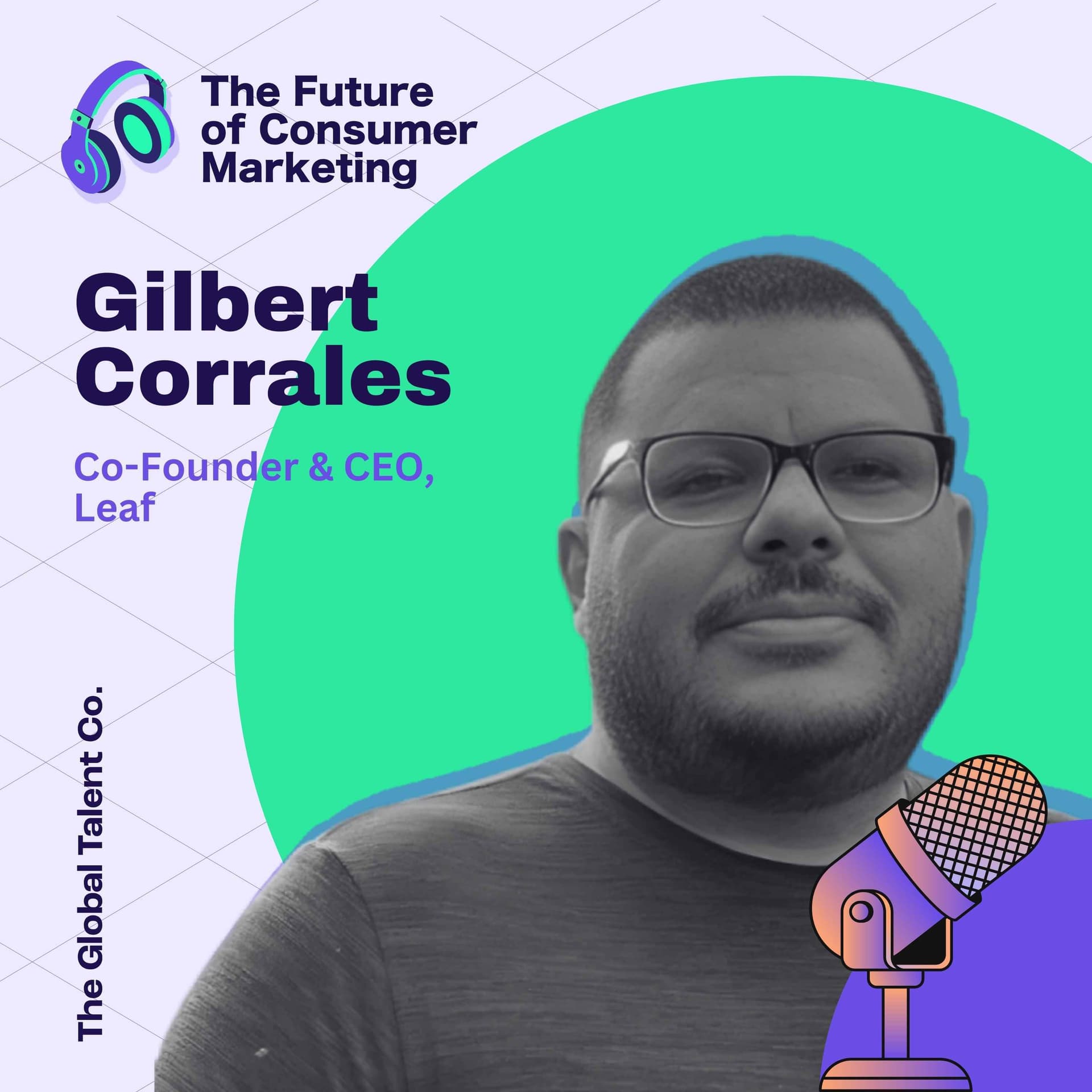
Gilbert Corrales, CEO of Leaf; Helga (Gilbert’s wife), CTO of Leaf.
Guest backgrounds
Gilbert is a technical product developer; worked at Intel (Costa Rica) and later in manufacturing automation, then customer-centric work including collaboration with Microsoft; later moved to South Korea for a master’s, then returned to Costa Rica in 2012 to co-found Leaf with Helga.
Key claims
marketing is an attention funnel across industries; retail specialization is enough to focus; AI boosts productivity but requires skilled “agency” from humans; growth decisions should be guided by ICP and unit economics; conversion tracking often breaks and should be monitored.
Notable examples
Leaf helped Universal labels accelerate ticket sales in California by applying its audience/attention techniques, tripling sales and selling out in 3–4 days; Leaf later worked with Sony and BMG.
Written by AI. May contain mistakes. Listen to the episode to check what was said.
Chapters
Tap a time to open that second in VOThe Story Behind Leaf's Foundation
0:46 to 2:48
Gilbert shares his journey from tech development to founding Leaf.
“No, we've been looking at Leaf and we must say, we really want to know more about your story.”
Transition from Music to E-commerce
2:48 to 5:10
Discover how Leaf shifted focus from music to the retail sector.
“You know, like long story short, you know, we're building up.”
Navigating the Retail Landscape
5:10 to 6:51
Gilbert discusses the challenges and opportunities in the retail marketing space.
“And it sounds so cool how you were able to create like a standard operating procedure through music that was translatable in retail industry.”
First Steps to Monetization at Leaf
6:51 to 10:11
Gilbert explains the initial challenges in monetizing Leaf's services.
“that allow us to specialize and to, you know, and to hone in our craft and really be better into delivering that.”
Defining Leaf's Marketing Philosophy
10:11 to 11:38
Explore how Leaf approaches its marketing strategy and client relationships.
“Because you don't want to be making money.”
Building an Effective Team at Leaf
11:38 to 14:00
Learn about the importance of team structure and defining ideal customer profiles.
“But, you know, that's probably further into the conversation.”
Building a Focused Marketing Team
14:00 to 15:04
Learn how to strategically build a marketing team for a new product launch.
“We hire a partners manager, you know, with experience in that sector.”
Understanding Hiring Needs
15:04 to 17:44
Explore how to assess gaps in your team and identify key roles needed for expansion.
“And when you talk about your team, Gilbert, I know you're mentioning that you've hired your head of marketing and different style.”
The Role of Curiosity in Leadership
17:44 to 19:56
Discover why curiosity and asking questions are vital leadership skills.
“I mean, because even if they wanted to copy it or even if they will think, oh, that's interesting, we should do the same.”
Leveraging AI in Team Dynamics
19:56 to 21:16
Examine the effective use of AI tools in enhancing team capabilities.
“I mean, but, you know, like the thing that I found with AI is that the person behind the cursor needs to know what they're asking AI for.”
Show all 15 chapters
Future Vision for Leaf
21:16 to 23:24
Gain insight into the three to five-year vision for an evolving company.
“Like just yesterday, I was doing a research task and I started with ChatGPT.”
Creating Memorable Customer Experiences
23:24 to 26:38
Learn the importance of making customers feel valued in business.
“I would say probably, you know, like product revenues are catching up to service revenues, which is great.”
Effective Conversion Tracking Solutions
26:38 to 28:00
Understand how specialized products can improve conversion tracking efficiency.
“And you will be surprised how many of those acts of service will come back into either new business or upsell or cross-sell, whatever, right?”
Discussion of Conversion Tracking Solutions
28:00 to 29:13
Learn about the importance of automated conversion tracking and its benefits.
“Yeah, I mean, you can look it up in LinkedIn or go into the website leafgrow.io or leafsignal.com, which is our new product.”
Closing Remarks and Sign-off
29:29 to 29:44
Wrap-up of the episode with final thoughts from the host and guest.
“So without further ado, it was amazing to have you here, Gilbert.”
Transcript
Automatic transcript. May contain errors.0:00This show is brought to you by the Global Talent Co, a marketing leader's best friend in these times of budget cuts and efficient growth. We help marketing leaders find, hire, vet, and manage amazing marketing talent for 50 to 70 % less than their U.S. and European counterparts. To book a free consultation, visit globaltalent.co. Hey, everybody. Thank you for tuning in. I'm here with Gilbert Corrales, who is the CEO of Leaf. And for those who haven't heard of them, Leaf helps fast-growing e-commerce companies figure out their digital marketing. Basically, they're taking care of everything from strategy to execution, so those businesses can actually make some money from the ads they spend while they build their brand.
0:42How's it going, Gilbert? We're so glad to have you here. And of course, and this, thanks for having us and thanks for inviting us into the podcast. For sure, for sure. No, we've been looking at Leaf and we must say, we really want to know more about your story. So without further ado, let's get into this. Tell us a little bit more about yourself, Gilbert. How did you start building Leaf? What is Leaf about in your own words? And maybe take us back to when the company was founded. Yeah, of course. I mean, my background is technical. I'm a developer. I'm a geek. And I think that probably has influenced the business a little bit and the way we approach things.
1:15But yeah, my background is in product development. I started my career when I was pretty young, when I was 18, working at Intel back in Costa rica and then that took me to the states where i worked on manufacturing automation so you know pretty much making the robots do their you know the things especially the most dangerous stuff i guess for lack of a word but you know like that's how it all started then eventually i moved to more customer you know centric stuff i had the chance to collaborate with microsoft in taking new technology to market and you know i did that for a few years and then i moved to south korea Did a master's there, moved back, and then I continued that journey, working very closely with customers, working on solving problems, I guess, for lack of a better word, but closer to the customer base.
2:01And in 2012, me and my wife, Helga, who is the CTO at LEAF, we moved back to Costa Rica and we started collaborating with a couple of friends there. And we had this idea about music and especially about how we were able to empower musicians to engage, grow, and monetize audiences. And this is the beginning of Spotify, the beginning of, you know, like SoundCloud was making its thing. We had Bandcamp in place. But something that we started to realize is that digital music and especially the platforms were putting the musician on the side or were commoditizing musicians. And musicians were losing control of their audience.
2:39And so we wanted to do something about it. And that's kind of like how we started working on Leaf. That brought us to the UK, which is where we're now, 11 years later. Yeah, and then that's got it started. You know, like long story short, you know, we're building up. The app grew quite fast, especially in Latin America, out of all places. It became the number one music app in Latin America, you know, for a few years. Spotify had us as a risk in the region. We collaborated with all the major labels and all that. And suddenly we started realizing, you know, why the industry was how it was. And, you know, musicians care about making music.
3:13They don't necessarily care about making money. The money making part, it's somebody else's responsibility, hence why the labels exist. But then, you know, that had a lot of dichotomies in the industry and how do you approach things. And not often, you know, what's best for the musicians is best for the labels and vice versa. And, you know, as you can see, 11 years later, the problem still remains. That's true. But what we realized in that journey was that whether you're Justin Bieber or Nike, you're kind of competing for the same space, right? You're competing in the same arena, which is the attention arena.
3:45right? You want to put your product, whether that's a song, an album, a concert, or whatever, in front of the right people at the right time. And equally, you know, like products or direct consumer brands are realizing that they need to be closer to consumers. And so, of course, we went from music to a wider range, which was starting working with direct-to-consumer, with retailers, and understanding that the same frameworks that we have built for music apply for direct-to-consumer marketers. And so we shifted. And, you know, at the core of everything that we've done, it's always technology, right?
4:16Like I said, you know, at the beginning, you were a tech company, right? We're anchoring product. And oh, we, from the days of Live Music, we realized that we could use technology as an accelerator, whether that was a decision-making or as an accelerator. You know, nowadays, everybody's talking about AI driving your campaigns and Mark Zuckerberg wants for brands to just give them the money, I'll make you the money, right? And, you know, like it's been a long way to get to where we are right now. And when And personally, we feel there is still, you know, like that last stretch to get to that world.
4:48But back in the day, you know, we had to build a lot of this technology that nowadays is, you know, pervasive in, you know, in the type of campaigns that, you know, are available to people right now. But that's the journey, right? And we went from music to retail, you know, power technology. And now we're making available all these learnings, this technology, you know, to these next generation brands that we get the chance to collaborate with. Wow, that is amazing. And it sounds so cool how you were able to create like a standard operating procedure through music that was translatable in retail industry.
5:20And are you trying to tap into other industries as well? Or are you just OK with retail right now? That's a very good question. And this is something that, you know, we ask ourselves a lot because you could argue that the frameworks and the, you know, and the algorithms and the approach that we take to things, it could apply to any vertical, right? When ultimately, at the end of the day, marketing is a funnel, right? You have your top, middle and bottom of funnel, right? You want to create awareness. You want to get those people once aware, you know, with something and then you want to convert.
5:49That is, you know, the quintessential laws of marketing, right? Like they're never going to change, right? So what works for music, which again, right, is making sure that you make their music available, you know, like put it in front of people that might like it. You know, all of that applies to retail and I'm sure it applies to all other sectors. But in retail, there is a lot of specialization to be have that it allows us to build the technology or to probably focus the technology, if you will, in a specific sector. That is, it's a growing sector. It's one where there is a lot of complexity built in.
6:22You're seeing a lot of the brands going direct to consumer now because they have to, right? I mean, they have to build that relationship, right? I mean, even brands like Nike that, you know, historically have built their business on top of, you know, distributors and, you know, like retailers and intermediaries and so on and so forth. You know, they're now going direct-to-consumer and they're building a lot of that direct-to-consumer offering themselves. They still work with, you know, retailers as a key partner, but they realize that they also need to own that relationship. So we realized that, you know, there is enough to keep us busy in the retail space, but then that allow us to specialize and to, you know, and to hone in our craft and really be better into delivering that.
7:01Wow. And Gilbert, how about from the moment that you founded Leaf and being that it started with music, how much time passed until you actually had your first paying customer or that you got the first payment for the services that Leaf offered? That's a tricky question. And I'll tell you why. When we started Leave, and these are different times, right? This was 10 years ago. We were living in the bonanza time of just like, grow as fast as you can, forget about money, and you will monetize eventually. We no longer live in that world. Yes, it's true. And then in our case, we were a marketplace, right?
7:36Because we needed the musicians and we needed the fans. And when you're working on a marketplace, when you're connecting two sides of a marketplace, you end up with a chicken and egg pit, right? Because it's like, who do you go after first? And in our case, we choose to go for the fans first because the musicians are always going to ask you, how many people do you have? Because ultimately, at the end of the day, what the labels want and what the musicians want is like, what's your audience, right? Like, what's your captive audience? How can you promote us? And so on and so forth. So we went for that.
8:02And, you know, we built the Eve to, you know, a few million, you know, active users. And that was quite successful. So we then went to the musicians. So it probably took us about a year, probably, to get to like 4 million active users, which is nothing, you know, like small or, you know, like something to discount for. But that allowed us to start talking to the labels and then, you know, like, and it's talking to the musicians and so on and so forth. And I remember there was a, because we started talking to the labels, you know, like they always want to test you, right? And they always want to try you.
8:32And music labels, especially the big ones, they're always looking for the next thing, right? They're always looking for, you know, what is going to allow, because at the end of the day, they pretty much have everything as a monopoly, although they're not a monopoly, you know, like from an attention point of view, you know, the major four own everything, right? True. So the first test I think that we got was for, and they wanted us to help them accelerate sale tickets. They were on tour in California and they were not selling enough tickets or not at least fast enough. So they came to us and said, hey, can you help us sell tickets?
9:04And we're like, well, we don't have a captive audience in California. We have it in Latin America, but not in California. And they say, well, can you use your same technique? to go after that, you know, and they gave us some money, right? And they gave us some budget and said, go and see if it works. And we said, well, all right, you never say no, right? And then we learned later to say no, but at that moment we were saying yes to anything. And so we give it a try and we triple ticket sales. And then we ended up selling it out in three, four days or something like that. And then we thought, we don't need the audience, right?
9:34I mean, we don't need to own the audience for that matter, you know, like to actually capitulate on something like that. And they were like, right. Amazing. you know, like what he did there. And, you know, like, can you do more of this? And so that's how we started working with Universal. We started working then with Sony, with BMG. And, you know, and then we started working with the major independents and some of the independents, because ultimately at the end of the day, we wanted to do that. We started working with legacy acts, you know, that they're no longer playing, that they're still selling lots of stuff.
10:02And, you know, they always want to maximize the potential of monetization that they can have. And I think that's how we grow. So long story short, it took us about a year and a half for the first money to go in, but that's a course, or it used to be a course at a time, right? Because you don't want to be making money. When you're growing, people don't want you to make making money. Because as a venture-backed business, right? Like you want to accelerate into growth and you want to see how big, how fast you can get. Again, right? With understanding that you're going to monetize later. The minute you start to monetize, then the evaluation on a company shifts it because it moves from how fast are you growing your customer base to how much you're making exactly okay so oftentimes you're better off saying no it's like i'm giving you money no thank you i'm not making money at this moment and it's about understanding right like what's your key objectives what are the type of kpis you're trying to move and that's you know i guess as with anything right you know for example in our case now with retail right what are you trying to optimize for?
11:06Are you trying to optimize for lifetime value? Are you trying to optimize for first purchase CAC? You know, like understanding the KPIs and something that we now do, right? Every time we onboard a customer, even before onboarding the customer, right? When we're even prospecting a brand, something that we try to understand, you know, as much as we can is the unit economics and what are the KPIs and what is possible and what are they aiming for? Because ultimately understanding these sort of numbers, you know, are going to help us draw the strategy to deliver on that. But, you know, that's probably further into the conversation.
11:41Okay. Wow. No, no, no. That is super interesting. And also, like, as I'm hearing you talk about metrics, KPIs and all that referring to Leaf, what is your marketing philosophy, Gilbert? Like, how do you guys approach the marketing of a brand like Leaf and how do you make sure it stays relevant that's a difficult one because obviously when you know it happens right that you have probably some of the best marketers in your team but they're busy delivering marketing for your clients and we not necessarily have time to do our own marketing the best marketing that you can do is your results right you know at the beginning a lot of our growth came through referrals you know and people more for like word of mouth like hey these guys are working very well we suggest you use them, that type of.
12:26Exactly. Now, what you realize, and especially when you're growing through referrals, and if I were to do things slightly different, you know, in hindsight, is having a very clear ICP, you know, like who your, you know, like ideal customer profile looks like is super important because then that will allow you or will it help you inform whether to say yes or no. Referrals can steer your direction in many different ways. Of course, yes. And you want to be in control of that destiny, right? And so at the beginning, again, right, we were saying yes to everything because you want to make more money and you want to drive revenue up and you want to be open to the ride and all that, right?
13:07But what you don't realize is the heating cost of saying yes. And it only comes down later, right? Because at some point, you know, like two years ago, we made the decision that, right, this is going to be our ICP. And our ICP was on the upper side of our current clientele that we had at that moment. And we said, we're not going to say, so if we were to evaluate the clientele that we had back then under ICP, probably half of them, we will say no. And he's fine. And it doesn't mean that you're firing those clients. It just means that you're mowing upwards in that trajectory, or at least we felt confident that we could go upwards in that trajectory.
13:40So we change our ICP. And this is an exercise that we do every year at the beginning of the year when we're planning for the year we go right should we evaluate our icp is our icp still relevant has something changed what have we learned over the last 12 months because you cannot be changing your icp every quarter right i mean no i have to give it you know enough time but i mean like at the beginning of the year we go have we learned something different you know that might help us fine-tune that icp because then that helps you inform who you're speaking to and who you want to speak to and then also politely decline you know like people who fall outside of that icp right so i mean to answer your question right now we're rebuilding well not rebuilding but we're actually launching a new gtm for a specific sector of our business because we have a new product that we're launching that we're bringing to market okay very specific product and there is a lot of opportunity there and we're seeing a lot of great results at the beginning of the move you know we are hiring specifically for that one vertical right i mean And we have a marketing person that we just hired, a head of marketing, which is amazing.
14:44We hire a partners manager, you know, with experience in that sector. We have an SDR and that's the kernel of the team, right? That's the beginning of the team. So we have a partners manager, we have a marketing manager, and we have an SDR that has built, you know, SDR teams in the past. And this is kind of like the beginning project, you know, like the beginning team. And yeah, I mean, it's just like the motion of acceleration that we're feeling. It's great. Wow. Okay. And when you talk about your team, Gilbert, I know you're mentioning that you've hired your head of marketing and different style.
15:15How do you know when it is time to expand and exactly what roles you need to hire for? Is that something you set up from the beginning of the year? Or is it like more first come, first serve type of situation where you say, hey, I need this person and you'll go get them? I mean, the first thing that you need to do is do a gap analysis, right? Of where you are and then where do you want to be? And then who's missing, right? And then you go, right. You know, and out of those people that is missing is like understanding who you want in those roles. Right. Yeah. And then it's like, go and search for them.
15:47You know, like in our case, we take a lot of the searching for people, you know, like we split probably the recruiting into two parts. So the technical part of the business, Helga, who's our CTO does the recruiting. So she does a lot of the sourcing herself. She has a very clear picture of who she wants. okay and so she tries to go and find that person or find you know like those type of people right and oftentimes those people are working somewhere else right they're probably not people who are on the market it's true so you need to go reach out to them you know learn from them oftentimes you know what happened to me recently as i've been putting together you know this new group commercial team is that i wanted to understand the market a little bit right and understand the people so what I did is I started looking into, you know, LinkedIn, and I started looking for companies in the space that will be aspirational for me or that I could learn something from, right?
16:45And then I went and looked at who were on those positions. And then I reached out to them. And I said, of course, you'd be open for a call. You know, I'm trying to understand the space, you know, and then you'll be surprised how many people like to talk, right? In general, a lot of people talk, and especially a lot of people like to talk about what they do right it's in our nature right i mean yes we're doing this right now right so going with this curious mind and then going and ask questions you know like i think that one of the most underrated skills anybody can have with us most especially a leader is to remain curious and ask questions okay right because it can be easy for you to think that you know everything it's true and you know the more you know the more you realize that you don't know a lot right i mean yeah you know something but then you open a door and then you go like oh look at this new world right and that's the thing right so going and learning right how other people do stuff and being humble and being curious about it and then eventually you're going to start figuring out patterns and then you're going to meet people where you go you know what it would be great if i could have this person in the team okay and then it gets to a point where you ask the question it's like because ultimately at the end of the day when you're asking they will ask you it's like oh what is this for what are you doing and then you start explaining kind of like what your vision is and all that again this is another mistake that i've seen a lot of people do and it's like oh i cannot tell you about what i'm doing because it's secret oh i cannot tell you about what i'm doing because you might copy it especially if you're talking to people who might be considered your competitors or people who might be consider your peers of course but you need to be confident about what you do i mean if you're confident about what you do right i mean if what you do you know in our case you know we're quite confident about what I mean, so I don't have a problem, you know, like, of course, talking about what we do.
18:27Right. I mean, because even if they wanted to copy it or even if they will think, oh, that's interesting, we should do the same. You know, it will take time for them to come around. You know, everybody has their own plans. Everybody has their own strategy. I don't think ours is better than the next one. They're just different. You know, but oftentimes you will might come with somebody who you actually click, you see yourself actually working with and, you know, and they might spark the curiosity, you know, to say, oh, you know what? Actually sounds interesting. And I totally agree with you on the fact that if you're the potential employer that you're talking with these prospects that you're trying to see if you hit it off with them or whatever, who better for your new employer than somebody that confidently conveys the idea they have and the mission for what they want to do.
19:11And even if you're working for a competitor, I believe that could have a lot of appeal to somebody who doesn't know whether to move out from where they're at and go to leave or something like that. So I do believe that it does help being confident when showing your idea or whatever you're doing. And actually, the reason why I asked Gilbert about your expansion in the team and how you know what roles you have is because in this age of AI, I feel and I find that a lot of companies are just using AI to fill in roles that used to be done by people before. So now that you've talked to me about how you expand your team, I'm also interested in knowing, and I bet our listeners are too, are you leveraging AI or using any trends of technology right now with Leaf?
19:53Oh, 100%. Like everything. I mean, but, you know, like the thing that I found with AI is that the person behind the cursor needs to know what they're asking AI for. You know, we're not at a stage yet, although, you know, today that we're recording this in a couple hours, ML1 is going to be releasing ChatGPT 5. So, you know, let's see what that comes with. I don't expect, you know, like that AI as we know it today is going to replace or is going to come and replace something that you have never had a chance to know how it works. Okay. So, like, if you have never sold, I don't expect that you're going to hire an SDR.
20:35an AI SDR that is going to start making it rain for you if you have never done the SDR role before. Oh, God. Right? The same goes for development, right? I mean, right now, you know, like, we use AI in a lot of our product development, but it's being used by senior people, right? Because, you know, like, it needs still a lot of handholding. Even when what you're doing is, you know, checking and handholding the technology to a certain extent. Yes, it's getting smarter. Yes, it's getting better. But you still need that, you know, kind of like critical thinking, you know, in there and to deciding what is good and what is not.
21:07Now, on the other hand, it's about having agency. And this is one of the key things that I use now to hire for and is understanding how much agency somebody has. And that's a super abstract thing. but i feel like right now agency is probably the number one skill that somebody should have should develop and it's being able to just don't wait until be told to be doing things and then just going and do things okay because right now you have a lot of tools at your disposal you know like there are new tools coming out every single day and you cannot just be waiting for somebody to come and say oh you know what i did all the research and this is the tool that you're going to be using it forward.
21:46Like just yesterday, I was doing a research task and I started with ChatGPT. So in ChatGPT, I have multiple projects and, you know, I treat each project almost like its own agent or assistant type of thing. Of course. It has its own context and, you know, and all that. And something I've been doing lately is I'm using ChatGPT to rewrite the instructions of the project itself. So it's like, listen, what you know, and based on the conversations we have had, refine the prompt. And I ask him like, is there any information that you should have that haven't given to you and then he's like well it would be great to know x y and set i was like yeah that's one great question so i'll add it and i'll say like this doesn't that so rewrite the prompt okay and then he will rewrite itself you know like auto correcting yeah but you also need to treat it as such right i mean again like how do you can actually leverage that so i started in chat gpt you know and then i moved to perplexity which is becoming great for certain things i mean i think their indexes you know like the way they build it is you know it's super fresh and then they have the comet and then there is the right the two browsers the two are good at certain things but you know they're not the same so how do we improve that you know like from that matter and how do we get them you know to do things in a way that they can improve the way we act but that means that probably you need to be jumping from one tool to the next to the next to the next right no i totally get that i totally get that okay so you're leveraging ai you're expanding your team Leaf has had a journey from beginning in the musical industry to now driving into retail.
23:17And I'm curious to know, Gilbert, what is your three to five year vision to what's to come for Leaf? It's a very good question. And, you know, like we've been discussing this a lot internally because we feel like there is a lot of opportunity in this AI space and in enabling that, which means that more and more the company is going to become more and more of a product company and a services company. I would say probably, you know, like product revenues are catching up to service revenues, which is great. Services is always going to be a component of what we do. But I think more and more we're going to be passing responsibility to product.
23:52We're going to be enabling that more and more. So I feel like in the next three years, we're going to be so much more product focused. Probably revenues are going to be, you know, much higher on the product side than on the services side. Okay. And I imagine that would be the natural development of what Leaf has become and what it's doing. It will be like a service. And if it keeps on expanding, as we hope it does, let's just hope you get even more customers each time. And finally, before we close up, Gilbert, what would you give as advice to somebody who is starting a company similar to yours that wants to provide a service that is going to market?
24:32what would be some advice or best practices that you would recommend? I would say something. I mean, just know something, you know, it's like, it doesn't matter what you do. It doesn't matter what you say. The end of the day is how you make people feel. Okay. That's the mantra for the company. Right. And I believe that service businesses or any business for that matter is a hospitality business at the end of the day. It's about how we show up to the customer, how we speak to them, how we make them feel, you know like if customers are coming to companies like ours they want to feel peace of mind right they want to feel like you know like they can give that to you and that you're going to be in control of that exactly yeah they can find other thing so understanding what do they want out of you actions but feeling right like how do they want to feel right and is is it do things that don't scale, right?
25:25I mean, there is a book it's called Unreasonable Hospitality a guy called William something and that book is about hospitality, it's about a chef or like a restaurateur who takes a restaurant and makes it the best restaurant in the world in two years. Wow. And what he was saying to the team is like unreasonable hospitality. What are the sort of things that you could do that are unreasonable that will make a memorable, you know, experience into somebody? Okay. And I bring that to the team as well, right? It's the two things that don't scale, right? I mean, oftentimes we need to do it, right? Even if it is not on you, right?
26:01I mean, I think Nordstrom has a lot of great examples of how Nordstrom customer service behaves. There is a book on it. You can go and look for it. But I feel like having that philosophy of going above the line and, you know, like going above expectations, it pays off because it builds relationship, it builds confidence. And, you know, again, it goes back to the word of mouth, right? a minute, gets people talking. Of course. And sometimes people will ask you, it's like, oh, but they didn't pay for that, or they're not paying for that. They're not this, they're not that. And it's like, just because they're not paying for that, if we can help them, why wouldn't us?
26:36Exactly. No. No, why wouldn't us do it? And you will be surprised how many of those acts of service will come back into either new business or upsell or cross-sell, whatever, right? So if you're in service or whatever it is that you do, like have a very clear mind of, you know, what you want your customers to feel like. That is beautiful. And that is one of the most empathetic approaches that I've heard when asking this question, because I've asked it a lot. And I really do believe in that. It's like what you give is going to come back two or threefold if it comes from a good place. And your customers are going to feel that, as you're mentioning.
Read the full transcript
27:13And that can only make the business grow. And that's super important. It has to be genuine. Exactly. You know, it has to be something that you're doing because of it. And it's a cultural thing. Is that something that you need to drive? You need to be driven by, you know, from the leadership down, you know, like. No, for sure. It needs to be celebrated. It needs to be embraced. It doesn't come free, but it does definitely, you know, pay back. It doesn't come free, but it will pay off in the end. So I'm sure that it is worthwhile, even though it might feel a bit intense or difficult at the beginning.
27:43Once you get used to just providing that extra mile to the customers, I know it works. I know it works. And Gilbert, before we leave, because we are at time, we're even over time now, but where can people follow you, learn more about Leaf if they heard this podcast and want to look into the services you offer? What would you recommend them? Yeah, I mean, you can look it up in LinkedIn or go into the website leafgrow.io or leafsignal.com, which is our new product. It's a conversion tracking and monitoring solution. So it actually takes care of all of your conversion tracking. It's a managed service.
28:15You know, like something that we found with conversion tracking is that oftentimes is left to the brand and the brand, you know, you should know what to do with it. It gets all sorts of somebody to kind of fix it only for it to break in the next release of the website. Right. So we have a product that fully automates it, but we implement it, you know, for yourself and then we monitor it close to real time. And so we know when the conversion breaks, whether because it's a new release of a web or a new app that you install. And when it breaks, within hours, you will find out. If you're spending a lot of money in paid media, you want to know.
28:50I mean, everybody has been burned by a change in the website that broke your conversion tracking and suddenly impacted your campaigns. That's why we built it. We built our own paranoia. Things great. If that's a thing for you, you will be in very, very good company. We have some great brands. We have billion-dollar businesses now embracing it, which has been a surprise for us. But yeah, livesignal.com, if you want to look at that. Awesome. That sounds perfect. So my people, you heard it here first. If this and what Leaf does sounds appealing to you, you can look at Gilbert through LinkedIn. You could look for Leaf in LinkedIn.
29:23And also just make sure to subscribe to this podcast because we will keep on hearing from more real people with real experience. So without further ado, it was amazing to have you here, Gilbert. It was a pleasure. And any last words? Yeah, Pura Vida Andres. Thank you very much for having us. Pura Vida Gilbert. Sounds good. Have a good one. Thank you.
From the publisher
In this episode of The Future of Consumer Marketing, host Andres Figueira interviews Gilbert Corrales, CEO and Co-Founder of Leaf. Leaf has evolved from a music marketing platform that became the number one music app in Latin America to a performance marketing agency specializing in direct-to-consumer retail brands. Starting with the challenge of helping musicians own their audience relationships in an increasingly commoditized digital music landscape, Gilbert and his team discovered that the same attention-based marketing frameworks applied across industries. Now Leaf helps fast-growing e-commerce companies optimize their digital marketing strategies while building technology products that solve conversion tracking and campaign optimization challenges at scale.
Topics Discussed:- Transitioning from music industry marketing to e-commerce performance marketing
- Building marketplace dynamics and solving chicken-and-egg problems in two-sided markets
- Evolving from pure services to product-led growth with technology solutions
- Strategic hiring and team expansion in specialized verticals
- Leveraging AI tools while maintaining human expertise and agency
- Creating "unreasonable hospitality" as a competitive advantage in service businesses