
In short
How Deliveroo/DoorDash rival Delivery Hero measures true ad impact using first-party data and geo-splitting, and how it structures performance marketing, measurement, and creative/AI across 70 countries.
Guest background
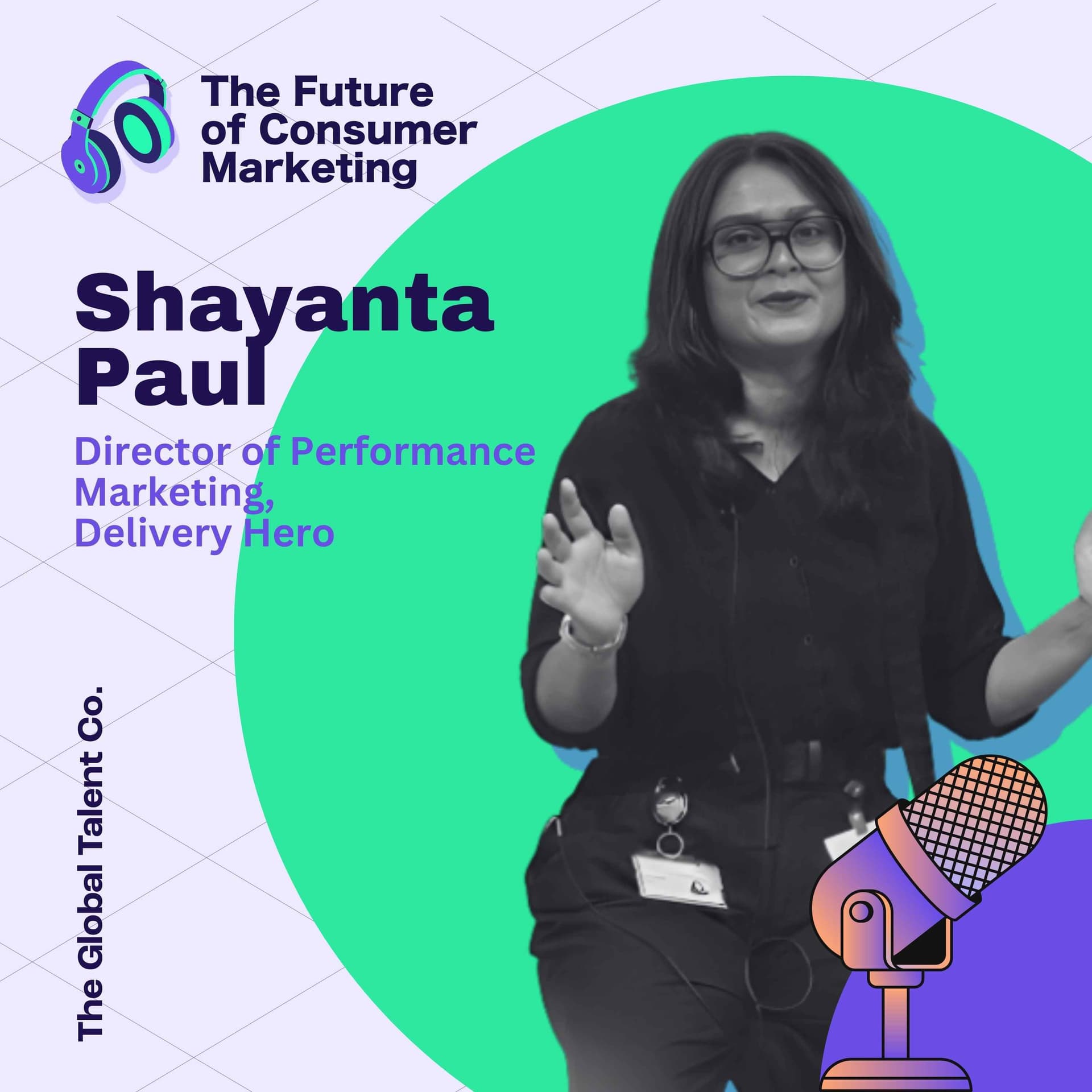
Jayanta Paul, Director of Performance Marketing at Delivery Hero (Berlin). Previously worked across tech/consumer marketing roles at Google and other companies in India, Singapore, Malaysia, and more.
Key claims
Marketing needs “good data” plus business understanding; audit first, observe for months, then solve. Competitors shape marketing mix via ad auctions. For measurement, rely on first-party methods to solve ~80% of needs; use geo-splitting to estimate incrementality beyond platform lift studies.
Notable examples
Malaysia “Fai(th)” Groupon acquisition—CPA dropped from ~$20–30 to ~$5–6 by changing deal/messaging/offer timing, not just bids. Media vs retention split: media drives app opens/purchases; loyalty/incentives handle retention.
Written by AI. May contain mistakes. Listen to the episode to check what was said.
Chapters
Tap a time to open that second in VOJayanta's Journey into Marketing
0:36 to 2:25
Explore Jayanta's diverse background and experience in marketing.
“I'm very excited to talk to you about some fun, cool stuff.”
Importance of Data in Marketing
2:25 to 4:21
Discussing the critical role of data quality in effective marketing.
“the state, like startup versus scale up versus very large corporations, that they always keep me very thrilled.”
Lessons from Marketing Failures
4:21 to 6:32
Jayanta shares a specific example of a marketing failure and its lessons.
“launch we go live and we are just waiting for customers to be acquired and for the longest I was like, I'm doing everything right.”
Auditing and Understanding Businesses
6:32 to 9:13
Strategy for auditing and understanding a new business environment in marketing.
“In my case, the customer was these brands who were running the campaigns.”
Marketing Mix and Competition
9:13 to 12:34
Discussion on how marketing approaches differ based on market saturation and competition.
“It's probably around, you know, saying, well, it's activating.”
Data Sources and Decision Making
12:34 to 14:00
Exploring the different sources of data for marketing decisions and their importance.
“Second, your app download share, app download position, how it's trending over time if you're a first business.”
The Role of BI and Analyst Teams in Marketing
14:00 to 15:10
Learn how data-driven teams contribute to effective marketing strategies.
“is having a BI team, which is separate from your performance marketing team.”
Time Allocation in Marketing Teams
15:10 to 16:10
Discover how marketing teams prioritize strategy and execution.
“I mean, what goes to kind of your typical allocation of time and priorities?”
The Evolving Role of Marketing Leaders
16:10 to 17:38
Understand the shifts in focus for senior marketing leaders over time.
“So So you need to deploy a lot more power and force and rigor to your operational plan.”
Challenges in Measurement and Data Privacy
17:38 to 20:15
Explore the complexities of measuring customer data in a privacy-conscious landscape.
“So over time, I think this discussion has become ridiculously important.”
Show all 15 chapters
Balancing Acquisition and Retention in Marketing
20:15 to 21:55
Learn how to effectively allocate resources between acquiring and retaining customers.
“That's better than nothing, I guess, yeah?”
The Importance of Customer Research and AI
21:55 to 24:39
Understand how customer research and AI can enhance marketing effectiveness.
“in-product offers including like vendor deals, etc.”
Emerging Trends in Content and Advertising Channels
24:39 to 28:08
Discover the rising importance of short-form content and new advertising platforms.
“So as soon as we are adapting to Model X, the next model is out.”
Evolving Advertising Strategies on Emerging Platforms
28:08 to 29:43
Learn how changing internet interactions influence advertising on platforms like Reddit and Quora.
“People are starting to interact with the internet like they would interact with their friends.”
Shifting Focus in Hiring for Digital Marketing Roles
29:43 to 31:04
Discover the evolving skill set needed for digital marketing talent in an AI-driven landscape.
“What are the creative angles we should explore?”
Transcript
Automatic transcript. May contain errors.0:00This show is brought to you by the Global Talent Co, a marketing leader's best friend in these times of budget cuts and efficient growth. We help marketing leaders find, hire, vet and manage amazing marketing talent for 50 to 70 percent less than their U.S. and European counterparts. To book a free consultation, visit globaltalent.co. Hi, everyone, and thanks for listening in to the Future of Consumer Marketing podcast today with Jayanta Paul, Director of Performance Marketing at, I think, one of the biggest food delivery businesses in the world, Deliver Hero, out of Berlin. It's a pleasure to have you, Jayanta.
0:36Thank you for having me. I'm very excited to talk to you about some fun, cool stuff. Yes. I mean, you've done so many different geographies, so many different companies. you put Google with Somata, which is like a really big, you know, consumer brand out of India, and Google, SkyScan and Singapore. How did you end up in the world of marketing? Because also marketing in all of those geographies is very different, I would assume, right? Yeah, like for me, I think, you know, growing up, I come from a very, very, very small town in India, and my parents or anybody in that generation has never worked for anybody else apart from themselves.
1:12So I don't come from a service family, I come from a business family. And then when I went to school in New Delhi, I just found the first job that came my way. I was just lucky that first job happened to be Google. And back in those days, like Google India was, I would say, quite a placency, I wouldn't even say it was fully established. However, the setup was such that I got access to work with US clients and US, as you can imagine, was always quite years ahead in terms of advertising marketing. It was a sales job and I quickly within the first year and a half realized I'm not really good at it.
1:49So I then happened to work in a marketing job as a model because they wanted somebody to set up digital marketing and I said I know AdWords so let's do it and that's it. Since then I have only worked in marketing and honestly like I couldn't have asked for a better journey. And the interesting thing with it, every time I thought I knew marketing, I joined the new organization. And I said to myself, no, let's reinvent the wheel. Let's learn some more. So very lucky, I would say that I've had experience across the globe, sure, but also very different types of companies. Only every company was a tech company.
2:24I think the depth and the verticals and the state, like startup versus scale up versus very large corporations, that they always keep me very thrilled. So one of the things that you feel universal, not when thinking about parking ethic of your walls? And what are the things where you always try to reinvent the wheel from a tactical, from a strategic point of view? I think the baseline is good data. Marketing without good data, as good as, you know, distributing flyers on the streets without knowing who really grabbed the tension from this flyer. So for me, the principle, whenever I join a new company, one of the things I spend a lot of time inspecting is the data quality.
3:06And then I obviously always start with a data plan before I even start with the marketing plan. So that's the first thing. The thing that is always different and really is challenging though, is organizational structure and business model. So when I was a little bit younger in my career, I spent a lot of time understanding marketing and a lot less time understanding business. If I could redo, I would do it the other way around. Like I would start with the business understanding rather than understanding marketing because I think that's a skill set and that business commercial and seven else that is understanding of what is your value proposition what are you trying to sell or market it's super important even if you were at the end of the day you're just setting up campaigns and Google ads or net ups and is there like a specific example where you actually executed everything by the book from a marketing point of view but then because you missed or didn't kind of focus on the business side of it it still didn't work out well yeah several terms to be fair but i'll give you one specific concept to work for this company in malaysia called faith and at the time we had acquired groupon malaysia singapore and indonesia so we launched a new product we had an acquisition so we had all the deals from groupon but for me i understood how to do performance like i never understood groupon's value proposition so we launch we go live and we are just waiting for customers to be acquired and for the longest I was like, I'm doing everything right.
4:32My CPAs are set up at the right level. My campaign is tracking properly. My copies are more or less enticing. Why are consumers not buying? And we spent approximately three months trying to figure out what is it that actually makes a customer buy. And when we started figuring out the types of deal, the push and pull that we could do with our digital ads, that's when we actually started getting the volumes and the CPA started to make sense. So we started off with a CPA, I would have to say$20,$30 and US dollars versus Malaysia ring that you can do the conversion. It's a very high CPA. And we managed to get it down to like five in four to six months.
5:14And it didn't happen just by adjusting bids. I can tell you that it did happen because we understood what the consumer really wanted, the messaging that stopped, the kind of offer is the vertical time of day, all of those things. So now that you've been almost from one amount of your direct performance marketing and delivery, how did kind of your past experience shape kind of the first few weeks and months in terms of, you know, auditing a status quo, coming up with strategies? What did you do differently now maybe than your first words? Yeah. So when I joined, the first thing I did was the first three months, I just observed.
5:49So I talked to several people, understood the business, understood data structures, marketing tech, and customer problems. So the way we're structured in the number hero is we have a central team that I lead and we own 10 companies across the world. So then we have those company teams as well, and they are the ones who are executing the campaigns. For me, my perspective is basically I provide them all the tech work, all the enablement that needs to go into performance marketing, attribution, incrementality measurement, anything to do with creative tooling, et cetera. So I come in where they need tech, but it's very easy to get lost in letting me create the best tech and lose sight of what the customer really wants.
6:33In my case, the customer was these brands who were running the campaigns. So the first couple of months, I just spent a lot of time understanding what is it that's not working and a lot less time telling people what we should be building. Once I was confident that I understand problems very, very articulately, then I started solutioning. I think that approach really came. I mean, if this was 10 years ago, I wouldn't start here. I would start by solving the problem. Okay. So where in the cycle of those delivery businesses, because I think there's been a time where there's been almost like a land grab and it was like, this is not takes an old mentality, a lot of TV marketing, a lot of out of home.
7:12I think now people get used to having and using from set of time and still not only a limited amount of apps, right, per country, but it's definitely not a monopoly. So, you know, where are the businesses in the cycle? Maybe it's also different by geography and how does that shape your marketing mix, basically? Yeah, that's a really good question. So because we own 10 companies across 70 countries, is our global footprint and how we do marketing varies considerably. And by how we do marketing, it's mainly the marketing mix. The proportions that you allocate between your top of mind versus performance marketing, versus subscription versus quick commerce really differs by where you are in.
7:53The first thing we will look at is customer penetration out of your addressable market. How many customers do you already have? The second metric that we look at is the deep pockets of your competitor, because believe it or not, your competitor shapes a lot of your marketing mix, right? You might say, oh, we'll do consumer marketing, everything should be customer back, world, etc. But at the end of the day, every impression that you pay for, every click that you pay for, is unfortunately very deeply influenced by what your competitor is doing, because it's an auction-based dynamic, more or less, in the digital realm.
8:27So what does happen, tend to happen a lot is, say, for example, you are very highly penetrated in the market, but you have a very aggressive competitor. In that case, even though you say, hey, customer acquisition is on track and customer penetration is on track, you're losing orders because somebody else is taking the share of wallet. So in those cases, we spend a lot of time and attention in building loyalty, building brand, and building savviness of the product. And then also ensuring your business is sustainable. At the end of the day, everybody's just bleeding out. Marketing becomes a big cost center.
9:02Okay. Is the messaging that you're doing now differently? And what kind of messaging works actually? Because I would assume that most people have heard of one of the big brands in their market. So it's not about brand awareness. It's probably around, you know, saying, well, it's activating. So what is the message? Absolutely. I think there are two parts of the funnel that we're deeply investing in. One is building consideration. The last is building stickiness. People use loyalty very loosely these days, you know, you relate to points and rewards and this and that. I don't think loyalty is just limited to points and rewards.
9:34I think loyalty means, you know, when I want to eat, I will choose the app that I'm most loyal to. So I think that also goes back to which brands build the maximum recall and consideration. So a lot of our money goes into these kind of buckets. So, you know, going back to messaging, I think it's very different because the customer is very different. So a lot of times you think, okay, it's just food delivery. Everybody's used to ordering online delivery apps. Why do I need to convince somebody? But what you show and what you lead your messaging with is disproportionately important. And over time, we've realized the importance of associating with brands that resonate better.
10:14So in our case, it will be restaurants or, you know, bigger supermarkets, chains, etc. And instead of relying on generic messaging, like, oh, order food for the first time and get X percent off. So we are now very focused on improving our vendor-led association. And also in the process, making our product more relatable to the customer. because you'll forget it. If somebody said to you, yes, you can order food at a 20 % off, you'll forget it. But if somebody said to you, you'll get burger and fries for free from McDonald's at 20 % off, you will remember that. Yeah, that's very interesting. The other thing that I think it's so hard to grab your head around is we were active in so many markets.
10:58We have so many different channels. Data, as I said, is important, but it's also so hard to get by because there's a lot of things happening offline. And so there are things that you can also not influence with when we don't have that much data, right? Delivery aspect. So walk us through how you also interact as a director, but with other teams or that, you know, collaboration works. And, you know, how you think about making decisions without complete data. Yeah. Wrong data, maybe. Yeah. I've done performance marketing for so long and people always ask me, I mean, all of your decisions be based on data.
11:35and I'm like, yes and no, there is so much art to it. You know, it's not completely science. So for me, there are three main sources of data. First is the obvious one, first-party data. So it's your own customer data. The more granular you are, the more real-time it is, the more detailed it is, the better it is for you in the long term for your work on Insta. The second is third-party data. So this is data from ad platform. So I'll call it like Google, Meta, TikTok. So it's the media landscape data that they would give you. These are metrics like impression share or top of page bid, things like say things that get you much closer to understanding your competitor, but doesn't quite give you the overall broad picture.
12:17The third layer of data is external data. That's super important. I think we spend a lot less time when marketing teams looking at external data. These are data sources like Synanerweb, Kapani, Sites of Tower, VOR, like several Euromonitor, are things that give you a couple of insights on your category share or market share, super important. Second, your app download share, app download position, how it's trending over time if you're a first business. The third is the same thing for your website. So for me, I do, like for the last couple of years, I've spent a lot more time in the last bucket, which is your external data source, because internally, it's very easy to get super consumed in your CPM, CPCs and forget the fact that you're not operating by yourself.
13:02Okay, and then how do you merge those data points and how is that kind of communication flow within the different marketing teams working with your different teams, your different countries? Yeah, so the first party, when it comes to first party data, it's super important to work very closely with your business intelligence team. It's the spread and butter, right? Like your business intelligence counterparts and you should be talking very closely. I have often seen one big mistake that lots of companies make, which is basically you have business analysts in your marketing function. There is no business intelligence.
13:37The problem with that is you will optimize towards what is my media allocation, where are my bigger, better performing channel, but you completely forget who your customer is, what are they buying, what is the lifetime value, profitability metrics, how do you bring that into marketing. So you get obsessed with your business analyst in marketing, you lose sight of business intelligence. So I would like from my experience, what works really well from a structural perspective is having a BI team, which is separate from your performance marketing team. It should be a BI team for the entire marketing function, which goes beyond just, you know, acquisition.
14:13It touches into loyalty, subscription, customer behavior, segmentation, all of those topics. The second team that I interact with very closely is, of course, the analyst team. The analyst is responsible to take first-party data, make it comprehensible, and then we push it out to the third-party platforms. For example, say my first-party data, I built a segmentation model. I said, okay, this segmentation model segments my customer into five cohorts. Now, the next team is responsible to ensure that that cohort is tied to timeouts so that you can answer the question. Google brings me X percent high value customers.
14:51You should be able to answer that question. The third team is the competitive insights team. These, in my experience, better SAP outside marketing because it should be business backward, not marketing forward. So if you are able to juggle insights across these three teams, I think you build a much more holistic and informed approach more than. Okay, interesting. I mean, what goes to kind of your typical allocation of time and priorities? Like how much time goes into strategizing? How much time goes all the way up into optimization, practical decisions, making new bets, team ad, how do you try to structure your leads?
15:28So my team is very into strategy and tech. So for me, 30 % of time goes into strategy, 70 % in tech. For teams that are on ground that are actually originally executing these campaigns, they typically have like a 20-80 approach where they're spending 20 % of their time on strategizing and 80 % of their time on executing. It's super important because our vertical is so fast, like food delivery is such an ever-evolving protocol that your speed of execution really, really matters. So I've been in companies where we were spending 40 % time strategizing, 60 % operating. Food delivery is not that business.
16:09You have to move really fast. So So you need to deploy a lot more power and force and rigor to your operational plan. And your timelines are super tight. So you have to move really, really fast. Okay. Okay. How has that changed? You think over the years is for marketing leadership? Where are marketing leaders required to spend more time on? Where are they spending less time on? What are the trends there? I think that it comes to very senior leadership, like, you know, director above. I would say a lot of the time is spent on tech. Understanding what is the right tech setup is super complex problem.
16:46And even though it is strategy at the end of the day, it's also execution because you need to deploy the tech stack. It can't just sit in your head. You need to put a plan in paper. So over time, I've seen a lot more conversations about tech enablement rather than just keep in execution. And the strongest leaders I've met in this field are the ones that are able to innovate it much faster. So these are people who are able to first provide a business case. Why do you need a tech team? A very simple question, right? Why do you need a marketing tech team? I have a tech team that does everything they can squeeze in some bandwidth for marketing.
17:19The skill set is different. The product is different. You're not building a front end or back end. You are essentially building an entirely new vertical, which is called marketing tech. So you need to spend a lot more time in understanding what is the nuances of the business? What are you trying to achieve? How does your KPI and your business tied together. And of course, ultimately, the question is, how much do you fund your tech team? So over time, I think this discussion has become ridiculously important. The second topic that has become super important is measurement. So measurement is a very complex problem because, you know, we're like, oh, there we have cookie, we have user level data, this and that.
17:57But the reality is privacy is a big thing, especially if you're in Europe, customers don't want to give you content. So how do you measure customers it without them telling you that, hey, you know, this is my data here, go on, run your model. So there's a fair bit of work we've done on building up some measurement muscle, required a lot of data engineers, scientists, analysts. So it's a tactic method, I would say. Also ecosystems are quite protective, like Google is an ecosystem, meta is an ecosystem. So they don't want to pair their data quite easily as well, right? So if you were to just rely on conversion lift studies that meta gives you or TikTok gives you or Google gives you, you have resources on truth.
18:37Who do you trust eventually? And most of them probably are not even true. How do you solve this? Because this stuff is like judge everyone has, you know, that all those ecosystems where you usually advertise are not opening up the black box of how they allocate things. Obviously, there's limited amount of first quality data that you can kind of track or establish. Like how is a company like For us, we know there are limitations. So some platforms will never give us the open ecosystem, do whatever we want to do. But thankfully, a lot of the platforms do give us the ability to geo-split customers.
19:14So we do rely heavily on geo-splitting because we are layering our own geographical polygons with the polygons of Google, the polygons of TikTok, etc. And then we are kind of pausing similar cities to figure out the marketing incrementality. And that for me is super important to get right because this is based on my first value data, right? At the end of the day, I want to measure how my customers in Berlin behave versus Munich. And it's based on my own data and not the data that Google tells me is incremental based on their own conversion of study methodology. So our intention and my push to my team also is, can we solve 80 % of our measurement needs through our first party methods?
20:00And those 20 % of cases will always exist because you have some players that are too small, some players that don't want to give you access to their geographical polygons. So you will have those problems. But for now, if I can fix 80, I'll be super happy. That's better than nothing, I guess, yeah? And as much as you can. And let's talk a bit more about kind of this balance between acquisition, retention, basically, you're in an industry that is very retention heavy, I believe, that's where you can do it. So how do you balance the focus, the budgets there? What kind of learnings from your position side can you actually leverage also retention side?
20:39So the way we split spending money is we focus media marketing on bringing in the customer to platform, which means acquisition and consideration, right? Opening the app is consideration. So every time we deploy media, so it could be offline, could be online. This is the primary focus. Either it's open the app or download the app, right? And do your purchase. When it comes to non-media marketing, this is things like incentives, loyalty, free delivery, anything to do with in-product marketing, I would say. That's the place where we spend, you know, our retention money on. We don't really spend our retention money on media.
21:17So that's the principles shift. And that is very intentional. It's because the margins in this vertical are so thin. If you keep paying money to Google and Meta and, you know, buying media offline to bring your customer to the app, even though they have already transacted, it's going to be a problem. You can't sustain. So our objective is to bring the customer to the platform. the customer that is hard to reach, hard to convince news media for those sides of the segment. And then once the customer is already in, face, face the first and second order, we know we can convince them otherwise. So we rely a lot on CRM, a lot on our in-product messaging, a lot on in-product offers including like vendor deals, etc.
21:58Okay. You mentioned obviously a lot of trends around data collection, marketing technology. Like what are the things that you feel are still very much undervalued that, you know, you would definitely recommend focusing on both in terms of marketing channels, but also in terms of technology, the job is the AI. We cannot really have a combination of that as well. So maybe share a bit more about what you see firsthand. I think what companies maybe tend to forget or overlook is customer research. This is a topic where I find a lot of different schools of thoughts. One is because people look at it from a trend monitoring perspective.
22:36okay, my consideration has gone up and down over time, or like my awareness has gone down over time. That's important, sure. But who is your customer? That's the first question, right? And when you start going into who's your customer, one of the first things you realize is also what makes them buy. You're not just asking them, what is your age, demography, gender? What do you like? You're also asking them, hey, when you think about food delivery, who do you think about? Hey, when you think about downloading an app, which are the channels you think about. How are you downloading an app? How often do you use an app?
23:09So I think this is still an area that marketing leaders need to really spend more money on when I don't think we're doing an app. And as soon as you start understanding that, I think your problem becomes quite easy. You know where your customer is, you know how to target them, you know what to resonate with, you can draft a messaging form. The second area I'm very excited about is obviously AI. I mean, you can't not be excited about AI, But the challenge is a lot of buzzwords and it's a serious struggle to get it from a playground to always on. You know, one of the fields we are now exploring is how do we build an engine to generate creatives?
23:49And the reason I say engine is it's not a toy, it's not a tool. So you have to build a wrapper or you have to build a first party integration over the technology to be able to deploy your creatives at scale. Because otherwise there are fragmented processes. For example, you will go to tool A, build the creative, download on your laptop. Then you will go to your platform, you will upload your laptop. Somebody else wants to see what the creative was, but it's on your laptop. They can't see it. So you know the media library. So we're trying to build a creative suite that does generation, scoring, deployment, tracking, optimization.
24:27It's a very hard problem, right? If you were to go in the market and pay for these tools, it'll cost you a considerable amount of money. So that's one of the areas that we're actively investing in. It's super exciting because the rollout of technology in this space is just really fast. So as soon as we are adapting to Model X, the next model is out. So it's a very interesting space to be in. And I think that's where a lot of, I see personally, see a lot of leaders posting about it on LinkedIn, how they're integrating AI into creative production. So it's a big topic. And that's what you're most excited about when it comes to how do you integrate into creative production and basically increase the output of creative assets so that you can have more, you know, creators to optimize for.
25:12Yeah. One of the biggest challenge we've had as marketers for the last six years has been video. We know customers are watching video. We just don't have videos because it's expensive to produce. I think the first AI is failing is this. The content, the video generation at scale, this problem is becoming so much easier to solve now. So now you don't have first mover advantage on TikTok anymore. We used to have this. Like at the past two years, we've had great success with TikTok because we were able to figure out how to go to market faster. Now, Leltock has made AI so accessible to every single advertiser within their platform.
25:47We don't have this first war anymore. So now we have to go back and reinvent the wheel and find even more avenues to innovate. I think this space is getting really inspiring and there will be a ton of new working value to be added in the next couple of months, I would say. The other obvious uses of AI is obviously the ML models. Generative AI is not only AI, you also have machine learning that we've been using to to run forecasting. So we have prediction on CLV values. We have prediction on customer segmentation. We have prediction on how this customer is going to generate, what kind of orders are this customers going to generate.
Read the full transcript
26:24We have prediction on customer actions. There's a bunch of ML work that we were doing for, I would say, a couple of years. This year, the buzzword is territory AI, of course. Okay. So we talked a bit about TikTok and how there was a mismatch between demand or eyeballs and advertisers actually go into that you could actually double down on undervalued attention. That trip has sales you mentioned. What are some of the next channels where you feel they deserve a shot? Because obviously there's been some fragmentation. There's people going Reddit, Twitch becoming a thing, but those are all in terms of scale and size not as big.
27:05And also they don't serve all type of target groups right so do you see more of a fragmentation or do you see other channels coming up like what's your take on I think there are two types of content that is really really really important right now first short form content so it's your YouTube shorts it's your Instagram reels your TikTok these will not go away in the near you know three to five years. I can only see them becoming bigger. In fact, like TikTok was so awesome that Instagram launched Reels and YouTube launched shots. Can you imagine the potential, right? So this is not going away in the next three to five years.
27:43The second emerging trend I'm seeing is people are going back to reading again. It's amazing, right? Where do you see that? So we are seeing a lot of, you know, like for example, if you just go and you look at what brings you traffic, you can see that your queries have become a lot more researchy, right? Instead of saying food delivery now, people are asking questions like, I like sushi, but I also like something else. What should I eat now? People are starting to interact with the internet like they would interact with their friends. This is true. right? So you see a lot of chat GPT driven traffic, you see a lot of Google AI driven traffic.
28:21And what that does is it's also opening up a lot of traffic for Reddit, Quora, Pinterest. Like these three platforms are, I think in the next couple of years are going to become way more important than they are right now. And I was just doing a lot of, like my team was doing a bunch of research and should we be advertising on these platforms is now the time. I think it's the time. Like we have, I would say a year and a half where these platforms adoption are lower beyond that time. I think a lot of advertisers will jump on the budget. And is that something that you kind of create new teams for?
28:58Is that something that we expect from other channels that you're moving on? Yeah, it's a really good question. So I have carved out a team for this because I think the fundamental thinking research, test and learn, budgeting, governance. These things have to be rebuilt. In the future, do I see these teams being part of my paid social? Mostly I'm going to call it paid social. Do I see it part of the paid social team? Probably, yes, because, you know, the platforms behave very similarly. They're all interest-based targeting. So fundamentals of performance marketing and brand buying, media buying is pretty similar.
29:35But the reason I have it separate is because I need a lot of thinking right now. And the thinking will go into setting up governance. What's the right best practices? What are the creative angles we should explore? Who's the customer? What are the times of day? What campaign types, et cetera? So I'm doing it a little bit more intentionally at this point. But eventually, when these platforms are semi-scaled, it can easily follow into the same teams that run meta and TikTok and Google. If you hire talent now, is there certain things that take, you know, I spent more attention, more priority than maybe 15 years or five years ago.
30:15Yeah, previously I was spending a lot of time asking technical questions. So I was like, how well do you know Google? How well do you know Meta? These days I spend a lot more time asking more first principle thinking related questions. So a lot of behavioral questions, because the reality is these platforms are moving at a very high speed, right? A lot of campaign types are becoming hands up the wheel. So you don't really change bids of keywords. You just give Google, this is my target CPA or target ROAS and Google does the job. So with that, the job is evolving from micro-optimization or day-to-day optimization towards more thinking analysis.
30:54So, you know, I think in the future, this space is going to, in terms of, you know, FTE and when you're hiring employees, you will look at people who are a little bit more analytical. analytical so maybe they know sql i love it when i talk to a candidate and they're like you know i can run my own queries this is such a plus point for me because they can run their own research and you know they can do their analysis themselves and come back with a recommendation and a hypothesis that will force my tech team to re-innovate i'm looking for that kind of talent a lot more these days than i was looking for you know five years ago it's such a big pleasure having you on the show thanks for sharing some interesting insights and sharing also your career today wishing you all the best thank you so much it was awesome to you know talk about some very relevant issues that comes to mind all the time yeah thank you
From the publisher
In this episode of The Future of Consumer Marketing, host Roman Kirsch interviews Shayanta Paul, Director of Performance Marketing at Delivery Hero, one of the world's largest food delivery businesses. Managing marketing operations across 10 companies in 70 countries, Shayanta shares how sophisticated performance marketers navigate the complex challenges of multi-market operations, data fragmentation, and increasingly automated advertising platforms. From her early days at Google India to scaling performance marketing at global scale, Shayanta reveals the tactical frameworks and measurement strategies that drive success in highly competitive, margin-sensitive markets where traditional attribution models fail.
Topics Discussed:- Building data-driven marketing foundations across multiple markets and business models
- Developing measurement frameworks when third-party attribution breaks down
- Balancing acquisition versus retention spend in margin-constrained businesses
- Leveraging geosplitting and first-party data for incrementality measurement
- Evolving team structures as advertising platforms become more automated
- Implementing AI-powered creative production at scale across diverse markets
- Identifying undervalued marketing channels before they become saturated