In short
Future of Consumer Marketing Podcast Episode Notes
Episode Overview
- Title: How 127 Hotel Rooms Became a Daily Sales Channel
- Host: Andres Figueira
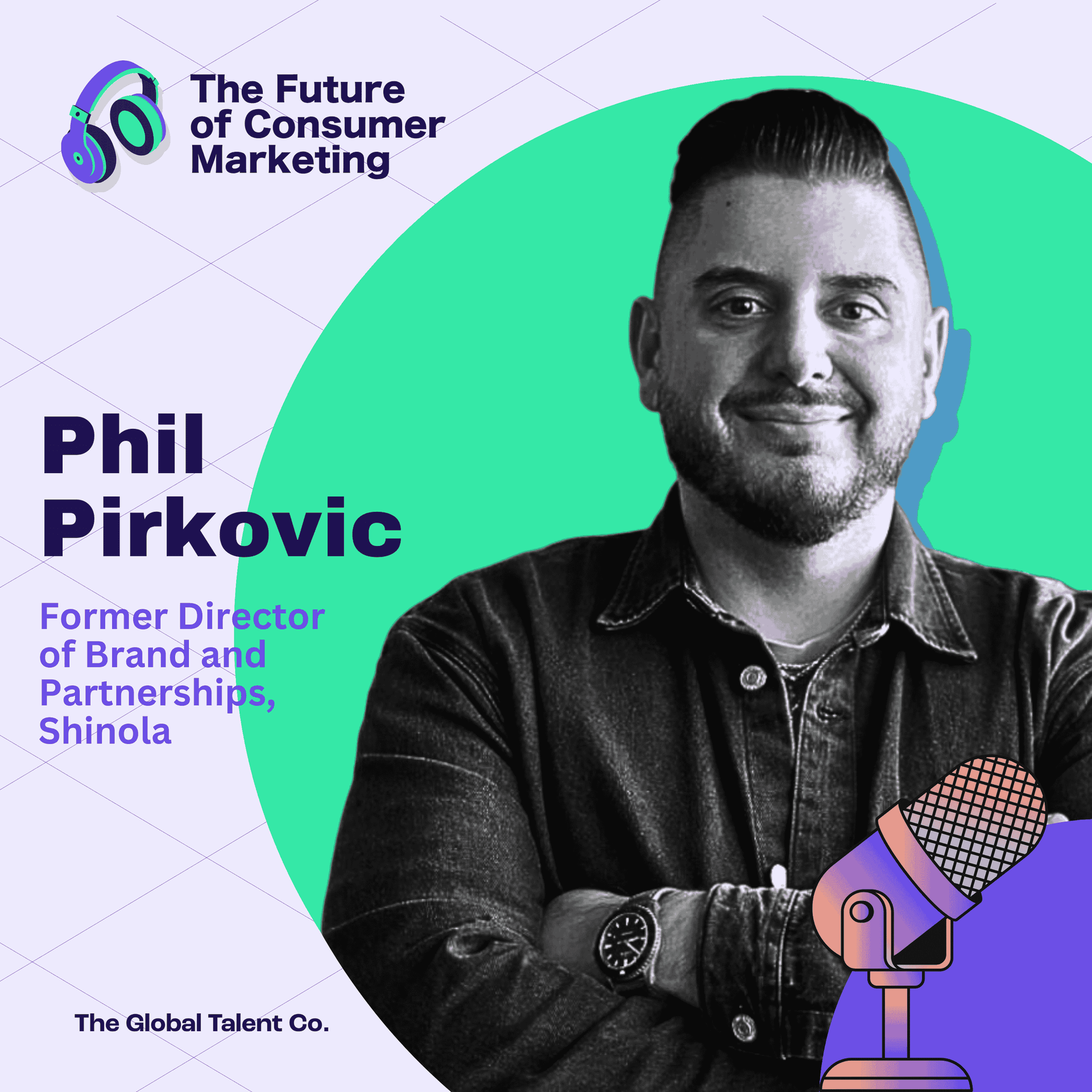
- Guest: [Phil Pirkovic](https://www.linkedin.com/in/philpirkovic/), former Director of Brand and Partnerships at [Shinola](http://shinola.com)
- Description: The episode explores Phil's journey in building Shinola's brand storytelling, transforming it from a product-focused narrative into a lifestyle brand, leveraging experiential marketing to compete in the luxury watch industry.
Key Topics Discussed
- Experience Marketing Philosophy:
- Importance of creating experiences that resonate with a few but can be shared with many.
- The motto: "Experience by few, witnessed by many."
- Transforming a Hotel into a Sales Channel:
- Utilized a Detroit hotel to turn 127 rooms into a branding and sales opportunity.
- Guests could borrow products (e.g., watches) during their stay, increasing brand engagement.
- Narrative Shift at Shinola:
- Transitioned from a "made in America" narrative to one focusing on "emotional memory".
- Emphasized the storytelling aspect linked to significant life milestones (weddings, promotions, etc.).
- Brand Consistency Management:
- Discussed managing brand presence across retail, e-commerce, a factory, and a hotel with a small team.
- Importance of maintaining a cohesive brand experience.
- Utility vs Premium Branding:
- Comparison of marketing strategies between a utility brand (like Google) and a premium product brand (like Shinola).
- Focus on storytelling and emotional connection in premium branding.
- Skepticism Towards AI:
- Caution towards AI adoption in craft-based brands like Shinola that value analog craftsmanship.
- Current reliance on human creativity and traditional methods over AI.
Key Takeaways
- Brand Experience:
- Brands need to create tangible experiences beyond just online presence to establish a deeper connection with consumers.
- Real-world interactions foster stronger emotional bonds with the brand.
- Storytelling as a Core Strategy:
- Effective branding involves telling stories that resonate with customers' personal experiences and emotions.
- Shinola's strategy was not just selling watches, but selling memories tied to those watches.
- Operational Challenges:
- Managing a small marketing team while overseeing a complex ecosystem of retail, e-commerce, and hospitality requires strategic coordination.
- Engagement Through Innovation:
- Engaging guests in unique ways (like watch lending programs) can transform casual interactions into potential sales opportunities.
Phil Pirkovic's Background
- Career Journey:
- A mix of experiences in different environments, from Google’s structured brand experience team to the dynamic landscape at Shinola.
- Emphasized the value of understanding culture and consumer behavior shaped by personal background and experiences.
- Marketing Philosophy:
- Believes in the necessity of a physical brand presence and the importance of creating memorable customer interactions.
Future Perspectives
- Personal Goals:
- Emphasis on being a good person and enjoying life while working effectively with motivated teams.
- Professional Aspirations:
- Focus on collaborating with passionate individuals who elevate each other's work, emphasizing teamwork in creative processes.
Conclusion
- The episode concluded with reflections on the importance of storytelling in branding and the value of personal experiences in shaping a brand's narrative. Phil's insights offer a fresh perspective on how to connect with consumers meaningfully in an increasingly digital market.
---
These notes summarize the insights from Phil Pirkovic regarding the evolution of Shinola's branding approach and the overarching principles of consumer marketing in the current landscape.
Written by AI. May contain mistakes. Listen to the episode to check what was said.
Chapters
Tap a time to open that second in VOCreating Meaningful Experiences
0:00 to 0:45
Explore how to create unique experiences that resonate through social media.
“What would you say is your marketing philosophy?”
Philip's Journey in Marketing
0:45 to 3:56
Philip shares his unconventional path to becoming a marketing expert at Shinola.
“My name is Andres Vigueira, and I'm going to be your host for the day.”
The Philosophy of Branding
5:00 to 7:22
Learn Philip's insights on brands needing real-world interactions to thrive.
“I have a couple rules that I kind of just always keep in the back of my head.”
Stories Behind Shinola Products
7:22 to 9:21
Understand how Shinola connects products to personal stories and memories.
“And what I found was like there's so many people that have kind of like a Shinola story.”
Utilizing the Hotel as a Sales Channel
9:21 to 14:03
Learn how Shinola's hotel enhances brand engagement and creates sales opportunities.
“Like you just mentioned it right now, but I hadn't actually made the connection in the fact that, yeah, watches and that type of products that I believe Shinola sells are very tied to these important moments in life.”
Creating Sales Channels Through Customer Engagement
14:03 to 15:14
Learn how hotels can become effective sales channels by engaging customers daily.
“And those are kind of like the little things that, you know, seem easy, but like logistically and operationally, like it's a lot to kind of implement just given how big the ecosystem is.”
Branding Differences: Google vs. Shinola
15:14 to 16:44
Explore the contrasting branding challenges and strategies between tech and product-focused companies.
“So what comparisons do you have in the difference for branding for those?”
Magic of Google: Building Emotional Connections
16:44 to 18:35
Understand how to foster emotional connections with users for a brand that is often taken for granted.
“And because it's so accessible and so easy and it works well all the time.”
Shinola's Craftsmanship and AI Integration
18:35 to 20:20
Discover how Shinola maintains traditional craftsmanship while navigating modern technology.
“But also to like remembering that, like there's, you know, there's, there's a time and place for both.”
Future Aspirations and Team Dynamics
20:20 to 22:39
Learn about the importance of teamwork and personal development in achieving success.
“Whereas, you know, majority of the industry starts with the computer, right?”
Transcript
Automatic transcript. May contain errors.0:00Andres Figueira:Experienced by few, witnessed by many. How can you create something that, you know, not a ton of people get to experience so that it's meaningful for them, but then use content and use social media and use these distribution channels where everyone can see that magic.
0:12Phil Pirkovic:What would you say is your marketing philosophy?
0:15Andres Figueira:You don't have a brand if you only market online. People need to be able to experience it and touch it and feel it and interact with it in the real world.
0:23Phil Pirkovic:Philip, do you have any comparisons that you can draw, for example, in your experience when you worked at Google? And now, Shinola is more of a product-focused company.
0:31Andres Figueira:You spend enough time working on different brands, and you kind of realize that all brands are trying to do is connect to people. There's an audience we're going after. How do we connect to them in a way that they understand? We're not selling watches. We're selling memories.
0:45Phil Pirkovic:Hey, everybody. Welcome to the show. My name is Andres Vigueira, and I'm going to be your host for the day. This show is brought to you by the Global Talent Company, helping fast-growing teams hire exceptional remote talent from Argentina, South Africa, and beyond. We connect companies with world-class professionals who bring skill, reliability, and a global perspective to every role. And just for our listeners, we're offering an exclusive 10 % discount on your first hire. All you need to do is click Start Hiring when you visit GlobalTalent.co and mention the podcast listener discount when we get in touch.
1:18Phil Pirkovic:And today, with me here, I am speaking with Philip Perkovic, Director of Brand and Partnerships, or well, better said, former Director of Brand and Partnerships of Shinola, which is a brand that is and has an unwavering commitment to crafting lasting products from watches to leather goods and even a hotel. So with that said, Philip, welcome to the show, man.
1:41Andres Figueira:Yeah, thank you so much for having me, man. I'm excited for this chat.
1:43Phil Pirkovic:Yeah, no, we're also very happy that we were able to make this work and have you on. And just so that we can get the audience a bit more in context, Philip, would you be able to tell us a bit about your background, what you're doing? I know that you're the former director of Brand at Shinola. So how your experience was there and maybe tell us a bit more about your story.
2:02Andres Figueira:Yeah, no, thank you. So background is super kind of unconventional, kind of fell into marketing. And I think a lot of it kind of starts just from, you know, my childhood, like indirectly. So my parents are immigrants from Yugoslavia and they came to, you know, America, ended up in Michigan. Um, and yeah, I think, you know, so much of my life was spent kind of trying to assimilate into culture, right? American culture that, you know, indirectly I was like studying culture kind of my whole life, right? Like what are kids wearing? What are kids eating? Cause my parents didn't know, right? When they came here.
2:37Andres Figueira:So, you know, I'm paying more attention to kind of like consumerism and culture and music and fashion and food and all this stuff. And that kind of shaped, you know, my childhood. So then as I got older, you know, went to college, I studied economics and just started getting into marketing. Like, you know, this is around the time when social media was like starting to become a thing, MySpace and Twitter and Facebook and, you know, was was understanding like how to kind of use these tools early on. And, you know, ended up getting a job at an agency out of college. And I was just doing social media strategy, just like, hey, here's cool things I'm seeing in the world.
3:21Andres Figueira:Here's how these brands can use it and really started to kind of hone in on like, you know, how how kind of agencies work. and how brands work and how marketing works. And then from there, you know, I moved to San Francisco for a couple years. Then I moved to New York for a couple years. And then I moved back to San Francisco to work at Google. So I was on the brand experience team there doing kind of internal marketing for Google. So basically all the ways people can experience the brand that aren't traditional kind of touch points. How do you bring Google to life? and then from there I moved back to Michigan and became the first head of brand at Shinola.
4:00Phil Pirkovic:Wow, that is one hell of a journey, man. And I must say I identify a lot with your story because I am originally from Venezuela, but I went with my parents who my dad moved due to jobs and the work he did. We moved to England, to Ecuador. I lived in the state for a while. So I totally get what you mean that you spent all your life trying to understand the culture just to be a part of it because that's what you were living right right and yeah it's funny because
4:25Andres Figueira:i'm like a third culture kid as well and i didn't really make this connection until like honestly like a couple years ago but you spend enough time you know working on different brands and you kind of realize that all brands are trying to do is connect to people right like there's an audience we're going after how do we connect to them in a way that they understand and so much of that is you know is in translation right how do you translate this audience pain points to you know what the brand is providing um and you know it yeah it's just like when you when you've been doing it for so long for your own personal life like it becomes a second nature thing of just like you know there's just like innate like you know there's these innate kind of hunches that you have around things that are going to work just because you understand people and culture and you know society better um but philip with with all the experience that you've
5:18Phil Pirkovic:gathered working at Google, at Shinola, at every place that you mentioned, what would you say is your marketing philosophy or your way that you approach branding for a company?
5:27Andres Figueira:I have a couple rules that I kind of just always keep in the back of my head. The first rule is you don't have a brand if you only market online. And I, you know, I say that with the sense of like, if you want to have a brand, people need to be able to experience it and touch it and feel it and interact with it in the real world. You know, I always say that like, you know, people aren't like taking screenshots of your banner ads and sharing them with their friends, right? So it's like, what are the things that you're doing that give people a chance to experience what the brand has to offer? And so that's one thing I think is super important for brands to kind of have, you know, to take space and have things that people can engage with in the real world, right?
6:12Andres Figueira:Whether that's events, activations, partnerships, partnerships you know in like anything that that people can actually engage with um i think that's super important because it's just you know the the the the bonds become deeper right so it's like you know when we were at google we always there's a saying that my boss told me he was like experienced by few witnessed by many right so how can you create something that you know not a ton of people get to experience so it's meaningful for them but then use content and use social media and use these distribution channels where everyone can see that magic, right?
6:46Andres Figueira:So it's like you can, you know, you can, that thing can be witnessed by so many people. So it's kind of like a two for one, right? So that's one thing for me that I believe in. And then, you know, I just, you know, end of the day, like it comes down to just storytelling, right? Like what are the stories you're telling? How are you telling them? How are you, you know, kind of championing the right communities and people, you know, with the brand? And, you know, and how do those things kind of play into into what you're doing? Right. Like we always said at Shinola, like, you know, we're not we're not selling watches.
7:19Andres Figueira:We're selling memories. Right. And it sounds a little corny. But like after I started, you know, working there, I never owned a watch before I started working at Shinola. Right. Right. But after I started working there, you know, I spent a lot of time, you know, my first like month or two, like I was going to all the different stores, talking to customers, trying to really immerse myself in what makes this brand special. And what I found was like there's so many people that have kind of like a Shinola story. Right. So you meet this guy and he's like, oh, yeah, like I bought my first Shinola when I got my first like my first raise, you know, at work and I wanted to celebrate it.
7:53Andres Figueira:Or it's like, my wife got this for me when we got married. Or my dad got me this watch after I graduated college. And those memories are associated with the product now, right? And with the brand. And I found that so many people kind of had a story like that, right? Because it's like, it's not an insignificant purchase. Like we're asking people to spend$1 ,000 to$4 ,000 on a product, on a watch, on a bag. Like, so those purchases, like they're all rooted in this kind of like notion of like, I want this to be associated with this memory. Right. So that was a very powerful thing for us to try to kind of tell stories around and unlock, you know, and at the time, you know, when we started to like explore this, the brand really hasn't, the brand really didn't do any kind of lifestyle kind of deep storytelling.
8:39Andres Figueira:And it was all just, here's the product, here's the factory, right? Here's how we make it. Made in America, made in Detroit. Here's what it looks like. And it's like beautiful, right? So, you know, it was the first time for us to kind of lean into some of these things where it's like, no, like, let's, let's go, let's go a step deeper and like, you know, figure out how we can actually tell the emotional side of the, of the brand and the products, the conduit to that, right? It's the thing that people remember, right? And this is the thing that people engage with. But everyone that I talked to kind of had this story of like, oh, I'm using this brand's product to remember something.
9:19Andres Figueira:And that was such a powerful unlock for us.
9:21Phil Pirkovic:Wow, I love that. And it is so true. Like you just mentioned it right now, but I hadn't actually made the connection in the fact that, yeah, watches and that type of products that I believe Shinola sells are very tied to these important moments in life. These milestones that you reach and then you get this gift or you buy it just for yourself. But it's so cool that you're able to make the brand more humane by portraying these stories that the customers say, because it does add another layer to it. Because when you mentioned branding and how everything is about storytelling, I also believe very strongly that it's also a part of like creating a world for the brand.
10:00Phil Pirkovic:That's not just the name, the product and the ads that you see, but it's, yeah, Shinola can be with you for all your life in these different steps or whatever brand it may be. But it's portraying yourself and your company as a, what's it called, like a companion for the customer during their life or providing these events. and in terms of of what the work you did at shinola philip how big is the company and how many people did you have helping you out as director of brand when you factor in like retail
10:30Andres Figueira:the hotel we're probably like 350 people um across like 21 stores hq the factory um and then the marketing team. So I overlooked the marketing team and then indirect, like, and then linear with the creative team. So the creative team was probably seven people. Marketing team was probably another eight people. There was a ton of things that we had to do just to kind of like, you know, like keep the lights on, right? Like we, email was a big part of our business. We, you know, updating and managing the website, you know, there's so many SKUs, product drops, like that That was a big part of the business, the e-com side.
11:15Andres Figueira:Okay. And then the retail side too, right? I worked really closely with the retail team because as we started to kind of, you know, transform the brand with storytelling and with, you know, photography and videos, we had to make sure that like you were getting kind of that same experience on the retail side too, right? So it's like, you know, little things like going into the store and like all the watches have to be on the correct time, right? If we're selling watches and one watch is not right, like we literally have to be on had someone would come in like in the morning when we're putting product out and making sure all the watches are taken correctly at the right time.
11:51Andres Figueira:And, you know, like all those little things kind of matter. Right. Because, again, we're asking someone to make, you know, a one thousand to four thousand dollar purchase. So we got to make sure that experience is is, you know, is the way that we want it to be. So. So, yeah, there's just so many kind of different touch points with with you know how the ecosystem in the world of shinola was was kind of operating um and then you have the hotel too which is like a lot of times people's kind of first interaction with the brand right people come to detroit they're straight on the hotel um they might not necessarily know that we sell watches they just think it's a hotel so it's like how do you use that platform and that you know that actual structure to kind of storytell even deeper and connect people to the brand.
12:35Andres Figueira:So we created a program where if you were staying at the hotel, it was kind of a lending program where you could, you know, call down to the front desk and say, hey, I have a dinner. I have a business meeting. And we would send someone up with watches that you could just pick one out and wear for your dinner and then return it when you were done.
12:56Phil Pirkovic:Yeah, give even people a way to experience the brand where it's like, hey,
12:58Andres Figueira:like I didn't know you guys sold watches. Cool, someone comes up to your room. there's like you know our watch our leather watch boxes they open it up there's 10 watches in there you get to you know pick one obviously like you have to kind of fill out a waiver and everything but like you pick the watch out you wear it to your dinner wear it to your event come back to the hotel boom boom leave it in your room you know and you know we leave you with a little watch box and then something and also times a lot of times too people were just like actually i just want to buy it so like you have that thing where it's like cool yeah so it's just again like using all the different touch points like you said building this world where it's like there's so many ways that you know people can engage with the brand and you know a lot of my work was in and how can you kind of elevate these touch points right make them a little more personable like we notice you know 70 percent of the people who are staying at the hotel have never purchased a product for us like oh that to me that was like a moment where it's like all right how can we get these people to engage with the brand a little deeper and it's like all right let them wear the product Right.
13:55Andres Figueira:Like if there's, you know, they're staying at a nice hotel, like let them let them test wear a bag, let them test wear a watch. And those are kind of like the little things that, you know, seem easy, but like logistically and operationally, like it's a lot to kind of implement just given how big the ecosystem is. Of course. But those are the projects, you know, that not only drive, you know, you know, loyalty and an awareness and engagement, but also drives bottom line P &L. Right. Like we're we know we just created another sales channel. Right. Every single day, there's 120, I think 127 rooms at the hotel.
14:31Andres Figueira:Every single day, there are 127 people checking in. Right. So it's like these are 127 customers that you can engage with every single day whom, like I said, 70 percent didn't know the brand or haven't purchased from the brand. So, you know, those are the those are the kinds of things for us where it's like, you know, how do we how do we see how do we take what we have and use that as kind of as the baseline? Right. Because, you know, as big as the brand is, like we're still relatively small compared to the watch industry. Right. Like the watch industry is a six billion dollar industry. Right. And we're just a very small fraction of that.
15:07Andres Figueira:So there's still so much room for us to grow in kind of these, you know, in these industries, in these verticals.
15:13Phil Pirkovic:no no i get that and i love how you're placing like uh you know i feel it is like a premium brand because selling watches is always a bit more of like a high standard um market and i felt as if you were going out to try out a lamborghini you're not going to buy it without doing a test drive before and having that michael done like the hotel just allowing them to wear it and live it for a while it's like the best experience you could provide for somebody who doesn't even know they want a watch or they don't even wear a watch until they do and then they feel a lot more formal a lot more elegant it's this whole thing with confidence that it makes you feel because i get it i get it that is so cool man and um philip do you have any comparisons that you can draw for example in your experience when you worked at google that you also worked in branding there versus shinola because like google is a software it's like a it's it's a service i feel like and now Now, Shinola is more of a product focused company.
16:08Phil Pirkovic:So what comparisons do you have in the difference for branding for those?
16:13Andres Figueira:Yeah, yeah. That's a great question. So the best way I can explain it is that, you know, at Google, we had a different problem, right? So most kind of, you know, any product CPG, anyone that sells something, their biggest thing is we need more people to know about us, right? We need more customers to know about us. at google it was opposite problem right everyone knows google right everyone uses every day but because it's it's so kind of like consistent in your life you almost take it for granted right so the challenge was is like how do we get people to care about this thing that's like always accessible that's always on like you you use google to to kind of do everything right find
16:56Phil Pirkovic:food find whatever search for things your home page on the browser it's like the first thing Yeah.
17:03Andres Figueira:And because it's so accessible and so easy and it works well all the time. You kind of take it for granted. Right. That's just kind of the nature of utility. Right. The more you use something, the less kind of, you know, the less magical it becomes because it's just consistent. Right. So for us, the problem was, you know, how do we get people to to you know, we always talked about, like, how do you get people to understand and feel the magic of Google? Right. So a lot of the work that we did, you know, there was, you know, this was also during 2020. So during the pandemic. So a lot of the work I had to kind of shift towards to video and production.
17:43Andres Figueira:So, you know, instead of, you know, Google to try to find a restaurant, we you know, we would do stuff with like different comedians. And it's like, all right, cool. Take us to your favorite spot. And let's show you how Google can optimize, you know, what you're looking for. Right. Like if you're a picky eater and you only want to find like, you know, one or two specific things. So it's like, all right, cool. How can you use content to tell a story around around that? But the focus becomes the person and their kind of preferences, not not the platform. Right. The platform is always the sidekick.
18:17Andres Figueira:It's always the the reliable thing that's going to get you to to the solution. but the story wasn't about Google maps. The story was about this person. Right. And like what they were trying to like accomplish. So again, it's all just about perspective in like, you know, what is the narrative that you're telling? But also to like remembering that, like there's, you know, there's, there's a time and place for both. Right. Like just as much as we, we did that, we, you know, we still focused on, you know, telling product stories and it's like, all right, cool. Here's how this thing works. Right. Very like layman terms.
Read the full transcript
18:51Andres Figueira:here's here's here's the new features here's the new thing here's how it works um but i think a lot of it for us was just like again trying to find those deeper kind of emotional connections of like how do you get people to kind of care about something um and you do that through relatability you do that through kind of you know humanity um and kind of lived experiences things that people can like oh you know what like i do you know one of my friends is a picky eater I understand this problem. I've been through it. Here's how this thing can help. Right.
19:22Phil Pirkovic:I imagine it must be difficult with something as big as Google. And as you mentioned, that it's something that people take for granted. It's just their opening landing page when they open a browser and it tends and it feels like it's something that exists, but isn't alive. It's just going to always be there and trying to get people to feel more humane towards the brand. Telling these stories is some way like to captivate the audience and show them the million other ways you can use Google instead of just like search and looking for a question you have. And now another question I do have, Philip, is in your experience at Shinola, did you guys leverage AI in any peculiar or interesting way, seeing that you're in an industry like you're a company that does watches and more like product for the consumer?
20:11Phil Pirkovic:Like what leverage, what um what ways did you use ai if you did at all um that could be interesting and you could
20:17Andres Figueira:tell us yeah so not a ton you know the brand you know is kind of rooted in this you know like tactable like we you know we're we're a craft brand right we make things right like the watches are all assembled in detroit by hand um and you know a lot of a lot of the way the brand operates you know from kind of the product point of view is still pretty old school right so like every watch is you know our watch designers are some of the most talented people in the world and every new watch starts with a notebook sketch like every single watch starts hand pen to paper sketching ideas first playing with it toying with it going through that process and then after we you know after something feels good then we'll go into kind of the digital the digital version and, you know, CAD it out and like do all those, you know, all those things.
21:12Andres Figueira:Whereas, you know, majority of the industry starts with the computer, right? Like a lot of designers now are digital designers. Our designers are still old school and it's still like, you know, what is the human, the human kind of touch? And, you know, you come to the, you come to HQ and like where our designers sit, there's just like huge foam core boards of just like sketches everywhere, right? They just kind of live in this like chaos of just like, you know, every single, you can kind of see like the oh this watch here's the first sketch the first idea of it here's what it actually became and here's the first iteration so um you know i mean it's it's a very analog brand right like it's a very analog it's a very kind of you know old school um so yeah we didn't use a we didn't really engage with ai in that level you know and even on the marketing side too like you know everything was still kind of you know we just didn't find the need to to kind to incorporate some of these tools.
22:08Andres Figueira:And, you know, as the tools get better and, you know, things, things kind of change. Yeah. Maybe down the road. But, but yeah, while I was there, we didn't really engage with, with a ton of the, ton of the tools.
22:19Phil Pirkovic:Philip, now talking more about the future. I know that you were, you're, well, you're the former director of, of brand Fortunola, but what are your plans for, for this year? And, and, and what do you want to accomplish, man?
22:30Andres Figueira:Yeah. I mean, I think on a personal level, you know, it's just like the older you get, you know, the more you just want to like be a good person, be there for your friends, be there for your family. And, you know, just like try to kind of enjoy, you know, and be more present. And then on a professional level, you know, like I said, you know, I think for me, it's just about people. Right. Like I want to you do this long enough and you kind of realize that like to do to do great work, you you have to be around great people right like everyone needs to to kind of lift each other up because like you there's going to be days where you know we're human like you're not going to be on your game and you're going to need your team to kind of support you and vice versa right you're going to need there be there for for that so you know i think for me it's just like the older the older i get too is just like you know i just want to want to work with good people who care who about what they're doing, who kind of, you know, push me, you know, push each other.
23:31Andres Figueira:Um, and who, who don't really kind of take no for an answer. Right. Like it's always, always tell people like getting an idea made is one of the hardest things in the world. Right. Going live with content, going live with a campaign, like, unless you've done it, it's very, very difficult to do. Um, And there's just so many variables that, you know, can kind of go wrong, right? Like, so when you're in the trenches like that, like, you know, you just I just want to you just want to be with people who also care and who also, you know, like, are there for the right reasons who want to push the work.
24:10Andres Figueira:So those are the things that I'm kind of looking forward to.
24:12Phil Pirkovic:I get that. No, I totally get that. And being and making sure that you're surrounded by the right people is so important. And also the fact that they elevate you to do your best work. And if you're not in the headspace to do your best work, then you at least are able to trust them enough to delegate what you are not able to do at the moment and know that it's still going to be done well. because that is like one of the most important reasons I feel that teams don't work out is because they don't have the they don't have enough trust to properly work with each other and it just turns into something so individual that then why are you even on a team man um right totally get that totally get that and um Phil I'm noticing that we're almost at time so I'm gonna close out the episode but before I do I just wanted to say man thank you so much for hopping on here with us, for telling us your story, your insights, and everything you've learned with your experience around the years, man.
25:08Phil Pirkovic:It really has been so cool working from Google to Shinola. The company's so different, but that provides so much experience. We really appreciate you being able to come and tell us your story, man.
25:19Andres Figueira:Yeah, thanks for having me, man. It was a great, great, great time.
25:22Phil Pirkovic:No problem at all. It really has been a pleasure and it was a great time. And to anybody here who is listening to us, we really appreciate you as well being on the show, listening to the different personalities that we bring on and all the different industries that we're talking to. So with that said, thank you so much and have a good one.
From the publisher
In this episode of The Future of Marketing, host Andres Figueira sits down with Phil Pirkovic, former Director of Brand and Partnerships at Shinola. Phil built the brand's storytelling infrastructure from scratch — shifting Shinola from a product-and-factory narrative into a full lifestyle brand rooted in emotional memory. He shares how he engineered experiential touchpoints across 21 stores, a Detroit hotel, and a small but disciplined marketing team to compete in a $6 billion watch industry without a massive budget.
Topics Discussed:- Why "experience by few, witnessed by many" is the north star for physical brand activation
- Turning a hotel into a 127-room-per-night sales and brand discovery channel
- Shifting Shinola's narrative from "made in America" to emotional memory and milestone moments
- Managing brand consistency across retail, e-commerce, a factory, and a hotel with a team of 15
- The difference between marketing a utility brand (Google) vs. a premium product brand (Shinola)
- Why analog craft brands should be skeptical of AI adoption — and when it might eventually make sense