In short
How Tom Bell built Drinkwell and Skinny Brands by using consumer purchase data to develop “perfect” functional alcoholic products, then scaled into own-label brands using an algorithm.
Guest backgrounds
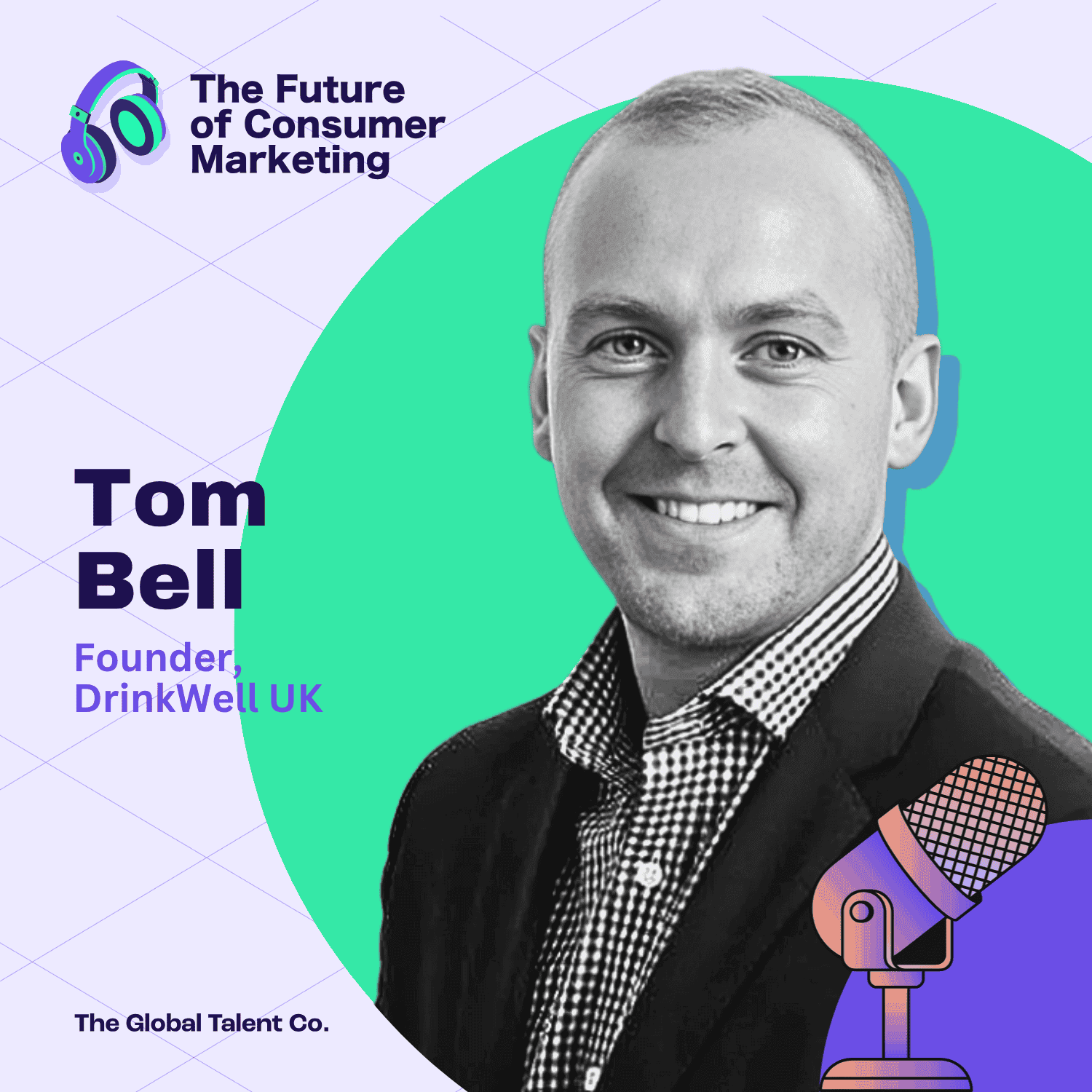
Tom Bell is a former rugby athlete and sports-science-trained entrepreneur. He co-founded Skinny Brands and founded Drinkwell UK, a marketplace/retailer for functional alcoholic beverages in the UK and Europe.
Key claims
He says he “followed the breadcrumbs” from what customers bought and valued, not brand-first or product-first. He argues UK/Europe “better for you” alcohol was initially hard to educate due to advertising rules and a weak category, and that big brands often “tarnish” the space by changing recipes and messaging. He claims own-label products have ~75% higher lifetime value than third-party items.
Notable examples
Skinny Lager; Traces wine brand. Drinkwell sold 3.5M bottles, then used an algorithm tracking 21 data points to specify product requirements (e.g., screw cap, clear bottle, French/provence rosé, 11%+ ABV, zero sugar, vegan, sustainable). AI also powers forecasting, marketing timing, and product creation.
Written by AI. May contain mistakes. Listen to the episode to check what was said.
Chapters
Tap a time to open that second in VOConsumer Trends in Alcoholic Products
0:00 to 0:57
Learn about the rise of functional alcoholic products and consumer preferences.
“I was seeing the rise of sort of better for you and more functional alcoholic products.”
Tom Bell's Background and Motivation
1:20 to 1:56
Discover Tom Bell's journey from athlete to entrepreneur in the beverage industry.
“Skinny Brands is a company that wants to become the number one alcohol brand for consumers unwilling to compromise on their lifestyles.”
The Birth of Drinkwell and Market Research
1:56 to 3:08
Hear how Tom identified a gap in the market for functional alcoholic beverages.
“Yeah, so I think from all of my life, all of my adult life that is, starting in my younger years I was a very keen athlete into a lot of sports.”
Creating Functional Alcoholic Beverages
3:08 to 4:03
Tom discusses the growing demand for healthier alcoholic options and his insights.
“And it wasn't available and significantly unavailable within the UK and European markets and was widely available in other markets.”
Consumer Feedback and Business Iteration
4:03 to 5:04
Learn how Tom used consumer feedback to refine Drinkwell's offerings.
“I didn't make any money, but I was sort of testing, effectively testing that is this product, is this style of product something that people are interested in?”
The Importance of Brand and Product Alignment
5:04 to 6:04
Tom explains the significance of aligning products with consumer values.
“Let's go and manufacture something more perfectly spoke for this market and that style of customer.”
Creating the Perfect Product with Data
6:04 to 8:00
Discover how Tom used data to create ideal products for consumers.
“It has a very limited amount of volume currently, but there's a lot of talk and conversation about it.”
Challenges in Educating Consumers
8:00 to 9:24
Tom shares the challenges of introducing new products to a hesitant market.
“So it was a really small portfolio, much, much bigger now.”
Building a Consumer Audience for New Products
9:24 to 14:03
Understand how Tom cultivated a consumer base for his unique offerings.
“and where we third-party about, but now Drinkwell has its own beverage division.”
Consumer Marketing Insights in Europe
14:03 to 16:30
Learn about the challenges and strategies of marketing low alcohol products in Europe.
“If I did this in America, I think this would have been, we would have hit the jackpot.”
Show all 13 chapters
Competing with Legacy Brands
16:30 to 20:26
Discover how new brands differentiate themselves from established alcohol brands in the market.
“And when they take that product and they launch it in the UK, and they've done this twice over the last 20 years and spent tens of millions of pounds trying, they changed the recipe.”
AI's Role in Product Development
20:26 to 26:52
Understand how AI is utilized for product creation and customer insights in the beverage industry.
“And they're actually, generally in the can, are much better than, like, Mid Club Ultra and Bud Light.”
Future Plans for Traces and Expansion
28:00 to 28:25
Learn about the international distribution plans for the brand Traces and its future in the American market.
“That will be distributed in about 30 different countries, 28 across Europe and East.”
Transcript
Automatic transcript. May contain errors.0:00I was seeing the rise of sort of better for you and more functional alcoholic products. That's not non-alc and it's not mid-zone and it's not stylistically different. This is alcoholic products that have more functional orientation. What was the main trigger that you said, hey, this is going to work perfectly. I want to finish going through with this. Did you have any any aha moments? All I've done is just followed what I wanted as a consumer and I couldn't find. So I wanted a solution for myself. And my first business, Drinkwell, is a marketplace. It lives and dies and breathes based upon what customers are buying.
0:32So we are a retailer. All we've done for literally from day one, from the first product I ever bought, all we did was follow the breadcrumbs. It was the customers are liking this. They don't like that. They attribute value to this. They don't attribute value to that. So we've never been brand first. We've never been product first. We've always been what does the customer want?
0:57Hey everybody, thank you for listening. My name is Andres Figueira and I'm going to be your host for the day. Today's episode is sponsored by the Global Talent Company, a company that's connecting amazing remote talent from Argentina, South Africa, and anywhere really with leading tech companies worldwide. So if your team is looking to hire top-notch South African or South American talent, just visit theglobaltalent.co and see how we can help. And today with me here, I'm speaking with Tom Bell, the co-founder of Skinny Brands and the founder of Drink Well UK. Skinny Brands is a company that wants to become the number one alcohol brand for consumers unwilling to compromise on their lifestyles.
1:36So without further ado, it's a pleasure to have you here, Tom. Thank you for joining the podcast. Thank you. Thanks for having me. No problem at all. No problem at all. And Tom, just as we get started, would you be able to give me and the audience a bit more context about who you are, what Drinkwell and what skinny brands they are and what they represent? Yeah, so I think from all of my life, all of my adult life that is, starting in my younger years I was a very keen athlete into a lot of sports. and the main sport for me was rugby. As a lot of people, if they do know rugby well, around the world will know that it's got a very ingrained drinking culture and it tends to be, instead of being a lot of rugby players who like drinking, it's a lot of drinkers who you play in a rugby.
2:23And I managed to make my way into various different teams and levels and all of them carried the same style and culture. And really what that led me to think about was, well how do I maintain this culture and still have that level of enjoyment while reducing the drawbacks like we were all you know semi-professional athletes we were all trying to improve consistently but still maintaining the culture of rugby very close in it it's pretty bound by that culture and what you experience not just on the pitch but in the changing rooms in the middle of house and that was the you know that's the heart and soul of rugby as a sport so what's simply for me I had the desire to find that more perfectly fit my lifestyle and what it was that I was trying to achieve.
3:08And it wasn't available and significantly unavailable within the UK and European markets and was widely available in other markets. So I was seeing the rise of sort of better for you and more functional alcoholic products. That's not non-alc and it's not mid-zone and it's not stylistically different. This is alcoholic products that have more functional orientation, seeing those in america seeing that in australia and those markets are multi-billion dollar industries you know the light the light beer market in america is a multi multi-billion dollar industry the same goes in us in australia the same now is starting to progress if you think about what hard seltzer is in principle hard seltzer is a multi-billion dollar industry built on it is still a relatively strong alcoholic beverage that has functional attributes so whether that's zero sugar low carb gluten-free organic sustainable vegan all those things are essentially encompassing what it is that somebody's trying to adapt into their lifestyle while maintaining the drinking occasion so what I did I literally by researching that I was a very green entrepreneur and I started in my back bedroom I did this around a full-time job I was working as a I was working as a in the in sales and education from medical firm having studied sports science and all it was was me trying to understand how do I start a business buy product where do I buy it from And I bought in some beer from Canada and put it in the garage and started selling to clubs and bars and restaurants that I'd, you know, played for as clubs and went to as a, and went out and, you know, went with friends.
4:43And I just sold them cases. I didn't make any money, but I was sort of testing, effectively testing that is this product, is this style of product something that people are interested in? And it worked, massively worked. So that's where I started the business Drinkwell. and it sort of transpired from there drink well is a marketplace business third-party brands operate within the uk and now europe so products that have that blueprint principle of maintaining the occasion maintain the quality but reduce the impact of you know all those different lifestyle attributes um if we we find products and we make them available for customers and then skinny brands was or me with skinny lager in particular was then the taking that into a this particular product.
5:26Let's go and manufacture something more perfectly spoke for this market and that style of customer. Okay, wow, that is amazing, Tom, because I feel you were a bit ahead of your time when you start to think about this more functional ways to ingest alcohol, because nowadays I'm feeling there's a lot more of the rise of 0 % beers and all these other like very, very low alcoholic grade beverages that it's just like people don't want to get super drunk off two beers they want to drink a few more beers but not have that level of alcohol intoxication and and and i really like i really empathize with your mission because i i'm i'm not a professional athlete but i'm a big big calisthenics advocate i love to skateboard and and i sometimes reach points where if you keep drinking at the level that the culture because here in argentina they love their wine they love their beer as well and it's very ingrained in the culture too but if you just keep um doing that regularly you're not able to progress in your athletic or or fitness goals because it just pulls you down a bit so you need to make it a lot more easy to live with and and and to live by so that is super cool man and okay in terms of the consumer insights that you gathered when you were giving those cases and and asking the clubs for feedback what was the main trigger that you said hey this is gonna work perfectly i want to finish going through with this did you have any any aha moments yeah i mean in principle so i've been doing this you're right i went this i probably went into this category so early it was kind of it was non-existent and i crowbarred the category into uk european consumer consumer appetite um and it it's now you you're right it's bubbled to the surface there are more functional products it's been led by no and low and I think that has its place.
7:21It has a very limited amount of volume currently, but there's a lot of talk and conversation about it. But all I've done is just followed what I wanted as a consumer and I couldn't find. So I wanted a solution for myself, and that was not just for me. This was for a lot of other people that I was having conversations with. You've bounced off a lot of other people that I was in and around in my life. And we all understood this is the type of product that we wanted. and then my first business drink well is a marketplace so it is it lives and dies and breathes based upon what customers are buying so we are a retailer people come in and they buy or they don't buy or they have a good they have a good experience so they don't have a good experience based upon the products that they consume and how it attaches to the lifestyle so all we've done for literally from day one from the first product i ever bought we were slightly hamstrung by what we could buy and what products I had access to then.
8:15So it was a really small portfolio, much, much bigger now. But all we did was follow the breadcrumbs. It was the customers are liking this. They don't like that. They attribute value to this. They don't attribute value to that. So we've never been brand first. We've never been product first. We've always been, what does the customer want? What problems do they want solving within being able to still enjoy a drinking occasion and what is it that's tearing them away from that or what is it that's stopping them from enjoying that as much and those are the things that we've tried to find solutions for so all we've done has been completely consumer focused so when we talk about consumer marketing it is just in its purest essence that is exactly what it is and we've and i'll tell you a little story maybe later on about how we've developed that as a marketplace into curating almost what we see as the most perfect product.
9:07Okay, so Drinkwell, you use the insights of the consumers you have there to make sure you're selling them what they want, but then you're changing the narrative a bit and you're also suggesting due to what they like, what would be the best thing they could buy? Yeah, correct. And that informs not just sci-fi products, purchase patterns, and where we third-party about, but now Drinkwell has its own beverage division. So we're now creating brands and products that fit most perfectly what people have been buying from us over the last 50 years. How has the receptivity of the consumer to your suggestions been?
9:43Do they, I want to say, do they bite the bait and what you give them or is there a little bit of pushback? No, it's really interesting. So like any brand, any product, any new product that you launch has a really good adoption phase because people just get excited about something new. New is new and people want to try new. And then what you need to see is not necessarily people get caught up on that first initial hit. They go, ah, it's worked because it's new. Like you have to attribute the newness to that, to the initial success. It's about how much it takes off after that and you have to give it some time.
10:17So it's about longevity and it's about lifetime value. So a lot of brands and businesses and they launch products and they put them in the bin, they trash them straight away because they think, well actually it's not had its it's not necessarily had what we wanted to happen but you do need to give it time because you see this peak it starts to dip back again and you wait for that longevity and lifetime value to come in and the products that we've produced and so as marketplace as an example the products that we've produced as our own label propositions which more purely get you know are curated in a manner that ticks as many of those boxes as possible um then they're the ones that we have like a 75 % higher lifetime value on those products than we do on ordinary third-party products we buy in.
11:02Because we might get something in that has, okay, we get a product that it's organic, it might have zero sugar, it might still be, it could be an Argentinian Malbec, okay? So something for you, it's an Argentinian Malbec, it's slightly lighter than alcohol, it's got zero sugar, it's got no alcohol, that's it, and it's organic, right? So we bring that product in, but it doesn't say it on the label, it doesn't shout about it in the brand. And it might be like a screw cap and people really like cork. They really overvalue cork instead of screw cap. It might be the wrong color slightly. It might not breed the right sort of attitude for the customer.
11:35They don't feel like they're getting the right value exchange. So we establish all these things. Then we create a brand that more perfectly fits that scenario and that customer. And when we launch one, we see over a 75 % increase in lifetime value when we create a brand that ticks as many of those boxes as possible. so so as a as a brand that we've done this with is a product called traces so traces is um is our own wine brand that was purely borne out the insight of our drink well marketplace so we sold we sold three and a half million bottles of wine in a period we put that into an algorithm the algorithm tracks 21 points of data about that product and the algorithm then said if you're going to make the perfect white red or rosé this is what it needs to be and it gave us a playlist and we've just gone, okay, it's got to be screw-capped.
12:23It's got to be in a clear bottle. It has to have an iconic part of the label. It has to be a white-backed label. It has to have some level of foiling on it. It's got to be French. The rosé in particular had to be a Provence-style rosé. It couldn't be less than 11%. If it was 10.9, it was not going to be good enough. It had to be 11. It had to be zero sugar. It had to be vegan. It had to be sustainable. And there is all those things as our playbook and we've then gone out to the market and gone, right who can get as close to this if not match it and traces was the adaptation of the you know that brand voice and that storytelling of all those usps traces was the thing that we created so it was and that's now in retailers and wholesalers we're distributing 28 countries by the end of this year we launch in america next year so much is happening because of really understanding exactly what it is that that consumer has been loving and not loving and and understanding what they buy and what they don't and what drives value and what has the highest value exchange and where the longevity sits and recency and frequency data, that's all been brought into creating a product.
13:28It's like the, what's it called, the phase of experimenting to get that perfect product, that wine, that flavor. It really is like a whole adventure just to make sure you get it right. And in terms of once you have the product, and Tom, when Drinkwell started, did you find yourself having to actually educate the consumers more about what you wanted to sell them since it wasn't that popular in that time or did people understand right away and and you just created a a consumer um what's it called like like a whole consumer audience of people that really just wanted this these products that you're offering that that is the solution they need you know it's an it's an interesting one because yes you're absolutely right people especially in uk in Europe, this category is relatively non-existent.
14:16It's still really new. If I did this in America, I think this would have been, we would have hit the jackpot. This would have been a long time ago. We'd have seen some significant volume out of this long time ago, which those brands have seen. And there is still in America for that category, there's still no consolidator. There's a lot of retail distribution through your Kroger and your Publix and Walmarts and so on, but there's not really a consolidator in that market. In the UK, we have our consolidator. We are that for Europe as well um so we thankfully we've got a relatively good critical mass now that helps us but in the early days it was really scripted it was really um we had to we spent months and months and months and thousands of iterations of like what's the perfect tagline what turns people on and turns people off like we we were analyzing biddable paid media clicks on if we change this word for that word or if we move this word to the back instead of the front if we create more of a hook phase more of an education phase more of a learning phase and more of a um a connection phase like we broke out sentences we broke out phrases we broke out even designs we'd have to look so deeply into what it is that we were saying so so people could understand it better and and that was it's not us doing it that was purely again talking about consumer marketing we're just reacting to what the data says of what consumers are are clicking or not clicking they're voting with their pounds on spend a product they're voting with their clicks on social media they're voting with the scroll stop and time as attributed um on social media you know analytics so are they stopping and not clicking what is it that's not getting them to click where's the why is this the hooks getting them but then the education phase is not enough or it's not good enough to get them into this click phase and we've just nailed that bit consistently over and over and over again i've been so hyper focused on that we're hamstringing alcohol because you can and can't say loads of different things you know you can't talk about health and alcohol even though we are functional healthier better for you alternative and alcohol it's really difficult for us to communicate that because in advertising standard agencies and the government really stop you from attributing health to an alcoholic occasion we've got to be really worried about what wording we use to be able to not break the rules but equally educate the consumer and it's tough it's it's hard work no and that's something that i was thinking about because since it's a controlled substance it it need there needs to be a certain type of you can't just say this alcohol is the best for you because it's the healthiest because it may be misleading and you got to make sure to cover your back and all that and and that is completely true and in terms of competing with major alcohol brands tom i know you're like a different product but i feel you might be looped into that same category has there been an issue or or has it been like a major effort to make yourself stand out from those legacy brands that already are going into the low alcoholic count uh market and all that stuff did you need to actually like feel that you pulled some of the consumers from their bag or were your people more um like they came to drink well because drink well represented what they needed and they didn't like to drink a corona or one of those big name brand beers that could be found or something like that and you know it's a really interesting question and i think it's it's difficult to answer i'll answer in two ways one i think the better for you category within the uk and europe is it's harnessed by a big brand behemoth doing it really badly so as an as an example so so blue light or mick level trait as an example in america like the two of the biggest beers in america right and they are they are 4.2 percent abv they are low carb beers advertised as low carb beers advertised at the nfl nhl you know nba they are sports related in that scenario of sports and consumption of sport they are advertised in those scenarios and therefore attach themselves to sort of physical activity and sort of health and wellness agenda but it's about having fun and health so they do that really well and they're 4.2 percent ABV, low carb beer brands.
18:21And when they take that product and they launch it in the UK, and they've done this twice over the last 20 years and spent tens of millions of pounds trying, they changed the recipe. They come into the UK and they made Bud Light 3.5 % and advertise it as a low alcohol beer, not a low carbohydrate beer, not a lighter beer, not a lower calorie alternative. It's like Coca-Cola changing the recipe or Big Mac changing the burger recipe. It's bananas, the way they did it. So unfortunately, this category in the UK and Europe has been really tarnished by brands that do something so well and make billions of dollars worth of revenue and have so much success and enter a new market and feel like it's got to change.
19:04And the consumers are so internationally connected now. They see a brand in one scenario in America and they see it across all different advertising because we digest so much of the American, Australian and international media market and then when the product comes here it looked totally different so they they they failed in those scenarios so the product in the low carb beer category in particular like skinny lager as a product that that it was tough to try and cut through and not be associated to those guys so it was tough to be like yes we're low carb just like those guys are in america but their uk products really different i don't know why they've done that but it's and and it's sort of a bit of a tarnished you know we got tarnished with the same brush um so we don't have there isn't a big thriving category here like there is in america it is really starting and actually it's been it's been pushed by um uk brands so there are brands like prime time and low rise um you know skinny was was for me was a uk founded low carb beer category um and they're in retail now they're really pushing they're winning over big brands used to so they'd get in that space that big brands used to take hold of and it's those kind of innovations that aren't aren't connected to a big brand i think they're now getting a lot more share of shelf and a lot more share of voice and that's really nice to see so we we have a bit of a brand harness but equally i think smaller more boutique-y um entrepreneurial-led brands that are there for a purpose i think that purpose-led scenario is working so much better than big blue chip just going we're going to come into a market it into our products and hope for the best of course and yeah and with this these big companies you can see how they just throw their money at creating a product that is in fashion or that or that's in trend at the moment and they don't and you don't feel that curation or or that effort into making it taste well and to making it and making it make you feel good um i i'm personally i'm a super big fan of michelab because of what they did because it was like the first beer that actually got me thinking like okay just if this is 89 calories per can if i drink three cans then i just need to go and jog 4k and i would have lost the beers and it's like i love doing those calculations because it doesn't make you feel that guilty and it's like if you find other types of beers that are may taste better when you when you start describing the players that are doing something well and are differentiating themselves from legacy brands i was like this feels like as if it were an artisanal beer shop where you go in and you can find those super high abv beers that you're like you're even scared to touch because it's like what would happen if i drink this then you could find some super low ones and and i feel they all have their place like right next to each other but that is so cool man it's it's interesting smaller brands who have that purpose who have that passion and that lifeblood behind them as a we're doing this because we couldn't find an alternative and I think I can make a beer for them.
22:01And they're doing really well. And they're actually, generally in the can, are much better than, like, Mid Club Ultra and Bud Light. They're fine beers, so they're not the best tasting things in the world. I don't think they're really trying to be. They're trying to, they are just being peeing with friends. It just baffles me that they changed their recipe. And Mid Club Ultra, like, in the UK market, again, was a 3.5 % beer. In America, it's 4.2 % beer. And, you know, 3.9 % is low out to a UK consumer, and 4 % is normal. 0.1 % can be the difference between a consumer going and i'm not interested in 3.9 because i want a beer and four you just go absolutely fine doesn't need a second question and that can be the difference and they are the little specifics that i just think you know these american brands currently thinking we'll just do what we want to do and when you were describing how those beers they've been able to position themselves in the market like bud light michelab being like mixed with sports that was something that i lived here like i lived and breathed it because michelab used a lionel messi as the face of their brand with the whole mls and the soccer and argentinians there i feel the culture is a lot like the uk they like their beer they don't like a low a low alcoholic beer a little car beer but when messi's face was put in michelab ultra i kid you not tom It took less than two weeks for this whole country to be packed with Mikulov.
23:22It's like they don't even know where to put them anymore. And it's like, OK, so something's being done right in the marketing side, even though people might not love what the beer represents. But it is good for them. So that's nice. And Tom, I also have I would love to know, since you're an industry that I don't talk to with that much because we don't get that much alcohol, beverage brands or anything like that. But how are you using AI to help you and the company in your day-to-day work? Do you guys have any way that you're leveraging it? Or is it something that you don't use majorly just for, I don't know, analysis of metrics and other stuff like that?
23:59Yeah, look, we do. We obviously do data analytics across with AI. So we do modeling and we do forecasting and planning with AI to look at all sorts of data, both retail distribution and customer acquisition structure and strategy and lifetime value metrics and all that stuff. You know, we use AI for web design and page development. We use AI for analytics on even like, you know, hotspotting through the website. And the AI learns and puts certain pages, ranks certain pages differently on menus. So that's we've got an automated menu feature. we use ai from our email marketing and our text marketing so that learns on like recency and frequency data about when do we we're always trying to talk to the customer right at the perfect time at which they're ready to place their next order so and it you know some people for the you know they have consumption they might drink six bottles in three months some people drink six bottles in a week so it learns their purchase patterns and we allow it doesn't kick in until it knows that it's got enough data to make an informed decision so it doesn't just go you know the place in order twice and now based upon the first and second this is their ongoing trend it sort of continuously adapts and learns so that and that changes through the year so somebody who drinks loads through christmas period like the october to december might not drink loads through january to march and it learns that and it says it sends emails out um and the same same really and that same adaptation through our SMS systems.
25:29We use AI from, just as I talked about, from how we create products. So it is from an analytical perspective, but it's equally from what kind of product do we need to create? What's the missing piece within our portfolio? How do we, let's say we've got 10 Merlots or 10 Shirazes, let's say, and we'll say, right, we need to find the perfect one because I kind of want to consolidate maybe five or six of those into one perfect product. and get the best of all of those five and six and really consolidate all that volume into one, which then becomes a more profitable endeavor for us as a business. And actually, the customer gets a better experience, they get a better price, we get a better margin, and everybody's happy in the scenario.
26:11So we use AI to do that tracking. So of the 21 points of data about all these different 10 shirazes, tell me the perfect thing. Tell me the reasons why people buy all of those, what stands out, what's different, what's unique, what drives value, what doesn't. And it runs proper assessment on those products. So we use it for brand creation as well, which is really exciting. That's incredible for us because it cuts down the time. Of course. No, that is super cool. And it helps you gather the insights of things that you might not even see, but it has all the data. And then it's just like, yeah, this is working out.
26:43You could use something creating these products as inspiration and that helps you consolidate what you're saying and be able to get better margins and provide higher customer satisfaction. Yeah. Okay. No, that's a super interesting way that AI is being leveraged because I just love this. With every single industry I speak to, AI is in there, but it's always a different way that they're using it and that it helps out. So that's very nice. I know people will appreciate understanding how that is being done there. And Tom, I know we're almost at time and I don't want to take more of your day, but I would love to give you the opportunity to tell anybody that may be listening right now, how they can go about learning all of the products that Drinkwell offers if they want to buy anything in the marketplace or if they want to look into skinny brands and just buy the ones that you guys are making.
27:32How could they go about that? Yeah, thank you. Thanks for that. We're in the UK and we're in the Irish market. So if you're in those two regions, and sorry, we're not worldwide yet, we'll get there eventually. Or drinkwellisland.com. You can search any one of the 200 different products that we list. some nice wines and beers and some sprits and hardseltas and so on that we do on the platform. All of that is delivered to your door. Have a look out for Skinny Log and that product is going to be distributed in America next year. Same with our brand Traces. That will be distributed in about 30 different countries, 28 across Europe and East.
28:08And then we're going West and we're coming over to America next year. So you'll see it across the American state if you're listening in America. That's something to it. Okay, so exciting. So we'll probably be hearing more and more of Drinkwell and Skinny Brands in the future. So that is amazing. And Tom, thank you so much for hopping on the episode. It really has been super interesting. And I can't wait to see what more you keep on doing with all these endeavors that you're in. Thanks so much. Thanks for having me. No problem at all. And to anybody that is listening, thank you so much for coming on the episode.
28:41And I really do hope that you come back to listen to the other industries that we speak to and all the different personalities that we have on here. So thank you very much.
From the publisher
In this episode of The Future of Consumer Marketing, host Andres Figueira interviews Tom Bell, Co-Founder of SkinnyBrands and Founder of DrinkWell UK. Tom has built a data-driven alcohol marketplace that reverses traditional product development—instead of creating brands and hoping consumers follow, DrinkWell tracks millions of purchase decisions to algorithmically design products that perfectly match consumer behavior. Starting from his garage selling Canadian beer to rugby clubs, Tom has scaled DrinkWell into a 28-country distribution network while launching proprietary brands like Skinny Lager and Tracers wine that achieve 75% higher lifetime value than third-party products. His approach demonstrates how consumer feedback loops, rigorous A/B testing, and AI-driven analytics can create functional alcohol brands in a heavily regulated category where traditional health marketing is prohibited.
Topics Discussed:- Building a functional alcohol category in markets where it didn't exist
- Developing a data-driven marketplace that informs proprietary product creation
- Using algorithmic analysis of 3.5 million bottle sales to design perfect products
- Navigating advertising restrictions for functional alcohol brands
- Competing against legacy brands that fail at international market adaptation
- Leveraging AI across product development, customer acquisition, and inventory optimization
- Creating 75% higher lifetime value through algorithmically-optimized brand attributes