In short
How DLE Magazine (Le Magazine) uses curated “co-retail” shared retail spaces to create cross-brand synergies and help brands enter physical markets without leases or store overhead.
Guest
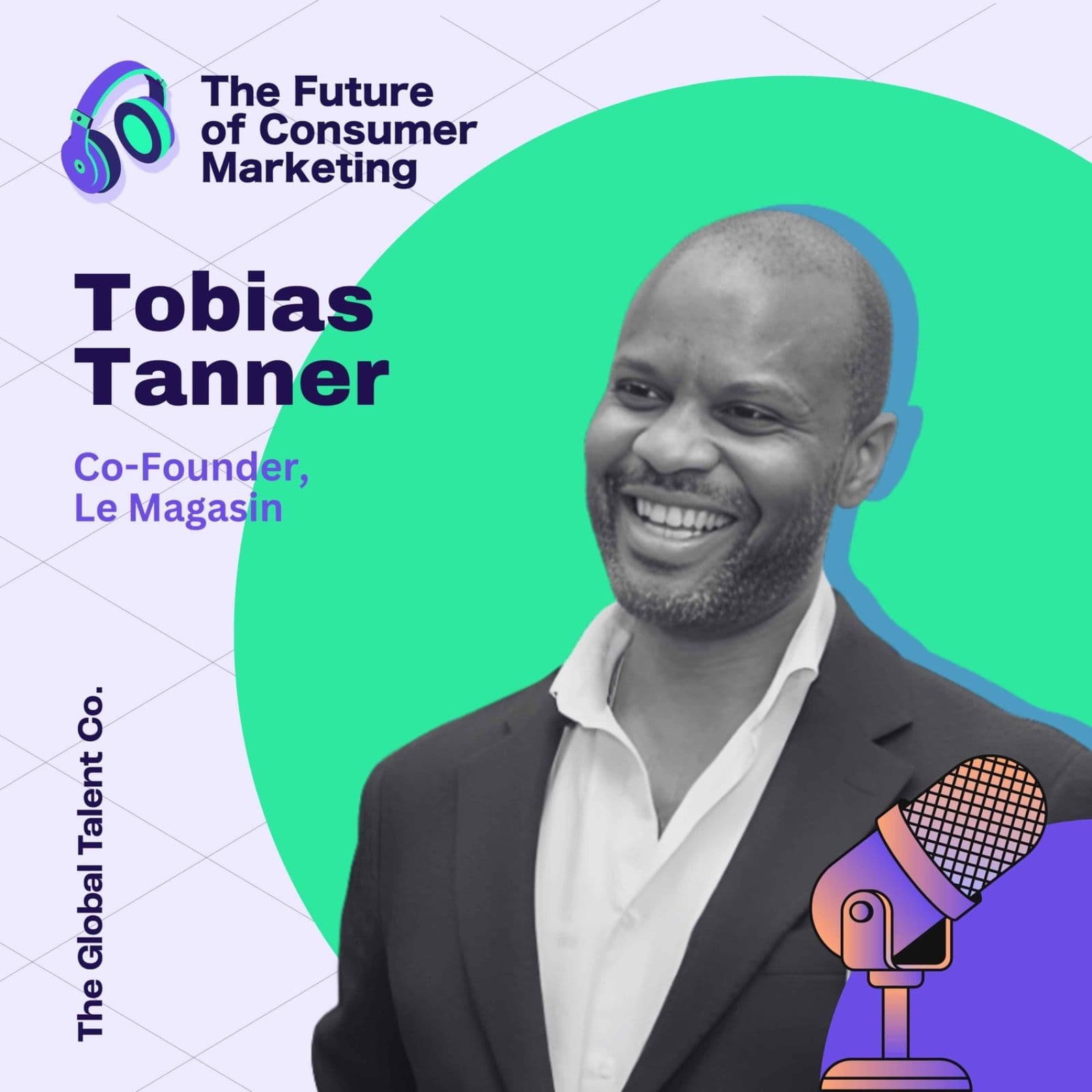
Tobias Tanner, American living in Berlin since 2009; previously ran a creative consultancy helping lifestyle design brands enter Germany (trend tours, analysis, pop-up shops). Founder of DLE Magazine, a co-retail platform.
Key claims
Co-retail is like co-working for retail—Le Magazine provides staffing, location, and overhead while brands keep sales control. It solves DTC brands’ pain of physical retail costs and market testing. Success is measured via brands’ marketing KPIs (exposure, testing, feedback), not just transactions.
Notable examples
Stockholm edition with Nordiska Kompagni (NK) for nine months; “Dry Bar” program featuring non-alcoholic spirits with mixology events and mocktail cocktails; brand/corporate partners include Piper Heidsig, San Cosme Mezcal, Diageo, Samsung, HelloFresh, and a recycled PVC flooring company (Bologna).
Written by AI. May contain mistakes. Listen to the episode to check what was said.
Chapters
Tap a time to open that second in VOUnderstanding Co-Retail and DLE Magazine
0:44 to 2:50
Tobias Tanner discusses the co-retail model and the mission of DLE Magazine.
“So without further ado, it's a pleasure to have you here, Tobias.”
The Benefits of Co-Retail Spaces
2:50 to 4:50
Tobias explains how co-retail spaces enhance brand visibility and attract traffic.
“And Tobias, could you give us a little bit further context regarding what co-retail is in case anybody hearing is not sure what that means?”
Market Expansion Strategies
4:50 to 6:55
Tobias shares insights on market entry strategies and brand growth.
“But you may not necessarily, if you're specialized with direct-to-consumer, you may not want to have that headache of taking on a shop and the lease and everything that goes with the physical retail game.”
The Shift Towards Experience in Retail
6:55 to 9:40
Discussion on the growing trend of experiential retail and its importance.
“I mean, we're focusing on certain trends and I'll tell you about one of them, but in light of what you just mentioned, we're seeing that physical retail is definitely becoming more about experiences.”
Diverse Consumer Expectations Across Markets
9:40 to 13:50
Tobias compares consumer expectations in North America and Europe.
“And Tobias, we looked at your LinkedIn and we saw what Le Magazine is and we've noticed that you've lived and worked across, as you mentioned, New York, Geneva, Berlin.”
Cultural Considerations in Community Building
13:50 to 14:01
Exploration of how storytelling and community building vary across cultures.
“But that's sort of the pipeline dream of what we want to be able to offer as a service to our brands that were with us.”
Creating a Community Through Retail
14:01 to 18:10
Learn how building community in retail requires cultural sensitivity and engagement strategies.
“on creating a community and not like stores per se, how does the storytelling change when you're trying to create a community in multiple cultures?”
Measuring Success in Lifestyle Communities
18:11 to 23:22
Discover how to assess marketing success in lifestyle retail environments.
“you know, when they're going over to the States for our first campaign, you know, who needs support there?”
Adapting to Market Demands and AI
23:23 to 27:49
Explore the importance of adapting retail strategies and integrating AI in operations.
“So the common denominator here is the specific consumer that you're tailoring to with like the stores you accept into the magazine and the people they bring due to their own audiences.”
Scaling Up: The Growth Journey
28:00 to 29:16
Learn about the challenges and strategies involved in scaling a business.
“I like to say that we built a beautiful tugboat at this stage, but now we want to sail the seven seas.”
Show all 13 chapters
The Importance of Mentorship in Business
29:16 to 31:02
Discover the value of having mentors and advisors when starting a business.
“But to answer your question, it's about scaling up right now.”
Navigating Fundraising Challenges
31:02 to 33:44
Understand the complexities and strategies involved in raising capital.
“Get people who know what they're doing behind you as early as possible.”
Promoting Le Magazine
33:44 to 35:06
Find out how to engage with Le Magazine and support its platform.
“And if you're a person that's starting up and coming, you've never lived that before.”
Transcript
Automatic transcript. May contain errors.0:00This show is brought to you by the Global Talent Co, a marketing leader's best friend in these times of budget cuts and efficient growth. We help marketing leaders find, hire, vet, and manage amazing marketing talent for 50 to 70 % less than their U.S. and European counterparts. To book a free consultation, visit globaltalent.co. Hey, everybody. How are you doing? My name is Andres Figueira, and I'll be your podcast host for this episode, which is brought to you by The Global Talent Company, connecting top remote professionals from Argentina, South Africa, and all over the world with leading tech companies worldwide.
0:37So if your team is looking to hire world-class talent, head over to theglobaltalent.co and see how we can help. And today with me here is Tobias Tanner, the founder of DLE Magazine, which is a co-retail experience that presents a lifestyle design-oriented community of brands, partners, products, activities, and events for your engagement. So without further ado, it's a pleasure to have you here, Tobias. Good to be here, Andres. Thanks for having me. Great intro. Thank you very much. Thank you very much. And well, besides that intro, since the audience will be listening to all of this, Tobias, would you mind telling us a little bit more about yourself, about what Le Magazine is, what it represents.
1:20Yeah. So short, sweet and simple myself, I'm an American living in Berlin. So I've been based here in Berlin since 2009. And when I first arrived here, part of my job was running a creative consultancy, helping lifestyle design brands enter the German market. So everything from trend tours, trend analysis, pop-up shops. And one of the things that we realize as Germany is a diversified market, so the mindsets of Berlin is very different from Munich, which is extremely different from Hamburg, etc. It's not like a one-stop shop nation like London or Paris, you know, or New York from that perspective.
1:53So we realized that a lot of our clients, they needed to be in physical just to understand who their consumer was. So we got into sort of process in 2019 with the first sort of beta test, you might say, of the co-retail model and step-by-step sort of involving it. And that brings us to where we are today. And in that sense, Le Magasin, where we are today, as a co-retail platform, we make it much easier and much more affordable for brands to be in physical retail. But then also, at the same time, we give them full control of their sales. So it's a beautiful sort of turnkey solution. And we have been focusing on developing in high profile, high traffic destinations where our brands want to be.
2:33And then on the consumer side, as the model is B2B2C, giving them that excitement and sort of discovery of maybe new things they've never seen before or products that maybe they've only seen online. So taking that box of experience for consumers. So a lot goes behind that, but that's it in a nutshell. Yeah. Okay. That's so cool. And Tobias, could you give us a little bit further context regarding what co-retail is in case anybody hearing is not sure what that means? I think co-retail from our perspective is sort of shared spaces. So much like you have the movement of co-working. I mean, I think now a lot of people understand the benefits of a co-working model.
3:09Apply that model to retail in the aspect that, you know, there's an infrastructure. So for example, we provide the staffing, the location, and all of that overhead for the brand so that it's a plug and play solution for them. But they're also benefiting from a shared space. So everything from the marketing to the consumers that come in, engagement, etc. So shared spaces, you might say. Okay, okay. That's amazing. And I imagine this must be appealing to brands in the fact that maybe since it's a co-retail space, they get a bit more traffic due to people visiting other stores within that same area, right?
3:43Is it like improves the traffic for everybody? Yeah, yeah, I definitely would agree with that. And, you know, at this stage, we've done a few of our own shops, but our last edition was in Stockholm in Sweden with Nordiska Kompagnett or NK, which is very much prestigious luxury department store in Stockholm. And I found that that was an interesting sort of model. We did nine months with them there as a win, win, win. So they were able to offer fresh content to their existing loyal audience, attract new audiences as well. then of course for our brands who would not want to be positioned in a luxury department store and probably have access faster than if they had to go the traditional buyer route themselves.
4:21And we're also able to elevate the Le Magazine names by taking advantage of that built-in beautiful, you know, robust audience and heritage of that name. So that's sort of the pader that we have hit and we want to go further further that along in terms of working with high profile, high traffic destinations. And I think the pain point that we're helping to solve, particularly if you look at a lot of direct-to-consumer brands. So Andres, we've worked with about 250 brands to date. A lot of those focused on direct-to-consumer. You know, direct-to-consumer online, that's a whole different beast than physical, but physical definitely is looking that much more attractive, especially as the cost of acquisition online is getting more expensive, and maybe the region is declining in a lot of cases.
5:02But you may not necessarily, if you're specialized with direct-to-consumer, you may not want to have that headache of taking on a shop and the lease and everything that goes with the physical retail game. So in that sense, again, we're making it a lot easier for brands to sort of test physical spaces in ways that maybe they have not thought before. And it's also part of our growth of our distribution strategy. You know, we've been talking with summer brands and so some of the markets that we're looking to go to, and maybe they've not thought about being positioned in those markets before. So if we can be there for them to have that awareness in new markets, then, you know, it's a great value proposition to offer.
5:38Okay, of course. Now, I totally understand that. And do you guys have like a certain framework for deciding which markets a brand should enter next? Like, do you advise them in that sense? Yeah, you know, our growth this phase has been in Berlin with our own stores and the first exit of the German market into Sweden last year with NK Department Store. So as we grow this year, it's been a foundational year for us. So we've been working on our team in as well, we're doing a pre-seat round right now. So a lot of this work has been looking at where do we grow next in terms of our partners, our property development partners, both sides of the pond in terms of Europe and North America, as we are a Delaware Corp with a German subsidiary.
6:20So we are in this point developing the strategy of growth of where our brands are going to go. And that is a constant conversation that we do have with our brands and partners as well. So it's pretty exciting right now that we're in a phase of sort of shopping for prop dev partners that can benefit from a model like ours. Okay. No, yeah. I imagine it must be really exciting. And I figure that maybe not mainstream brands or very big ones must be looking into having a spot within a magazine store, but these smaller brands that are starting up, it must be so good for them to be able to get that exposure.
6:53Yeah. And you know what's so interesting? I mean, we're focusing on certain trends and I'll tell you about one of them, but in light of what you just mentioned, we're seeing that physical retail is definitely becoming more about experiences. So, you know, we know we can buy everything online. The God bless the Amazons and the Alibaba's and all of those brands are the world. You know, but that's not going to go anywhere. That convenience is here to say, but we as human beings definitely want to go out. You know, we want to be social. We want an aspect of community. I like to say again, that aspect of retail therapy, of discovery, that's here.
7:25And we've seen that post COVID, you know, with the movement of the growth of membership, everything, you know, longevity, wellness clubs to even dog park clubs, you know, and private members clubs growing. So there's a boom and sort of a desire for people to be in physical. And I think one of the growth challenges that retail will continue to evolve into, let's say, is the fact of less just about transaction, but more about experience. And so, for example, we have created a concept. We work with lifestyle and design brands about eight different categories from fashions, interiors, cosmetics, et cetera, etc.
8:01And one of the things that works always well for us, one of the categories is spirits. But we introduced, because there's a movement sort of driven by millennials and Gen Z of people drinking less and less alcohol. So we created a program that we call the Dry Bar that highlights non-alcoholic spirits, wines, and beers. So imagine on Saturday, we have a mixologist who has worked with all of our brands and our partners such that there's a mixology experience. You sit on down to the bar and you're trying different non-alcoholic cocktails, et cetera. And as there's the retail component, you can buy what it is that you're trying.
8:36That has become such a huge hit. I mean, we launched that for Stockholm last year, and it's something as a centerpiece of our experience that creates sort of engagement, cross-brand synergies for events, et cetera, and that sort of halo effect of a do-good movement. I mean, literally people of all ages who have come into the dry bar portion of our program have said, you know, I've stopped drinking or, you know, my wife is pregnant right now, or I'm driving and I've got to go to this event, or we're having a wedding, but you know, the groom and bride, they don't drink, so we need alternatives. So there's been a huge, huge awareness of opportunity.
9:09So we see that as something that as a trend, we're going to push forward, but also as a great opportunity to introduce customers to some category that's really growing and very fascinating right now. Okay. Wow. That is such like a noble thing to do and just create a dry bar and offer mocktails. It's like all the benefits of sipping a drink without the downside of actually getting drunk. It's amazing, okay? There you go. So you can have a mocktail on Tuesday afternoon without any guilt. Exactly. I think the elimination of the guilt there is like the best part. And Tobias, we looked at your LinkedIn and we saw what Le Magazine is and we've noticed that you've lived and worked across, as you mentioned, New York, Geneva, Berlin.
9:51How have you noticed that consumers' expectations differ between these different markets? That's a beautiful question. Wow. You know, I think in terms of, let's say, European versus North American sensibilities, I have noticed is that U.S. is definitely much more transactional. It moves much faster. You can really introduce a lot of concepts and people are very open. I would say in EU, you know, consumers are a little bit more reserved. They want to understand the backstory. I think there's sort of more of a depth of sort of understanding and also in terms of our consumers sort of a quality and sort of the heritage of which it comes from.
10:29So maybe not moving as fast here, but there is, you know, in a sense that if you really are able to capture the minds and hearts of a consumer, then you've got them and they're going to be loyal. So both sort of mindsets are very, very interesting. And as well, you know, in terms of our growth goal, we want to take Le Magazine, not only building our distribution network here in Europe, but we are planning for being in the United States. I can't announce sort of our first project there, but at some point in the next 12 to 18 months, we're going to be doing a project in the States. So we're super excited about, because the opportunity from brands on both sides of the pond are going to be able to sort of benefit and play with the distribution network of reach to new audiences and consumers as well.
11:09Okay. Oh, nice. Congratulations. I really hope you guys get to expand in the US. So cool. So cool. And when you mentioned that, yeah, the US is more open to new things, But I also imagine that if the European market's a bit more difficult to crack, if you do, they will be more loyal than the always trending in the US that I feel like people get this fever about something and it's quickly then dropped and they pass on to something else. Is that something that you've noticed happen as well? Yeah, definitely. You know, I think, but as well, you know, trends with our TikToks and Instagrams, etc. We all over the world, we get the trends, you know, straight away now.
11:45So there is really no difference from that perspective. But what I think is interesting, especially brands, you know, if you're going to enter the U.S. market, it's on one hand a very straightforward approach. So most of my brands, when we talk about being in New York, they all want to be in New York. They want to be in New York. You know, they want to be in those big capitals. But then, you know, there's also the brands that think secondary. They want to be in secondary markets like a Chicago or Dallas or whatnot. But we know that there's huge money in those markets and maybe not as much variety as you would have in L.A.
12:16and New York. So those audiences are very, very appreciative as well. So there is a prog approach, but, you know, a lot of special European brands in New York, L.A., that's where they want to go, you know, as first point. Now, the opposite in terms of the EU, you know, we've been talking with some really interesting direct-to-consumer brands with seven-figure monthly turnovers in the U.S. that are super exciting and very nice marketing budgets. When it comes to the EU, a lot of the strategy of brands across many sectors is to go to the UK first for the commonality of the language and sort of similar aspects of culture.
12:50It's very easy to enter the UK, of course, but then starts looking at the rest of Europe. And, you know, it's such a diversified market that it's not really a one-stop shop. And the particularities of, say, maybe the French market are extremely different from the Spanish, which is very different from German, etc. So it takes a little bit more effort to crack the nuts of the EU as a whole, because you need a lot of specialization in entering this market here. So one of the things that we've been talking about as we look to expand our distribution network of marketplaces for our brands, our member brands, is that turnkey solution.
13:23So again, you know, I really have to think so hard in terms of touching down in Paris. And if the magazine Paris, I'm coming in for fashion week, I can have a place to engage with customers, post my meetings for distribution or attract new agents, spend a Saturday in the shop and do an engagement, but then also understand that mindset. And I've just paid my membership fee rather than having to even open a pop-up or open a store, et cetera, et cetera. So that's kind of the value proposition of sort of dreaming because it's in a marketing spend at the end of the day that our brands spend with us.
13:52But that's sort of the pipeline dream of what we want to be able to offer as a service to our brands that were with us. Okay. No, and actually while you were mentioning like within your answer right now, it actually leads into my next question, which was, I know you're focusing on creating a community and not like stores per se, how does the storytelling change when you're trying to create a community in multiple cultures? Like you mentioned, it's different for France, for Spain, for England or whatnot. Yeah, that's a beautiful question. And I think that speaks to our stage of growth right now.
14:24I mean, we still are very much in early startup phase. And with, of course, with ambition to become a beautiful enterprise with global, you know, marketplaces, But at this stage of growth, we are focused specifically on lifestyle and design brands across our categories because those type of brands we understand very well, but also the type of clientele that comes through our door, you know, we can speak to them. I think we do physical experiences very, very well. We are not yet at the stage where we are doing sort of the online experience extremely well yet, but we have a strategy for becoming omnichannel.
15:01So we really have focused with these past editions on the physical retail experience and having that sense of discovery and engagement with consumers. So we've gotten that down well. But I think what's core and important about that, no matter where we go, and again, we've worked in two different complete cities, two different complete cultures, is that sense of sort of immunity. If we continue to do an engagement, gauging approach that, one, I believe that whatever customer that walks through the door, they've got to have that hello. You know, they've got to be well. My university days when I was home in California in the summer, I always worked at Nordstrom selling shoes and they really taught us excellent customer service.
15:39So that's something that's always stayed with me. And I kind of teach our staff as well to welcome people because there's nothing worse when you walk in the door, no one even acknowledges you or even look at you. You don't want to spend money in that type of environment. Think about it. It's true. It's true. We don't like that at all, that we're not snobby in any way. We're super welcome to meet you in whatever level a customer wants, because it's kind of like an experience when you come in as you're discovering and seeing brands and products and concepts you've never seen before. A lot of people.
16:06So there's kind of that, let's say, the museum or the gallery experience where there's the information about the brands and the products. And, you know, our staff are all knowledgeable about them. So the consumer can engage in whatever level they don't want to be bothered. That's fine. But if they do, we're here for them from that perspective. But then also sort of building a community of practice around the experience. So not only do we represent lifestyle and design brands, but when we build our spaces, we involve different corporates as well. And we have sort of about 10 different categories of everything from, of course, the food and beverage.
16:37We always have a beautiful champagne sponsor. I think Piper Heitzig was our last one. So that's important. Of course, the non-alcoholic is there, but we got to have the alcohol for celebration. I love it. I love it. One of our oldest clients, San Cosby Mezcal. I love Mezcal. and they're such a great brand. So they've been a sponsor for us, of course. We've worked with Diageo, et cetera, et cetera. So from that to mobility, Samsung has been one of our lead corporate partners, taking care of sort of our interiors and our screens. We had a beautiful frame TV for our last lounge to HelloFresh to a flooring company.
17:11Amazing. Recycled PVC flooring company in Sweden called Bologna, et cetera, et cetera. And when you think about a great sporting event, you know, why would Samsung sponsor the FIFA World Cup or the Olympics? Well, it's for that exposure and awareness, but then also being associated with a great movement. So we take that approach with the community of practice that we build, because there's a lot of synergies that can be built. And we host a ton of events in our spaces so that we sort of march through a lot of different communities. And what we've noticed, particularly with our last edition, that we would have once a month events where some of the brand donors could come together and as well, some of our VIP customers.
17:49But there's a lot of beautiful synergies. and we were starting to see synergies amongst our brands themselves. So planning their own pop-up stores or even doing collaboration products. So I think there's a certain excitement, you know, in terms of where we're going as not only a Corrito platform servicing our brands and partners, but also creating a community of amazing brand owners. So, you know, if they can benefit and grow with each other, you know, when they're going over to the States for our first campaign, you know, who needs support there? Maybe we're all joining together for the 3PL solution and logistics that's bringing everybody together, which I think we will do.
18:23But you get my point. So if we as a community continue to grow, then I think we become sort of a exciting members club at the end of the day, which I can expound upon sort of that. I love how you're describing this because I just feel like you're creating a little commercial habitat that these owners are getting to know each other. And it's this mutualistic relationship now that they're like, yeah, it's a win-win situation if we do a crossover with our brands or whatever like that. So it's cool that you're able to provide that space for them. And yeah, from all I'm hearing from Le Magazine, I feel like it's not just the objective of selling the store's products, which you guys is the real goal.
19:02So how do you measure success when trying to build a lifestyle community? Absolutely. And at the end of the day, you know, when we pitch our brands on the sales calls, I mean, look, this is a marketing spent at the end of the day for the physical. And we are here to solve whatever the marketing KPIs that the brands may have. Some brands want to use physical retail for exposure to new audiences. Some of them just want to test markets to understand how their products do in certain environments or feedback, you know, a lot of good feedback in terms of the clientele, the customer that's walking through the door.
19:36So each brand has a different sort of marketing metric that they want to achieve. And our job is really to help them to achieve that. So that's a big focus of sort of where we are providing service for them at the end of the day. Okay. Okay. Now that's amazing. And do you feel like you have to work on maintaining brand consistency while allowing for cultural customization, depending on where the magazine is going to be located? Yeah. You know, I think the challenge that we've had this for, I mean, Berlin, I don't know if you're spending much time in Berlin, Andres, but I had the pleasure of going, but when I was like, what, eight years old, so it's been a while.
20:13Come on back. This is probably, in my opinion, one of the most dynamic capitals in Europe today. It, you know, historically, a lot has happened here. Since reunification, the city has sort of rebuilt itself. And there's a lot that's happening here. You know, since I've lived here, it's become a foodie city. When I first hear, there was a new restaurant launching every three months and we all had to go because it was new and exciting. But there's so much variety of cuisine of food here that was not here before because people from all over the world have come and called Berlin home and have taken steak to the city.
20:46So it's super exciting. It's super vibrant, great startup city, especially to have your team based here. So there's so much going on. And it skews, of course, a lot more youthful culture, nightlife, et cetera. Everything is here. Great place to study. Stockholm, much more reserved, much more conservative, but also a dynamic, stylish, wonderful community, great people. So we were questioning, okay, what is it going to be like the mix, you know, when we get to Stockholm, obviously a lot more Nordic and Swedish brands participated than maybe down here in Germany. But nonetheless, what I found very, very interesting, it didn't really matter about this, let's say the brands that were involved, because we already took a sort of curated approach to the Lifestone to design brands that we will take on.
21:31We do not take every brand into our program. We're very selective. And of course, we want to know the brand and understand them. So there's also, let's say, the interview process that we go through. So that's important for us because what our job at the end of the day is to make sure that we have an amazing experience for the consumer that walks through the door. So we keep a high benchmark with that. But what was interesting for me to see is that regardless of the audience, because I would say our audience is in our doors in Berlin are between 25 and 45 on average. In Stockholm at the department store, which has a decidedly older audience, it was 70 % female.
22:11And majority of that mix of consumer that walked through the door, I would say on average was about 35 to 65, which it skewed a lot more older. And in Berlin, the mix is a little bit more mixed. So about 60 female, 40 % male, somewhere in there. So interesting is that regardless of the mix of the brands, the curation in both of them, I would say they were pretty similar in style of the brands that were there and the experience. Both audiences love the mix and we would get, I was very actually humbled at Christmas time, standing at the cash register with our retail staff. No one knew who I was.
22:49And I remember one lady walking to the register and she was talking to a consumer behind her because it was at Christmas shopping line. And she was saying, you know, I love this store. I stop in every few weeks, you know, I got that, what you're buying now for my daughter. I love that brand over there, et cetera. And I was just like, wow. And we would get that quite often that people just say in both locations, I love this curation. I love this store. So if we continue to do that well, I think we can transcend borders because we speak to a certain type of consumer that's looking for quality, that's looking for things that are new and they want to be inspired.
23:19So that's our goal on both ends of the business model. Okay. Okay. So the common denominator here is the specific consumer that you're tailoring to with like the stores you accept into the magazine and the people they bring due to their own audiences. So, okay. And do you have any recent campaigns, Tobias, that you did and it drove to strong results or something like that, that you could walk us through just to like maybe give some experience and examples? Absolutely. And as mentioned for us, we see working with high profile, high traffic destinations as a win-win. So again, for the department store being able to offer fresh content to their existing customers, for the brands having access to a prestige account and being in a high profile destination, and for us raising and elevating our name.
Read the full transcript
24:04So from that as a base, that campaign that we did was by far, and remember, our model is B2B2C. So in terms of memberships, best selling to date. So moving on traction-wise to our next levels of growth, but then also in terms of customer sales within the store, for our brands, best-selling edition to date. So we've hit the hit in terms of we know that the value proposition of what we bring to property developers resonates attracting new audiences for our brands. It is about being in that right location and reaching the right customer. So if we continue to sort of develop that further in our next strategy, then we're really on our way to be able to grow.
24:43I would say another aspect, because for this, at this stage of growth, especially being a strappy startup, we've been focusing, as I mentioned, on the physical experience, but we realize that we have an opportunity to go omni-channel and not in an omni-channel in sort of a classic sense, but more of a strategic sense. I mean, look, for a customer that comes through the door, we know that we are becoming an authority on the fresh and the new and the exciting brand. So we know the benefit of being online and brands are born online. So we need to move that storytelling online and sort of take that to the next level.
25:17And also as a service in terms of reach to our brands and growing our own audience, you might say. So that's a big focus for our next stages of growth. I would say this with our last edition, we know that we're one of the best Christmas gift shops in town. So we're really going to focus on Christmasing the hell out of our next shop as well. I love it. It was wonderful time of the year. and actually I just love Tobias how if the answers you're giving me you're helping me lead into the next questions I have because what I was going to ask right after this was if you guys are leveraging or if you can maybe explain a bit more in depth how you're leveraging social media if you're using influencers for marketing and if you're even using AI like I'm not even sure since it's such a physical idea I would love to know how AI fits in because I'm sure everybody's using it.
26:07These are all beautiful questions. And you know, it's part of our next stages of growth. And this next Christmas edition that we do here in Berlin is about refining the strategies that we have put in place for becoming on YouTube. So yes, I envision a world for us as part of our ecosystem and also service for our brands that we are one, becoming more authorities of storytelling in terms of reach. I love the fact that we work with such innovative brands. So it behooves us to be able to tell the stories online. I would love to have a podcast that introduce our brands. One day. A magazine podcast, and then just make sure you advertise every single story that's there.
26:48That's amazing. That's a good idea. New fresh brands that are coming. I would love to do that. So, you know, and base, of course, social media. And we are looking at working with a few influencer agencies such that say we're introducing 10 new beauty brands. Can we work with a new beauty influencer in their roster to sort of give them some space and presence? So what does that strategy look like right now in terms of how do we play online from an omni-channel perspective from a consumer? Because remember we're B2B2C, so we're talking about consumer strategies, user-generated content, et cetera.
27:21So all that's going to be in play for our playbook for the next edition. But then, of course, from the B2B side, we are looking at how do we attract new brands through LinkedIn, through case studies, etc., etc. So once we are fulfilling our pre-seed round, our VP of marketing is going to have a wonderful time setting all these things at play. And talking about marketing and specifically, I want to know further a bit more about your team. How big is your team, Tobias? Like, how do you know when it's time to expand and bring someone new into the group or just stay put and tight and just keep on working consistently?
27:57Like, do you have a standard procedure for that? Absolutely. And this year as a foundational year has been about sort of the structuring to get us to our next levels of growth. I like to say that we built a beautiful tugboat at this stage, but now we want to sail the seven seas. So we can't take that tugboat. We need to have a beautiful, tall sail ship that's going to get us from port to port as we need to. And it's so funny. I was talking with a colleague about AI because you asked me about AI earlier and sort of their advice to me, because they work in AI, they were like, whatever AI can do that a human can, that you can hand over to AI, you got to start building for that.
28:34So that's very interesting. And, you know, we're in the process of hiring our interns right now. And I kind of feel sorry for some of these interns because a lot of my other colleagues are thinking the same way. I don't know if you've seen it, but even assistants, some friends in agencies, their assistants, their jobs are on the line in a sense. So it is true. That's a trend that's happening with AI agents that just came out with all these different LLMs that are creating them. But Hank Tobias, you just know that if you need help building out your crew to sail your ship through the seven seas, the Global Talent Company can also help out with that because we do have hiring in our pocket.
29:08So if you want a partner to help you out with all those payroll details, just let us know because we are, in fact, available and happy to help you if you need that. We will be talking. But to answer your question, it's about scaling up right now. We are in the process of scaling up. So a lot of my time these past several weeks has been on conversations, not just for interns, but key account managers and everything else that we need for growth. But also what's interesting is that there's a lot of amazing talent that sees the vision of what we're doing. So I'm really excited about these next stages of sort of building the team to take us to where we need to go.
29:43Okay. Now, yeah, that's beautiful. And in these stages, as you mentioned, since you guys are like a young company that's starting and these new stages are coming and they haven't arrived yet. I imagine the excitement that must be laying underneath everybody as it keeps on growing and as it festers. It is palpable. And you know, we brought on a COO because I've been a solo founder for quite some time with this project on its way to becoming enterprise. But I've been a solo founder. I started the concept with a business partner who had to step up early for personal issues. But closing the doors of our last edition, I realized there's no way that physically I can take everything alone to its next stages of growth.
30:23So we brought in a wonderful COO who comes from fundraising, has raised money from Sequoia Capital, et cetera, et cetera. So he's been really great having on board. His name is Luis Ferrero. So we're really happy to have him. And we had our sort of founder catch-up call today, just all things, just whatever, like over a beer or tea or whatever. And we were discussing the fact that, as you mentioned, sort of this excitement and energy of how things are growing. We have an amazing advisory board as well that's supporting our growth. So we catch up with them once a month, but it's palpable. There's a lot of exciting things going on.
30:57A lot of people who are seeing the vision and supporting us. Okay. I'm so glad. I'm so glad. Congratulations on that. And Tobias, if you had to give any advice for somebody who's starting a new company or a new job with retail and how you think the future of marketing in regards to this industry is going, what advice would you give them that you would love to have had when you started? Mentors. Get people who know what they're doing behind you as early as possible. And I say that to say, because in my career at this path, I started my career at Universal Music, and what I studied is different from what I do.
31:38So I studied music, classical saxophone, and jazz. And I started my career at Verve Records, which is owned by Universal Records. And I'm dating myself now, but this was a time when Polygram was merging with Universal. So I was part of a merge of two different companies coming together. And that was super exciting. But then the rest of my career, I founded a boutique jazz label, co-founded, which I ran about six and a half years. creative consultancy. And then it brought me to the magazine. This is the first time in my career that I've ever had to raise capital. And for our earlier additions, we've been able to do them.
32:14We've never had to raise capital until this stage, but we've done them by selling our memberships. So sort of proof of concept, our memberships to our brands that are corporates. But this is the first time having to raise capital. And I'm right now in two different cohorts that are just amazing. And, you know, we have our weekly office hours. One of them is Farrell Williams Black Ambition. So we're a semifinalist for the prize. And hopefully we're going to get this prize in Miami come November. And it's called. Thank you. Another one from, it's called Level Up. They have an incubator program, but we're on office hours in both of them weekly, different masterclasses, how to deal with your cap table and how to hire, et cetera, et cetera.
32:52So it's really such a great thing to have these mentors and to be able to have office hours and to ask questions. And it really helps because fundraising is probably the hardest thing I've ever done. I can imagine. I can imagine. Seriously, we're doing a pre-seed round. We're raising a million. And it's just such a daunting thing. And you got to go through a lot of notes. But I have to tell you, though, going through this process, the doors are starting to open a lot of cold calling. But people are like, love what you're doing. You know, I think you need to talk to this person or go speak to VCX, etc.
33:25So there's this synergy that's bubbling under. And it makes me feel good because we have this structure of mentors. these cohorts that are supporting us on this journey. So I suggest to anyone, make certain, if you got to go out and find the right advisor, please have some mentors and some associations just to help you because it gets really lonely and it's very, very hard. Yeah, I can imagine. And if you're a person that's starting up and coming, you've never lived that before. The insight a mentor can provide with their actual experience is invaluable because I do believe that helps you and it takes you miles.
33:57Whether if like, if you're together, instead of going alone, it'll take you longer. You'll probably still get there, but maybe you'll hit some more bumps along the road. Absolutely. Yeah, yeah. All right. And Tobias, I'm noticing that we're almost at time and I don't want to keep you extra since it's Friday and I know it's a bit later over there, but I would love for, before we close the episode, if you're able to provide our listeners, if you're a company who's interested in entering Le Magazine and representing its platform, or if you're somebody who wants to go and check out the store, how would you direct them to that?
34:29Absolutely. Check us on our website, Le Magazine, which is French for the shop, by the way. Le Magazine, I'll spell it L-E-M-A-G-A-S-I-N dot store. That's the website, but then also that's Instagram. So at Le Magazine store. So easy to find us. Awesome. I'll go follow you guys. No, no, for sure. I love the concept that you guys are doing. And really, Tobias, it's been a pleasure to have you on the episode. And thank you so much for giving us your insight. Thank you. And have a good rest of winter there in Buenos Aires. Thank you so much. I hope the summer in Germany doesn't get too heated here coming on.
35:10But yeah, hopefully the winter will come soon for you guys. Okay, thank you. I really appreciate it. Thank you. And thank you, everybody, for listening. Make sure that if you like this episode, hit the subscribe button and wait for more because we are coming with more insights from more people and more great stories. Thank you.
From the publisher
In this episode of The Future of Consumer Marketing, host Andres Figueira interviews Tobias Tanner, Founder of Le Magasin, a co-retail platform revolutionizing how lifestyle and design brands enter physical retail markets. Based in Berlin since 2009, Tanner has built a turnkey solution that makes physical retail accessible and affordable for direct-to-consumer brands while creating curated discovery experiences for consumers. Through partnerships with prestigious destinations like Stockholm's NK department store and innovative concepts like their "Dry Bar" non-alcoholic spirits program, Le Magasin is redefining retail as experiential marketing rather than mere transaction.
Topics Discussed:- Building a co-retail platform that serves as marketing infrastructure for brands
- Creating turnkey physical retail solutions for direct-to-consumer brands
- Developing experiential retail concepts that drive community engagement
- Navigating cultural differences in consumer expectations across European and US markets
- Scaling curated retail experiences while maintaining brand selectivity
- Leveraging high-profile retail partnerships for mutual value creation
- Building omnichannel strategies that connect physical and digital experiences