In short
Endy’s brand and growth strategy—how it shifted sleep marketing to “mornings,” built brand before/alongside direct response, and stayed disruptive via creator/influencer audits, Quebec localization, AI experimentation, and sponsorships/partnerships.
Guest
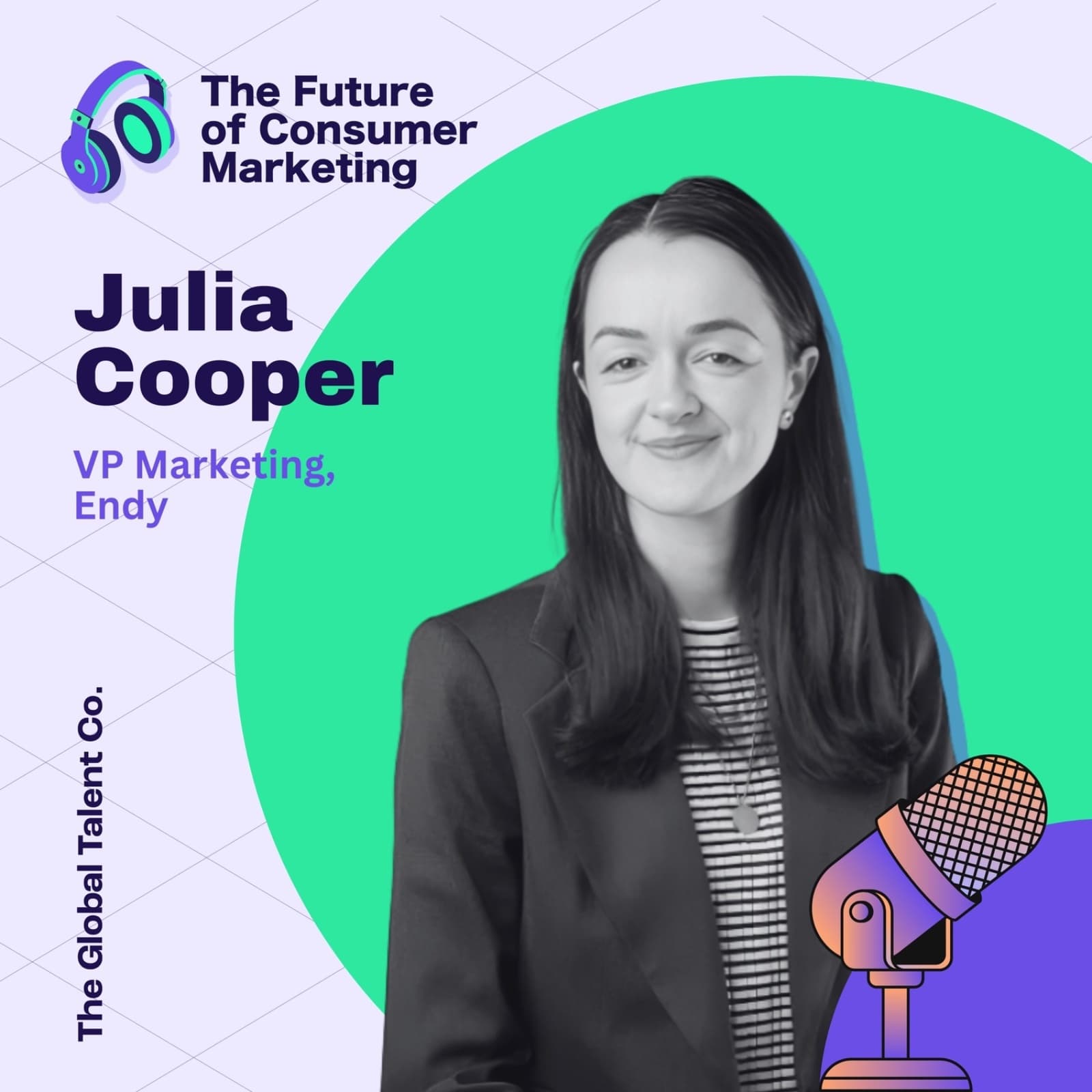
Julia Cooper, Vice President of Brand and Marketing at Endy (Canadian mattress company). Background includes startup marketing and grad-school film criticism/journalism (Globe and Mail, National Post), shaping her storytelling approach.
Key claims
Sleep culture accelerated post-pandemic; Endy’s “Rise to Shine” platform reframes sleep as the output of a great night. Brand must be embedded in company DNA, not added late. Influencer programs shouldn’t be “set and forget”; scale down always-on and spike around launches. Quebec required “country within a country” messaging.
Notable examples
“mattress in a box” delivered in two days; Quebec hero SKU made in Quebec with Montreal manufacturing; partnerships with Tim Hortons (roll up to win) and WNBA (plus Canadian player Aaliyah Edwards; ROAS above benchmark, ~50% lower CPA). AI used via ongoing experimentation (creative video not yet “real enough”). Advice: get off the phone; create ownable, distinct work.
Written by AI. May contain mistakes. Listen to the episode to check what was said.
Chapters
Tap a time to open that second in VOEndy's Innovative Sleep Solutions
0:45 to 2:15
Discover how Endy revolutionized the mattress buying experience.
“Now, I must say, after we were looking into all that Endy is, I'm just loving the way that you guys are mentioning that you just revolutionized.”
Cultural Shifts in Sleep Awareness
2:15 to 3:37
Understand the impact of the pandemic on sleep culture.
“Have you guys managed to actually make it so, so, so minuscule?”
Revolutionizing Sleep Marketing
3:37 to 5:14
Learn about Endy's unique approach to morning-focused marketing.
“that growth engine and to connecting with consumers.”
Challenges in DTC Marketing
5:14 to 7:15
Explore common missteps in direct-to-consumer branding.
“And that was grounded in a research insight when we surveyed Canadians about their relationship to sleep and what was important to them in their lives more broadly.”
Strategies for Effective Influencer Marketing
7:15 to 9:24
Examine how Endy adapts its influencer strategy for better engagement.
“Okay, it has to keep you on your toes constantly.”
Navigating Quebec's Unique Market
9:24 to 11:24
Uncover the tailored strategies Endy uses in the Quebec market.
“And I'm like, guys, we need to freshen this up.”
Leveraging AI in Consumer Marketing
11:24 to 13:22
Discuss the evolving role of AI in marketing strategies at Endy.
“Influencers was one thing that we tapped into, finding kind of authentic francophone influencers in that market that can try our product and speak sincerely about it.”
Embracing AI in Marketing
14:01 to 15:28
Learn how experimentation with AI can enhance marketing workflows.
“answers or that there is some magic bullet out there or one webinar you could do that is going to explain to you exactly how to implement AI systems into our workflows.”
The Influence of Film Criticism on Marketing
15:29 to 17:39
Discover how a background in film criticism shapes storytelling for brands.
“I feel it's like a little toddler who started crawling a few months ago, and now he's just getting smarter every time.”
Effective Partnerships and Sponsorships
17:40 to 21:42
Explore how strategic partnerships can serve as growth levers for brands.
“Because I think for me, I'm not getting inspiration on Instagram.”
Show all 13 chapters
Balancing Brand and Product Marketing
21:43 to 24:16
Learn how to effectively balance brand awareness with product marketing.
“But then, of course, there's a really great Canadian tie-in.”
The Future of Marketing: Real-World Connections
24:17 to 28:00
Understand the importance of creating authentic connections beyond digital.
“versus the product marketing in your strategies?”
Emphasizing Real Connections in Marketing
28:00 to 29:11
Learn how marketers can shift focus to create more authentic connections with customers.
“coming from an algorithm, it is only feeding back to you the content that you've already seen and light in new iterations.”
Transcript
Automatic transcript. May contain errors.0:00This show is brought to you by the Global Talent Co, a marketing leader's best friend in these times of budget cuts and efficient growth. We help marketing leaders find, hire, vet, and manage amazing marketing talent for 50 to 70 % less than their U.S. and European counterparts. To book a free consultation, visit globaltalent.co. Hey, everyone. How's it going? And thanks for listening once more. Today, I'm speaking with Julia Cooper, Vice President of Brand and Marketing at Endy. This is a brand that is revolutionizing the way that people sleep through their ridiculously comfortable and supportive 100 % Canadian-made mattresses.
0:40How are you doing, Julia? It's a pleasure to have you. I'm great. Thank you so much. Really looking forward to our conversation. Yes. Now, I must say, after we were looking into all that Endy is, I'm just loving the way that you guys are mentioning that you just revolutionized. the way people sleep with mattresses. So before we go into like the more deeper questions, give us a bit more context, please, Julia, tell us about Endy and how you've gotten to where you are. For sure. Happy to. So I'm sure you've noticed sleep has sort of entered the cultural zeitgeist. I think with the pandemic, that was really kind of mobilizing moment when people became around the world, like obsessed with their sleep as a part of their wellness.
1:23And Endy is older than the pandemic were actually turned 10 years old this year. But it was really, I think, in the last couple of years that we've hit our stride in our messaging and really tapping into the cultural moment. And so we lean really hard into the importance of sleep and how it can revolutionize, you know, your day to day life. But going back a little bit, Andy revolutionized sort of the industry in Canada. So we have a few legacy players and a more traditional brick and mortar kind of experience of buying mattresses, which is similar in the U.S. And Andy was the first market player here to put a mattress in a box and, you know, deliver it to your door within two days across Canada and still deliver that really high comfort sleep that traditionally you're used to with a mattress.
2:12Okay. I read also that it fits in a duffel bag, the mattress, when it's sent. Like, is the packaging really small? Have you guys managed to actually make it so, so, so minuscule? That's probably one of our bolder marketing claims. It would need to be a large duffel bag. But yes, it's delivered to your doorstep and can be easily kind of brought up the stairs to your second floor by yourself. So that ease of actually delivering the mattress is the main innovation that we're really proud of. Okay. Oh my God, that's amazing. And I totally understand what you mean in terms of the importance of sleep.
2:47I'm 30 years old and I hadn't understood it until a few years ago. And now I'm actually placing so much more value to going to sleep on time, just feeling energized at the beginning of the day, because it really is a game changer when you get the proper rest that you need at night. And Julia, please tell me, have you ever seen a common mistake between marketers that they make when they're trying to build a consumer brand such as Endy? So I do think a common mistake that I've seen, because I also come from the world of startups, is this application of brand too late in the game and really relying on direct response marketing as the only lever to build awareness for a brand and then sort of realizing, you know, maybe years into a company that actually the importance of brand is really critical to feeding that growth engine and to connecting with consumers.
3:43But it's one of those things that's hard to reverse engineer into the DNA of a company. I think you have founders that kind of believe and understand brand or bring on people to help them understand that, or you don't. And it often is, there's a lot of tension, which I think is expressed in the marketing when there isn't a true understanding of the power of brand marketing, especially in the D2C space. Okay. Okay. I get that. And do you have, or have you used any counterintuitive strategy that actually changed how your customers connected with the brand? Yeah, for sure. So when I joined Endy a few years ago, we really were kind of looking for our brand platform.
4:25What is this kind of foundation that we want to tell the story of the brand to our consumers? And when I looked around the space, all of our competitors had, like no pun intended, but sleepy marketing. It was all about winding down, you know, And it was all about Zen and getting into this kind of calm space. But in trying to express that, the marketing itself was just boring and kind of dark and quiet. And so I think one of the things that we flipped on its head at ND was we are the brand that's associated with morning. So our brand platform is Rise to Shine. So that's not based on going to sleep.
5:08But what is the output of a great night's sleep? What does that really revolutionary sleep enable you to do the next day? And that was grounded in a research insight when we surveyed Canadians about their relationship to sleep and what was important to them in their lives more broadly. And it was this notion of wanting to continually surpass themselves every day. They wanted to be better than yesterday, which I think is a departure from perhaps five years ago, the hustle grind culture. of no tech row optimization. I think now we have a more holistic sense of what it means to optimize our wellness.
5:48And so grounded in that insight of wanting to surpass ourselves each and every day, we landed on this brand platform that when you have a good night's sleep on an ND mattress, you're able to rise to shine the next day. Oh my God, that's beautiful. And yes, you're like leaning more onto the result of the good sleep rather than the work, eat, sleep, repeat, and just like feeling having to go to bed with the tiredness. Okay, so you leaned on that and it feels like the market was waiting for disruption. Like I feel there were a lot of old school players that were just going by the books and then Andy just came to disrupt it all.
6:23Could that be correct? Yes, totally. I keep making puns here. Adormant industry. Please stop me. I'm going to think you haven't written down, Julia. And it's terrible. These are all by accident. But really, it was felt like kind of dormant industry that was really ready for disruption. If you think about 10 years ago, how comfortable millennials in particular with buying things online and think about how much clear water there's been between 10 years ago and today of how much we buy online. And yeah, I think Endy was really there and at the forefront of that kind of disruption in a really exciting way.
7:02And my challenge now is like, how do we continue to tap into disruption? And how do we hold on to those fiery roots and not get kind of too comfortable? Yeah, you just got to make sure you're always setting yourself aside from the competition and just be different. Okay, it has to keep you on your toes constantly. Yes, you get it. And Julia, have you ever seen marketing mistake with DTC brands that you feel they're making right now that you feel Andy isn't? or maybe Andy could be making a mistake that you want to fix? I see a major kind of challenge in the industry that multiple companies and Andy at moments is trying to get in front of, which is the shifting role of influencers and creators.
7:46I think Andy really was at the forefront of bringing on creators in the early days and using them as a paid media channel and really thinking about their potential to drive revenue for the business. And in Canada, at least, Andy was really the market leader in leveraging influencers and scaling out these big programs that were huge revenue generators. But if you think about, again, over the last 10 years, like how much the role of influencers has changed, it's one of those things that can easily remain a channel that you almost set it and forget it. And you don't sort of go back and audit and think about like, wait, why are we investing in this channel in the way we are?
8:27is it still driving revenue and impact the way that it used to? And if not, not being afraid to scale it down. So when I joined ND, we dramatically scaled down our kind of always on influencer program. And in exchange for that, we sort of decided, let's actually save those dollars. And when we have a big product launch or a big campaign moment, like that's when we can really tap into that base, share what the narrative is that we're talking about at that moment, and have them be a part of it rather than something that's just sort of like always on and easy to forget. Oh, I love that because it is true.
9:05If you always have like the same type of advertising or the influencer just making the same product video, it starts to turn into static. I agree with you making it more strategic and using those waves of new products or whatever to actually leverage that power that influencers have because influencer-based marketing is crazy. like just i see it on tiktok and instagram whatever all the time and you're just bombarded with different products and it's like testimonies like hey this andy mattress is amazing you're gonna love it and it's like okay if he said it i might just believe it but also if you swap that out with any of your competitors names like could it be distinctly ownable by your brand like if i have to watch another video of a sheet being put on a mattress like i'm gonna lose it Like we have to do something different because, of course, I get targeted with all my competitors ads, too.
9:59And I'm like, guys, we need to freshen this up. Oh, my God. Your algorithm must get you a bit sleepy between seeing so-setting mattresses while scrolling. Oh, my God. But it keeps me sharp. I know what everyone's doing. Okay, Julia, let me know also what changes you've seen when you're scaling the brand internationally versus just scrolling domestically. So right now, ND is exclusively in Canada. But I will say that Quebec has been an interesting focus. So Quebec is not international. But if you know the Canadian market, it is almost a country within a country. Yes. Given that French is, of course, the official language and the culture and kind of mores of Quebec are very distinct.
10:45And you can't speak to a Quebecer in the same way you speak to someone from Vancouver and expect that to resonate. And so to be totally honest with you, post-pandemic, Andy was in major decline in Quebec. We were down 17%. We had kind of across the country seen great success throughout the pandemic. Perhaps unsurprisingly, everyone was at home, obsessed with their sleep, bored and wanting to shop. But we saw an especially steep decline post-pandemic in Quebec. And that's where we had to think about almost this foreign country within Canada. How can we resonate there? What can we do differently?
11:25Influencers was one thing that we tapped into, finding kind of authentic francophone influencers in that market that can try our product and speak sincerely about it. But the other major thing is that we realized made in Quebec is a really important message there, but our mattresses are made in Canada. And so what we actually did in partnering with our operations team is actually ensured that our mattresses being shipped to Quebec were made in Quebec. We were able to actually extend our manufacturing and set up shop in a factory in Montreal. And the ability to put made in Quebec right on our boxes, in our ads, across our email, in our influencer messaging, really showed and signaled to that market that we want to be here and we want to be a part of the fabric of your life.
12:15We're not just saying that. And it's resonated incredibly well. And since then, And we've increased our digital paid spend there, but we've also engaged Quebec-specific PR firm that have built some really strong relationships with media and have done two activations in the last 12 months. And we're up 37 % year over year in Quebec alone. Oh my goodness, that's so cool. And was it very challenging to actually create a new operation to make the mattresses in Quebec? Or did you already have like the standard procedure and just made sure it just ticked all the boxes? I mean, the operations team might have a different answer than me.
12:56Well, from your side. But in truth, you know, we have great partners on the op side and they really understood like this isn't just kind of a fluffy marketing message. We want to be able to maybe put at the top of an email subject like this is a strategy. And so they made it happen. And, you know, not all of our products are made in Quebec, but we're able to say that our hero SKU is manufactured there. And so, you know, the work that it did take, our fabulous operations team is definitely borne out in the results. Oh, my goodness. Yes. And you hit them right where it's worth it, because they are super proud to be from Quebec.
13:34And if it's made in Quebec, I just love how you put that spin on it. And also, Julia, have you guys leveraged or are you using AI to try and impact the consumer marketing beyond just the hype? Or do you have any strategies that you're coming up with AI? Yes. And I feel like it's different every week because AI is smarter than it was last week. So my approach to it, you know, as a leader of the marketing team is not that I have the answers or that there is some magic bullet out there or one webinar you could do that is going to explain to you exactly how to implement AI systems into our workflows.
14:14For me, it's really more about this mindset of constant experimentation. Is each team thinking about ways of that type of workflow integration? And are we giving our teams enough autonomy in terms of budget and capacity resourcing to start to play around with different tools? So our creative team, for example, has tested out some AI video and we feel like it's not good enough yet, but we're like... It feels a little fake, though. I don't think we're that far from it being useful. We might actually, before the end of the year, launch some ads with AI to help bring to life some more kind of surrealism and fantastical elements that we want to bring ads around Black Friday, Cyber Monday.
15:01But that's a continual process of like, are we testing it? And then our web development team is really, really great about thinking about are there plugins to improve checkout? Are there ways that we can be optimizing our weekly rituals and processes as developers to stay ahead of the changes in AI? So I would say for us, it's a mindset rather than this notion of mastery around AI because it just changes so fast. Yeah, it's like AI. I feel it's like a little toddler who started crawling a few months ago, and now he's just getting smarter every time. But it's a new partner that we have to learn to work with and just like keep renewing our way that we use AI because, oh my goodness, I've been using AI since for what's it called?
15:49I've been using it for nutrition. I've even had it therapize me. It's I was like, I gotta even stop fusing it so much. And Julia, we also saw while we were like a little bit investigating you that you have a background in film criticism. Is that correct? Yeah, that's a deep cut. Has your background in film criticism influenced your approach to the way that you use storytelling for the brand? Yeah, that's such a great question. And thank you for your thoughtful research. Not many people know that. Yes, when I was in grad school, kind of on the side was developing my career as a freelance film critic.
16:28And I wrote for some major publications here in Toronto, like the Globe and Mail and National Post, and had a ton of fun covering, you know, film festivals in Toronto and Berlin. And that was a great experience. And totally, it absolutely shapes, you know, who I am as a storyteller to be able to think about the craft of storytelling. I always say that, you know, my background is in English literature and, you know, cultural theory, which is not a direct line into D to C disruptors, which is where I've spent most of my career. But I think about, you know, those years in grad school and those years as a writer and journalist are the ones where I really matured into my thinking and my ability to analyze and pattern match and decipher symbols and also to really just learn how to communicate.
17:19How do you take complex ideas and synthesize them and make them digestible for people? And so absolutely, I think back fondly on those days of film criticism, because even today, you know, art and film and TV and music, you know, deeply impact who I am as a marketer and the type of creative work that we do at Endy. Because I think for me, I'm not getting inspiration on Instagram. I'll tell you that much. I believe that's super important. But oh my goodness. So for how long did you, because this is more from my side, it's so interesting that you were a film critique. For how long did you actually like critique film professionally?
17:58Because like I hear it was like your real job, right? It was probably a good three years that I did that. Oh my goodness. Wow. That is so nice. I would love to be a film critique. Yeah, it was really fun. But it's probably the same where you are. It is a dying trade and not a ton of investment, you know, in magazines or newspapers. Yes. And with IMDB and all these like rating movie websites that everybody just goes quickly to see what it is. Nobody's actually like taking the time to read an actual article on a movie or something like that. Yeah, exactly. Yeah. Okay. Going back to the original topics, Julia, what's one growth lever or one growth tactic that most consumer brands completely overlook?
18:47So we have had a lot of success in 2025 in investing in sponsorships and partnerships for the first time in a really concerted way. So I have two examples. The first is we partnered with Tim Hortons on their iconic roll up to win contest, which Canadians love. They are obsessed with this contest. And he's a really iconic Canadian brand. So is Tim Hortons. We partnered with them and were part of the contest this year. And it was hugely successive. Quick question. Tim Hortons is the coffee shop, right? It's like the Starbucks from Canada. Yes. Okay, perfect. Yeah, totally. Tim Hortons is the Starbucks of Canada, although we do have Starbucks here.
19:32And yeah, it's a Canadian brand. And so Canadians are very, very loyal to it and it's consumed coast to coast. And so partnering with them got us incredible reach. And we saw a direct spike in web traffic that was sustained for about three months and a ton of just brand love and great response there. So that was the first time that Endy has like really partnered with another brand and seen immediate success and a ton of brand affinity with the consumer. And then the other very, very exciting multi-year partnership that we kicked off this year was with the WNBA. So Endy is the official sleep partner of the WNBA in Canada.
20:13It's part of a three-year deal to support the league. And this has been super exciting and a real like pinch me moment for me in my career to be able to launch this. And the reason that I come back to your question of like, how is that a growth lever is that it's leading with brand storytelling, but to get us into a new audience. So for us, we was telling you our brand platform is Rise to Shine. That's all about, like I said, you know, being better than yesterday and who embodies that more than an elite athlete. And also, you know, the connection to sleep and recovery is one that is also very organic and very natural.
20:53So, you know, our tagline for that campaign was the beauty of sleep. It's not time off, it's time put in. Okay. We really underscore the importance of sleep to athletic performance and everyday performance. And that was something we did because I wanted to increase our brand awareness. I wanted to reach new audiences, but there was so much rich storytelling there. The league is actually bringing its first Canadian team in 2026. So we're getting with Toronto Tempo, which is going to be Canada's first WNBA team. So cool. The country is going to lose its mind when that team starts playing. And I wanted to get in on the ground floor.
21:34So we We partnered with them for this year, 2025, in order to really be a part of that groundswell that we're seeing in women's sports globally. But then, of course, there's a really great Canadian tie-in. And then we partnered with Aaliyah Edwards, who's one of four Canadians who actually plays in the league. And she became the kind of face of our partnership with the W. Oh, my goodness. And that's so cool how you're like, recovery is time put in. Because even my coach, when I train, he's like, don't forget the recovery day. Like it's a whole day where you don't exercise because you need to rest.
22:07So I just love how you put that spin on with the WNBA. Oh, my goodness. That's going to be so much fun. And is it a goal to have every lady in the WNBA sleeping with empty mattress? Is that going to happen anytime soon? Well, I'll actually puncture a bit of the bubble there in that 52 % of fans are male on the W. you the first step is just be an authentic part of that community can we just get on the radar of the w fan because they're highly engaged with the league and with the teams and can we show up in a way that shows who we are as a brand and that when that consumer is finally in their purchasing cycle of a mattress which is not the most exciting or sexy purchase you're going to make, but we are top of mind and that there's some positive brand affinity.
22:59And I will say, you know, the goal is it was that brand awareness, like top of funnel, but the results are actually, I was surprised pleasantly, they are doing incredibly well on our paid social. So the ROAS that we're seeing at WMBA specific content is above our benchmark for awareness content. Our cost per acquisition is almost 50 % less on WMBA content. So it's like also resonating in our growth funnel in a way that I thought would happen maybe by the end of this partnership in three years. But to see it in the first few months is truly... And from what I'm hearing, it seems that it's growing and organically happening.
23:44It's not like it's something you guys are pushing so much for, but it's just like on it. So, wow. Okay. The nice thing is like, if you could just put your competitor's logo on it, it's not ownable. It's not going to work, you know? And you have to be able to take your logo off something. And people still know it's you. And people still know it's you. That's a very nice thought. I'll keep that in mind always. I'm going to write it out. And Julia, now that you were mentioning how you were making sure it was brand awareness and everything in that style. How do you know when to lead with brand marketing versus the product marketing in your strategies?
24:21Like what is the decision maker there? It's funny again, because my background is in startups and I worked at a fintech startup many moons ago. I remember then the idea that any product launch would be interesting to people and that that was all our marketing was around is like new features. and it was hard to, you know, break the heart of the CEO by saying like, no one cares that we're launching this thing that took hours and hours of our development team. There's no story, there's no hook or it's just getting us up to parity with competitors. And of course the marketer's job is there's always a story.
25:01You can always spin something. But I think if you're only relying on product as the thing that will get you in the news or create that sense of newness, you're always going to be painting yourself into a bit of a corner. You have to have multiple brand stories and narratives that you can tease out and bring some texture to who you are as a brand because just product launches isn't going to be enough. And we talk about that with our PR firm of like, how can we tap into culture? How can we, in an organic way, insert ourselves in some of those cultural conversations? And for us, distinctly Canadian, cultural conversation.
25:41No, I understand. And it's also like creating lore around the brand. And then it's like these stories, like if you're already partnered with the WNBA, it's like, oh, so athletes sleep with Andy mattresses, so they must be good for recovery. And it creates all this other story around just the products that you guys sell. Exactly. And it can't be then, you know, disconnected from what you're doing on direct response. Like you can't just do brand awareness for fun or for your personal portfolio. Like there has to be that business case of how will it translate into the bottom of funnel. But I think that there's a time and a place where that type of top of funnel investment is really critical.
26:18And one place to get a sense of if that's true for your business is traffic. Traffic for me is a really great indicator of the health of the business, especially as an e-com first company. Like, are you seeing a decline in direct traffic? What's your organic branded search looking like? I compared our branded search the week of our WNBA announcement to the previous year, and our search on our five top keywords went up by 47%. Wow. Well, there has to be some type of measurement and consideration for how these ideas and campaigns flow through to the bottom of the funnel. But if you're constantly trying to do direct response marketing and call it brand, consumers can tell.
27:05Yeah, like they notice and it takes away a little bit of the thrill of the new brand they might be learning about. If I had a dollar for every time a CEO asked me to put a QR code on a billboard or a transit shelter ad, I would be rich. okay and julia since this is in the end the future of consumer marketing podcast do you have a piece of advice to any marketer that is trying to build a next breakout consumer brand do you have anything you would like the listeners to take away from this whole interview yeah i would say get off your phone. I love that. I think the sea of sameness right now in the marketing that I see in D2C brands just leaves so much to be desired.
27:56And I think that, you know, if your inspiration is coming from an algorithm, it is only feeding back to you the content that you've already seen and light in new iterations. And I think as marketers, it's our jobs to think outside of, you know, that tiny frame and really listen more carefully to our customers and to the culture of what's going on, what's coming next. And I think there's such an appetite for more real world connection. It's why Indy has been investing in more, you know, IRL activations and experiential marketing. There's just an appetite that we've seen from our creator community, from our customers of like wanting something that feels real and that feels different.
Read the full transcript
28:45And so for me, you know, perhaps my flippant advice is to get off your phone. The real insight behind that is to make sure that you're creating work that is truly ownable. And like we said, you could do that logo test and take it off and people could still recognize and be able to identify your brand. And I think that's really what's going to set you apart in just the sheer volume of marketing out there right now. Okay. Okay. So people, you heard it here first, get off your phones and make sure to not repeat the same advertising you're seeing on the algorithm. I love that, Julia. So with that said, this is the end of the interview.
29:24And I must say that it has been a pleasure, Julia. The story of ND and everything you have done has been so interesting. and I can't wait for everybody else to hear this. Thank you. That was really awesome. You asked such great questions and we had a really fun time. So hopefully that comes through. Oh no, I'm so glad, Julia, because it really is trying to just create this space of comfortableness and just making sure that you get to tell us your story because everybody else really wants to hear this. So I'll make sure to just let you know once we have all of the clips ready, once it's ready to be uploaded.
29:58and after that we'll just make sure to send you an email so that you can also upload those in your social media as well okay thank you so much for the invite this is great no worries at all it has been a pleasure and i hope you have a great rest of your day julia happy friday take care bye bye take care
From the publisher
In this episode of The Future of Consumer Marketing, host Andres Figueira interviews Julia Cooper, Vice President of Brand and Marketing at Endy. Endy revolutionized Canada's mattress industry by being the first to deliver premium mattresses in a box, disrupting traditional brick-and-mortar retail with 2-day delivery across Canada. Julia shares how Endy transformed from a direct-response focused startup into a brand-first company by flipping conventional sleep marketing on its head - positioning themselves around the energy and potential of mornings rather than the fatigue of bedtime. Through strategic partnerships with Tim Hortons and the WNBA, innovative regional localization in Quebec, and a disciplined approach to influencer marketing, Endy has built a distinctly Canadian brand that drives both awareness and performance.
Topics Discussed:- Transitioning from direct-response to brand marketing in D2C
- Disrupting sleep industry marketing by focusing on morning outcomes
- Strategic scaling of influencer programs from "always on" to campaign-driven
- Regional localization strategies for culturally distinct markets
- Leveraging partnerships and sponsorships for brand awareness and growth
- Implementing AI experimentation mindset across marketing teams
- Building authentic brand partnerships that drive both awareness and performance