In short
Newton Baby’s digital-first marketing strategy for beating legacy baby brands, centered on measurable performance marketing, incrementality testing, and AI-enabled creative/customer service.
Guest
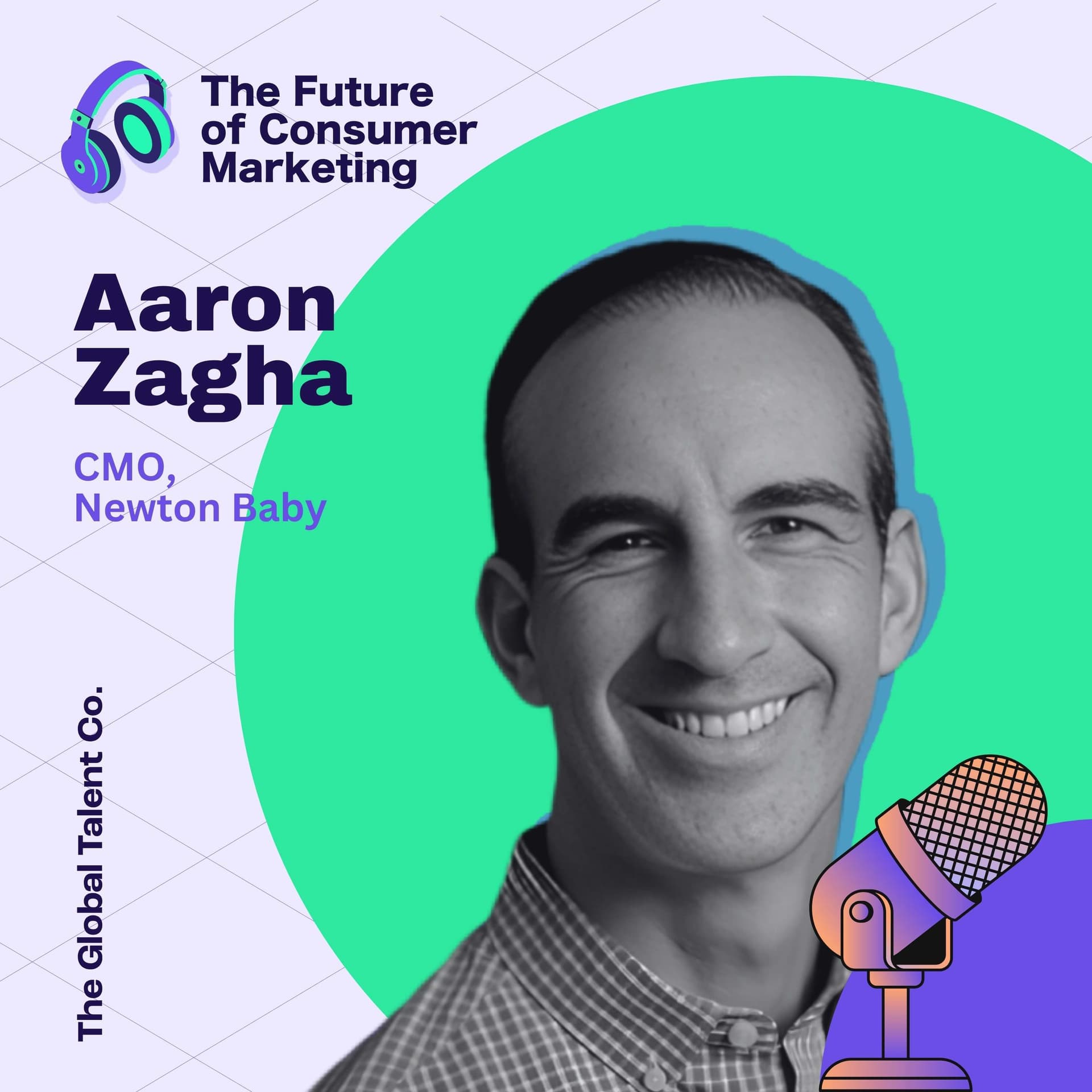
Adon Zagha, Chief Marketing Officer at Newton Baby; background includes investing banking followed by 10+ years in marketing and online e-commerce; joined Newton Baby about seven years ago as an early employee.
Key claims
Newton Baby’s patented “woven air” crib mattress is 90% air for breathability (reducing suffocation risk) and can be washed/disinfected by removing the cover and washing the core. Marketing: flat team (13–14 people), test-and-learn approach, incrementality testing via tools like “Geolift,” and skepticism toward conventional wisdom (e.g., brand-paid search not being incremental for dominant brands).
Notable examples
Snapchat and display tests shut off when not incremental; PMax initially leaned on then retested; chatbot LLM reduced on-site chatbot/customer service costs; GenAI creative testing (with TikTok AI tools).
Written by AI. May contain mistakes. Listen to the episode to check what was said.
Chapters
Tap a time to open that second in VOAdon Zagha's Journey and Newton Baby's Innovation
0:40 to 3:16
Explore Adon's unique background and Newton Baby's innovative crib mattress.
“So, Aaron, now that we finally have you on the podcast, would you be able to tell us a little bit more about your background, your story, something you want to share with us about Newton Baby?”
Marketing Philosophy and Team Structure
3:16 to 4:50
Understand Adon's data-driven approach to marketing and team dynamics.
“And the kid's mattresses are the exact same thing.”
Hiring Process and Marketing Experiments
4:50 to 7:24
Learn about the iterative hiring process and experiment-driven culture.
“But yeah, that's, you know, our marketing philosophy is really, let's make sure that we're measuring everything that can be measured and take a data-driven approach to marketing in general.”
Marketing Successes and Failures
7:24 to 11:35
Discover the key learnings from successful and unsuccessful marketing efforts.
“And do you have any experiments that you have done, Aaron, that you feel have failed or not been as successful as you expected?”
Competing Against Legacy Brands
11:35 to 14:03
Understand how Newton Baby competes with established baby brands.
“And I also heard you, Aaron, mention AI, which is probably the hottest trending topic of the moment since a while ago now.”
Newton Baby's Competitive Edge
14:03 to 15:40
Explore how Newton Baby competes against established brands by leveraging direct-to-consumer strategies.
“And Aaron, I have another question that it's just came to the top of my head right now.”
Targeting Millennial vs. Gen Z Parents
15:40 to 17:08
Learn about Newton Baby's tailored marketing strategies for different generational demographics.
“And just another question, because this is such a curious company.”
AI Innovations in Marketing
17:08 to 19:18
Discover how AI is influencing Newton Baby's business practices and product development.
“In terms of how they want to be marketed to, that's another way.”
Marketing Measurement and Success
19:18 to 20:28
Understand the importance of marketing measurement and attribution for growing brands.
“to excel in maybe the toddler space or just in the consumer goods market?”
The Importance of Mattress Cleanliness
20:28 to 21:20
Discuss the significance of mattress hygiene and its impact on parenting.
“and that you're able to keep on creating such amazing products because you're solving so many issues and things that, for example, me, myself, I didn't know that was something that parents needed.”
Transcript
Automatic transcript. May contain errors.0:00This show is brought to you by the Global Talent Co, a marketing leader's best friend in these times of budget cuts and efficient growth. We help marketing leaders find, hire, vet, and manage amazing marketing talent for 50 to 70 % less than their U.S. and European counterparts. To book a free consultation, visit globaltalent.co. Hey, everybody. Thank you for listening today. I'm speaking with Adon Zagha, Chief Marketing Officer at Newton Baby, a company that is on the mission to provide the whole family with safer, healthier, and better products for rest and play. How's it going, Adon? It's a pleasure to have you here.
0:39It's going great, thanks. How are you? I'm doing pretty well. Can't complain. So, Aaron, now that we finally have you on the podcast, would you be able to tell us a little bit more about your background, your story, something you want to share with us about Newton Baby? Sure. So my background is a little atypical for the industry. The first half of my career was investing banking. And then the second half of my career has been in marketing and online e-commerce. So I kind of migrated from one side of the world to the other. But for the past 10 plus years, it's been squirreling in e-com land. And yeah, so I joined me maybe about seven years ago.
1:14The company was a couple of years old at the time. So very early stage, I think I was employee number two or three, basically. The company had been founded to really bring to market a radically new crib mattress. So unlike all the other crib mattresses on the market, which are just humps of foam for the most part, our crib mattress is made from material that looks like ramen noodles before you put them in water. We call it woven air, it's patented, but it's very different than anything else on the market. It's made from the same material as a yogurt cup, and it offers two very big benefits and differentiators versus the other mattresses.
1:49Number one, it's completely breathable because it has that woven material. It's 90 % air by volume. So babies can literally breathe straight through the mattress. So it completely eliminates suffocation risk, which is like a big concern for many parents. I still, my daughter's seven years old. I still check to make sure she's breathing sometimes. It's kind of... Oh my God. Yeah. so it's completely breathable which was very new at the time nothing is breathable it was on the market now everyone claims to be breathable most things either are success but nothing really was and the second cool thing about is because it's made from effectively like yogurt cut material you can actually wash the inside of the mattress so you can take the cover off wash it in the machine and then the inside core you can stick in the tub and hose it down disinfect it which is remarkable because babies are disgusting occasionally diaper leaks happen and the fact that no other mattresses are you can actually watch the inside it's kind of shocking you can watch covers that are waterproof but not the inside of other mattresses so those were the big differentiators at the time like i said i joined three years into the journey we changed up the marketing mix completely and started growing growing a lot faster and over the past call it three to four years really we've launched a whole slew of new products mostly still in the baby sleep categories.
3:04So bassinets, back and plays, cribs, but also dog beds and also kid size mattresses for when the two to three year olds start growing out of the crib and get their first big kid bed. And the kid's mattresses are the exact same thing. And the nice thing for the kid's mattress, particularly just about potty training age, and you want to make sure you can wash that mattress. So our kid's mattresses are totally washed. I love how you guys are solving two very important issues in the toddler market. So it's safety. And that is amazing, making sure babies can breathe at a suffocation risk and also sanitation.
3:37Because as you said, I had not thought about how few mattresses actually get washed. And it's great that Newton Baby is providing the possibility for this. That's so cool, man. And tell us a little bit more, Aaron, about yourself and how your philosophy to marketing works, especially with Newton Baby as the company you're working for? Yeah. So, you know, my marketing philosophy is really a byproduct of my roots, quantitatively, especially I'm pretty quantity person. You know, my original background was finance with some statistics thrown in. And so the thing I love about online marketing is that almost everything is measurable, maybe not completely directly discreetly, but you can track and measure just about everything from, you know, clicks on the site to marketing channel effectiveness.
4:26And so it's really kind of a nice marriage of the two fields I've worked in, which is, you know, really mathematical oriented finance, and then a little bit more creative, but still mathematically oriented marketing and performance marketing, especially. So we do lean probably on the performance side of the world, if you believe in kind of how the industry often, you know, bifurcates the marketing world between brands performance. I don't believe in that. We'll talk about that later. But yeah, that's, you know, our marketing philosophy is really, let's make sure that we're measuring everything that can be measured and take a data-driven approach to marketing in general.
5:00Okay. And how about your team's process from idea to execution and specifically tailored to the marketing of all of this? So I run a really flat organization. There is 13, 14 of us on the marketing team at this point. And anyone is encouraged and even completely welcome to bring any ideas. We do an offsite every other month, basically, which everyone has to come with one big new idea. We kind of move forward with the good ones. So, you know, anyone can come up with ideas. And if it's an idea that makes sense, if it's an idea that we think will work, especially there's a little bit of consensus and a little bit of dictatorship on deciding which of these move forward.
5:39But I'm happy to be overruled. And I always tell my team, I'm happy to be proven wrong. I'll let them things that I don't think will work, the goal of being proven wrong. But yes, then we move through and the process is very much test and learn. So I'll test almost anything as long as we can design a test that we think will succeed, especially from like a statistical significance perspective, for example. Okay. And then it either works or it doesn't. And the data shows whatever it shows. Okay. You mentioned that your team is about 13 to 14 people big, but how about when you're looking to expand it or build it out, how do you decide what roles you need to hire for or who you actually need to come on to the team?
6:16Yeah, this has been a bit of an iterative process. We don't have kind of a traditional team in terms of, I mean, sort of a hybrid between, you know, centers for excellence and cross-functional training. It's really just kind of grown by necessity. So when my paid social person is maxed out, we'll hire, you know, a junior underbird. Or if we scaled into TikTok, for example, and our creative needs doubled, you know, we needed to get some support for our designers. So it really kind of grows out of necessity. You know, I wouldn't say that I said at the beginning of the year with the CEO and designed the perfect org.
6:52It really hasn't happened that way. In many ways, we're still very much a startup. So, yeah, in terms of hiring, it's always, you know, just driven by demand and sometimes even driven by forecast demand. So this year we're doing a bunch of product launches in the second half. And so we hired a little bit to get ahead of that because it was just going to be a massive amount of work. That sounds totally reasonable because something that no company would want happening is overhiring and then having to just spend a bigger budget on the workforce you have and not be able to spend it on things you really actually need.
7:24So very wise, very wise. And do you have any experiments that you have done, Aaron, that you feel have failed or not been as successful as you expected? So many. I mean, like art culture is so experiment driven, especially with respect to like incrementality testing. So like I said, everything we can, we measure. I'm a huge believer in incrementality testing. And we run it through House, which I think is best in brief. And I mean, we won't launch a new channel without testing it via Geolift test, if we can do a Geolift. So I mean, there's so many channels that we tested that didn't work. At one point, because I was such an advocate of this test and learn, we were running 25, 30 marketing channels.
8:06Yeah. And so thankfully, we've used House to cut those down based on whether or not they're incremental. So branded paid search, it wasn't really an experiment, but we ran an experiment on it. It didn't really work for us. Snapchat, we've been running for a while. It wasn't really all that incremental. We shut it off. A bunch of display we tested, not incremental. We shut it off. So there have been lots of, you know, what I would say were experiment failures, but huge learnings that benefited us from, you know, certainly a marketing efficiency ratio standpoint. Okay. Okay. Amazing. it's curious to me that you guys try to enter snapchat with marketing and it being a baby toddler like consumer brand it's kind of weird because i felt snapchat was dying down a bit would i be correct in that yeah i mean this was a couple years ago so it was when snapchat was still growing pretty quickly okay and you know like i believed all of their docs that 30 percent of users were you know over 25 years old i think at the time and so we were having to experiment and run a little bit.
9:07And then, you know, all of our marketing actually looked really good in platform. Okay. All marketing looks good in platform generally, but it really looked way better on Snapchat than even on Pinterest, which is, you know, much more traditionally probably associated with the baby having process. And so it looked amazing in platform, but when we ran into mentality, it wasn't from that at all. Okay. Okay. And talking about best practices that you've had, what do you think are the fundamentals that everybody, when talking about marketing, and if you want to be more specific to the toddler space, what do you think everybody should be getting right?
9:40Yeah, so, I mean, there's so many, but making sure that your customer is the hero of the story, you know, making sure that you're thinking of them as the hero of every ad and that it's not yours, it's them that are the hero. I'm a big believer in that approach to advertising in general. So that's kind of one of our hard forward philosophies. You know, we're not saving the mom. It's the mom and it's the hero in this scenario. or the phone drive typically for us in the pregnant one. So that's just kind of like our overall ethos and making sure that all of our designs make sense. You know, another fundamental is just making sure that we are taking into account whatever data is available.
10:17Let's, you know, if there's data available, let's look at it. Let's make sure we're not ignoring anything. Let's make sure we're reevaluating our assumptions. So especially in this day and age where all of the big ad platforms are rolling out AI-driven tools, We'll test them because the algorithms change all the time and things need to be retested. And what worked last year probably doesn't work anymore. So what do you think are, because that was exactly like my next question, what do you think are the best practices that are outdated already? Since you mentioned that something from last year aren't working anymore, like what would be an example of that?
10:51I mean, the classic one, and this isn't even last year, this is probably two years ago, but I'm sure. So like everyone thought you have to defend your brand and Google, don't let your competitors steal your traffic, all of that. That might be true for some kind of smaller brand without much market share that are just entering the market. But if you're a bigger brand or have a more dominant market share, brand-of-paid search isn't going to be incremental at all for you. You don't need to spend that money. It's just handing over a text to Google for no reason at all. So that's kind of like one of the conventional wisdoms that we at least prove very wrong for us.
11:24And again, it's not true for every brand. For some brand, brand search is very incremental still. So it needs to be tested. But that's certainly one of the conventional wisdoms that didn't work for us at all. Okay, okay. And I also heard you, Aaron, mention AI, which is probably the hottest trending topic of the moment since a while ago now. But could you specify or explain to us how you guys are thinking of using AI or if you're using it avidly right now, what would be the process that you have in place? Yeah, so it's such a broad term and it's, you know, marketing jumps me for this point in time.
11:58there's a couple different areas where we use ai pretty regularly or test it so all the ad platforms have their ai tools you know whether it's facebook asc or visible p max or whatever we've tested all of them pretty extensively and if they work on an incrementality tested basis then we use them if not not so in the beginning p max was showing pretty good brutality for us so we've leaned in very heavily probably too heavily and then we just retested and it's no longer more incremental than shopping. So we actually could have been back to people shopping. Facebook ASC works for us in some tactics, not in others.
12:31So, you know, the AI tools, sometimes they work, sometimes not on the Adapop platforms. Off, in terms of other things, you know, we use an LLM for our chatbot. That was a huge unlock and dramatically reduced the cost of our on-site chatbot and customer service. So that was a great win. And then we're testing very heavily into Gen AI for our creative needs. Some things it's great at, some things it's terrible ad don't ask it to like make an image of a mom holding a baby the baby will not look like a human baby but it's gaming there and there are some new tools which are like amazing i just saw i was just at tiktok yesterday and they were demoing symphony their their AI creation tool and it's pretty good i mean shockingly good so that's one of those ones but i saw some of the ads that some of my peers had created using it and they were incredible i mean you would never be able to tell like the mouth matches the words which is kind of the first it has wow Wow, okay.
13:23No, but it's just that AI is getting even better by the minute every single day. Having it pronounce the words is going to make it not weird watching an AI persona read a script. Because it's happened to me with e-learnings, with anything you see online, that you're kind of able to tell apart. Probably not your grandparents when they see Instagram or something. That they send you a video like, hey, what's happening? And it's so funny that they fell for it. But I totally get that. The coolest thing I saw of the guy who watched it, I think, maybe he's the head of their AI lab or whatever. He made a video using himself as the avatar of translations and him speaking the translations of the other languages.
13:59And his mouth matches like very well. You know, the same thing in Italian and Spanish. It was incredible. It was really cool. Yeah. I'm sure they changed it. I don't know. But it was awesome. It was shocking. Wow. And Aaron, I have another question that it's just came to the top of my head right now. but how does a brand like Newton Baby compete against legacy baby brands that have, I don't know, 50 plus years of presence in the market? Yeah. So, you know, it's an interesting question because we were really, and I mean, to some of you still are the only DTC player in the space. And we were really built in the online era, whereas many of them were.
14:40And frankly, it was a huge advantage at various points. A, you know, our DTC is our biggest channel and all of them are still struggling to stand up DTCs. B, as brick-and-mortar baby stores went out of business and they're now all gone, that really hurt the other players. Obviously, it wasn't going to hurt us as much because we didn't really have much of a brick-and-mortar presence at all. So, you know, I think it's actually helped us more than hurt us. And, you know, it's allowed us to scale advertising where we spend more online, I think, than any of our competitors by far, by big multiple. So maybe they still spend, but it's on traditional media.
15:14And, you know, some of them spend more on Google search now, but they just don't have anywhere near the budget or sophistication that we've built up by being a digital native. So I think it probably helped us on average. Okay. Now, and I understand. I imagine like Mute and Baby has been or was at the forefront of the dawn of e-commerce and these companies that were so old school, so mainstream and used to that old method of ways. I think it's been harder for them to adapt, but so nice that you guys have been able to just go with the flow as you started. And just another question, because this is such a curious company.
15:48When I read you guys, I was like super interested because I saw you were like leading the market. And do you have a different approach to marketing when talking about, let's say, millennial parents versus Gen Z parents? Do you like do those groups differently or just treat everybody the same? We do. So, you know, there's been a couple of big trends. First and foremost, we want to make sure that we are wherever they want to shop so some brands won't go to amazon we went to amazon early because like it was clear people want to shop on amazon and i mean i i had for a long time now i'm just trying to shop less on amazon but for a long time i was amazon only if it wasn't on amazon i wasn't buying it so making sure that you are wherever the person wants to shop and that's changed a little bit so right now we're seeing baby list which is a big gaming registry site and online retailer take a lot of share.
16:36And so we went there early also, and that's more of a Gen Z shift that we're seeing now that the newer moms are migrating there in mass. And so making sure that you are wherever the gen wants to shop is one important way. And then the other way that we really do it is with design. So we're launching a new color line, for example, because there's a generational difference in the design aesthetic. And so we want to make sure that we're catering to those, I mean, really just trends, but this one tends to align with the generational difference a little bit. So things like that, for sure. In terms of how they want to be marketed to, that's another way.
17:11So we do very little brand advertising anymore. We do almost all, like very few official, like formal photo shoots. We're almost all UGC. So that's another way, like make sure that you're marketing to them the way that they want to be morphine to and they're going to trust you know someone they follow a lot more than you as a brand saying this is why we're great and that's you know just the newest generation and way you know of course now i imagine you guys taking a bunch of influencer moms and just having them say and give the testimony that oh my goodness this mattress is so cool watch me wash it you can't do that with yours.
17:50And Aaron, are you guys excited about any trends that you see upcoming, be it in the business model that you guys have, or even with products that you're thinking about launching or have the idea of? We're all over the AI front. And so I love that stuff, especially the Gen AI stuff. I think it's so cool. Half of my team is experimenting with different tools. You know, I think we try out three to four new tools a week, probably, which is a little crazy. I've been a little crazy making sure that they're all experimenting and using them more appropriate in their work streams. I'm a little less excited about some of the AI and marketing tools like budget optimization or allocation, spend allocation.
18:29I don't think those tools are there. But yeah, that's one that I'm pretty excited about. Cool. It really is. And generative AI, like me, myself as a normal person, let's just say I use it to create images, illustrations i've done my thing trying to make videos but it really is just so first of all fun being able to just get whatever is in your mind and make it a real thing it helped bridge the worlds between creativity and the actual artist not taking away from those people who can't do it with their hands but to us mere mortals it's amazing that we can use generative ai Yeah, I'm no artist either.
19:05Like, I wish I was, but thank God AI is now here. But Aaron, just because since this is a podcast that we have and we will have an audience listening to, do you have any advice for the business-to-business marketer that's looking to excel in maybe the toddler space or just in the consumer goods market? I mean, it's a pretty broad question. I still have so much advice on Aaron. I think it's important to really kind of understand marketing measurement is the one thing that I'd really say is most important. You need to spend money and you need to know how to spend that money and how to allocate it.
19:41So focusing on marketing measurement and attribution especially are really important. If you're a tiny brand, it probably doesn't matter as much. Just spend it all on meta and you'll be more or less fine. But as you start to scale and become a bigger brand, And making sure that you're getting the best return on your spend requires a pretty good knowledge of marketing attribution and incrementality. And making sure you have the tools in place to measure those things appropriately is really key. See, that's like the number one piece of advice. Okay. Okay. Now, that sounds totally logical. And I like how your approach is always based on the metrics and what you see is working in whatever you find as your info or your data, because that's more private to what Newton baby is.
20:24but it does sound amazing. And we really hope that NudaBaby keeps on growing and that you're able to keep on creating such amazing products because you're solving so many issues and things that, for example, me, myself, I didn't know that was something that parents needed. But just being able to clean your mattress, it's game-changing. Uh-oh. Do you want one? I mean, I want one. I think I'm going to have to get a baby first, but once I do... How about for you for your grown-up bed? if you can wash your mattress when you wash it that's true no actually i live in rental so i'm just always hopping around the place but i do not want to know when the last time these mattresses i'm sleeping on were washed even more so so wouldn't that be cool if you could take the mattress in your airbnb and like just throw it in the shower and then you know you're sleeping on a clean mattress no no that is completely true like mattress cleanliness now i'm not going to be Sorry, not sorry.
21:21No worries. No worries. But everybody, I hope you enjoyed this episode with Aaron. Please go and check out Newton Baby because you got to check out their products. And if you're a parent whose child was just born, I'm sure you're going to find whatever you're looking for there. And without further ado, please press subscribe before this episode finishes. And we'll see you for the next one. Thank you so much, Aaron, for coming. Thank you. It's been a pleasure. It's been a pleasure. Bye bye.
21:49you
From the publisher
In this episode of The Future of Consumer Marketing, host Andres Figueira interviews Aaron Zagha, Chief Marketing Officer at Newton Baby, a company revolutionizing the baby sleep market through radical product innovation and data-driven marketing. Newton Baby has disrupted the traditional crib mattress category with their breathable, washable "woven air" technology made from the same material as yogurt cups. Starting as employee number two or three at the early-stage company, Aaron has scaled Newton Baby from a single product to a full sleep ecosystem through rigorous incrementality testing, AI experimentation, and a flat organizational structure that encourages radical experimentation.
Topics Discussed:- Building a flat, experiment-driven marketing organization with 13-14 team members
- Running 25-30 marketing channels simultaneously and using incrementality testing to optimize
- Leveraging AI across ad platforms, customer service, and creative production
- Adapting marketing strategies for millennial vs. Gen Z parents
- Competing against 50+ year legacy brands as a digital-native DTC player
- Testing and abandoning channels like Snapchat and branded paid search based on data