In short
How Newman (a UK digital healthcare brand) built brand awareness on startup budgets by combining above-the-line creative with performance marketing, then rebranded to support a broader, more premium, gender-neutral healthcare proposition.
Guest backgrounds
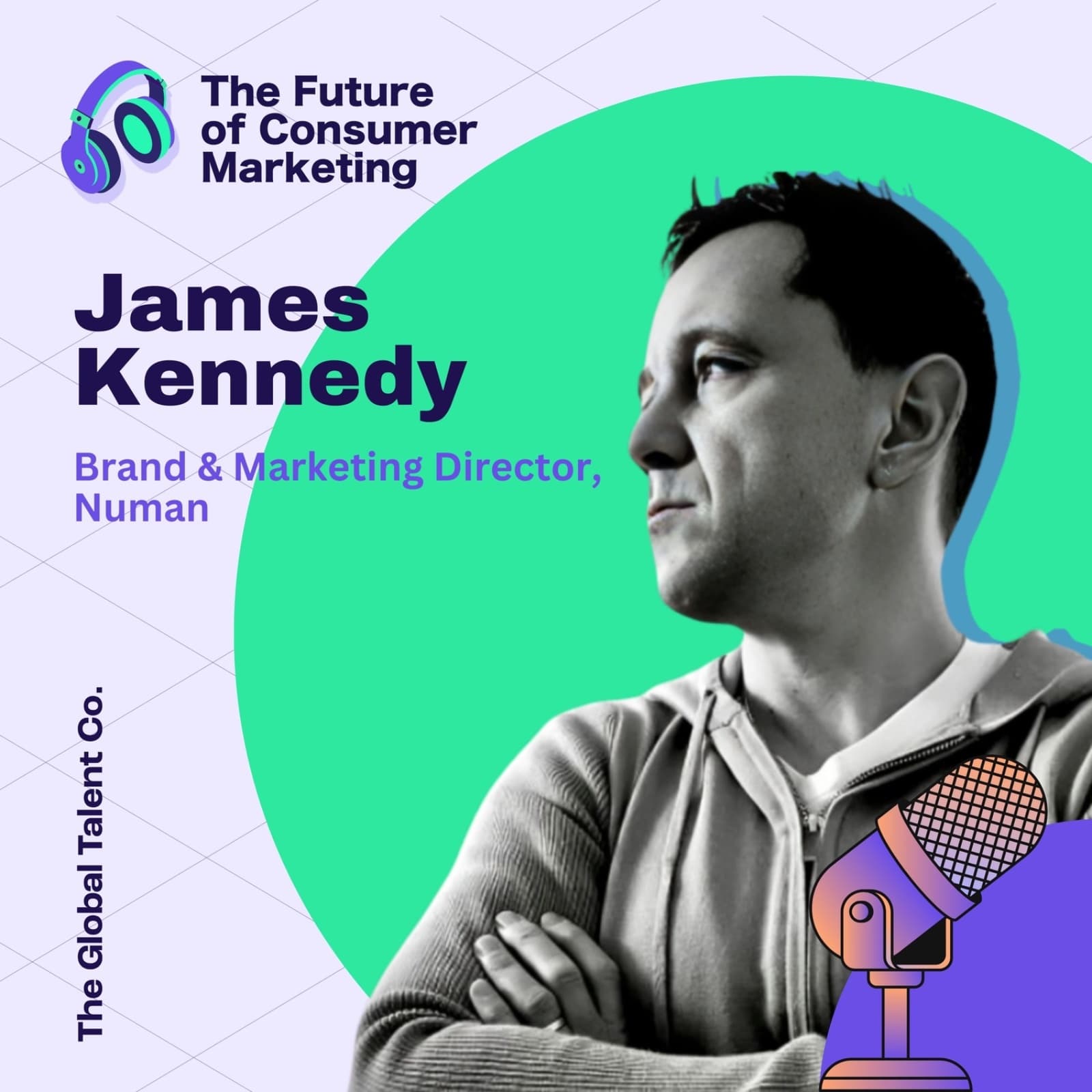
James Kennedy is brand and marketing director at Newman. He spent ~10 years in ad agencies in London and Sydney, then 7 years at Nike Foundation (later an independent NGO) focused on brands for social purpose, then a couple years in FinTech education loans before joining Newman in 2022.
Key claims
Awareness boosts performance efficiency; healthcare brands can be humorous without losing trust by “growing up” the experience; rebrand and repositioning were needed because outward messaging lagged behind expanded services; performance-only marketing isn’t future-proof; point-of-view beats keyword sameness.
Notable examples
Newman’s early erectile dysfunction category and bold, taboo-breaking ads; 2022 nine-ad TV campaign using stop-motion characters; GLP-1 “miracle weight loss” skepticism increased the need to emphasize regulation (GPhC/CQC) and clinician-qualified care; shift from male-focused to unisex after research and GLP-1-driven demand.
Written by AI. May contain mistakes. Listen to the episode to check what was said.
Chapters
Tap a time to open that second in VOJames Kennedy's Career Journey
0:45 to 1:46
James shares his background in advertising and marketing.
“I mean, I'd say, yeah, broadly speaking, my career is split in two.”
Social Impact and Healthcare Challenges
1:46 to 3:06
Discussion on men's health and cultural healthcare challenges.
“So all those things wrapped together just like made it an interesting challenge.”
Marketing Strategies at Newman
3:06 to 5:06
Insights on effective marketing strategies at Newman.
“So both of those things, and they had quite an interesting point of view and tone of voice.”
Balancing Humor and Trust in Healthcare
5:06 to 8:09
Exploration of using humor in healthcare marketing while maintaining trust.
“And then obviously there's this misconception in healthcare and just generally healthcare products have to be boring and needs to be all happy families and, you know, you can't really have a point of view.”
Shift in Consumer Preferences Post-COVID
8:09 to 10:13
Analysis of changing consumer preferences in healthcare products.
“Did you see a shift in consumer preferences over time?”
Building Effective Marketing Teams
10:13 to 12:01
Discussion on assembling successful marketing teams in healthcare.
Rebranding and Expanding Newman’s Market
12:01 to 14:00
The process of rebranding Newman to appeal to a broader audience.
“I think it's like we always had a male focused market for sure.”
The Evolution of Numan's Brand Strategy
14:00 to 16:20
Learn how Numan adapted its branding and marketing strategies to maintain relevance.
“So I wouldn't say that's like a hidden trend that you're telling me about.”
Opportunities in Digital Healthcare
16:20 to 18:48
Discover the emerging trends and opportunities in the digital healthcare landscape.
“If you're, you know, building something from scratch, you know, world of digital health, what do you feel are kind of the biggest opportunities at the moment?”
Transcript
Automatic transcript. May contain errors.0:00This show is brought to you by the Global Talent Co, a marketing leader's best friend in these times of budget cuts and efficient growth. We help marketing leaders find, hire, vet and manage amazing marketing talent for 50 to 70 percent less than their U.S. and European counterparts. To book a free consultation, visit globaltalent.co. Hello and welcome to a new future consumer podcast episode. Today with James Kennedy, who's been a lot of different places, but is the brand and marketing director at Newman. Newman has been, you know, revolutionizing healthcare and marketing, I guess, and you could say.
0:40So James, it's a pleasure to have you. And walk us through how you ended up at Newman. Thanks, Roman. Yeah, pleasure to be here. I mean, I'd say, yeah, broadly speaking, my career is split in two. I guess I spent my first 10 years in ad agencies in London and Sydney. So working on essentially learning the craft of building brands and the power of creative and all those good things. And then kind of through happenstance, I ended up switching onto the marketing side of the fence. Yeah, about 10 years in and I worked for a sort of innovative NGO that was Nike Foundation. So it started off as part of Nike and then spun out to become an independent charity.
1:18And so that kind of led me down a path of brands for social purpose and what roles brands can play in changing insect behaviors and cultural things like that. So, yeah, I spent seven years working there and then I spent a couple of years at FinTech doing education loans. And then I was just always drawn to, like I said, that Venn diagram of brand social purpose and ideally quite sort of creative led brand. And then I joined Newman in three years ago, so 2022. So at the time, it was very squarely a men's health brand with a very bold and provocative tone of voice. So all those things wrapped together just like made it an interesting challenge.
1:55Interesting. And what was the biggest social impact that you felt you could have with Newman when you joined? I think, yeah, like so culturally in the UK and many other places in the world, then it's relatively well known, I guess. but like men do they go to the doctor less they live longer in poor health they die earlier they kind of like generally have this sort of trope around looking after themselves a bit less than being the provider and you know man up and grin and bear it and all those things and kind of like it all leads to an imbalance in health care and health outcomes between men and women so i sort of was quite interested in the role a brand could play to try and shift some of those insect cultural trends.
2:37And coupled with that, I guess there is the impending shift from in the UK and many places, again, to digital healthcare. So we have the NHS here and it's sort of well known that it's a kind of overburdened system and struggling to adapt to modern demands and a growing population. And so like more innovative players like Newman that saw digital first, I think like resolving, I guess, the cultural problem of men that are looking after themselves, as well as the bigger problem around sort of healthcare in the modern age. So both of those things, and they had quite an interesting point of view and tone of voice.
3:10So those were sort of the challenges that I was keen to get into. And what was the marketing play when you started there? And what were some of the things that you felt were working? And what are some of the things that you felt immediately they're not working after I have to change? I'd say some of the things that were working is like, they always had a model like long before my time of even when they were starting out they kind of went for above the line advertising so to try and grow that awareness and even though the media spends and the production spends were very small you know because they went for quite bold and provocative and taboo breaking creative there was a lot of cut through so I guess it was maybe a slightly unusual like less trodden path for a startup to go straight to above the line like that but I think they used that to sort of grow their awareness and then couple that with the performance marketing and then see those two things then work in balance quite nicely and if you do have more awareness then it makes your performance marketing more efficient so rather than purely relying on everything being through meta or whatever then that model I think pre-existed my rival Newman still sort of works today so I think that's worked really well I think the thing that was maybe lacking a bit what I did when I came in was kind of a typical story, I guess, for a brand that they like a startup, it's sort of maybe it started off doing one thing in one treatment area.
4:29And then over time, more things got added on and they added different treatment areas and more complex treatment pathways, added diagnostics, they added like an app, they added health coaching, they had all these things that kind of had all these bits and pieces behind the scenes, but the sort of outward facing version of Newman hadn't changed for a few years. So that was one of the big things I did was worked on a kind of rebrand and repositioning to try and sort of bring everything up to speed and up to date with where healthcare was at and where Newman was at. And I think, yeah, it was like a long process, but we sort of managed to rebalance, yeah, the positioning of Newman and you said, that's kind of what you see today.
5:06Okay, cool. And then obviously there's this misconception in healthcare and just generally healthcare products have to be boring and needs to be all happy families and, you know, you can't really have a point of view. So in some of your TV you had a lot of humor, I guess, at least the ones that I saw. So how did you kind of tell us that misconception or, you know, that misconception, how did you kind of balance, you know, being quirky and edgy with the need to still have, you know, full of trust and, you know. Yeah, it's a really interesting one because I think so when you, when it first started, it started in one area, which was erectile dysfunction medication.
5:42So kind of like rolling off. Everyone knows Viagra and that's one option, but like, you know, Once that had been around for a while, then Newman and other players started offering similar things. And so I think that category by itself naturally lends itself to a bit of like humor and taboo breaking and being sort of a bit more provocative. Obviously, I think what Newman did, again, this is all my time, but the route they take was it go right to the wire with it. And they like made some very funny ads that had like massive cut through for very little budget. So I think that was good. I think it's quite interesting when I look back when we were doing the rebrand we sort of got all the old stuff out and the very first identity that was created for Newman by an agency it's funny looking at it because it was very generic sort of healthcare and you put it up against loads of other competitors and it's you know kind of all gets lost and everyone tries to balance you know you've got to have a photo of every type of person and every situation and you get a lot of stock photography and everyone wants to be quite neutral and it all kind of like ends up quite beige and not much standout.
6:44So I think that was a thing that quite quickly, I think Newman shifted to recognizing as a bit of an issue. And I think they, you know, they had an identity when I arrived that definitely had a lot more standout, although it was a bit less maybe coherent. So one of the funny things is that even though like me, myself and maybe you and lots of other people would naturally lean to the more humorous and taboo breaking stuff. And like you just do that all the time. And that would be really interesting. But like you said, like people do obviously need the serious side of healthcare as well. And especially with digital healthcare and like a lesser known player, like we're obviously not as well known as the NHS or boots or things like that in the UK.
7:22So you do need the serious grown up side as well. And so I think that was one of the things, again, we did with the rebrand was to show that Newman has grown up a bit. And I think we tried to sort of keep the TV ads to show that we hadn't lost our soul or lost our point of view on the world and things like that. And we did a, you know, but we did in 2022, we did a big nine ad TV campaign with stop motion characters. So we used quite a lot of like craft and storytelling, whereas before it had been like very sort of bold and shouty and funny ads. And these were still humorous, but like with a lot more humanity and in there.
7:55And so I think we kind of tried to use the TV ads and the above the line comms to show the funniest and boldest side of Newman. But then the rest of the experience was sort of meant to be very premium, very slick, very trustworthy and all that stuff. So kind of work in harmony. And how did you, obviously there's been even more, now it's probably less, there's been a lot of skepticism about I'm just using healthcare products, be it, you know, digital products or kind of ordering physical products. Did you see a shift in consumer preferences over time? If so, what contributed to that? Was that also kind of the messaging that you did or just generally COVID?
8:33I think, I mean, to be honest, I think COVID was just created a natural shift towards digital healthcare that was sort of very beneficial for Newman and other players like it. So the challenge then was sort of to keep that going once the world returns or back to normal, so to speak. But I think, you know, there's always bad players in a market, in any market and any online market. So the trouble is obviously in healthcare, the consequences can be a lot more serious than other markets. So I think Newman's always sort of led with being very, like we have in the UK, we have regulations such as the GPHC and the Care Quality Commission.
9:11So, you know, I think we always are very front and center with the fact that we are regulated and authorized and we sort of have like 100 % qualified clinicians. And I think it's never seemed too much of an issue until with the arrival last year or so of like the GLP-1 medications. So, you know, it was originally a Zempic was the media craze, you know, that's for diabetes. But, you know, when we go, we came along and all these quote unquote miracle weight loss jabs. That's when it became a lot more serious because, yeah, bad players in that market can, people are so desperate to get a hold of these things that, you know, they kind of just go anywhere online.
9:48And if you get something wrong, that's why, you know, you get deaths recorded in the UK. So I think it's trying to sort of, like I said, use the full experience of the user journey. So, you know, the hook is one thing, but then you've got to like really layer on the messaging throughout the rest of the whatever it is, the website, the app or the emails and things and the whole experience to really reassure and sort of over index on that trustworthy. interesting let's talk about building out kind of teams in that space because obviously you come more from a you know social impact side of things what kind of you know talent works best in the healthcare environment would you say especially when it comes to kind of marketing talent yeah to be honest i think like it's maybe not as different as you might think because you know there's just maybe slightly more people in the room so to speak like in terms of in a different industry certainly less regulated industry then maybe the i'll call it the production process to make it sound easier but yeah the process of getting something made and out the door there's just sort of fewer people in the chain and fewer steps and checks to go through but i think you know you still need in terms of the team that's coming up with the content or the ads or whatever it is still we have like a new minute like a real blend of people from different marketers we have a lot of ex-agency people with you know performance and brand people and I think you still need it's quite a traditional mix in that sense but I think what you do then ladder in with a place like Newman or like previously when I was at Girl Effect as well like you just have these extra layers so you have like behavior change specialists or at Newman obviously we have like clinicians and then we have the legal team to make sure you're not sort of crossing any lines with the ASA and what you can and can't talk about a product and its claims and things like that so I guess like there may be this slightly more elongated process and then it becomes important to try and you know really protect the work it's a bit like feel like when you're in an agency and you have like more and more reviews with a client and more and more meetings and every time things can get diluted a little bit so it's kind of like really important to try and stay true to things and not lose too much along the way but obviously all those checks and balances and all that those different areas of expertise it wouldn't work without it yeah you wouldn't be able to do it okay and i mean you did a really interesting pivot from being focused on men only to kind of being gender neutral with the company the name obviously stayed human because it had awareness but it kind of reminds you of the heritage so how was that process and working for some considerations that you consider changing the name that you like how did you manage our communication yeah good question i think yeah i I mean, I guess us like others, you know, there's sort of female focused players that have become more unisex as well.
12:36I think there was kind of two things. I think it's like we always had a male focused market for sure. And then it was the arrival again of the weight loss medication that really drove the acceleration into the unisex market. But it was something that like we had looked at before. And like you said, you know, all the options were on the table and had been discussed and looked at at length. and whether we'd have keep Newman just for men and have a you know a sister brand like hims and hers do in the US and UK or whether we'd stand up at different brands you know like manual did so they sort of created voice or you keep it all as Newman I think one of the things the rebrand and repositioning that I alluded to quickly earlier which we did it kind of went live just before the sort of arrival of GLP ones but obviously all the work is done months and months months before that.
13:24So it wasn't because of that. But what we did with the repositioning was to show that Newman had grown up from being this kind of, if you like, shouty male brand talking about erections and making jokes about that to being a bit more of a premium healthcare provider and more sophisticated experience. And it was kind of fortuitous, all those new cues and all those things that we were communicating once we'd rebranded and repositions, then with the arrival of GOP1s and then we started doing research with a female audience and suddenly like where before there might have been tension with a woman coming to a Newman website and you know seeing what they saw before would they feel comfortable then as a woman like using this as a healthcare provider maybe maybe not but like you know post rebrand and repositioning because we'd made it more sort of sophisticated and accessible to all then I think we saw that there was no reason in the research to go after a separate brand or whatever it was so you kind of like those two things happened slightly fortuitously you could say but like yeah they work quite nicely and so then it became quite an easy decision to just keep it all as newman but more deliberately open out as a female and male brand okay let's talk a bit more about trends especially you know on the technology side but also our trends that we're seeing in customer acquisition engine so are there certain trap that you feel underappreciated that you would kind of urge other senior marketing leaders to focus on that really worked out well for newman i don't know about trends but i think because obviously like the obvious one maybe marks under the sun is sort of looking at ai and how that can be embedded and i think like you know the content side is one thing but you know it's kind of really more systems-wide piece that needs to be looked at and i know everyone's looking at that newman and a bunch of other companies that I know people at.
15:10So I wouldn't say that's like a hidden trend that you're telling me about. But one thing I do think that is important that maybe gets forgotten in the sort of rush to be kind of like putting lots of content out and trying to get your authority up and trying to get your domain rating up is there's more old fashioned than a trend. But having like a real different point of view is like something gets so lost, I think these days. And everyone's sort of in a rush to put out something with the right keywords and focus on all that. And it obviously is really important, but you kind of end up with a sea of sameness and all brands talking about the same things like in healthcare in particular, but in lots of other industries.
15:44So I would say like less of a digital trend, but I think the focus on the performance marketing element on its own is obviously not future proof. And I'm not the first person to say that at all, but I think, you know, there's a bit of a renaissance now in terms of the importance of brand and craft and having that creative point of difference rather than just sort of ticking a lot of boxes and trying to get the most sort of efficient spend out there, which is obviously important. But I just mean like in isolation, it becomes like a race to the bottom versus, you know, the opportunity to be the top of mind through having that point of view and point of difference.
16:19Okay. If you're, you know, building something from scratch, you know, world of digital health, what do you feel are kind of the biggest opportunities at the moment? I think the biggest opportunities would be, I think healthcare is becoming much less sort of siloed and much less sort of treatment area by treatment area. And I think, you know, the way we'll get to in the next five years or so, it will be like, yeah, a lot bigger, a lot more of a focus on all round, like you can use whatever jargon you like, like holistic health or preventive health or whatever that is. But I think there's obviously rise of wearables is already nearly complete.
16:57Like, you know, pretty much everyone has one. Integrating that with healthcare providers is what's happening in lots of places right now. And I think, yeah, having a more thorough overview of how your body's performing, what the things are to watch out for, what the downward trends are that you want to take action against, rather than, oh, I've got this specific issue, like whether it's whatever, testosterone or weight or whatever it is, like focusing on a specific issue. I think that is very much where healthcare is at right now. So it focuses on a specific issue and tries to react to something that's gone wrong and fix it but all the digital healthcare players will be working towards that yeah more integrated holistic view okay interesting and would you build a brand now differently than you know you've been building it with Newman for instance over the past few years I think I would take you know the very similar building blocks in terms of what Newman did in terms of you know like I said before about how it started off with going after awareness and trying to embed themselves in people's minds as much as the performance side from day one and I think that's really good I think to purely using 2020 hindsight you know sort of Newman itself went from being a single issue single category healthcare treatments kind of a bit more like an online pharmacy I guess like selling pills for one issue that comes to your door to being yeah much more integrated and advanced sort of all-round healthcare system so I think you know maybe going back in time, if you had the crystal ball, then we would have laid those foundations earlier, rather than sort of adapting as we went.
18:33So I think that's probably maybe like one big learning. And like I said, I think that is very much the future trend, without doubt, that is the future direction of travel for healthcare industry. So if I was building one now from scratch, then yeah, I think you wouldn't have to have those pieces in place from day one in terms of that brand story and holistic health. Amazing. James, it's been a pleasure having you. Thanks for sharing your wisdom and wishing you the best of luck. Cheers, women. Pleasure to chat.
From the publisher
In this episode of The Future of Consumer Marketing, host Roman Kirsch interviews James Kennedy, Brand & Marketing Director at Numan. Numan has transformed from a provocative men's health startup into a sophisticated, gender-neutral digital healthcare platform. James shares how they've navigated one of marketing's most challenging sectors - healthcare - while maintaining brand authenticity and driving growth. From executing taboo-breaking creative campaigns on minimal budgets to successfully pivoting from male-only to unisex positioning, Numan's journey reveals how to balance edgy brand personality with regulatory compliance and consumer trust in a heavily regulated industry.
Topics Discussed:- Balancing provocative creative with healthcare regulatory requirements
- Executing successful above-the-line campaigns on startup budgets
- Managing brand evolution from single-issue treatment to holistic healthcare
- Navigating gender pivot from male-focused to unisex brand positioning
- Building consumer trust in digital healthcare during and post-COVID
- Integrating performance marketing with brand awareness strategies
- Assembling marketing teams for regulated healthcare environments