In short
Paul Sampson, co-founder/CEO of Lick(t), explains how YouTube’s Content ID copyright system unintentionally pushed creators toward stock music, then how Lick(t) built a “Spotify-like” mainstream music licensing platform that clears rights and prevents copyright claims. He also covers the business case: better music increases engagement (about 30% on average; up to 150% in some verticals) and that Lick(t) expanded from creators to brands (Lick(t) for Brands), reducing a 12-week manual clearance process to ~48 hours.
Guests
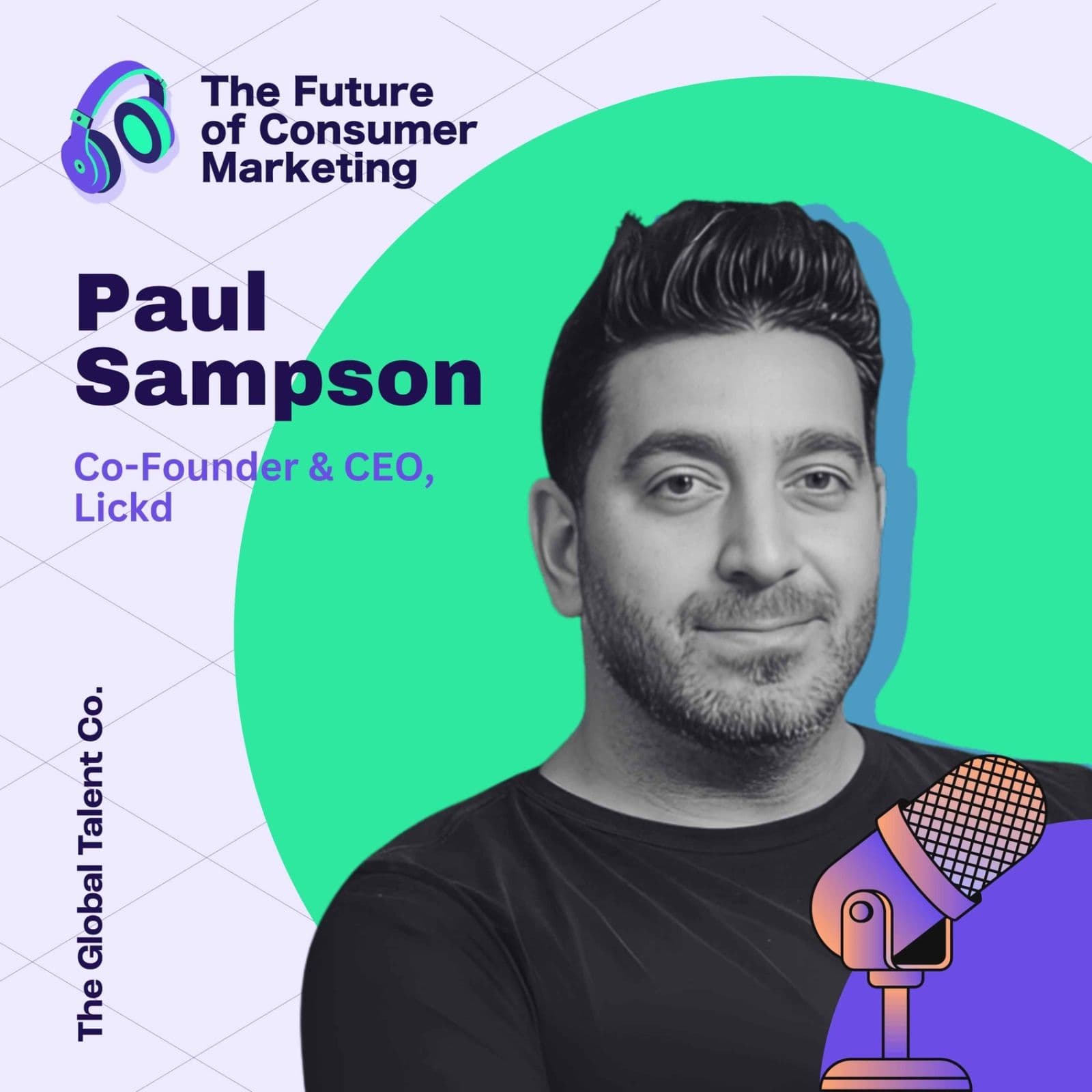
Paul Sampson, co-founder and CEO at Lick(t); background includes 20 years “putting music to picture” (film/TV/ads) and experience negotiating licenses across multiple rights holders (sometimes 17 companies per song).
Key claims
YouTube’s system treats mainstream music as infringement unless rights are proven; Lick(t) aggregates rights for ~14 million songs and enables one-click licensing with YouTube-safe protection; creators using Lick(t) see higher watch time/likes/comments.
Notable examples
Major creators with accounts (MrBeast, Logan Paul, KSI, Sidemen, Beta Squad); music examples (Coldplay, Dua Lipa, Bruno Mars, Justin Bieber, Ariana Grande, The Weeknd); vertical examples (fishing channels using drum and bass; fitness channels licensing 7–9 songs/video).
Written by AI. May contain mistakes. Listen to the episode to check what was said.
Chapters
Tap a time to open that second in VOOverview of Licht and Music Licensing
0:47 to 4:28
Paul Sampson discusses Likt's role in music licensing for creators.
“catalogs of music for creators with 1.4 million mainstream tracks and royalty-free songs.”
Licht's Unique Approach to YouTube Music
4:28 to 5:50
Exploration of how Licht interacts with YouTube's copyright system.
“Without that, the whole company doesn't exist.”
The Benefits of Using Licked Music
5:50 to 10:16
Understanding the advantages of using mainstream music on platforms.
“Those days should be behind us and are feasibly behind us if you become a leaked customer.”
Expanding Services to Brands
10:16 to 14:00
Paul shares insights on how Licht is adapting offerings for brands.
“Increases, uptakes in those KPIs is what the algorithm is looking for to promote your content.”
Licensing Challenges for Brands on Social Media
14:00 to 17:04
Explore the complexities brands face when trying to license mainstream music for commercial use on platforms like TikTok and Instagram.
“I don't want to go back and try and make something slightly better.”
The Evolution of Marketing Strategies
17:04 to 22:08
Learn about the changing landscape of marketing strategies over time and the challenges faced during Lick's launch.
“As you mentioned, everybody was a bit incredulous when you would arrive with this idea, but how were you able to market that to the masses and to the people?”
Understanding Audience and Retention
22:08 to 28:00
Discover how to effectively target audiences and improve retention rates for a music licensing platform.
“but it might be slightly more than a stock music company.”
Cultural Values in Hiring
28:00 to 29:43
Learn how to identify cultural fit during the hiring process.
“Having people who not just are smart, but are good humans and working out a way in the hiring process to look for that without being obvious, I think has served us incredibly well.”
The Importance of Value Alignment
29:43 to 31:20
Discover why aligning values is crucial for long-term team success.
“I would say focus on that, given the time it's worth, because you might be doing something expedient by getting the smartest person, but if they don't fit your values, they will cause you problems down the line.”
Conclusion and Reflections
31:20 to 32:09
Reflect on the key takeaways from the discussion on hiring and values.
“And I think it's a very valuable insight from your perspective of how it went with WIC that anybody who is starting, even when you need that help, you might not be that interested in filtering.”
Transcript
Automatic transcript. May contain errors.0:00This show is brought to you by the Global Talent Co, a marketing leader's best friend in these times of budget cuts and efficient growth. We help marketing leaders find, hire, vet and manage amazing marketing talent for 50 to 70 percent less than their U.S. and European counterparts. To book a free consultation, visit globaltalent.co. Hey, everybody. Welcome to the show. My name is Andres Figueira and I'll be your podcast host for the day. This program is brought to you by The Global Talent Company, a company that's connecting top remote professionals from Argentina, South Africa, and anywhere around the world with leading companies worldwide.
0:38So if your team is looking to hire world-class South American or South African talent, just head on over to theglobaltalent.co and see how we can help. And today with me here, I have Paul Sampson, co-founder and CEO at Licht, one of the biggest catalogs of music for creators with 1.4 million mainstream tracks and royalty-free songs. So how's it going, Paul? It's a pleasure to have you here. It's good, Andres. Pleasure to be here. Thanks for having me. No, no problem at all. The pleasure is all ours. And Paul, just so that we can get this podcast started and provide the audience with a little bit more of context of who you are, what Lick does, would you be able to give us a brief overview of the company and what you guys offer?
1:19Sure. Yeah. So Likt is the world's first mainstream music licensing platform for creators. What does that mean? It means that content creators up until the formation of Likt were limited to using stock music or royalty-free music exclusively because famous music would always result in what they call a copyright claim on their video. Basically, YouTube's copyright recognition software presumes all famous music use is a copyright infringement because how the hell did you get all the rights to use this right there isn't a place to get it and a copyright claim for a creator that earns money from youtube is a death sentence because it appropriates all your income yeah and so the unintended consequence of the music industry working with youtube on copyright identification was that they actually precluded the only demographic on youtube that had the means, the will to pay to use music and the interest in production values to use music from working with them.
2:22And they funneled a lot of money from creators' pockets into stock music companies. Now, Licht's mission is let's democratize music for the world's creators. I've been putting music to picture for 20 years now. So what that means is every film and TV show and advert that you've watched on TV has music in it, right? And someone like me would creatively pitch a song into that content, if you won that pitch, you would then negotiate on behalf of the multiple rights holders associated with every song. I've seen songs owned by 17 companies, right? Wow. Then you would negotiate that license and handle the contract.
3:01And it takes months. It could take anywhere between four weeks and 12 weeks to clear one song for a TV commercial, right? That process, that functionality is not fit for purpose in the digital world and in the modern world in terms of the way that people use social UGC platforms and have the cadence of which they're outputting content. You can't ask 113 million channels putting out five videos each a month to go and get permission and then expect them to find who all the writers are, who those writers assigned to in terms of publishing deals, deal with the label on behalf of the artist. You know, it's just nonsense.
3:38What I determined was if we're going to put money in the hands of artists and writers efficiently and not let this opportunity pass without us monetizing it and help creators and audiences increase the value of their production and their enjoyment of content, what we need is a platform like Spotify, but for music licensing for content creators. somewhere where all the rights are already aggregated. And all you have to do is select a song and click a button and pay a fee. The next technical piece was we had to build software that informed YouTube's content ID or the difference between a copyright infringement and a legal use of music.
4:20And so we did that and then we built Spotify or something like it on top of that. And that's what picked it. That's Spotify content creation. That is so cool. Like it's amazing how you notice that gap in the market of the creators and how they were using music that you were able to come up with this solution paul but i was exactly going to ask that i was wondering if flicked you had to upload your content through your platform in order to be able to upload it somewhere else but you mentioned that then licked is kind of talking to youtube so that youtube understands that whatever a content creator uploads using music from linked will already be licensed right correct yeah yeah and That's the real magic, right?
4:58Without that, the whole company doesn't exist. Look, yeah, look, everyone from my nephew who has a Licked account, all the way up to sort of the Sidemen and Beta Squad and Logan Paul and KSI and Mr. Beast have accounts with Licked and will occasionally, if not frequently, come to the platform, select a song from, say, Coldplay or Dua Lipa or Bruno Mars or Justin Bieber or Ariana Grande and say, hey, I want to use that song. How much does it cost for my channel? And then they'll just check out like a normal e-commerce store. And then the software in the background does all the best, all the rest in the background in terms of protecting them from YouTube persecution.
5:35Wow, that is so cool. So if I'm ever hearing music that is mainstream on a YouTube video, I'm safe to assume it was probably put there or allowed to be put there by Licked, right? Because not everybody is able to. Yeah, all that likely. There's a few instances where people would just, they don't know about us, will say, I'm just going to take the hit and lose my money on this video in the hope that, you know, that song resonates so well, I'll make money on future videos and gain a larger audience. Those days should be behind us and are feasibly behind us if you become a leaked customer. Yeah, that's how it works.
6:10Wow, that's a cool thought. Like I have at one point of my life created content and I have fallen into that trap of YouTube where you want to use a mainstream song where you can only use like 10 seconds before they pull your video down or the copyright infringement thing kicks in. so that is very nice very nice and also andrews that 10 seconds used to be 30 seconds and then it was 25 seconds and then it's 20 seconds and like they're getting better and better and better identifying songs earlier right it's no strategy oh my goodness yeah and paul have you noticed if certain demographic is the one that uses lick the most or is it just like creators in general because i believe it's something it's such a useful product that it might not just be 20 to 30 year olds it's actually even more of a broader demographic in my opinion would that be correct yeah we've got customers of all sizes i'm always amazed when someone one of my team comes to me says hey you should like early days very early on it leaked when we didn't have the major labels and publishers that represent those big name artists i just mentioned okay you know we had lots of really great smaller independent labels right and someone came to me one day and said I've just done some analysis.
7:19Did you know that we have a lot of fishing channel customers? I love fishing. I consume so much fishing content, it's crazy. But what was really surprising was that the fishing channel customers were almost exclusively all licensing drum and bass. And that surprised me because you don't associate a fisherman with drum and bass. But I guess if the content is so tranquil, you either match it with really slow, melodic music that's calming, or you go completely the other way and go, we need to add some energy here, right? It's true. It's true. Yeah. The only real vertical on YouTube that is prolific with us in some capacity is sort of video podcasts.
7:56You're doing now. You're going to use a lot of music in this chat, right? Exactly. Right. You might have an intro and outro. You might have had a friend who's a musician write that for you to keep things simple. So those things take not to need a lot of music. But fitness, we do really well in, right? Of course. And sports content, because the energy is needed. and in fitness like i don't know about you andres but i should always be doing more exercise if i was to go to youtube and find an instructor that i liked and do say a 20 minute workout a day and find a new video from that instructor every day it's going to be hard enough for me to finish that 20 minute video and workout as it is now imagine that that video is scored with stock music techno right it's going to hurt your ears yeah and anytime you might be thinking about quitting you're probably going to quit right okay what we found is fitness instructors license multiple songs they have a different behavior on the platform right they license seven eight nine songs per video okay what we're seeing is and this is true of all verticals actually not the seven eight nine songs per video but this next behavior that i'm about to talk about.
9:11It's true across all verticals of lit customers. The comments on the music underneath your video go bananas. They go crazy when you use good music. People are always going, I didn't think that was possible. I loved that song. That reminded me of when I played FIFA 2014, or I remember where I was when I first heard that song. Great edit to the music. Whatever it might be, we see engagement go up on agruga when the music's better by about 30 % across the board. That includes watch time, likes and comments, right? Wow, okay. You've seen it as high as 150 % in certain verticals. Like I think it's over 100 % in gaming and technology channels.
9:51Okay. We analyze when a customer joins us, what happens in their first six months. And then what we'll see is, well, the six months before you joined Lix, your videos were getting this level of engagement, this length of watch time, this level of likes and comments. And then we A, B test that against the videos using our music. And in almost every vertical, it goes somewhere between 30 and 105 % in terms of increased engagement. And those KPIs are exactly what the algorithm is looking for, right? Increases, uptakes in those KPIs is what the algorithm is looking for to promote your content. And if the algorithm starts promoting your content, it's like having YouTube do your business development for you, right?
10:33If you get more views, you get more money. And so what we've learned is there's a business case to using better music in your content. No, and that's also, it's like a great reason for somebody to go and use Licked. It's like the best marketing strategy you could have, just spitting the facts of how good it is to use mainstream music or popular songs versus stock music. Exactly. And our thinking was, right? Because I'm not here to poo-poo stock music. I've worked in stock music, right? Of course. But there is a place for all of it. Stock music is really, really useful as a toolkit. If I want a scene in my video to sound like Scream or Pirates of the Caribbean, I'm not going to get that from Jess Glynn or Sabrina Carpenter.
11:17Of course. I need a dedicated resource that says, hey, here's your fantasy album or here's your adventure album and here's your horror album. What it does really badly, really badly, and I cannot stress that enough, is imitate a commercial sound. right i watch daytime programming here in the uk and literally i'll go oh they couldn't afford coldplay oh they couldn't afford the week there and you can hear the knockoff it's so close but so chintzy but i'm actually taken out of the content because my brain's gone oh that's a stock music ripoff god that's bad but you have like a different lens paul you have a filter that's effective that's true that is true i'm a bit more sensitive my pun all off is i'll be sitting watching tv and i'll go that is extreme music album 101 track seven from when i was in stock music right the good news is on leaked right you can afford all those artists because it's not tv prices you can get coldplay if you're a startup channel for six pounds wow so you're right i mean the bigger creators are paying a lot more it's based on the size of your audience and your ability to pay okay okay wow and that was actually a question that was like my next question do you guys only or is like a service that only can be used by creators do you have a different way of serving like bigger brands or is it just like the same process for everybody that's really interesting that you asked that because obviously and i guess part of the reason i'm here is that licked for want of a better term is a b2c company right okay you think about prior to lick what i want in film and tv and advertising that's business to business it's me as a rights holder licensing into Paramount as a film studio.
12:55Exactly. You could argue that content creators are small businesses. So you could argue it's B2B. Okay. But it's not. The vast majority, like 92 % of content creators don't earn a penny from their content. All right. So I regard them as consumers. The very top eight earn money on YouTube, right? And you could say that they're businesses, but even the lower end of that 8%, probably hybrid. They're not professional. They're semi-professional. It's not enough money to live on. But I had no interest in going backwards and going into B2B again. But that's changed over the years because I mentioned the mission is democratize music for the world's creators.
13:34When I wrote that, I meant UGC content creators. Okay. But it turns out that brands and businesses are as reliant on social platforms and using them as ubiquitously as content creators today. Yeah. And so I categorize them as creators now. What I've realized is that I didn't hate the idea of B2B. I hated the idea of going back to traditional media. Okay. But what we've built is I only want to build solutions for where we're headed. I don't want to go back and try and make something slightly better. When we built something at Lick, it's because it needs to exist and it's never been built. And that's really a painful place to live because you're taking risks the whole time.
14:15You're then going to market on something that people don't think is possible. and you're doing it all on a shoestring. Of course. We've just launched Licked for Brands and it enables brands to license a similar catalog. It's smaller than the 1.4 million you mentioned. So the new platform, we have to sign all the rights holders again, right? So at the moment, we have the top six publishers in the world. We have Universal and BMG on the label side. So two of the top four labels in the world and we expect the other two imminently. Cool. Congratulations. That's amazing. Like that's very nice. But brands like Nike and L 'Oreal and Ferragun and many others have come and said, hang on a minute, I didn't think it was possible to license mainstream music for, say, TikTok or Instagram.
14:59But as an influencer, you can use whatever you want on Instagram or, right? But the moment you get sponsored by a brand or the moment you are a brand and use music on your own channel, it's illegal. Okay, so as like an individual user on Instagram or TikTok, you can use the songs like you choose to put in your stories or your videos. But if you become a business in the platform, then using that music is another story. Yeah, if you start selling a course, or if you launch your own brand, or even if you work with a big brand, if Nike approaches you and says, hey, you know, we want you to promote this campaign we've got coming up.
15:33You go from being able to use any song in the world down to a handful of songs the platform provides you for commercial use. Wow, okay. And what we've seen is right now there's over a billion dollars in lawsuits between the music industry and brands for misuse of music on TikTok and Instagram. And while it's, you know, interesting for the music industry to protect and worthwhile for them to protect their artists and protect their copyright, it's not a long-term revenue strategy to just go around suing everyone. True. You're not making a lot of friends if you're happy to do that. What you need to know is no label who owns the recording of a song has any clue who the writers on that song are and therefore who the publishers of that song are.
16:18And you need the master label and the writers publishing cleared for a user song. What I've learned is we have that information on over 14 million songs. You aggregated it. And so I went to brands and labels and said, what if we build a platform where if the song's on there, all we have visibility on the ownership of every piece and you just click a button request the use of that song and that request will drop into the inbox of everyone that needs to approve wow and so we take of like a 12-week process the manual process i used to be a part of pre-linked we take it down to like 48 hours that really is great optimization and great value to offer it for companies that are having that hard time with musicalizing like their shows or whatever they have on social media.
17:04It's amazing. And Paul, now I would love to know a bit more of what the theme of this podcast is as once you had Licked ready and the whole idea of what you wanted, once you had made sure that it was working and I imagine you had amassed a library of several songs before you even started like the proper Licked, how was it that you marketed a product that consumers didn't know existed, didn't know was possible? As you mentioned, everybody was a bit incredulous when you would arrive with this idea, but how were you able to market that to the masses and to the people? The short answer is badly. I love that answer because I'd love to know more.
17:42It throws a marketing has been a thing for a while, but as anyone listening to this will know, it augments and evolves on a weekly basis, right? The rules change, the algorithms change, the data insights who get change. I launched this company in 2016. Dean. We didn't launch the actual product for another 18, 24 months. We're going back seven years now, 2018. I didn't have a major label. I didn't have any major artists. We had small independent labels and publishers. And so there wasn't a lot of conversion around, right? People would get very excited about Licks when they did see our marketing or advertising because, oh, hang on, I can use mainstream music and not lose my income.
18:26But then they would come and search for the artists they know and love and they wouldn't necessarily be there. That was disappointing. But like I said, the data and insight we had available to us at the time wasn't that good and the targeting wasn't that good or as good as it is now. So we worked with just some well-known names or at least like, I guess, smaller creators, but on the up and doing up. We didn't think necessarily about what we know now. So what I'm saying to you is you work with an influencer. Okay. That influencer will have a rate card, right? This is what it costs to sponsor one of my videos.
19:00We would pay it and we would see conversion rates from those efforts at like between 0.5 and 1%, right? Okay. If that. And that was because our customer is the influencer themselves. It's not their audience. Aha. Like you need to sponsor an influencer for influencers. And that makes sense. There you go. We needed to find the guy behind the guy. We needed to find the influencer that influences influencers. And that was really difficult. And we spent a lot of money trying to get that right and trying to work how to do it. We spent a lot of effort trying to work out how we could use GA to work out if a creator's audience included other creators, right?
19:43What we learned is that if a creator has a creator-dense audience, then only about 4 % of that audience will also be creators. If we see someone that has 4 % of their audience also has a YouTube channel, we think we've hit the jackpot. Right. And that was really difficult. It took us years to work out that's what we needed to do. And the data and tools weren't available to help us work that out in the early days. So we spent a lot of money, wasted a lot of money on generic ads. We did a bunch of static stuff where we thought it might work. And we worked with a lot of the wrong creators. Okay. And then we suddenly started seeing some efforts, right?
20:22with some efforts pay off. And that was when we started working with how-to creators. That was the first thought. Okay, well, the channels we know that are definitely watched by creators are the ones that teach creators how to create. That's what I was thinking, like, while you were mentioning, I was like, okay, a good prospect would be how to make an Instagram video viral. And that's the creator that makes that. And that's what influencers would be looking at to just know how to gain virality or anything. But that's, wow, it's so nice that you got there through all your research and trial and error.
20:52So we went from just generic pay and spray, right? Then we were like, okay, this isn't working. We need to focus on the how-to sector. Let's take that shot next. And we worked with a couple of creators that have sort of YouTube-ed tutorial channels. And we saw an increase in our ROI. Okay. But it wasn't going to get us where we needed to be. Because what we learned after a year and a half was, okay, we are growing. This is a useful channel for us. But at the same time, the catalog is improving every week. We were expecting more, but we ended up with loads and loads of channels all just starting out.
21:30Okay. There wasn't one that had like a big community already, but they were just starting. Okay. But I admit to you that Casey Neistat isn't searching how to edit my YouTube video, right? Okay. Or which camera's best, right? Oh, but he might watch camera's best. It's true. It's true. We end up with lots of customers who, let's say under 1 ,000 subscribers. Okay. And if you've got, say, under 100 subscribers, you're less likely to retain on Leet because it's a premium product. It's the only place in the world where you get mainstream music. It's a financial commitment. It's not big financial commitment by any stretch of the imagination for a startup YouTuber, but it might be slightly more than a stock music company.
22:12Of course. Right? So then you start saying, oh, hang on, now we've got a leaky bucket, right? We're getting a better ROI, but after three months, we're losing these channels. Coming in, they're leaving, guys. We've got to make them stay. Exactly. There's two ways you can make them stay, right? A, improve the product. And we're continuously trying to do that. But it took us five years before we got a major label on board. Wow. Okay. And even if you get a major label, if you haven't got a major publisher, you can't put any of their content live. So it took another year to get our first major publisher to be able to put any of that major label content live.
22:45So what can you do with them in interim? Well, you can try and target better. Or you could put a few more hurdles and gate passes in your messaging, right? And try and get a more on target customer who sees the value, needs the product, has the problem you're solving, and will stay longer. We ended up in a place where we worked with editors where we were like, well, how do we get people who have 100 ,000 subscribers? How do we get to that person? You can't do it through the how-to audiences. Of course. Something interesting was happening. As Mr. Beast and channels, I was going to say channels like Mr.
23:22Beast, there aren't any channels like Mr. Beast, but you get the idea. The Logan Pauls, ASIs, as they were blowing up, just behind them came this smaller group of channels that had a really engaged audience. And it was the production teams or the editors for those channels. Exactly, because they stopped editing their own videos and had to like pass along that part of the job to the rest of their team okay yeah and when the team gets that big that you have an editor it's no longer you the creator that i need to convince right and so once we started just by word of mouth getting the odd big youtubers creator big youtubers editor contact us how does this work can i really use it i don't want to lose my boss all this money am i going to be safe blah blah blah we realized that they had channels that they had started putting out their own content these editors going by the way mr beast editor here's how we go about creating you know that content and that was like the jackpot hang on a minute mid-sized creators are going to want to be learning those trips and then we started working with not just the how-tos but the editors as well and that just didn't exist before 2022 wasn't a thing true and so it's been a slow growth you mentioned earlier the best thing we could do was sign the best music in the world and like i mentioned, you know, we have 14 ,000 labels and publishers signed to late.
24:43They've delivered us 14 million songs. We've managed to get cleared and available on the platform. 1.5 million of those songs. So like I said, Ariana Grande, Sabrina Carpenter, The Weeknd, Bruno Mars, Justin Bieber, Coldplay, almost anyone you can imagine. I don't have Sony. So if there's a Sony artist you want, the shit's out of luck. Well, you don't have Sony yet. That's just the extra. You're right. but you know there are some very smart people at sony and we're in constant conversations with them and we hope to have them on board interestingly we do have them on the b2b site on the b2b platform oh okay yeah or we will have them immediately anyway so yeah the best thing we could do is add more music that's what's going to convert and retain so a few of those things happened simultaneously we unlocked some really great music we started converting more on platform and then we had our marketing strategy a bit more defined.
25:38Okay. And Paul, I have one more question and it is a bit more targeted because we're almost at the end of the episode, but I would love to know with all the story that you've told us, which by the way, has been one of the most interesting come up stories I've heard for a company. Great. And really it's amazing how you guys have been able to like pivot and understand where you needed to go. But if you were talking to a co-founder of CEO for a company in the music industry like you guys are, and they were starting out, what would have been some advice that you would have loved to give yourself when you started out with LinkedIn?
26:13Well, firstly, I would say over the years, we've tried to pivot from talking about ourselves as a music company to a creator economy company. If I was talking to someone in the industry about startups, I would say, don't bother. I'm going to say it's going to take a lot longer than you think to convince the major labels and major publishers to do anything. Even if they've been meeting one, they love what you're doing and there's lots of smart people those labels that want to innovate one the music industry at mo for the last hundred years has been monetized scarcity right and everything i'm asking them to do is liberate and democratize it's the opposite of their mission of their bonus operandi so even if i was talking to any other startup found outside the music industry i would still say it's probably going to take longer than you think i would also say review your efforts as often as possible.
27:03Don't pivot too quickly on something that's not working before you've got statistical significance, but then move quickly once you're sure you have. And the last thing I'd say is I didn't realize the impact of the import I placed on culture would have on the business and the team. Culture and values in hiring is one of the best time-saving resources you'll ever have. By that, I mean, when we find good people, they tend to stay, right? And replacing people on high churn rates or having a rotten apple in the company, you can't always get it right. But those things cost you as a founder a lot of time.
27:43The bigger your business gets, the further away you will become from everything you liked about the job in the first place. I'm Dean and Avin. Yeah. Or you will end up just sort of delegating, listening and then making decisions, right? And then delegating that work from those decisions. Having people who not just are smart, but are good humans and working out a way in the hiring process to look for that without being obvious, I think has served us incredibly well. We have a set of cultural values in hiring. Look, I'm involved in the hiring process. every step along the way if I'm hiring someone that's going to directly report to me.
28:23Okay. If my team is hiring, I get involved at the very last stage. They come to me and say, Paul, we found a candidate. This is the one we want. And I'll say, right, I want to meet with them. And I will do what we call a cultural interview. Okay. Does the impact is what you have to represent and what you want or your value? Yeah. Yeah. I don't talk about their skills. I don't need to see their CV. I don't care. My team's told me you're good. That's all I need to know. They're hungry, not me. What I'm trying to work out is do we share values do i think when push comes to shove when no one's looking you're going to be a good actor then i think we can move forwards now very few people fail that test okay but somehow which means that you do have a certain filter for what you're looking for yes and i'll tell you how i arrived at this my first round of investment i hired three people with me right okay two years later we were fortunate enough and successful enough in our development efforts to have convinced people to do a follow-up round and attract new investors.
29:21And that allowed me to go from four people to 12 people, right? Okay. I got very, very scared. I was going to swear again, but I was. Very, very scared, Andreas, right? I'm tripling the size of the business. And these three people and me have moved mountains. And I don't know why we did it because we're so different. And I started listening to podcasts and reading books. I listened to people at Workday, Chesky, Airbnb, and all the companies we know and love they all have different cultural values but they all have some right and i'm making a list of all of them you end up with a list of about 100 values each you're all inherently valuable that's what values are right it's true i thought well how do i pick ours and my first thought was well just pick the ones that are most important to you paul and i thought well then i'm going to end up with people like me and and 12 of me isn't going to get us everywhere anywhere and so what i did was i took say 30 and i went through my team and i said well which ones of these do we all share okay you made each one pick and then you saw the ones that were in common yeah and if i didn't see it in all four i threw it out right and when i saw there were like seven that the four of us shared and i thought it's sharing those values despite us being completely different people that allows us to work well as a team that allows us to respect each other and if I use that as a filter in the hiring process and you can't just ask people hey do you have integrity like who's gonna say yes yes I do yeah you have to figure out ways to elicit it but yeah we have where it has weeded people out I've suddenly seen them in a different light during the interview process I'm going oh my god this person is going to cost us a lot of time a lot of pain and a lot of money down the line like however good they are we have to say no Wow.
Read the full transcript
31:06I would say focus on that, given the time it's worth, because you might be doing something expedient by getting the smartest person, but if they don't fit your values, they will cause you problems down the line. You'll end up having to replace them and you might lose two or three other good people in the meantime. That is so true. And I think it's a very valuable insight from your perspective of how it went with WIC that anybody who is starting, even when you need that help, you might not be that interested in filtering. You just need the assistance at the moment. So it could bring is more issues in the long term.
31:37So I love that, Paul. Anybody who's listening here, I believe is going to take a lot from what you just mentioned. But yeah, really appreciate the time, Paul. Like I could stay here talking about Ligt and everything you guys are doing for hours because it's so interesting. We want to keep the engagement at its max. And I do know that you have the rest of your day ahead of you. So it really has been a pleasure. Thank you so much for coming on the show. It's my pleasure. Well, I really enjoyed the chat, Andres. You're doing good work. Thank you. Thank you. Thank you. No, no. And it's even easier when the companies are as cool as yours.
32:06So I know she's in there. Thank you, Paul.
From the publisher
In this episode of The Future of Consumer Marketing, host Andres Figueira interviews Paul Sampson, CEO and Co-Founder of Lickd. Lickd revolutionized content creation by building the world's first mainstream music licensing platform for creators, solving a critical problem that forced millions of YouTube creators to choose between using popular music and monetizing their content. Starting without any major label partnerships in 2016, Paul navigated the complex music industry landscape to eventually secure deals with Universal, BMG, and the top six publishers globally. Through data-driven insights showing 30-150% engagement increases when creators use mainstream music versus stock alternatives, Lickd has grown to serve everyone from emerging creators to MrBeast, while expanding into B2B solutions for major brands like Nike and L'Oreal.
Topics Discussed:- Building a licensing platform that bypasses YouTube's copyright detection system
- Navigating the complex web of music rights holders and publishers
- Identifying the right customer segments in creator economy marketing
- Scaling from independent labels to major music industry partnerships
- Using engagement data to prove product-market fit
- Expanding from B2C creator tools to B2B brand solutions