In short
Future of Consumer Marketing Podcast Notes
Episode Title
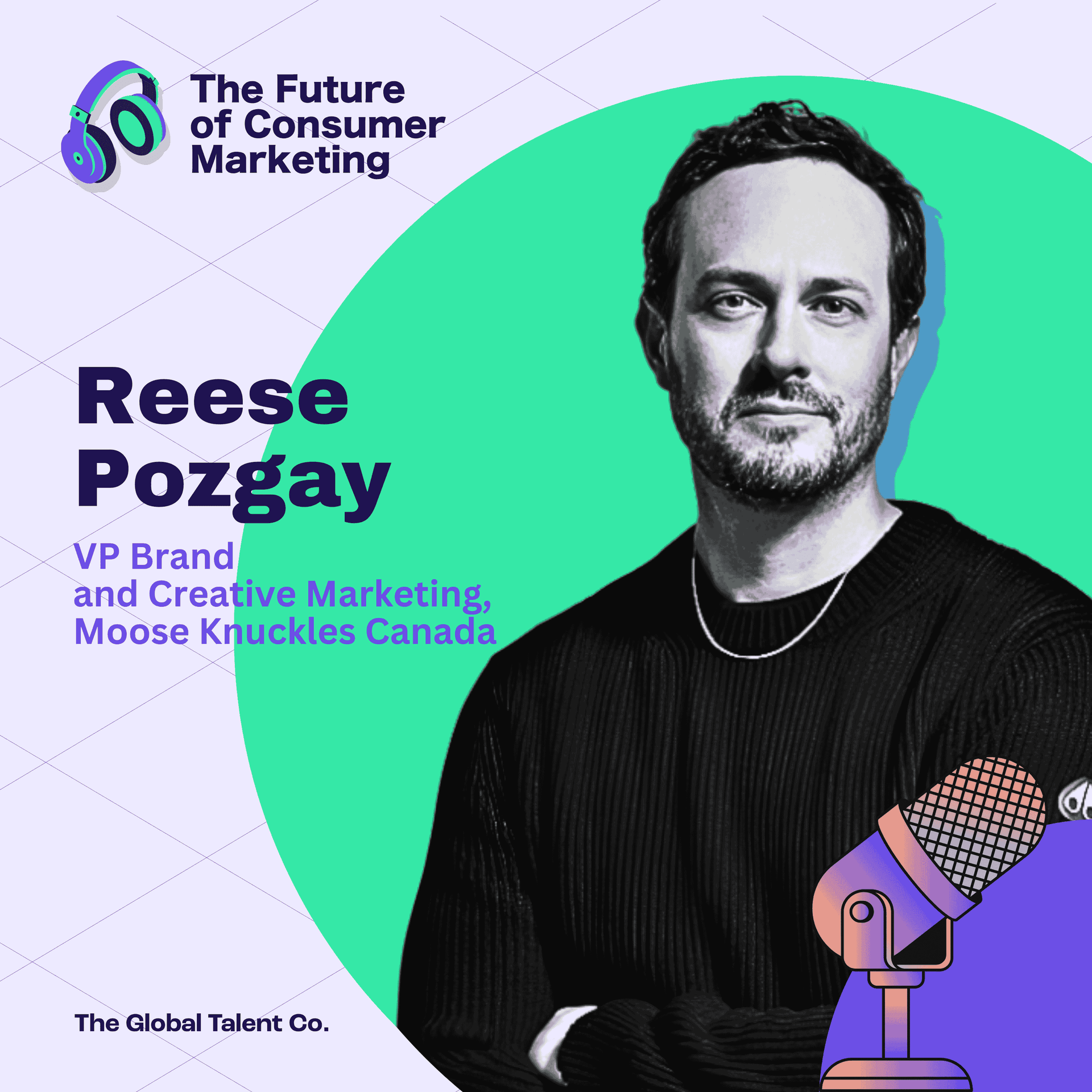
Reese Pozgay: If the First Idea Doesn’t Offend You, Push Harder
Host
Andres Figueira
Guest
[Reese Pozgay](https://www.linkedin.com/in/reesepozgay/)
Podcast Description
The podcast discusses the evolution and future of consumer marketing, showcasing industry insights and experiences from leading professionals.
---
Key Discussion Points
Career Trajectory
- Background:
- Started at Marc Jacobs, eventually became VP of Brand and Creative Marketing at Moose Knuckles Canada.
- Spent 10 years at Marc Jacobs, growing e-commerce from zero to over $100 million.
- Launched his own marketing agency, secured Google as a client before formal establishment.
- Led Revlon's first beauty TikTok campaign that achieved over 2 billion views.
Innovations in Marketing
- Daisy Tweet Shop:
- First pop-up shop using social media as currency, allowing entry via Twitter engagement pre-Instagram.
- Successful engagements across New York, London, and Asia.
- Street Mark Campaign:
- Guerrilla marketing initiative encouraging public remix and defacement of brand advertisements.
- Generated significant viral responses and community engagement through user-generated content.
Platform-Specific Strategies
- Content Strategy:
- Emphasized the need for tailored content for each social media platform.
- Criticized the "waterfall model" which leads to brand irrelevance.
- Social Media Trends:
- Anticipated shift towards off-feed and private networks like DMs and Snapchat.
- Engagement requires adapting content to fit unique platform features and audience preferences.
Influencer Marketing
- Micro vs. Macro Influencers:
- Advocated for micro-influencers due to their authentic engagement and community connection over celebrity endorsements.
- Highlighted the shifting perception of influencer marketing where engaging content is prioritized over sheer follower count.
Moose Knuckles' Brand Position
- Brand Identity:
- Defined Moose Knuckles as "cultural nomads" and urban explorers rather than direct competitors to Montclair or Canada Goose.
- Aimed to blend luxury with humor and irreverence, maintaining authenticity and edge.
Creative Philosophy
- Creative Standards:
- Promoted a daring approach to ideas: “If the first idea doesn’t offend me a little bit, we haven’t pushed hard enough.”
- Adapting to Change:
- Stressed that social strategies need to evolve every six months to remain relevant.
Future of Marketing
- Evolution of Social Media:
- The need for brands to engage authentically in a saturated market.
- Anticipated return to more private, personalized interactions on social platforms.
---
Key Takeaways
- Respect the Platform: Tailor content to the specifics of each social media platform for better engagement and community building.
- Dare to be Different: Pushing boundaries in marketing is crucial for standing out in a crowded landscape.
- Community Engagement: Building genuine relationships with audiences (not just followers) is essential for brand loyalty.
- Adaptability: Brands must be ready to evolve their strategies based on platform changes and audience behavior.
---
Closing Remarks Reese Pozgay's extensive experience highlights the dynamic landscape of consumer marketing, underscoring the importance of authenticity, tailored strategies, and a willingness to innovate. As brands navigate the complexities of digital engagement, the insights shared in this episode offer valuable guidance on how to connect meaningfully with consumers.
Listen to the episode for deeper insights and strategies from Reese Pozgay's remarkable career.
Written by AI. May contain mistakes. Listen to the episode to check what was said.
Chapters
Tap a time to open that second in VOIntroduction to Moose Knuckles Brand Philosophy
0:00 to 0:48
Learn about Moose Knuckles' approach to blending luxury with irreverence in their branding.
“It was made to withstand Canadian tundras.”
Rhys Pozgay's Journey in Fashion
1:38 to 4:06
Rhys shares his unconventional path to becoming a leader in luxury fashion marketing.
“So I kind of came in, you know, I always like to start.”
Innovative Social Media Campaigns Pre-Instagram
4:06 to 6:44
Explore Rhys's ground-breaking social media marketing strategies before Instagram's rise.
“Specifically, he kind of built out that end, brought photographers, videographers, everyone internal, merchandisers, customer service, you know, what have you.”
Leveraging Instagram for Fashion Marketing
6:44 to 10:50
Understand the early adoption of Instagram for fashion marketing and its implications.
“I've got another example I could share from Instagram once it happened.”
Creating Unique Campaigns Across Multiple Platforms
10:50 to 14:00
Learn about the importance of tailored content for each social media platform.
Understanding Consumer Engagement on Social Media
14:00 to 15:00
Explore how brands can create unique experiences across different platforms.
“And like as a consumer, as a user, someone who loves TikTok, doesn't love Instagram, does go on both, whatever it is.”
The Evolution of Marketing Agencies
15:00 to 18:00
Learn about the shift from traditional marketing to a 360-degree approach.
“And then also, you know, just respecting the consumer there, right?”
The Journey to Revlon and Digital Transformation
18:00 to 22:30
Discover the impact of digital transformation in the beauty industry.
“Like, I hated the old agency model, whereas you get three images, one long video, and like, that'll give you your three magazines in the video.”
Luxury Branding and Authenticity at Moose
22:30 to 26:10
Understand how Moose balances luxury with authenticity and irreverence.
“But I like how you mentioned that, yeah, you want the brand to differentiate itself from these other ones just because you're not taking yourself too seriously.”
The Shift to Micro-Influencers
26:10 to 28:02
Examine the rise of micro-influencers and their effectiveness in marketing.
“Influencers are like I'm just watching and then suddenly they just slip an ad in there and I'm like, I fell for it.”
Show all 13 chapters
The Power of Micro Influencers
28:02 to 29:18
Learn why micro influencers are more effective than major celebrities in marketing.
The Evolution of Social Media Engagement
29:19 to 31:19
Discover how social media dynamics are shifting towards private engagement and authenticity.
Conclusion of Insights
31:20 to 31:32
Reflect on the insights shared and the importance of genuine connection in marketing.
Transcript
Automatic transcript. May contain errors.0:00Reese Pozgay:We make the best clothes. It was made to withstand Canadian tundras. But also, we don't want to take ourselves too seriously. We're okay with a little humor. We're okay with the edge. We want it to be irreverent. Your marketing philosophy, has it changed? Our goal from the day the founder started it. How do we add edge in our original brand ethos a bit, but also our product is elevated. We're luxury, you know, so how do we find our way into that lane? Have you been the one that has kind of installed this new perspective of how to see the brand since you arrived. There was a little bit of a gap in the middle where we kind of corporatized it.
0:34Reese Pozgay:We lost a little bit of our edge. We got a bit more structure and we were big, right? Because we're international now. We're global. We're a massive multi-hundred million dollar business.
0:47Hey, everybody. Welcome to the show. My name is Andres Figueira, and I'm going to be your host for the day. This show is brought to you by the Global Talent Company, helping fast-growing teams hire exceptional remote talent from Argentina, South Africa, and beyond. We connect companies with world-class professionals who bring skill, reliability, and a global perspective to every role. And just for our listeners today, we're offering an exclusive 10 % discount on your first hire. All you need to do is visit globaltalent.co, click start hiring, and mention the podcast listener discount when we reach out.
1:21And today with me here, I am speaking with Rees Posge, VP of Brand and Creative Marketing of Moose Knuckles Canada, a Montreal-based company that creates exceptional luxury outerwear. So with that said, welcome to the show, Rhys.
1:37Reese Pozgay:It's a pleasure to have you here, man. Pleasure to be here. Great to meet you. Likewise, likewise. And just so that we can hit the ground running and make sure we get the audience a bit more in context, Rhys, would you be able to tell us more about your background and how you came to become the VP of Brand and Creative Marketing at Moose Knuckles? It's a hairy road, but a good one. So I kind of came in, you know, I always like to start. I came to New York saying the one thing I'm not going to do is work in fashion. Of course, fast forward pretty quickly, I did. But I kind of came in through an admiration for someone named Robert Duffy, who was the original founder of Marc Jacobs with Marc Jacobs, but literally picked him out of school.
2:13Reese Pozgay:They started the company together. My dad kind of put me on to him saying, you know, he's he's a business guy. He's in creative and fashion, but he created contemporary with Mark by Mark and took this luxury framework to kind of make it more mass and, you know, really created a multi-billion dollar business and amazing thing. So I kind of went in trying to get to get to his lens and I kind of swallowed the ego. I answered phones for a little bit. I did catch his eye and basically became his traveling assistant for one month. he kind of saw my value and where I was coming from. And then I became he and Mark's kind of business manager for a while, which was, you know, an incredible impactful time in my career where I went from, you know, being broke in New York, calling my dad to help me get the extra$50 to pay my rent to all of a sudden I'm in this suite in Paris going to fashion week, working for Louis Vuitton and Marc Jacobs.
3:01Reese Pozgay:And, you know, it was an amazing ride. Long and short, I emerged from his office and kind of was given three departments to start so I took over e-commerce from a branded to an e-com site from e-com to a re-platforming with demand where to international you know zero to 30 million 30 to 100 million plus um in just a few years at the same time though I was also given social media which we were kind of starting from scratch this was pre-instagram twitter and facebook to start um and then also special items which was our third collection which was kind of you know it was supposed to be partially our cheaper items but people who know we had something called the junk store totes tees lipstick pens everything in between umbrellas but also collaboration skateboard surf bikes we'd rip carpets off of the runway make bags out of charity initiatives we would do sustainability by reusing old fabric to make things so a little bit of everything I always like to start there because that was really where my career kind of changed indefinitely because uh you know it was honestly kind of I was put in an omni-channel position because special items was only in our retail store so I was really close to retail e-com is e-com and then social media for us was a playground in between the two um so it was omni-channel before omni-channel was a thing frankly and then that kind of became like the road to my you know progress, I guess, where we had a very small team, it got really big as e-com became very important.
4:32Reese Pozgay:Specifically, he kind of built out that end, brought photographers, videographers, everyone internal, merchandisers, customer service, you know, what have you. Social obviously also expanded from kind of a small one person game to community plus posting plus operations to everything it is today. And then from one platform to two platforms to 10 platforms to Snapchat filters to geotagging, you know, whatever it may have been at the time. I'm hearing you out and it's just crazy. I'm just like thinking, what would have been working with social media be like before Instagram? It's like, it's inconceivable to me because I can't even imagine.
5:11It must have been like just experimenting with Facebook and see how many clicks you got, how many likes or anything like that.
5:15Reese Pozgay:To this day, my favorite, probably my hit where my kind of like personal career got a little bit of fire and traction. It won a lot of awards. We did it so many times. We did something called Daisy Tweet Shop, which I still talk about. And I would like to do a similar thing in the world today. But essentially, we were the first company ever to exchange. I mean, the first anything ever to exchange social media as currency. So we were going the traditional route. It was, you know, we're going to launch a new fragrance. We want to do a pop up and like some ads and whatever. But the challenge was like, how do we make it cool or how do we make it different?
5:48Reese Pozgay:And so essentially you couldn't get into the pop-up without having hashtag and tagged basically the brand, right? You couldn't get your nails done there from a celebrity nail artist unless you pushed it to five friends and then they pushed it. And you kind of had this stacking point to your system. We had custom coffees. There was art on the wall. There were celebrities. There were photo booths. All of it was unlocked by literally tracking this engagement. And we were really early on that game in the early days of hashtag and how do we gamify it? and it was one of our most successful things ever way beyond what we would have spent on an ad spend our EMV, our ROI was through the roof we ended up doing it so many times that I just wanted to die like please stop redoing it, it's gotten sad now but it was a success, we did New York, we did London then it's in Asia and then we ran it back with the next one and eventually it got a little sad where it's like alright we can come up with a new idea guys but that was pre-Instagram right it was a very different time i love that and it's like it's it's a very futuristic way of thinking about how to leverage social media because it's enticing people to do the organic marketing by just making sure their friends retweet they share it everything like that but it's by their own will it's not like the brand is forcing them it's like if you want these benefits just make sure to share like and subscribe i mean and that and that was our sweet spot right like Luckily, I had a lot of leeway from Robert to test and learn and do things.
7:14Reese Pozgay:I've got another example I could share from Instagram once it happened. I love the story of when we started Instagram because, frankly, and I'm sure that I shouldn't even say this one, but I got kind of the call from LV, I won't say who, but very, very high up on the pole, kind of saying, hey, we heard you're doing Instagram. I don't think that's a good idea. We don't want to lean in there and invest. No, fashion's not going to do Instagram. It's not going to be a thing for luxury fashion. And luckily, Robert said, you know what? Keep running. Let's see how it goes. You know, like, let's let's give it a little go.
7:45Reese Pozgay:Right. And we did. And we were kind of authentic before authentic was now the buzzword because we didn't have the money. We weren't getting the ad shoots. We were shooting employees. We had our videographer and photographer always traveling with us. Wherever we went, we would take that store in. But it got this like really authentic, natural nature that was, you know, fast forward five years what everyone's trying to do, you know. And I will kind of pause on that one example I had. We had another one called Streetmark where it's exactly what you're saying, right? Hashtag Streetmark. I do miss hashtags.
8:17Reese Pozgay:Those were good games to play. Yes. I used to love creating hashtags. And that's like they're not that cool or not that big. You can use that much. I just feel old. Yeah, the search comes in, all the things. But we did something called Streetmark. And that was post-Instagram after we kind of got the pass. And I was like, oh, wow. I guess Instagram is going to work for fashion. We better actually amp that up and like do it, you know, but we, um, we kind of lost our budget. Frankly, we did like a very big campaign, celebrities, you've got, you know, a celebrity videographer doing it, massive set builds, the whole thing.
8:52Reese Pozgay:But I like these examples. Cause this is what I always found as my sweet spot is like think 360, think IRL and digital. And like, I was able to do it early, which really built my kind of ethos going forward. But we did something called street mark we took the little money we had and we did gorilla wild postings around five cities in the u.s we sent out the talent for free like luckily they were all on board you know everyone from beth ditto to uh manly manson and like whoever it would be right okay katie grant in the campaign mark himself they went out they spray painted those billboards and we told our community go nuts we don't want we don't care if you mess up our ad we want you guys to go out there and do it right so we got this amazing response from the world like beth diddle's face has been replaced with ursula there's collaging there's photoshopping you know bet midler's going and putting a mustache on herself like this incredible virality around it and at the time it was really when the first pivoted instagram was happening where you know it was kind of going that more authentic try not to just repeat your ads here that's not what it's made for it's supposed to be human to human so the no-no at the time was putting ads on instagram and it was just kind of coming to light but we got this network that basically was posting our ad to instagram on our behalf with the hashtag and maybe they tweaked the face maybe they cut out the pieces and made a collage like whatever but it was incredible and we got i think we got like tens of thousands in the first two weeks at the time we were one of the big players people just wanted to get an app mention, you know, and get a little extra following going.
10:28Reese Pozgay:They were featured on the site. We broke the internet with it really. And I hate that term, but it was like a big thing. And our EMV was huge, right? Like we kind of made up what we lost in these million dollar ad budgets on doing something that was just groundbreaking different and, you know, respected the platform. That's always been like one of my big things. It's like, whenever you have a brand come in, like, we want to be on tic tac throw tic toc throw the ad up you know and it bombs it's like we didn't respect the platform it's about music it's about transitions um we had a similar situation when i was at revelon i know i didn't kind of go through the whole spiel but but where that was it where we won tic toc where they're like all right you try now right it didn't work when we kind of did the ad thing like you try we did custom music we had three transitions the song itself was about bold bolder boldest the idea was with each one of those bold you kind of have a makeup look you know the transition bolder it's louder the music's louder the lights are getting crazier at the end you're like crazy full makeup hair right we were the first beauty brand ever hit two billion views we did it in two days um we beat elf at that time which i was quite pleased with because everyone's competing against elf is the benchmark they're the ones crushing it eyes lips face they made the music video and they are the best make no mistake to this day they're an icon for anyone looking at it they know how to test they know how to risk and they're smart enough with theirs as the example that when the music picked up and it became a viral audio on TikTok they made the music video right invested more instead of pulling back going to the next campaign they said let's make the music video let's do it for YouTube now let's get it off of TikTok so that's the stuff that I love is like let's connect the dots let's pour gas on it and not try to like sell but like let's lean in where we have viral moments you know what i mean exactly it's like it's creating a bit of like lore around the brand and giving the consumer and and the audience like something they can live through and it's not it's just like if they like the song on tiktok and they want more give them a music video they'll put it in their house and anything like that like if they're loving it you know elf did a very good job with that now i continue to tote them because it's like they literally got on board early where it's like ask them what they want to see what colors do you want to see what product you want to see next and then they followed through with it and like then all of a sudden it's not like buying from you know the the demon corporation it's like oh wow it's real community right like everyone uses the word community but it's not just growing a following it's conversing with them it's creating places where they can feel heard as they want to show up for the brand, you know?
13:08Reese Pozgay:So I think they do a very good job with that. And I haven't thought about this, like in the way you said it, and it's, you got to respect the platform where you're going to upload the different, I don't want to say advertising, but the videos and what you're creating as your campaign, because it's so true. You can post a video on Instagram and they just put the same one on TikTok and it might work in one of both platforms, but it usually doesn't unless you change the dynamics to what the platform is. I think that's the biggest hurdle that marketers are going through right now, if I'm being honest, like I go in everywhere and it's like how do you have seven channels these days right like nobody it doesn't have facebook instagram tiktok it may or may not have pinterest they may or may not be tapping into lemonade or reddit or whatever but you have a lot of platforms right biggest mistake man brands make is they do the traditional build here's the campaign here's the secondary here's the social whatever which a lot of people aren't even doing that but you kind of have this waterfall across everything And like as a consumer, as a user, someone who loves TikTok, doesn't love Instagram, does go on both, whatever it is.
14:11Reese Pozgay:If you're getting the same experience, why would I follow you twice? Why? Like what's the purpose, right? It feels a bit half assed. It's like they don't want to finish doing the job right. And the consumer feels that. And it's like, if you don't care enough to make it fun for me in these different channels, why should I care enough to even go buy something if it's not the effort that that deserves my attention? Yeah. And, you know, and it's hard, right? but markers is not cheap if i'm being honest and it's in the post right it's like how do you how do you edit something for short form video long form video carousels stories you know strategically bts goes here influencers go more here you know what i mean like there's a whole hurdle to it that i get why it's the biggest hurdle for people but i do think like the grail is where you're treating each channel individually creating content specifically for each one and And then also, you know, just respecting the consumer there, right?
15:05Reese Pozgay:Like no one, I know there's some trending in TikTok and like, unfortunately, eventually every platform ends up just trying to be the other one and you're chasing the dollars once the, uh, once the revenues come in. But, you know, I don't think TikTok's made for carousels of images, even though they're doing that now, as long as there's an audio on it, but you know, put video on TikTok, put images on Facebook, start doing both on Instagram. Like you got to figure out how to hit the shuffle a little bit. And there may be some overlap, but not, you know, it shouldn't be a lot. TikTok for me is just weird.
15:35Like I post music videos and me playing guitar and stuff. The one that's gotten the most hits is one of me fishing. And it's like, okay, so people want to see me fishing? I did not expect that. Let's see if I go through that route. But you got to know how to pivot once you see what the audience wants. And then you just start, what's it called? Rolling with it.
15:53Reese Pozgay:And the platforms pivot, right? I mean, I think the craziest thing, especially with a big brand, you know, I hate vanity metrics. it's always been a thing where it's like oh this worked just do that over and over and over and then all of a sudden your metrics are start to tank and it's like what's happening and it's like the algorithm's changing the platform is changing ours isn't feeling new anymore you know like you gotta constantly be changing with social and like it's true you know i love a good social strategy but if you're not changing that every six months you're dead like it's it's gonna be ill you're Like you're dead in the water, right?
16:28The knuckle of the fittest, man. You got to adapt and keep going. Okay. So at this point in the story, you mentioned that you did a campaign with Revlon, but we haven't arrived to Moose Knuckles yet, right?
16:39Reese Pozgay:We didn't arrive to Revlon. I'll be quick on that. So I left Mark and had, by accident, I say, but it ended up last for four years. I basically started my own agency on accident. I went to Mark 10 years. It kind of was just time, honestly. I've got nothing but love for Mark. My best learnings were there, but, um, you know, I kind of reached the tip of my pyramid there and it was time I left there. And coincidentally, I had Google was my first client because they called and they kind of were like, you have an agency or you have a LLC. Right. And I'm like, of course I have an LLC. And of course I got right off that call.
17:14Reese Pozgay:And I called my buddy who's like a college buddy who is a lawyer. And I'm like, I need an LLC yesterday. And he's like, all right, we'd be your social name. And we did it, you know? And I'm like, yeah, here's my LLC paperwork. You're the first to see it. Like, take it, you know? But yeah, it kind of became my agency. I found like a nice little niche doing what became my sweet spot at Mark, which was this kind of like surround sound 360 marketing, like whatever you're doing on social. I want to also be thinking about what the influencers look like, what the ads look like, what the site looks like, the XP page, so that like wherever you come in, you're going to be getting a similar story.
17:47Reese Pozgay:Now it should be different content for each platform in each place, right? The way we were talking about it was a little more commercial, one's a little more ground level. That was the start of my agency. And what was more interesting is all these other agencies that I was pretty terrible to at, Mark, being like, this isn't it. You're not the future. Like, I hated the old agency model, whereas you get three images, one long video, and like, that'll give you your three magazines in the video. But you have like, at max 10 to 20 assets, right? The age of social media, I need 200 to get through a season, right?
18:17Reese Pozgay:I need on set. I need making of the set. I need BTS. I need interviews with everyone. I need, you know, how do I bake out a whole season if I'm basically at that time it's changed a bit but like spending all my money on this one campaign you know how do we make that work um and that was always where I was really hard on agencies like the traditional doesn't work for me anymore I need to know what the influencer activation is what's the second small shoot we're going to do for social how are we going to do all the things right it's adapting it's adapting it and understanding that the cadence for posting and for creating media with social is just a lot faster it's a lot faster than what it And right again, at this point, polish was bad.
18:56Reese Pozgay:More authentic was getting good. It's like, this isn't working for me either. So it ended up being funny enough that all these agencies came to me and they say, okay, come and do that for us. We're still going to do the hero campaign. You just tell her like social influence, like build that 360 thing you like and like do that. So I had some great partners there from Starworks to map projects to agency love, um, got to I work with a lot of amazing clients through that. I Renew Earth. I'll enjoy. I stayed with Cody and Mark Beauty a little bit. And then I was acting CMO during that time for Dr. Paracombe's hydrogen water launch.
19:32Reese Pozgay:Oh, great. To kind of get them off the ground and bake them in. So that was the big step. And then that was where I went to Revlon. And they essentially came and said, like, we're going to take out all your agencies. Come in and be the head of digital transformation here. That's where it started. Kind of ended up being head of IMC there. But again, bringing that 360 thinking kind of absorbed Almond or Revlon and then became a little bit like a digital guru across our org and our other brands. I kind of left there a couple fractional CMO moments. I was head of marketing for a smaller fashion brand, which was a good learning for me to kind of take the other side coming out of the massive red tape of Revlon.
20:09Reese Pozgay:And then I landed here at Moose, which is really a perfect fit for me, but kind of with the mission of how do we add edge and like our original brand ethos a bit, but also our product is elevated. We're luxury, you know, so how do we find our way into that lane? You know, and I came as initially a consultant to help kind of with our fall winter 25 campaign. But then we kind of decided that it made a good fit and whatnot. And there was a bit of like an executive change coming in here. We've got a new CEO, new head of merchandising, a couple of new designers. And then myself and my counterpart kind of making up the marketing lane where I'm on the brand and creative end.
20:46Reese Pozgay:Everything the consumer kind of touches. And he's more on the kind of like traditional CMO marketing, the operations, like leading all of those pieces as well. I understand. I understand. And now that you're with Moose, Reese, has then like your marketing philosophy, has it changed? or are you bringing all your learnings from all the experiences you told me and trying to just extrapolate that and use it here? Yeah, I mean, that's where it's the perfect fit for me. It's kind of back to my sweet spot. Like, you know, I use the language, I'll curve my language here since we're on camera, but like, I like breaking things, right?
21:21Reese Pozgay:I like new models. I like creating the things you kind of heard out was going at the other examples I gave, but it's kind of that, that ethos of mark again where like the culture is strong the community around us is strong and our job our goal from the day the founder started it is that we don't want to be montclair canada goose we don't want to be that kind of luxury we don't really see that it's kind of bs right okay no one wearing their montclair is going to hike in everest it's just not happening so where we found our sweet spot is like yeah yeah we make clothes like we're from canada we say canadian cold you know uh it's about actually being able to battle those elements like if you've been to montreal it gets cold man and you want a jacket for real life right but at the same time you know it's drinking it's having fun it's living in it it's city life and that's where we kind of found our niche around these like cultural nomads like metropolitan city explorers right and the idea is like this is real it's brick in new york but i've got my jacket that i could still put on over anything and be warm enough to go day to night to go out you know i don't really freak out you know at least our consumer the way we see it like someone scuffs against a wall and their montclair it's the end of the world i've been i scuffed my montclair for us that's intended right the wobbly is and some uh has some drinks i'm not afraid to spill on it it's waterproof like lived in and the product sorry the price is valid by the performance in the reality of like we make the best clothes it was made to withstand canadian tundras but also we don't want to take ourselves too seriously like we're okay with a little humor we're okay with the edge we want it to be irreverent that's where we stand and like the rest of it gets a little bs where it's a bunch of the same influencers at the same dinner in a different jacket we're not looking to be that we're looking we're out here looking to break things um and to you know i i talk to our team a lot i'm stealing this a little bit from my counterpart but i've kind of absorbed it myself but like the thing we like to say internally here is like if the first idea doesn't like offend me a little bit then we haven't pushed hard enough right i love i love that measurement it needs to offend just a little bit yeah exactly like the first one i should be like all right let's bring it down just a nudge like you know i'm seeing a lawsuit here but we're close okay you know like I think that's the game we're playing.
23:47But I like how you mentioned that, yeah, you want the brand to differentiate itself from these other ones just because you're not taking yourself too seriously. But that also matches what we've been talking about with all the social media and everything like that. It's authenticity. It's making the people feel like the brand really is talking to them, living with them, and helping them out in their day to day. And I totally get that. And have you been the one that has like kind of like install this new perspective of how to see the brand since you arrived? Or was this already happening at Moves before?
24:17Reese Pozgay:I wouldn't take full credit. I came in a little bit into the transition, right? I think, you know, there was a little bit of a gap in the middle where we kind of, I would say the word corporatized that we lost a little bit of our edge. We got a bit more structure and we were big, right? I mean, we've like shifted some things. You know, we think of Canada is always going to be part of our brand ethos. but it's kind of become the fourth tier instead of the first one because we're international now we're global we're a massive multi-hundred million dollar business like you know we've got we've got uh but the thing that stands is that we're like city dwellers right we are those urban explorers so yes we're defended by the reality of canadian cold but our people are everywhere now right we're big in asia we have a huge eu community like it's not everything can't be like a hockey leaf in the You know what I mean?
25:03Like a game in the Canadian League. We got to balance our reality a bit, you know? I feel that. I feel that. But it's tested. It's tested in Canada, which makes it very valuable and very trustworthy. Because I do know the Canadian cold is intense. Like it's something that... I live in Argentina, so I've been down to the south in Ushuaia, like just before the last town before Antarctica. So I have felt cold, but what I've heard from Canada is like crazy.
25:32Reese Pozgay:But to wrap up that last one, I wouldn't say I brought it in. I think the need was identified. I think that I kind of brought in to help find our way there because we are trying to get that irreverence, but we're balancing two things, right? Like we're luxury. So we want to elevate. We want to make sure we are in that lane, but we don't want to lose our edge. We don't want to lose our actual voice, our tone, and we're not looking to be everyone else. So if they've done it, we actually want to do it better or a different way or a completely different lane. Like if it's this is how you're supposed to do it, we're going to probably go left, you know.
26:05So I like that irreverence, as you mentioned, because that's what makes a brand stand out in between so much noise that can be found nowadays with everything that's on social media. Like everything's an ad. Influencers are like I'm just watching and then suddenly they just slip an ad in there and I'm like, I fell for it. I literally just fell for it.
26:23Reese Pozgay:I mean, influencers are the craziest because, you know, we built, I built the influencer from scratch at Mark. We kind of really built up that department within what we were doing at Revlon. But, you know, that swung in such an interesting way. At the beginning, influencers came to the scene because they weren't celebrities, because it was more real. You've got Leander Medin and it's not, here's the full kit and it's the pants, the shirt, the jacket, blah, blah, blah. You know, no one's buying the full kit off the runway that way. It just doesn't happen. Instead, you're this nice, refreshing world at the beginning where it was like, this is my vintage T-shirt from a rock concert.
26:58Reese Pozgay:I've got my favorite holy jeans and I'm wearing my Gucci jacket. That's amazing. You know what I mean? But it's that high load that made it so amazing at the beginning. We slowly slid into influencers of business. All of a sudden, you get hashtag paid again. And it's like an aversion. And I do think we're just maybe coming out of that where now that realm is dying a bit. Not like there's still a lot of it out there still might be made. But the people who are crushing it are figuring out how do I make how do I entertain? How do I make content like people are now the same way back then you were reversed to the ad with a celebrity because it wasn't real.
27:35Reese Pozgay:Now it's kind of like, oh, hashtag ad. It's like, you know, when I get ready for bed, I like to brush my teeth brought to you by Crest. You know, and you're like, what are we talking about? this isn't natural anymore you know like this is bizarre it's like true with joe you know so i think it's nice that we are getting back to this world where it's like it became niche influencers it gets real it's not about the following it's about the engagement like if you've 10 that like i to this day i was really big on micro influencers early give me a hundred micro influencers with dang an engagement over like one massive awareness person that i'm paying a ton for and has 10 million followers every day i would rather like hit a bunch of networks and like people who are like really talking to their community than somebody who is a bit of a billboard but no one's converting from that anymore yeah and you can't you don't even know if it's the bots paid to have even a higher count of followers or anything like that like i also i really like micro influencers i feel it's the real nitty-gritty like social media in depth you fell into the wormhole and it's like you find this person that has their own community and it's like crazy 100 i mean i feel like i need new talking points but when i was kind of first shifting my strategy to that the idea was like who do you buy from like in my room i would go to it i'd be like ceo who do you buy from you know like you need new toothpaste is it because you know jacob allure he told you it or is it because your like sister was like i got the best toothpaste you're gonna love it right it's amazing you want to be here right and that was where the micro really came is that they were authentic conversations like you look at a big celebrity especially with women it's difficult because like how many creepers are just in there like hoping to see some cleavage or something it's horrible but like like the audience metrics don't mean much anymore because like you know who's actually there are they buying is it in it or is it just someone trying to like creep or like follow the celebrity zeitgeist or whatever you know what i mean no no i get that i get that completely man and and it's it's just crazy how it has evolved so much with social media that nowadays everybody's just trying to become a personality it doesn't matter what but as long as you start creating this engagement it then like it leads into this um possibility of a brand reaching out of somebody coming and telling you hey your community you formed is valuable let me then give you this product to see if you can push it but i feel that micro influencers now have this extra challenge where they need to create a storyline they're like many many filmmakers they need to make it entertaining and honest in order for it to work if not it'll just be scrolled over you literally have to be a director or producer all that it's hard out there on content creators i don't envy it's like tough out there but like some of them crush it and the ones who stay in their niche are great but i i think the interesting newest trend is actually what's coming off these right i think that like we're back in the dms i think you're gonna see a resurgence of snapchat broadcast channels like the one-to-one you know especially with the younger generations and gen alpha and all of them like they don't want to be posting everything onto the feed they want to be in like a sweet little network of their friends where they're sharing every single thing but it's off the grid right like like where is that's our private conversation i think you're seeing that with niche too where like you know it's gonna be a weird world because everything's getting monetized between like subscribe to my instagram page or get on my subreddit or whatever it is but i do think you're gonna find authenticity kind of coming back and the real authenticity not that word where it's like brands make it less polished seem more real the actuality of like you know the bullshit doesn't sell anymore like we need to actually just be ourselves like people want to be people want a personality they don't want a slew of people trying to be the personality that they think is going to perform best on social media based on trends right now and reese i'm noticing that we are at time already it flew by without me even noticing i know that was i know we're just getting started but before i do close this out man i did want to give you the chance to let anybody who's hearing us know um like i i know they were very interested in your story but since we also talked about moose knuckles how could they go about learning where they can find your products seeing if they like anything and how they can buy it what countries are they available in just as if for anybody that is curious i mean we're pretty much everywhere internationally so you can tap in moosenuckles.com moosenuckles.ca wherever you are um and moose knuckles canada across most social so at moose knuckles canada i would say follow instagram for the fullest expression while we continue to build um but tick tock all of the things um and you know keep your eyes on the streets we're going to be hitting experiential and irl pretty hard going forward here so a lot of things coming um so i would say if you're in new york montreal um really anywhere a lot of europe we're going to be uh we'll be out there so keep an eye keep an eye out because it It should be surprising and maybe just a little offensive.
32:43I'm dying. You should come to one of those campaigns down here in Argentina, man. But amazing, Reese. Thank you so much, man. And with that said, we really appreciate you hopping on the show with us today for providing your insights, your learnings, telling us your story, man. It really was a hell of a ride. And it's so cool where you are right now. So just wanted to say thank you for that once more. I appreciate it.
Read the full transcript
33:04Reese Pozgay:Thanks for having me. No, no problem at all, man. And to anybody who has been here with us listening and seeing everything we're talking about, we really appreciate you being on the show with us as well. We hope that you keep returning to learn about all the different personalities that we're talking to and all the different industries that we're learning about. So with that said, have a good one.
From the publisher
Reese Pozgay spent 10 years at Marc Jacobs building ecommerce from zero to over $100 million and inventing campaigns that used social media as literal entry currency — before Instagram existed. After launching his own 360 marketing agency (with Google as his first client, secured before he even had an LLC) and serving as Head of Digital Transformation at Revlon where he led the first beauty TikTok campaign to hit 2 billion views, he joined Moose Knuckles Canada as VP of Brand and Creative Marketing. In this episode, Reese traces the full arc of his career through one recurring conviction: respect the platform, push the idea until it makes someone uncomfortable, and never mistake audience size for actual community.
Topics Discussed- Career trajectory: From answering phones at Marc Jacobs under Robert Duffy to VP of Brand and Creative Marketing at Moose Knuckles Canada
- The Daisy Tweet Shop: the first pop-up ever to use social media as literal entry currency, pre-Instagram, repeated across New York, London, and Asia
- Street Mark: guerrilla wild postings across 5 US cities that invited the public to remix and deface the brand’s own ads
- Why every social platform demands its own content strategy — and why the waterfall model destroys brand relevance
- At Revlon: building the first beauty brand TikTok campaign to hit 2 billion views in two days
- Building influencer from scratch at Marc Jacobs — and why micro-influencers with real engagement beat macro celebrities every time
- Moose Knuckles’ brand position: not Montclair, not Canada Goose — “cultural nomads” and metropolitan city explorers
- The internal creative standard: “If the first idea doesn’t offend me a little bit, we haven’t pushed hard enough”
- Why your social strategy needs to change every 6 months or you’re dead
- Where social media is heading next: off-feed, private networks, DMs, and Snapchat broadcast channels