In short
Purity Coffee’s “circular health coffee” approach—coffee as a health-optimized product—plus how the company grew into the Inc. 5000 for five straight years.
Guest backgrounds
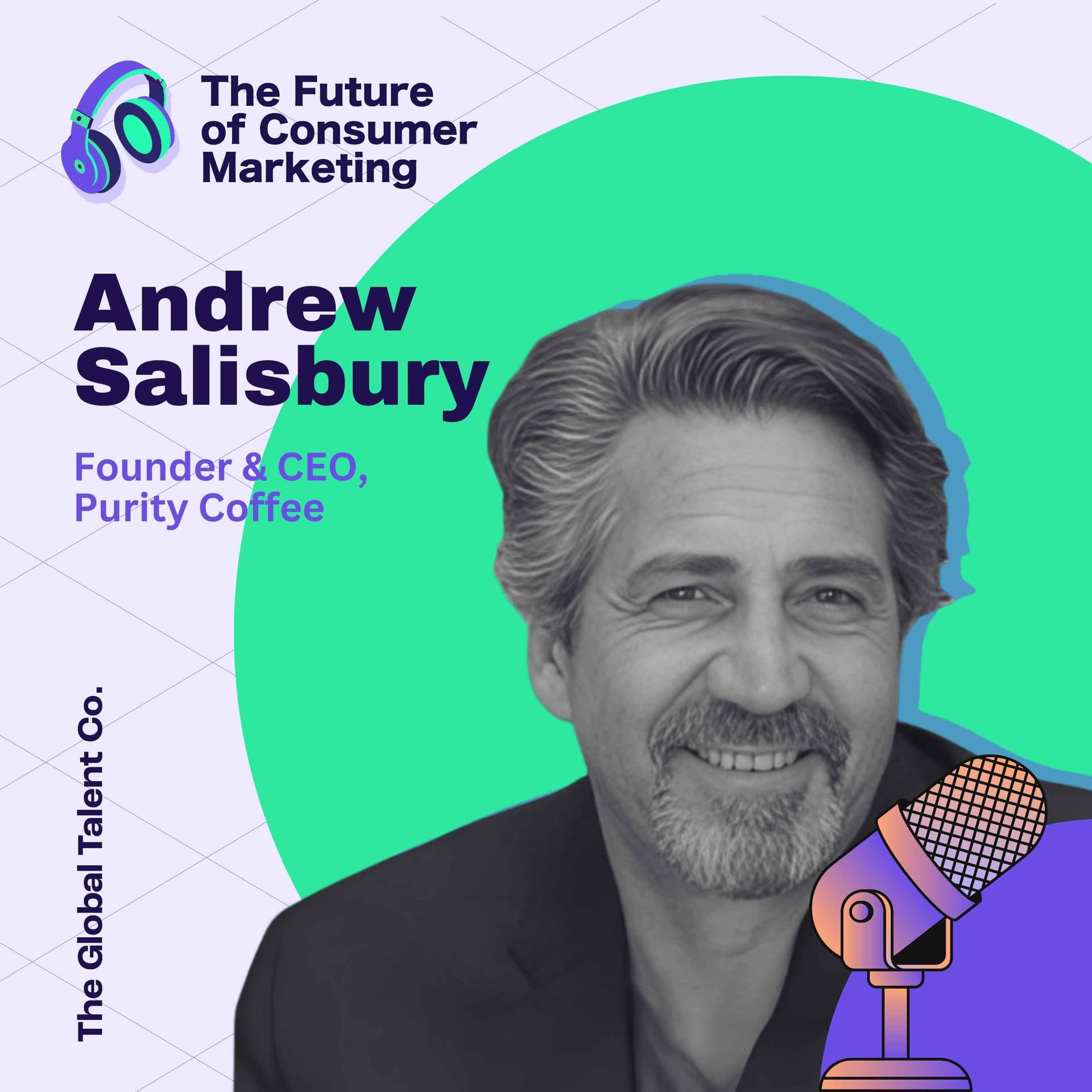
Andrew Salisbury, founder and CEO of Purity Coffee. Previously grew up in software and built/sold a B2B contact-center software business (sold in 2011; operated across 5 countries, installations in 13).
Key claims
Coffee is “one of the most well-studied foods” (20,000 studies); health benefits depend on minimizing negatives (mold/mycotoxins, heavy metals, pesticide residues) and maximizing positives (CGAs/antioxidants). Companies should test every batch for mold/mycotoxins (he cites ~$200 per container). Coffee chains optimize repeatable taste by over-roasting, which he says reduces antioxidants. Health is personalized (e.g., caffeine metabolizers; mast cell activation sensitivity).
Notable examples
51,000 testimonials (4.9-star average) and 8,000–10,000 Amazon reviews; partnerships with farmers via multi-year contracts and micro-lending; early retail via Air One in California.
Written by AI. May contain mistakes. Listen to the episode to check what was said.
Chapters
Tap a time to open that second in VOAndrew's Journey into Coffee
0:45 to 2:30
Andrew Salisbury shares his transition from software to the coffee industry.
“I was actually, I grew up in the software area, and so I started a business in Latin America.”
Health Benefits of Coffee
2:30 to 4:30
Discussion on the health benefits of coffee and misconceptions.
“And the challenge I gave her is what would happen if you made every decision based on health?”
Quality of Coffee and Its Impact
4:30 to 7:00
Exploration of how roasting and sourcing affect coffee health.
“Their lens is how do we make a drink that people will buy repeatedly that tastes the same in Singapore as it does in Seattle?”
Personal Sensitivities to Coffee
7:00 to 9:10
Understanding individual differences in coffee consumption and health.
“I was following Dave Asprey, reading a lot of stuff.”
Mold and Mycotoxins in Coffee
9:10 to 11:10
Andrew discusses the issues of mold and mycotoxins in coffee.
“But I think a lot of companies don't like to test for it because what it means is that if it's present, they have to reject the coffee that they're buying and then they have to improve the standards on a farm level.”
Positioning the Brand in the Market
11:10 to 13:10
Strategies used to position Purity Coffee in a competitive market.
“And was there a specific persona that you said that, yes, this demographic or this group is going to value and want to spend the money on, I'm guessing, a premium product?”
Building a Consumer Base
13:10 to 14:01
Andrew explains how they built a loyal customer base through product quality.
“So what we wanted to do, because it does cost us a lot more to go through, every decision based on health means there's lots of things that we have to do that the average coffee company doesn't do.”
Building a Coffee Brand on Quality
14:01 to 14:50
Learn how focusing on product quality and customer testimonials contributes to business growth.
“So I didn't know if anyone was going to buy coffee based on health, but I really wanted to make sure that we were doing something different.”
Defining Circular Health Coffee
14:50 to 16:04
Discover the concept of circular health coffee and its benefits for farmers, consumers, and the environment.
“If the product wasn't good, I don't care how good the marketing was, it wouldn't matter.”
Consumer Trends in Health
16:04 to 18:27
Understand how consumer attitudes towards health and wellness have evolved over the years.
“So the category that we're defining is circular health coffee, which is not just, so specialty coffee is a starting point.”
Show all 14 chapters
Challenges of Transitioning Industries
18:27 to 21:04
Hear about the difficulties of moving from tech to the coffee business and the learning curve involved.
“And then also, I think thinking back at this, I felt like I had the luxury to try something that I found was really interesting.”
Direct-to-Consumer vs Retail Strategy
21:04 to 22:23
Explore the balance between direct-to-consumer sales and retail opportunities for a coffee brand.
“to very sort of like, you know, you have to sell tens of thousands of bags of coffee to make the same amount of margin, you know.”
The Importance of Storytelling in Marketing
22:23 to 25:07
Learn why storytelling is crucial for differentiating a product in a crowded market.
“Yeah, Airman is definitely the most expensive grocery store that I've ever been in.”
Advice for Aspiring Founders
25:07 to 26:26
Gain insights on how to identify and solve significant problems in business as an entrepreneur.
“And I want to make sure that we're doing a good job explaining why that's important to other people.”
Transcript
Automatic transcript. May contain errors.0:00Brett Stapper:This show is brought to you by the Global Talent Co, a marketing leader's best friend in these times of budget cuts and efficient growth. We help marketing leaders find, hire, vet, and manage amazing marketing talent for 50 to 70 % less than their U.S. and European counterparts. To book a free consultation, visit globaltalent.co. Hey, everyone, and welcome back to the Future of Consumer Marketing. Today, we're speaking with Andrew Salisbury, founder and CEO of Purity Coffee. Andrew, what's going on? Great. Nice meeting you. You too. How'd I do on the last name? We were just joking about it. That's a tough name for Americans like myself to pronounce.
0:36Brett Stapper:How'd we do? Yeah, very well. That's perfect. That works. All right. We'll take it. We'll take it. How'd you end up in the coffee business? Tell us your story here. Yeah, it's sort of an interesting, I mean, sorry. I was actually, I grew up in the software area, and so I started a business in Latin America. And we were sort of, we had offices in five countries and installations in 13, and it couldn't be more different. So it was very large, software for call centers, for contact centers. So long sales cycle, 18 months or so, very expensive products. I knew my top 100 customers. To move into coffee was not a natural move for the company.
1:12And what happened was I sold my company 2011. It was basically sold the company to the manufacturer and then decided to take a year off. And in the year off, I traveled with my wife and daughter, and we just traveled around. But my wife started getting some health issues at the end, and everything worked out fine. But in the interim, she was drinking a lot of coffee and like a lot of us to sort of like motivate and get energy. She was drinking coffee. And as an English tea drinker, I was thinking like, you're not doing yourself any favors. It's one foot on the accelerator, one foot on the brake.
1:44You're really just forcing your body to do something it doesn't naturally want to do. And so that's when she sort of gave me the biggest challenge, which is, okay, if coffee is really bad for me, prove it to me and I'll give it up. And so just as like, and a lot of husbands trying to win a bet, I started to dig deep into the health benefits of coffee. And I was lucky enough in the end to invite to dinner two professors from the Institute of Coffee Studies in Vanderbilt. And I asked them, I said, okay, is coffee good for you? Is it bad for you? And they gave me this really long shopping list of all the health benefits of coffee.
2:17So it was the number one source of antioxidants, liver disease, type 2 diabetes, six forms of cancer, very long list of why you should drink coffee. but what they said was really interesting that there was no one company that was making every decision based on health and that's when sort of a light bulb went off in my head and I thought I didn't know if there was necessarily going to be a business at the end of this but I had the luxury of thought of saying okay I'm interested in this let me dig a little bit deeper and they introduced me to Professor Adriana Farrar at the University of Brazil in Rio and we spent about 18 months what started off as like just a one-month two-month consulting project ended up being 18 months.
2:56And the challenge I gave her is what would happen if you made every decision based on health? What would the coffee look like? What would it taste like? What decisions would you make differently? And I was just sort of curious if at the end of it, you could have a business that was health focused.
3:10Brett Stapper:Just so we can level set here, like how bad is the coffee? I drink from an espresso. I'll be converting to a customer of yours, of course, right after this call, but I drink Nespresso pods every day. Like how bad is that for me? The first thing is, I don't think it's bad for you at all. So the reason why I would say that is the coffee is one of the most well-studied foods on the planet. So there's 20 ,000 studies on coffee and health. Many of them are peer-reviewed studies, and they're all done at a time when nobody made the distinction about the type of coffee you were drinking and the brewing method you were using for your coffee and that sort of thing.
3:45So as a starting point, coffee is really good for you. Now, there are certain things that you know you probably want to avoid because you know those compounds are bad for you. And you know that there's things that you want to maximize because they're compounds that are good for you. So the starting point, I believe, is the coffee is very good for you. But it can be made better if you actively focus on minimizing the negative and maximizing the positive.
4:07Brett Stapper:But for a brand like Nespresso, like what is their coffee like specifically? Is that slowly killing me? Does it just depend for a brand like that? And if you don't want to talk about them specifically, we can say like the general standard coffee that most humans are drinking. Like what's wrong with it fundamentally? I think the most important thing is to understand the lens that a coffee company is choosing to look at coffee. So, for example, you've got the big coffee chains. Their lens is how do we make a drink that people will buy repeatedly that tastes the same in Singapore as it does in Seattle?
4:38And so the fix for that is over roast the coffee. So they would over roast the coffee so it tastes a certain way in whichever region you try the coffee. And the problem with that is because their lenses taste, what they're doing is they're roasting away the antioxidants in the coffee. There's some companies that don't worry about the negative compounds in coffee. So the mold, mycotoxins, heavy metals, pesticide residues. As far as I'm concerned, that I'm only going to eat organic, especially for something that I consume every single day for the rest of my life. I'm going to make sure it's organic.
5:08So I'm very sensitive to those things. But the sort of caveat is this, your body is sensitive to certain things. And there's some people like with mast cell activation syndrome that are very sensitive to just even the smallest amount of pesticide residue or mold or microstoxin. So they're very sensitive to the bad things. And we're the only coffee they can drink. There's other people who can tolerate it fine. So it really depends on your body. So they're really, I'm not trying to be sort of like tucous here, but I mean, it really does depend on your body because you might find you're more sensitive to other things.
5:40And some people are fast metabolizers of caffeine. Some people are slow metabolizers of caffeine, which means that I can drink a double espresso before I go to bed and I'm fine. Some people, if they have a coffee after 12, they'll stay up all night. So, you know, everybody is different.
5:55Brett Stapper:We were talking about that pre-interview that we're both wired up with these glucose monitors. You know, we don't have to eat. But just that alone of like this idea that like everybody is different has been fascinating where my wife and I will like eat the same things and she'll spike or I'll spike. But it's like, it is completely different. And that's just been, I don't know, I feel like for a long time, I just viewed it as there's like health and not health, right? It's like there is kind of like binary. But now I'm learning that it is so personalized down to the individual that it's like you can't really just take general advice.
6:23Brett Stapper:You have to like test and experiment for yourself. Yeah. And there are things I think generally we could say generally we should avoid. I mean, we think we should avoid pesticides and glyphosates and things like that. I think we should avoid mold and mycotoxins. But avoiding stuff is very easy. maximizing the good stuff is much more complicated and more difficult. So, I mean, you know, I think it's a sort of like a dual issue here is what are you sensitive to? And then what are the easy fixes that you can sort of say, OK, I'm just going to be buying this sort of quality of food? Yeah, I think back to when I started really thinking about coffee was probably from Bulletproof Coffee.
6:56Brett Stapper:I would guess this like kind of like 2013, 2014. I was following Dave Asprey, reading a lot of stuff. And I believe like his big take on it was like mold. There was mold in most coffee. And I remember that there were people who were pushing back on that, saying it's not bad, but you never know who's right, who's wrong. What is the status quo with coffee? Is mold the core problem? What does that look like? So it's really interesting. So I actually think that Dave Asprey did a good job when it came to sort of identifying that there was a mold problem in coffee, because typically coffee obviously is grown on the equator in humid climates.
7:29Mold then develops and mycotoxins can develop from the mold. And I've heard numbers of as high as 94 % of all coffees contain some form of mycotoxins. I've heard numbers that are a lot lower than that. But the good news is it's an easy fix. Like, I don't think this needs to be a conversation across the board. I think every coffee company needs to test for mold. It costs for a container of coffee, of all the things that we do for our coffee, it costs for a whole container$200. So why do we have a conversation about molding coffee or not? Test for it. Say there isn't. These are my lab tests. There we go.
8:05That's it. It's$200. I mean, it's like, but this conversation around, you know, is the mycotoxins in coffee, we can do away with that conversation immediately. So heavy metal, pesticide residue, mold of mycotoxins in coffee, we can deal with that right away. Only buy coffee that meets a certain criteria and work with the farmers to maintain good quality. But good news is you can test for it. And I don't care what coffee company from Maxwell House to Folgers, there should be an icon that says you test for this. Because think about the low bar. I mean, shouldn't we demand from all of our food that it's not moldy with mycotoxins?
8:42I mean, it's not an unreasonable ask. But the good news is it's incredibly cheap. And so I always find that conversation a little bit funny when people are going back and forth. If you don't believe there's any mycotoxins in your coffee, great, test for it. If you do believe there's microtoxins in another coffee, prove that yours has not. Let's move on.
9:00Brett Stapper:Sounds like that. You know, sometimes they try to like, you know, two side things and it's like some things just don't need to be two side. And there's only one side that makes logical sense here. Yeah, that's right. Or just, you know, prove it one way or the other and just say, I test for that and then move on, you know. But I think a lot of companies don't like to test for it because what it means is that if it's present, they have to reject the coffee that they're buying and then they have to improve the standards on a farm level. and that goes into sort of like a deeper issue. But the reality is, I think as consumers, we should demand from all of our coffees.
9:30I don't care if it's the cheapest coffee in the world, it should be free of mold and mycotoxins.
9:34Brett Stapper:It doesn't seem unreasonable to make that request of anything we put in our bodies. That would be great if it didn't have that in it. We got to bulletproof. Very early on, we were identified as a biohacker and there was this community and you very much were selling into that community. That was his ICP. Who was your initial ICP? Like, who did you identify to say, like, this is the group that's going to really, like, place high value in a coffee like this? I mean, I did think initially Askwee really sort of led the way in terms of showing that people would buy coffee based on health. And I think what was valuable is he would say, like, you know, people, he showed everyone that was a market, that the absence of bad stuff was enough of a motivator to say, okay, I like this coffee, and therefore I'm going to buy this coffee.
10:18But as I started to dig deeper into coffee, I realized it was just a very low bar. It was a starting point. And yeah, I mean, organic and free of mold and mycotoxins and heavy metals and stuff is very valid and it's important, but it's also very simple. And it's very simple to fix. And it's very simple as consumers to say, this is the standard that we care about. What I found out later on is the real trick, and this was much more complicated, lies in the antioxidants in the coffee. So the CGAs are the main antioxidant in coffee. There's 11 forms of CGAs, polyphenols. They reduce inflammation in the body.
10:53How you source for and encourage the farmers to grow coffee that's higher in CGAs, and then you roast for that coffee. We had to sort of start with a blank sheet of paper because nobody was doing that. And still nobody is doing it. I mean, there's a lot of companies avoiding the bad stuff. There's nobody who's focused on maximizing the good stuff.
11:11Brett Stapper:And was there a specific persona that you said that, yes, this demographic or this group is going to value and want to spend the money on, I'm guessing, a premium product? I think there was, and I did look at that, but I felt like the intersection was so large. I mean, so, you know, 164 million Americans will wake up tomorrow morning and drink a cup of coffee. Some of them are biohackers. Some of them have health problems that coffee can help with, like liver problems, type 2 diabetes, forms of cancer. I mean, so it's almost like a barbell, which is that people who are healthy and they look at coffee as something that they, it's almost like a guilty pleasure.
11:47I'm going to do it anyway. Don't mess with my coffee. And then they realize, wow, we could actually maximize the health benefits of coffee by focusing on a company that sources and produces coffee that way. And then there's another group of people on the other side of the barbell that are sensitive and they have, you know, heavy metal problems, mold, mycotoxin issues, but also more importantly, liver problems or type 2 diabetes or heart disease or anything that, you know, that coffee can help with. And so as a group, I think the intersection of those people, it's almost like the intersection of supplements and coffee.
12:19and that intersection is very, very large.
12:21Brett Stapper:Did it ever feel too large? Like, did you ever feel like the need to really like identify a smaller segment, dominate and win with that segment and then leverage from there to go to the next segment? I did, but what I was trying to do initially is I was trying to de-risk the business. So I wanted to approach this almost from an investor point of view, putting my investor hat on to say, you know, well, first of all, there was a lot of sort of big question marks. One is if coffee is good for you, could we do anything to improve the health benefits of coffee? or was that just generally all coffee is good for you?
12:50So could we do anything that improves the health benefits of coffee? Could we measure that? And then even if we could prove that, if it tasted awful, if it was wheatgrass and it was really good for you, but nobody wanted to choke down that instead of a cap of coffee, then that wouldn't have worked. So would people buy coffee based on health? And then the last part is, would they pay a premium for coffee based on health? So what we wanted to do, because it does cost us a lot more to go through, every decision based on health means there's lots of things that we have to do that the average coffee company doesn't do.
13:21Their job is to take green coffee and turn it brown. Our job is to sort of maximize the antioxidants, design a roast curve, test for all the heavy metals, pesticide residues, that sort of thing, and then tell a message to the consumer about why they should care. So initially, I guess the long answer is I thought the funnel needed to be wide. I needed to find where our tribe was. And what was interesting is our tribe seemed to come from a lot of different areas, which is that barbell that we talked about.
13:48Brett Stapper:The brand, how you approach building the brand in those early days, what were some of the tactics and strategies that you used just to get on the radar at this massive market that you're after? Yeah. So the reason I mentioned this whole thing about sort of like building it up through plateaus is that we focused initially on the quality of coffee. So I didn't know if anyone was going to buy coffee based on health, but I really wanted to make sure that we were doing something different. So we focused in areas than most people did. And I know, you know, in terms of your group, they'd be focused on the marketing aspect of this.
14:21But what we were doing is we were focusing first on the product with the hope that the marketing would not necessarily take care of itself, but the best of the product, the more people would make the distinction. And word of mouth really was what grew the company. And so, you know, the thing I'm probably the most proud of is 51 ,000 testimonials so far on our site, plus, I don't know, probably 8 ,000 to 10 ,000 or so on Amazon, but 51 ,000 with a star rating of 4.9. Wow. What I'm saying about that is that's a reflection that people notice a difference in their body. If the product wasn't good, I don't care how good the marketing was, it wouldn't matter.
14:59Brett Stapper:You're 10 years in now. Do you start to say like, okay, there's a business here for sure? I think honestly, the first year we were in the Inc. 5000, I think we were in 173 and the Inc. 5000. We've now been five years in a row. So we're the only coffee company that's ever been five years in a row consecutively. No reason why we're going to stop because our growth curve looks like that. But that was the final sort of validation. Even though the business was still growing and we're reinvesting money, it's not yet profitable. The very fact that an outside group was to say, you're one of the fastest growth coffee companies in the US, if not right now, how the fastest, you know, I mean, I think that was the validation.
15:40That was the point where we're going, okay, yeah, this is a segment, this is a category, you know.
15:45Brett Stapper:How do you identify the category or define the category? Is there a phrase that you're using? Yeah, and I think it's very important. And so Ildi Revy, who works with us, who's head of our coffee and finding and doing all the science around coffee, has spent about a year and a half writing a book, which separates what specialty coffee is and what circular health coffee is. So the category that we're defining is circular health coffee, which is not just, so specialty coffee is a starting point. It's a very good quality of coffee. It's the best quality of coffee, but the lens that people are using is just taste.
16:19So with circular health coffee, every decision is based on maximizing the antioxidants in the coffee, which means that the farmers have to do things that they wouldn't normally do, and then design a roast curb to maximize the antioxidants in the coffee. So it's sort of like an apple spirals. It's a symbiotic circle where everyone wins. The farmer wins because we buy pretty much all of their crop. So 80, 90 % of their crop that reaches us are standards we buy from them. They've got consistency. They've got two to three year contracts. We micro lend and give them money to focus on the soil, focus on various additives, which are natural to improve the yield.
16:57So they win as farmers. Then the environment wins. because we farm in a way that's good for the environment. Then the consumer wins because they get a better quality coffee that they wouldn't normally get if it was just organic. If you were looking at it through a lens of taste, then obviously purity wins because as an upward spiral, we can charge more for the coffee for the process that is valued by our customers, reinvest the money, and then it goes around again.
17:20Brett Stapper:From a timing perspective, did you expect it to work as well as it did? If I just think about it from a consumer lens, like 10 years ago, maybe 15 years ago, like all this health stuff was like so niche, like even like biohacking and like that idea was such a niche thing. But now it's like very much in the mainstream. Like I live in probably a little bit of a bubble, but like everyone I know has the same thing on their wrist, right? They have the whoop, they have the Oura Ring, they have the glucose monitors. Like it's very elevated now in terms of like people are really thinking about their health.
17:48Brett Stapper:Like I think they've really kind of like, I don't want to say become disillusioned, but like they feel like they need to take control of their health. Like the doctor is not going to come in and save you. like no one really cares besides you. And like you should care because like you probably don't want to die. Like, did you know that the world was headed this way when you founded the company? Not at all. There's a huge amount of luck involved in this. I mean, if you think about COVID, which is obviously an awful situation for a lot of people, but nevertheless, people started, as you mentioned, focusing on the quality of their food.
18:15And also that drove people who typically would go to coffee shops and drink their coffee out to a home purchase. And so that was good for the business. So, you know, we were a lucky beneficiary of what happened in the market. And then also, I think thinking back at this, I felt like I had the luxury to try something that I found was really interesting. You know, I sold my company. I decided I wanted to just go in a direction of just where I was passionate about. And coffee wasn't even on my radar or something that I should do. In fact, I mean, a lot of sort of focus groups with friends and, you know, But almost to a person, they said, this is a really awful idea.
18:53I mean, smart business people would say it's an awful idea for the simple reason that success in one industry, like contact centers, doesn't parlay into success in another business, like$20 bags of coffee. So it was very different. It was drinking from a fire hose. But at the same time, I also think that because I didn't have any vested interest in focusing on sort of like one part of the business was a sacred cow that I wanted to protect, I could have with a blank sheet of paper, just ask the dumb questions. And I didn't come from coffee and I could ask the questions. And, you know, I'm sure there was a lot of eye rolling in the early days, but that was, you know, the benefits, I think, you know.
Read the full transcript
19:30Brett Stapper:There's a book that I saw Bill Ackman recommend a few years ago that I read called The Outsiders. And it was just, you know, looking at CEOs who were dropping to companies. They weren't from the space. And like, because they didn't come from the space, they were able to have a massive impact. And I deeply believe in that. What you just described, I think, is very, very true, right? Like being able to come in and ask dumb questions is like an advantage in a lot of cases. Yeah. You know, just questions where you just, you don't come from that background. And I agree that the innovation comes from outside of the industry typically, and it comes from having a knowledge in something else.
20:00And they're just asking to see if it translates. And sometimes it does and sometimes it doesn't. But that intersection means that you ask different questions, you know.
20:08Brett Stapper:100%. For you, what was like the hardest shift that you've had to make going from, you know, building software, building tech, you know, B2B to the world that you're in today? Good question. Harder shift. Building a business online was very difficult. I mean, it's like, I wasn't familiar with it. I knew there was a hundred customers in the whole of Latin America that I cared about. I knew every single one of them. I knew where they were. I could invite them out to dinner. It was like a very hands-on personal relationship. It was all about high level strategic selling into selling bags of coffee where I really didn't have the same information about the consumer.
20:42And luckily, you know, over time, we've got more and more information. I realize now the sort of like the insights that I get on my consumer are much better than I probably would have got, even with a hundred companies that I was focused on in Latin America, because there's just so much data that's now available. But I mean, I would say that would be the biggest leap for me is just like, how do you make that move from very large enterprise sales to very sort of like, you know, you have to sell tens of thousands of bags of coffee to make the same amount of margin, you know.
21:10Brett Stapper:Yeah, very different world. What about on the retail versus e-com side? What's that split for you right now? So it's almost entirely direct to consumer. So it's about most of our business, like 65, 70 percent is on our Shopify account, which is that people come to our website. The rest is on Amazon and maybe two or three percent is on grocery. And we want to go slowly in grocery for the simple reason we started with Air One, which is a very high-end store in California. And that, for me, was the center of the bullseye. I mean, the center of the bullseye was, where will people see food as medicine?
21:47Where will people be willing to pay a little bit extra for a quality product because of the attention that's gone into that product? So we started that way, and then we expanded on out to different sort of grocery locations, but still very sort of select. And the reason for that is because I don't think that you're going to walk by, let's say, I don't know, you know, Whole Foods or whatever, and see 50 different coffees and go, Purely Coffee, I'm going to pick that because it's twice as expensive as every other coffee. It's important that people understand the story and why they're willing to pay extra money and what we do differently.
22:20And so that communication directly online was very valuable. That makes sense.
22:25Brett Stapper:Yeah, Airman is definitely the most expensive grocery store that I've ever been in. My wife's family lives in LA. And whenever we're driving from LA back to San Francisco, and we always stop there. And I just joke, like, don't thank her. And I was like, she'll come with like a few snacks and it's like$300. It's a fascinating brand. I think in general, like what they've been able to achieve as a brand, it's very, very fascinating. Absolutely. Absolutely. I agree completely. I mean, and we were very lucky in the fact that they were our first grocery location anywhere in the world. So, I mean, because they approached us because one of the owners was drinking our coffee and they said, okay, why don't we have your coffee?
23:02Brett Stapper:That was my next question. How'd you get in there? So it was the owners were drinking the coffee. Yeah. And that's often how opportunities come to us. I mean, we don't reach out. I mean, we try to be more proactive, but I mean, often it's a case of just people coming in and reaching out to us and saying, I like what you're doing. My focus on regenerative agriculture. I like what you're doing. I focus on the liver or food as medicine or whatever. And so we have a lot of alliances with like-minded either companies or individuals who want to promote also what they're doing. I call it sort of like joining arms with people who think the same way.
23:34Brett Stapper:A lot of the DVC brands I talked to, like they're aggressively trying to get into retail. That's a top priority for them. Sounds like your logic made sense there, right? Like you need to go tell the story. You need to have the communication there. Like, are you ever going to go big in retail or is this always going to be a direct consumer business and you're going to weigh in with direct consumer? It's very important to me. Like my primary goal is that people recognize that I always say the three reasons why people buy coffee. One is convenience, one is taste, and one is cost. And so they will fall into those buckets of, you know, and I believe if people knew what I knew about coffee, there would be a fourth reason, and that is that they would choose health.
24:12And so I want to measure that people are looking at health as one of their considerations when they choose coffee. And so I'm open to grocery, but I care more about the fact that this is a new category, and I'm going to pursue areas where food is medicine. And so, you know, I would rather be in a GMC than I would be in a Publix, for example. I would rather be in a Fullscript, where they promote their products and supplements and that sort of thing to doctors, than I would be in a large grocery store. So the lens is a little bit different. So our lens makes all the difference because, you know, I'm sure you've read Blue Ocean Strategy.
24:49I mean, you know, we're in a blue ocean, which is coffee and health. And a red ocean is coffee is, is completely every category of coffee. There's somebody doing something, but not in this area of health. And so I guess the long answer to your question is circular health coffee is the most important part for me. And I want to make sure that we're doing a good job explaining why that's important to other people.
25:12Brett Stapper:Final question for you. What advice would you have to other founders that are building a direct to consumer business after everything you've learned, the last, decade, you know, being five times, I think 5 ,000 fastest growing company list. Like what have you learned? What advice would you have for them? It's a little cliche, but it is find the biggest problem that you can solve. Like what is the thing that you think you actually, you know, and I'm probably a bad example of that. I went to the coffee and I had no experience in that area. But if there is an area where you think you really could solve a problem that frustrates you, and it's the whole hedgehog factor is the idea of you, where can you make money?
25:45Where could you be the best of the world at? And really, where can you do something where you're fixing a problem that people care about? And I think too often people, and I probably have a culprit to this, I was in the contact center space. I didn't really care about the business and the products as much. I cared about the business. I didn't care about the product. And caring about the product and knowing that the product solves a problem you want to solve is the first step. And getting that right leads to a lot of other things. Getting it wrong, then you spend the next 10 or 15 years, And even if you make a lot of money, it's just not as fulfilling.
26:19So I think getting that product right of like, what problem are you trying to solve for? And do people care about the problem that you're trying to solve?
26:26Brett Stapper:Amazing. That's where we're going to end it. Andrew, this has been so much fun. Really enjoyed the conversation. Really appreciate you taking the time. Obviously, I'll link to the coffee site for anyone that wants to buy some coffee from you. But just for you personally, are you active on LinkedIn, Twitter, Instagram? Like, where can they follow along with more of Andrew? LinkedIn is the only social media I use of any sort unfortunately I mean I'm not in this world I'm way behind this sort of eight ball on that LinkedIn and then our purity sites but I know as far as purity we're on all of the sort of normal platforms amazing Andrew thanks so much it's been a really fun conversation really enjoyed it thank you thanks for it
From the publisher
In this episode of The Future of Consumer Marketing, host Brett Stapper interviews Andrew Salisbury, founder and CEO of Purity Coffee. After selling his B2B software company in Latin America, Salisbury entered the coffee industry with zero experience but armed with a compelling hypothesis: what if every decision in coffee production was optimized for health rather than taste, cost, or convenience? Over the past decade, Purity Coffee has grown from an experimental concept to one of the fastest-growing coffee companies in America, earning five consecutive spots on the Inc. 5000 list. By creating the "circular health coffee" category and building direct relationships with consumers who value functional benefits, Salisbury has proven there's a substantial market for premium coffee positioned as medicine rather than just beverage.
Topics Discussed:- Transitioning from B2B enterprise software to direct-to-consumer coffee
- Creating a new category: "circular health coffee" vs. specialty coffee
- Building a health-focused brand without falling into the biohacker niche trap
- Leveraging word-of-mouth marketing through product quality and customer testimonials
- Strategic retail expansion focused on health-conscious distribution channels
- Testing and validating health claims through scientific partnerships
- Scaling from 100 enterprise customers to tens of thousands of coffee consumers