In short
How Obvi rebranded collagen supplements to feel like colorful cereal on retail shelves, and how it uses packaging, retail media, community storytelling, AI, and testing to drive sales.
Guests
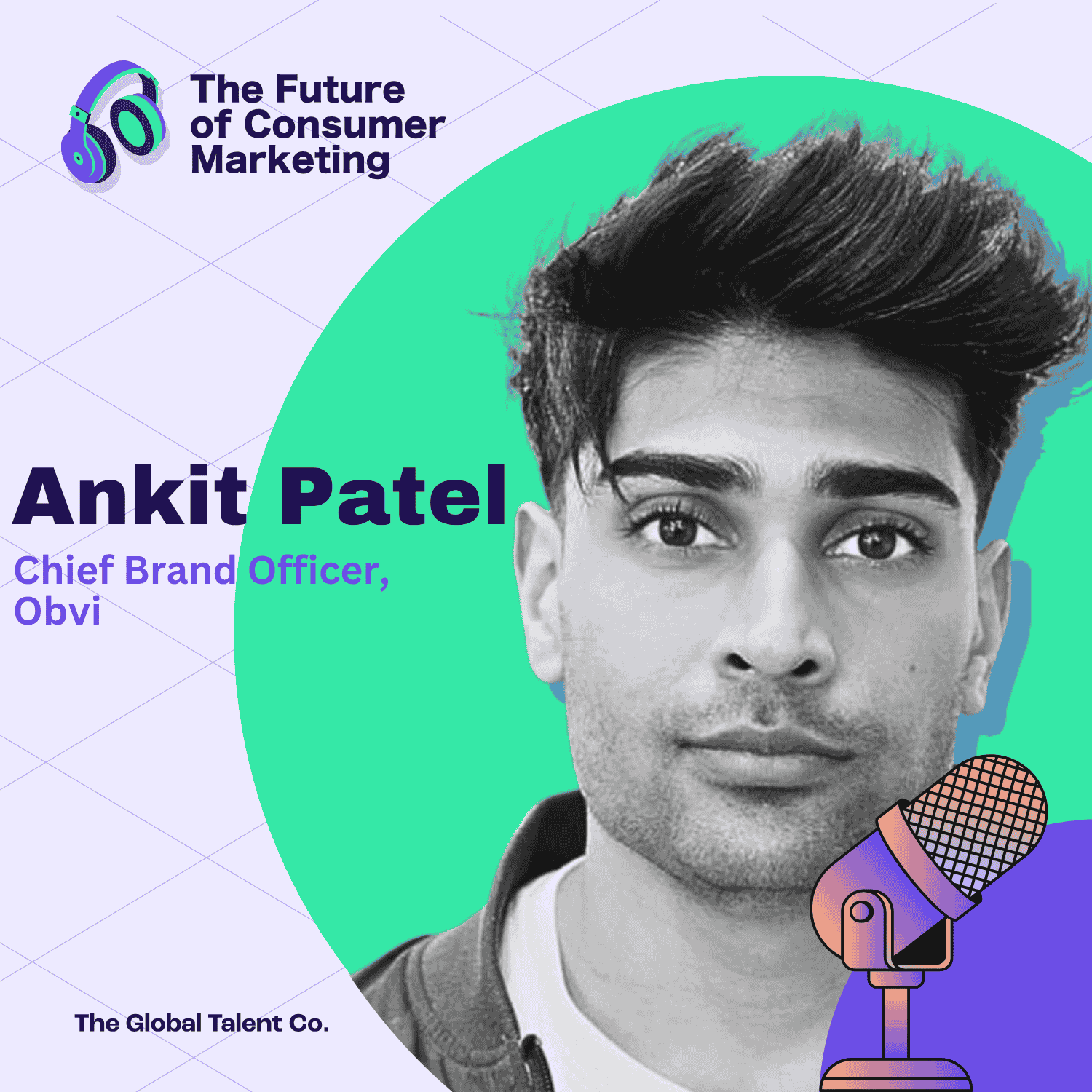
Ankit Patel, co-founder and Chief Brand Officer at Obvi. Background: led brand/marketing/product teams for big supplement brands for six years; later co-founded Obvi after noticing collagen products were mostly single-source bovine and “clinical” looking.
Key claims
Supplements must win a ~3-second shelf decision via front-panel value props; visual identity can be nailed early, but messaging needs adjustment to the real buyer (30–65 women, not 20–30). Retail distribution can sustain movement even when ads pause. Copycats are inevitable and can be treated as validation.
Notable examples
Walmart nationwide launch with 3 SKUs stalled; Obvi used pickfood.com packaging polls to “win” and then retail sales “started flying.” Uses Meta, TikTok, Walmart Connect/Red Media, Ibotta/IQ; tests mobile gaming ads (AppLovin). Runs a 150k-member collagen Facebook community for product flavor decisions.
Written by AI. May contain mistakes. Listen to the episode to check what was said.
Chapters
Tap a time to open that second in VOUnderstanding Obvi's Journey and Market Differentiation
0:44 to 2:59
Ankit discusses the founding of Obvi, the collagen market, and how they stand out from competitors.
“And also with me here, I have Ankit Patel, the co-founder and chief brand officer at Obvi, a company that is dedicated to bringing regenerative ingredients and delicious drinks to the market.”
Revamping Branding for Retail Success
2:59 to 6:28
Ankit explains how Obvi revamped their packaging for retail after initial struggles.
“And Ankit, do you feel that the branding like you guys applied is what differentiated you guys in what I feel is like kind of an oversaturated market, right?”
Marketing Strategies and Ad Platforms
6:28 to 9:21
Discussion on successful marketing channels for Obvi, including shifts to omnichannel strategies.
“That is such a cool way to actually learn and get some insight from the consumers themselves.”
Leveraging AI for Product Development
9:21 to 13:00
Ankit shares how AI assists Obvi in product development and market insights.
“Consumers have three seconds to decide if they want to buy something or not in the supermarket.”
Maintaining a Lean Team Culture
13:00 to 14:00
Ankit discusses the importance of a lean team and personal connections within the company.
“And AI just helps you like put everything in perspective again.”
Team Dynamics and Personal Connections
14:00 to 15:04
Learn the importance of maintaining personal relationships in a growing team.
“be more, how can I say this, to age better with time.”
Navigating Competition and Copycats
15:04 to 17:08
Understand how to deal with competition and imitation in the supplement market.
“Do you feel that you guys have a lot of competitors or has it not been that hard to stand out with all the moves you've done that I feel you're like totally in the correct place?”
Regulatory Challenges in Supplements
17:08 to 18:28
Gain insights on the regulatory landscape for supplement brands and compliance.
“Like I said, I worked in supplements for the first six years of my career.”
International Expansion Strategies
18:28 to 20:06
Explore the complexities of selling supplements internationally and navigating legal challenges.
“They don't have the necessary, I don't know, nutritional information or whatever they need in their supplements packaging.”
Balancing Brand and Performance Marketing
20:06 to 23:05
Discover the importance of integrating brand-building with performance marketing strategies.
“So kind of learning all of those nuances has been, I mean, super educational for us.”
Show all 12 chapters
Valuable Advice for Founders
23:05 to 24:52
Hear critical advice for new founders on adapting their product and market approach.
“That is amazing because it's like it's consumer generated advertising between the consumers so you don't have to like actually do it.”
Where to Find Obvi Products
24:52 to 25:58
Learn about the various locations and platforms to purchase Obvi products.
“And it's just then that we need to learn and need to know that if you got to pivot, it's time to pivot because if it's not working with the other audience, then that's completely understandable.”
Transcript
Automatic transcript. May contain errors.0:00This show is brought to you by the Global Talent Co, a marketing leader's best friend in these times of budget cuts and efficient growth. We help marketing leaders find, hire, vet, and manage amazing marketing talent for 50 to 70 % less than their U.S. and European counterparts. To book a free consultation, visit globaltalent.co. Hey, everybody. Thank you for listening. My name is Andres Figueira, and I'm going to be your host for the day. This show is brought to you by The Global Talent Company, a company that's connecting top remote professionals from South America and South Africa with leading tech companies worldwide.
0:35So if you're looking to hire talent from South America, South Africa, or anywhere really, just head on over to theglobaltalent.co and see how we can help. And also with me here, I have Ankit Patel, the co-founder and chief brand officer at Obvi, a company that is dedicated to bringing regenerative ingredients and delicious drinks to the market. So it's a pleasure to have you here, Ankit. Welcome to the show. How are you doing? Andres, thanks for having me. Excited about this. I am doing well. TGIF. TGIF for real, man. I can't wait for the weekend to finish arriving. But Ankit, now that we're here, I did want to also just ask you a little bit more about yourself.
1:15And if you can put us and me and the audience a bit more in context about what Obvi is. Absolutely. So we started the brand about six years ago. And prior to that, for the first six years of my career, I was leading brand and marketing teams and product teams for some big supplement brands in the industry. OK. I knew I always wanted to start something. And that's kind of where I met my co-founders, my CEO, Ron, and my CMO, Ash, at that first startup. And so eventually we ended up moving on. We saw a gap in the market. We noticed that collagen was trending, but the collagen community was underserved because of the products that were on the market.
1:54We noticed that they were sourcing from single source collagen, mostly bovine. And what we wanted to do is bring out multi-source collagen. So we wanted to source collagen from not only bovine, but also marine, eggshell, chicken, bone broth. And that kind of addresses a lot of the different pain points that collagen looks to solve. So what we did is we added all those ingredients and then we added hyaluronic acid, biotin, vitamin C, making our formula superior to everybody else on the market. But then we were able to come in with a price point that was competitive with everyone else as well. So So that's kind of how we started.
2:30And we started making these fun, flavorful drinks. We wanted to make sure that we had this bright pink branding. And I felt like everything that was collagen-based was serving a market that was more clinical. If you go down the shelves and the aisles, you'll see everything is white or gray. Not anymore, but back six years ago, that's what it looked like. So to stand out, we wanted to create a superior formula, a better price point, and a better product and branding overall. Okay. Wow. That is so interesting. And Ankit, do you feel that the branding like you guys applied is what differentiated you guys in what I feel is like kind of an oversaturated market, right?
3:09Because even though there isn't exactly collagen, well, health supplements and all that are very trending right now. So what is it that you feel exactly makes you guys stand out? Yeah. So six years ago, like I said, if you walk down the shelves, everything looked very clinical, everything very medicinal. And it felt like, you know, you were going to shop for something that you didn't really want to take, but you were being forced to take for whatever health purposes that you needed to take it for. We wanted to make it so that you were shopping almost like a cereal brand. You go down the aisle, you see all these colors, you see all this really unique typography, and it feels like a real consumer brand.
3:47So we wanted to make supplements feel like a real consumer brand. Okay, that's beautiful because it is a bit harder to shop for something when you feel you might even need to get a prescription for it or that it just feels a bit too, as you mentioned, medical. And it's like, why would I have that in my cabinet if it's something that usually looks like medicine? And then how are you able to transmit the product's functional benefits while still making it fun? Has that been like a challenge to you guys? Absolutely. I think in the beginning, when you're selling a product direct to consumer, and the first three years of our business was primarily direct to consumer, you have a product page that's going to explain everything that product does or a landing page.
4:28And your packaging doesn't really need to say much. You don't need to have a lot of value props on that packaging if you're just doing a direct to consumer play. Once we got into retail, we realized, okay, you don't have this product page anymore. So you need to make sure all your value propositions are on the front or the principal display panel of that packaging. And because a consumer has about three seconds to make a decision when they're shopping the aisles. So what we did is we kind of brand refreshed what we had, which was, it was good, but I think people were confusing us for a cereal brand because of the flavors that people were wanting to be like a cereal brand.
5:07I know. We did revamp it for retail and it worked. Okay. Okay. And could you walk us a bit through about how the revamp went? Like, was it specifically that helped you guys? Yeah. So about two and a half years ago, we'd launched into Walmart nationwide. Okay. And we launched with three SKUs. And what we did is we just put whatever we had on direct to consumer on the shelves. And we noticed in the first three months, it was not moving. We were like so stumped because we had the better formula. We had a great price point, but it wasn't moving. And so what I ended up doing is I got on this website, it's called pickfood.com.
5:46Okay. And pretty much you upload your packaging and then you upload all your competitors' packaging. And pretty much you can create a poll and filter it like, okay, I only want women who are of this age range, who shop at Walmart, who care about their health and wellness to vote on this poll of which packaging they like the best. Okay, wow. Which one would they pick up? So you can get very granular. You can even do hobbies, things that, you know, that tailor it to your consumer. So what we did is we ran that poll. I kept making adjustments until we won. And then we took that new packaging and we put it in retail.
6:24And since then, it started flying. Okay, wow. That is such a cool way to actually learn and get some insight from the consumers themselves. it's like you were able to narrow the scope in the polls you did and just choose that demographic that you needed that is gonna be buying the product okay that is so interesting and and geek what do you feel has been harder getting right the brand's visual language or its voice and messaging or has it been like kind of the same honestly i feel like we nailed the visual part really early on a few tweaks here and there but as far as the overall brand visual identity that was really solid from the get-go, but it has always been the messaging.
7:02I think we came into the brand marketing to a very younger demographic. And we realized after getting some data after the first year or two years, listen, our shopper is not the age 20 to 30 shopper. It's actually the 30 to 55, 60, 65 shopper. And what's really unique about that is those women were being sold on visual identity that was medicinal and just that white, gray earth tones. They wanted to be sold on a more useful product to make them feel more useful. They don't want to be treated like old people. They want to be treated like everybody else. Of course. They want the cool, fun packaging.
7:46They don't want to hide it in the cabinets. They want to put it on their kitchen countertop. Of course. Of course. And in terms of the channels through which you have marketed your products at Obvi, what has been one of the best ones that has worked? Because I understand you place it in the retailer's shelves and the consumer then decides to buy it or not, but how have you marketed that product besides the shelf themselves? Yeah. So we've built the business on Meta. So Facebook marketing was our number one driver for a lot of years and it still holds the majority of our budget. Okay. But because I mean, everybody knows that Facebook algorithm changes every year.
8:25So the volatility and the consistency just wasn't there for us. So we moved to more of an omni-channel approach where it's like, okay, we need to start moving budget to things like TikTok or things like retail media. So to really drive our products in retail, we do a lot of spend on Walmart Connect, Red Media. Most of these retailers have their own media platforms that you can spend on. And then we also do a lot of stuff with I.O. and Ibotta, which are other retail media agencies that can drive traffic to retail. So I think direct to consumer wise, it's about awareness now rather than acquisition.
9:05Retail is becoming more of the channel that we want to drive to because distribution is everything. That's mailbox money that's coming in every month. And now if your product's moving in retail, that you can shut all of your marketing off and it can still move. That's the real health of your business. Wow. Okay. It's like, even though if the people aren't being advertised or just constantly bombarded with publicity from the brand, it'll still move in the shelves due to what you guys have, as you mentioned before, how you were able to make it. What was it that you called it? I hadn't heard that fact before.
9:38Consumers have three seconds to decide if they want to buy something or not in the supermarket. That is so interesting. That is such a good, what's it called? Measurement to see if it's working or not. Three seconds. That's a lot. That's quick. And Angit, how are you able to like test or experiment with new strategies? Or are you guys just staying towards and maintaining with the classical or the traditional ways that have worked for you guys? Honestly, any new ad platform that comes out, I'm on there right away. Right now, we've been messing around with mobile gaming advertising through AppLovin.
10:13Oh, wow. I feel that due to the demographic, I feel you guys are appealing to the women and the collagen and them being healthy and in their free time, they should play a bunch of games. Yeah. You know what? I was very skeptical when Applovin approached us about, you know, being one of their design coordinators as far as their case studies on their ad platform. Okay. But I didn't think our consumer was on mobile apps or games or that type of that deal. But honestly, it's been one of our biggest, and now it's not a great top line revenue driver, but profitability wise, it's been a great channel for us.
10:51And I think as long as it stays, you know, profitable, we can keep doubling down on that channel. That is so cool. No, I like that. I like that because I'm hearing the different pieces that make up this puzzle. I'm like mobile advertising and gaming. It's a good step in the right direction. It makes more and more sense as you think about it. It really does. It really does. And Ankit, are you guys leveraging AI in any sort of specific way or maybe in a different way that isn't just the optimization of monotonous and mundane tasks that most companies are usually using it for? Yeah. And we have a pretty lean team.
11:26We have about 10 people in office, but I think AI has given every single person a creative co-pilot to accomplish whatever tasks that they need to. So for me, I mean, I use it for product development, to see new trends. I formulate a lot of these products myself. So what I like to do now, and before I used to work with the R &D team at the manufacturing plant. Now I'll sit down with AI and be like, listen, these are the raw ingredients I want to go in with. What's the average cost of these ingredients? They'll tell me I can finally, I can figure out my margins there. I can figure out what my marketing spend is going to be and really figure out what that breakeven is going to be before I even create this product.
12:10And then they'll even give you really cool, I mean, I use ChatGPT a lot. I use cloud. I use a lot of these other mid journey. these AI platforms, but they'll give you a lot of insight as far as, you know, is this product going to work? Are you going to be able to beat the competitors on your shelf? And you can literally give AI all your competitors information as far as what price point they're selling at, what does the product look like, who are they appealing to, and they will give you an answer. Now, at the end of the day, it's your decision. You do have to make a decision as far as, you know, are you going to listen to the AI or not?
12:44Of course. I think the AI can help you give you ideas as far as how to go about things. It's true. Like you can't follow the AI blindly, but it does help get people unstuck in parts where you feel you just might plateau or say, oh, this is way out of my depth. And AI just helps you like put everything in perspective again. I get that. I get that. And you mentioned your team. Do you mean that Obvi is just composed of 10 actual people in office or do you have more of a remote team extension or work with agencies? How do you guys move around that? Yeah. So we've always wanted to keep the in-office team very lean to create a really nice company culture.
13:23So we've always had about 10 to 15 people in office. And then we leverage a lot of different agencies and freelancers who are remote, obviously, for other tasks. So anything from, you know, a TikTok agency to an agency that's going to help with affiliates and things like that. Okay, cool. I got that. No, and I love the fact that you guys are just maintaining and making sure that you're like the work environment in the office is nice and that everybody knows each other and that it's a bit more, I want to say familiar in terms of how it feels. That's cool. That's cool. I think it's something very important to keep in mind in terms of getting the company to be more, how can I say this, to age better with time.
14:04Because if everybody likes each other and you all work as a team and always helps to pursue goals further. So that's really - Listen, you spend most of your time with these people. We spend more time together than we do with our significant others or our family. At the end of the day, I remember there was this one month where we had, I think it was like 20 or 25 people in office because we went on a hiring spree. And I was forgetting the names of some of the people. So at that point, I'm like, all right, listen, Ron, I don't want this company to get so big where I don't personally have a relationship with every single person in that company.
14:40So we kind of rethought it and we scaled down just a little bit and trying to keep that core team going. Okay. No, I get that. I get that. And I totally respect that feeling because it does get that one-to-one feeling with everybody in the company, no matter their role, because people sometimes, if it's too much of a workforce, they can feel like it's a bit verticalized and they don't have the same max. Exactly. as other of their leaders or anything. And Ankit, tell me a bit more about the market itself. Do you feel that you guys have a lot of competitors or has it not been that hard to stand out with all the moves you've done that I feel you're like totally in the correct place?
15:15Yeah. But are any of your competitors kind of like, I don't know, trying to copycat you guys or are they maintaining the medicinal image and style? Yeah, I think, I mean, if you look at the shelves now, they're pretty colorful. So I remember. I mean, right. Yeah. You know, it was really easy the first couple of years of the business because we felt like we were just in a lane of our own. There was all these medicinal brands, these legacy brands that have existed for 50 years. And we felt like we were the new guy on the block or the hot chick on the block. And everybody wanted to get a piece of us.
15:49But ever since then, you kind of realize that if you play in a space where it's a very low barrier to entry supplements, anybody can really go out and create a pill or a powder. And if you play in this space, you're going to get copycatted a lot. There's kind of stuff from China on eBay that we see all the time where it's like, it's my packaging, but they'll change, you know, low. It's like a five-year-old trying to create my packaging. These types of things happen all the time. And honestly, what I say now, it used to get me angry, like, oh, they're taking all my ideas and they created the same product and it's the same branding.
16:25You can't just keep being mad about that. It's like once somebody copies you, you know, you've made it. So I almost take it as a sign of respect now. It could almost be interpreted as a compliment. It's like, oh, you like my branding and you're using it. It might not work as well as for me because I'll be original, but I get it. Like keep trying, bro. Right, right. Exactly. And another thing I'm also curious about, Ankit, is that since you mentioned that once you entered, everything was feeling very medicinal, it was very like almost as if it needed to be prescribed and there was not that much color.
16:55Have you guys had any issues with regulations and how you create your products and obtaining those? I'm not even sure if you need any approvals or to abide to any regulations in order to have that on the shelves, but just curious to know how that works for you guys. Yeah. Like I said, I worked in supplements for the first six years of my career. I did a lot of compliance training. I was creating a lot of the packaging myself. So I was creating a lot of those nutrition labels, the supplement facts, and then also claims and things like that, I would go over with it with the legal team. Now that we have our own brand, I wanted to make sure that we're never in a place where we're saying something that we're not supposed to be saying.
17:35We're claiming something that we're not supposed to be saying. We want to make sure that our ingredients are efficacious and they actually work and we're sourcing the highest quality ingredients. So working with our general counsel that we have in-house, I think it's very important for supplement brands. I know there's a lot of them that don't do any sort of legal examination on their products. They're not doing the third party testing. They're not creating them in FDA regulated facilities. So supplements is a gray area. And most of those brands, they'll get sued eventually once you start making a little bit of money.
18:09But once you do start making money, you need to really look into the legalities of what you're doing and you want to make sure that you're doing everything in the right way. Okay. No, so it's great that you have all that background experience because it means that you had all those bases covered since the beginning. And it could be harder for a brand that doesn't pay attention to that. They don't have the necessary, I don't know, nutritional information or whatever they need in their supplements packaging. And then that skyrockets and they need to change it all. It might not work. So that's pretty nice.
18:38That's pretty nice. And Ankit, my understanding is you guys are based in New Jersey. Is that correct? Our office is in New Jersey. Nice. And are you only selling the product within the United States or do you have any intentions or are you expanding to other places around the world? That's a good question. We've always sold internationally. Now, it's not every country, but we're open to most countries. We use a platform called Open Borders, which helps us manufacture here, but still be able to sell internationally and get through a lot of that red tape as far as things like tariffs and some of the legalities that go in with selling supplements in international countries.
19:18They have their own laws as far as what ingredients are compliant there, what dosages are compliant there. So we tried to adhere by those laws, but anybody who will have the supplements we create here, we will send it out there. Now, there are a few countries that we manufacture in and sell there. Wow. So we just opened up India. We started by sending them product from here and testing it there and seeing if it would work. Okay. And it worked really well. So we're like, okay, let's start manufacturing here, which is, it is a heavy, heavy undertaking to manufacture in a different country. I can only imagine there's a bunch of standard problems that you might not be aware of.
19:58So, of course. Exactly. All the protocols that you were accustomed to here do not apply there and they have their own way of going about things. So kind of learning all of those nuances has been, I mean, super educational for us. OK, OK. No, I understand that. And Ankit, as a founder, when thinking about investing in the brand building versus the performance marketing early on, do you have something that you think is more important that you should concentrate at the beginning? Or is it just something equal that needs to be properly addressed on both sides? Yeah, you know what? This brand versus performance marketing question comes up a lot as far as, you know, where should you dedicate your time?
20:39Which one wins? And for us in the beginning, we were doing a lot of direct response marketing, which was, you know, we were trying to convert that customer in the first touch point. What we learned over time is that, A, that's for acquiring customers early on and just getting them into your funnel. But for a long-term vision, that's never going to hold. You really need to start doing a lot of community storytelling within your content. So your funnel needs to be a little bit more sophisticated. You know, there's product aware, there's product unaware, there's different types of consumers that you need to be targeting.
21:14And, you know, you see some funnels where it's like, they're just running top of the funnel. and they're just doing direct response at the top of the funnel. And there's nothing at the, there's no brand building going on in the middle or the bottom of the funnel. And what I really think is you should be doing the brand building at the top and then do the direct response at the very, very bottom. I'd rather somebody see my ad eight times and then buy, because I know I've sold them on not only the brand, but now I've sold you on the offer as well. And that person is probably going to come back more often because they know everything about the brand now versus you hitting them with 50 % off at the top of the funnel.
21:55They don't know anything about the brand, but they love the price point. That person's probably not going to come back if they don't enjoy the product. Okay. No, I get that because it is more about having the customer or the consumer educated on what you guys do so that they know when they need your product instead of just giving them a hell of an offer. And then they forget about it when it's not 50 % off. Okay. Absolutely. And we like to funnel people into our community. We have a collagen community on Facebook. It has about 150 ,000 active women. Wow. And they just talk to each other every day about their health and wellness goals.
22:32They're posting recipes. They're posting their transformations. They're posting their life events. Oh, I just got married. And we don't do any of the heavy lifting. They organically just speak to each other. And it's a great community for us because we can go in there and be like, hey, guys, we're thinking about bringing this product out. What do you think? Oh, you hate it? All right, we won't do it. Or you love it and we will do it. Or hey, guys, these are the flavors we're thinking of. Which one do you want us to release? And they'll pick. So it's great to know that your product is going to succeed just based on the intel that you get from a community.
23:06Oh, my goodness. That is amazing because it's like it's consumer generated advertising between the consumers so you don't have to like actually do it. They sell it to themselves. That's such a genius idea. Yeah. It's like, oh, hey, I just bought, you know, three of the cocoa collagen peptides. I really think you guys should buy it. And we're not doing any of that marketing. They're just selling it to each other. It's almost like those Tupperware clubs where women get together and they sell each other Tupperware. It's really fun. Like if you have 10 minutes, go on that community and just scroll.
23:41It is fun to read. Every time I think about it more, I feel it works so much. It's crazy. And Ankit, I know that we're almost at the end of the episode, but I did have one more question I wanted to ask you. And it's more towards the audience and anybody that might be listening. And it would be is if you could give only one piece of advice to a founder that's building their first consumer brand in an industry such as the one that you guys are in, which is kind of health, kind of wellness. What would that advice be that you would have loved to know when you started out? Yeah, don't be married to anything.
24:16And more specifically, don't be married to who you think your product is going to attract. Like I mentioned before, we went into Avi trying to build a product for a younger demographic. And what we noticed is we appealed to an older demographic. So our game plan and our blueprint had to change. And you cannot be married. You know, everybody wants to do the sexy marketing to the, you know, the younger demographic. But hey, if your brand is selling better to the boring market, then you should get behind that and try to make it less boring for them. No, I get that. I get that. And it's just then that we need to learn and need to know that if you got to pivot, it's time to pivot because if it's not working with the other audience, then that's completely understandable.
Read the full transcript
25:02Now, I think that's some very valuable insight and it's very true. It's very true. And Agit, before I let you go, I did want to give you the opportunity to let anybody that's listening right now, if they're interested in Obvi, if they located in the States or maybe in India, how can they go around getting your products? I know that you have deal with Walmart, so they could probably find it in Walmart, but anywhere else? Yeah. So, I mean, you can go to our website, www.myobvi.com or you can go to, we're in Walmart nationwide, launching into HEB nationwide. Okay. Sprouts nationwide. We just got Hy-Vee and there's other vitamin shop as well.
25:40And there's a bunch of other stores, but there's about 20 ,000 retail doors that we're opening. So you'll be able to find it somewhere. That is amazing. No, congratulations, guys. I feel the idea behind Obvi and what you guys are selling and how you're doing it, it really is different. I feel it's fresh and unique. So that is very nice. And thank you so much for hopping on the show, Ankeet. It's been a pleasure. Thank you, Andres. No problem at all. And everybody that has been listening, thank you for tuning in. And I hope that you keep returning to hear more of the insights that we share with all these leaders, founders, and CMOs from the different companies that we bring on.
26:13So really appreciate you hanging here with us. Thanks, man.
From the publisher
In this episode of The Future of Consumer Marketing, host Andres Figueira interviews Ankit Patel, Co-Founder and Chief Brand Officer at Obvi. Obvi is disrupting the supplement industry by transforming collagen from a clinical product into a consumer lifestyle brand. Starting six years ago in a market dominated by medicinal-looking white and gray packaging, Obvi created a colorful, cereal-aisle-inspired brand that appealed to consumers who wanted premium supplements without the clinical feel. Through a combination of superior formulation (multi-source collagen with added ingredients), competitive pricing, bold branding, and community-driven marketing, Obvi has grown from a direct-to-consumer startup to a brand available in 20,000 retail doors nationwide, including Walmart, Sprouts, and Vitamin Shoppe.
Topics Discussed:- Transforming supplement branding from clinical to consumer-friendly
- Building and scaling a 150,000-member Facebook community as a product development tool
- Transitioning from direct-to-consumer to omnichannel retail strategy
- Using data-driven design testing to optimize retail packaging
- Leveraging emerging ad platforms like mobile gaming for customer acquisition
- Implementing AI for product development and competitive analysis
- Managing brand positioning when target demographics shift unexpectedly