
In short
Cloak’s approach to making data exposure feel personal, using a “hotline” demo and a product suite to reduce spam and identity-fraud risk.
Guest backgrounds
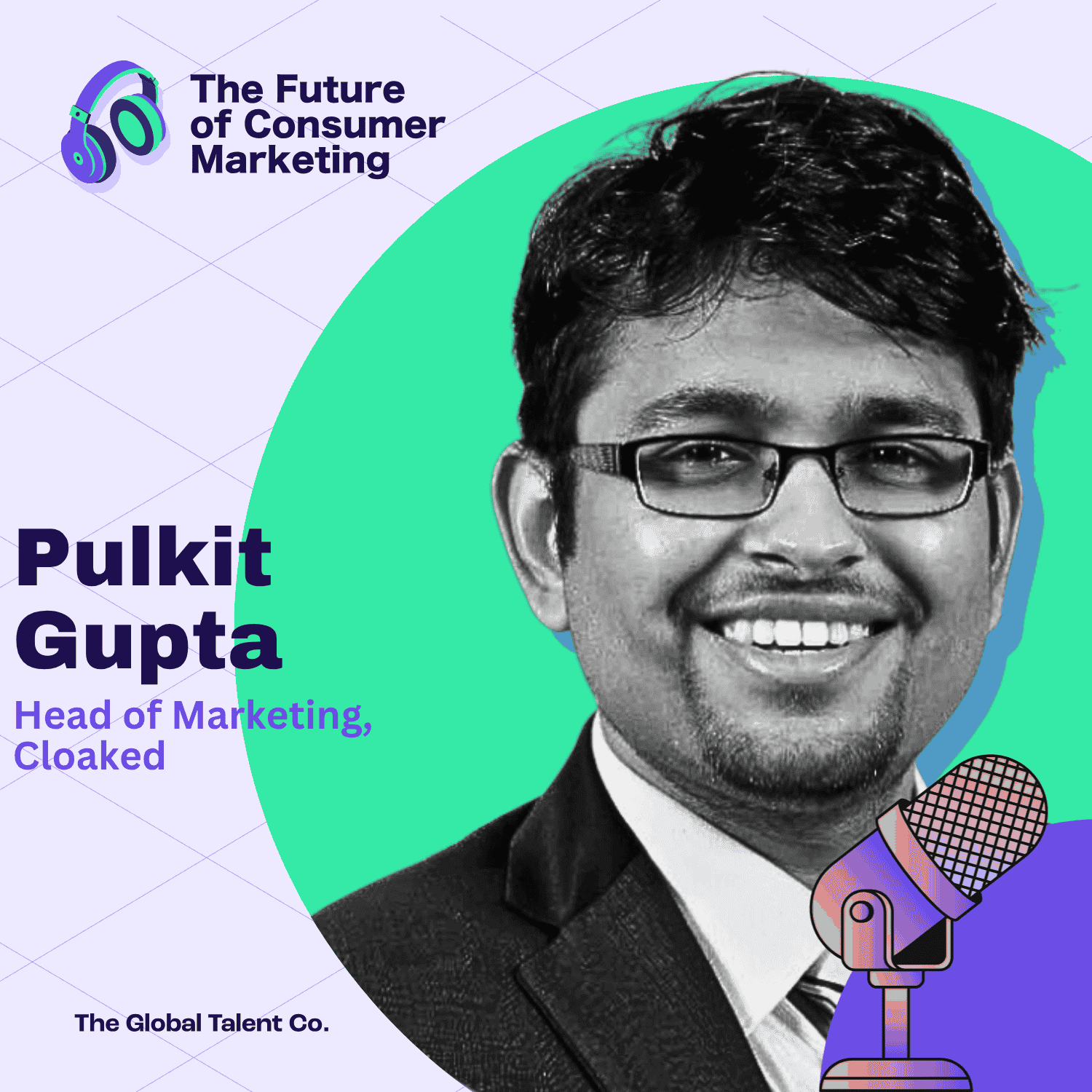
Polkett Gupta, head of marketing at Cloak (NYC-based). Episode includes a live hotline call demo.
Key claims
With only a phone number, Cloak can surface publicly available PII (including SSN, home address, family info). Cloak removes users from 140 major US data brokers, replaces personal email/phone with unlimited aliases, and “poisons the well” by spreading identity across many cloaked contacts. It also offers up to $1M identity theft insurance and an AI Call Card that screens unknown callers in real time.
Notable examples
Hotline number 855-752-5625; campaigns at SXSW and Times Square; UGC videos; AI-assisted ad editing/tagging and static-image testing.
Written by AI. May contain mistakes. Listen to the episode to check what was said.
Chapters
Tap a time to open that second in VOIntroduction to Cloak's Mission
0:00 to 0:54
Learn about Cloak's mission to help users regain control over their data.
“So, Cloak's pitch is we want to enable users to take back control of their data and that starts with essentially teaming up your past and then protecting your future.”
Exploring Cloak's Products
0:54 to 1:42
Discover Cloak’s data removal and alias features for personal data protection.
“Today we're speaking with Polkett Gupta, head of marketing at Cloak.”
Personalizing the Data Problem
1:42 to 2:28
Learn how Cloak addresses personal data exposure through user experiences.
“Fun fact, my founder essentially spun this up with one sort of a night work of coding.”
The Power of Personal Data Awareness
2:28 to 2:52
Understand the shocking implications of data exposure through real examples.
“Essentially, every critical person, PII about you can be pulled from just your phone number.”
Cloak's Comprehensive Solution Overview
2:52 to 6:01
An in-depth look at Cloak's three-part solution for data protection.
“I mean, what incredible marketing though, right?”
Marketing Insights and Strategies
6:01 to 8:05
Explore Cloak's approach to marketing its products and reaching consumers.
“Because essentially you're poisoning the well with so many phone numbers and so many emails about you.”
Transition to Problem-Based Messaging
8:05 to 12:20
Learn about Cloak's shift from feature-based to problem-based messaging.
“But yeah, I think the way, and this is what Arjun talks about on public platforms as well.”
Influencer Marketing and Creator Engagement
12:20 to 14:00
Discover how Cloak utilizes micro-influencers to promote its product.
“We were also able to translate this well into a 15-30 second vertical UGC style video.”
Impact of Personal Stories in Marketing
14:00 to 14:40
Learn how personal stories from creators help reduce spam exposure.
“And then they start talking about how their spam footprint went down, how they see their exposure number sort of go down as well.”
Utilizing AI in Marketing Strategies
14:40 to 15:51
Explore the role of AI in content creation and marketing workflows.
“So we have to at least bring up AI one time in this conversation.”
Show all 14 chapters
Enhancing Editing Workflows with AI
15:51 to 16:47
Discover how AI improves editing processes for marketing videos.
“On statics as well, we're doing a bunch of inciting using.”
Building an Effective Marketing Team
16:47 to 17:36
Understand how to create a lean marketing team leveraging agencies.
“So I've had a chat with product managers, PMMs, who have sort of 15-member, 20-member marketing team, and they don't rely on agencies as much.”
Finding and Selecting Marketing Agencies
17:36 to 18:22
Learn about the challenges and strategies in selecting marketing agencies.
“We're fortunate enough to have a good array of investors in our business.”
Future Trends in Consumer Marketing
18:22 to 19:28
Gain insights into the future landscape of consumer marketing and AI integration.
“course, have to ask you, what's the future of consumer marketing?”
Transcript
Automatic transcript. May contain errors.0:00So, Cloak's pitch is we want to enable users to take back control of their data and that starts with essentially teaming up your past and then protecting your future. Talk a bit more about what Cloak does, how do you make money, what is the actual product? One is we have this data removal product. Essentially, remove your data from 140 of the biggest data brokers in the US. The second part of the product, which is actually the cool part of the product, is an alias feature, which is essentially Cloak gives you unlimited real working emails and phone numbers that stand in place of your personal email and personal phone numbers.
0:30Brett Stapper:The audience that you're after and then the messaging, can you talk us through how that's evolved over the history of the company? And we wanted to use that as an inspiration to build an experience where people can, how critical their phone number is in terms of their personal information. With just your phone number, we can surface your SSN, your home address, information about your family members.
0:54Brett Stapper:Hey everyone, and thanks for listening. Today we're speaking with Polkett Gupta, head of marketing at Cloak. Polkett, how are you? I'm doing good. How about you? I'm going to start this interview in a very weird way. I'm going to ask you to give me a certain phone number. I've not called this phone number myself, but if you want to go ahead and give me this number, I'll type it in. Yeah. So you can call 855-752-5625. Hello, Brent Stapper. This is a secure line with cloak.com. And here is the information we have found publicly on you. Your social security number begins. What the hell? What's happening there, man?
1:31Brett Stapper:Yeah. So this is, let me sort of tell you a story. Essentially, we used to talk a lot about features and what Cloaks solves for. But then we realized we wanted to make the problem very personal and apparent to potential users. So we built this hotline experience. Fun fact, my founder essentially spun this up with one sort of a night work of coding. So we were inspired by this other AI product that has this hotline where you can call in and sort of get an experience of how an AI sales chatbot would feel like. So that was the inspiration. And we wanted to sort of use that as an inspiration to build an experience where people can understand how critical their phone number is in terms of their personal information.
2:20So our objective was with just your phone number, we can surface your SSN, your home address, information about your family members. Essentially, every critical person, PII about you can be pulled from just your phone number. And it's all from publicly being put data. So what we just did there was we took your phone number, scanned the visible internet for your PII, just leave to your phone number. And that's why you were able to hear that, hey, with just your phone number, we pulled your name. and we were about to surface your SSN as well.
2:51Brett Stapper:We kept that one off the podcast, but I guess it doesn't matter. The information is out there. I mean, what incredible marketing though, right? Just to validate the problem. It's terrifying. I remember the first time I did that, when you guys first launched this, I was like, oh my God, that is absolutely horrifying. And everyone I've said that to, they've had the same interaction. So just have to say, incredible, incredible marketing. It's a good marketing tool. It's a good sales tool, but it's also from my POV, it's a fantastic education tool that we're trying to get in front of as many Americans as possible.
3:23Just for context, we did a flyby at South by Southwest where we had a plane with this phone number sort of go around the venue at South by Southwest in Austin earlier this year. We've done time square campaigns with this hotline. We have gotten coverage in multiple podcasts with this hotline as well. So we've been trying to get this hotline in front of as many Americans as possible so they're able to see what data we can pull from just their phone number.
3:50Brett Stapper:I love good marketing, and it's just outstanding marketing. And like you said, it extends beyond that, right? It's an education piece because it's a wake-up call. I remember doing it, and I'm pretty careful, I would say. On the scale, I'm pretty careful, but apparently not. Not careful enough. Now, let's take this chance to talk a bit more about what Cloak does. How do you make money? What is the actual product? I think we're probably pretty clear on the problem here now. So we solve for two big problem themes. One is annoyance of spam. But the other sort of bigger, more apparent problem is spam is because your data is out there.
4:29Your data is exposed. It's available with data brokers. It's available with two bad actors, spammers, scammers, hackers, people who are essentially looking to put you at high risk of identity theft and financial fraud. So that's the second big problem theme. Those are the two things we want to solve for. But those are both symptoms of your data being out there. So Cloak's pitch is we want to help, we want to enable users to take back control of their data. And that starts with essentially teaming up your past and then protecting your future. So we have a three-part solution. One is we have this data removal product.
5:07So we essentially remove your data from 140 of the biggest data brokers in the US. the second part of the product which is actually the cool part of the product is an aliases feature which is essentially Cloak gives you unlimited real working emails and phone numbers that stand in place of your personal email and your personal phone number so every time you're signing up say for example for a loyalty program or a marketing newsletter instead of dropping your personal email on a personal phone use Cloak email, Cloak phone you'll get all of the communication you have all of the controls so you can lock the identities what we call it you can set up forwarding so you can get calls and messages as normal, but the other party does not have your personal email and personal phone number.
5:49So if you're interacting with businesses, you have the chance that say for example, they get breached essentially what will end up in the breach data set is a cloaked email and a cloaked phone number. What it also does is a concept called data poisoning, which is we're poisoning the well by attaching, say for example I have 100 cloaked numbers Now Pulkit Gupta is attached to 100 different phone numbers instead of that one phone number like Brett was. Because essentially you're poisoning the well with so many phone numbers and so many emails about you. So it becomes tougher for these brokers and these bad actors to identify which number is your number and which number isn't.
6:30The third part of the product is a peace of mind offering. So essentially, if anything does fall through the cracks, we have our users covered up to$1 million in identity theft insurance. So that's more of a peace of mind. Just in case, because you have all of this data out there, it's a process. It takes a bit of time for your footprint to start coming down and just sort of spam calls to start coming down as well. In addition to that, we now create an immediate solution to spam as well. So we have this product called AI Call Card, which essentially is an AI agent that sits between you and an unidentified caller.
7:05So essentially what it will do is it will have a conversation in real time. For example, you're getting a spam call. It will have a conversation with the caller, identify the motive, identify the context, and then forward. If the context and the motive essentially feels legit, it will essentially connect the call. and then we're also coming up with a bunch of AI features around data removal, around auto-cloaking, auto-rotating breached passwords, breached emails as well so that's the offering in a nutshell
7:35Brett Stapper:I'm jealous of you man what a fun product to be building and be marketing, I feel like that must be very fun a lot of marketers listening in must have a sense of jealousy there with what an awesome product it's just a massive problem that everyone's dealing with, now I'll ask for some personal advice, so what do I do now? Do I just need like a new phone number? Do I start from scratch and like get a new phone number and never put it into another business? Like, can we poison the well enough so that like this number is still safe? Like, what do we do? What do I do from here? First things, I would recommend signing up upload.
8:08But yeah, I think the way, and this is what Arjun talks about on public platforms as well. The way to go about life is not being sort of afraid to share your information. It's just, there are tons and tons of businesses and relationships where you don't need to give out your numbers. For example, you land on an e-commerce website. They want to give you a 10 % coupon. They ask for your phone number and your email. That's an unnecessary transaction. So I would say you can bring your data footprint down by A, being very conscious of what data you're sharing. And B, of course, data removal services help to bring down your existing footprint.
8:46But it's not very effective until you stop giving out your phone number for each transaction. and that's where our aliases product comes in. And that's sort of the cool part about the product is there are a bunch of products that offer aliases. There are a bunch of products that offer data removal. There are a bunch of products that separately offer like a call guard screener, et cetera. There are VPN products, password managers. We sort of build an all-in-one product that essentially with just one cloaked subscription, you can sort of have all of the pieces about your identity protected and safe in one place.
9:20Brett Stapper:Let's talk a little bit about just the audience that you're after and then the messaging. Can you talk us through, you know, how that's evolved over the history of the company? Yeah. So just for context, we were founded 2021. And then up until October of 2023, we were building the product with around 4 ,000, 5 ,000 beta users. And October 2023 is essentially when we went to EA. So we launched to the general market. We launched with a$10 a month subscription price. Then over time, we, of course, experimented, maybe tested with the pricing as well. But essentially, October 2023 is when we launched for a general audience.
9:59And our initial pitch was, oh, this is a privacy product that helps you take back control of your data. The initial audience as well was tech enthusiasts, privacy-conscious, middle-aged, predominantly male, people who essentially already use, say, for example, a VPN product, people who use a password manager. So our pitch was Cloak helps you round out your privacy tool stack. And initially, we used to talk a lot about Cloak email and Cloak phone numbers. So we were very feature-based, rooted in features in terms of how we were messaging. For a couple of months, we struggled to establish a product market pick because it didn't translate well across platforms.
10:42So we used to find good resonance within privacy-conscious communities, like, say, for example, the Brave browser. We used to very actively manage a Discord community as well. But beyond a point in time to scale up, we realized we had to have a slightly more democratic messaging because we want to build a brand that goes beyond the privacy community niche and build something for Americans in general. and that's when we sort of started to transition to a more problem-based messaging so we realized we needed to build a category by starting to talk about the problem itself which is data exposure and data exposure is something that to explain it to someone you need to tell them about the symptoms so spam is a symptom of data exposure the fear of financial fraud is a symptom of data exposure phishing attempts someone trying to log into your google account at 2 a.m in the night is a symptom of your data being out there.
11:39So we started to talk a lot about the problems. So we pivoted from feature-based messaging to problem-based messaging. And we essentially, not instantly, but over two, three months, we started to find a good traction with people who said, yeah, I feel this problem. I feel like I need a solution for this. And I believe Cloak is offering the right thing as a solution for the problem of spam and fear of financial fraud. We also built this tool. Essentially, you can try it out on Cloak.com. we have this field where you can put in your phone number and it would essentially do the same thing that the hotline does.
12:12Basically surface all publicly available information that you can pull with just your phone number. So I think that's when we started to see good traction and establish PMF. We were also able to translate this well into a 15-30 second vertical UGC style video. So that's what has kept us going for the last year on platforms like Meta and TikTok. We have a bunch of UGC style videos where essentially a creator would say, oh, I get tons and tons of spam. This box-pied data is out there. If you are facing the same problem, it's looked as a solution for you. So that's the journey from more features and moving on to something that talks a lot more about the problem.
12:51And now we've seen traction within a persona that is sort of, we've seen traction amongst older users who are at higher risk of sort of higher exposure to spam and higher risk of financial fraud. And we are seeing sort of more gender parity so we're onboarding teachers, accountants, like general Americans now onto the product.
13:11Brett Stapper:I see. And can you share, or sorry, I just thought of a different question. Can you unpack that influencer program for us a little bit? You know, those folks that you're working with, are you bringing them on and then they're just pumping it out through your channel or do they have an existing audience? Because I see brands do both. Like there's those agencies where you can hire people to do UGC content, but they have no audience. So what's that look like for you? We have a mix of both. So instead of going after bigger influencers, we've onboarded micro-influencers across various age categories.
13:41And we have a ton of diversity within our creator network. And it's because we don't need them to be, we want the messaging to be as simplified as possible. Essentially, what I try to do is get every creator a cloaked account, have them use the product for a month to get a feel for the product. And then they start talking about how their spam footprint went down, how they see their exposure number sort of go down as well. So that's why each piece of creative they put out essentially is more or less a personal story of how a creator had this problem and then how Floog was able to solve the problem.
14:19This also gives sort of makes an active feedback loop for us in the sense a lot of creators reach out. hey, this feels a little off. I'm sort of going through this flow and I'm not able to see the data exposure number because I was recording a video. So we've also very actively get some product feedback from a bunch of creators as well.
14:38Brett Stapper:What about AI? So we have to at least bring up AI one time in this conversation. How are you using AI in the marketing mix here? I think talking about performance, we've been trying to figure out what parts of content we can do with AI. So, for example, UGC style videos where essentially I want the audience to connect with this creator. I don't believe generative AI authors can do that job. And that's why we've sort of consciously stayed away from doing that. On videos, one of the things that we've identified as a good use case is we're using it in editing workflows. So, for example, we have a bunch of creators more or less follow a similar speed where they would talk about the problem of spam and how that is because your data is out there.
15:25So what we've done is we've built a bank of animations and a bank of stock footage that are tagged very neatly to if someone talks about data brokers, have this on the screen. So essentially what we can now do is get for footage from our creators, run it through an editing model. And then it essentially very neatly tags on to each 5 second, 10 second, multiple tag on product shots and some stock footage. So now our editing workflows have become much, much tighter and much, much quicker. On statics as well, we're doing a bunch of inciting using. so what we do is we'll a we test 300 400 static images that are ai generated but then we use them just to surface insights that we can funnel up to our content creator so for example one of the insights we discovered what a lot of people wanted uh so to spam to them fence like noise and silencing spam was a theme that we we found that a lot of people resonated with through one of our AI-generated static ads.
16:29So the static ads are meant to spend by themselves, but they are meant to give us insights on, oh, this is a theme that resonates. Can we now convert this into a high-quality UGC-style video that we'll spend$1 ,000 to$1 ,000 on? But the insight has been surfaced from these 300, 400 creatives that we generated in mass-using the ad.
16:50Brett Stapper:I see. Interesting. What about the marketing team? What does the marketing team look like? So I've had a chat with product managers, PMMs, who have sort of 15-member, 20-member marketing team, and they don't rely on agencies as much. We've sort of gone with the other thesis. We've always been in, so we are a two-member team. I have me and a product marketing manager sort of managing, a commerce marketing manager, managing the entire marketing stack. and we have a bunch of agencies who assist us on content, on creators, on SEO, on PR. So yeah, we've stayed lean very, very consciously. How do you find good agencies?
17:30Brett Stapper:That's always been a trouble for me. Most of them suck. So it helps to be... So we have a... We're fortunate enough to have a good array of investors in our business. and that's why we're all just plugged into the into sort of the marketing network across our investor network so i i've had a bunch of our investors sort of think hey this is this is these tactics are working these strategies are working these agencies are working for our portfolio companies uh and that's how we've sort of built our current agency stack is a lot of good word of mouth a lot of good referrals and then just good old scouting and putting out briefs and any agencies to pitch.
18:13And Mixer Fall 3 essentially has led to us sort of arriving at a good optimum marketing stack.
18:19Brett Stapper:And final question for you, this is the future of consumer marketing. So we, of course, have to ask you, what's the future of consumer marketing? I think this is an inflection point for a bunch of marketers in understanding where to draw the line between AI slop and actual creative content that you can still scale and experiment with. I think eventually a lot of these AI tools, AI best practices would be baked into ad platforms themselves. I think meta is sort of to a certain extent trying to build in some of the analytics tools. Google is surfacing some of the insights as well. But I think eventually the future 10 years from now, I don't think we take 10 years, but I think have a creative, have a messaging, have a positioning strategy that works for each potential user, each potential audience member that you surface are creative to.
19:10I think we are trying to get there by sort of going up on our varianting and going down on our segment size. But eventually, I think the future of marketing is an ad that works for each potential consumer and works best for them to convert them.
19:27Brett Stapper:Amazing. I love it. All right, my friend, we're going to wrap here. Before we do, if anyone's listening in that wants to follow along with you. Where should we send them? And then, yeah, where should we send them if they just want to play around with the product? So, cloak.com is our website. We are on the App Store. We are on the Chrome Web Store. We are on the Play Store as well. If you want to try out the product, try out the scan, our hotline is 855 752 5625. And I'm on pull kit at cloak.id. We are based out of New York. We are in the Union Square 14th Street area. So if anyone wants to hit me up, You can find me on LinkedIn as well.
20:03Brett Stapper:Amazing. All right, man. I love it. Thanks so much for joining. Thanks for having me, Brent.
From the publisher
In this episode of The Future of Consumer Marketing, host Brett Stapper interviews Pulkit Gupta, Head of Marketing at Cloaked. Cloaked is tackling one of the most pervasive problems in modern digital life: data exposure and its consequences - spam, identity theft, and financial fraud. Operating in a space where consumers are increasingly aware of privacy issues but often lack practical solutions, Cloaked has built an all-in-one privacy platform that combines data removal, unlimited email and phone aliases, and AI-powered call screening. Through problem-first messaging, creative experiential marketing, and a lean team structure that leverages agencies strategically, Pulkit and his team have evolved from serving privacy enthusiasts to reaching mainstream Americans who are tired of spam and fearful of fraud.
Topics Discussed:- Transitioning from feature-based to problem-based messaging in a new category
- Building experiential marketing campaigns that validate the problem (hotline experience)
- Structuring a lean two-person marketing team supported by specialized agencies
- Using AI for creative testing, editing workflows, and insight generation
- Scaling micro-influencer programs with authentic product usage
- Evolving audience targeting from privacy enthusiasts to mainstream consumers
- Launching and establishing product-market fit in an emerging category