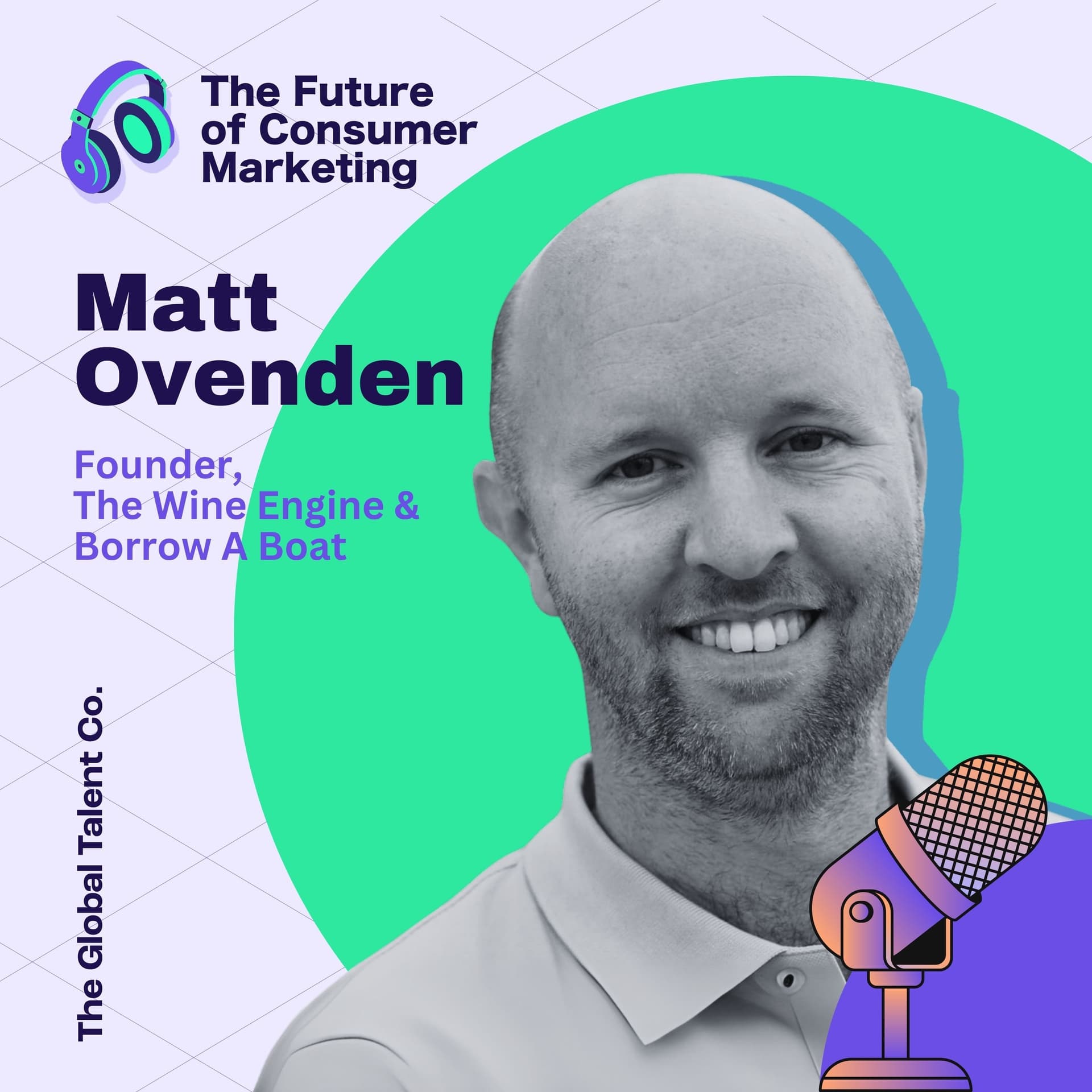
In short
Matt Ovenden discusses shifting from a boat marketplace (Borrow Boat) to a wine subscription business (The Wine Engine), focusing on consumer subscription trends, inbound marketing, and AI personalization. He argues the wine industry is outdated versus Gen Z’s subscription expectations, and claims Wine Engine offers a more flexible, personalized, cost-saving wine box with “Grapevine AI” for taste profiling and recommendations.
Guest backgrounds
Matt Ovenden is a serial entrepreneur and founder of The Wine Engine and Borrow Boat. He previously worked at the London Underground for seven years in innovation/technology, applying tech to mature systems. Borrow Boat is ~9–10 years old and has ~400,000 users.
Key claims/examples
Borrow Boat was under-digitized and inaccessible in 2016; growth relied on strong brand narrative and inbound. Wine Engine: monthly customization, AI quiz/chat, Netflix/Shopify-style personalization; AI can suggest pairings (e.g., dinner with chicken) and tasting notes. Growth tactics include crowdfunding and caution with above-the-line spend; SEO will evolve into “GEO” for AI models.
Written by AI. May contain mistakes. Listen to the episode to check what was said.
Chapters
Tap a time to open that second in VOJourney from Underground to Entrepreneur
0:36 to 2:10
Matt shares his transition from the London Underground to founding businesses.
“Yeah, I mean, you've been building a business in the boat industry.”
Identifying Opportunities in Boating
2:10 to 3:18
Matt explains his motivation and the unique market opportunity in boating.
“And the ownership model wasn't simply working very well for many people I knew who had boats either.”
Marketing Strategies for a Marketplace
3:18 to 4:33
Explore how Matt navigated B2C marketing in Borrow Boat and its unique challenges.
“There's a lot of, you know, the secret sauce is in the marketing.”
Launching the Wine Engine
4:33 to 5:48
Learn about Matt's new venture, The Wine Engine, and its unique concepts.
“So it's something that I've done more of than anything else.”
AI Personalization in Wine Subscription
5:48 to 8:05
Discover how AI is used to personalize wine subscriptions for consumers.
“I mean, the one question that every entrepreneur asks him or herself for starting a business is, why is now the right time to build that particular business and what's your sequel?”
Navigating Competition in the Wine Market
8:05 to 11:15
Matt discusses strategies to compete with established players in the wine industry.
“So we're excited about the new element that brings.”
Evolution of Entrepreneurship with Technology
11:15 to 12:50
Insight into how modern technology has transformed entrepreneurship and marketing.
“Yeah and there's obviously some established players with deep pockets like big beverage companies right the holdings but also companies like Vivino who are unicorns.”
Consumer Behavior Insights in Subscriptions
12:50 to 14:00
Matt shares insights about consumer behavior differences in subscription models.
“It was probably a lot more expensive to build things.”
The Shift to Subscription Models
14:00 to 17:00
Explore the differences in marketing strategies between traditional and subscription-based models.
“You can link content strategies to hosting multiple different outlets.”
Innovative Marketing Techniques and Mistakes
17:00 to 18:58
Learn about unexpected marketing tactics like crowdfunding and the pitfalls of traditional advertising.
“I think one technique which was a bit unexpected at first was crowdfunding, an innovative way to raise capital and provide some extraordinary marketing platform for you at the same time because of the reach.”
Show all 12 chapters
The Future of SEO and Consumer Expectations
18:58 to 20:08
Understand how SEO is evolving and what consumers expect from brands today.
“more people who wouldn't have found on Facebook.”
Future Ambitions for The Wine Engine
20:08 to 21:41
Matt discusses his goals for The Wine Engine and the importance of a strong brand voice.
“So we're ready for it from the beginning.”
Transcript
Automatic transcript. May contain errors.0:00This show is brought to you by the Global Talent Co, a marketing leader's best friend in these times of budget cuts and efficient growth. We help marketing leaders find, hire, vet and manage amazing marketing talent for 50 to 70 percent less than their U.S. and European counterparts. To book a free consultation, visit globaltalent.co. Hi, everyone, and thanks for listening to the Future of Consumer Marketing podcast. Today I'm speaking with Matt Overden, serial entrepreneur and founder of The Wine Engine and Borrow Boat. Matt, it's a pleasure to have you. Thanks. Good to be here, Roman. Thanks for inviting me on.
0:36Yeah, I mean, you've been building a business in the boat industry. You've been building a business in the wine industry. It feels like you're really building businesses and everything that you feel passionate about. Is that a right assumption? That's a fair comment. Yeah, I like to build these sectors I'm passionate about because I believe it's the best way to be authentic in the content and in talking about the subject and the subject to agree necessarily. It helps if you care about it and know about it. Yeah, I've chosen things that I'm interested in, for sure. Yeah. Amazing. And I saw on your LinkedIn that before you actually started with your first company that you've been also working for the London Underground.
1:16So you basically went from, you know, the underground to the ocean. Are there certain things that you kind of learned during your time there that you applied to your first company? Yeah, I've had four of my businesses, all of them founded after I left the London Underground. Yeah, I was in London Underground for seven years, beginning my career in the innovation technology team for most of that time. So very much learned a lot of first-hand experience implementing technology into large, mature systems and industry. I think this is the theme of everything I've done, is taking a very mature instance and applying technology to it or significant ingredients to the user experience or saving efficiency.
2:05So yeah, it just took me on that pathway in a way. So Borrowed Boat is almost 10 years old, I think nine years and counting. So walk us a bit through why you saw a big market there and what made the business unique and engrossed with us from me a part of you yeah i just saw an opportunity in the industry back in 2016 start directing the previous business and then i was looking at essentially buying a boat actually i was looking on this and just saw that it wasn't very well digitized charter market it was wasn't very accessible wasn't very flex the whole industry wasn't very accessible in general we didn't you know, invite anticipation by newcomers to boating or make it easy to go boating.
2:53And the ownership model wasn't simply working very well for many people I knew who had boats either. So there was an opportunity at the time and launched the business. And I think it's fair to say, we've seen significantly impact of the industry in that title. Amazing. And were you already interested in marketing back then? Or how do you, because obviously that's a marketplace, you know, marketplace all about network effects. There's a lot of, you know, the secret sauce is in the marketing. How did you learn how to succeed and excel in the marketing world? I mean, I've had three businesses before, which had different marketing strategies in the energy sector, the eco-owned sector.
3:32B2B businesses, very different than doing B2B marketing or B2C. That was the first time I'd gone into B2C marketing. I think, yeah, and it's a marketing-driven business, the market makes it interesting. It's all about inbound clients. There's no outbound sales outreach, anything like that going on. It's all inbound. It's a place of building a strong brand, having the right narrative of the brand, communicating with the audience. There's an element of it being intuitive, I think. When you just went to it, we've got a boat right from the beginning to tell an important narrative about what the business needs setting up to do.
4:14Okay. And now the wine engine, are you running this in parallel? And what kind of gave you the energy and the motivation after, you know, nine years of building and before that, you had some other companies kind of start from scratch again. And, you know, you could have done a lot of other things, but what was the reason there? Yeah, I could have done, I guess, I mean, I've been an entrepreneur now for 16 years. So it's something that I've done more of than anything else. I was born with my, the stage it's at is we've got a lot of interest in this and i mean without saying too much let's just say it's towards the end of its potential art what's an exit and it's built at the moment so i've actively stepped back from the business as we've relocated it all to athens it's very much in a performance minimized cost stage and run up to the initial exit and so i've stepped back and to advising the business on a regular basis.
5:07But having stepped back, suddenly you got more tired and you got more hands. And, you know, there's no shortage of ideas. I had many ideas and I started to have time to look at them. And that's why I decided to build a business in a wide engine, which is similar in multiple ways to build a load. And, you know, it's a very large, mature industry with an opportunity to make it more accessible, easy for consumers. There are similarities, but then there are key differences. It was attractive once I identified it, the opportunity, it was attractive to have a card out and take a lot of skills and experience I've got from Borrowboat and apply it to a new business.
5:47Okay. I mean, the one question that every entrepreneur asks him or herself for starting a business is, why is now the right time to build that particular business and what's your sequel? So how would you ask for that for the Vime engine? And maybe you can share in a sense or two, you know, what is differentiator of the wine engineers versus other existing clients in the market. Yeah, sure. I mean, as for timing, there's probably never a perfect timing. But I think there's a general trend. Every timing is perfect. Yeah, we've just got to go for it, really. In the wine industry, and it's quite a traditional industry, there's definitely been a consumer shift towards subscriptions.
6:25and the means of access to products. Certainly, Gen Z are very pro-subscriptions on food delivery box apps and have put them in the last few years. I felt the wine industry wasn't serving the customer as it should or could do in terms of a subscription or wine club service. The not-the-wine clubs were very dated and traditional and they select the wines for you and limited flexibility. I was thinking this day, And then it's where there's personalization as well, in particular, of what is flexibility. There wasn't anyone really bringing that to buy. It could be done. And so we've launched the most flexible and personalized wine subscription that we can get.
7:08It's a wine subscription box. It's more convenient than going shopping for wine down the local shop. The wine will just look at your house. But you can choose what's in your box from a large selection of items. And a lot of subscriptions don't make you do that. You can customize it every month. By being in the subscription, you make a significant saving cost of the wine, which means buy a better wine for your money. And you have an AI personalization element as well, which is brand new for the industry, which will understand your preferences, you know, gather data, get up both over time of what you like and what you don't want.
7:44Look at the new data, the answers and where's your general feedback, and will suggest wines that it fits since fit your taste profile. And that's something new. So yeah, someone called it the other day, like a Netflix of wine or the Shopify of wine. It will start to personalize and adapt to what you like. And I don't think anyone's really done that before. So we're excited about the new element that brings. And at the same time, at the most simple level, it's just a very cost-efficient way of getting wine. Wine, like food, it's a perishable product which you need to buy on a regular basis. So it lends itself to a subscription naturally.
8:22And why not save wine, get better wine, and actually start to discover wine at the same time. Okay. So walk us through how you actually use AI to make wine more accessible. Like what are the elements that you kind of white-ladle or take off the shelf? What are some of the things that you kind of engineered yourself? Sure. So on the Wine Engine website, and suitably in the Wine Engine app at the moment, which is coming soon, If you go to thewineengine.com, you will see on the right-hand side Grapevine AI. It's a standard that can open, which is powered by a large-rich model. At the moment, open it by mainly.
9:00It's a modern AI embedded there. You have conversations with it. It will ask you. It starts to take a quiz to understand your taste profile. It will present you with the wines. You can ask it. You can say, I'm having chicken for dinner on the weekend with my friend. what wine would be good with this and it would suggest wines. You can ask for tasting notes. You can say, I've got a bottle of this one here. What kind of tasting notes should I be looking for? And it'll tell you. So it's like personal I.S. Menier or any I.C. You know, as it will. You can ask it any stupid question about wine you don't want to ask the person in the shop.
9:34It'll nose everything. And we'll steer you towards wines based on what you tell it. So it's been a quiz that suggests it categorizes a certain type of wine drink and then it would suggest wines. Then as you go along with more feedback and data, it's just other lines that don't split. And it's going to be interesting to see how people get on with it. So it's a way to guide you through the sector. And I think we're going to see more of this in more industry sectors that haven't been one. Yeah. And obviously you start with an interesting approach. You're catering both to consumers with home delivery, but also to the hospitality sector.
10:10So in a way, B2B to B2C at the same time. So what was the reasoning behind that to do both at the same time? And is there a particular focus on one versus the other? Yeah, it is mainly focused on the consumer, the direct consumer at the wine engine. It's people who think wine at home and they're the people that it speaks to. We'll do more surveys and find out where people buy them. I think there's a statistic that 70-80 % people buy wine at the Super Bowl, which is a mass-produced one. And frankly, that's as good as a lot of wine you can get that's producing enough. So wine is just a popular product.
10:55It's a massive industry, isn't it? It's such a popular product, but it doesn't make itself very accessible. Some people don't understand the different assets of it or how to find the wine online. right so they end up just drinking what they can find in the local supermarket and I think they can happily improve upon that and steer them towards some very good wines for a lot more Yeah and there's obviously some established players with deep pockets like big beverage companies right the holdings but also companies like Vivino who are unicorns. How do you plan to win customers when you necessarily can't really or don't want to outspend competition?
11:34Yeah the thing is a large player but It doesn't have a subscription, for example. It doesn't really have a proper wine-box subscription that we offer. It also doesn't have this AI on scale, Joe, and we know. So, yes, it's reached considerably scale, but it doesn't have these things. It's more of an approach. So I think in some ways it's limited to how much it can personalise, to provide good value for money, actually. I think that we pay for whack on that. So, yeah, look, we've done it before. with a young upstart in a big industry like Borrowboat was in the beginning. And Borrowboat now has 400 ,000 users.
12:11You know, it's become part of the fabric of the industry. I mean, in some ways, from the new entrant to the industry has the most authentic voice or throat sometimes and bringing something new. And I think that's one of the advantages to play to. And now as a serial entrepreneur and obviously with AI and other technologies around, is building a company now very different than, let's say, 10 years ago? And if so, how? Yes, it is. actually. I think the way the technology landscape has changed has made it more possible to do it if you know how to do it and what to do with automation and AI has a lot done, probably with a lot less capital.
12:50It was probably a lot more expensive to build things. Mine was more about spending a lot of money on its first website and more on its second website. I remember I thought she had announced that looking back, because it was necessary to to deploy the good coders. There's more after-shelf tools. There's more plug-in tools. There's more AI. You can get things done. There's more sort of gold stands of ways to approach certain aspects of it to make it only more accessible to start a business now and maybe to do it without raising so much capital, which is an interesting development. I think we're going to see that pattern.
13:25And it's going to be empowering. Okay. And specifically for marketing teams, how do you build marketing teams now versus five or 10 years ago. How are you going about this with the wine? Well, if you choose to, you could definitely automate a lot more now. We use AI tools in operating that didn't exist nine years ago. We've done all the approaches of Boreboats, had large meetings in the past, and then we've gone through smaller approaches and outsourced to agencies. We've done everything in the approach. But nowadays, you can certainly join things up a lot more. You can link content strategies to hosting multiple different outlets.
14:07Your brand, you can produce content a lot more quickly than they are. That's definitely the case. You can get inspiration for content. I mean, the way the tools are developing is very, very, very interesting. Okay. And is there anything counterintuitive that you learned about consumer behavior when you now launched, you know, the wine engine or also what we're about? Pretty true too? I'm not sure. or nothing particularly comes to mind, but I guess the subscription element is what's different between the two. While boats didn't really lend itself to subscription proteins and sort of once-in-a-year activity, most of the other year.
14:46So it wasn't one to go down that route with, whereas the One Engine, it's much more of a high-volume, high-repeat-weight service. The lifetime value is how much higher than you'd expect. You know, one customer could order from you every month or several times a month. Your lifetime value can be pretty high. It's just interesting to approach a different sector, different dynamics, where many things are the same, but some things are significantly different. So it's really interesting. I mean, the wine engine is a description-first strategy. So it automates and lends itself to subscription, which makes no sense, even though it's anything to what's up.
15:25But building subscription-first and AI-native-first is I think the right strategy for today. And you wouldn't have done it that way if still would have bought it. It still wouldn't be right before. I mean, obviously, as you said, the big difference is the retention side, right? So with BorrowBot, it's a lower retention product. So it's really about cheap customer position. Now with the wine engine, you also, you know, it's make or break how you manage retention and how you actually double down on the product. So how does that change your marketing mix? How does that change, you know, channels that you operate in?
16:00It's definitely, I mean, it's important, although very much up to acquire new customers every month, although it had to almost climb them down to every month to get, you know, the revenue again. It wasn't going to repeat months and months. Very few people, once in a while. It made it a vast outreach program to acquire large numbers of customers. Oh yeah, we've been managing different economic. economics, you can start to get certain amounts. You have very healthy recurring revenue, although the budget order values are that much smaller. So there's that, that shows. So you want to make the same revenues for a boat, you'd give more customer in the months.
16:39So you need to acquire more, the repeater rate would be that much higher. So you didn't need to acquire more at months or months, but you did it for a boat. So just different dynamics. I think it means some approaches are going to be more effective and work better with the oil engine than they would have before and vice versa. Okay. What are some of the unconventional or secret marketing growth hacks that you've used that you're comfortable sharing and other on the flip side, expensive marketing mistakes that you've made that you want people to avoid? Okay. I think one technique which was a bit unexpected at first was crowdfunding, an innovative way to raise capital and provide some extraordinary marketing platform for you at the same time because of the reach.
17:30Some of these large equity crowdfunding sites, you pay some of the biggest, more than a million investors. And just by putting a product on there, you're reaching a large audience. It will drive customers. and we used to acquire customers for the crowdfunding at boat shows for example and then they became customers so you make your investors your customers and the customers who are investors as well so our customers used to invest we invite them to and then we invite our investors to be customers so of course those two groups interesting things we wouldn't advise i mean a path the line marketing is something which i think you've got to be very careful about right to the wrong time to be above the line stuff and Bora Boat did a fair share of that at the beginning to get the brand out there in the industry.
18:20We sponsored boat shows. We were in tube stations across, we were in 55 tube stations across London once a summer, big joint campaigns. And I think at the end, yes, we did get some return on it, but arguably we've got the same return at Los Bermall with digital. So just, if you've got digital channels that work, I know that can be tracked as well, so efficiently, it's often going to be at best of use. There is a time and a place for above the line marketing. You really want the brands to turn heads, to pull in consumers that perhaps don't use the digital acquisition channels as much. You know, the Hervo Show is a good place to meet more people who wouldn't have found on Facebook.
19:02So they have a place, but just to be careful how much your budget you put towards above the line. Okay. Matt, what's one marketing trend that everyone thinks is the future, but you will, you know, believe will actually fade away? I think the position that SEO has in the marketing mix will change a lot. We're already seeing SEO become SEO and GEO, generative engine optimization to position the information on your product and services amongst the AI large language models from Chat2B2 to Gemini to the product and others. And that's going to change the way people use Google. We already see Gemini come up on Google every time we do a search, virtually now.
19:43I think the way that that works will change and therefore SEO will become something completely different. Okay. How do you, with your companies, prepare for that? We're already building SEO and GEO ready from the beginning with the divine engine. The interesting thing about starting again has been able to bake these things in from the very beginning, from the AI to the GEO optimization and subscription optimization. Yeah. I've tuned into that. I know that that change is coming. So we're ready for it from the beginning. Okay, amazing. And then on the consumer side, do you feel that consumers expect now and over the next two years different things than they've been expecting of the past?
20:23I think we're very evolved now to expect quite transparent presentation of products and services, which is by a marketplace style format with review data. People like to see revenue data. So they like to see independent verification. These are sort of defaults now. They want a certain standard payment gateway. So a lot of things are sort of standardized. Their expectations are going to meet quite high, but it's better for the consumer. It wasn't quite the same eight, nine years ago, but it's evolved. Okay. And maybe last two questions. Number one, your ambition level. What's the ambition level with the wine engine?
21:02Where do you want to see the business in five or 10 years? Well, it's early days, but I want to see, I want to build the best digital wine box subscription in the sector. I believe we're already the most interesting offering out there. So we want to get it stale and it needs to start in the UK. You know, it's not as easy to go international actually, I think for various reasons to do shipping wine. But I want to make it the biggest wine box subscription in the UK first, and then we'll evaluate if we don't take it internationally as well, which can be done. So yeah, the plan is to make the best wine description out there.
21:37Okay. And if you could give one piece of marketing advice to someone launching their first consumer brand tomorrow, what would that be and why? I would say have an authentic voice and communicate a lot through a lot of channels in an authentic way. Have a little voice of a brand. Have something meaningful about what you're trying to achieve. Don't just read off soundbites. Talk to people about why you're bringing what they're bringing. talking through all the media that people consume every time all the social media you might have former people are consuming media like never before so they're ready to listen to have an authentic voice okay amazing but thanks a lot for sharing an update on what you're working on and sharing a lot of wisdom it's been a pleasure having me thank you very much
22:31you
From the publisher
In this episode of The Future of Consumer Marketing, host Roman Kirsch interviews Matt Ovenden, serial entrepreneur and founder of The Wine Engine and Borrow A Boat. After building Borrow A Boat into a 400,000-user platform that transformed the boat charter industry, Matt is now applying his marketplace expertise to wine subscriptions. The Wine Engine represents his shift from low-frequency, high-ticket transactions to high-frequency, subscription-based consumer marketing. Through AI-powered personalization, flexible subscription models, and a focus on making wine more accessible, Matt is challenging traditional wine clubs and major players like Vivino by creating what he calls "the Netflix of wine."
Topics Discussed:- Building subscription-first businesses in traditional industries
- Using AI for personalization and consumer education in wine
- Transitioning from low-frequency marketplace to high-retention subscription model
- Competing against established players without massive marketing budgets
- Leveraging crowdfunding as both capital and marketing platform
- Evolution of marketing tools and team structures in the AI era
- Preparing for the shift from SEO to GEO (Generative Engine Optimization)