In short
Podcast Notes: Future of Consumer Marketing - No Retainers, No Contracts: Performance-Only Agency Model
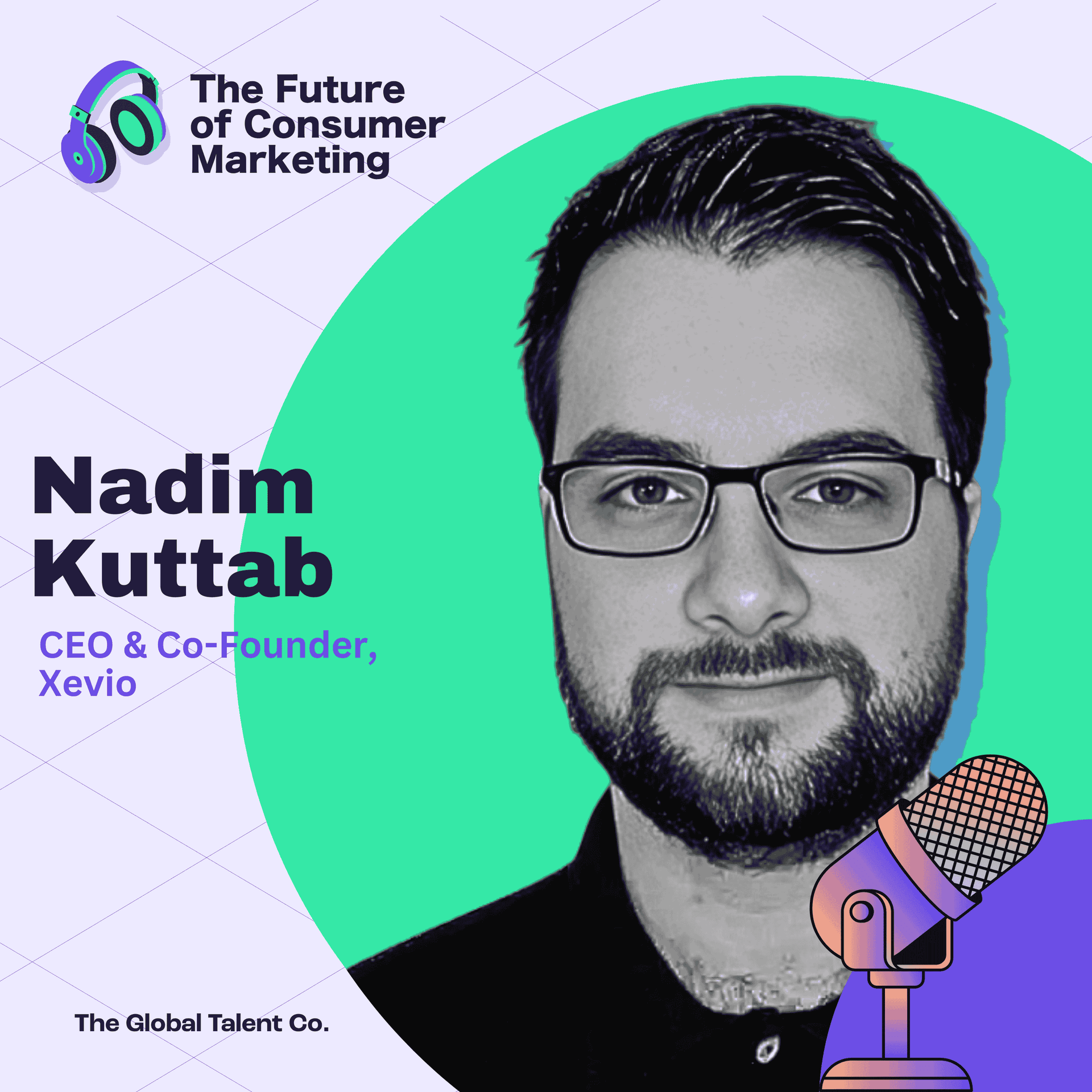
Episode Overview In this episode, host Andres Figueira interviews Nadim Kuttab, CEO and Co-Founder of Xevio, a performance-based native advertising agency. Xevio has rapidly scaled to $100 million in annual ad spend within three years, adopting a unique model that emphasizes performance-based fees without retainers or locked contracts.
Key Topics Discussed
- Performance-Only Agency Model
- No Retainers or Contracts: Unlike traditional agencies, Xevio operates without retainers, allowing clients to leave at any time.
- Performance-Based Fees: Agency earnings are tied to the performance of campaigns, creating an environment of accountability.
- High Client Selectivity: Xevio turns down approximately 90% of client requests, focusing on larger accounts averaging $500,000 per month.
- Scaling Native Advertising
- Campaign Management: Techniques for scaling campaigns to mid-six figures monthly spend.
- Native Advertising Evolution: Discussion on the shifts in native advertising and the opportunities available due to relative market size compared to giants like Google and Meta.
- Founding Team Dynamics
- Six Co-Founders: Unique to have such a large founding team, which allows for diverse perspectives but also necessitates effective delegation and management.
- C-Level Management: Transition towards hiring non-founder executives for leadership roles to support growth.
- Team Structure and Culture
- Pod-Based Team Structure: Creation of small, specialized teams ("pods") for focused client management.
- Company Culture: Emphasis on building a positive work environment with 50% office presence and robust employee benefits (e.g., daily meals, gym memberships).
- Technology and AI Investment
- AI Utilization: Six-figure investments in proprietary AI tooling to automate campaign processes.
- Content Generation: Transitioning from manual to AI-assisted content creation, while maintaining high-quality standards.
- Market Dynamics and Geographic Focus
- Client Geographies: Majority of clients from the US and Germany, with attention to emerging markets like the UK, France, Italy, and Spain.
- Native Inventory Availability: Market selection based on availability of native advertising inventory in different countries.
- Client Engagement and Expectations
- Transparency with Clients: Maintaining clear communication about campaign performance and potential outcomes.
- Focus on Results: Commitment to delivering measurable results to maintain client relationships.
Key Takeaways
- Xevio’s innovative approach to native advertising by prioritizing performance has created a sustainable and scalable business model.
- Maintaining a high standard of client service while implementing a transparent and accountable performance model is key to their success.
- The shift towards AI and pod-based management has enhanced efficiency and performance in dealing with client campaigns.
- A strong company culture, reinforced by attractive employee benefits, significantly reduces turnover and increases staff motivation.
Conclusion Nadim Kuttab's insights into building a performance-driven agency provide valuable lessons for marketers and entrepreneurs. Xevio's strategy of focusing on performance, transparency, and employee satisfaction sets a new standard in the advertising industry, particularly in the niche of native advertising.
For further information, listeners can connect with Nadim on [LinkedIn](https://www.linkedin.com/in/nadimkuttab/) or visit [Xevio's website](https://xevio.io).
Written by AI. May contain mistakes. Listen to the episode to check what was said.
Chapters
Tap a time to open that second in VOIntroduction to Xevio and Its Growth
0:00 to 0:58
Learn about Xevio's growth trajectory and its approach to client selection.
“Last year we ended the year strong with a little bit under 100 million US in ad spend.”
The Founding Story of Xevio
1:45 to 3:52
Explore the unique founding story of Xevio and the challenges faced by its founders.
“I am the CEO and co-founder of a 50-person at this point agency team based in Europe with our HQ here in Cologne in Germany.”
Understanding Native Advertising
3:52 to 6:19
Gain insights into what native advertising means for Xevio and its evolution.
“And okay, Nadine, can you maybe then now tell us a bit more about who your specific clients are?”
Client Selection and Relationship Management
6:19 to 7:47
Learn about Xevio's selective client onboarding process and performance management.
“Nowadays, because both of the largest two companies in native space, Tobol and AppBrain, now called Teeds, went public a couple of years back.”
Challenges in Scaling and Team Dynamics
7:47 to 11:15
Discover the challenges Xevio faces in scaling and maintaining team motivation.
“So I feel that the real challenge here isn't you've got what you mentioned, like nine years of experience in the native advertising area.”
Market Focus and Client Demographics
11:15 to 14:02
Examine Xevio's target markets and client demographics in various regions.
“How long did it take for you to get your team to this size?”
Global Client Demographics
14:02 to 15:32
Learn about XIVIO's client demographics and market focus.
“Then having them specialize on one allows them to really concentrate on the work they need to do.”
Company Culture and Remote Work
15:32 to 17:10
Discover XIVIO's approach to remote work and company culture.
“is XIVIO a remote first company where you have different people working in the time zones for the US, for Germany, for Spain, for that type of countries?”
Employee Benefits and Retention
17:10 to 18:58
Understand how XIVIO retains employees through benefits and culture.
“But we do try to provide for the people that are here.”
Performance Expectations and Client Relationships
18:58 to 20:50
Explore how XIVIO manages client expectations and performance metrics.
“And it shows, it's a testament, I think, to the work that the team has done to build a healthy, supportive environment that really pushes everybody to continue growing and be better.”
Show all 16 chapters
Market Challenges and Opportunities
20:50 to 21:46
Examine current market challenges and XIVIO's strategic response.
“And that means we have a huge surplus of demand.”
Leveraging AI in Marketing
21:46 to 24:49
Learn how XIVIO utilizes AI for marketing tasks and content creation.
“And Nadim, then I'm also curious about, what's it called?”
Future of AI and Creative Work
24:49 to 28:00
Discuss the evolving role of AI and its impact on creative jobs.
“All of that data will be pushed into an AI and an agent and we're trying and we are testing.”
Importance of Continuous Learning in AI
28:00 to 29:42
Discover why ongoing education is essential for adapting to AI advancements.
“And it's just crazy because it feels like we never stop educating ourselves, which we shouldn't.”
Contacting Xevio for Collaboration
29:42 to 30:41
Learn how to reach out to Xevio and the services they offer.
“We already understand that they need to hit certain requirements in how much budget they have available and how much they are having as income.”
Educational Platform and Innovations
30:41 to 31:42
Explore the features of Xevio's educational platform and its unique offerings.
“I give it up for free, but then you have a thousand people that aren't spending any money in it and the conversations don't go anywhere.”
Transcript
Automatic transcript. May contain errors.0:00Nadim Kuttab:Last year we ended the year strong with a little bit under 100 million US in ad spend.
0:04Andres Figueira:Do you try to work with a specific type of company with Xevio?
0:08Nadim Kuttab:We don't have a style of client. We are interested in big accounts. Our average account is spending about a half a million a month, which means that we turn down probably 9 out of 10 client requests at this point.
0:19Andres Figueira:How and when did you notice that it was time to actually grow more?
0:23Nadim Kuttab:I think growth has been the hardest part at Xevio. Is how do you empower the right people? How do you keep people motivated and offer our partners the same quality than I was giving them three years ago when I was managing campaigns, right? That is the hardest part of growth.
0:37Andres Figueira:Is ZVO a remote first company where you have different people working in the time zones for the US, for Germany, for Spain, for that type of countries?
0:46Nadim Kuttab:I don't believe we could build a culture that we have without meeting in person regularly. We're a company that was founded off of people that wanted to build a lifestyle company.
0:58Andres Figueira:Hey, everybody. Thank you for tuning in. My name is Andres Figueira, and I'm going to be your host for the day. This show is brought to you by the Global Talent Company, helping fast-growing teams hire exceptional remote talent from Argentina, South Africa, and beyond. We connect companies with world-class professionals who bring skill, reliability, and a global perspective to every role. And just for our listeners, we're offering an exclusive 10 % discount on your first hire. All you need to do is visit GlobalTalent.co, click Start Hiring, and mention the podcast listener discount when we get in touch.
1:29Andres Figueira:And with me here today, I am speaking with Nadim Khutab, CEO and co-founder at Zivio, a company that is leading the charge to bring native advertising to the forefront of paid media. And with that said, Nadim, welcome to the podcast, man.
1:45Nadim Kuttab:How are you doing? Doing good. Thank you very much, Andres. It's good to be here.
1:48Andres Figueira:Likewise. No, we're very glad to have you, man. And Adim, just so that we can get the episode started and have the audience put a bit more into context of who you are, would you be able to tell us your background, what Xevio is in your own words, and maybe how you came to the idea of founding this company?
2:05Nadim Kuttab:I am the CEO and co-founder of a 50-person at this point agency team based in Europe with our HQ here in Cologne in Germany. We are a mix of different backgrounds. We've come together from all walks of life to co-founders. There's six co-founders, so we're quite a big founder team. It's a little bit atypical to have that many people on board, including my wife. So we went and we really tried something new, and it's been working great. We started three years ago and 11 days. I think that's the 17th of January 2023 was our kickoff date. We've been growing ever since, and I've been in the native advertising game a little bit over nine years now.
2:45Nadim Kuttab:I think almost nine and a half. So I've seen it change a lot, and we're here. Last year, we ended the year strong with a little bit under 100 million US in ad spend.
2:55Andres Figueira:Wow, that is amazing. And six co-founders is a lot. It's the first time I've heard of so many people coming together to found one company. And is there any type of anecdote or story behind why you guys are so many that you could be able to tell us?
3:09Nadim Kuttab:Sure. We started with a smaller group here in Germany. I was my wife, myself, and two of my former colleagues, a good school friend of mine. And we were working together at my previous agency. I sold my stake there, brought them over, and we started Xevio in early 2023. We then got into, relatively quickly, got into conversations with two guys from Taboola, which is also our biggest advertising partner, the network that we spend money on. And they were looking for a new challenge. We'd been working together for years. I had a lot of respect for them. And it just, we started a new company together where we had a stake in their company.
3:42Nadim Kuttab:And last December, we finished the merger. And now in January, we're all under the Xevio group. So it's one big company.
3:49Andres Figueira:at this point but okay that's the story oh my goodness and zvio is now three years and 11 days
3:57Nadim Kuttab:old yes sir probably when this comes out would be like three days and six weeks three three years
4:02Andres Figueira:in six weeks but that's beautiful man happy belated birthday to zvio since it's already been three years it's so cool when you see it's like your child it grows up and it just starts walking and then you see it grow more. And okay, Nadine, can you maybe then now tell us a bit more about who your specific clients are? Do you have any type of requirements or do you try to work with a specific type of company, WebZio, or is it just anybody who requires your services that can reach out?
4:31Nadim Kuttab:So we don't have a style of client. We are interested in big accounts. Our average account is spending about a half a million a month. So we're not an agency for small accounts, which means that we turn down probably 9 out of 10 client requests at this point, which is, again, atypical for an agency, right? Most agencies try to take on what they can. We don't have retainers. So if you're familiar with the agency model, we are going against the stream by not tying our clients. They can leave us tomorrow at any point in time. They control the budgets. We run in their ad accounts, and we have essentially fees based on what we deliver, which makes us a performance agency.
5:09Nadim Kuttab:There's a lot of risk associated with that in the sense that theoretically, if performance drops today, my business is gone tomorrow. It's a very interesting type of challenge as a CEO. How do you hire 50 people in Europe where labor laws are definitely probably amongst the strongest globally? And if you want to work with us and want your campaigns to work on native, you go through our process. We ask you a bunch of questions. We audit your accounts, see what you're doing elsewhere, and then decide together as a team whether we want to take you on. because we lose money in the first one to three months of every project.
5:43Nadim Kuttab:Because again, we're not charging minimums. There's nothing, if you don't spend a lot of money, we test a ton of stuff. We're not going to make a ton of revenue.
5:52Andres Figueira:Okay, it is a very different business model from the one that I'm used to. And Nadim, would you be able to maybe help if anybody in the audience isn't aware or is maybe not that sure of what you're talking about? Like what is native advertising for you guys?
6:07Nadim Kuttab:Native ads are pretty much, they're changing, first of all. So the old definition of native was definitely articles on the internet in apps that would have ads at the bottom of the article. That's like the traditional below the fold, below the feet native. Nowadays, because both of the largest two companies in native space, Tobol and AppBrain, now called Teeds, went public a couple of years back. There's a huge amount of pressure to grow. They're also expanding outside of what traditionally would be native. So they're opening push, they're opening display. to compete with Google and other channels.
6:39Nadim Kuttab:CTV has been scaling like crazy right now via Teets. So native isn't what it used to be. That poses a set of challenges, right? What do you do? Where do you spend your dollars? The benefit I think native brings is it's still relatively unknown. And because the market is quite small, so I think the biggest player is like$2.5 billion annual spent globally, which is a lot of money for an individual or company, is not that much when you compare it to a meta or a Google or even some of the smaller networks, right? So if you become big in native, it makes it very difficult for others to compete with you and you have a niche channel for your traffic.
7:19Andres Figueira:Wow.
7:19Nadim Kuttab:That's what we offer our clients, right? We say, we want to take over this space for you and make it very difficult for your competitors to enter and help you generate a ton of money consistently over a long period of time. And our client turns tiny, but it's also very difficult to find the right client. Let's say, Again, 9 out of 10 of the requests don't even start with us, right? We're just like, this is not going to work. I'm sorry. It's not big enough. It's not interesting. Try yourself. Be my guest. But we're not going to take you on as a client.
7:46Andres Figueira:Okay. Oh, my goodness. So I feel that the real challenge here isn't you've got what you mentioned, like nine years of experience in the native advertising area. And so the major challenge here is to find the right customer for you guys. And that way, just keep on building the business.
8:01Nadim Kuttab:Not even the right customer. Let me give you an example. we have had a lot of e-commerce clients small brands that started the craziest case was that they're on YouTube talking about this all the time the two co-founders of Hype which are probably when I look up at e-commerce founders the most successful the smartest they've done so many things right into building their business and they started quite small in meta as a lot of these brands do and then grew thanks to the scale that in part Native was able to provide and the eyeballs we were able to bring to their page to a, they're doing hundreds of millions in revenue and they didn't exist when Xevia was founded.
8:39Nadim Kuttab:To give you a perspective of the time, right? It's not a very old company that kind of grew over 10 years, but they really scaled it very aggressively and Native played a huge part in that. And they were the only shoe brand that was scaling like crazy in the US for years on Native.
8:54Andres Figueira:Okay, okay. And about how many customers do you have nowadays with Xevia? So, Nadim, do you have a wallet of, what, 10 customers per month or less?
9:04Nadim Kuttab:So we try to minimize churn as much as we can. So we're very selective to start. I think that's evident based on the rejection rate. So we do our very best to have the best possible chance of success. I'd say our hit rate is about 50 % right now. So 50 % of the clients that we onboard end up being successful and scaling to some degree. For us, successful is five figures a month, ideally mid-six figures, right? So if we can get there after a couple of weeks slash two months, three months, gay, if not, then probably not an ideal fit. We have, oh God, how many clients? Probably including pipeline, like testing clients, 30-ish at any given point, of which maybe 15 are scaling and the others are being warmed up and tested.
9:46Nadim Kuttab:And those are obviously on the testing front. We do our very best to test fast, fail fast, and move on if there's no sign of life.
9:54Andres Figueira:Exactly. Like mitigate risk and mitigate spending from either side that is not needed. It's terrible.
9:59Nadim Kuttab:If you have a budget of a client at 20K and you notice after three, you're like, you know what? None of these metrics are adding up. We'll stop. We'll tell the client, like, I'm really sorry that we don't have more to show. But your CTR is bad. Your click-through rate is bad. The conversion rate is terrible. It's not the right product. We're not hitting the right people. And then we'll try to find a way to move forward. And if not, let's stop.
10:18Andres Figueira:Okay. Okay. Now, I like that. Yeah, it's a blunt approach and it's a proper way to stay transparent and make sure that the clients trust you and that if you're doing a good job, you'll tell them. And if you're not, you'll also be able to tell them.
10:28Nadim Kuttab:Especially because we don't hire clients around, brother. So if we're not doing a good job, they don't stick around. They can leave. And it's very important for us that there's trust and we can, as a performance agency, we actually perform. It's the hardest part of being a performance agency is performing.
10:45Andres Figueira:Exactly. No, I think you're the first performance agency that I'm speaking to properly. And I'm having such an issue wrapping my head around the fact that you don't hire the client. It's like there's no contract signed. It's not a fact that they need to stay.
10:56Nadim Kuttab:But there's anything in that contract. It's essentially just the basis of how we get paid and how we work with you. And it's more of a framework of a cooperation. I don't see anything word client is wrong. It's much more of a partnership, right? They're investing into us. We're investing into them. And if it works, we'll all make a lot of money. And if not, then there are other fields to go graze on. And Native is not the only channel they can track.
11:16Andres Figueira:How long did it take for you to get your team to this size? Like from when you first founded it until you had your first customer, how much time did it pass? And then how and when did you notice that it was time to actually grow more?
Read the full transcript
11:28Nadim Kuttab:I think growth has been the hardest part at CBO. I'm doing this now for the second time, but for the first time properly. And the challenge, I think, as CEO, especially in 32, Andres, I haven't been working in businesses for 20 years. is how do you empower the right people? How do you keep people motivated? And as you grow from this very small founder-led entity towards this much more like a company that's built on individuals that have contracts and salaries and bonuses, how do you keep people motivated and offer our partners the same quality than I was giving them three years ago when I was managing campaigns?
12:05Nadim Kuttab:That is the hardest part of growth. I think we're now entering a new, like in January this year, a new era. We noticed at some point in the summer last year, our systems that we'd built, which was very much like one big team that was working on everything, wasn't scaling with our size. And so we said, okay, we're going to break it up into pieces. We're going to have what we call pods, where you have these task force that are working on either one style of client or niche or a product or just one client. And they become experts in that world and everything to do with that product or the client sticks to a very small group of people that are very good at what they do.
12:42Nadim Kuttab:And that's been helping us grow. We added a higher C-level. So our C-level is now pretty much exclusively not founder-led, which has been a huge shift from how we were working two years ago.
12:54Andres Figueira:I can only imagine. And it's also, I imagine that it must be a big challenge with so many founders. And I believe that caused to not need expansion so quickly because you were so many people that understood the company perfectly.
13:06Nadim Kuttab:And that you can put into important roles, right? The founder can drive a department relatively independently. No discussions about salaries. Essentially, you're expected to do everything, which is a lot at a startup growing as quickly as we are. And to be fair, I have an incredible group of founders and I wouldn't do it differently today if I had to restart.
13:27Andres Figueira:Now, and I do believe that it's the fact that, yeah, when you're so many people and there's so many hands on deck and everybody knows what the main idea was and the original idea of what you wanted to accomplish is so visible. then delegating that must have been like quite hard finding somebody that could enter that circle of trust because it was pretty big already. And it's keep on adding the C-level and making sure that the talent you bring into the company matches the culture you guys have. But I love how you were able to then optimize the scaling of the company by creating these pods, because I really feel that's one of the best ways to take it when you have so many different clients, industries or stuff like that.
14:02Andres Figueira:Then having them specialize on one allows them to really concentrate on the work they need to do. And Nadim, in terms of the clients you have and where XIVIO, I know you mentioned Germany, but do you have clients all around the world? Or are you guys looking at a certain demographic or certain countries that you want to work with?
14:19Nadim Kuttab:There are, I'd say, guardrails that force us into a certain direction. So Native is very small in some countries or very fragmented. So if you look at the Nordics as a good example, Tabula and Alprain barely have inventory there. They barely have a presence. And so even if we wanted to buy on these channels there, we'd be limited to a couple of hundred bucks a day. Best case. Like it would be tiny. So it's not really worth it for us to close like a Swedish client that's running only in Sweden. I'd say right now it's about 40%, 35 % Germany, 50 % US, and 15 % broken out between UK, which had really big months and pretty small months last year.
14:55Nadim Kuttab:We had a seasonal product. And France, Italy, and Spain. Those I think are emerging markets. They have a lot of inventory. the prices are still pretty low. So they're probably where Journey was five years ago, which now we're spending tens of millions here on the market is definitely worth the attention. But the biggest market by far with around half the global inventory in terms of spend is the US. So there's a huge focus on the US. And I don't need to tell you this, any marketer knows Americans like to buy, they like to click, they like to read, they like to watch. It's a great market to sell stuff in.
15:27Nadim Kuttab:And it's going to be the backbone of a lot of what we do, I think, for the years to come.
15:32Andres Figueira:And Nadim, also another question I have is then, is XIVIO a remote first company where you have different people working in the time zones for the US, for Germany, for Spain, for that type of countries? Or do you have a physical office? And is that where everybody is gathering?
15:48Nadim Kuttab:We have, I don't know what it is in square feet, Andres. If you use square meters, like 350 square meters here in Cologne, over two floors. We have a full deck studio. We have, I don't know how many desks here, 30-ish. I think we're 20-something in the office. I don't believe we could build the culture that we have without meeting in person regularly. It's about 50 % remote with Basivia. We have a team in London, which meets up every week if they can. We have a relatively fragmented team in Spain, the Netherlands, Eastern Europe. We have a couple of people in Asia, not many, and they're working European times.
16:27Nadim Kuttab:Our home base is very much Central European time. That's when you have to be online. And we don't have any staff in the US. We have a guy in Mexico, again, trying to work German times as best he can. It's not easy. I respect the hours he has to get up in the morning and be awake very early. But we do offer insane benefits, right? We're a company that was founded off of people that wanted to build a lifestyle company. We wanted to, all founders are aligned on this. We want to give back. We want to have fun in what we do. We want to be proud of what we're building, right? And as marketers, you're never going to build the best company in the world that changes everything for the better.
17:08Nadim Kuttab:That marketing isn't that. Of course. In 99.9 % of the cases. But we do try to provide for the people that are here. We try to have fulfilling projects. And every day there's lunch. So we order Uber Eats on a daily basis. There's a link. People can join. They get a budget of$25,$30. They can order what they want into the office. It's a huge pain from a tax perspective in Germany because that's seen as salary. So we have to pay their taxes on whatever they eat. Oh, my God. For North America and South America, this is like a completely new, you have to pay for your employees' meals. Yeah, you have to tax the benefit that we give them here in Germany.
17:45Nadim Kuttab:But they get the gym membership. We do our very best. They have unlimited trains they can take. There's like a card that you can buy. But this is really the only way that you can keep people motivated. give them uncapped commission structures and massive benefits, and give them a reason to show up with 100 % of the battery full every day, and they'll do a good job. The typical marketing agency, at least here in Europe, underpays their staff, hires a bunch of interns, has a huge churn of their top people, and is making money because they're underpaying staff and overcharging clients. And I like to think that we do that a bit differently, where we overpay and are also very expensive for our clients, but the expectations towards us from our clients are also super high.
18:27Nadim Kuttab:So if we're not top, best in class in what we do, they'll replace us because there's cheaper alternatives for sure. But at the same time, because we have extremely attractive incentives and can keep, essentially we had our first employee, really a good employee, leave on his own accord because he got offered an incredible opportunity with the founder of a big e-commerce brand to build something. And I was like, dude, take it. But in three years to have virtually no churn, and if you'd asked me a month ago, no churn, right? Then it's pretty hard to do, I think, in our industry. And it shows, it's a testament, I think, to the work that the team has done to build a healthy, supportive environment that really pushes everybody to continue growing and be better.
19:09Andres Figueira:No, and I really admire how you're separating yourself from the generic marketing agency that is underpaying, overcharging, and you are here being totally candid with the fact that you are keeping your employees and your workforce happy with all the benefits that you're providing. And with the fact that, yeah, you could charge a lot for the customer you get, but you're also delivering a different and a higher level of quality.
19:31Nadim Kuttab:Because our demands of these customers are they give us insights into what we're doing. We can see the impact we're having on pretty much 99 % of the clients and the partners that we work with. So I can see, am I too expensive? Is my impact not enough? Do we need to invest more resources? Or do we need to let a client know, listen, we're not going to hit your targets. So what do you want to do? Do you want to continue? Do you want to use a different attribution model that might support our case better than elastic attribution model? But it's a decision we make together, transparently, because again, otherwise you're not a performance marketing agency and they'll leave you if they don't feel like you're doing them right.
20:07Andres Figueira:You got to meet the expectations and the requirements every single time, or if not, it'll just be the grounds for them to say goodbye. Okay, now I get that.
20:15Nadim Kuttab:And that's super hard, by the way. It's not like, I'm not saying, hey, we're the best and we're breezing through this and life is peachy. You live in the same world I live in. It's been massively crazy. And since COVID, things have just been unbelievably bumpy across the board. I do, however, believe that as crazy as it sounds, the fact that things aren't super easy right now are a huge asset to a company like CBO. Although I'd much rather prefer things were much more quiet from a founder perspective, right? And from a person, from a human perspective, but the fact that things are difficult, people are scared of buying stuff and things have gotten inexpensive and there's a ton of problems that people face on a daily basis means that traditional channels are being challenged and meeting demand that these companies have is a lot harder using only search and social so there's a huge pressure right now to get out of search and social into other channels and obviously as a niche agency focusing on one thing and doing that best in class globally, if they want to do native correctly, at some point in time, they'll come knocking on our door.
21:24Nadim Kuttab:And that means we have a huge surplus of demand. We could probably be a 500 person company today and not remotely saturate the demand that we have. We haven't even begun proper outreach. We're starting to build a sales team. You can imagine this is just, this thing grew essentially as quick as it could organically, or as quick as we were comfortable growing it organically. and we're nowhere near, I think, a saturation point.
21:49Andres Figueira:Amazing. That's crazy. And Nadim, then I'm also curious about, what's it called? How are you guys leveraging AI to help you in your everyday tasks? Or maybe if there's some way you can tell us that is a more peculiar use case that you found for AI, maybe pertaining to native. I'm just, since I'm not that in-depth of the topic, I'm not sure if there's...
22:10Nadim Kuttab:I can give you, let me give you a quick rundown of a native campaign. There's an ad. It's small. It's a tiny image somewhere on your screen, whether it's your phone or your desktop. It's not taking up a lot of real estate. You have a headline that's between 60 and 100 characters long. You have maybe a small description and a call to action, if at all. The whole ad, if it's on your phone, it'll be like, I don't know, like this. You'll have a little maximum.
22:32Andres Figueira:I'm imagining in those articles, I'm scrolling down and then I see an ad right at the middle that I can, okay, and I just keep on going.
22:38Nadim Kuttab:And it looks like an article. It'll be like, hey, three reasons why outdoor freaks are using these shoes. As an example, right? If you go hiking, a hiking expert recommends take these three things with you into the wilderness. Things like that. They'll be packaged like an article. And when you click on them, you'll land on a page that's written like an article with a tag advertorial. So it's essentially a paid article. So right now, 99 % of the ads that we're running on the front end are in some way, shape, or form generated with an app. A year ago, that number was under 20%. And did you have people designing the ad then?
23:14Andres Figueira:Like you had somebody?
23:15Nadim Kuttab:Yeah, we had, this was a huge challenge actually right now and what we're dealing with where the team that does these ads isn't needed for ads anymore. So we need to retrain them. We need to find something else for them to do that's valuable. And these people are great. They're amazing. They're motivated. We have one of the best design leads I've ever worked with. He's phenomenal. but it does mean that the demand for what they were doing two years ago doesn't exist anymore. It's the same with content. So AI speeds up the production of content and at the same time makes it more complicated to produce high quality stuff because an AI isn't able to produce a piece of content that's as good as something one of my copywriters would spend hours producing.
23:58Andres Figueira:Of course.
23:59Nadim Kuttab:It'll be almost as good but again we're not hired to do almost the best job. when a client comes to us, they want to be beating everybody else in the market in the second that they're in. So our team uses AI, obviously, to especially ideate, talk to another person. That's essentially what AI is being used for. And at the same time, really focus on guiding the AI and editing the text blocks that come out of it. Like you cannot write a 2000 word landing page in five minutes with AI and it won't be any good. You can write 30 text segments with AI that you edit and adjust and reprompt and spend hours doing.
24:37Nadim Kuttab:And then you have a good piece of content that's AI generated, but it's not really AI generated. It's generated with massive inputs from humans that know what they're doing. And I think this is the key. We're trying now to automate this as much as possible. We have built or in the process of releasing like an alpha internally, this will not be a public tool, but at some point Xevia will have an AI tech stack that streamlines the production of everything and that is funneled by the hundreds of thousands of
25:05Andres Figueira:dollars we're spending a day worth of data.
25:07Nadim Kuttab:All of that data will be pushed into an AI and an agent and we're trying and we are testing. We're spending quite a bit of money building this and testing it definitely six figures right now every semester. So we're investing a lot into kind of trying to crack the code. But at the same time, the human element is so important, especially guiding. I do cease to exist in three years. I think it'll be much more like a creative crafter that somebody can piece together all of these moving pieces with different LLMs and different models and different tools to create something really cool and unique. It definitely won't be somebody sitting in Google Doc and typing a text for three hours.
25:48Nadim Kuttab:That will be dead.
25:50Andres Figueira:I feel that is also the way that it's going. And when you mentioned like the great design lead that you work with, I was like, yeah, That person's value has not gone anywhere. Maybe they won't be spending the time creating the design, but their value is still as important in regards to what prompt you give the AI to generate something because you still need creativity to ask it to make something cool because AI can make anything, but it can also make trash. So it's like making sure you give the proper prompts to the AI and then it might be AI generated, but human edited. and that way you make sure that it's obtaining like the proper voice and how you want it toned.
26:29Andres Figueira:But I get what you mean. And it's so cool that you're creating your own tool of ZVO because that is someone that can then go places. It can even be sold as a service to other companies if that's even an idea for you guys. But oh my goodness, it's so exciting to see the potential that the future may hold.
26:43Nadim Kuttab:I think the biggest risk and challenge, so to speak, that we have is we have to stay on top of things. We have to be the best all the time. And we won't. 100 % there will be at times or moments where we're like, crap, that's a really good piece of content that somebody else wrote. Damn it. Why didn't we think about that? But it's important to keep people, I think, really motivated to keep pushing the boundaries. And there's a reason why we have the strongest track record in the Neovite space. We have the biggest accounts. We're the biggest banner on Taboola globally and Mediago globally. And hopefully this year, Teets and Outbrain.
27:14Nadim Kuttab:And so you have a really good foundation. We have extremely good people. But you have to stay on top of things. You cannot be complacent. And this is one of the bad things, I think, about being an agency owner that people should be aware of before they start running an agency. It never stops. It does not matter what you do. There is never a moment, especially now with AI and LLMs coming in to crash the party, where you can be complacent, right? If people are paying you a lot of money to do the job and to spend their money effectively, it does not matter how good your relationship with them is and how good of a seller you are.
27:48Nadim Kuttab:if you don't deliver results, you're going to be out before you complete. It's true.
27:52Andres Figueira:No, and you've got to constantly keep on learning about all the updates with the different LLMs and how it can be used better and what this new modality provides and what it can bring to the table. And it's just crazy because it feels like we never stop educating ourselves,
28:04Nadim Kuttab:which we shouldn't. But now it's just like a bare necessity to keep in the only,
28:09Andres Figueira:like even just write the coattails of what's going on because I'm not even in the forefront of knowing everything that AI is capable of. I'm still trying to learn every single tool that I'm interested in, but it's just, it takes a while. And it's something that has its own learning curve. So I totally get you there, man.
28:23Nadim Kuttab:I think it's also just something that, no, you need to give your staff time to learn. I think a lot of people are expecting, okay, I'm going to spend 10 minutes in Germany and I'm going to be an expert. Not how it works, right? You don't learn something that quickly. It's close to impossible. And there's, I think, knowledge sharing within teams is going to become so important because as people find other use cases of these tools, if they only use them and don't tell their colleagues about them, it will not affect your company. It will not help your company. You need to have this. I think the use of LLMs will be one of the biggest and best kept secrets at bigger companies because they'll do their very best to just build these layers on top of whatever is available to keep an advantage over the competitors.
29:07Nadim Kuttab:It'll be what we're trying to do. And at some point, maybe later this year, I'll say, hey, we tripled our ad spend without adding a single creative member. It's not unrealistic, right? It could happen.
29:17Andres Figueira:It could happen. And I'm sure that it totally will as long as you guys just keep chipping at it as you have. Because to already be having these ideas and how you want it to move forward with only three years having existed, three years and 11 days, I believe that says a lot about how you guys are working and what you have in the plans for the future. So really excited for all of that, man. And Nadim, I'm noticing that we're almost at time with the episode. But before I actually finalize or close it out, I did want to give you the chance to let anybody who's hearing us know how they can get in contact with Xevio to see if they're a proper fit.
29:51Andres Figueira:We already understand that they need to hit certain requirements in how much budget they have available and how much they are having as income. But how would a company be able to contact you or Xevio in general and just be able to...
30:04Nadim Kuttab:There are many ways. There are many ways and they all lead to the same inbox. I think LinkedIn, if you look up my name, there aren't that many Nadim Khatams or Nadim Batista Khatams around. I think there's only one with the name combination that I have. Our website has a contact form. It has an email, zvio.io, x-e-v-i-o.io. Okay. If you ask your Taboola or Outbrainer MediaGo account managers for a recommendation, nine out of 10 times will be in the list that they give us. They give you most of the time will be at the top. Anywhere you need help with, let us know. We do audits for free. We're not this type of company that will charge you to talk about native with us.
30:41Nadim Kuttab:We also have an educational platform that we built as a service to the networks. I give it up for free, but then you have a thousand people that aren't spending any money in it and the conversations don't go anywhere. so we've put like a bit of a barrier it's monthly i think 200 bucks at this point you can cancel anytime you get access to everything immediately and there's a community in slack where people are using and exchanging ideas as well as they have access to what my team has uncreatively called the nadine gpt or the native hub gpt i think is the real term it's essentially all of the videos all of our webinars all of our conferences all of the scripts from all of the meetings that we've done as well as all of the consulting sessions fed into an AI with the ability to ask the questions about native and it works surprisingly well.
31:26Nadim Kuttab:So they get access to that in the hub and they can ask the questions and engage with other members, do weekly consulting calls with senior buyers on my side. And if you're not sure about your commitment to native and you don't know where to start, I'd recommend that. And if you ping me, I can also send you a free trial.
31:42Andres Figueira:Okay. I love Nadeem GPT. That is a term that I'll be calling.
31:47Nadim Kuttab:Andres, if you're in it, I wish I could share my screen here. They put like these GIFs while the GPT is loading and they're ridiculous. I'm just like, guys, if we ever become like a big serious company, you need to chase that. It'll be like me vaping or me flying away.
32:02Andres Figueira:Oh, my God. I love that. I love that. But so anybody who just heard you heard it here first, then in order to get in contact, just go to ZVO.io or then just look up Nadim Batista Kutab on LinkedIn. and you can also be able to get a hold of everybody there and just make sure it's a proper fit. But yeah, without further ado, Nadim, thank you so much, man, for hopping on the show. Really appreciate your insights, your transparency, and for being able to tell us your story because ZVIO is an interesting one and I can't wait to see what you guys keep doing in the future.
32:34Nadim Kuttab:Thank you very much, Andre. It was a pleasure being here and good luck with everything.
32:38Andres Figueira:No, the pleasure has been all mine, man. And to anybody in the audience who's here listening to us, thank you so much for being on the episode, for coming over to listen to all the different personalities we talked to and all the different industries that we're learning about. So with that said, have a good one.
From the publisher
In this episode of The Future of Consumer Marketing: Masterclass Edition, host Andres Figueira interviews Nadim Kuttab, CEO and Co-Founder of Xevio, a performance-based native advertising agency that's rewriting the rules of agency economics. In just three years, Xevio has grown to nearly $100 million in annual ad spend with a 50-person team across Europe, built on a radical premise: no retainers, no locked contracts, and pure performance-based fees. Operating in the relatively unknown native advertising space, Xevio has carved out a defensible niche by becoming best-in-class at a channel most marketers overlook. Through aggressive selectivity (rejecting 9 out of 10 client requests), transparent performance metrics, and heavy investment in AI infrastructure, they've built a model where both client churn and employee churn are remarkably low in an industry notorious for both.
Topics Discussed:- Building a performance-only agency model with no retainers or minimum commitments
- Scaling native advertising campaigns to mid-six figures monthly spend
- Operating with six co-founders and the dynamics of a large founding team
- Creating pod-based team structures for specialized client management
- Investing six figures per semester into proprietary AI tooling for campaign automation
- Maintaining sub-10% client acceptance rates through rigorous qualification
- Building company culture in a hybrid-remote European team with 50% office presence
- Providing premium employee benefits (daily meals, unlimited transit, gym memberships) to minimize churn
- Navigating the evolution of native advertising beyond traditional below-the-fold inventory
- Managing geographic market selection based on native inventory availability