In short
Chapter 2 (formerly Another Block) is a data company building infrastructure for “clean” music earnings/royalty data so creators can understand where money comes from and sell music catalogs to global music funds. The episode covers the pivot from a marketplace to infrastructure, valuation misconceptions, AI/data cleaning, and blockchain/crypto limitations.
Guest backgrounds
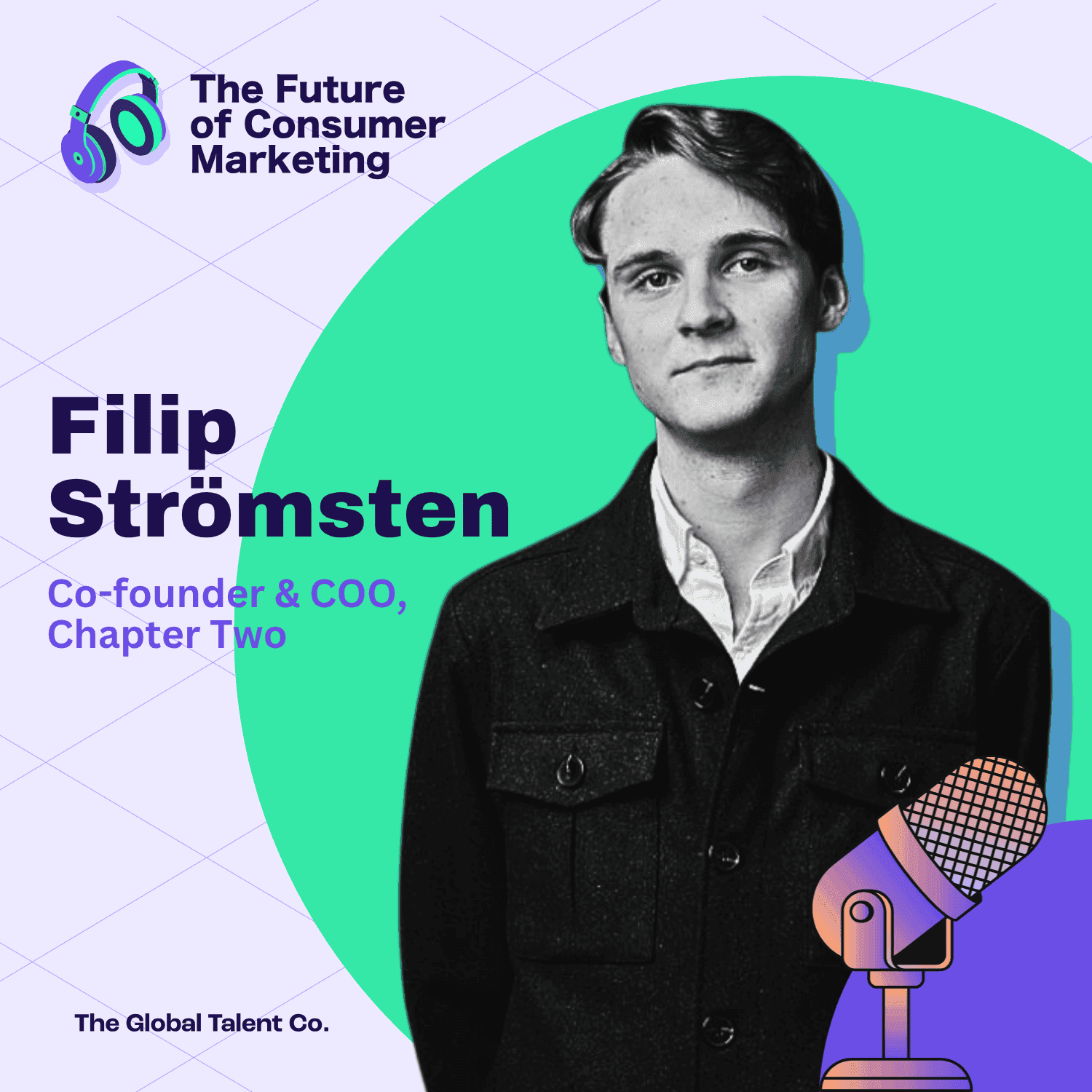
Philip Stromsten is founder and COO of Chapter 2. He previously produced music, got signed at 18, and learned the industry lacks transparency; he was motivated by major catalog sales reported around 2020.
Key claims
Music royalty data is “broken” and inconsistent, making accurate valuation costly; music rights are stable/un-correlated but undervalued due to high discount rates and data complexity. Chapter 2 provides benchmark estimates (not definitive valuations) and uses AI to normalize many royalty-statement formats.
Notable examples
Catalog sales involving Rodney Jerkins, Bigger Boom/Blackpink; Justin Bieber is cited as an example of a catalog seller. Mentions Bob Dylan, Neil Young, Shakira, and TikTok/Suno AI music controversies.
Written by AI. May contain mistakes. Listen to the episode to check what was said.
Chapters
Tap a time to open that second in VOUnderstanding Chapter 2's Mission
1:02 to 4:10
Philip explains Chapter 2's focus on data analytics for music catalog transactions.
“Now, it really is very exciting to have you guys from Chapter 2 hop on.”
Challenges in Music Earnings Transparency
4:10 to 8:14
Discussion on the complexities of music earnings data and the lack of transparency.
“So like that kind of like gave me some sort of insight that like the music industry is fucked.”
The Value of Music as an Asset
8:14 to 12:04
Philip discusses the misvaluation of music rights and the stability of music as an investment.
“make it straightforward and give music the actual value it has because it really is a complex musical industry.”
Building Trust and Credibility in Chapter 2
12:04 to 13:50
Philip shares insights on gaining market trust and explaining complex industry issues.
“as a founder and operator of chapter two?”
The Future of Creators in Music
13:50 to 14:00
Discussion on how Chapter 2 aims to help music creators understand their value more clearly.
“supposed to go into that topic, but it's unfortunate.”
Valuing Music Catalogs
14:00 to 16:30
Understanding how music catalogs are valued and the challenges involved.
“or maybe a recording label could contact you guys to sell their catalog because they need money or whatever.”
Predicting Music Trends
16:30 to 20:07
Discussing the unpredictability of song relevance and trends in the music industry.
“And Philip, have you found yourself being able to predict which songs might stay relevant?”
Building a Data-Driven Platform
20:07 to 23:05
Insights into the challenges and counterintuitive lessons learned in creating a B2B platform.
“But all of these income statements in the music industry, they look different.”
The Role of AI in Music
23:05 to 25:48
Exploring how AI can be integrated into the music industry and the necessity for clean data.
“The whole thing is Suno, I believe, is the platform that's being...”
Advice for Aspiring Founders
25:48 to 27:05
Key advice on resilience for founders building data-driven marketplaces.
“that helps people sell their catalogs and they choose the value.”
Transcript
Automatic transcript. May contain errors.0:00This show is brought to you by the Global Talent Co, a marketing leader's best friend in these times of budget cuts and efficient growth. We help marketing leaders find, hire, vet, and manage amazing marketing talent for 50 to 70 % less than their U.S. and European counterparts. To book a free consultation, visit globaltalent.co. Hey, everybody. Thank you for tuning in. My name is Andres Figueira, and I'm going to be your host for the day. This show is brought to you by The Global Talent Company, a company that's connecting top remote professionals from South Africa, South America, and anywhere really with leading tech companies worldwide.
0:36So if your team is looking to hire world-class South American or South African talent, just head on over to The Global Talent Co. and see how we can help. And with me here today, I have Philip Stromsten, the founder and chief operations officer at Chapter 2, a company that is creating a platform for music catalog transactions, which will be powered by analytics and extensive data, which was also formerly known as Another Block. So, Philip, it's a pleasure to have you here. How are you doing today? Very good. Thank you so much for being here. Pleasure. Now, it really is very exciting to have you guys from Chapter 2 hop on.
1:11when I was investigating the company, I must say, I read that it's a platform for music catalog transactions, but I must admit, and I believe the audience will be curious as well. Would you be able to elaborate a bit more about that so that you can explain what chapter two exactly does? Of course. So like if I were to just shortly describe it, like in essence, we're actually a data company. So like we've worked a lot with catalog transactions, but we're actually a data company. So like everything kind of stems down to like earnings data in the music industry. So Like if you look at creators, like in the music industry, you have all sorts of creators, right?
1:43You have songwriters, you have artists, you have all types of people creating music. When you create music, if you're lucky enough, you will also earn money on that music, right? But the difficulty is that when you actually earn money, it's very, very difficult to actually see where that money comes from. So like, it's very hard to know where is the money based? Like, is it coming from Spotify? Is it coming from Apple? What type of royalty is it? Like, it's depending on if it's, you know, in TV or if it's on Spotify, like it's type of royalties. And it's very hard to just find out where the money is coming from, essentially.
2:12And what we are doing foundationally is just cleaning the world of data so that it makes sense where creators money actually is coming from so that you have deep analytics, understanding how the earnings is like, where does the money come from? How is it projecting in the future? So like everything in regards to earnings data. And since we're doing that, it's also very easy for us to actually transact with music, right because the essence of transacting music rights or copyright is understanding how much music has actually earned historically speaking and since we are a data company it's very easy for us to do that because our technology just makes it so easy to figure that out so like the first product that we did based on our technology is to kind of help creators out there if they want to sell their catalog like get you know money up front like you're selling a property or whatever we help to facilitate that transactions like we have a bunch of buyers all around the world which are like music funds normally.
3:06They acquire catalog because it's like an alternative investment. And we kind of facilitate that transaction and just show these music funds like how has this catalog performed historically and all of that, just making it so easy for creators to actually sell their catalog. Okay, so for example, just like a wild example here, this is, I know the last artist I understand that sold his musical catalog was like Justin Bieber. He sold all his songs. So this would be the platform that would allow for any musician or creator to actually sell everything they've created to uninteresting. Exactly. Okay, that is amazing.
3:42And Philip, how did you actually reach the point where you decided that this was the direction you wanted chapter two to go to? Because I know you've been there since the beginning. So it's like, why music? No, so like, to begin with, like, when I grew up, I've always been like, super interested in music. So like, I started producing music, got signed to a record label when I was 18. So like, that was my encounter with, you know, the music industry, like getting a record label agreement on email. I had no clue about agreements. Like I'm not a lawyer. I don't understand anything. So like that kind of like gave me some sort of insight that like the music industry is fucked.
4:15It is. Because there's no transparency whatsoever, but simultaneously also very interested in finance. So when I started to see all of these kind of catalog transactions that were starting to be apparent in the news, like around 2020 with, you know, Bob Dylan, Neil Young, Shakira, were like some of the biggest songwriters, some of the like in the world that were selling their catalogs, like I was just super intrigued. So the first thing that we actually did was to create a marketplace for it. And that was what you said in the beginning, another block. So like another block was a marketplace for everybody to kind of invest in music rights.
4:47But we kind of realized like hosting that marketplace was that the earnings data was so completely fucked in the music industry that we could never host a marketplace because we couldn't value music quickly. So like we had to kind of solve the most foundational problem in the music industry before we can allow for, you know, complete market liquidity for music rights. So that's kind of how we come about the problem, so to say. I understand. So you had a solution for something that you like, but then you noticed that the problem went way deeper. So you had to solve a bunch of other stuff before you could actually.
5:20Okay. Okay. I get that. I get that. And Philip, in order for an artist to place their catalog in chapter two for sale or anything like that, do they need to meet certain requirements or do they have to have a certain level of audience or something like that in order to be able to? Or can anybody just place their music there and see if another person wants to purchase it? So like in theory, anybody like we have said that you should at least have had your music out there for more than three years. And the reason why is because we never encourage any creator, to be honest, to sell their catalog if it's younger than three years.
5:55That is because it's not mature enough. So like when you like ask people that invest in music, they will always undervalue newer released songs because you can't really see the stability. Like it's very hard to project how new music is going to perform. Right. So like the only really requirement that we have is like, yeah, have your catalog a bit mature and that you have your music out there for a while before you actually sell it. Okay. That's wise. And I also feel that for an artist, if they're starting out and they have like 10 songs like they created in one year, they could sell it out of need.
6:28But with three years, they could actually understand their trajectory and see if they're actually getting a hit or if not, or if it's best to sell. So I like that timeline. It seems very wise. And Philip, have you seen or do you believe there's any big misconception about what makes music valuable as an asset? Do you believe it's not being properly valued by the market right now? And that is something that also chapter two is helping solve? Definitely. And I think that the problem with like music in general, right, is that it's so difficult to understand the historical earnings. And like when it is so difficult to understand the historical earnings, there's also a lot of costs associated with that process of understanding that.
7:10Right. And when there is a lot of costs, that also decreases the value. So like for me, music rights is literally the most like one of the most stable asset classes in the world. Like if you look at investments, like it's uncorrelated with the overall market and which is like makes sense, right? When you think about it, because it's not that you are listening less to music when it's a recession, for example, like the opposite. You might even be listening more. Exactly, right? So like music will always generate revenue like all the time, which makes it an extremely stable asset class. And like if you look, I'm not going to go into like financial like metrics to kind of explain how like fucked up it is.
7:47But in essence, it's extremely undervalued. And like if you look at like discount rates, which, you know, investors apply when they're valuing something, those are extremely high for music. And what that essentially means is that they are accounting for a lot more risk than should be in there. And the reason why it's in there is because the process of just understanding music rights to begin with is so complicated. It's very difficult. No, no, I get it. But I love the cause for chapter two that's trying to like simplify all this and try to make it straightforward and give music the actual value it has because it really is a complex musical industry.
8:23And I've talked to other companies that, for example, help creators publish copyrighted songs on YouTube and that way they allowed them to get the copyrights. But everything is so complex. It's nothing is straightforward. So it really is very nice that you're trying to put some order in this world because my goodness, I've been a musical creator as well. Like I put my first song about a year ago and my second music. I like hip hop. I rap in English and Spanish. So I'm like delving into that style. But the thing is that I do understand that the song hasn't been massively heard, but where it has been heard and everything, it really is pretty difficult to understand where all the data is coming from.
9:02So. Yeah. And I mean, that is the big industry issue as well, right? Because if creators can't really understand how much you're earning and like how they like have historically performed, like how are they supposed to make sound financial decisions, right? It's kind of like, How are you supposed to know if your new job gives you a better salary if you don't know your existing salary? It makes no sense, right? It creates so many problems for creators. It's true. And even from the standpoint of you vouching for yourself, you showing your portfolio, it's like, no, this song has earned this much.
9:35But like, okay, and from where? And like, maybe Thailand, because I had a bunch of listeners there that I didn't expect, but you're not going to provide the proper credits. So I love that. I love that. It's a mess. It really is. And OK, in terms of the building of what Chapter 2 is, Philip, what do you feel has been harder to accomplish? The technological platform that Chapter 2 is built on now or gaining the trust from the market? Because it's such a complex industry. I imagine you've also had to deal with the marketing of getting the consumers and the businesses you work with to actually trust Chapter 2 and understand that it really works.
10:11Could you maybe tell us a bit more about that part of the process? Yeah, absolutely. And I think like to answer your first question, like what has been, you know, the biggest hurdle made is actually not like obviously like technically this has been like so hard problem to solve. We're like begin solving, but I love our team and our tech team is literally genius. So like they have been figuring that out. But I think the biggest problem that we have been having is actually like trying to explain this to people outside the industry, because like this is such a big problem that nobody really understands.
10:42and nobody really understands the impact of the problem either. So like when I come on and like I try to explain that, you know, the royalty data is broken, like it's very difficult for people to like interpret what does that mean, right? So I think that that has been our biggest problem in general, like credibility wise and like getting, you know, customers and like creators. It has been quite successful for us. Like we worked with Rodney Jerkins, for example, and like sold his catalog that was quite apparent in the news like three months ago. And he wrote for, you know, his dark shots. Like he worked for Michael Jackson.
11:12He worked for Whitney. So like he is a very big one. And then we worked with Bigger Boom, for example, that was the main producer for Blackpink. And Blackpink is the K-pop band that, you know, pretty much took K-pop to West. So like we have been very successful in like getting these creators and like getting the message out there to them, I think, or I hope so, at least. But I think the biggest problem has been trying to explain the problem to people outside the industry. Okay. So yeah. No, I understand that this could be an issue where you're so close to the problem that you understand it. Exactly.
11:43And all that when somebody from outside comes here, you're like, yeah. And you just spit out all this data to them. And it's like, wait. Right. Exactly. Exactly that. I can totally see why somebody that's not in the musical industry might be a bit confounded about what's happening there. Yeah, 100%. That's okay. Okay, Philip, and from your early career, what skill do you feel has been most valuable as a founder and operator of chapter two? Like, what do you feel has helped you be the most resilient and be able to progress through such a, what's it called? I want to say difficult obstacle to overcome, but I feel you guys are on the other side of the hurdle now.
12:21Yeah. And I think like for me, it's like maybe purpose, I think. Like, I love this, to be honest. I love what I do. I wake up every morning to, yeah, and I love everything about it. But I think maybe like it's so rewarding to like see that like because when we're helping a creator out and like selling their catalog, like getting a proper, you know, valuation that they wouldn't have gotten like if they didn't work with us, that like gives such a reward because it's such a direct impact, right? Because it's life changing money many of the time. So like they can literally change their whole life just working with us.
12:53And that is a pretty cool concept. So like I think that that has been the main driver. But then I'm just a workaholic as well. So like I love to work. I think the line becomes a bit more gray when what you do, because you don't feel like you're getting up for work. You're just getting up on your mission and what drives. Exactly. I love that. I love that. If I had to actually the opportunity to work with music as well, I would love it. I studied musical production here in the University of Palermo, and I saw several classes regarding the business aspect of music. And it's just like what you say.
13:25It is so complex and I feel that creators are they're handed the short end of the stick a bit with what is everything in terms of earnings and understanding their data and everything they're not very aware so and I mean like they shouldn't either right like creators should focus on what they do best which is creating and then it's like it's so sad in a way that many of the times like their unawareness is like exploited especially like financially it's that yeah which we're not supposed to go into that topic, but it's unfortunate. No, no, I totally agree with you, man. I totally agree with you.
14:00And okay, Philip, do you guys also when creator or I'm not even sure, or maybe a recording label could contact you guys to sell their catalog because they need money or whatever. Absolutely. Is the dollar or the value to the music placed by the creator? Or do you guys at chapter two also help the person understand how much their music is worth due to the metrics you guys have available? So like now we don't offer like proper valuations. So like if you can't come to us and like ask, what is, you know, my valuation for my catalog? We give a benchmark like estimate when someone is coming and like consulting with us to sell their catalog.
14:39The reason why we do that is just because like we want to kind of manage expectations. So like when someone is wanting to sell their catalog through us, we then come with like a benchmark estimated value of what we believe that it's worth. But that doesn't say anything about what, you know, global funds out there believe it's worth, because everybody has, you know, different valuation methods. Like everybody believes like how it will, you know, project in the future is different. Like it's very hard to say this is what it's worth, but we can give like a data estimate. No, I get that. And that's why I'm asking, because I'm just a bit confused with how can you properly value something as intangible as a song and its cultural impact or where it came from?
15:19because as an artist, if you ask me, how much is your song worth? I'm like, it's worth a million dollars. You have no idea how much I put into it. But that's a little bit skewed due to my perspective of my song and being mine and everything. So it must be difficult or it must be a bit intense to set expectations with artists who are super proud of their music and it may not be as expensive as they believe. Yes. And therefore, like we try to be so, like we really try to emphasize that like the benchmark valuations that we give are purely from a financial point of view. So like purely looking at the money.
15:53But then again, there's so much emotional and cultural value that goes into music, right? Which you shouldn't disregard. And there are investors that like take that into account to some extent as well. But in the end of the day, what you need to like understand is like when someone is selling their catalog, investors out there will view that as an alternative investment, right? So like they will maybe look at it from a financial point of view. So therefore, it is many of the times it's a pretty sensitive topic, obviously, because like many creators are literally selling their kid, like it's their life's work.
16:27So yeah, I don't know if I answered your question, but I hope so. No, no, no, no, it's perfect. And Philip, have you found yourself being able to predict which songs might stay relevant? Or do you maybe get a gut feeling with a catalog you receive and you say, oh my goodness, this guy's selling this and it might be a hit soon or something like that. Yeah, impossible. Like, it's literally impossible. And like everybody that says that they have found, you know, some sort of method to like, I have found, you know, like I can see which songs will like blow, like impossible. Like there is no scientific model to do that whatsoever.
17:00And the reason is because it's so random, right? Like the majority of the songs that break do that through TikTok today. Nobody knows how that algorithm really works. And like, so it's so random. it's so much identity that plays into it like it's super difficult to do that i totally get that like if you had told me six months ago that today i would be waking up and listening to k-pop demon hunters i have said you're crazy man and it's been two week fad that i just got the movie with my girlfriend i can't stop humming the songs in my head and it's like oh my goodness how did these people get so big so quick and it's just like totally respected so i feel that it's kind of the same that I thought like with it have you heard Brazilian funk yes I have it's crazy and to begin with like I didn't understand that either because it literally has felt like you know like a house song that is just distorted like immensely right but in some way people like that right and to like I am starting to enjoy it as well like it's weird I love how you get to a musical genre and you're like I don't get it and then you listen to it a bit more and you start getting it And it's like, oh, I like that now.
18:10So cool. And okay, Philip, what is the most counterintuitive thing that you've learned about building a B2B platform like Chapter 2 is? Oh, that is a very good question. Like counterintuitive in, can you give an example? Or maybe in the sense of the fact that you're building this and you thought that this would work out, but the total opposite is what you actually needed. So you were like, oh, hey, maybe that wasn't the way, but this is something that'll work. maybe then like the whole founding story of the company is kind of counterintuitive if you think about it really is it really is yeah in one direction i noticed that you had to pivot because there was all of this broken market and industry that you needed to fix oh my god yeah i can't believe you took this undertaking in your hands and you're like i'll fix the music industry yeah somebody needs to do it and i think that we come from a very like point of view where we actually can do it which is a big part of our story i think and that is like partly one like Like we have a lot of data, right?
19:07And like in order to build technology that understands royalty data, you also need a lot of royalty data. Of course. Because you can't apply just AI on it. And that kind of explains a lot because when you apply, you know, LLMs to like royalty data, LLMs doesn't understand it because there is no inherent logic that is in it. Which says a lot about the industry to begin with. So what you need to do is like literally define a lot of things to begin with before you can start applying AI to it. And that is also a part of what we believe is the vision here, that like we are creating the infrastructure for clean data in the music industry.
19:42And once you have clean data, that is when you can start applying AI and a lot of those things to it, which is very exciting. That was exactly the next question I had in the way, which is AI. So you need to make sure the data is clean and a bit more logical so that the AI can understand it. But before that, do you have AI help you in any other parts of the process? us? Like we use AI in like all of our tech to be honest like because like we have essentially trained partly one to just like clean the data like AI is a very big part of that just trying to understand all of these various formats that is out in the industry so like and to be maybe a bit more specific about that so like you have a lot of royalty statements right and what a royalty statement is is essentially an income statement and that is what all of these creators are receiving to kind of, yeah, understand their historical learnings, right?
20:32But all of these income statements in the music industry, they look different. So like Universal, they have their own way of presenting that. And like Warner, they have their own way of presenting that. Like all of these different stakeholders, there's so many different type of formats. And that creates so many issues because it's kind of like, imagine, you know, the corporate market, like it wouldn't function if there was no kind of like consensus around, like this is how we produce balance sheets, for example, or like this is how we account. it. And like, and that is the music industry. Like there are no rules, there's no consensus around pretty much anything.
21:04So like we are using AI for them is just like we have trained that on all of these formats and then it can start understanding formats that it hasn't seen before. So that is a big part of it. Okay. No. And now as you mentioned it, I'm imagining it's like getting different receipts from different labels and none of them look alike. And it's like, how do I read, how much I spend, how much I earn, how much I'm getting. Okay. Okay. I understand. Exactly. And have you guys ever, and this is more out of my curiosity, Philip, because I'm a big crypto fan. Have you guys ever thought about placing all this on blockchain?
21:35We actually did it on blockchain when we had the marketplace. Then we used blockchain to distribute royalties. Exactly. But the issue with crypto in the music industry is that in order for crypto to philosophically work, in my opinion, then everything needs to be decentralized. Because if you have a centralized intermediary, it defeats the whole purpose of blockchain, right? Exactly, it's true. So like what that essentially would mean is like if people start paying, you know, on a like listening to music on a decentralized platform, like let's say that Spotify would become decentralized, that would need to happen for everything to be decentralized.
22:11So like if consumption is not decentralized, then nothing can be. And that is also what we noticed. No, I totally get that. And it's true that the whole environment needs to be on the blockchain in order for it to work properly, because if not, even the transmission of data could be skewed. You're not getting the proper things. You don't have the actual visibility that blockchain provides, which is something that is super in the whole industry. So, OK. And also, I would love to know, Philip, do you have any idea, prediction or just a certain type of gut feeling of how do you feel the music industry is going to look like in five years?
22:46Do you think you have any type of idea of the direction is going in? Like, I have actually no clue. And the reason why is because there is so many things that is like so hard to and like with AI, right? Right. Like AI and producing music with AI is a highly controversial topic, right? Oh, yeah. The whole thing is Suno, I believe, is the platform that's being... Right. Yes. But Suno is also in a lawsuit with Universal. So like, I don't really know why they are like up and running. Like, it doesn't make sense. Of course. But there are a lot of controversies like in that and a lot of people like some people love that you can use AI to create music because in some ways it's democratizing, you know, music creation, right?
23:27But some don't like it at all because you would like a human that is behind, you know, the creative work, which also makes sense. But in the end of the day, I think that we need to like figure out a way of like what will happen in regards to AI generated music to kind of understand what will happen with the music industry in five years. And I think that that hasn't really happened. Like no one is really has agreed on that. No, no, no. Everybody's just seeing what happened. It's like, what? Right. So it's difficult, but it's very difficult. No, no, no. No, I get that. I get that. I get that. And Philip, I'm noticing that we're almost at the end of the episode.
24:02So I do have one more question for you. And this one is more driven towards the audience and anybody who could be listening. So it would be is if you could only give one piece of advice to a founder or a COO that's helping build a data-driven marketplace from the beginning, what would it be? What would you have loved to know when you started out that you're like, oh my goodness, this would have saved me so much time? Oh, that's a very good question. Like I would say partly like to answer one, and this might sound cliche, but that is like resilience, especially like creating data companies, because data companies is like, it's very difficult in the sense that you need a lot of data in order for it to work.
Read the full transcript
24:41Right. So like, I think it depends on whether you are creating a data company based on public data or private data, because if you're doing it with private data, like we are doing that like you need to have resilience because it takes a lot of time. And I don't think that people should view all of these extremely, you know, fast growing AI startups as some sort of benchmark to like we need to hit, you know, this revenue in like$10 million in ARR in three months, because otherwise we will not like I think that all of those things is a little bit, you know, inflated to some extent. and the numbers are inflated as well, mathematically speaking.
25:15Yeah. So like, I think, like, I don't know if that is a boring answer, but for me, I think resilience is just the most important part of like building any company. I understand that. And I feel it as well, because as you mentioned it, it's private data, the data you guys are working with, and you're not going to have access to that at the beginning. So I would imagine that great part of the journey of what chapter two is now, the majority of it was actually scraping and finding the data you guys now have available on your own servers or in your power. And that way you're able to provide this super cool service that helps people sell their catalogs and they choose the value.
25:52So I get that. It's not cliche. I believe it's super appropriate to what you guys are doing. So if anybody's listening and you're entering a data-driven marketplace, just know you'll need to be resilient. It's the main... but other than that Philip I would also love to give you the moment and the space to let anybody know if there's I don't know if a musical creator is listening to us or if a record label happens to hear this how could they go about contacting chapter 2 and seeing if they need to sell their catalog or anything like that yeah like the easiest way is to contact like go into our website like it's chapter2.com so it's a very simple domain but other than that you can also contact like you can contact me personally on LinkedIn if you want that Philip Stromsten And then also our Instagram, enter chapter two.
26:36So you can just send a text there and we'll take care of it. That is perfect. So you've heard it here first, guys. If you have a musical catalog you want to sell, just go to chapter two dot com. And thank you so much for listening to anybody in the audience. And we hope you keep returning to see the different companies that we speak to and the several personalities that we learn about in the show. Philip, thank you so much for hopping on here with us. It really was. Thank you. Pleasure being here. Likewise. Likewise. Thank you.
From the publisher
In this episode of The Future of Consumer Marketing, host Andres Figueira interviews Filip Strömsten, Co-founder and COO of Chapter Two. Chapter Two is solving one of the music industry's most foundational problems: royalty data is completely broken. While catalog acquisitions from artists like Justin Bieber and Bob Dylan make headlines, the underlying infrastructure for understanding music earnings remains opaque and fragmented. Chapter Two is building the data infrastructure that will enable proper valuation of music catalogs, starting with a transaction platform that has already facilitated sales for legendary producers like Rodney "Darkchild" Jerkins (Michael Jackson, Whitney Houston) and Bankabooom (Blackpink's main producer). By cleaning and standardizing earnings data across hundreds of different royalty statement formats, they're creating transparency in an industry where creators literally don't know where their money comes from.
Topics Discussed:- Building AI-powered data infrastructure to clean fragmented music royalty data across hundreds of formats
- Facilitating music catalog transactions for creators seeking liquidity on their life's work
- Navigating the challenge of explaining complex B2B infrastructure problems to non-industry audiences
- Using AI to understand and standardize non-logical data structures before applying advanced analytics
- Managing the tension between financial valuation and cultural/emotional value in music assets
- Pivoting from a marketplace model to solving foundational data problems first
- The impossibility of predicting music virality and the randomness of TikTok-driven breakout hits
- Why blockchain doesn't work for music rights without fully decentralized consumption platforms