In short
Muesli’s shift from influencer-led skincare products to prescription tele-dermatology, arguing most OTC skincare “doesn’t work” because topical ingredients are regulated as drugs only with prescription, so many products are effectively moisturizers. The episode also covers how Muesli builds trust via real patient results and “before/after” marketing, plus how compounded prescriptions are made quickly for potency.
Guests
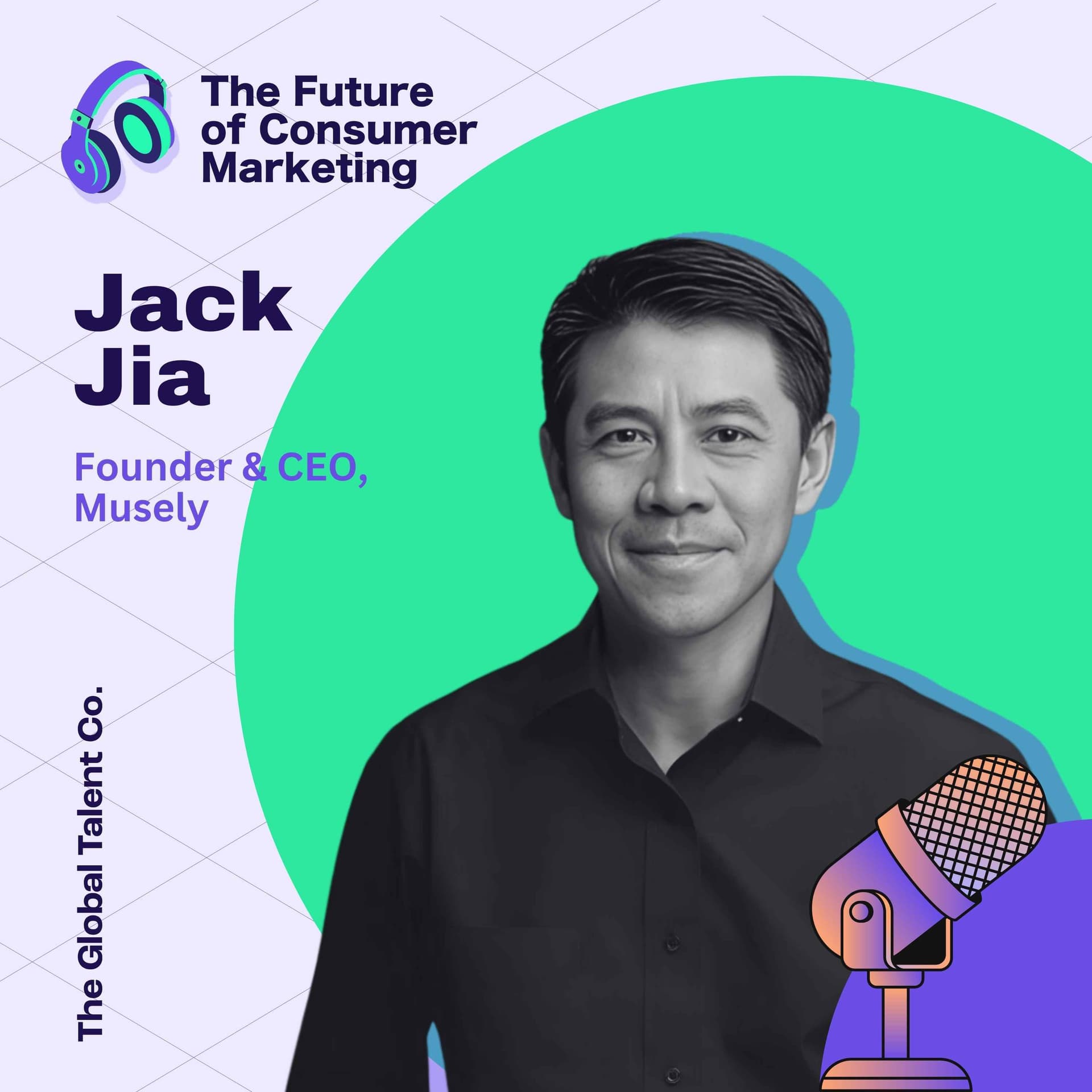
Jack Gia, founder and CEO of Muesli (Silicon Valley serial entrepreneur; fourth company; based in Silicon Valley). Muesli is described as the largest U.S. tele-dermatology/telehealth company focused on skincare, hair care, body care, and aging.
Key claims
Muesli started with a marketplace of 900 products (2017–2018) but pivoted after experts said nothing would work without prescription. Medications are compounded after a tele-visit (often within 24 hours) and are fresher/potent. Marketing avoids models; it amplifies real patient outcomes.
Notable examples
Wife’s 20+ year melasma case; advisors Dr. Marie Jin (board-certified dermatologist), Lori Bush (Rodan and Fields founder/CEO), and Kimber Mazzarazzo (Proactiv GM/EVP). TV ads used eight recruited patients (shot pre-COVID; aired April 2020).
Written by AI. May contain mistakes. Listen to the episode to check what was said.
Chapters
Tap a time to open that second in VOJack Gia's Background and Muesli's Origin
0:48 to 2:11
Jack Gia shares his journey in founding Muesli, a telehealth company focused on skincare.
“prescription wellness company with a focus on accessible and effective telemedicine.”
A Personal Journey Towards Skincare Solutions
2:11 to 3:38
Jack discusses the personal motivations behind Muesli, stemming from his wife's struggles with melasma.
“So my wife had melasma since our son was born, which was 25 years ago.”
Initial Market Research and Challenges
3:38 to 5:23
Jack recounts the challenges they faced while testing various skincare products and the lack of effectiveness.
“So Muesli was first a marketplace of skincare products and to potentially help my wife and other folks.”
Insights from Dermatological Experts
5:23 to 7:16
Jack explains critical insights he gained from dermatologists regarding skincare products and prescriptions.
“And this time either, none of them worked.”
Regulatory Insights on Skincare Products
7:16 to 9:09
Discussion on the laws governing skincare products and why many over-the-counter solutions are ineffective.
“And that was kind of one sort of angle that I got inside.”
Muesli's Transformation to Telemedicine
9:09 to 11:09
Jack describes how Muesli pivoted to telemedicine and the development of their own skincare products.
“especially if you have of any scale, then you would not allow to do it, right?”
Affordability and Accessibility of Treatments
11:09 to 13:01
Exploration of the affordability of Muesli's treatments compared to traditional doctor visits.
“And every single one of them are formulated by our own chemists, pharmacists, and together in connection or in collaboration with our doctors, our practitioners.”
Building Consumer Trust in Muesli
13:01 to 14:01
Jack discusses the importance of trust in skincare and how Muesli has built credibility with consumers.
“because most of the, you know, dermatological medications are some kind of asset, right?”
The Challenge of Trust in Skincare
14:01 to 14:54
Learn how trust issues impact patient experiences in skincare.
“Yeah, you actually hit the nail on the head.”
Real Patient Stories and Community Engagement
14:54 to 17:39
Discover how real patient results and community forums build trust.
“And I think this, her story repeated so many times.”
Show all 13 chapters
Marketing Strategy: Real vs. Ideal
17:39 to 21:52
Understand the effective marketing strategy of using real patients.
“The results build trust and the trust gives you more results and then creates a giant flywheel of more results.”
Consumer Preferences in Skincare
21:52 to 23:22
Explore how skincare marketing resonates differently across age demographics.
“A woman of 25 years old, probably the only skin condition that this person may have is acne.”
Advice for New Entrepreneurs
23:22 to 26:35
Gain insights on the importance of resilience and learning from failure.
“And Jack, I know we're almost to time and I know you have your next meeting coming up and your talk.”
Transcript
Automatic transcript. May contain errors.0:00This show is brought to you by the Global Talent Co, a marketing leader's best friend in these times of budget cuts and efficient growth. We help marketing leaders find, hire, vet, and manage amazing marketing talent for 50 to 70 % less than their U.S. and European counterparts. To book a free consultation, visit globaltalent.co. Hey, everybody. Thank you for listening. My name is Andres Figueira, and I'll be your podcast host for the day. And this show is brought to you by the Global Talent Company, a company that's connecting top remote professionals from Argentina, South Africa, and all around the world with tech companies worldwide.
0:37So if your team is looking to hire world-class South American, South African, or from anywhere really, any type of talent, just head over to globaltalent.co and see how we can help. And also with me today, I'm speaking with Jack Gia, the founder and CEO at Muesli, a prescription wellness company with a focus on accessible and effective telemedicine. How's it going, Jack? Welcome to the show. Thank you, Andreas. Yeah, going well. It's Friday. Yes, it is. It is Friday and the body knows it. Jack, just so that we can get this episode started and so that we can also get the audience a bit more in context, would you tell us a bit more about your background, about what Muesli is in your own words and how you came up to found and be the whole founder and CEO of a prescription wellness company.
1:24Yeah. Muesli is, as you said, is a telehealth company, the largest in the U.S. focused on skincare, hair care, body care, and overall aging. And we're the largest tele-dermatology online company. I'm a serial entrepreneur. I'm based in Silicon Valley, and this is kind of my fourth company. It's fairly accidental how I got into this business. And yeah, I was a more traditional Silicon Valley software technologist, building multiple companies, including, you know, one that went IPO during the first dot com. And then another company that was now we call it AI company. One was really out of, you know, personal sort of a need.
2:06Not me, but my wife's personal need, as well as accidental discovery. Right. So my wife had melasma since our son was born, which was 25 years ago. And then since that pregnancy and childbirth, she had this dark spot on her face, melasma that just cannot be for many years. And after she tried many, many dozens of products, creams and lasers for 20 plus years, nothing worked. So, you know, there was definitely a real need to find a solution for her massive dark spots, mustache around her mouth. And, you know, accidentally in that journey, I was able to find something called prescription skincare medications.
2:53Okay. So. Or Mucy, yeah. Wow. I think that's beautiful and coming more so like the creation from a place of love and to help out your wife and with something as sensitive as the skin, which is practically the first thing people see when you look at somebody, it's like the first main organ in our body. And it's crazy that through helping her with that is that you arrived at Muesli. And when did you notice in between helping your wife get better and finding this prescription like body care medicine? When was the aha moment that you said, this could actually be a business and it doesn't just need to be a one thing I'm doing to help my wife.
3:30Right, right. That was actually around 2018. So it was about seven years ago. In fact, the journey took a couple of turns. So we first actually built a marketplace. So Muesli was first a marketplace of skincare products and to potentially help my wife and other folks. So we built this marketplace with both influencers. We call them Muses. That's why Muses, kind of the brand. Muses are aspirational women with knowledge on what skincare product might work. We believe that. I personally believed it. So we actually onboarded. So we had this marketplace with both Muses and brands with 900 skincare products between 2017 and 2018.
4:12That's when we actually built this. We thought that would solve the problem of skincare, real solving skincare conditions or skin conditions. And quick question here. So the Muses, they see the products you have from the brands in Muesli, and then they recommend it between themselves. Like, hey, this one works. This one doesn't work as much. And it's more of like a collaborative community. That's right. That's right. Exactly. And 2017, if you follow the industry, it was actually the heyday of natural organic products. And there were 50 ,000 brands emerged in that period in the U.S. alone. Globally, there were over 200 ,000.
4:50And so there were a lot of brands. Right. So these muses will identify certain brands that worked for them, quote unquote. And then we will start to potentially contact the brands and source that products and then put them on the marketplace. So in that one and a half, two year journey, we onboarded 900 skincare product. We thought they would solve the problem. And there were several dozen dark spa correctors. My wife tried it because we thought, OK, this time is different. Of course. Yeah, it turned out there were no difference. And this time either, none of them worked. So the aha moment came after I, you know, got really concerned.
5:31We spent a lot of time and money and onboard these brands. And, you know, these musics are start to promote them and test them. My wife included, and they were no different. So why? That's where the three ladies really helped me. These people are in the space, right? So one is Dr. Marie Jin, who is now our medical officer, who is a board certified dermatologist. You know, we recruit her as advisor initially just to help to sort through these 900 skincare products. And hey, that's crazy. That sounds like so many products must be overwhelming. It's like, oh, how much do you know? She didn't even bother to look at those products much.
6:11And before she said nothing would work. And I said, well, Dr. Jin, you got to check them out. Look at their ingredients and look at their claims. And she said, well, I don't have to because I've been doing that for the last 25 years. Right. Every week, I have dozens of women bringing whole bags of skincare products. I literally spread it on my table, ask me the same question. You know, Dr. Jin, which one of these? 50, 100. I can imagine my wife too. Hi, Brent. I brought the tallest bag in her repertoire. are. So she said, I have done the research, you know, for 25 years. And I know today, I don't need to do that again because nothing would work.
6:52So that was kind of the doctor's perspective. And I asked, okay, so then there's nothing we can do about this melasma. And she said, no, no, no, there are solutions, but it requires prescription. Oh, okay. Okay. So that was kind of, I know there are prescriptions for real illness, but these are largely cosmetics conditions. And I didn't know there were actually potential drugs that can help on these, you know. That you're going to need a doctor's receipt to obtain. It's not like you get a full account. And that was kind of one sort of angle that I got inside. And another two ladies, one is Lori Bush, who is the founding CEO of Rodan and Fields, which is, you know, a multi-level marketing skincare company, very successful a while back.
7:35Another lady, Kimber Mazzarazzo, she was the general manager and EVP for a product called Proactive. You know, whoever have treated acne before probably would know this. I think I know which one it is. Like I'm not from the States and I believe I've heard of it. Yeah. Both ladies are, you know, have many, many dozens of years, 30, 40 years each of skincare product development background also. Right. They worked at Euclina, Johnson & Johnson before. Both ladies actually told me something even more shocking, right? This is the aha moment, right? They said, well, none of these products will work.
8:12That's a fact. But it's not like L 'Oreal or Estee Lauder, you know, their team don't know what might work. But the problem is that if you put something topical, OTC topical cream on your skin, if that cream can interact with your skin cells, do something good or bad, right? You know, remove wrinkles, reduce wrinkles. That's good. Right. or causing cancer. But in your way, that's the very legal definition of a drug. So you are not allowed to put something topical, OTC stuff like that into skincare ingredients. And so 30 years ago, when we had little understanding of modern biology, you know, DNA, cellular structure, you can get away with some of this, putting ingredients that may actually have good impact for your general skincare, hair care problems.
9:08But today, you know, FDA would shut you down, especially if you have of any scale, then you would not allow to do it, right? So the bottom line is I was shocked to hear that. I said, are you saying all those skincare products that you can buy in Sephora, Elta? They don't work. How many spores? Yeah, you know, duty-free shops in the airport, right? They are just moisturizers? And the answer is yes, that's by law. Wow. Like, I'm just thinking right now, hearing your story of my mom, how many times she's bought something over the counter that she thinks works. And it's like, I'm going to tell her the truth now.
9:46And it's like, mother, you need something that's prescribed. Okay. I don't want to direct you. So interesting. Yeah. So that's that. We had to pivot one more time in 2018. Right. And then that's when we launched telemedicine in 2019. six, nine months later after we built the whole telehealth technology and we have to do pilot trials. And then we also realized the medications, although there are medication can treat these conditions, generally there is no well, you know, tested, manufacturally made pharmaceutical products for these cosmetics conditions. So we have to end up compound our medications to really create formulas on our own.
10:25Although the ingredients are there, but how do you formulate something that is you know, efficacious and, you know, cheap and affordable. It's not, you know, actually didn't exist because these cosmetics conditions are not covered by insurance. Therefore, there's no really big pharmaceutical companies really have no incentive to make drugs for that, for something that insurance covered. I understand. And Jack, from what I'm hearing in the story, then Muesli starts out trying over these 900 brands, but nowadays you guys created your own product? Yeah. Yeah. We started out with just two treatments in 2019.
11:05Today we have 23 different treatments now. So we're more than 10X in six years. And every single one of them are formulated by our own chemists, pharmacists, and together in connection or in collaboration with our doctors, our practitioners. Wow, that is amazing, Jack. And are your products covered by insurance? Like, is this something like that? I would say 95 to 98 % of our, the conditions we treat are not covered by insurance. Even those couple of them are covered. It's very hard to get insurance coverage. You had to fight with an insurance company a lot. So we made the drug so affordable, it actually cheaper than your doctor visits.
11:51So your copayment is more expensive than actually. Okay, it's like the consumer is going to say, or the patient is going to say like, yeah, I prefer just to buy it because I know I need it than even to go to the doctor to get it prescribed. Although you do need a prescription to get these, right? That's why we provide, you know, 25 board certified dermatologists, OBGYN doctors, so they can, you know, through telemedicine platform that we have, they can see patients and they will get prescribed. And not only in these 223 treatments, but also with individual formulas that is customized for particular conditions.
12:25Now, we have all over 100 different formulas for the doctor to choose and to customize for that particular patient. And our medications, because they're compounded, so therefore they are not pre-made. So doctor writes prescription first. Then one of our three pharmacies will compound medications immediate after. Right. So within typically 24 hours, your drug will be made. Okay. Whereas both active and inactive, you know, it is really a cocktail of ingredients. And then that gets filled and dispensed and mailed to your home. So we have this very freshly made medications, which also makes the drugs a lot more potent because most of the, you know, dermatological medications are some kind of asset, right?
13:12You know, 90 % are some kind of asset. So they oxidize the moment they're made. So their shelf life is pretty short. So when they're freshly made, they got their 100 % potency. Exactly. So we have this notion from farm to table, right? Farm being pharmacy farm. And to, you know, so it's fresh in that sense. And then therefore it's more effective. Wow. Okay. This is so interesting. I had no idea that this was even possible. And the way that you're organizing it, I think it's amazing. And Jack, would you be able to elaborate a little bit on how you got your consumers to trust Muesli with these custom formulas that you have, with these medicines that you have elaborated and created with your team?
13:54And it's like, how are you able to convey trust to them and have them prefer you over? I don't even know if there's a competitor to what you do since you're the biggest one, but would you be able to tell us more about that? Yeah, you actually hit the nail on the head. The trust is actually the biggest problem. It's not just the solution. Well, it is the solution as well, but it is the biggest problem. Just imagine my wife's scenario, right? You know, I tried everything else and the kitchen sink, right? She literally started to make her own things. She heard like coffee and green tea and cucumbers can help these dark spots.
14:31So she would put, you know, all the blended, you know. I can't imagine how it's. But nothing worked, right? Right. Everything, everything else, nothing worked for 10 years, 20 years, 30 years in some cases until Muesli, right? That's kind of the most common feedback and turn out that, you know, now we have over a million patients started out with the first one, my wife. Right. And I think this, her story repeated so many times. That's really the only reason why we succeeded is, you know, efficacious formula, create results, the results, there's people, right? It's the before and after. It's not just one, it's not just 10.
15:11We've had tens of thousands of patients report in. Wow. In fact, it is so much. Initially, we just get emails. We didn't even know, right? It's like we could email these before and after even friends of us, you know, got treated. And then we say, well, let's create a forum. Now the forum actually lives on our Muesli app. And if you go to download music app, the second tab, besides your own medication cabinets and all that stuff is the forum, right? Literally about half of our patients, about half a million participated in this patient-only forum. And most of the posts were really about people posting their results and either their success and their triumph or their frustration.
15:53Hey, it hasn't worked after two weeks. Why? Right. Most of them. All right. There's a whole regimen because this is very different to use these medications. The fundamental principle of how it works is very different than moisturizer. In fact, it's the opposite of moisturizer. So a lot of people don't know that. They think they can just splash on the medication on their face and somehow it will just do magic, right? Which is what moisturizer will do. Moisturizer, we're supposed to stay on the surface, right? And block the pores so that you don't lose, you know, water. Right. That's kind of. And where I think if these medications stays on the top of the epidermis, which is really the skin top, it does nothing.
16:37Right. Because those are dead skins. Oh, poor. It's going to go under trade all the way down to dermis in order for the medication to, you know, that's where the live skin, the root of the skin. To be effective. Right. So then the active ingredients can actually start to prevent, you know, hyperpigmentation from happening in these dark spots from randomly popping up everywhere, like a volcano. you know, breaking out or, you know, creating more new skins and therefore your skin turnover increases. That's how you remove wrinkles. All right. Because when the speed of the skin production increases and the wrinkles start to disappear.
17:14And this is why young people don't have a lot of wrinkles where people like me have a lot more. Because our ability to create new skins slows down dramatically as we age. Okay. Yeah. Yeah. So that's why, you know, these medication really work, but how to use is equally important. And this is why the forum, the community started to help each other out, right? Oh, you didn't do this. Oh, therefore. Okay. So yeah, as a result, we end up having these giant library of before and after. And that's really how we succeeded. The results build trust and the trust gives you more results and then creates a giant flywheel of more results.
17:54and more trust. Yes. And more so in an industry such as medicine and one that is specifically more regarding dermatology. It's like skin is so visible to see if it worked or if it didn't. And it's only logical when you think it through. And it's like, of course, word of mouth and real life testimony of it working is what's going to be the best seller for this, your company and how the smart you're creating. And Jack, did you guys leverage those images of patients and their testimonies and what they mentioned, did you create a sort of marketing campaign around that? Or did you post that on social media?
18:30Obviously, with the patient's permission, but was it like, did you pivot to use that as a strategy? Or was it just within the community of Muesli that the word of mouth started spreading? It is the strategy. Our entire marketing strategy is to amplify these real successes. We don't use models, for example, at all, right? We have multiple television ads, right? When we started out five, six years ago, when we first created the first television ads, in fact, the entire TV media companies, that production company were against using real patients. They think the models are easier to work with when you do.
19:07Yeah, they sell better. People are able to empathize more. No, we must use real patients. And we have to go in the dream. Literally, we recruited eight patients around the country and they all converge right before COVID actually locked down, we got really lucky. You know, a couple of weeks before lockdown, we did the production shoot. And then when the actual, you know, the result came, the TV ads were created and we were in the middle of the lockdown, right? In April of 2020. And so you have already shot everything before the lockdown. Okay. So you have like the product ready. Yeah, that's right.
19:41We got lucky in that sense, but our story of telling real patient, real results has become the cornerstone of our marketing, right? So when we do ads, it's not promoting our own story. It's promoting these patients. We just simply amplify it for them. They may have their own little circle of influence, their friends and family, which we do have a program for them to promote that. Okay. But then we can also help them to promote, you know, social media, on television, billboards. But these are all real patients and our before and after are so powerful. In fact, it is like everywhere. And this is literally has become the even some of the fake product companies start to actually use.
20:27I mean, literally without consent, they will take our images and start to put it down. We had to put a lot of cease and desist letters to some of these other, you know. Oh, my goodness. That's crazy. How dare they? But that's how you know you're doing something right. When people start trying to copy you, that's just because you're at the forefront of something big. And that is just amazing, Jack. And I really like the fact that you're mentioning that, yeah, we want to use real people. And nowadays, when transparency and for trust, you just got to be as real as you can. I think that goes a much longer way with your consumer than just placing a very cute model.
21:01If the thing's all made up or whatever, I don't buy it either. It's like especially our woman. right? Our woman is our middle-aged woman, right? From 30 to 90 years old with most of them are in the 40s and 50s. And they've gone through that. They don't trust some influencer just putting a little bottle holding their... I wouldn't trust it either. Yeah. One of our major competitors did do that was, in fact, with JLo, spent millions of dollars with JLo, with her flying hair, blue sky behind her holding a little bottle and that completely went busted. Yeah. I think the only person that actually took something out of that was J-Lo because she must've...
21:41Yeah, yeah. You know, millions of dollars from that, but no one else. I mean, that model, that marketing works for 20 years old people who have aspirational needs for skincare, right? A woman of 25 years old, probably the only skin condition that this person may have is acne. Outside of acne, her skin would be perfect, right? So that's why you can market almost any brands and, you know, people would happily to try that. That's why there are so many subscription skincare, you know, Ipsy, Birchbox, you know, they send you 10 different skincare products each month. You're happily trying different ones.
22:21Why? Right? Because you don't really have a real need yet, right? Your skins are actually perfect. You're just trying everything out because you can, Yeah, and that's why they appreciate the story in that age demo more so than what's inside the jar, right? You know, that's why every brand has their own unique story. The design of the bottle is so pretty. And even the found, and then everyone appreciate skincare in this sense, almost like a piece of fashion, right? But nobody in that age demo care about what's inside the jar, right? Because they don't have a real problem. That's why moisturizer just fine would be.
22:59I know it's crazy. Like you're opening my eyes with what you're telling me because like I had no idea that that was that way. And I don't have any idea either because my wife certainly spent a lot of money, both expensive and cheap skincare products trying to fix conditions. But I mean, the cheap one turned out to be better. If you want a moisturizer, you should just go buy a cheap one. That's actually the cheaper one. Okay. Okay. I love that. I love that. And Jack, I know we're almost to time and I know you have your next meeting coming up and your talk. So I just want to ask you one more question.
23:31And this one is more for the audience. And it's for any new first time entrepreneur or somebody that's delving into creating a company and founding one. What would be a piece of advice that you'd give them that you would have loved to know when you were starting out? Well, that's definitely more than one. I would say probably the most important thing is you don't think, don't worry about whether you have figured something out already. Right. And, you know, Muesli has a culture called fail fast. I think a lot of good startups would have that. Right. You need to fail fast. You need to iterate to success.
24:10I did not know there would be a prescription skincare product or market opportunity or even a category, right? But it was really through the iteration that the opportunity presented itself. So don't worry about too much. Just go commit yourself, you know, hopefully in a big market opportunity. But sometimes big opportunity may not be there at the very beginning. You just have to find it over time. Awesome. Yeah. So just remain resilient and tenacity goes a long way, even when you're not sure. But I do know that a lot of people fall for imposter syndrome or that they just don't feel that they have it figured out and they prefer to stop until it's perfect.
24:50But waiting for perfection is a fallacy. So that totally. And that's why these two words have loaded meaning. Fail fast, right? Fail means that, you know, for every success in business, you probably need to fail nine times more, right? Fail, you know, nine times you can succeed once. And then that success is not the ultimate success. You just basically passed one impasse. So you need to pass many impasses before you get the ultimate success. The fast part is really critical too. That fast means, you know, A, when you fail fast, you save time, right? Because you can iterate 10 times in order to hit that one chance of finding something really good, right?
25:29If you fail slow, you don't have time. You may have just wasted two years, right? So ideally you want to fail weekly, daily. Okay. Yeah. So that's one part, right? The fast also means you can afford it because the biggest thing for a company to fail is run out of cash, right? Whether you have money or you don't have money, you have funding or no funding, either way, cash is always the king and queen and princess altogether, right? So that's really important to fail fast, to save money so you can fight another day. Of course. Yes, those are really critical. No, and I love it because failing fast means that you're always attempting.
26:11And as long as you keep on attempting it, you'll hit the gold at one point, but you can't stop. So I really love that. And I'll take that lesson for myself as well. And Jack, before I let you go, could you, if anybody here listening today has any skin conditions or has interest in seeing what Muesli has to offer, even to get checked up with a doctor, how would they go about contacting Muesli and using you guys and just seeing what's up? Yeah, just go to Muesli.com. Muesli is N-U-S-E, like Muse, and with L-Y. So we are off Muse, basically, Muesli.com. Perfect. So if you're curious or if you want to know if you do have a skin condition, just make sure to go to Muesli.com and check them out.
Read the full transcript
26:53And yeah, without further ado, Jack, thank you so much for coming on the episode. It has been an honor and it has been super interested. I really do wish the best for Muesli. Thank you so much, Andreas. I hope you have a great rest of your day and a great weekend, Jack. You too. Take care.
From the publisher
In this episode of The Future of Consumer Marketing, host Andres Figueira interviews Jack Jia, founder and CEO of Musely, the largest teledermatology company in the US. Musely transformed from a failed marketplace of 900 skincare products into a prescription wellness company serving over one million patients. When Jack discovered that over-the-counter skincare products are legally required to be ineffective (anything that actually works is classified as a drug), he pivoted to create custom compounded prescription medications. Through authentic patient testimonials and community-driven marketing, Musely built trust in a skeptical market by proving results rather than making promises.
Topics Discussed:- Pivoting from a marketplace model to prescription telehealth after discovering regulatory constraints
- Building trust through authentic patient results rather than influencer marketing
- Creating community-driven support through patient forums and shared experiences
- Developing custom compounded medications for conditions not covered by insurance
- Scaling authentic testimonials across traditional and digital marketing channels
- Competing against established beauty brands through efficacy rather than aspiration