In short
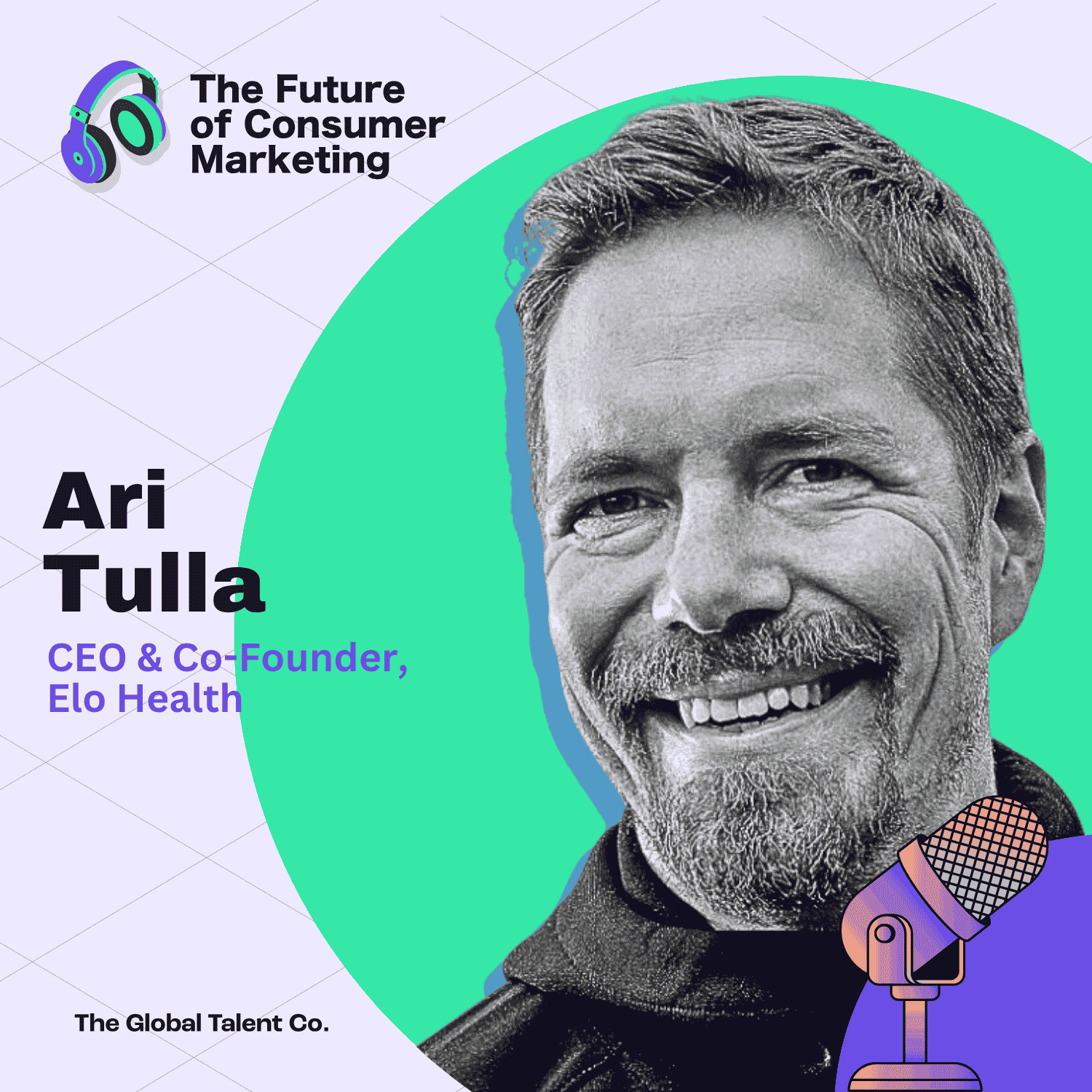
EloHealth’s CEO Ari Tulla explains how the company uses at-home blood biomarker testing plus AI coaching to design personalized nutrition/supplements that complement medical and lifestyle treatments (“one plus one equals more than two”), targeting Gen Z/active wellness seekers and people around 35–40 with kids.
Guest background
Ari Tulla is CEO/co-founder of EloHealth. He previously worked in gaming (including early online/mobile gaming and Nokia’s game store) and in brand marketing at big tobacco (Lucky Strike). He later built healthcare companies after personal tragedy: his first son died in 2010; he became a heavy healthcare user and pivoted from gaming to healthcare entrepreneurship.
Key claims
Many supplement users take unnecessary or harmful stacks; biomarker-guided plans improve outcomes. EloHealth moved from supplements personalization to “food/supplements as medicine,” including IVF support and weight-loss companions for GLP-1 users.
Notable examples
home finger-prick blood test + lab analysis + coach/dietician/doctor + AI nutrition plan; addressing low vitamin D, high LDL, and blood sugar; IVF clinics in the US; “CLP1 protein” to reduce muscle loss and prevent micronutrient deficiencies; demographic focus on women as primary healthcare decision-makers.
Written by AI. May contain mistakes. Listen to the episode to check what was said.
Chapters
Tap a time to open that second in VOIntroduction to EloHealth's Mission
0:00 to 1:09
Learn about EloHealth's unique approach to nutrition products and healthcare.
“We are building nutrition products that when paired up with any other medical treatment can be one plus one equals more than two, maybe three in ideal case.”
Host Introduction and Show Overview
1:09 to 1:36
Meet the host and get an overview of the episode's focus on EloHealth.
“My name is Andres Figueira and I'm going to be your host for the day.”
EloHealth's Unique Blood-Based Approach
1:36 to 8:01
Uncover how EloHealth uses blood tests and AI to personalize nutrition.
“So Ari, it's a pleasure to have you on the show.”
Target Demographics for EloHealth
8:01 to 10:47
Explore the primary demographics EloHealth targets in their marketing.
“Yeah, we had, I mean, like you said in the beginning that, you know, you haven't heard about this type of thing before.”
Marketing Philosophy Evolution
10:47 to 12:39
Understand how EloHealth's marketing strategy has evolved over time.
“if you think about more broadly who are interested about what we do.”
Ari Tulla's Career Journey
12:39 to 14:03
Learn about Ari Tulla's diverse background and experience in gaming and marketing.
“Yeah, I think this is an interesting company because we, you know, If I go back a little bit, so I started my career in gaming, making video games in the late 90s already.”
The Evolution of Mobile Gaming
14:03 to 18:00
Explore the early days of mobile gaming and its explosive growth.
“We built some games you may have heard about, like Snake and others.”
Pivoting to Healthcare
18:00 to 21:08
Learn how personal experiences drove a shift from gaming to healthcare.
“Yeah, so I mean, I really believe that, you know, in the beginning, you need to have a point of view.”
Building Trust in Brands
21:08 to 23:16
Understand the importance of brand trust in the health industry.
“And I really I'm so sorry for your loss, even though it was a long time ago.”
AI's Impact on Business Structure
23:16 to 28:00
Discover how AI is reshaping team structures and productivity.
“My friend wrote recently, it just came out.”
Show all 15 chapters
Company Structure and AI Impact
28:01 to 29:13
Learn how a fully remote company structure impacts efficiency and roles in the age of AI.
“And then, you know, of course, some people live here in the Bay Area, some people live, you know, around, but, you know, we...”
Challenges of Global Health Data Regulations
29:14 to 31:09
Explore the complexities of healthcare data regulations across different countries.
“where you connect the blood biomarker data, blood data, and then you connect with also a kind of wearable device like Apple Watch or glucose sensors, whatever you have.”
The U.S. Healthcare Market Dynamics
31:10 to 32:48
Understand the scale and significance of the U.S. healthcare market compared to the world.
“Although, for example, we do 3D printed gummy vitamins.”
Elo Health's Mission and Brand Significance
32:49 to 33:31
Hear about the vision behind Elo Health and the brand's cultural relevance in Finland.
“I feel like you have such a nice setup now after obviously so many years of experience and trial and error and trying it out.”
How to Access Elo Health Products
33:32 to 34:24
Find out how to access and purchase Elo Health products, including new availability on Amazon.
Transcript
Automatic transcript. May contain errors.0:00We are building nutrition products that when paired up with any other medical treatment can be one plus one equals more than two, maybe three in ideal case. This experience, then how did it help you with EloHealth? I became a heavy user of healthcare system when my first son died in 2010. You know, that's when I decided to go out of gaming and start building healthcare companies and started investing in healthcare companies. What would you say has been your marketing philosophy around everything that the company has been doing? You need to have a point of view. Like, why do you exist as a company?
0:33And then you're going to start building the story. Like, what is this about? Is there a certain demographic that you feel is more predominant? One is the people who turn 40 or, you know, 35, and maybe they have kids. And they're first time thinking, like, maybe I need to think about my health. I don't want to burn the candle both ways because, you know, I want to be here for my kids maybe 30 years now. And the other one is the Zenzi, who are the most active people who are now eating well. Many of them don't drink alcohol anymore. They are living a healthier life and they want to be different from their parents.
1:08Hey, everybody. Thank you for tuning in. My name is Andres Figueira and I'm going to be your host for the day. This show is brought to you by the Global Talent Company, helping fast-growing teams hire exceptional remote talent from Argentina, South Africa and beyond. We connect companies with world-class professionals who bring skill, reliability, and global perspective to every role. So if your team's looking to grow with proven remote talent, just head on over to theglobaltalent.co and see how we can help. And today, with me here, I am speaking with Ari Tulla, CEO and co-founder of EloHealth, a smart nutrition company that's turning food from the leading cause of disease to medicine by harnessing personalized nutrition, AI, and the power of at-home testing.
1:53So Ari, it's a pleasure to have you on the show. How are you doing? Hey, thank you. Great to be here. It really has been a very interesting profile, the one that I looked through in LinkedIn about EloHealth, Ari, because I have not seen a company doing the same thing as you guys, since I feel this is a company that tailors food for other food companies in order to make it healthier. Would that be the angle? And just so that we can give the audience a bit more context, please let me know if I'm wrong and describe Evo Health in your own words. Yeah, so we are building nutrition products that when paired up with any other medical treatment or lifestyle treatment can be one plus one equals more than two, maybe three in ideal case.
2:44So think about some of the examples that are concrete today. We started in personalization of supplements. Think about powders, pills, gummy vitamins. And in that market, we realized that most people, they eat some type of pills like multivitamin or omega-3 or whatever people normally take. And they often don't know if they really need to do that. So people just do it because their mom told them to do it or they heard some podcaster talk about it. There's nothing against you, but that's what people often do or they read about it somewhere. And we realized like five years ago that most people are taking supplements that are actually not needed and some cases they take things that are not even good for them they may be harmful and we wanted to build a better system and start learning about this so we launched a system where you take a blood test looking at your blood biomarkers you can do a finger prick at home You send a kit into our lab.
3:56We analyzed it. Then we paired up you with the coach, a dietician, a doctor, and then you go through the data. And then that person is then giving you AI-designed nutrition plan. Like, what could you do to improve your blood biomarkers, like your cholesterol or your vitamin levels and so forth? And then we prescribe people custom-made supplements. It could be a pill pack or it could be 3D printed gummy vitamins or powder, what you need. And that was kind of the beginning. We had about 10 ,000 people who went through the system. Some people, many people had issues with the vitamin D levels that was too low.
4:36Not so much, you know, in Brazil, but, you know, maybe in the Northern Hemisphere, people don't have the sun and so forth. And some people, you know, they had issues with their blood sugar. Many people have diabetes today. Too high LDL cholesterol. Those common issues. And we then started to tackle those by giving you, you know, vitamin D is too low. We give you vitamin D. Pretty simple, right? And then, of course, you know, in some cases like LDL, you know, we give you berberine or blood sugar. We give you berberine. So there are certain things that can be done. Of course, you know, the supplements are supplemental.
5:08And then the coaching helps the people to make better decisions. Like maybe I say it's the way I eat my breakfast. I don't maybe eat that type of food anymore. And I can get better. So anyway, that's the learning we spent about two or three years doing. And a couple of years ago, we had enough data and learning that we knew that, you know, if you have certain issues, we can fix that. And the funny thing I already said in the beginning that, you know, many people were taking things that they should not have been taking. And we basically had these sessions with people and we always asked them, what are you doing today?
5:41And people were taking like 15 different pills. and our dieticists told them that don't stop doing that because you are harming yourself and that was maybe more important than giving them the right things because you don't want to do harm on on people but anyway that learning was then taken into account and we we decided to go more into health care and that when we started to really be you know food or supplements as medicine in a way that we went into fertility treatments for example and today we work with a lot of the clinics in the US where we are providing supplements for people who go to IVF, for example.
6:14And that's really powerful because, you know, people already take prenatal vitamins or such. We make them better. We make them more personalized. We also now starting to work more in the weight loss where a lot of people, they take Ozempic or other drugs for weight loss and they do work. They're mad sick almost. But we help people then, like here's an example. We just start creating this new product that we call CLP1 protein, which is not the drug. It's just a companion for people who want to take, you know, more protein so they don't lose muscle mass. They can take all the supplements and kind of the micronutrients are there so you don't get deficiencies.
6:52So it helps you to feel better when you're taking the medicine. So that's the idea of a one plus one equals more than two. And we also work in like, you know, longevity, think about sleep, recovery, and so forth. So that's kind of what we do and it's long answer but you know we've been kind of going through many stages to learn and build products that are really helping people actually to get better outcomes and we are trying to be very scientific in a way we approach this. Wow I love that and I understand now how you describe it's one plus one equals two or more so it's like something that helps out the other things that you need in order to achieve the best results for your body and your else okay that makes it a lot more clearer and Ari how long was it before in between you having completed all the studies you needed to understand that you finally had a proper product that you needed to market and from when you had your first customer or consumer per se was it a long gap or or were you already um was like the best marketing you could do was do the test for these people and the quizzes to understand how they were and then they were just consumers because you had the solution to the issues that arose.
8:03Yeah, we had, I mean, like you said in the beginning that, you know, you haven't heard about this type of thing before. We were called the first company to do this blood test based approach with AI and dieters. And so it was very complicated to build. And we didn't even know what to expect, because people were not ready for this. Nobody was looking on Google, like, I want to find blood based supplements. Nobody had done it before. So when When you are first at something, of course, you always are facing the problem that, you know, you have a small megaphone and you can tell your friends about it.
8:36But how do you get people to know about it if they are not looking for solutions? So that was really, I think, a challenge for us in the beginning. But, you know, in the first, you know, few months we had, you know, first hundred users. So we got, you know, people we knew in a local community in the Bay Area, for example. We got these very active kind of biohackers who came to this. But we realized in the end that there's not like a massive market who wants to pay$100 to$200 a month for this. There's maybe a million people, but not like 100 million people who want to do that today. And I think that was five years ago.
9:11Today, I mean, you may know and you may follow this. And you have a lot of companies doing blood testing that are now scaling up fast. You have more apps that are doing it. You have, you know, like Aura Ring is now collecting blood as well. So it's becoming more normal. But we were one of the first companies to do this outside of the medical setting. And it was pretty, pretty new to people. But for us, I mean, the goal was never to be the biggest consumer brand. The goal was to really be a platform that can power. So we can build this for, you know, we could work with Aura. We already work with Aura on some capacity, building products that are helping people, you know, have babies.
9:50and we pair up the Oura Ring to get the supplements and do something really cool there. So that's interesting. But, you know, ideally we want to play with like, think about like Equinox or Peloton or big brands like that who already have a huge population using their product. And, you know, you could pair up, let's say, a Peloton and then the recovery products from Peloton. So after every ride, you know, the person will tell, hey, let's take, you know, protein to recover. That makes a lot of sense. And none of them have done it yet, But I think in the future, a lot more people are going to do this.
10:22One plus one equals more than two. Also, not in healthcare, but also in wellness overall. And Ari, is there a certain demographic that you feel is more predominant into who you cater to? Or is it a general amount of the audience that you say, hey, yeah, I got young people, older people, middle-aged people? Or do you feel there's like a certain specific demographic that you serve? Yeah, there's two categories, I think. if you think about more broadly who are interested about what we do. One is the people who turn 40 or 35, and maybe they have kids, and they're first time thinking, maybe I need to think about my health because I'm not here only for myself.
11:06I don't want to burn the candle both ways because I want to be here for my kids maybe 30 years from now. So that's one big group of people. And the other one is the Zenzi folks who are the most active people who are now eating well. Many of them don't drink alcohol anymore. They are living a healthier life and they want to be different from their parents. So those are kind of two categories. And of course, we work heavily in women's health and women are the ones who are really, I think, driving the adoption. Men, like you and me, we kind of tend to do what our spouses are telling us to do. I mean, they know more about this.
11:42And in healthcare overall, many of the healthcare decisions are made by women. they didn't own the pocketbook for the family anyway. Yeah, I can vouch for the fact that my girlfriend is the one who recommends me take all these different supplements or something that's new. And she's like, yeah, you need to take magnesium to sleep. And I'm like, do I though? I think that's where Elo Health could help me have a counter argument against that and say, I don't actually need it. I think magnesium for you before you go to sleep will only do good. So I mean, she's right about that. Amazing. Thank you for giving her the reason then.
12:21And Ari, okay, in terms of, I know then that Elo Health and what you've been doing has been going on for a while. And what would you say has been your marketing philosophy around everything that the company has been doing? Maybe it has changed from how it started to what it is now. But if you could tell us about the process and how it has evolved, it would be really cool. Yeah, I think this is an interesting company because we, you know, If I go back a little bit, so I started my career in gaming, making video games in the late 90s already. I spent a stint in big tobacco at one point. I was running the Lucky Strike brand in Northern Europe when we had the Formula One team, the Bar Honda.
13:07So very different marketing, like brand marketing with very little you can do because it was basically banned, the marketing Europe at the time. And quick question here that doesn't have anything to do with it. What game did you work with? Like, I'm an avid gamer, so I'm just curious. And back in the 90s. Yeah, so in the 90s, I mainly worked on these first multiplayer games called mods. It's called multi-user dunces. They were like precursor of World of Warcraft, basically. Okay, wow. I was one of the top players in the world, and then I became a game maker. So I was building the games as well for a few years.
13:47And then after I was at the World of Tobacco for a while, I got back into gaming. So I went to Nokia. And I was doing the games marketing, leading it in Nokia for the N-Gate device, the side-talking device. I remember that one. We built some games you may have heard about, like Snake and others. So you may know that one. Snake? Ari, you had to do with that? That's crazy. You know how much time I wasted in school playing Snake under the desk while I was supposed to be viewing class? Oh, my God. That's a classic. So we took that game and we took it 3D. We made it more exciting. And we did work with like 40 different game IPs.
14:32So we built our own IP. We had our own publishing studio. Like, you know, Sony has their own. Ninja has their own. So we built our own games. and we also worked with other companies to build their... So we had Call of Duty, for example. We had Lara Croft. We had Asphalt. Many of these games that people know, FIFA, NBA. So those are all games we built on that platform. So I was involved working with EA and all these big gaming companies as well. Oh my goodness, that sounds like a dream for a gamer. You were top in the world. You started making games. You started working with the biggest brands.
15:07That is so nice, man. But I think what is maybe more relevant, why is this relevant for this, because we go back to Eloy, is that at the time, so think about it. I was working on the first games online. This was before people had email. In 1994, we were building the first games online. And that was really, really early, of course. And then later, when we were working Nokia, we were building games for mobile. And we were just about to launch the first smartphone. This is before iPhone and Android. So nobody had really played games before. And you remember the first games were on the Nokia devices, the Snake and others.
15:47Those were like pre-embed games. You didn't buy them. They were already coming with the device. And you only had a few options. So we built the first game store, first app store before iPhone came out. And my task at the time was to define what gaming would be on mobile. So it was all about building this new world. we didn't really know, like, is gaming different on a PC or different on a console than on mobile? So we were working on a lot of these ideas. And same thing happened again at Ello. In the beginning, we had to think about, like, how do you take to market something that is so new that people don't know about it?
16:24And it's, you know, there's no blueprint I can copy. I can't go and take a case study because nobody had really done it before. So those are always interesting moments in marketing. And, you know, we failed mightily at Nokia. You know, we spent a billion dollars and we built these games and, you know, we had millions of people playing them. But we never succeeded to a level that what iPhone now is. But just to think about the perspective, like I was giving a talk at the conference here in San Francisco, maybe 2007, 2006, about mobile gaming. It was the first ever mobile gaming track in the biggest gaming conference called CDC, Game Development Conference here.
17:0220 ,000 people come every year. All the game makers are here. And we had like 100 people in a small room talking about mobile gaming. And we were talking about it and like, how big could this be? And we said that, you know, there may be 100 million people in 10 years who play these games. You know, there ended up being 4 billion people. Now gaming, so mobile gaming is bigger than music, TV, and books combined. I did not know that statistic, but I am sure of it as well. I have no doubts it should be that way. Oh, my God. And some of these people that we built these first games, they then built later Rovio, Angry Birds, my friends.
17:40They built Glass of Clans and Supercell. So those are the games that came out for the same people, like my old friends I met when I was in high school. That is so cool. You're just mentioning all the games I've ever played. Okay, I don't want to stray away from the actual topic at hand. And so then this experience, then how did it help you with EloHealth? Yeah, so I mean, I really believe that, you know, in the beginning, you need to have a point of view. Like, why do you exist as a company? And our kind of tagline was that, you know, we want to turn food into medicine. And yes, we haven't yet doubled in the food.
18:19In the future, we may go and do like meal delivery as well. But today we are in this sort of a world of, you know, supplements because they are easier to send to people. they take they are they're not personable like food food goes bad in five days supplements go bad in maybe a year so you can you know store them easily and and then it's about building a trust that has some authentic value so we spend a lot of time thinking like you know how do we name the company and elo came up uh pretty early and and we wanted to kind of do something that has a omas to my native Finland where I'm from. And elo means, if you say elo, it means life in Finnish.
18:58If you say elo, it means happiness in Finnish. So, I mean, those are both really good words and a story for a brand. And then we had my dear friend who actually built the brand for Aura, built the brand for Supercell. So his studio came in and built the brand for us, the elo, and tried to make it like a modern, exciting brand. And an Elo brand today is no longer kind of the most important thing in our company because we can also white label. But it was a really nice start. And we got a lot of, you know, positive feedback on the fact that we were able to build a brand that people felt are trustworthy, modern, and exciting.
19:34And then those are kind of principles. You have a reason why you exist. You have a brand that you can stand behind with. And you can believe in yourself. And then you're going to start building the story. Like, what is this about? And of course, in today's day and age, I mean, the founder or the like insets and story is quite important. And, you know, I've been telling the story around the world for many years. And the same story helped me build two previous companies as well. So I built companies in, built a doctor finder company, one of the biggest ones in the US, that you can find doctors online and book online.
20:11And then I was building this company that was basically building doctor networks. so we are now the de facto company in the u.s when you build a network of doctors you can be a health plan health insurance company you can be a government agency you can be a hospital system so when you hire doctors there's other tools to do that and that's now a big company almost a thousand employees so that started from my own problems that we have we had a hard time getting getting a family with my wife and it took us you know 15 years and our first son didn't make it and you There's a lot of twists and turns.
20:43And that was kind of the starting point for me that I became a heavy user of healthcare system. And when my first son died in 2010, that was the time when I decided to go out of gaming and start building healthcare companies and start investing in healthcare companies. So it's been a really interesting 15 years that three companies came out of it and we've been investors in almost 100 companies now. Wow. Wow. And I really I'm so sorry for your loss, even though it was a long time ago. I still understand that that is never easy, but it really is beautiful how how you how you pivoted due to such a hard and heavy issue with your family.
21:25And then it's just a noble cause now that kept you going, that kept you going. And after I'm hearing you speak, Ari, about how you started in gaming and what you did and even what Elo Health is and the companies before, I feel like you've always been a pioneer, like creating these new companies in these new areas where nobody is actually very clear about what they need to do to succeed. So that is very, very cool that you're able to just tackle these new, what's it called? I want to say these new spaces in the industry that nobody knows they were needed. But then it's due to problems that you face that you create a solution for.
21:59And I think that's what always makes like the best business is when you find an actual problem that is affecting you. and then you try to solve that because always it always happens as somebody else is going through that same thing and it's so nice to actually find a solution so congratulations on that the story is very um what's it called um i find the story very appealing and and i can really empathize with it so and and it's it's important like you know you may not be telling the story on your website front and center but it's a story that you tell when you are hiring people or you run a company and it becomes kind of the cornerstone.
22:36And in a way, it's interesting that, you know, having now hired, I don't know, a thousand plus people into healthcare and we often hire from other industries. And it's so fun to bring somebody from like Instagram who works on the app and optimizing people's addicts in there to get them to healthcare, do the same thing, you know, in a positive way. And I feel like a big win every time we get people hired from like Google or somewhere that, you know, they are doing one thing really well, optimizing your addiction again on something. But that's when you bring that talent and then you do something good with it.
23:11I mean, that's been a big reason why I've been talking about these things publicly. And I think there's a really, really fun book. My friend wrote recently, it just came out. I was just reading it yesterday. I'm not normally plucking a book, but you know, I was just reading it and it's me and my customer and AI. And it's all about the fact that, But his thesis is that he's been building big companies that we all know. And some of them are public now. And he's been really influenced. But he is predicting that we're going to have 450 million people about who will be unemployed in the next 10 years because of AI.
23:48450 million people, more than people in the US and Brazil combined about. So that's a pretty big number, right? and if that happens I mean we can get depressed about it or we can look at in a way that these people are often very capable these are not going to be like you know factory workers they might be lawyers and doctors so and they are highly educated so what they will likely do is that they're going to be like that sucks but then they get you know up from the bull straps and then they're going to build something new and these people are often going to build new companies using AI. And they help focus about how do you actually build a new company?
24:27How, like, like, why would you do it? Like, because it's been, I mean, you know, this last 10 years, 15 years, it's really cool to be an entrepreneur. You know, I've been an entrepreneur since 98. I've been a CEO for many, many years. And, you know, people look at me and I'm like this sort of a dude who did it many times. Yes. In my native Finland, you know, I'm known quite a lot. But, you know, this is something that it's not really easy. It's not really fun work. I mean, my friends who work at Facebook and, you know, whatever, Google and OpenAI, they probably make more money than I do currently.
25:02Maybe in the long term, I hope I make, you know, some money as well. But, you know, it's really fun to work in a big company when you can have a big impact. And you don't need, you are not liable of everything. As a CEO, as a founder, I'm liable of every moment of the company. So the question is like, like why would these 450 million people, what would they do? And it's not just about like starting a company to make money, that won't work. But you have to start a company because you have a real passion of something. There's a real problem you feel, or you have a real urge to do it. Because when you build this company, my last best company took 10 years to build.
25:35And that's a long time. And you're not going to do 10 years of anything if you don't have some excitement or reason to do it. I understand that. And I really see the value in that because I've spoken with a lot of companies and that is one of the common denominators between all of them, between founders and whoever's at the head of it. And it's the fact that it's not just about making money. It's about providing that solution to a problem that you're passionate about. So for example, I'm right now looking how to hit my protein goals. And when you showed me that supplement for the protein that you guys have, I'm like, oh my goodness, I could actually use this and it's super useful and now you have a potential customer who believes in what you do that i've never actually seen an ad from you guys or anything like that but it's because the solution to the problem is actually hitting home and i think that is like so so cool um and ari i would also love to know um how since you've mentioned like you have the you have you built the company that would look for doctors and you have elo health right now and you've been a founder several times what is your team looking like at elo health right now like how many people do you have under you helping you with all of this are you a remote first company or do you try to have like a physical location how does that work yeah it's a good good question so elo we started it just before covid and um and we we had um so last three companies i have started with the same co-founder.
Read the full transcript
27:04So we've been together now for 17, 18 years every day. And it's really easy when you trust somebody that you know they're going to get their stuff done. And he's the builder. He can build anything. It's amazing. And then we brought in a few other people from my previous companies who told me in the very beginning and started to build the company. We had like, I don't know, six, seven people in the beginning. We raised some money, I don't know, it was 20 million bucks. And then we hired a bigger team. I think we had about 30, 40 people almost at the most. And last year and a half, I mean, I have fully embraced AI.
27:39And today we are about 10 people today because we realized that, you know, you can do almost four times more work if you have the best competent team together building stuff using AI first principles. and we get probably the same amount done now with 10 people we did with 40 people, which is kind of mind-boggling. We have fully worked our company, so we have no office at all. We try to meet once a year, all of us. And then, you know, of course, some people live here in the Bay Area, some people live, you know, around, but, you know, we... And, you know, if you build that type of company, you need to have people who are very competent, who have been, you know, working for a long time and know what they're doing.
28:19Otherwise, it's kind of difficult. We don't have, like, a shadow in somebody because we are in different cities. Exactly. Okay, and I get it. And that's something I've also seen with the rise of AI. It's that companies have slimmed down due to the fact that you don't need 40 people to get the job done, but you can have four people whose job is 10x'd by the AI. And that way you can do what 40 people used to be able to do, but nowadays a bit better and a lot faster. So I really understand that concept. and I was also going to ask you about the fact that do you guys only serve the United States market?
28:57Because knowing that you're from Finland, I'm not sure if you guys might also be working with Europe or just looking at a global way to work with Hilo Health, but I'm not sure about the health regulations because it must be a pretty sensitive subject in different areas. Yeah, so the challenge we had in the beginning is that we started from this idea where you connect the blood biomarker data, blood data, and then you connect with also a kind of wearable device like Apple Watch or glucose sensors, whatever you have. So the challenge is that that data connectivity is very different regulation by country.
29:34You go to Brazil, you go to Sweden, you go to US, they are all having their own regulatory aspect. And you may know in Europe, for example, the GDPR and the privacy rules are, I think there is a lot of good, but they are very, very complicated when it comes to healthcare. And they are not even unified within the whole EU. They can be country by country in some cases. And in US, what happened in Obamacare is that, and I was involved in the Obamacare regulation at the time, we enabled this data movement and data transparency that was really valuable in healthcare. So we in the US now, for example, if you use Apple, you can use Apple Health, which is the Apple Health app, and you can push your data, like your Strava data, your Whoop or Apple Watch, all that data into it.
30:30But you can also pull data into it from clinics. So by law, if you enable it and you just go to the Apple Health app and you can open up like my healthcare system, my labs, all the labs are going to come into the Apple Health. So that's only available in the US and the UK will be now next. But in EU, they can't do that. Apple has inhibited doing this thing. So what happens now in Ello early on and still today, you can connect all your data with Apple and then you can open that gateway to Ello and we can then see all your health data, your health record, your activity, your sleep, all these things.
31:07And that was the backbone. And that caused us to only work in the US. Although, for example, we do 3D printed gummy vitamins. And these are like, you know, printed for you spec. It's pretty cool. And they taste great. So these are made in Europe. So some of the products are made in Europe because we have connections there. And we believe that, you know, food and nutrition made in Europe is probably the best in the world. the EU regulations are very tight. So they have to make the product really good. In the US, it's small x. But then I understand now that the countries and their regulations could butcher a bit what your business model is.
31:48So therefore, you better work where you can serve your clients the most. And that is by them opening up their Apple Health info for ELO to check out. And that way you guys can know. And that was just one example. but you have to kind of appreciate the U.S. market in this is very big. In healthcare, if you just think about the broad healthcare, just to put it in perspective, U.S. market today is$4 ,500 billion annually. And the whole world is about 10 ,000. So 10 trillion world, U.S. is 4.5. U.S. is 45 % of the whole world healthcare cost today. And think about how many people we have in the U.S.
32:29we have 350 million people. What is that? Out of 7, 8 billion. Not that many, right? So we are over-indexing by 10x in the US on healthcare spend. And if you think about supplements, food, all this stuff, US is over-indexing a lot. So US market is a massive market in healthcare. Oh my goodness. I feel like you have such a nice setup now after obviously so many years of experience and trial and error and trying it out. But when I'm seeing the finalized product with elo health and let me say i love the fact that elo and elo mean good things in finnish because that way i don't feel bad about butchering the name that was an excellent way of assuring yourself to have a great brand but i must say that i truly see your vision and and it sounds amazing man like i really hope that elo health keeps on expanding and evolving and and keeps serving people with uh such a righteous mission which is being helping them be the healthiest they can be.
33:28And with that said, Ari, I noticed that we're almost at time with the episode. But before I finalize it, I did want to give you the opportunity to let anybody in the audience who is in the US, let them know how they can find out more about ELO Health, how they can go about scheduling a test, a home test in order to start to create their own supplements through you guys or whatever they need. How would a person go about that? Yeah. So today, like I said in the beginning you have access to elo in many of the clinics could be fertility for example if you want to try the elo products you don't need to do your test anymore you can simply go to elo.health website or you can go to amazon and and find elo products for sleep and energy and others so we just opened amazon a few months ago so that's the first time we are kind of really opening up the company to anyone because everybody's in Amazon, of course.
34:24Of course, of course. But okay, that is amazing. And with that said, then Ari, thank you so much for hopping on the episode. It really has been an honor and very interesting to hear everything that you were up to these last years and what EloHealth is. So once again, thank you very much. Thank you. No problem. And to anybody in the audience who's here listening to us, thank you so much for tuning in. And we do hope that you come back so that you can keep on learning from the different personalities that we speak to and all the industries that we are also learning together about. Have a good one.
From the publisher
In this episode of The Future of Consumer Marketing, host Andres Figueira interviews Ari Tulla, CEO and Co-Founder of Elo Health, a smart nutrition company pioneering the concept of "food as medicine" through personalized supplements, AI-driven insights, and at-home blood testing. Elo Health is building nutrition products that act as multipliers for medical treatments and lifestyle interventions—where one plus one equals three. After analyzing data from 10,000 users, they've evolved from direct-to-consumer personalized supplements into a B2B/B2C platform partnering with fertility clinics, weight loss programs, and wellness brands. Drawing on lessons from pioneering mobile gaming at Nokia and building healthcare companies following personal tragedy, Ari shares the marketing playbook for launching category-defining health products in a market that doesn't yet know it needs them.
Topics Discussed:- Building consumer trust for products in categories that don't yet exist
- Pivoting from D2C blood-test-based personalization to B2B/B2C platform partnerships
- Leveraging AI to operate a 10-person company doing the work of 40
- Creating supplement products as "companion treatments" for existing medical protocols (IVF, GLP-1 drugs)
- Marketing to two distinct demographics: health-awakened 35-40 year-olds and proactive Gen Z
- Navigating healthcare data regulations across markets to enable product innovation
- Using founder story and mission as recruiting tools for talent acquisition from big tech
- Transitioning from exclusive blood-test model to accessible Amazon distribution
- Building authentic brands rooted in purpose rather than promotional messaging