In short
How to turn email and other marketing touchpoints into “research moments” (helpful, story-led drip flows) rather than transactional reminders; plus broader marketing philosophy for sustainable, design-led brands.
Guest
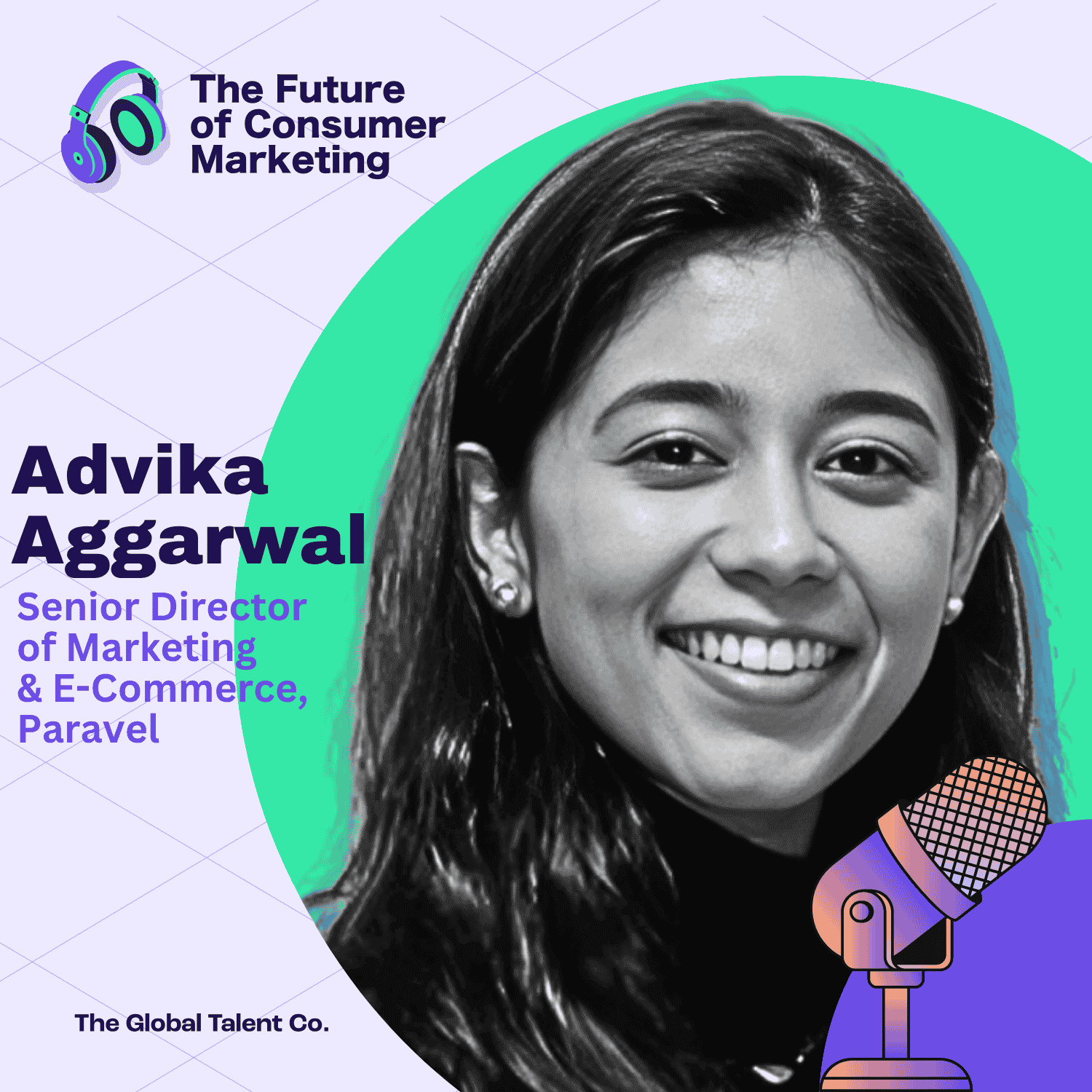
Advika Agarwal, marketing and brand consultant; former Senior Director of Marketing and E-Commerce at Paravel (sustainable travel brand), also worked at Coach and Gap (merchandising; planning/financial modeling), previously across brands including Bottega Veneta, Le Labo, Victoria’s Secret.
Key claims
Sustainability should be non-negotiable and built into product DNA, not led as a marketing angle; marketing must combine problem-solving, storytelling, and value; “consumer first” is incomplete without a confident brand voice; email should focus on browse/cart abandonment and drip flows with product story/press/reviews; manage “creepy” personalization via frequency and content sequencing; measure with both ROAS/first-order profit and qualitative brand affinity; influencer marketing can have diminishing returns unless tightly aligned.
Notable examples
Paravel’s “product system” (bag + accessories) messaging; drip emails that surface features, press, and reviews instead of “come back”; Paravel’s niche creator network (photographers/travel enthusiasts) replacing broad influencer gifting; AI copy tweak from “product is built to last” to “piece is carefully made” to preserve brand emotion.
Written by AI. May contain mistakes. Listen to the episode to check what was said.
Chapters
Tap a time to open that second in VOAdvika's Marketing Journey
0:44 to 3:37
Advika shares her experiences in marketing and design across various brands.
“is also working at Coach and Gap, where we have a lot of insights from Advica that we're about to hear today.”
Navigating Sustainability Claims
3:37 to 4:47
Advika discusses how Paraval approached sustainability and brand communication.
“claims against people maybe saying that it could be greenwashing?”
Marketing Philosophy Insights
4:47 to 6:44
Advika explains her marketing philosophy combining problem-solving and storytelling.
“So the sustainability wasn't something that you guys, like for lack of a better word, it wasn't something you guys bragged about or anything like that.”
Effective Email Marketing Strategies
6:44 to 12:23
The discussion focuses on the importance of email marketing and customer engagement.
“It's just like having them buy something and then giving them all these little other products that could be matched, linked up.”
Managing Brand Messaging Frequency
12:23 to 14:00
Advika shares strategies for balancing brand messaging without overwhelming customers.
“But Advocat, have you ever had the issue where with the insight you have and in the moments you're going to reach out to these customers that is so valuable, you feel it might even be a little bit creepy?”
Timing and Frequency of Marketing Communications
14:00 to 14:40
Learn the importance of timing and frequency in email and ad communications.
“It's like you should be serving ads or emails, you know, in a certain time.”
Measuring Brand Strategy Effectiveness
14:40 to 17:44
Understand how to balance performance metrics with brand health indicators.
“So this one's a tough one because you don't want to move too fast with very little information, but then you also don't want to be very slow and calculated and not willing to take agile decisions.”
Evolving Influencer Marketing Strategies
17:44 to 20:20
Discover the shift towards niche influencer marketing for better results.
“So that way, influencer activations were done in a very, I would say, in a very different manner.”
Budget Allocation in Marketing
20:20 to 21:33
Explore strategies for effective budget allocation across marketing channels.
“And you actually mentioned something, Advika, that leads into my next question, which is more about budget.”
Building Effective Marketing Teams
21:33 to 23:21
Learn the pros and cons of in-house versus agency marketing teams.
“And OK, let's now move on to team building, Advica.”
Show all 15 chapters
Leveraging AI in Marketing
23:21 to 27:51
Understand the role of AI as a tool in optimizing marketing efforts.
“I do feel that having somebody in-house that believes in what the brand represents, it's a lot easier to create a marketing strategy around that.”
Advice for Launching Sustainable Brands
27:51 to 28:01
Gain insights on focusing beyond numbers when launching sustainable brands.
“And with your anecdote, I couldn't help but remember, like, I don't know, math class when you had to show a problem.”
Advice for Marketers on Brand Values
28:01 to 29:17
Learn the importance of balancing data with brand storytelling and values.
“We I need you to show your work, please.”
The Dangers of Empty Metrics
29:18 to 30:29
Explore how focus on viral metrics can mislead brand strategy and consumer engagement.
“You know, everyone is so growth-focused that at times you lose sight of, you know, what does your customer need or what does your customer understand or think of you?”
Communicating Brand Essence
30:30 to 31:05
Understand the need to effectively communicate brand essence to consumers.
“And for anybody that's listening, don't forget your storytelling and to make sure that you don't dive too deep into the numbers because they can get a bit.”
Transcript
Automatic transcript. May contain errors.0:00This show is brought to you by the Global Talent Co, a marketing leader's best friend in these times of budget cuts and efficient growth. We help marketing leaders find, hire, vet, and manage amazing marketing talent for 50 to 70 % less than their U.S. and European counterparts. To book a free consultation, visit globaltalent.co. Hey, everybody, and thank you for tuning in. My name is Andres Figueira, and this show is brought to you by the Global Talent Company, A company that's connecting top remote professionals from South America, South Africa, and anywhere really with leading tech companies worldwide.
0:35So if your team is looking to hire world-class South American or South African talent, just head on over to theglobaltalent.co and see how we can help. And today, with me here, I have Advika Agarwal, a marketing and brand consultant who gained experience as the former Senior Director of Marketing and E-Commerce at Paravel, is also working at Coach and Gap, where we have a lot of insights from Advica that we're about to hear today. So Advica, it's a pleasure to have you here. How are you doing? Thank you for having me, Andres. I'm very excited to be here and can't wait to jump in. It really is a pleasure to have you hop on the show.
1:11And I can't wait to hear as well all your insights from the different experiences you've had, because upon looking through your LinkedIn, I know you've had quite a journey. So in order to start the show, Advica, would you be able to tell us what your proper journey was and how you got here? Yes. So Andres, I've always been fascinated by the intersection of design, business and sustainability, how creativity meets commerce and how brands translate values into something people actually want to live with. That curiosity is what took me to design school. I wanted to understand the craft behind the products, not just how they're marketed or how they're made.
1:49From there, while I was at design school, I really gave myself the permission to explore. I worked across different verticals from wholesale to merchandising to digital marketing and across a range of brands and cultures. I've had the chance to learn from places like Bottega Veneta, Le Labo, Victoria's Secret, with teams based everywhere from Europe to Japan to the US. So that global exposure taught me how different brands approached storytelling and how culture shapes business decisions. So eventually, when I began in New York, I knew I wanted to see how things ran from the inside out. So after all of these experiences, I decided I wanted to be at a big American house where all of the decisions from product, marketing, business strategy, finance all happened under one roof.
2:39And that led me to Coach, where I started in merchandising. Coach is very design led. It taught me to think visually, emotionally about the product. And after that, I moved to Gap, which had the same foundation in merchandising, but the excellence there was in planning and financial modeling. You know, it was a good balance of brand storytelling and understanding the business impact. And then after that, I wanted to be somewhere that was digitally native in this day and age. So a brand that was born online and can move fast. So that's what brought me to Paraval, a sustainable travel brand. I joined the brand marketing function and over time took on performance, e-commerce, international expansion.
3:22And I eventually oversaw the full brand from partnerships, PR, creative and growth. So I really connected all of the dots between brand storytelling and business impact. Wow, that's quite a journey. The experience is quite extensive. And Advocat, from your experience at Paraval, did you ever have to like prove the sustainability claims against people maybe saying that it could be greenwashing? Because I know it's a whole thing that nowadays like brands want to appear more sustainable or eco-friendly. So how were you able to navigate making customers or consumers understand that Paraval isn't just greenwashing, but it really is sustainable?
3:59Yeah. So our ethos was very simple. Fundamentally, we wanted to make travel essentials that are built to last and thoughtfully designed. Sustainability for us was never a marketing angle. It was a non-negotiable. It was stable stakes. And we thought about it from each and every lens, from a supply chain lens to a product lens to, you know, marketing or how we communicate that to the customer. And if something couldn't be made responsibly, we didn't make it. So everything on our website, everything that we sold was sustainable. But we also never led with that. Like the focus was always on timeless design, functionality and performance, because that's what people want to hear when they hear of luggage.
4:42but sustainability was built in as a part of our DNA. Okay, I understand. So the sustainability wasn't something that you guys, like for lack of a better word, it wasn't something you guys bragged about or anything like that. It was just something intrinsic to the product that would make the consumer just feel a lot better for having that bag that looks amazing, works very well, but it's also sustainable. That's correct. Okay, I love that. I love that. And Avika, after all your experience you've had with Coach, Gap and Paravel, how would you summarize your marketing philosophy? to be nowadays?
5:13Like, do you have a certain angle that you like to take or is it more depending on the product or the company you're working with? So I feel like with my marketing philosophy, it's almost combining three different philosophies to build one philosophy. You have to be at three different, you have to be at the intersection of problem solving. You have to be storytelling and you need to be value driven. I feel like that is what is going to be the right marketing philosophy because you have to combine, you know, the analytical bit with the creativity, with the sense of purpose. So, you know, at least with the analytical bit at Paraval, we always looked at product and marketing as a problem solving activity.
5:57So, you know, you always have to understand the friction a customer experiences. Obviously, you need to have product market fit. You need to design solutions that feel intuitive, you know, aspirational and aligned with the brand. So an example that I wanted to share was at Paraval, it was never about selling a piece of luggage or a tote. We thought about products as a system. So a set of pieces that work together. So a customer could start with one bag and then naturally add a piece of accessory, a vanity case, a piece of luggage. So marketing then helped reinforce that ecosystem, showing how each product fits into a lifestyle and a travel experience.
6:38So it makes it feel very effortless, thoughtful, as well as aspirational. Wow, that is so cool. It's just like having them buy something and then giving them all these little other products that could be matched, linked up. It could just look very well with this. And it creates this need and urgency to just have more of that. I get it. I'd fall for it as well. And I also would say that when it comes to the creativity of it, the product design matters, right? Like, of course, what sticks around with the customer is the butter smooth roll of the wheels or, you know, the exterior pocket when the exterior pocket on a duffel where, you know, you're at the airport and you need to put your passport somewhere and you need to be hands free or, you know, a beach bag which has a spill proof exterior, you know.
7:24So when you're at the beach, like you don't drop drinks on it or your drinks don't stay in your bag. So it's very important to have that problem being solved because at the end of the day, there's a very clear need as to why a customer is buying a certain product. But then also being like to communicate that effectively. Of course. No. And I love that the problems you pinpointed are also something that a person might not know they're looking for that exact thing to be solved. And once you use the product, and for example, as you mentioned, like the wheels are buttery and you say, oh, my God, it's so nice to roll the suitcases.
7:57There it comes from. I love that. I love that. And OK, Avika, is there any common marketing best practice that you disagree with or that you believe is outdated nowadays that you feel you were using before? But like being coached, but nowadays it's just something that isn't working. Any thoughts around that? So this one might be a little bit of a hot take, but I feel like the mantra that every digital brand has is to be consumer first. You know, everyone is all about let's put our customer at the center. Don't get me wrong. Customers are critical. And of course, a brand also needs to be, you know, authentic to themselves.
8:32So for me, it's about if you lose clarity about what you stand for, it's easy for a brand to start chasing trends or to dilute your identity. And I think the bit that's always very important is balancing your customers needs, but with a very strong, confident brand voice, because you are the industry leader or you are the one that they're coming to because you're the expert. And a brand should never just create something only keeping the customer in mind. It has to be an art and a science. I understand that. Yeah. And it also makes like a brand usually has a mission and a vision. And when it strays away from that, it's biting off more than they can chew.
9:16And it can become into a more cumbersome issue because you're not following your actual, what's it called, essence as a brand. So I get that as well. And in terms of how your marketing mix is going, because I know you're mentioning that nowadays you're a consultant for marketing and branding for different companies. In your marketing mix and channels that you work with, is there anyone that's working best right now? I would say marketing always has to be a big mix. You know, you cannot just focus on top of funnel or only on bottom of funnel or middle of the funnel. You have to hit a customer across the funnel.
9:50So that's always a guiding principle, right? Because you have to think about how your customer came in. But just because they come in, that does not mean that they're going to convert. Right. So you have to find a way to push them through consideration to make sure that you still stay top of mind and then finally get them to convert. I find one of the most it's quite unfortunate. One of the most underrated marketing channels is email for me. And even within emails, you know, it's people focus most of their energy on evergreen product campaigns. So, you know, the day to day emails that brands would send out.
10:28But I feel like the ones that should be done effectively are drip emails or, you know, browse and caught abandonment emails. So traditionally, I've seen brands use them in a very transactional way, which is, you know, an email saying, come back. This is waiting in your court, which feels so outdated. And, you know, it's crazy because, you know, the customer has already given a brand their mental space. And, you know, why not use that real estate to share the product story, highlight the thoughtful features, you know, showcase the press or reinforce why this product actually matters and why they actually need to buy it?
11:05Because they're already thinking about that at this point, right? Like if at least in a category where it's not an immediate purchase, it's a considered purchase, the customer will, you know, if they've, let's say, come in from a paid ad, they're already thinking about how is this product made? Why should I get it? They're already on, you know, like they're searching for articles online, seeing like who has featured them? Is it top rated? And what if a brand just immediately surfaces those things because a customer is already on your site. A customer has bounced off of your product page and you know that there's interest there.
11:40So I think it's about surfacing the right information at the right time where the customer feels like you're almost reading their mind. So it feels intuitive, helpful. And then you also, you know, given that you are holding the narrative, it's aligned with the brand. Okay. No, I totally understand that because it happens to me even here, like I'm based in Argentina. And sometimes when I go to online store and I put some things in my cart, which you mentioned the email saying, hey, this is still in your cart. Aren't you going to buy it? It's such a trigger to like go back in the website and just see what I was going to buy.
12:12And it's like, oh, should I? Shouldn't I? And receiving proper emails at those moments of decision making is just so valuable because you can actually skew the consumer's decision to go and actually buy the product or convert them. But Advocat, have you ever had the issue where with the insight you have and in the moments you're going to reach out to these customers that is so valuable, you feel it might even be a little bit creepy? Have you had to kind of like navigate around that just to make sure they don't feel you know too much about them? I feel like the way to balance that is by like figuring out frequency.
12:45That's always been a difficult one. If you think of it in the context of paid ads, you don't want to see the same ad 10 times on your Facebook, right? So the big thing that I feel like needs to be done from a performance marketing standpoint is your brand awareness ads, your acquisition ads, and your retargeting ads need to have different images or different content. Some people would say that you have the same content in the funnel because it's the same messaging that's being hit over and over again. It shouldn't obviously feel very different, right? Because then you want to make sure that someone who's in the market for luggage is not getting, you know, their next touch point is something about bags or, you know, their next touch point is something about accessories.
13:30But if it's done in a very methodical manner where the first ad, let's say, from a brand awareness standpoint is about, you know, who are you as a brand? You know, the acquisition is then about the functional details. And then the last one is about press and customer reviews. So then, you know, it's actually the same principle as, you know, like drip email flows. It's, you know, how do you share that information at the right time? And just making sure, obviously, your frequency is managed because you should not be hitting. It's like you should be serving ads or emails, you know, in a certain time.
14:05So like every two days or every three days. And all of these are things that you can control in these platforms. So now I get that cadence is very important because if you're hitting people every day or every eight hours, it can get cumbersome and it can even drive them away because it's like, oh, my God, this brand is being a bit annoying, I'll unsubscribe or I'll just make sure to not keep receiving these emails or place them in spam. So I get that. And Avika, how do you know or do you have a way of measuring when you need to pivot your brand strategy versus staying on course? Is there any type of indicators you use to understand that it's going well or that it might be better if I try this other thing out?
14:41So this one's a tough one because you don't want to move too fast with very little information, but then you also don't want to be very slow and calculated and not willing to take agile decisions. I would say it depends on platform to platform and end goal to end goal. So when it comes to performance marketing, you know, we'll always look at ROAS, we'll always look at first order profit, revenue per visitor. These are like tangible metrics which tell you, oh, you know, click through rate on an ad. But then when I'm thinking about brand health, you know, I would never shy away from doing a customer survey or, you know, having phone interviews with people because that's when you get a lot of qualitative data about how someone is perceiving the brand and the product.
15:28So I think it's about having understanding both measurable growth as well as what's the deeper brand affinity. So I would say it's both short term and long term. Okay, I like that. And in terms of e-commerce best practices per se, like with Paravel, do you feel that there is any marketing practice for that specific industry that is outdated? Or do you keep on using the same things you've been learning throughout your journey? That's a really good question. I think the bit that I always struggled with, and this could also be a hot topic, was influential. We love hot here. So, head advocate, feel free to give us your best opinion.
16:08I feel like I always saw diminishing returns from influencer activations because as a business, we always prioritized scale because you want to do it fast, right? Like you want to get as many people. Let's say you're doing a holiday campaign. You want to get as many people with as much product as you can in their hands to be able to have a successful campaign at the right time over complete brand alignment. if you actually think about it, you have to have a lot of time on your hands to be able to, you know, find the right person. You know that they're going to be a great fit. You know, they're going to create the right content.
16:47So I feel like what I saw was sending products to brand adjacent creators didn't really drive traffic, revenue or meaningful content, which then it's like, what are we doing here? Right. So I decided that we needed to pivot to a more niche approach, which might not drive revenue immediately, but it's going to build a community in the long term. So especially with Paraval, we built a network of photographers and travel enthusiasts and design enthusiasts. We knew that they were going to be at these beautiful locations and at these beautiful hotels. And, you know, it's something that they need anyway for their trip, and it's going to fit their lifestyle.
17:31And they are the ones who understood storytelling. So that strategy became very central to our content approach. And it helped us carve out a niche amongst the design community. And the design community also obviously loved Paraval because it's a design first brand. It's a beautifully designed product. So that way, influencer activations were done in a very, I would say, in a very different manner. And then that also made us rethink our content strategy because initially we relied on, you know, large scale, expensive, you know, fashion style campaigns with professional photographers and stylists, which they were great.
18:13They produced incredible content. But then at the same time, I could only do two or three a year, you know, like I can't like you have budget constraints. And with this methodology, we could do two shoots and then have a few different photographers, I would say, like travel photographers or hospitality photographers around the world shooting our product. But this was their profession. They knew what they were doing and they were able to capture these beautiful moments with our product. Wow, that is so nice. So you got like, I'm just thinking about it. It's like you got premium exposure from people that were travel photographers, hospitality photographers, by having them use the product that they needed to use and just organically making or advertising the Paraval accessory or luggage that they were using at the moment.
18:58Because I do understand that if you just use general influencer-based marketing and you just give luggage to a whole bunch of different people, their market or their audience might not be the specific one that Paraval needs to cater to. So I love how you guys were able to narrow the scope a bit more as to who actually helped you market and that it worked because it does position Paraval as a premium brand. because that's what I'm feeling, right? Paravela is a very premium and aspirational brand for luggage, right? Correct. And I feel like with content, the people that you target, it always needs to be, you know, you have to know your customer.
19:34You know, you need to know what drives them. And I feel like with these travel, hospitality photographers, or, you know, even influencers, or I would say people who have a lot of influence in their community, that felt more authentic to us versus, you know, just finding someone who can shoot content for us. That's something that I've noticed with a lot of the companies I've talked to. And it's the fact that the organic and more authentic, as you say, user-generated content works a lot better than having a professional photographer in a studio take 10 pictures of the bag and then just posting that.
20:09Look how beautiful we are. People aren't buying that super produced content that brands usually have or that bigger brands have been more used to doing. But OK, OK. Okay. And you actually mentioned something, Advika, that leads into my next question, which is more about budget. How do you manage budget allocation across different channels when you're working on your marketing mix? I think budget is always dictated by opportunity and strategy. So where there are clear guardrails for your return on investment, you know, it's measurable. Those will always get prioritized. But then you also have to reserve spend for aspirational brand building, you know, PR, partnerships, you know, storytelling that might not have immediate returns, but you're getting your customer or you're building brand awareness with a customer that has never interacted with you before.
21:04So again, it's that funnel approach where we would definitely put a lot of spend towards, you know, immediate returns, but at the same time, you have to go further up to make sure that you're still continuing to fill the brand awareness bit of the funnel, because there needs to always be, you know, like people coming in and going down that funnel. No, totally, totally. And that way you can tackle all the different angles you need to and just make sure everything, all the bases are covered. So that seems very logical, very logical. And OK, let's now move on to team building, Advica. In terms, I know you're a consultant right now, so I'm imagining you're a one woman team at the moment?
21:43Or do you have anybody else that's helping you out or that you're directing and helping them help you? Yeah, I would say that marketing teams, I've seen a lot of different mixes. You could be doing a full agency route, right, where you're able to get incredible talent at incredibly, you know, founder led agencies, which are smaller. And then you could also bring everything in-house. Obviously, if you bring everything in-house, it's much more expensive versus giving things to an agency. So I think it depends from company to company, you know, different size, different priorities. You would also have to consider that with an agency, they are not able to give you that complete attention because they have other clients versus with, you know, a full-time employee, you would have, you know, someone who's coming in and is only focused on, you know, like you as a brand.
22:36So I think it depends upon what your focus is at the time. And, you know, what are things that can be offloaded or, you know, given to other people versus what needs to be integral and, you know, a part of the organization right now. So if you are very focused on, you know, PR and brand building and partnerships, then bring that in house, you know, or have like a like a one man show consultant who can do it all. And, you know, if like PR is then not a push for you, or if that's something that you're just relying on organic growth, then you can give it to an agency. So I think it depends from business to business.
23:15I've seen many different approaches and I just think it depends upon your priorities at the time. Yeah, I know. And I feel what you say when you mentioned that, because I do understand that when a brand and I feel it's more when they're starting out that they need to communicate their mission, their vision, what they stand for to the audience, to the consumer. I do feel that having somebody in-house that believes in what the brand represents, it's a lot easier to create a marketing strategy around that. And once you have a standard procedure done for the marketing mix or whatever it is that you already set up, it's a lot easier to delegate to an agency because it's as you say, an agency will probably not have 100 % of their attention to the company they're working for or the brand that you're having them help you with.
23:57But it does sound that it is a bit more focused as to the stage that the company is at with what they're going to need. And Avika, I also want to ask you about one of the most trending topics of the moment right now, which is AI. How have you been able to leverage AI to help you out? Is it something that you're using every day in your day to day or for more specific scenarios? So I feel like I'm going to give the most cliche answer, but I feel like AI is a tool. It's not a replacement. I use it every day to speed up my research, to optimize processes, generate ideas. But it has to be paired with human judgment.
24:37You know, you know, AI can surface insights from data. You can draft content, suggest audience targeting strategies, everything under the sun. But the creative framing, the brand voice and the strategic decision making still lies in the human touch. Even a small example is I was doing some copywriting when I was at Paraval. And one of the things that ChatGPT kept surfacing was, you know, the word product or orders. You know, it's like this product is built to last. And, you know, even a small tweak that I would have is this piece is built to last. And I think that small tweak, you know, eventually you can get ChatGPT to a point or like any AI tool to a point where like they understand your mission and value.
25:24But in that moment, I was like, if someone didn't really understand the brand, they would have ran with, you know, this product is built to last and it sounds fine. It sounds great. But then the second you say every piece is built to last, that gives a different emotion. And it feels like it's not something that's made in abundance. It's carefully made. And I feel like just that makes, you know, that small distinction goes a long way. It truly does. And as you frame it, I can totally feel it like this product is very well made or this piece is especially crafted. It just makes it feel so special and a lot more intimate to the consumer.
26:00So I think that's great. And I also agree with the fact that AI is nowhere near being able to run on itself. I just feel AI is like a baby and it's starting to just, what's it called, to crawl right now. And we're helping it get up. We're teaching it how to walk and how to help us out better. But I wouldn't trust it blindly. Yes. Yet. I think we're a long ways from being able to just press a button and look the other way because it does make mistakes and it gets a bit frustrating at times because you have to teach it, reteach it, then see it make a mistake again, say, why do you keep making this mistake?
Read the full transcript
26:32And it's just funny because I enter arguments with my AI all the time. I mean, there are so many articles right now talking about how AI is, you know, it's like some insane percentile, like 40 % of, you know, AI generated results are actually inaccurate because they're not able to scrape the internet correctly. And that's scary because like with a lot of these engines, you read it and it's so compelling and it feels like it's, you know, it's the source of truth. But once you double down on it and try to figure out where the data is coming from. I tried that where we were looking for consolidated recent press articles about a business that I work with.
27:15And I just, you know, looked online and I was like, okay, you know, like what are the recent press articles for this business? There are certain press quotes that, you know, AI pulled that actually weren't real. And I had to question, I had to question AI to be like, okay, you found the quote, but, you know, share the article with me. And I feel like then the answers were completely off. So, I mean, I fully agree. It's you have to manage AI. I feel like eventually AI will get to a point where it is intelligent and it is accurate, but we are at the early phases of experimentation. Yeah, no, we're experimenting right now.
27:52And with your anecdote, I couldn't help but remember, like, I don't know, math class when you had to show a problem. It's like, show your work. We I need you to show your work, please. And Advika, I know we're almost at time for the episode, but I have one more question for you. And this one is more tailored towards the audience. And it would be along the lines of if you were to give only one piece of advice to a marketer that's launching sustainable consumer brands such as Paraval, for example, what would it be? Like, what would you have loved to know when you started out with Paraval that you know now that you would love to be able to tell yourself at the beginning?
28:29So when I first joined Paraval, given the brand is digitally native, you have access to platforms like Shopify and Google Analytics and in-platform metrics from Facebook and Google. It's very easy to get into the numbers. It's very easy to get into the data and just focus on those and let them drive your decision making. I'm not saying that that's wrong, but there has to be, you know, like a bigger picture that's established around who you are as a brand and what are your values and what are your beliefs and how are you going to push that brand messaging forward to the consumer? because that's important for the medium to long-term future.
29:17I feel like, you know, a lot of marketers think about quick wins. You know, everyone is so growth-focused that at times you lose sight of, you know, what does your customer need or what does your customer understand or think of you? So I feel like that's the bit that, you know, the storytelling is always important. You know, the data and storytelling always needs to coexist. And you need room for intuition. You need room for creativity. You need room for like value-driven storytelling because those elements are the ones that are ultimately pulling at the heart of a customer. It's not just data and numbers.
29:57Okay, I love that. And I totally agree because I do believe it's a thing of balance. And nowadays with everybody wanting whatever they post to go viral or to just make sure that they get these million impressions on the video, So sometimes it's even empty metrics that they receive because you could have a viral video for your brand that was seen by 2 million people. But if you're located in the States and the 2 million people that watched it are, I don't know, in the Philippines, for example, and it's just because of a song you use, then there is no actual value there for the brand. So I totally get what you mean with your advice.
30:31And for anybody that's listening, don't forget your storytelling and to make sure that you don't dive too deep into the numbers because they can get a bit. What's it called? They can control your site and you can just stay there trying to get the metrics to increase. I totally get that. It can also be paralyzing because you can just keep focusing on the numbers and try to dissect it different ways. And it's at some point you need to be pencils down. Yeah, no, totally agree. And it's then a thing of making sure you communicate the essence and what the brand means and what you want it to communicate to the consumers.
31:03And that is also super important. But yeah, we've already reached our time, Advika. just wanted to say thank you so much for hopping on the episode. It's been a lovely conversation and we really hope that the audience also enjoyed what we've been talking about and that they will return to hear more anecdotes from the different companies we talked to and the different personalities that we have as guests. Thank you so much, Andres. This was lovely. It really was, Abraka. Thank you so much. I hope you have a great day. Likewise. You too.
From the publisher
In this episode of The Future of Consumer Marketing, host Andres Figueira interviews Advika Aggarwal, former Senior Director of Marketing & E-Commerce at Paravel. Paravel is a sustainable travel brand that revolutionized how DTC brands approach product ecosystems, email marketing, and influencer partnerships. Through her experience scaling Paravel from brand marketing to overseeing the full commercial operation, Advika shares tactical insights on transforming underutilized marketing channels, building authentic creator networks, and balancing data-driven decision making with brand storytelling. Her journey across Coach, Gap, and Paravel provided her with a unique perspective on how digitally-native brands can punch above their weight through strategic constraint and focused execution.
Topics Discussed:- Reframing sustainability as table stakes rather than a marketing angle
- Building product ecosystems that naturally drive sequential purchases
- Transforming transactional email flows into storytelling opportunities
- Pivoting from scale-driven influencer marketing to niche creator communities
- Balancing brand-building investments with performance marketing ROI
- Managing frequency and creative variation across paid acquisition funnels
- Leveraging qualitative customer research alongside quantitative metrics
- Strategic trade-offs between in-house teams and agency partnerships
- Using AI as an efficiency tool while maintaining brand voice integrity