In short
Reverie’s marketing approach to turn mattresses/adjustable bases from commodity furniture into “sleep technology,” escaping price-based competition through personalization, education, and customer storytelling.
Guest
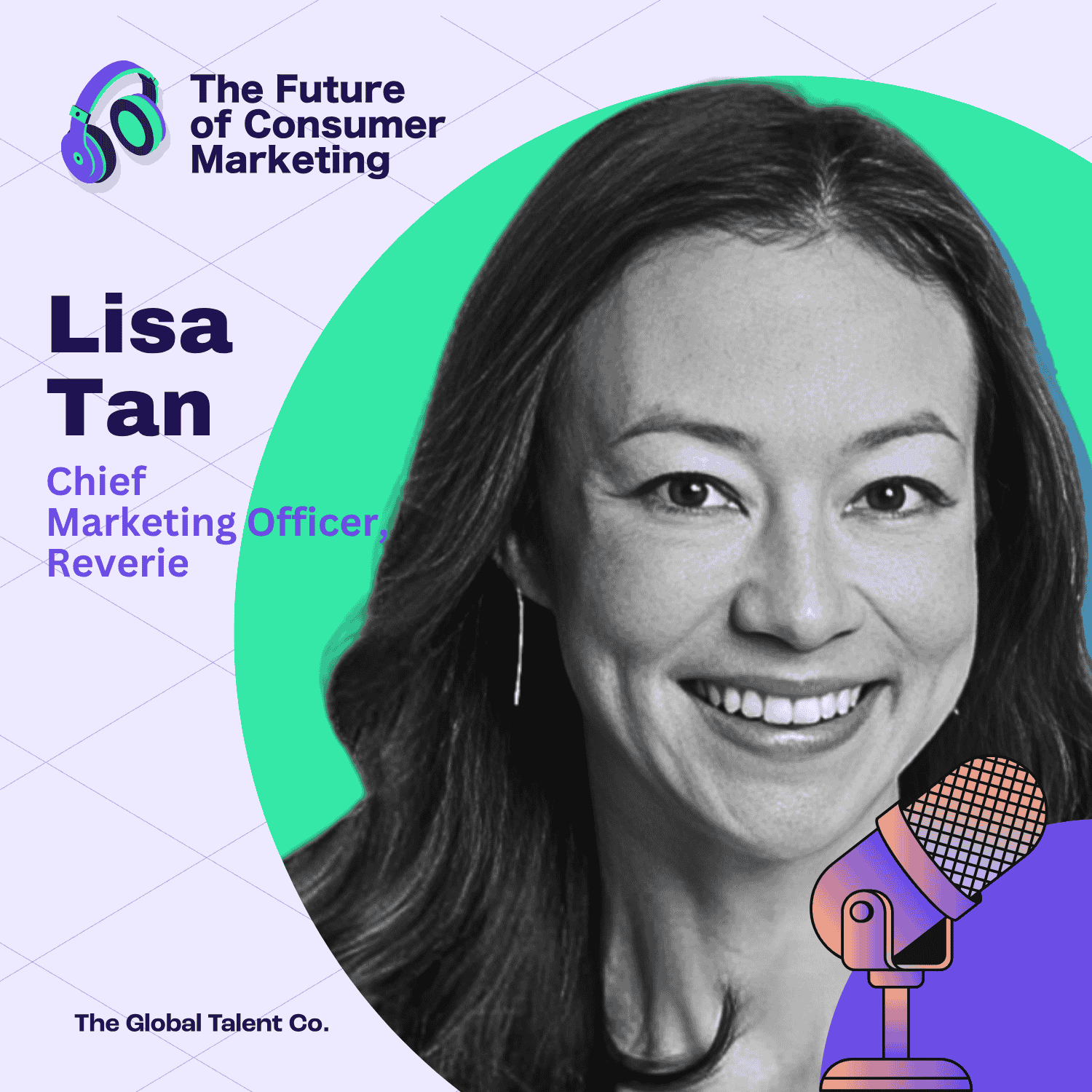
Lisa Tan, Chief Marketing Officer at Reverie (sleep technology company). Background: 12+ years at Reverie; joined after management consulting/PR; husband is a Reverie co-founder; helped set up the marketing department and direct-to-consumer strategy. Reverie mission: better sleep via adjustable bases and DreamCell customizable mattresses.
Key claims
Shift buying conversations from discounts (“$799”) to educational, personalized sleep outcomes; couples and life-stage pain points (snoring, back/pelvic pain in pregnancy, recovery) drive relevance; influencer seeding doesn’t work well due to product complexity—existing customers do.
Notable examples
couples with mismatched body types; snoring partner benefits from elevation; pregnancy and postpartum reconfiguring without buying a new mattress; website quizzes feeding personalized email follow-ups; AI agents for customer service and knowledge-base answers.
Written by AI. May contain mistakes. Listen to the episode to check what was said.
Chapters
Tap a time to open that second in VOLisa's Journey to Reverie
1:12 to 2:19
Lisa Tan shares her background and journey to becoming CMO at Reverie.
“Reverie is as a company, would you mind giving us a bit of a backstory of how you got to be a chief marketing officer there and what Reverie actually does?”
Understanding Reverie's Market
2:19 to 3:59
Discussing the demographic that Reverie serves and its market approach.
“That's so cool that you were a part of the forming of Reverie through your husband and then like how you helped him in this initial project that just ended up being you obtaining a full time role there.”
Convincing Consumers of Sleep Investment
3:59 to 6:06
Exploring how Reverie addresses consumer concerns about investing in sleep.
“You know, our story resonates with our sleep problems.”
Marketing Philosophy and Education
6:06 to 10:40
Lisa describes Reverie's marketing philosophy focused on educating consumers.
“You know, once you're coupled, once you're working hard, once you have a cold, right?”
The Importance of Sleep for Health
10:40 to 12:00
Highlighting the significance of sleep in achieving health and fitness goals.
“And me, like when you mentioned right now a few minutes ago, the fact that it's easier to sleep than to have a strict exercise regimen or a strict diet.”
Current Marketing Strategies and Personalization
12:00 to 14:00
Discussing Reverie's effective marketing strategies and personalization efforts.
“Our hope is that we continue to have those conversations with people that really care about sleep and we're able to really get them over that hump of, oh, this is more than just a piece of furniture.”
Personalization in Marketing
14:00 to 15:30
Learn how quizzes help personalize product recommendations.
“Another thing that's working really well goes back to that goal of personalization.”
Differentiating Products from Commodities
15:30 to 18:00
Understand how to elevate a mattress from commodity to technology.
“It's like a mattress is considered the same as like a couch.”
Building a Marketing Team
18:00 to 20:30
Explore the dynamics of a small marketing team and the importance of in-house knowledge.
“At one point, we did have a much bigger team, but we've gone the route over the past 10 years of really doing more in-house and relying on trusted partners, you know, to facilitate.”
The Hybrid Work Model
20:30 to 22:50
Discuss the benefits of a hybrid work model and its impact on team dynamics.
“because I spent a lot more time listening to the actual customer versus brainstorming what worked for another company that might not work for us.”
Show all 13 chapters
Leveraging AI in Marketing
22:50 to 26:00
Discover how AI is used for customer service and data analytics.
“And I would love to know if Reverie is leveraging AI in any certain way, besides the more common tasks that we know that everybody is using.”
Gathering Customer Insights
26:00 to 28:38
Learn the importance of collecting direct customer feedback for effective marketing.
“I think that's something that's a conversation we're in the midst of right now, is we have all these different data sources pulling data, whether it's like quality data or call data or even the data from our AI bot.”
Closing Remarks and Gratitude
29:04 to 29:48
Hear the hosts express gratitude to the guest and invite listeners back.
“Now my grandpa lives in Naples, Florida, and I'm going to have him do the quiz because I think he's looking for a bed.”
Transcript
Automatic transcript. May contain errors.0:00This show is brought to you by the Global Talent Co, a marketing leader's best friend in these times of budget cuts and efficient growth. We help marketing leaders find, hire, vet, and manage amazing marketing talent for 50 to 70 % less than their U.S. and European counterparts. To book a free consultation, visit globaltalent.co. Hey, everybody, and thank you for listening. My name is Andres Figueira, and I'll be your podcast host for the day. This show is brought to you by The Global Talent Company, a company that's connecting top remote professionals from South America, South Africa, and anywhere, really, with leading tech companies worldwide.
0:37So if your team is looking to hire world-class South American or South African talent, just head on over to theglobaltalent.co and see how we can help. And today with me here, I have Lisa Tan, Chief Marketing Officer at Reverie, a company that is on a mission to help people live better lives through the power of sleep. So without further ado, Lisa, it's a pleasure to have you here. How are you doing? Wonderful. Thanks for having me here, Andres. No problem at all. It really is a pleasure to have you hop on this episode with us. And Lisa, just so that we can give the audience a bit more context in to who you are and what Reverie is as a company, would you mind giving us a bit of a backstory of how you got to be a chief marketing officer there and what Reverie actually does?
1:20You bet. So as you said, Reverie is on a mission to help people live better lives through the power of sleep. We do that through our sleep technology, which is primarily adjustable bases. So the kind that raise and lower with a remote control, as well as customizable mattresses using our DreamCell technology. So we really want our products to be a tool for customers to wake up feeling refreshed because they've been working on their sleep and they have a tool to help enable the best possible sleep they can get every night. I've been with Reverie for over 12 years. I started off, actually, my husband is a co-founder of Reverie.
1:58So I was in management consulting and PR for some time and looking to make a career change to get inside a company. and I told my husband I would do a three to six month project and help set up the marketing department and figure out a direct to consumer strategy. And, you know, 12 years later, here I am. Oh, my goodness. That's so cool that you were a part of the forming of Reverie through your husband and then like how you helped him in this initial project that just ended up being you obtaining a full time role there. Yes. So the company was already, you know, working for several years. But the primary objective in those early years was to manufacture primarily OEM, some, you know, branded business with adjustable bases to retail partners.
2:44But going into the consumer field was the new area that I really jumped in on. Oh, OK. Now I understand it. I understand. Cool. That is so nice. And Lisa, in terms of specifically the demographic you guys serve with these products that Reverie sells, I would imagine it's a bit more of the older generation of people and consumers, right? Because when you tell me about mattresses that you can lower and rise and specific needs into what the mattress is, I would think it's more of like, I don't want to say older, but it's that demographic. Could it be correct? So that's right, Andres. I think everybody would benefit from sleeping on an adjustable base.
3:23The ability to have positional therapy and to elevate your head, whether it's for sleep or for reading or watching TV or just relaxing and recovering. There are benefits for everybody. However, people who are 50 plus generally have a much better connection with how, you know, a customizable sleep product will benefit their sleep. You know, the worse your sleep gets, the more you appreciate tools that help you sleep better. So you are correct that the majority of our customers would fall in that 50 plus range. Those are the easiest customers to speak to about our product. They really get it. You know, our story resonates with our sleep problems.
4:02Of course, of course. Now, and as I would imagine, because when you mentioned what the product does, I just remembered, for example, my time with my grandma when she was living with us that she needed a mattress, a mattress specifically tailored to what she had at the moment and also just like raising and lowering the bed. It would have helped her get up at night when she needed to go to the bathroom and then just be in a proper position when she went to sleep. So I love that. Yeah, I love that. And Lisa, in terms of the harder demographics to cater to, how have you been able to convince people to spend money on something that they will use while they're unconscious and not that much when they're awake and doing other stuff?
4:39That's right. Well, a big part of the story is how hard it is for you to get to sleep and how well you feel when you wake up. So those are the two elements of sleep that we're able to start the dialogue with a customer about. Falling asleep can be really challenging for a lot of people. especially if they're not comfortable. So one storyline that works really well for us is talking to couples about their sleep quality and about their comfort. Most couples aren't designed the same, right? One partner may be tall and have heavy bones. The other partner may be petite. And those two people need really, really different sleep surfaces to feel comfortable.
5:17So if they're compromising for something that suits one of them or suits neither of them, they're going to be unhappy in their sleep experience in their bedroom. They're not going to fall asleep well. They're not going to wake up well. So that is one area where when we talk to couples about the importance of finding the right fit for you and how that might not be the same as your partner, then they start to understand, you know, why our mattress technology and our adjustable bases can provide benefit. Then we get into the night and maybe one partner is sleeping really well, but snoring and the other partner is up all night listening to the snoring.
5:49So that's another frequent occurrence that really helps people understand, oh, if my partner was elevated so that their airways were open and they weren't snoring so much, that would be a game changer for me because I could fall asleep. So those are the types of things that really resonate with a lot of people. You know, once you're coupled, once you're working hard, once you have a cold, right? There are so many use cases where sleep becomes a problem, either falling asleep or waking up and being able to tell that customizable story starts to resonate with a much larger percentage of the population.
6:23Another example that works really well is when you're going through pregnancy. A pregnant woman obviously gains weight and that weight is distributed in the core of her body primarily. So having an adjustable base to help alleviate some of the back pain or pelvic pain that often comes with pregnancy is important. And then once you have a baby and you're recovering, whether it's from a C-section or a natural birth, again, your body is redistributing its weight and how you're carrying yourself. And then, you know, you have a lot going on in that body. So having a bed that can really adjust with you in those life moments of rate change is helpful.
7:00And you don't need to buy a new mattress to do that. You can actually reconfigure an existing Reverie mattress to fit your needs at the time. We micro-target every four inches using our DreamSell technology. And then the adjustable base, again, provides so much support for getting in and out of bed, nursing, back pain, all of the things. Okay. Now that you just told me the different stories you've used to cater to different people, it's like a lot of them resonated with me because I'm like, I have a girlfriend right now. We're not living together. But when we do sleep together, it's this issue that I love like 70 pillows.
7:33She just likes one. I snore a bit. She doesn't. So I was like, if she had the possibility to raise me while I sleep without like waking me up, it would be perfect for her because I would stop snoring. So that's an amazing way to get people to empathize with what Reverie's products can do. So cool. I'm glad you feel it. Yes. No, while you were telling me these stories, I'm like, OK, now I get the angle here. It's not just for old people. And Lisa, how have you been able to what's it called? Like, have you seen any big misconception between the consumers that you cater to that they think about when it's referring to investing in better sleep?
8:12Do people believe or think that investing in better sleep is not something worthwhile? Do you have to do a lot of convincing on your side? We definitely have to do a lot of convincing when we're talking about investing in better sleep. I would say it is nice to be part of a shift change over the past 10 years where there's a lot more scientific research available about sleep. And in general, there's a big focus on health and longevity. And sleep plays such a critical part in that. And honestly, it's a lot easier to sleep than it is to be consistent about your diet or have a consistent, and challenging exercise routine.
8:47But people often don't view it that way. So being able to change the dialogue in a shopping experience from, I need a deal to buy a mattress. Oh, it's a promotional period. I want to buy a mattress that's$799. You know, our biggest challenge is to shift that conversation to one that's much more educational about how the sleep tools you use have a big impact on the quality of your sleep. So we work a lot with our retail partners, you know, trying to help understand what the shopping experience is in store. And then online, we want to take that even a step farther and make the conversation really about personalization and how you can build the right plan using a sleep tool to achieve better sleep.
9:32Awesome. Well, yeah, my next question then was going to be, what is your marketing philosophy when it comes to Reverie and the products you have? But what I believe is, or my understanding is that your philosophy is a lot about educating the consumer so that they make an educated buy based on what you guys have them learn, right? Or would your philosophy be something different to that? No, I think that's correct. Over the years, it has changed. I think when I first started out, I wanted to paint a picture of a very aspirational lifestyle based on better sleep. If you sleep this way, you're going to wake up in this beautiful environment feeling wonderful.
10:05But the truth is, there's a lot more that goes into it. And it's not easy for everybody to sleep. And so making it more personal and, you know, is important. And as part of that, the more personal you get, kind of the more gritty you have to get with being able to spread that message to the individual that you're trying to communicate with. So at this point in time, I would say our marketing philosophy is very much let's be gritty and let's be personal so that we can establish those, you know, those meaningful conversations with individuals that help them see why customized sleep is so important for them.
10:39No. And me, like when you mentioned right now a few minutes ago, the fact that it's easier to sleep than to have a strict exercise regimen or a strict diet. And that is so true. And I am like a fitness junkie. So I'm very into my diet, very into my fitness. But one thing I had left out in my whole routine was proper sleep. And I've been learning about that just from a few months ago till now and trying to apply it. If I had a good mattress with the products that you're showcasing and telling me about, I know it would be so much easier. But I am beginning to see in my individual perspective, the true value of rest in everyday life because it's something so important.
11:16We spend like one third of our lives in that. So I totally understand the fact that educated. Exactly. One third is like, it would be the goal. Your workouts are going to go a lot better. And body's going to process all that great nutrition a lot better if you're getting a third versus a quarter. It really is true. Like when I have a good night's sleep, I feel so much better when I go exercise later. It's a game changer, like properly sleeping. When you don't, you just feel like you're half drained of energy without even starting the day. So I love that people are able to be educated about that because I think it's the biggest like driver of them wanting to purchase.
11:51It's actually learning and understanding that it works, not just a bunch of marketing, just getting them to buy it because you convince them. So I think that's really nice. Really, really nice. And that is our hope. Our hope is that we continue to have those conversations with people that really care about sleep and we're able to really get them over that hump of, oh, this is more than just a piece of furniture. This is actually something that's going to help me in my health goals. Yeah, no. And it's crazy. I've seen a rise of even a bunch of sleep wellness apps that just determine how long you slept and what phase of sleep you spent certain time in.
12:22And when is your best time to go to sleep and wake up? And it's a whole level of new consciousness around sleeping that I believe we didn't have before. So I think it's a great time for Reverie to just like double down on that. I agree. And Lisa, what would you say is working best in your marketing mix right now? Do you have a certain channel that you feel is like, oh, my goodness, we just get a bunch of conversions from advertising and using marketing here? Or is there any weird or different channel that you didn't expect is also working very well? So there are two things that are working really well for us right now.
12:54And over the years, we've ebbed and flowed in the size of our marketing budget and our objectives. Over the past few years, we've had a smaller direct consumer marketing budget. And as a result, again, we've been more gritty in how we go about approaching our customers. So one thing that is really, really important to us is our existing customers and the stories they tell, you know, their friends and family. So influencer marketing, per se, where we go out and we seed product to influencers, quite frankly, doesn't work for us because it's a very large product. It takes a lot of time to tell the story and you need a really large ROI on seeding, you know, or paying influencers with product.
13:37So it really works much better when we're talking about existing customers who have lived the experience, you know, have felt the benefit or address the pain or the need that they had with sleep with our product. And then they go out and they either purchase another bed, you know, five to 10 years down the road, or they tell their friends and family. So right now, we're really making sure that we are cultivating those relationships and encouraging people to see the benefit of the longevity of the relationship with us. Another thing that's working really well goes back to that goal of personalization.
14:11And we've just replatformed our website. So we're just at the beginning of what I am very excited to pursue as far as personalization campaigns go. But it's creating these quizzes that help identify the right product for you or even the right sleep solution for you. So our objective isn't always to sell you a product right away. It's a big purchase. It's a considered purchase. And for people who are out there trying to figure out why they're not sleeping well or how to overcome sleeping poorly because a spouse is snoring or whatever the case may be, you know, being able to feed them information through, you know, a quiz format dialogue has been fruitful and allows us to get to that level of personalization without, you know, massive spending.
14:55Of course. Now, and when I checked out the Reverie website, I did see that you have like a build your own mattress and you can choose. And now I understand better after you provided further context, like you can choose the firmness of the left side or the right side. And that way each spouse or partner can be sure that their side of the mattress is catered to what they need. That is amazing. That is so cool. I had never seen a product or a company that was doing this with mattresses. So congratulations. It really feels like a different type of product, even though it's something so mundane as a mattress, which is everybody has practically.
15:28So very nice. Yes. And I think you're absolutely right. It's like, how do we get out of the idea of this as a commodity into something where it becomes more differentiated and truly, you know, again, something that matters, a piece of technology in your bedroom versus a piece of furniture? Exactly. It's like a mattress is considered the same as like a couch. It might be cute. It might be OK. It's in your bedroom. But it's one of the most important things you need to have that needs to work properly, because if not, it's like you say, your life won't be as good if you're not sleeping well. If that doesn't allow you to work properly, it just creates a whole domino effect if you're not taking care of your sleep.
16:03And I totally understand that. OK. And Lisa, how are you able to what's it called? create the personalized experience at scale without creeping customers out? Like in this way, I mean, is it just the quiz section that allows you to gain that insight into how to personalize for them? Or do you have any other methods to understand what your clients are going to need? Well, it does start with information that the customer has given us. So whether that's on site with a quiz or, you know, on our roadmap. So it starts with a quiz and then the results of the quiz feed into personalized communication via email.
16:40So in our ideal state and campaigns that work, you know, we have a conversation. We might recommend a product for Andres based on, you know, your quiz results. But then we would go down the path of following up with information that's relevant to you based on the information you provided. That's one route. The other is, as you mentioned, you understand a lot more now that we've had this conversation about the customizability of the product. And that's something that we'd like to address more in the future with the guided shopping experience, whether that's with quiz tools or guided AI agents. Okay, got it, got it.
17:16Yeah, now, because I know if your marketing that you were using were through other channels, I don't know, if it were more like TikTok or influencer-based marketing, it could provide for different insights that customers might not understand how you got. But if it's from entering the website, responding to quiz, having a conversation on personalization after they reached out, I think it's a much more natural way to have those talks with the customer and have them a bit more engaged into the product they want to buy. So that's pretty nice. That's very nice. And in terms of team building, Lisa, what does your marketing team look like today?
17:50Is it a very big team or are you more of a one woman shop? So fortunately, I'm not a one woman shop, but we have a small team. We have a team, you know, about five people that are working on marketing right now. At one point, we did have a much bigger team, but we've gone the route over the past 10 years of really doing more in-house and relying on trusted partners, you know, to facilitate. I would also say we've gotten much better at utilizing all the tools that are available to us now that have expedited the process of design or production or development. Those are all things that we relied on heavily in-house at one point in time.
18:29And now we are able to move a lot faster by having trusted partners. But one thing that I've learned over the years is that we're going to operate the best if we are heavily involved in understanding the process. And so that often means like rolling up your sleeves and doing it so that you can work effectively with partners. I think, you know, with any of the tools that we use, if we don't understand how to use them in-house and we're outsourcing them to an agency, we're never going to get the results that we want because we don't understand deeply enough. So that's a big part of my, you know, team marketing philosophy is that we all understand really the technical side of things, like the operational side of the marketing in order to be most effective in realizing our results, you know, through the process of operating those tools.
19:21I do understand what you mean, because it's the expression, if you want something well done, you got to do it yourself. But even if you do it yourself, you learn how you want it done. And that way, if you ever delegate that task, you have a certain standard that you know needs to be met or that you want it to be done this way. And that way you can have a better functionality with your partners or the agencies you work with. Exactly. Because we aren't looking to replicate what others have done per se. It's really helpful to learn from case studies, but we don't want to just do what other companies have done because that playbook might not work for us.
19:55So being able to really let the playbook internally before we spend the money to have somebody, you know, execute it that has the expertise to do a better job than we could in-house with that, you know, helps us save and helps us get where we want to go faster. And that's also true with how we think about marketing within the organization. So I don't just oversee marketing. I receive customer experience, which includes customer service and customer service for the information and direct to consumer sales. And that role that I've acquired over time has really changed how I think about getting and has made me a much more effective marketer because I spent a lot more time listening to the actual customer versus brainstorming what worked for another company that might not work for us.
20:42Okay, I love that. And you're dipping your toes in a lot of different roles per se within the company. And that visibility is exactly what I believe is helping you out as well. Like seeing the customer service side and what are pain points for the clients you guys have or who you've sold mattresses to can also help understand, And OK, we can keep on following this marketing channel and marketing this aspect of the product. But if we have a gap here, it might not be best to market it yet until we solve it. Or it provides that different type of insight as well, I would imagine. Yeah. And it goes back to the things that are most effective for our consumers are not necessarily the most sexy things.
21:19So being able to explain the product to a 65 year old that has back pain or trouble getting out of bed is very different than painting that beautiful aspirational picture of waking up in the morning, feeling refreshed. And it's really important to cater to the person that's, you know, trying to figure out how to use the remote. Of course, of course. And Lisa, in terms of the marketing team and how teams are built or the workforce that Reverie has, are you guys a completely remote company or do you have a more of a hybrid model in the way you guys work? We have a hybrid model in how we work. So, you know, we have locations in Buffalo, New York, Metro Detroit, and then we We have a lot of people spread out all over the country.
21:58So it definitely is hybrid. For people that are close to an office, the goal is to be in office three days a week for meetings. So that setup works out well, where if you have the opportunity to connect with somebody in person, you know, I very much value that. I think the conversations change and we're able to have conversations that might not happen if they had to be scheduled. But we do rely on our talented team that spreads and spans the country. And that's also really, really helpful because you get different perspectives from different areas. And obviously it's nice to have the right people, even if they're not in the geographical right place.
22:33Exactly. I know, that's true. That's true. And that is also very nice that it's hybrid because remote work also allows you to find excellent talent, even in the places that you're not located in. And that also provides a lot of strength to the team. It really does. And Lisa, in terms of AI, which is a trending topic right now, And I would love to know if Reverie is leveraging AI in any certain way, besides the more common tasks that we know that everybody is using. But just because since you're like, I want to say a health and wellness company with direct to consumer product. But the fact is, do you guys have AI help you in any way in reading metrics or analyzing?
23:13I'm not even sure how you could use it, but it would be an interesting topic. For sure. We are doing our very best to utilize AI and embrace it in every way we can. We actually have an AI committee where people from all departments are wearing a hat to say, OK, what can I do to research more about AI and how can I bring it into the organization and utilize it effectively? So that's ongoing. And, you know, it allows us the freedom to test and experiment a little bit, which I really enjoy, especially with wearing my marketing hat, there are so many AI enabled tools that are growing. And there are a lot of really interesting, talented startups that are, you know, they're pushing these things.
23:52And once you get in a dialogue, you know, it's fun to be part of their pilots. So I really enjoy doing that. And, you know, we are using a lot of AI that other companies are adopting now too, because it's natural on the customer experience front to be using it. Like we have, you know, customer service, we're using AI agents now. But I think what's cool is when we talk about personalization again, And being able to get to that customer in the moment by utilizing data and by having a knowledge base that's robust enough that if a customer has questions about the product or about sleep, they can have them answered, you know, by an AI representative of Reverie in a way that, you know, a salesperson can't necessarily retain or have time to learn all that information.
24:32So I think if we think about data as a huge library that we can tap into for our brand to help our customers, that's what I'm most excited about. But additionally, we found a lot of efficiencies on the marketing side by using AI enabled tools, whether that's, you know, something like Canva or our CRM tools. Obviously, creating content, that's pretty standard at this point. And then just how we're even thinking about building content, making sure it's AEO instead of SEO. Okay. Okay. Yeah, no, that's a huge pivot. I've talked to a bunch of companies that they've had to make because AEO is now the new way to get exposure in places like Google or whatever.
Read the full transcript
25:09It's all the AIs are just summarizing what it said. So that's a nice way to get Reverie to pivot. But having AI agents, if you guys already have that implemented, is just so cool. Like I've seen them work in other industries and it's just so interesting how they are so effective and they optimize the times to reply and everything so much. So that is very nice. Early days, but it's really exciting to see how beneficial they've been. Yeah, no. And how could it not be exciting if you're working on something that's going to make your life easier and allow you to concentrate on what matters most and have the AI handle all those other monotonous tasks that sometimes needed to be done by somebody in the back end.
25:47And that time for that person could then be freed up to work on something else. So it's just that I just love the whole realm of possibilities that has opened up when we start talking about AI. Yes. And then thinking cross-functionally about all the things we can do to be able to analyze our data better. I think that's something that's a conversation we're in the midst of right now, is we have all these different data sources pulling data, whether it's like quality data or call data or even the data from our AI bot. How do we pull that all together into one unified dashboard so that we can really make sure that we're hitting on the things that matter most to customers?
26:19and you're layering on product usage data with pain points in the customer experience as far as usage or shipping or delivery or sentiment and being able to combine all those into a dashboard or being able to use them in a unified way is our next game challenge. We certainly haven't solved it, but I'm excited about the potential to solve it in a way that we haven't really done before with unified dashboards. No, unified dashboards and being able to just visualize all that data in the moment you need it. It really is like it's a game changer for the other companies I've seen it done. And for you guys, it truly will be as well.
26:56Just enabling to get better insights on what's working and what's not. Oh, and Lisa, I just noticed that we're almost at time with the episode, but I do have one more question for you. And this one is more tailored towards the audience, but it would be if you could only give one piece of advice to a marketer that's launching a premium consumer product in the next year or so, what would it be? Like, what would you have loved to know when you started out with Reverie that you know now that you would have loved to let you teach yourself? My advice would be to collect 500 personal data points from customers that use the product.
27:32So go out in the field, like stand in a store, stand on a corner, have people engage and interact and actually hear what they're saying. Listen to calls, like all those things. actually go out there and talk to the customer. Because if you do that upfront, all of that information is going to feed into everything that you do and make you a much more effective marketer and storyteller than you would be if you just tried to make assumptions or even just utilized data that you're collecting from surveys or secondhand. So that would be my advice. Collect 500 in-person, like tactile data points from your target customer.
28:07I like that so much. I love the exact number you just gave us. So anybody who's listening, if you get more, it should be even better insights that you receive.
28:19But if you like make the effort to get 500, you're going to be golden. I love it. I love it. And Lisa, also just to give you the space to let anybody know who's listening, who's located in the United States, or I'm not sure if you guys deliver or have international shipping? Is the product only available in the U.S.? So the product is primarily available in the U.S. We do have distribution in Australia and Asia and Europe, but in the U.S., I think that's the place to start. If you live abroad, reach out to us. We can work with you, but visit our website at reverie.com. Take our sleep quiz. Reach out to us.
28:54We're accessible. And I want all the feedback I can get on your sleep concerns. And then you can look at our store finder to where we have our retail partnerships and you can try out an adjustable base. Okay. Now my grandpa lives in Naples, Florida, and I'm going to have him do the quiz because I think he's looking for a bed. So if it were a reverie bed, that would be amazing. So I'll be showing it. Just shoot the reverie website to him so that he can do a quiz. Awesome. But yeah, without further ado, Lisa, it was a pleasure to have you on this episode. Thank you so much for hopping on. And anybody that has been listening, we really appreciate you coming to the show and listening as well.
29:29So just hope that you can be back and listen to further insights that we have from other amazing personalities in the different industries that we talk to. Andres, thanks so much. It was a great way to spend a Monday afternoon, and I hope you sleep well tonight. Thank you, Lisa. I hope you sleep well as well. Have a good one. You too. Take care.
From the publisher
In this episode of The Future of Consumer Marketing, host Andres Figueira interviews Lisa Tan, Chief Marketing Officer at Reverie. Reverie is transforming the sleep technology market by repositioning adjustable bases and customizable mattresses from medical devices for the elderly into personalized wellness tools for health-conscious consumers. Over her 12-year journey from a "three-to-six month project" to CMO, Lisa has pioneered a direct-to-consumer strategy that emphasizes education over aspiration, turning sleep from a commodity purchase into a considered investment in longevity and performance.
Topics Discussed:- Shifting premium sleep products from aspirational lifestyle marketing to personal, gritty storytelling
- Building personalized customer experiences through quiz-based product discovery
- Leveraging existing customers as authentic influencers versus traditional influencer seeding
- Integrating customer experience, service, and sales data to inform marketing strategy
- Implementing AI agents for customer service and moving from SEO to AEO content strategy
- Operating lean marketing teams through in-house technical expertise and strategic partnerships