In short
How That’s It grew to 85K+ retail doors by winning clean-eating trust with a simple “fruit + fruit” ingredient story, plus lessons on authenticity, influencer/UGC strategy, and digital marketing myths.
Guest
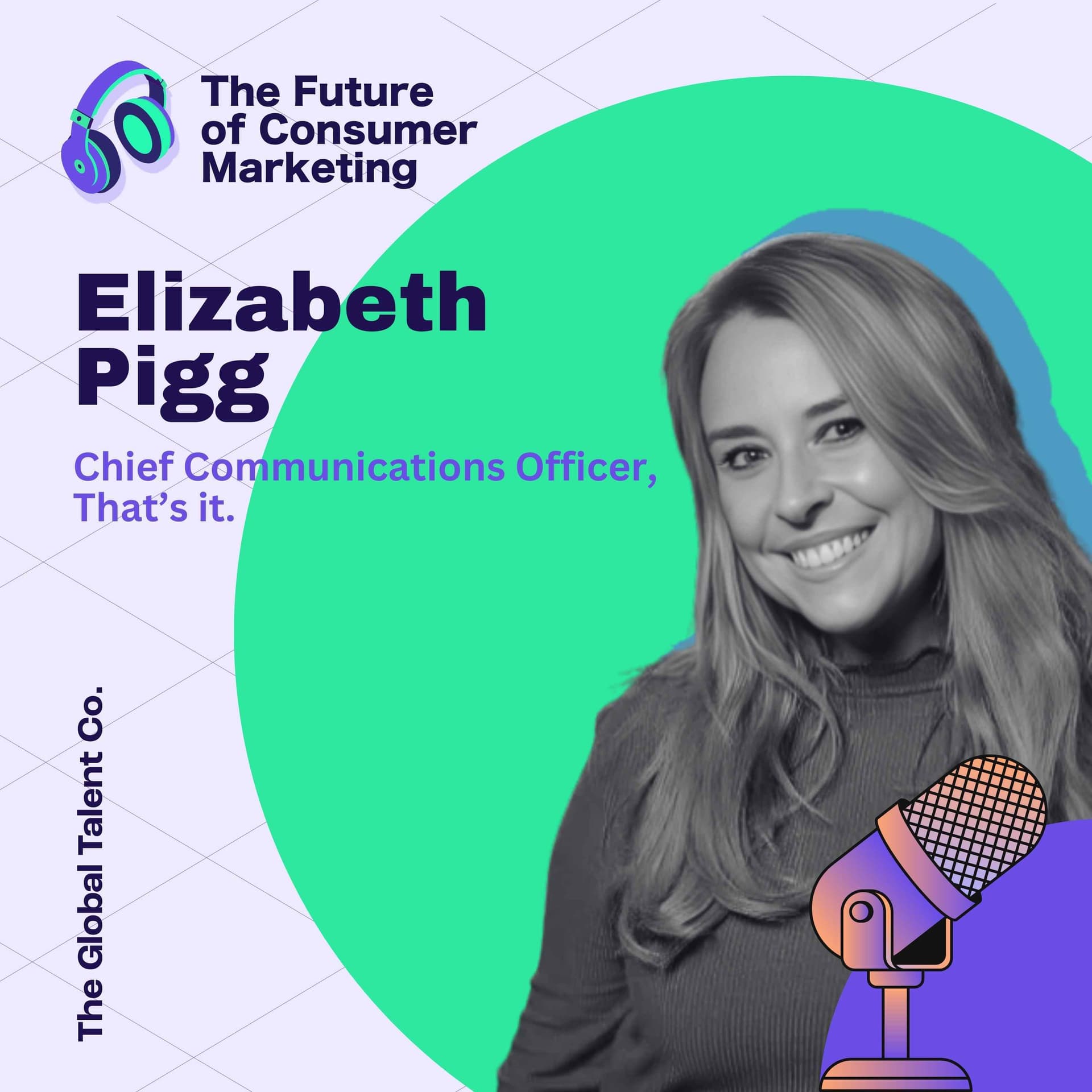
Elizabeth Pig, Chief Communications Officer at That’s It (5 years at the company; previously marketing). Background includes starting in marketing, later moving to comms; company founded by Dr. Lior Lewinstein (medical doctor) in 2012 in LA farmers markets; first national Whole Foods deal in year one.
Key claims
Overselling “healthy” without ingredient truth is the biggest clean-eating mistake; “natural flavors” jargon undermines trust. Data is useful, but common sense/intuition matters more than heavy market research for creative. Viral content priorities: back-to-school and New Year “new you.”
Notable examples
Two-ingredient fruit bars (e.g., one apple + one mango), school sampling for parents, 10 million samples planned, Crunchables and organic energy bars (100mg caffeine), use cases like mixing into yogurt/trail mix, and “listening” on Reddit/Facebook groups.
Written by AI. May contain mistakes. Listen to the episode to check what was said.
Chapters
Tap a time to open that second in VOThe Evolution of That's It Brand
0:45 to 3:59
Discussion about the origins of the brand and its core values.
“Now, we've been really excited for this episode because once we started investigating what That's It does and how the brand has placed itself as it seems to be the biggest selling fruit bar in the United States.”
Authenticity in Marketing and Consumer Trust
3:59 to 6:20
Exploration of how authenticity affects marketing and consumer trust.
“And it's beautiful how, as the consumer starts to have more awareness, how you guys are just like, yeah, there's not that much you need to be aware about.”
Influencer Marketing Trends and Strategies
6:20 to 8:34
Insights on the evolution of influencer marketing and its impact.
“content in the long term when you're building like this brand?”
Creative Production and Scaling Strategies
8:34 to 13:00
Discussion on how to scale creative production effectively.
“And it's changed their business completely.”
Counterintuitive Insights on Consumer Behavior
13:00 to 14:00
Exploring surprising insights into consumer behavior and marketing success.
“Do you have any counterintuitive insights about consumer behavior that you've discovered through your campaign work and maybe through what that is in terms of like it's the food industry or in your experience in general?”
Discussing Growth Strategies
14:00 to 15:10
Exploration of growth strategies and the role of team expansion.
“The fastest, we have tried a lot of those things.”
Integrating AI in Marketing
15:10 to 17:18
How AI is utilized across departments to enhance efficiency.
“I know it's like the trending topic of the time and everybody's using it, but I would love to understand how that has or hasn't incorporated in its process.”
Communicating Nutritional Benefits
17:18 to 19:16
Strategies for effectively conveying product benefits to consumers.
“So it's still in process, I think, but it's exciting.”
Authenticity in Clean Eating
19:16 to 21:18
The importance of authenticity in marketing clean eating products.
“And that helps the people understand as well what you mean, like the usability of the product they're buying.”
Addressing Consumer Trust
21:18 to 23:12
How brands can build trust with consumers through honest messaging.
“I believe it's supposed to taste like what it's naturally representing, but it's not actually natural.”
Show all 15 chapters
Catering to Diverse Audiences
23:12 to 25:33
Strategies for targeting different age demographics with products.
“Do you have a specific strategy for also catering to like the senior population or, or, or those of older age?”
Future Flavors and Shelf Life
25:33 to 27:30
Insights on product shelf life and the introduction of new flavors.
“It's such a nice place when companies like arise from, from like a place of honesty.”
Consumer Engagement Insights
27:30 to 28:07
Key insights for marketers on engaging consumers effectively.
“I would say lean into listening to where your consumers are because consumers are, is the number one thing.”
Listening to Consumer Needs
28:07 to 28:35
Learn how to effectively tap into consumer desires through social media insights.
“fulfilling a gap that they're actively talking about.”
Wrapping Up with Elizabeth
29:16 to 29:59
Reflect on the success of That's It and the importance of enjoying your work.
“So you can get just about just about anywhere these days.”
Transcript
Automatic transcript. May contain errors.0:00Biggest selling fruit bar in the United States, is that correct? Our first tagline that we ever had as a brand that we're still using to this day is our fruit bars are made with fruit plus fruit. That's it. We also work with micro and nano influencers that are true fans of the brand. We talk about use case as much as possible. The biggest mistake brands make when they're trying to compete in the clean eating category. Try to oversell something that isn't really authentic. What do you think is the biggest myth about digital marketing? I love data, but I think that we don't go enough on common sense and intuition as much as we have been.
0:42Just Do It was not tested through market research.
0:54hey everybody thanks for listening today i'm speaking with elizabeth pig chief communications officer at that's it a brand that has transformed the natural foods category with its portfolio of clean simple plant-based snacks so elizabeth how are you doing it's a pleasure to have you here I'm good. Thank you so much for having me. Yep. Now, we've been really excited for this episode because once we started investigating what That's It does and how the brand has placed itself as it seems to be the biggest selling fruit bar in the United States. Is that correct? Number one selling fruit bar in America.
1:32Yes. that's amazing and just so that we can give the audience a bit more context elizabeth could you please tell us a little bit more about yourself and what that's it is sure well about me i've been at that's it for about five years i actually started on the marketing side and a couple years ago i moved to chief communications officer side and that's been really exciting but that's it we've been around for about 13 years now we started in 2012 in farmers markets in los angeles Got our first national deal in year one in Whole Foods. And now we're in over 85 ,000 retail doors nationwide. And we do everything from make simple, clean ingredients, most known for two ingredient fruit bars.
2:15But we've got into other things like crunchy fruit snacks, confection with dark chocolate truffles, probiotic fruit bars. So like we want to make sure that fruit is delicious, convenient, easy and accessible for all ages and all lifestyles. OK, that's beautiful. And I'm going to be so hungry after this episode. Just hearing what you guys have to offer. and elizabeth a little bit more i would like to know is for example how do you balance being authentic and the storytelling that your brand has with working with the simple ingredient focus that you guys do like is it hard to market that type of story you know what it actually is it it it's harder from a marketing perspective than you would think you know we have two ingredients Our first tagline that we ever had as a brand that we're still using to this day is our fruit bars are made with fruit plus fruit.
3:15And sometimes the simplest message is the hardest one to get across because of the simplicity. But I will say in 2025, with all of the scrutinizing in the news lately about ultra processed foods, removing food dyes, people, particularly parents, our main audience, is finally turning over the wrapper and looking at the ingredients on the back that they never have before. And they say, that's it? And we're like, yep, that's it. So they do the work, a lot of work for us now. So I think we were a little ahead of our time in 2012, but these days it's really resonating and it's really exciting to see.
3:58Okay. And it's beautiful how, as the consumer starts to have more awareness, how you guys are just like, yeah, there's not that much you need to be aware about. It's just a simple formula that will always work. And that's what sells, right? I mean, that's what sells. But, you know, there's also different need states for this simplicity, right? So if you are one of the 33 million Americans that have one of the top nine food allergies, we're also free of all the allergens. So they're school safe. We have diabetes and you can't have snacks with added sugar. We just have sugar from the fruit. So, I mean, there's there's a lot of audiences where we can like hone in on something that is a benefit, essentially a fruit and where our product is the solution.
4:43Oh, my God. That's so cool. That's so cool. And Elizabeth, what do you think is the biggest myth about digital marketing that you've had to bust in all your years working since we saw that you've worked in Chicago, New York, L.A.? Like we did a little bit of digging. Do you think that there's something that that is a myth that you actually bust that, you know? Honestly, I am. I'm a believer in trusting. I love data, but I think that we don't go enough on common sense and intuition as much as we have been. So I'm one of those people that, you know, I'm not a big believer in a lot of market research, particularly for creative campaigns, because I think it can suck the life out of something that might be really good.
5:34I mean, Just Do It was not tested through market research. And it's three simple words and one of the best campaigns of all time. So that's a myth that I think I think that's overhyped. You know, people just don't trust something's going to work and they test it with a room full of people that at the end of the day might not even be your consumer as much as they try to qualify them. okay i totally understand that and it is true that the campaign somebody could imagine or that they're trying to create might be skewed due to the data that you're saying like hey this is not going to hit this percentile of the consumers you have and then you start to get it in your own head and it doesn't even follow the normal pathway of what inspiration is so i totally feel that i totally feel that and um elizabeth do you have a framework for deciding when to prioritize viral content in the long term when you're building like this brand?
6:29Sure. So our two biggest priorities throughout the year are right now during the back to school period, where kids are going to need a healthy snack and moms and dads, parents of all types are needing a healthy snack as well. So that's one big time of the year. And the other big time that we prioritize content that is viral is around New Year. People are starting to realize, oh, I should probably not be eating all the foods that I've been eating during the holiday season. So they're getting back to New Year, New Year, and New You. And so that's when the biggest moments of time. But we really don't think in a campaign specific way, year round, we're creating content, we're leveraging ambassadors.
7:18We have our own ambassador group that we have. We've created it. And we also work with micro and nano influencers that are true fans of the brand to create UGC that's relevant for our audience. Okay. And do you think that influencer marketing execution has evolved a lot during the past five years? Like mentioning that you have UCG and these types of generated contents. Do you think there's been a major change in that? I think there's been a major change. I don't think there's been that much of a change in how it works. I mean, there's always going to be a new tool to use and a new way that things can happen with AI and all that stuff.
7:59But I think the biggest change is that influencers of all sizes not only can build a brand at lightning fast speed, but they can also cancel a brand. So I think listening to the audience is just as important as what you're putting out. The speed of communication, especially on TikTok, among Gen Z, they can kill a brand really quick for not being authentic and trustworthy. And we've seen a lot of big serial brands this year that has happened as a result of social media. And it's changed their business completely. Wow. Okay. And do you guys measure the authenticity in paid social campaigns while you try to maintain the performance metrics?
8:45Like, how do you make sure that you're still being real with all these different influencers and different profiles that you might be looking for? I mean, we thoroughly look at everyone we decide to work with. So if their content already talks about healthy and nutritious snacks and they have kids, I mean, that really shines through. So we do our research on that. And then, you know, we do we measure the same things everyone else does, you know, about, you know, how many likes they get, engagement, shareability, the comments, the quality, the quality of their followers, too, obviously, you know, to see who they're associated with.
9:23So we're looking we're looking at all of those signals at the same time. Ah, okay. Okay. And how do you guys, do you have a process or a strategy you follow when you want to create thumb-stopping creative content that's paid, owned, and earned by different channels without losing your brand consistency? Because that's what like, it always, it makes me question, like, how do you maintain yourself aligned with who you are with so many people advertising you guys? We give them the key messages and they're very simple, right? So it's hard to mess them up. And if you mess them up, they're not right for the brand, but we give them the guidelines.
10:03But the beauty of working with, with creators is that we don't want to control it. I want to, I want to see, you know, we have, we have our new product crunchables. I always have product in hand. these are apples and strawberries that's it and they're crunchy snacks and we love to see okay i'll send you some it would be love to see what the audience does with them we might say eat it out of the bag they might mix it in a yogurt they might make it put nuts in it and make it a trail mix that's fine with us i mean we're not so precious if you find a different use case for it we're all for that so but okay yeah so but i mean the messages are the messages our product is very simple it's clean and and it's delicious and what you want to do with it and how you want to talk about it as long as you're telling the truth because that's what we're doing we're happy with that okay okay now that that sounds like very nice because i do understand that the value in the product is that it's so clean.
11:07It's so simple that you can use it for whatever you want without having to have like a second voice in your head saying, oh, this is not that healthy, or you shouldn't be eating that much sugar. And that really provides like confidence in the consumer, in my opinion. Okay. Yeah. And it really all comes down to trust. Like for us, that's our biggest metric is are we building trust with our audience, especially these days when brand, when everything's costing more these days. We have inflation, we have shrinkflation. People don't trust the labels anymore. Trust is very important to us. That's the number one thing.
11:45Of course. And Elizabeth, how have you guys scaled like creative production from startup budgets to enterprise level campaigns as I imagine that's it must be having now? I don't know what you, I mean, we don't have, we don't have, we're an independent entrepreneurial mindset, roll up your sleeves type of company. As big as we get, we probably will always be that way. But that allows us to change things on the fly, A-B test things, whether it's email marketing or SMS or paid media, we do our creative in-house. We don't have a creative agency for that. We have a boutique paid media agency that helps us scale up.
12:29But yeah, we're pretty nimble. We move pretty fast. And we also lean into our digital retail as well. So it's social and it's also retail. Retail support is our number one priority, followed by strategic sampling at scale. Specifically, we're giving out 10 million samples this year. And then the third area would be social ambassador and UGC and scaling that to paid. Okay. Okay. Okay. And okay. I have another question. Do you have any counterintuitive insights about consumer behavior that you've discovered through your campaign work and maybe through what that is in terms of like it's the food industry or in your experience in general?
13:21Counterintuitive. Something that nobody expects that they think is right, but it isn't. For us, I think over the years, we've tried different campaigns that get a little creative that it might work for another brand. But at the end of the day, going back to the most basic thing in the world is what has been working the best. So we went back to simplicity a couple years ago and we're just sticking with it. So you would think changing out the campaign every six to eight weeks and doing, do we need a tagline here? Do we need a headline here? Do we need to, to do something different? Do we need a wild moment?
14:01No, we don't. We don't. The fastest, we have tried a lot of those things. I mean, if you look at our socials, you'll see we've worked with some pretty big names like over the past 10 years but not in the last three to four years and we've grown quicker um in the last four years so um that's counterintuitive to me no no totally valid totally valid and when you talk about growth elizabeth how does how do you and your team and the company and as a whole know when it's time to bring more people on board now Now that you also mentioned that you have a lot of like the what's it called? The campaigns are done in house and that it's a pretty roll up your sleeves and get to work company.
14:44How do you guys know when it's time to when it's time to bring new people in? That's a really good question. The answer to that is it all depends, of course. When it comes to creative and designers, we want to make sure that we're properly staffed there at all times. But we also lean in occasionally to agency partners when needed and then make a determination whether we want to bring another headcount. I mean, our marketing team in total, I think, is eight or nine people total. Okay. Okay. Wow. And do you guys leverage AI in any way? I know it's like the trending topic of the time and everybody's using it, but I would love to understand how that has or hasn't incorporated in its process.
15:30I venture to say that every department in our organization is using some form of AI for something that they do, whether it's operations or finance or marketing or PR. Okay. To, you know, kind of learn a lot of, you know, what can make things more efficient, right? So AI is very interesting for me. ChatGPT in particular, going to five is five better than four. There's all this debates about this. What I'm really looking at now is how there's been a lot of discussion recently of Shopify integrating into ChatGPT so that you could natively make a purchase in ChatGPT. Okay. Without ever leaving. And so that's supposed to be rolling out in the next few months.
16:29You know, there's certainly been a lot of headlines about in the last month or so. So how does that how does that impact us as an organization? looking at is SEO turning into GEO or AEO, you know, and thinking about that question answer format that makes that's it a result when somebody is searching in AI for a healthy snack for my toddler that has a nut, soy and wheat allergy so that that's it becomes a result in those queries. If it's moving in that direction, we want to be ready, but we also don't like to jump to the next shiny new object when AI is still evolving. Even images, you still get someone with six fingers.
17:20So it's still in process, I think, but it's exciting. Okay. Okay. And I understand And that's it. The fruit bar, for example, it just has two ingredients, which makes it very easy. But do you guys have an effective way to communicate the more complex nutritional benefits to in simple terms to the general public? Sure. I mean, yeah. I mean, with the two ingredients and of course, you know, I'm going to show for those that can't see that our fruit bars, one apple, one mango. That's it. So if we're at if we're advertising to parents or to someone that's busy on the go, we might talk about how it gives you quick energy.
18:07We love fresh fruit, by the way, but we like products because you can put it in your pocket. A lot of marathoners use them. So we talk about use case as much as possible. So getting back to school, for example, when we're doing sampling, we're doing sampling in K-12 schools and getting the product in the hands of parents so they can see that this is a school snack. Okay. And this year for the very first time, we're pairing that with a brand new product we came out with, our organic energy bars. So it's made with just fruit and 100 milligrams of clean caffeine. Okay. Wow. So that's for parents because they need their daily servings of fruit, but they also need their multitasking energy.
18:54So we speak to the multitasking energy that you don't need to have five energy drinks or wait in line for coffee or risk spilling your, you know, drink on your laptop or while driving that this is a portable solution. So so we talk about the times of day of how you might use it. Does that answer your question? Yes. No, no, no. For sure. For sure. And that helps the people understand as well what you mean, like the usability of the product they're buying. The kids could use it for school. You could use it while you're going late to the office and you didn't get a chance to stop at Starbucks. So you then get your caffeine dose and your pick-me-up.
19:32That sounds very interesting. Yeah. But we do love Starbucks. Our bars are in Starbucks too. For real? Yeah. That's amazing. That's amazing. Yeah. Yeah. Okay. hey, Elizabeth, what do you think is the biggest mistake brands make when they're trying to compete in the clean eating category? Something that I believe that's it has completely dominated from what I'm hearing, but I would love to know your opinion about that. If they try to say, try to oversell something that isn't really authentic. Okay. Right. So, I mean, I see so many better for you brands. And I would say the vegan imitation meat category has had some struggles with this.
20:19You know, saying that something is healthy, but really not digging into what those ingredients are. So you can't put like flashy marketing on the front of the package without seeing what's on the back. So it goes back to just being really authentic and saying what you are. If you are, there's so many nutrition bars out there. Some of the biggest ones that are not nutrition bars, they're actually delicious candy bars masked as a nutrition bar. And I think that that's a big mistake. It does a disservice to a consumer of what this is doing to their body. So, so I think that's really important to make sure that you're honest in all of your messaging and what your ingredients are.
21:06Like there's some, there's, there's, um, the thing that drives us the craziest is if you ever look at a product and you see an ingredient called natural flavors. Do you know what that is? I believe it's supposed to taste like what it's naturally representing, but it's not actually natural. See, nobody knows, but people think it's healthy. It starts out as natural, but it goes through processing with other ingredients that might not be natural. And they're not required to disclose what's in those natural flavors. So there's a lot of jargon that goes around in the better for you category. And I think I think we're going to start seeing a lot of the minimal ingredients trend.
22:01I don't think that that's going away. I think that's going to continue to grow. OK, no. And I totally get that because it seems like they're being a bit cheeky with the words they put because the technicalities are what help them to make it seem as it's natural. But it's naturally flavored. Right. Like you'll see a lot of these snacks that'll say like fruit is our first ingredient. It's like, well, what's the second, third, third ingredient? You're just giving me the first step of the process, God. Yeah. So we'll lead with the one thing that's healthy. Okay. Or they'll add in some, they'll add in like our products have real fruit from fiber, for example.
22:43And fiber is something so important. Only one in 10 Americans are getting their daily amount of recommended fiber. And a lot of brands are adding kind of not an artificial, but they're adding in processed fiber back into their snacks and other foods where, you know, we don't have to do that. So showing like how something is sourced is really important. And I think he's really, really cares about that, too. them no of course and more in a time where the people where people are constantly trying to be more aware of what they're ingesting and what the products they buy and consume have inside them so if you're being cheek and just saying like generally what you do it's not going to create that trust that you've been mentioning to us that really has value so okay okay and i've heard elizabeth that you've mentioned that you guys have um put out fruit bars in schools to cater to the kids to cater to the parents.
23:39Do you have a specific strategy for also catering to like the senior population or, or, or those of older age? So that's really interesting. I, I, yes, yes, we do. I mean, we, we look at different channels. I mean, I would say we talk not so much, but no on social, we are on Facebook and Instagram to a certain degree. And we address that audience. It's not our biggest buyer, but we do get, you know, our email marketing, we get a lot of consumers writing us that are seniors that can no longer bite into an apple, for example. And they're writing us and thanking us that we have provided a chewy solution where they can still get their nutrition, even though they no longer can have something that's crunchy, like fresh fruit.
24:30Oh, that's so wholesome. It's beautiful. I'm so glad they're getting their taste of apples then. Yeah, well, you know, and I didn't bring this up at the beginning. I didn't mention that the way our company started is our founder and CEO, Dr. Lior Lewinstein. He was a medical doctor. And he realized he was he was learned a stat that only a third of Americans get their daily servings of fruit. And that really struck him that what if we could use food as medicine and treat all of these illnesses before they happen through food as preventative medicine at scale, he could help more people. And that and so he went to business school and started That's it.
25:15And that's the whole reason that we exist. We never sought out to be a fruit bar company. We wanted to become a snacking platform that will make getting your daily servings of fruit easy and convenient and accessible from two years old to 102 years old. Okay. Wow. That makes the mission even more. It's such a nice place when companies like arise from, from like a place of honesty. And I think it's such a noble mission to just want to give people their, their food servings for the day and noticing that stat that's wow. That's incredible. I mean, you have no idea. I've worked with some of the biggest brands in the world on the agency side and had so many meetings where to figure out what's going to be the PR spin on this.
26:04How are we going to tell this story? And then to work at a company where all we have to do is tell the truth. That's like the greatest job in the whole world. like you can't fabricate the truth and it must be so beautiful to just say it and you almost want to complicate it because it's so simple like don't do don't do that don't do that and elizabeth if i'm not sure if i'm if i'm asking too much here but i want also i'm curious to know do the flavors that you guys have for your fruit bars are those seasonal like do they change depending on what you guys have available or is it always the same flavors that you guys have repeatedly we have had we you be on the lookout we will probably have some some new flavors and formats in in the next few months but for now we have you know our fruit bars are our fruit bars the great thing about that product and all of our products is that we're 24 months shelf stable so we actually take the seasonality out of fruit so the flavors that we have right now we've had for quite a while.
27:11We haven't given up a flavor, added a new one in the fruit bar specifically area for quite a while, but it's coming. Okay, so cool, so cool. So stay tuned, people. There are more flavors on the way. Yeah, exactly. Okay, Elizabeth, I have one final question that it's more for the audience per se, but it is that if you could give marketing leaders one actionable insight about consumer engagement that will keep them competitive over the next years if they are starting in the market? What do you think that would be? I would say lean into listening to where your consumers are because consumers are, is the number one thing.
27:54I mean, you can be as sophisticated as you, you can be the most sophisticated media marketer and have your whole, you know, channel strategy perfected. if you're not listening to what the consumer is wanting and fulfilling a need state, fulfilling a gap that they're actively talking about. And there's, I would say, lean into Reddit, lean into the Facebook groups, like specifically, if that's where your audience is, they have no filter there. And that's where you need to pay attention. Okay. Okay. Where the most honest reviews are, where the most honest comments about what's happening, where people actually believe the testimonies.
28:32Okay. Exactly. Exactly. Amazing. Amazing. Okay. And before we close up, Elizabeth, I would like to give you the space to let our audience know where if they want to find out further about That's It, if they want to buy the fruit bars, how would they be able to do that just so that they have a clear action path to obtain this delicious snack? Sure. So you can buy our products on our website. It's that's it fruit dot com. We're also on Amazon. Our two new products are Crunchables and Energy Bars are distributed in Costco, Sam's Club, Walmart, Target, Kroger, Hy-Vee, H-E-B, Thrive and Thrive Market and a bunch of other places as well.
29:16So you can get just about just about anywhere these days. I know. That's amazing. That's such a nice story. You guys are on every single shelf in the States. So nice. So nice. We're busy, but we're having a good time. That's how it should be. If you're not enjoying the work you do, then are you actually doing what you want to do? But OK, Elizabeth, we are very happy that you were able to attend the podcast and we will make sure to let you know what this is ready for you to listen. and to the whole audience thank you so much for tuning in and just make sure to hit the subscribe button and if you guys want to go and check out the fruit bars from that's it you've already heard it you'll probably find it in your supermarket so just keep an eye out for it thank you bye
From the publisher
In this episode of The Future of Consumer Marketing, host Andres Figueira interviews Elizabeth Pigg, Chief Communications Officer at That's it. That's it. has become America's number one selling fruit bar by mastering the art of simple messaging in a complex market. Founded by Dr. Lior Lewensztain as a solution to help Americans get their daily fruit servings, the company has grown from farmers markets in Los Angeles to 85,000 retail doors nationwide. Elizabeth shares how they've built trust and scaled growth by deliberately choosing simplicity over complexity, creating authentic community connections, and turning their product limitations into competitive advantages.
Topics Discussed:- Building brand trust through radical ingredient transparency
- Scaling in-house creative production while maintaining agility
- Strategic sampling at massive scale (10 million samples annually)
- Leveraging micro and nano influencers for authentic UGC
- Preparing for AI-driven commerce and search evolution
- Creating multiple use cases for simple products across demographics
- Balancing viral content opportunities with consistent messaging