In short
Why China still dominates manufacturing, and how The Studio helps brands find the right factories (trust and curation, not labor-cost arbitrage).
Guest backgrounds
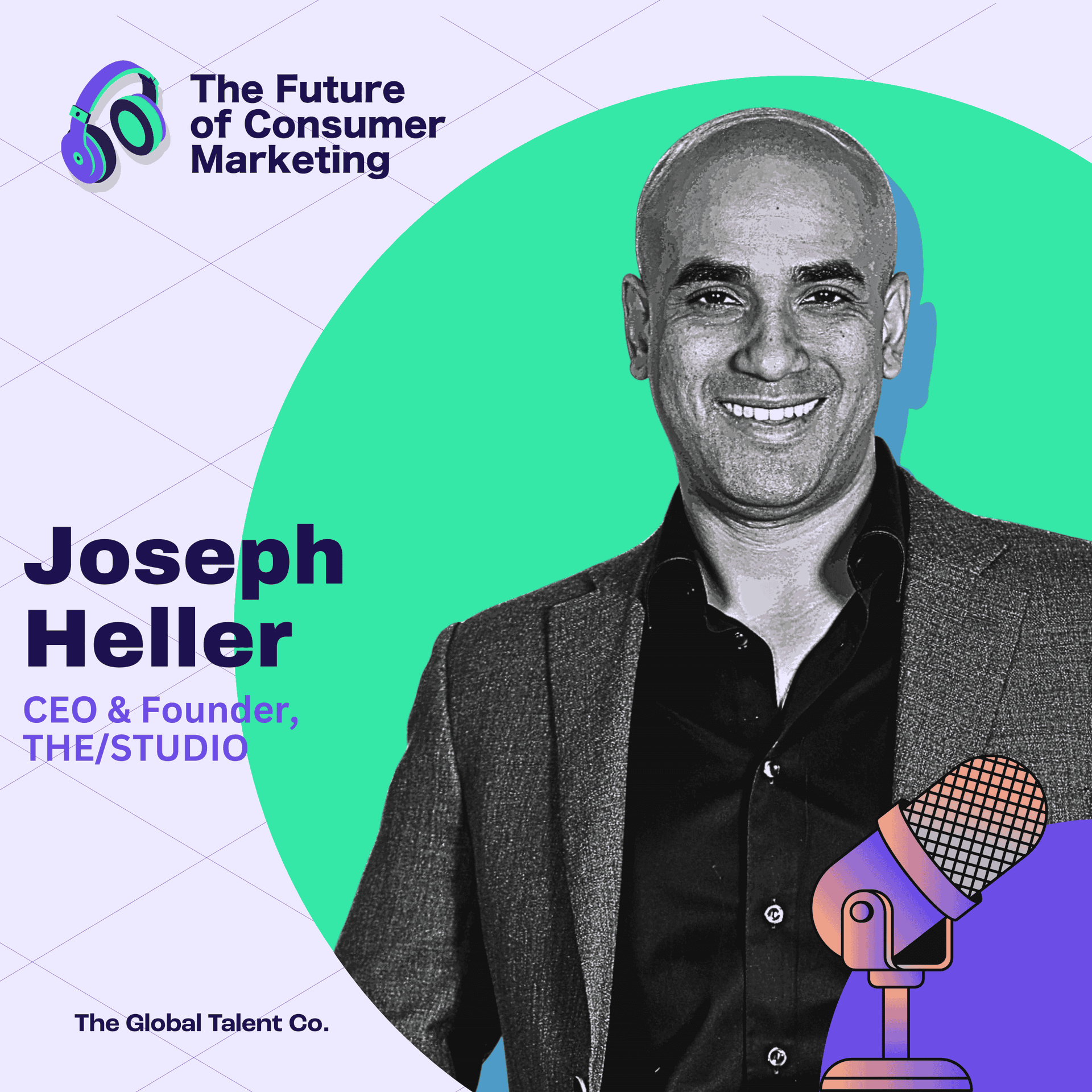
Joseph Heller, CEO/co-founder of The Studio. He lived in China after graduating, taught English for a year, became obsessed with factory floors, and previously worked in manufacturing.
Key claims
Manufacturing success is driven more by manufacturing capability and dense supply chains than by low labor costs. Brands often fail by choosing the wrong factory for their specific quality/positioning needs. The Studio solves this by curating manufacturers and building trust. Marketing is challenging because it’s hard to explain the value quickly amid market noise (Alibaba, trade shows, Google).
Notable examples
A “luxury T-shirt” can be ruined by a factory that’s fine for Walmart. The Studio has worked with 100,000+ customers over 14 years; “Source Anything” helps manufacture anything. AI is used to generate/iterate product ideas to 90–95% before design teams finalize.
Written by AI. May contain mistakes. Listen to the episode to check what was said.
Chapters
Tap a time to open that second in VOThe Importance of Trust in Manufacturing
0:45 to 1:30
Discussion on how trust impacts manufacturing relationships and the challenges faced.
“Even though the factory may be good, it's just not a right fit for them.”
Introducing Joseph Heller
1:30 to 2:30
Introduction of guest Joseph Heller and his background in manufacturing.
“And today, with me here, I am speaking with Joseph Heller, CEO and co-founder at The Studio.”
Navigating the Manufacturing Landscape
2:30 to 5:00
Joseph discusses challenges in manufacturing and how The Studio addresses them.
“And I randomly got exposed to manufacturing living in China.”
Curation in Manufacturing
5:00 to 7:10
Exploring the importance of curation in helping businesses find the right manufacturers.
“Okay, because if I understood correctly on your website, then you guys are like curators for these people that need to create their products and you recommend the best factory for what they need, right?”
Growing the Studio: Word of Mouth Success
7:10 to 9:20
Joseph shares the origin story of The Studio and how it grew through referrals.
“like we've always had a pretty distributed team and different teams kind of manage different functions in the company.”
Trends in Manufacturing Requests
9:20 to 11:30
Discussion on the types of products most commonly requested and current trends.
“So we actually, I was in manufacturing before I started the studio.”
Adapting to Manufacturing Outside China
11:30 to 13:20
Joseph discusses the shift towards manufacturing outside of China and the challenges involved.
“Or is it a grand variety of miscellaneous things that it's just random and people just order whatever they want?”
Leveraging AI in Manufacturing
13:20 to 16:51
Exploring how AI is integrated into The Studio's processes and its impact.
“China has the strongest manufacturing in the world, just generally.”
The Power of Social Media in B2B
16:51 to 20:00
Discover how social media can be a game changer for B2B marketing despite the competition.
“And in the past, it's something that we kind of ignored.”
China's Dominance in Manufacturing
20:00 to 22:29
Understand the reasons behind China's leading position in global manufacturing beyond just labor costs.
“Now with the tariffs, people are expecting and hoping to get out of China to start manufacturing more locally.”
Show all 11 chapters
The Studio's Vision for the Future
22:29 to 24:19
Hear about the long-term goals of the studio and their commitment to helping businesses succeed.
“you have the best product tailored to what you want.”
Transcript
Automatic transcript. May contain errors.0:00The studio is really focused around making people successful in manufacturing. So our goal is to make manufacturing more accessible, easier, and like a lever that brands can use to make them more successful. How has it been marketing? Something that I feel is a bit more niche. Marketing has gotten more expensive. We've had to come up with more creative ways to market to our customer. how to present it in a compelling, interesting way, I think that's more the challenge. In terms of trust, when somebody needs something manufactured, it's also like they need to know who's making it, that the product is the quality that they need.
0:39That's the major problem that we solve. A lot of times people don't understand manufacturing. They create relationships with the wrong factory. Even though the factory may be good, it's just not a right fit for them.
0:56Hey, everybody. Thank you for listening. My name is Andres Pigueira, and I'm going to be your host for the day. This show is brought to you by The Global Talent Company, helping fast-growing teams hire exceptional remote talent from Argentina, South Africa, and beyond. We connect companies with world-class professionals who bring skill, reliability, and a global perspective to every role. And just for our listeners, we're offering an exclusive 10 % discount on your first hire. All you need to do is visit theglobaltalent.co, click start hiring, and mention the podcast listener discount when we get in touch.
1:29So just let us know if this sounds appealing to you, and we'll wait for you at our website. And today, with me here, I am speaking with Joseph Heller, CEO and co-founder at The Studio. A company whose vision is to create the world's largest, most customer-centric digital factory, empowering creators to effortlessly bring their products to life. So, Joseph, it's a pleasure to have you here on the podcast, man. How are you doing? Doing good. Thank you for having me, Andres. No problem at all. It's an honor for us to be able to host you. And Joseph, just so that we can start getting the audience a bit more in context, would you be able to tell us a bit more about your background, who you are, and even in your own words, what the studio is and what you guys do?
2:11Yeah, so I guess for starters, I used to live in China. That's how I got exposed to manufacturing. I graduated from college and I ended up teaching English for a year in China. And while living in China, I mean, China is like the manufacturer of the world. And I randomly got exposed to manufacturing living in China. And it's kind of one of those things I've just been obsessed with from like the first time I ever went to a factory floor. And the studio is really focused around making people successful in manufacturing. It's generally manufacturing is very challenging, but it's a critical part of like any consumer brand.
3:00And a lot of factory, a lot of companies just don't do manufacturing well. So our goal is to make manufacturing more accessible, easier, and like a lever that brands can use to make them more successful. How has it been marketing something that I feel is a bit more niche or that customers aren't clear that they might need or that it'd be so useful to them? How has that part of the whole process with the studio been? So I think people actually kind of generally do understand that they need help with manufacturing. One thing I think has evolved, though, is manufacturing is just, I mean, not manufacturing, marketing has gotten more expensive.
3:42And so I think we've had to come up with more creative ways to market to our customer. But I do think people generally understand that manufacturing is important. And I think they generally understand that that's probably something they're not good at and they need help with. But I think, you know, how to present it in a compelling, interesting way. I think that's more the challenge. OK. And in terms of trust, because when somebody needs something manufactured, it's also like they need to know who's making it, that the product is the quality that they need. Has that been an issue or has that or has there been like a standardization in the fact that people understand they're going to get top quality products?
4:26Yeah. So, I mean, I think that's the major problem that we solve is like, in general, manufacturers don't have a good reputation. And manufacturers don't have a good reputation for a million reasons. One of those reasons is a lot of times people don't understand manufacturing and because they don't understand it, they create relationships with the wrong factory. Even though the factory may be good, it's just not a right fit for them. And so I think that's the value the studio brings to the market is bringing trust to the market and bringing trust to the company that's looking for the right manufacturer.
5:06Okay, because if I understood correctly on your website, then you guys are like curators for these people that need to create their products and you recommend the best factory for what they need, right? Yeah, exactly. And I think that curation piece is the right way to think about it because manufacturing is like super, super broad and there's a million manufacturers. And like another thing people don't understand is like even if you're saying manufacturing a T-shirt, like there's literally a million different ways you can manufacture a T-shirt. And like if you're going for like a very luxurious, high quality T-shirt, like if you find the wrong manufacturer, they may be great for Walmart, but like terrible for your brand.
5:48So I think curation is like the right word to be using. Awesome. No, that's amazing. And that really is quite a gap in the process because, for example, me being from Venezuela, a lot of people import from China. And I've seen countless numbers of friends of mine or people who go to China and speak with a zillion manufacturers and never find the right one. So maybe the studio is the exact solution that they've been looking for, but that they don't know existed, but that they've been looking for. So that's pretty cool, man. And I see that you guys are based in Pasadena, California, right? Correct.
6:24We're technically headquartered in Pasadena. Okay. But then you created your contacts in China, and now you liaise with them from Pasadena. And do you have like a remote team or is everybody in California? How does that work? Yeah. So we used to have physical offices in LA and San Francisco. We're now fully remote, except we still have a physical office in China. Yeah. Okay. Okay. No, I would imagine that. And I would imagine that in the remoteness of it all, you would need different time zones to be covered in order to cater to all the different customers that you guys serve. Because I imagine it's not country-based.
7:02It's not just in the States. It's anywhere really, right? Yeah, that's right. And so we've always had like, even before COVID, like we've always had a pretty distributed team and different teams kind of manage different functions in the company. So remote actually works quite well for us. Okay. Okay. I like that. I like that. And in terms of Joseph, you mentioned that the real challenge was making the marketing campaigns and through the channels that you guys use, making those ads and that way to get you guys known more compelling and a more interesting narrative. Would you be able to give us an example of one of those campaigns that you're mentioning?
7:44So I think it's going back to the value that we create, which is kind of curating and bringing trust to the market. So it hasn't been like the easiest thing to describe because you don't want to get too technical into like how we kind of do what we do. I think the goal is how we can solve the customer's problem. And so the marketing that we've kind of ended up focusing on is helping our customer to understand that we can make really amazing products for them. And then we have the backend supply chain to make it easy for them. So that's kind of what we want to describe in three seconds, whether it being on our website, whether it being in our emails.
8:32I still think it's a work in progress. I don't think we've totally nailed how to describe that, but that's our real value proposition because there is a lot of noise in the market. Like there's Alibaba, which is the biggest manufacturing platform in the world. There's a lot of other companies in the space. And then there's like trade shows and there's even Google. So that's our messaging is we can help you to make really cool products and make that process really, really simple. Since you have the idea for the studio, You understood how things worked in China. You maybe got back home and you started to make a whole business of it.
9:09How long was it after you had the realization of the business you wanted to create and you obtained your first customer? Was it been a very short time or did you spend a while trying to get somebody to vouch and trust the studio? So we actually, I was in manufacturing before I started the studio. and the actual idea for the studio came from a friend who needed some products manufactured and then like we did a really good job for him and then his like it was actually a military a small military order and then like his commanding officer wanted more products and then we just kind of it would start off as like word of mouth and then i just realized that there's a real problem that I could solve since I was actually living in China at the time.
9:59And so that it kind of grew organically from there. And now how many customers do you have or have you helped out to manufacture with the studio? Yeah. So, I mean, literally we've worked with over a hundred thousand customers. We've been in business for 14 years. So, um, yeah, so, so we have quite a lot of scale. Yeah. We've, we've worked in it. It's even gotten to the point where like, I've randomly met people like at parties or events and they're like, Oh, I use your company. So, um, yeah, we, we, we've worked with a lot of people. That must be a very nice feeling. Like, Oh, you're from the studio.
10:34I use that. And you're like, okay, business is going well. Yeah. Yeah. Yeah. It is cool. The first time ever was like at an Apple store. Um, just randomly the person saw my business card and he's like, oh, I use the studio. And then another time, like shortly after, I was at a trade show in the UK. Like my brother had like an event at a trade show and I went with him. And like there was a guy randomly that I was talking to and he had used our company. So, but I love how you mentioned that it grew organically at the beginning and word of mouth, because that is also, I find that it's from what I've heard from other CEOs and founders, is that when their product or their solution is so good, There's actually no need to advertise it because people are enjoying the fact that it works and that it's something that they needed.
11:21So that's pretty nice, man. And in terms of the manufacturing that companies ask for or your customers, is there a certain type of product that you see is being requested the most or that people want to make? Or is it a grand variety of miscellaneous things that it's just random and people just order whatever they want? I know that from 100 ,000 customers, it must be hard to recall, but just wondering if there's any pattern. Yeah, so it actually started off, we manufactured very specific products. Recently, we launched a new product called Source Anything, where we basically will help them to manufacture anything.
12:00But our kind of core competency is like in the apparel, accessories, home decor space. That's where we have like the most expertise. I think some trends are obviously people are trying to manufacture outside of China more and more. That's becoming a very important theme. I think another just kind of important theme is like social media is driving a lot of trends now. So a lot of times people are getting their kind of manufacturing inspiration from what's going on on social media. So, yeah, I'd say those are probably the two most significant trends going on right now. getting out of China and then like what's trending on social media and how can I make that for my company?
12:47Okay, I love it. They send you like a TikTok video and hey, I want to make this that's gone viral. How can I do it? Yeah, exactly. I could imagine. I could imagine several companies going that way. And when they ask you if that they don't want to keep manufacturing in China, have you been able to create a catalog of manufacturers outside of China and you cater to that request as well? Or is it just China that helps you out with manufacturing? Yeah, so that's something that we're like really focused on right now is helping people with manufacturing outside of China. China has the strongest manufacturing in the world, just generally.
13:27So it's very hard to replace China. But obviously with tariffs, it's something that people have to do. And yeah, we've been setting up teams outside of China to help build relationships. So yeah, we're seeing lots of people. And also, it's kind of unpredictable how tariffs are being applied. So everyone thought that China was going to be the only country hit with tariffs. But India, Vietnam, everyone's been hit with tariffs. So we've also been helping people with manufacturing in the US, which is another big trend. is like domestic U.S. manufacturing. Of course, that the product says made in the USA and that way, you know, it was just, it's local.
14:13It didn't have to pay any tariffs. And Joseph, also another question that I love to ask in the show is that I see, and it's a normal thing now, it's the major trend, but how are you guys leveraging AI to help you out in your processes? Because I talk with a lot of different companies and they all have kind of a specific use for it. So just wondering if you could shed some light about that. Yeah, so I definitely think AI, I mean, we use it throughout the organization for things just like brainstorming, marketing ideas. We're also using it for like idea generation with our customers. So our customers will say like, hey, I'm looking for something like this.
14:55And in the past, we would have to generate the designs with the factory, but now our team can generate ideas in real time using AI, which is like a really cool use case. And we also have a design team, but before, like there's obviously a lag time between the customer has an idea, then we send it to our design team. Now we can just kind of iterate on ideas and get it to like 90, 95 % of the way there and then send it to our design team. So that's been a very like practical, efficient way to use AI. Like it reduces like the time to hours instead of days. And it also doesn't clog up our design team kind of iterating on a bunch of back and forth.
15:40So that's been awesome, right? Because in the past, the customer would have to go back and forth with the design team. It could take days and weeks. Now we can kind of iterate in real time and get it 90, 90, 95 % there with more options much quicker. And then once they like narrow in on an idea, then we can send that to the professional design team. That's amazing. And being able to provide something that's 90, 95 % ready to your design team is just telling them like, hey, you just need to put the finishing touches and make sure that it works. And then we'll set it to manufacturing because AI can go over great sometimes.
16:16But super cool that you're able to eliminate that backlog because designing, it takes a lot longer than just thinking about the idea. I know I already asked you about the campaigns, but I would love an example of some content that you guys have created, if you have any, Joseph, in terms of anything that has been said in social media or if you guys, what channel is working best for you in terms of driving conversions. Do you have any type of example for that? Yeah. So, I mean, one thing I'm just very bullish on now is actually creating content. It's something that we never did before, but it's something we're now investing a lot of time and energy and money into.
16:59And in the past, it's something that we kind of ignored. And so I think social media and content is like very, very difficult now because there's a lot of competition. But I think if you can get it right, I think there's nothing that can pay off like social media. So I think it's risky and difficult, but I think it has like a really high ROI if you can get it right. and and i understand that this is more so the studio serves customers that are companies that want to get things manufactured so it's b2b and in the content that you produce for b2b i don't know if i imagine a company going through instagram or do you have a specific platform that you feel is the one that works best for this content that you want to create actually like all the platforms actually work so everyone is technically like i think that's the interesting thing about b2b now is like yes your old software buyer like you know 10 years ago wouldn't be on social media but like i do actually think like i mean and gen z is becoming more and more business decision makers and they're definitely on social media so everybody everybody has one of these and it's like it's obvious that they have at least one social platform downloaded on it how big is the studio if you guys have been like ongoing for 14 years and you've told me about your design team and i just hear a lot of parts that are moving that make this work so how big is your the people that you have um helping you out like how big is your workforce so we're about like 90 people globally and that is separated into how many teams so we have engineering design customer service sales, production.
18:54Yeah, those are like, and then obviously like operations and marketing, of course. What is one of the most counterintuitive insights that you've learned about what drives the decision for customers that they want to manufacture with you guys? Like, is there anything that you didn't expect would work to get them to come on board? So one thing I've just learned in general is people don't care about software and like, they care about you solving their problem. And I think that's something that we're starting to learn better as like people want to know within five seconds that you can solve their problem.
19:31They don't actually care about how you do it. So yeah, that's been a big learning. Okay. I understand. So it's not going so nitty and gritty with the specs. It's just making sure they understand the solution because if not, you could just lose them with all the noise and all static that comes with social media. Yeah, I think that's right. Yep. And if you would have any prediction about how manufacturing is going to go in here to five years, Joseph, what would you say about that? Like, I understand that, for example, a few years ago, it was mainly China. Now with the tariffs, people are expecting and hoping to get out of China to start manufacturing more locally.
20:09What do you believe will be happening with manufacturing in five years time? Yeah, it's a good question. So I still think China will be important. China is like the best manufacturer in the world. So their labor laws are definitely more robust than the U.S., surprisingly. And it used to be the case that they didn't enforce the labor laws, but they actually do now enforce the labor laws. So, for example, like people legally get six months maternity leave in China and it's very much enforced. Whereas like in the U.S., actually there is no maternity law. So why is China the best manufacturer in the world?
20:48It's because I'm not saying that low cost isn't a factor. They clearly have like lower cost than the U.S. or in Europe, but their costs are not lower than Eastern Europe, for example. And actually, like a lot of the labor costs are even higher and are actually lower in parts of Portugal. um and so and also the labor costs are lower in a lot of south america and also like places like asia and stuff so it's actually not a labor cost issue like china has just gotten very very good at manufacturing and they're very good manufacturers so they also have like a very dense supply chain so people use the word supply chain so like even like something simple like this white t-shirt you still need like a call you need like a supplier for the cotton you need a supplier for the labels and china just has like an amazing like saturation of like everything you need to make a product in one place so that's just like one thing why china is the best manufacturer in the world i know i love that joseph thank you for teaching me something new because i'm gonna stop trash talking china now and actually say that they deserve to be named the best manufacturers and most efficient is what I believe is what comes with them as well.
22:07Because I understand that labor costs could be cheaper in South America, but I feel the quality wouldn't be the same in certain things. And what you say as well, the oversaturation of the Chinese market in terms of the suppliers you may need, that must feel really good being able to pick and choose from so many different companies that you can just make sure you have the best product tailored to what you want. Yeah, for sure. They have the best supply chain in the world. I mean, just in general, the cool thing about China is any product that you could want to make, like you can, it's almost like being in a playground for making a product because literally everything you could ever want is there.
22:57And that's kind of a problem with even U.S. manufacturing. If you want to put together a complex product, you have to get components from all over the place, including outside the U.S., and it just takes a long time. Whereas the cool thing about China, they have these like massive markets, like nothing like nothing you've ever seen. And like, I guess you're like. So what's like the nice, cool area in Buenos Aires? Let's say Palermo. Yeah, Palermo. Exactly. So they literally have areas the sides of Palermo that just have markets full of material, for example. Literally, there's an area literally of the size of Palermo where it would take you days to explore the entire area where there's just every material you could ever think of.
23:52So it's actually really cool. And Joseph, in terms of the studio and your main goals and objectives for 2026, would you be able to tell me what your main thing is that you want to accomplish? Yeah, I mean, it comes down to like our original vision is like we want people, we want to help people to create amazing products and give them access to the supply chain to make them successful doing that. That is totally understandable. And it's just making sure the company keeps working for what it stands for. And that's beautiful. Because if you guys have already 14 years in the market, I would only hope that you guys have 14 more to go and in excess.
24:32Yeah, we hope so. And Joseph, I know that we're almost at time for the end of the episode, but I did want to give you the opportunity to let anybody who's hearing us know how they can look up the studio, how they can see if their company and what they want to manufacture works, and you guys can help them out and just look at your services. Yeah, I mean, they can always go to thestudio.com. That's like the easiest. Okay. But they can also email me, josephatthestudio.com. I stay super close to our customers. And so if someone has like a really cool idea, we'd love to hear about it. And, you know, I can either put them in touch with the right person in our company or sometimes I even take the calls if it sounds like a cool project.
25:15OK, that is so cool. So for anybody listening, if you have a nice idea, just make sure to reach out to the studio or even Joseph personally. And if it's a really nice idea, you might even get to meet this guy. That's been a lot of fun in this episode. So pretty nice, man. Thank you so much for helping on here, Joseph. Appreciate it. Cool. Thank you, Andra. And anybody who is listening here with us, we also appreciate you being on this episode and just hope that you come back to learn about all the different personalities we talked to and all the different industries that we're having on the show.
From the publisher
In this episode of The Future of Marketing, host Andres Figueira interviews Joseph Heller, CEO & Founder of The Studio. The Studio has quietly become one of the most essential manufacturing platforms for consumer brands, serving over 100,000 customers across 14 years by solving one of the hardest problems in consumer business: finding the right manufacturer. Rather than competing on price or technology features, The Studio built its business around curation and trust—acting as the critical bridge between brands and the world's manufacturing infrastructure. Their approach to marketing reflects a fundamental understanding that sophisticated customers don't buy software or platforms; they buy solutions to specific problems delivered with speed and clarity.
Topics Discussed:- Building trust in a market where manufacturers have poor reputations
- Evolving marketing strategies as customer acquisition costs increase
- Curating manufacturing partners rather than simply connecting buyers and sellers Using AI to compress design iteration cycles from days to hours
- Expanding beyond China to build global manufacturing networks
- Translating complex B2B services into simple, compelling marketing messages Leveraging organic growth and word-of-mouth in the early stages
- Adapting to social media-driven product trends and customer inspiration