In short
Digital saturation is creating demand for analog products—specifically premium, long-lasting notebooks that offer “intimacy” and lifelong organization.
Guest
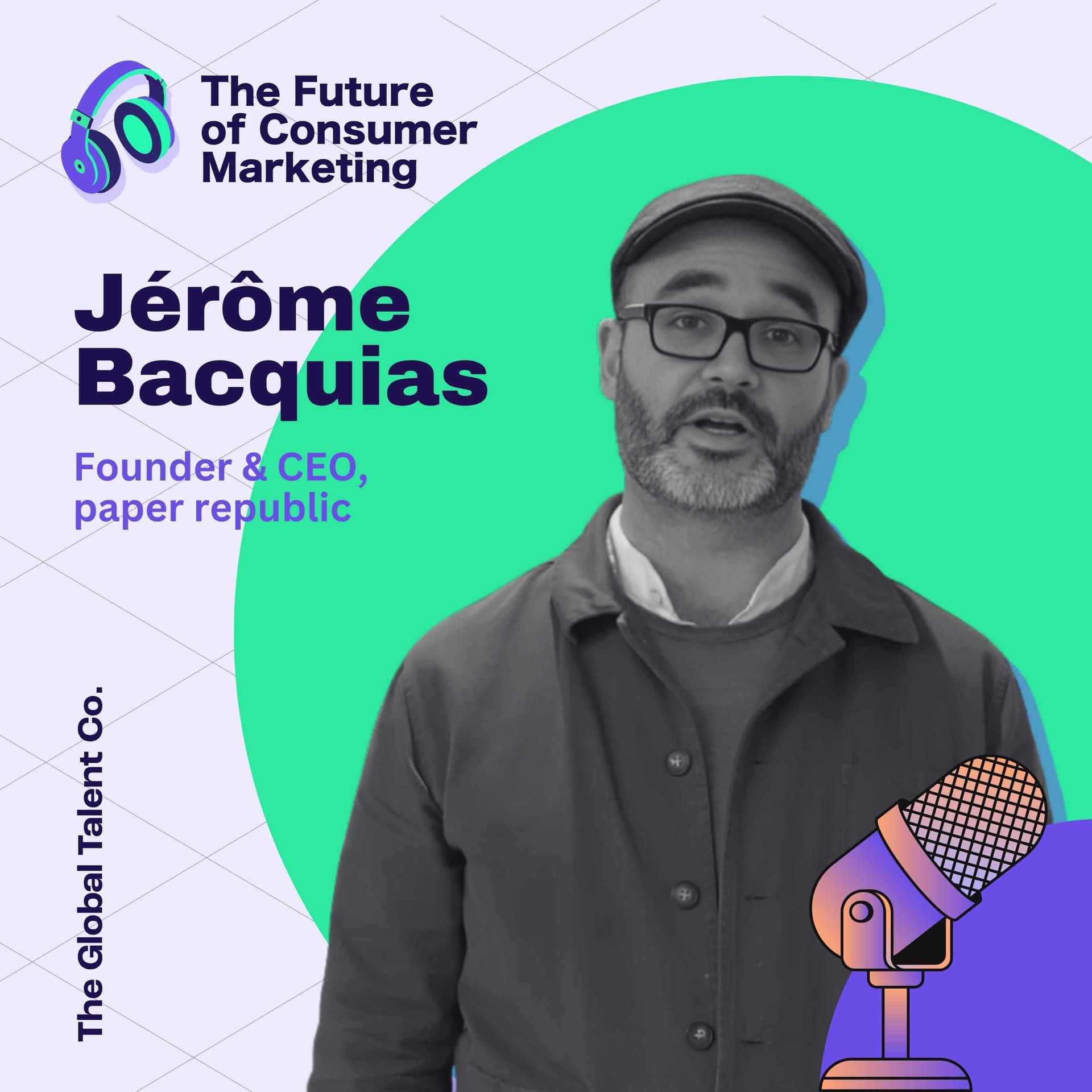
Jérôme Bacquiat, founder and CEO of Paper Republic (born in France, based in Austria/Vienna). Background: studied political science; worked as a consultant; left corporate life after feeling he’d “hit the end of the world,” then started making notebooks with no printing/paper/leather business background.
Key claims
Paper Republic vertically integrates everything (design, cutting, marketing, shipping) with ~100 employees in Vienna; sells direct-to-consumer (90% online) to avoid distributors/price pressure; notebooks last “for 100 years” via vegetable-tan leather covers plus replaceable, non-proprietary refills; loyalty comes from exceptional customer experience (e.g., handwritten notes on every online order).
Notable examples
leather refill system (lines/dots/planners), pen loop magnetic leather accessory, passport holder; transition to online selling around 2018 (before COVID).
Written by AI. May contain mistakes. Listen to the episode to check what was said.
Chapters
Tap a time to open that second in VOIntroduction to Paper Republic
0:50 to 1:40
Jérôme shares the story behind Paper Republic and his passion for notebooks.
“one of the leading manufacturers of premium notebooks in Europe.”
The Journey from Consulting to Creation
1:40 to 3:35
Jérôme discusses leaving consulting to start Paper Republic driven by his love for writing.
“I was born in France, but now I'm in Europe, based in Austria.”
Finding the Right Notebook
3:35 to 4:50
The conversation revolves around the personal connection to notebooks and the inspiration for creating a premium product.
“I think at some point, yeah, you kind of get lost.”
Quality and Competition in the Notebook Market
4:50 to 6:54
Jérôme explains how Paper Republic competes by offering high-quality notebooks in a saturated market.
“And like, I really empathize with you and the fact that if I were to quit my job for tomorrow, I wouldn't know what to do either.”
Direct-to-Consumer Model
6:54 to 8:39
The advantages of a direct-to-consumer strategy and how it enhances customer relationships.
“How do you compete with something that's a little bit cheaper, but yours is, I want to say, more special and has more of a premium price?”
Scaling Production While Maintaining Quality
8:39 to 11:13
Jérôme discusses challenges in scaling production while maintaining the handcrafted quality of products.
“I love how you mentioned that, like somebody like me, myself, I would have thought like, hey, in this mass produced market of notebooks, maybe it's a little bit harder to stand out by being such a premium price.”
Expanding Global Reach
11:13 to 13:19
Insights into Paper Republic's international sales strategy and shipping capabilities.
“because I wanted to know if you guys shipped to Argentina because I want one of these networks already.”
Understanding Notebook Longevity and Customer Loyalty
13:19 to 14:00
The design and materials used in Paper Republic's notebooks that contribute to their lifetime durability.
“an extremely strong role during the pandemic, that's true.”
Crafting Timeless Notebooks
14:00 to 16:48
Learn about the durability and quality of leather notebooks and their customizable nature.
“Could you even explain to us why the notebook lasts a lifetime for anybody that's listening that doesn't understand?”
Building Customer Loyalty
16:48 to 19:00
Discover the importance of personal touches and customer experience in fostering loyalty.
“So every online order has a real online note written by a team member thanking them for the purchase.”
Show all 15 chapters
Product Core and Innovation
19:00 to 20:32
Understand how Paper Republic focuses on stationary while drawing inspiration from various sources.
“There is always inspiration from everywhere, of course.”
Embracing Analog in a Digital World
20:32 to 22:36
Explore the balance between analog products and digital tools within modern business.
“But are you leveraging AI to help you with your processes?”
The Importance of Brand Building
22:36 to 24:48
Learn the significance of brand identity over mere product sales in luxury markets.
“And you see, I had a direct influence on, I would say, white colors for sure.”
Navigating Marketing Challenges
24:48 to 27:36
Analyze the challenges of marketing analog products to a digital-savvy audience.
“It's the premium and best notebook you'll find.”
Discussion on Paper Republic's Appeal
28:00 to 28:26
Explore the influence of media on consumer behavior and brand engagement.
“I know me personally for a fact, I'm going to go down a rabbit hole via Paper Republic's media in Instagram, TikTok, and just see these stories because I'm a sucker for those.”
Transcript
Automatic transcript. May contain errors.0:00This show is brought to you by the Global Talent Co, a marketing leader's best friend in these times of budget cuts and efficient growth. We help marketing leaders find, hire, vet, and manage amazing marketing talent for 50 to 70 percent less than their U.S. and European counterparts. To book a free consultation, visit globaltalent.co. Hey, everybody, and thank you for listening. My name is Andres Figueira, and I'm going to be your host for the day. I'm located in Buenos Aires, Argentina, and this show is brought to you by The Global Talent Company, a company that's connecting top remote professionals from Argentina, South Africa, and all over the world with leading tech companies worldwide.
0:40So if your team is looking to hire world-class talent from South America, South Africa, or from wherever you want, head over to theglobaltalent.co and see how we can help. And with me right here, I have Jérôme Bacquiat, founder and CEO of Paper Republic, one of the leading manufacturers of premium notebooks in Europe. So, Jerome, how's it going? It's a pleasure to have you here. Thank you for having me, Andres. A pleasure to be here. Doing well. I'm very glad that we got to have you on the episode. I must say that this episode from today and what you guys do, it really hits home for me because I am a journal fan.
1:18I have already, I would say, seven or eight complete notebooks of all my notes that I just saved in a little library. So when I saw what Paper Republic was all about, I was like, I can't wait to have a chat with Jerome and see what you guys, how you started, how the company came to be. So if you want to help us put the audience a bit more in context, let us know a little bit about yourself and Paper Republic. Sure. So first, I'm Jerome. Just call me a Frenchman. I was born in France, but now I'm in Europe, based in Austria. And I created Paper Republic about 12 years ago. I come from a completely different background.
1:50So for me, it's something I really discovered like step by step. I did study political science and then I was a consultant. Then I just stopped everything and had a kind of a crisis and just decided to create notebooks out of the blue to say is just love like writing and paper. So it's really a live project. It was really like out of almost a crisis, I would say. And this started as a one-man show. Right. And then just grew step by step over the years. I know we are about like a team of 100 people. and what is incredible is we do everything ourselves well we completely vertically integrated company so we do the notebooks we cut it we prepare it we do the marketing we ship it and yeah and this is paper public wow that is so cool and jerome like you do everything in house that's crazy and what was in at the beginning of your story you're mentioning that you weren't too in consulting and then like you got fed up with the corporate life what was that moment of realization when you realized that the corporate life wasn't for you?
2:47I think at some point, there was no choice anymore. I just hit the end of the world. I think in life, sometimes you just feel like there is no way further. If I just go further, I'm just going to really lose myself in such a way that I will not be myself anymore. So I just had to quit. I just felt like I had to move away and just to say goodbye to all the corporate life I had. And it just happened like on Monday. I had this realization on the morning, morning, it was a very big corporate day. You know, at the meeting where everyone is sitting and you just feel like, and then I just say like, guys, I'm sorry, I'm not going to go through my agenda.
3:19I'm just going to leave the company now. And then on Tuesday, I just left the company and I really had no clue what to do. Really no clue. I just knew like, like I cannot be there, sit on the morning, morning, take a flight on the Tuesday, go for a project, come back. No, that was over. And it took me about six months just to find out like what I wanted. So I tried many different ideas, many different things. I think at some point, yeah, you kind of get lost. But I really like always loved reading and writing. And at some point, I just realized, actually, I can't find a notebook I like. Well, maybe I should make it.
3:49And this is how it started. But I had absolutely no clue about printing, paper, leather, nothing. So just went to fairs to meet people, meet suppliers. I had no business background either. So I just did everything myself. That's crazy, Jero. That's very inspiring. Respect for that. Because realizing you don't want to be there. I love the fact that it was on a Monday. That means you had the rest of the week to get yourself together. I think we will have it. But I think for me, the test is how do you feel on a Sunday evening? Like, do you feel great about the coming week? Is this something like you want, you're looking forward?
4:19Or do you feel like you don't want to be on the morning morning? And if this is just like one or two times, that's fine. If it's other weeks and weeks feeling the same like Sunday evening, like blues, then you should really like take some steps. And for me, that was like one morning morning too much and just decided to leave the company. It's true. And the body and the mind, although they can be crazy at some times, they can also be very wise. So it's important to listen to that and make sure that you don't stay somewhere you don't want to be or that you feel you shouldn't be. Because then we get stories like yours in which you got to be able to make something that you love.
4:53And like, I really empathize with you and the fact that if I were to quit my job for tomorrow, I wouldn't know what to do either. but it's really beautiful how you were able to find something that you're passionate about personally because I love journals I always have like what you said I never find the notebook I actually like I always have to make concessions with one that I say okay this is the best one I got but it's not the one I need like I desire and when I start to look into your website I feel that the notebooks you guys create it's very it's a premium class product right it's very well done and I believe it's handcrafted so yeah it's handcrafted I think we just try to do the best notebook possible.
5:29No, it's a very simple products. I mean, like paper has been around for two, three thousand years. Leather has been around for five thousand years. So we're not inventing the ice here, right? Once a year, like they put on that product that's so timeless. So you need to put so much love and attention to it to make it perfect. Yeah. And I think notebooks is one of the most personal items you can own. It's like a wash, you know, like it's Something you carry all the time is close to you. It's almost physical, the relationship you have to the notebook. And indeed, you need to have this personal connection to it.
6:02Otherwise, it's just something that you will throw away after a few weeks. But I just felt like this was completely missing on the market. Like this super personal connection you have with your writing, with the object was kind of missing. And I just tried to put everything together, like from the materials, the suppliers, the design, and even like the use of it. I wanted to make a notebook that is a companion for life. What we try to do is you don't buy a notebook, you buy a companion for your lifetime. And this is what we want because what is more personal than what you write, right? Nothing almost.
6:31It's true. You want it to be secret. You want it to be personal. You want some intimacy, but you also want something that will be with you over the next five, 10, 20, 30 years, even maybe your children, right? And this is something I really wanted from the beginning. And yeah, so we do everything ourselves. And of course it is unprofitable because this is for us like a way to really master the product and to understand really the quality from A to Z. Okay. And Jerome, how have you been able to compete in a market such as, I believe, I want to say static or filled with many products as notebooks because they're very mass produced by these other companies that maybe don't have as much soul as you guys have, but they do have a lot more inventory.
7:13How do you compete with something that's a little bit cheaper, but yours is, I want to say, more special and has more of a premium price? I think this is the opportunity we have, and it is massive. I don't think there is any brand currently on the market doing what we try to do. It's taking a very customer mass-produced product into something more premium, something which is actually more expensive, but which will be from a quality like nothing comparable to the other products. So I was happy it was pretty easy to compete because there was no one there. All the other brands were either trying to do some shitty apps or crap like notebooks, you know, like for two or three pounds or dollars.
7:53And we just come here and say like, well, you have something here for 50 to 100 dollars, but it will be for life. And trust us, it's the best product we will ever own. And I really think so. So basically, when I started, because I was really long, there was almost no competition out there. Exactly on that niche. So it's way easier. And the other point is the ability of paper public to sell directly to customers. So this is a very traditional market. So to say, most of the players go through distributors, wholesalers, and then shops. And then you have a lot of middlemen between you and the customers.
8:24And we are completely direct to customers. So this makes it possible to first have more margin, but also to know our customers, to have a customer base, and to have a super high number of recurring customers. So yeah, that's how we did our way. And I really think there is a massive opportunity here. So we are just trying to do our best. I love how you mentioned that, like somebody like me, myself, I would have thought like, hey, in this mass produced market of notebooks, maybe it's a little bit harder to stand out by being such a premium price. But then that's the angle you saw. And it's like there isn't a premium product to compete with all these mass produced ones.
9:00So that's really cool. And how have you been able to maintain that handcrafted quality after you guys, I believe you grew more than 100 % or 100 % in 2023. Is that correct? The company has been growing 100 % every year for over the past five years. Nice. And how is it that you can maintain the handcraft quality while it keeps on growing? Like, is it the team that you get always a specialized person that knows how to make them? Or what's your process around that? It's one of the main challenges, to be honest, because it's not the same thing to do like a few hundred notebooks a month and to do tens of thousands, even maybe hundreds of thousands.
9:36You got to build a team. Everything is the team, right? It's the team and the processes. So I think we've built a fantastic team of people who are really like super knowledgeable in leather craft, in production, in purchasing, in supply, in planning. And then we've built the processes around. So we're still learning about it. But the main challenge is actually very few companies do this kind of very like labor intensive factory in Europe. It is usually you do this in Europe, you do this in Asia. But I would say we are one of the few companies doing this way. So it's not only to produce it like ourselves, it's to do it ourselves in the middle of Europe, in the middle of Vienna, in the middle of the city.
10:12We're not even in the outskirts of the city. We're in the city center and building this massive facility of now 100 people working and producing notebooks in the center. So yeah, the team and the process. Okay. Okay. Understood. Understood. And Jerome, now that you mention it, like you guys are located in Vienna, like in the center of the city, you're creating these notebooks yourselves. Do you only sell to the European and American markets or are you guys already shipping worldwide? Like, do you want to become a worldwide brand or is it just better to stay? We're selling 90 % of our businesses online and we serve the world, right?
10:48So there are a few countries where we cannot deliver because of some very obvious political or economic problems. But basically, we deliver to every country in the world. Like all main markets are what you mentioned, like still like Europe and the US or North America. but Asia, some Middle East countries, in Africa, South America, it's pretty strong for us. So I would say the rest of the world is still like a third of the business. And we are shipping this every day from Vienna. I'm asking this question purely for me because I wanted to know if you guys shipped to Argentina because I want one of these networks already.
11:23What we learned is not always easy to export to Argentina, but for other reasons. It's true. It's true. Okay. So Jerome, going back to the topic at hand, like how were you able to transition from selling from shop to shop and being alone to doing small batches and building then an international online presence? Like what was the main catalyst in that? Was it that the team expanded or was it that you maybe got fed up with going by foot and just walking your way to see what you could sell? Yeah, I think at some point I just realized that what I wanted to do is super high quality and not mass produce goods and going to the traditional distribution networks was just not working.
12:04Like the wholesalers were driving the price down. They wanted to pay even always later. So it was just not working from an economic perspective. So basically that was again this moment like there is no other choice. There is no other choice but to go online and sell directly to their customers. And then from this moment, just trying to just, I always go all in. When I take decisions, I go all in, right? So I went all in in the company and then I say, well, now it's time to go all in online. So that was about 2018 or something. And then I decided to ship a business online. So we closed all the business with all the wholesalers we had and went completely online to customers from, again, from Monday to Tuesday.
12:42And it just worked out like incredibly well because the online growth is massive and we have access to, well. entries in the book right and by the dates you're giving me it seems you made the transition from like going with wholesalers and stuff to the online world right before the pandemic right right that was about a year and a half before that actually that's true that was a very good timing in a sense and we had pretty unfortunate but we had a very good time during the pandemic of course of course from our economic perspective also because we did produce everything ourselves so we were not relying on supply from asia or from other countries that were being blocked so we had an extremely strong role during the pandemic, that's true.
13:22But it was pretty difficult though, because you have to make people together. The time was tough. Yeah. Now, if you make the product physically, I imagine with the quarantine rules and everything, it must have been harder. But I feel that a lot of companies that I've talked to that made the switch right before the pandemic to go online, it actually boosted them because people went crazy and at home, locked up. It was hard. But Jerome, I've heard you mention several times that these notebooks last a lifetime, And it's like, I hear that they are very, very, they have very long lives. So how are you able to get your, what's it called, your customers to build loyalty with them when they will never need to actually repurchase a notebook?
14:03Could you even explain to us why the notebook lasts a lifetime for anybody that's listening that doesn't understand? So our concept is we make actually leather notebooks. Okay. If you have a letter cover, which is very strong and inside you put different refills, different notebooks. So it can be big ones, smaller ones, can be with lines, can be with dots, can be planners, can be a lot of different things. And you can change these refills and banners inside as much as you want. It is not a proprietary system. So you can even put other brands and things that you love or other books. So it's not based on paper public.
14:37So basically you make your own notebook, right? And the leather we use is certainly one or if not the best leather in the world for sure. So it's a vegetable tan leather from super nice animals. So it's really top notch and the quality is incredible. And it cannot break basically. Like leather is this incredible material where it's just actually a byproduct of the meat production. So you don't kill any animals. And leather is something that's been around for 5 ,000 years. And we know in a stage where leather is just extremely durable and I think way more in the other materials. So basically, the system we made, make it possible to say that this is something that you can for 100 years for sure.
15:18Because you can feel it and you get it as much as you want. So first, we have the product and we can prove it. And then how do we make people come back? And I think by just trying to offer the absolute best customer experience possible around the product and to be true on the promise that we sell. that we make tools that will change the life of our customers, that will make it possible to organize the life, to be creative and to be the best version of themselves. And we just try to really like fulfill that promise. And I think we do it pretty well most of the time. And people just come back because they see the qualities here.
15:53They see the authenticity is here. And when you write, you don't only write once a month or once a year. You just have to write like most of the times. You just come back because you claim what looks like. So this is how we try to do it. And by the fact that we are a D2C company, we speak directly to the customer. So we have our audience on social media, we have our audience in email marketing, we have audience on different channels. So we speak to the customers all the time, not only to sell them the stuff, but also to explain how we work, who we are as a company. And I think that authenticity and really like human connection that we try to bring to the customer makes a big difference.
16:30One small example, if you want, like one thing I started when I started the company is to always write a personal note to every customer when we have an online order. So there is, dear Andres, thank you for your order. All the best from Vienna. And I did that from the very first order that my customers placed on our Shopify store. And 12 years later, we still do it. So every online order has a real online note written by a team member thanking them for the purchase. And you know, that's not something that any company would do at scale, which is good because I don't believe that that makes the connection and people feel like, wow, they really do it.
17:05And yeah, of course. Yeah. If you treat people like well and with respect, I think they come back in business, in friendship, whatever you want. I like that train of thought and I agree with it as well. And the way you mentioned how you're able to capture your customer's loyalty, I totally agree with it because it's even happening with me that I'm not even a customer yet. But the fact is that I'm looking at your page as you're talking to me and it really looks beautiful in the terms of that. It looks like a high quality product. And if I were to purchase something right now from this page and somebody from Paper Republic were to say, hey, thank you for your purchase.
17:38Greetings from Vienna or whatever. I would be like, oh, so nice. They would make me want to purchase again. And actually, I'm seeing now that in Paper Republic, it's not just the leather notebooks. It's also the papers. And you have other like, what's it called? and you have other items as well. Do you produce the pens and all that too, Jerome? Or is it only the notebooks that you guys do in-house? The core of the business. I think every company has to have a core. And the core of the business is stationary. So we make notebooks, we make them well, we make paper, we make it well, and we make pen and we make the best pen, I think, on the market currently.
18:12So that's really the core of the market. And it's my job to convince our customers that they should try it at first. We've developed it around a different range of articles, especially in the leather area, because we have the factory, we have the people, we have the craftsmen. So we have our little purse. We have invented really a pen loop so you can put your pen into magnetic leather piece that you can attach to anything. We have a passport holder. We have some few other products, but I would say the core of the company is and will remain in the near future around everything which is about writing and organizing your life for sure.
18:46Okay, okay. And in terms of the stationary products you have and how you create them, have you gathered inspiration from somewhere else? Or does all this come and is born from you and from what you would like to see and the things that you do? There is always inspiration from everywhere, of course. Paper has been around for 2 ,000 years. I haven't invented notebooks. I haven't invented journals. You have to be like aware of the trends and everything. But at some point, I just felt like we need a new system and this new system has to be kind of different and it has to be different materials. It has to be a different way to address them.
19:23So of course, a lot of influence from different places and a lot of then input from me, from my team to develop the products. Okay. Now, the reason I ask is because coincidentally, a few days ago, I saw that in Japan, there was the contest for the best stationary products in all of Japan. And it was this whole competition analyzing the best and most useful stationary products. And now that you mentioned it, like for the industry that you're in and that Paper Republic is, it just like, it connected in my mind. And I just wanted to see if you had even like seen other stuff. But Jerome, there are a few different brands out there doing different things.
20:00And I think it's great. I think all of them have different like strength and different like way of doing more things. So I would not pretend we're the only one out there doing notebooks and doing travels. That would be a bit pretentious in a way which is like adding so much value. Okay. And Jerome, I feel from what we've spoken and from how you've told me the story of what Paper Republic is, it's a very analog brand in this whole digital world that we have. And I feel that everything is handcrafted. The team is very invested in how you guys work. But are you leveraging AI to help you with your processes?
20:37even if it's not in the making of the products, but maybe how you manage the website or something like that. But it's a question I like to ask everybody because it's the trending topic of the moment. So I would love to know if you guys are leveraging AI. Yeah, I mean, first, we are very analog in the output, so to say, like the product we make, but the way we organize, we are extremely digitalized. Like from all the way we work, the way the team communicate, the marketing, the production, all the tools we have. And of course, we do use AI, I would say like in different ways, a lot of us. So in customer support, that's really like the pretty obvious thing that most companies do.
21:12I really it's so much it's changing our life. So I would say like a lot of first level support is done through AI or through automated responses. And we do work a lot on customer support and we try to have a really world class customer support. So you need a lot of humans, but the AI is helping out here. than in the production for sure and making sure you understand what to produce when, to analyze trends, to analyze dynamics, to analyze what you need when. Here we are using AI as well. And I think while a lot of us on a daily basis use AI agents just to make more products. So personally like I speak a lot to my AI agents, write each off and get texts better.
21:49I think it's not like the core of the company, but I really encourage people to be aware of the incredible opportunity we have here. So it's true. Now, I feel that with many companies I've spoken with, AI is never like the core of the company unless they are an AI development company. But it's crazy how it's being leveraged in every single industry that I can imagine. I always do this question and it always just surprises me how much people are actually leaning on it. And it seems pretty cool because it really is helping. It's allowing people to work more on what matters most to them instead of these operative and regular processes that AI can now take care of.
22:27So that's pretty cool. But to add maybe just one comment on that, I mean, of course, we are also producing companies. So we have white colors and blue color employees, so to say. So workers work on machines and workers work on computer. And you see, I had a direct influence on, I would say, white colors for sure. And it will really disturb the marketplace a lot. For people who work just on machines and do the stuff like here you see they're a bit far away from that of course like what is the hammer is the cut is the machine is the stuff but i agree sorry i just no yeah totally the blue collar worker will i believe will get ai a bit more integrated with them if they had i don't know if they got metaglasses and the ai spoke to them about how they should do the job but we're far along away from that but okay going back to paper republic jerome i was wondering if you have ever seen entrepreneurs that want to build a luxury brand such as yours make a mistake that you'd like to point out that you noticed?
23:23Like what's the biggest mistake that you've seen entrepreneurs make when building a luxury brand? Not to think about the brand, just to think about the product. Okay. Okay. It's more mission and vision rather than just I'm selling this. I think you need to be absolutely obsessed with the product. Okay. So the product should be perfect. Every details count. Every details matter. Of course. But the way you're going to sell it is not the product. What you're selling is not the product. You're selling the brand. So you need to build the brand. And building a brand is a long term game. It's not something you do in a matter of month or year.
23:55It just takes so much time. And it's just investment. It just and brands don't lie. At some point, like a product, you can lie about a product, but the quality of a product, and then you can still sell it for a few months. Like a brand that lie, they will just fall apart very quickly. So just to build a brand over time and then just take the time to build a brand. I think that's what most people like. Don't take the time to do it. Don't take the investment because you don't see the investment coming back. The ROI of building a brand is not as clear as a key on Facebook, right? Okay, okay. And I have one more question in regards to how you've positioned the brand.
Read the full transcript
24:29And I imagine I know the answer, but I just want to hear it from you. And it's in the fact that you're selling notebooks in such a digital world, has it been harder for you or has there been any marketing obstacles when you need to market analog product? to digital consumers. It's like, hey, I know you're using a computer, but you should write on this notebook. It's the premium and best notebook you'll find. Me as an avid writer, I know the feeling of putting pen to paper and no keyboard will ever replace that for me. But I'm not sure if that's the market that you guys are applying and that. Actually it is.
25:01I think it's the best time ever to sell pen and paper. It's easier to sell it now than for 50 years because for 50 years, everyone was doing it. You know, like, I know that was very difficult. No one is doing it. Like you only have very cheap competitors and everyone has an iPhone. Like what makes you different? It's not for your smartphone anymore. Like here in the MidMinders, we have the same iPhone, but the notebook you have will make you different. I think everyone feels the oversaturation we live in of the digital environment, maybe from videos, from social media, from notification and everything.
25:34It's getting easier by the day to tell people like, I think it's time for you to get some intimacy with yourself and to find quality time. to find quality time on paper. And I think like, it's so obvious that we don't even have to say it. Like people are just like, I know it's true. I know it's fine. Like I've been doing shit like so long on my scoring on TikTok. Like let's do something like relevant in my life. I don't think we're interested anymore. Just like to just take it. I'm going to be honest, Jerome. I'm loving the confidence and how much you trust in the product you've built because I agree and you're convincing even me.
26:06But the fact is that notebooks nowadays, how you're mentioning it with this digital day and age that we're in, having a journal on you that's visible is even like a fashion statement now. It's like, oh, look, he writes with a pen and it's not with a keyboard or a computer. And it does set you a bit apart in this hipster way. But I do agree. I think people don't even need to be told. They know that they're having too much screen time. It really has a function that people are just fine against. I really think so, that there is a meaning to writing. There is a meaning putting thoughts on paper and not to have a different like media, like digital screen.
26:42There is a meaning to it. There is a function to it. And this I'm absolutely sure there will be paper up all week in 200 years, but I'm not sure Facebook will still be around in 200 years. No, like the digital world will change very fast, but notebooks and paper will stay for a while for sure. It's true. It's true. You've entered a timeless industry and I believe this will go down in history as one of those brands that is always there and it'll just become a legacy brand. So fingers crossed that that's the way. And Jerome, we're almost at time, but I would love to give you the moment to let any listener who's really interested in Paper Republic and the journals we've talked about, let them know how they can purchase your products and how they could find them.
27:21I think the best way to start is just Google Paper Republic. You just go on our social media, Paper Republic. Look at the videos we've made. I think we have a very active like social media presence where we can, we try to show like how people use the notebooks and how How the life changed since they've been using a notebook is super inspiring. Oh my God. On our Instagram page, TikTok page, and of course our website because we sell worldwide. And if you happen to be in Vienna or in the US, in Paris, we have a very selective network of very good retailers and shops where we have our own corners.
27:53So you can go there in the US, in Paris, in Vienna, and we're opening our shop in Vienna as well. So if you have to meet us, you can always as well. Oh my goodness. I know me personally for a fact, I'm going to go down a rabbit hole via Paper Republic's media in Instagram, TikTok, and just see these stories because I'm a sucker for those. If I'm already sold on the product, this will finish like delivering the final blow. But if anybody liked what Jerome mentioned, you know, you can find them in paper-republic.com or on social media. Just look them up. Very nice brand and very nice conversation.
28:25Thank you so much for your time, Jerome. Thank you so much for the invitation. Sounds good. Have a great one. Thank you. Bye-bye.
From the publisher
In this episode of The Future of Consumer Marketing, host Andres Figueira interviews Jérôme Bacquias, founder and CEO of paper republic, one of Europe's leading premium notebook manufacturers. paper republic has transformed a commodity product category by creating handcrafted, lifetime leather notebooks in Vienna's city center. Starting from a corporate consulting crisis 12 years ago, Jérôme built a vertically integrated company that has grown 100% year-over-year for five consecutive years. Through direct-to-consumer strategy, authentic craftsmanship, and personal customer connections, paper republic carved out the premium segment in a mass-produced market, now serving customers worldwide from their Vienna headquarters with a team of 100 craftspeople.
Topics Discussed:- Transitioning from mass-market distribution to direct-to-consumer sales
- Building a premium brand in a commoditized notebook market
- Scaling handcrafted production while maintaining quality standards
- Creating lifetime customer value through refillable notebook systems
- Leveraging authenticity and personal touches in digital marketing
- Positioning analog products as differentiation in a digital world