
In short
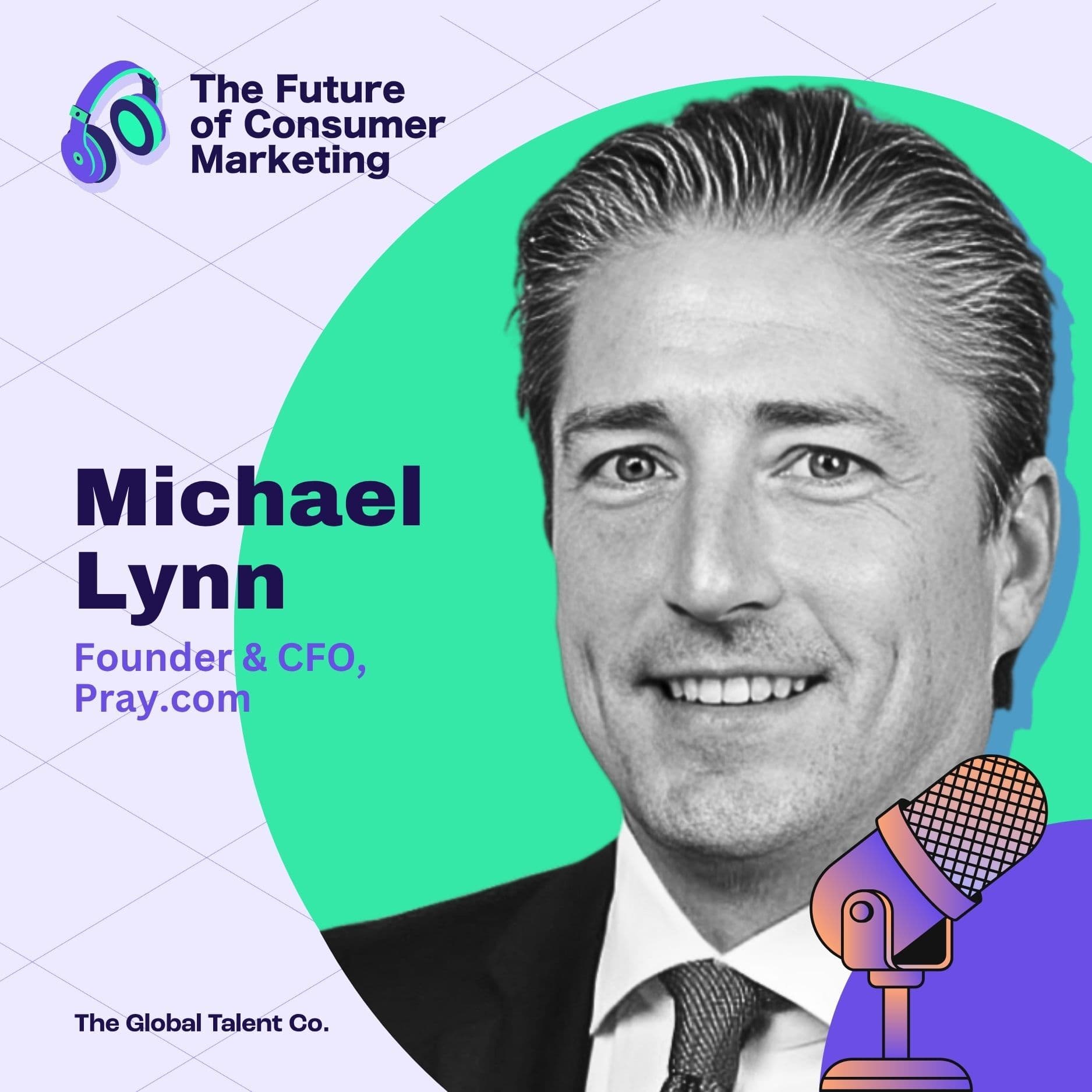
Michael Lynn, co-founder and CFO of Pray.com (spelled “Prey.com” in the transcript), explains how the faith-content app evolved from a tragedy-driven domain purchase into a subscription business, then into a health-focused platform backed by clinical trials.
Guest background
Michael Lynn previously worked 13 years at Merrill Lynch; he later left to co-found Pray.com after joining Steve (co-founder) around 2016. He describes a Catholic upbringing and personal grief from a helicopter crash that killed his brother and friends.
Key claims
Faith content can measurably improve mental health (stress, anxiety, depression). Pray.com shifted from B2B church donations to consumer subscriptions in 2019, then scaled after COVID in 2020. The app’s impact is supported by two clinical trials published in three medical journals.
Notable examples
“Cold walking” into churches; a cop in Ohio says the app stopped him from suicide; a stage-four cancer patient says daily devotionals improved her outlook. He also discusses taboos in fundraising for “sin stocks”/faith companies and later success with major investors.
Written by AI. May contain mistakes. Listen to the episode to check what was said.
Chapters
Tap a time to open that second in VOThe Tragic Event that Sparked Pray.com
0:37 to 3:12
Michael Lynn shares the story behind the founding of Pray.com.
“So as I just did the intro there, Prey.com, I would have to imagine you didn't just go to GoDaddy and buy that for 10 bucks.”
Shared Experiences of Loss and Faith
3:12 to 5:02
Discussion on personal tragedies that shaped both hosts' faith.
“I actually did lose my brother, best friend, four other friends in a helicopter crash in 2019.”
Transitioning from Finance to Entrepreneurship
5:02 to 8:00
Michael explains his career shift from Merrill Lynch to Pray.com.
“It was more like a TED talk than traditional like, she's like, that's what?”
Early Challenges and Funding in Silicon Valley
8:00 to 9:51
Michael discusses their initial struggles and funding efforts.
“Cause then, you know, the story starts from there going to Silicon Valley and all the fun that happened at that point.”
First Business Model: Prayer Application
9:51 to 12:51
Exploration of their first product and initial monetization strategy.
“And, you know, as a CFO, I'm glad we're not in that space anymore.”
Pivoting to Consumer Subscription Model
12:51 to 14:00
Discussion on the challenges and decisions to pivot business models.
“2018 that we're going to have to start switching business models.”
Initial Challenges and the Subscription Model
14:00 to 15:18
Learn about the early struggles and strategies for launching a consumer subscription model.
“So we launched our first consumer subscription package in the April of 2019.”
The Role of Mentors in Business Growth
15:18 to 17:57
Discover how mentorship influenced business strategies and growth at Pray.com.
“We were doing things that no VC back company was doing at our time, especially as small as we were at the point in which we were doing them.”
Impactful User Testimonials
17:57 to 21:10
Hear powerful testimonials from users that highlight the app's positive impact.
“And then you just need to make a schedule.”
Clinical Trials and Mental Health Data
21:10 to 22:29
Understand the significance of clinical trials in demonstrating the app's mental health benefits.
“you know, you can look at retention rates, you can look at, you know, is your churn increasing, decreasing?”
Show all 16 chapters
Trends in Religion and Consumer Behavior
22:29 to 24:40
Explore the resurgence of religious interest and its implications for consumer behavior.
“You know, we might legitimately be a health business.”
The Future of Faith-Based Content
24:40 to 28:03
Examine the future of faith-based content consumption in America post-COVID.
“There's another trend of like, I don't know, maybe it's just like my general social network, but it seems like religion is back.”
Shifts in Faith Content Consumption
28:03 to 29:42
Explore how the consumption of faith content has evolved post-COVID.
“So like, you know, it ain't going nowhere.”
Innovations in the Faith Space
29:42 to 30:30
Learn about the innovative business models in the faith sector.
“And then, you know, all these other business lines opened up after that because consumer subscription is not the only thing that we make money now.”
Navigating CFO Relationships for Marketers
30:30 to 33:03
Discover strategies for marketers to effectively work with CFOs.
“And now we're in a position where I get to spend, you know, hundreds of thousand dollars on doing clinical trials because, you know, we built the business properly.”
The Future of Personalized Faith Experiences
33:03 to 34:22
Understand the vision of delivering personalized faith content through technology.
“Final question for you since I'm seeing we're over on time.”
Transcript
Automatic transcript. May contain errors.0:00Brett Stapper:This show is brought to you by the Global Talent Co, a marketing leader's best friend in these times of budget cuts and efficient growth. We help marketing leaders find, hire, vet, and manage amazing marketing talent for 50 to 70 % less than their U.S. and European counterparts. To book a free consultation, visit globaltalent.co. Hey, everyone, and welcome back to the future of consumer marketing. Today, we're speaking with Michael Lynn, co-founder and CFO of Prey.com. Michael, how are you? Living the dream. Thank you so much. Living the dream. That's a great way to start this conversation. And how I'd like to begin is with a very specific question about the domain.
0:37Brett Stapper:So as I just did the intro there, Prey.com, I would have to imagine you didn't just go to GoDaddy and buy that for 10 bucks. How'd you get the domain? What's the story there? Yeah, I think the precipice of how Prey.com started before the domain, I think is worth hearing because it actually started from a tragedy that occurred in one of my friends who's now in one of my co-founders life. He was the CEO of an aerial production company in Hollywood. And so what that is, is essentially you're filming from aerial positions, your production company filming from aerial positions. And they had helicopters and fixed wing aircraft.
1:10And on one of their movie shoots, because they're in Hollywood, their mentor and founder of the company died in a plane crash during a job, actually a Tom Cruise movie. And my business partner, who was my friend at the time, was the CEO of that company. and you never experienced somebody die tragically like that before. And if you've ever experienced something like that and hope you never do, it jolts you. It really puts you back. And, you know, I think for me, I have a Catholic background, Brett, so I fall back on that instantly. For my business partner, Steve, that was not his first instinct.
1:42His first instinct was I'm going to go on YouTube and look at a bunch of videos like Deepak Chopra and Oprah and, you know, Tony Robbins. And maybe that'll help me with my business partner dying. And it didn't. And so a Navy SEAL pilot friend of his was like, hey man, why don't you listen to this pastor's podcast out of Texas? And Steve was like, dude, I'm not into that Jesus stuff. I'm not going to do it. And his friend's like, look, it's helped me. Again, when you remind me I'm a Navy SEAL, I'm telling you, it's going to help you. So he started listening to it, going to work, coming home from work.
2:16He's like, this is the most incredible thing I've ever heard in my life. I legit make Hollywood movies and I didn't even know about this like faith vertical why isn't there a place for all this stuff especially when people need it right so in his journey he was telling me he wanted to start this company I was like dude I'm totally in and we started looking of like well what should this domain be where all faith content can exist like what would make sense and so if entrepreneur friend of his had a list of domains from way back in the day this big book of domains and he starts flipping through it, but literally he opened it up.
2:50And the first thing he saw on the page was prayer.com, which was not the first thing in the upper left corner or anything. He just opened it up. I was like, boom, prayer.com. And that's how we got the domain. And before it is what it is today, it was basically just a webpage that people could go on and call a phone number and like leave a prayer. Like that's what it was before we kind of took over and said, nah, I think it should be more than that.
3:10Brett Stapper:What a crazy story. I would say some insane overlap. I actually did lose my brother, best friend, four other friends in a helicopter crash in 2019. And I was on that same helicopter three days before. So that very insane experience. Wow. And yeah, as you're saying that, and I leaned on faith very heavily. I was not a very religious person, became very religious shortly after that. So crazy story to kick things off. Yes, I guess. I guess we've got a mutual tragedy and hopefully we, you know, people that are listening out there, it doesn't have to be something that dramatic, but you know, basically there's an acute time of like a mental health crisis that you might be going through.
3:46And sometimes you don't want to call it that, but you go, what do I do right now? Cause I'm panicking. And it's like, you know, for some people, they go back to their faith for other people. They're like, you know, they get into drugs or do something else. So it can be a very scary thing.
3:59Brett Stapper:Yeah. For me, what I decided, which, you know, I have to get two personal errors, like it happened and I basically was like, all right, there's two paths here. One destroys you. The other one, you're going to be like, I turned into a positive. I'm like, we need to turn into that. And like the last part of the cool story, my wife, I have a daughter with, I met her at my brother's funeral. So it's a good example of that. Oh, wow. Things can come from like, absolutely like the most horrible things that you can possibly imagine. It's true. And you know, my business partner, when I went to the memorial service for his business partner, that moment that I saw him be the CEO of this company, because it was a very high profile position, he had to go on TMZ and ABC and all these things.
4:35When I saw him interact with that environment, which was very stressful and he did it so stoically and such a leader i was like there's any time i could work with that guy i was going to do it and so like to your point there are moments of like extreme stress that can define you and it can define the people that you love and you trust or people in your life and that can change your total opinion about other people they can change your path for the rest of your life which happened to you so
5:02Brett Stapper:yep and that's why she said she's with me it's like the speech was so good i gave this talk about like turning grief into rocket fuel. It was more like a TED talk than traditional like, she's like, that's what? So crazy, crazy. Let's talk more about the company. Otherwise, we can probably go back and forth on this all day, our shared pain that we went through. So yeah, you start with the website, you have the Epic domain. When do you start to think like, all right, I'm going to go all in with your co-founders are going to go all in on this idea. Yeah. So I was working at Merrill Lynch for 13 years.
5:31So that's my background. Didn't work anywhere else in terms of like a professional setting. And, you know, I thought that was the path for me. I, you know, 13 years in the financial industry, like you've got basically an annuitized business that's locked in. So you're sitting in a good position, but I went to USC business school and actually went there for entrepreneurship. If you can believe you'd go to business school for entrepreneurship, I don't recommend it in general because it's like, you can only really be an entrepreneur if you just get out there and do it. But while I was there, you know, That's really where things kind of got me excited.
6:02Maybe I should do something else other than this path for the rest of my life. How would I know that I can be an entrepreneur unless I go try it? And so when Steve had this happen to him and we became friends, there was a very clear moment when he told me that he was going to acquire this domain named prayer.com and start this company, which was in the summer of 2016. And we were just having pizza randomly one night when he told me this. And I knew that night that I had to leave my 13-year career. Like it was as clear as day of like, you know, I need to go eat something right now. Like, you know, that feeling.
6:35And I was like, oh, this is it. This is the moment. This is why I have to do this. And it was not even a second guessing. It wasn't like, oh, maybe I'll, you know, keep some clients on the side or, you know, keep my series sevens license. And, you know, it was like, burn the bridge, burn the boats. Like we're doing this and don't even think about going back. Like, don't even think about that's a real thing that's done. so that's kind of the moment for me was when he told me the idea i was like oh this totally makes sense i have a catholic background and you know as somebody that kind of grew up culturally catholic where i wasn't like super into it especially when i went to college when nobody's going to church i was like i need to come back to this this makes a lot of sense i'm going to help build an environment i want to be in and that's kind of where pray.com kind of really just started ideating and then you know we had this pitch deck that we put together and we had to get two other technical co-founders by the way Brett because you know the CEO of an aerial production company and a guy from finance can't code a dang thing once we got two other really great guys and we just created this PowerPoint and that was it like we had some really you know janky you know wire frames that we put together and had basically no money to put together some like a designer tech to make it somewhat useful.
7:50I mean, this is not AI times back in late 2016. And so that's really where things got really going is after that pitch deck got put together. Cause then, you know, the story starts from there going to Silicon Valley and all the fun that happened at that point.
8:04Brett Stapper:Do any stories from that adventure stand out to you? It was early trips to Silicon Valley, anything stand out? There was a lot of, you know, they call it providential in the faith world, you know, for the secular people, they call it coincidences, but you know, it's called providential. It was meant to happen. Right. But there were times we were in a meeting and, you know, there was like a pause, like maybe we should invest or maybe we should invest in like lightning would go off or like, you know, can we be sitting in a meeting and, you know, presenting some information about, you know, what we were going to build and somebody would like roll and go like, it's funny because now we're able to invest in faith companies literally like this year right now.
8:43And nobody's ever pitched us to faith company. So like, this is really cool. So like, I would say one is people did not want to meet with us initially. We were like guns and cigarettes and, you know, things that people did not feel like they could have worked. We're like the sin stocks. And if you know what those are, they're not excited to invest in a faith company. They felt like it was taboo. Yeah. So we had really deep conversations with preeminent names that were like, we want to do this really bad, but our principles say we can't invest in this space. And then there's other people, you know, we've got like Greylock, we're like, we had no clue they would be excited or Sequoia or, you know, founders on like these preeminent names.
9:24And we're like, we thought you guys would not want to touch us because we heard so many other people saying they would never touch us. So I would say, I feel like we broke some taboos there and you can see like the line of people that come after us that were able to raise, which is exciting because it really builds this momentum in the space. But, you know, it was a wild time back then where people were raising on just literally a PowerPoint, no traction whatsoever. And you could burn cash as fast as you could to get to the next round. And, you know, as a CFO, I'm glad we're not in that space anymore.
9:54I feel much more confident just being a profitable business.
9:57Brett Stapper:What year was that? And how much did you raise for that first round? Yeah. So the first round was in 2017 and we raised around two million bucks. And, you know, that didn't last too long. That didn't last too long. I mean, engineers were expensive back then, still are, you know, maybe the prices have come down a little bit with AI. But, you know, that lasts us basically a year. And we built a private prayer application, essentially. And it was released like four months after we raised the funds on iOS. And basically that first iteration of the platform was just a private prayer feed. We would go, we would actually cold walk.
10:31So if we're talking marketing, like our first marketing exercise was cold walking. Like, have you done cold walking? No. It is a different experience when you're cold walking into a church.
10:41Brett Stapper:Walking. Yeah, cold walking. You cold walk into a church. They don't know who you are. And you're like, hi, I'm with Pray.com. And they're like instantly like, what did you say? We're like, Pray.com. Like, I'll take a meeting at least, right? Yeah. And, you know, our application barely worked. You could barely get it to install. Like, you could barely register. But the prayer feed was great. And it had great retention. It had like WhatsApp retention. Like, really good retention. And that type of retention got us into a series. which was led by TPG. And that's where we thought, oh, we're going to build this massive platform where all these churches are going to come on and use our private prayer network and people just get to pray all day long.
11:17And we found out that was a really tough thing to cold walk everywhere. And so we go, cool, how else are we going to do this? Because, you know, back in 2018, getting ministries to sign up for a free prayer application, which they were not into tech necessarily back then, COVID really forced it to happen. You know, it was difficult. It was difficult to get people to sign up for a free application just to pray. And we knew after that point, we had to change our first pivot basically into our business.
11:45Brett Stapper:So was the initial thinking there that you were going to always stay in B2B and it was always going to be distribution through churches? I think we knew it was going to be a platform. So we always had this idea that the church was, you know, really the meeting place for where people wanted to go and, you know, interact with the community. and when we started the company, our mission was grow faith and cultivate community. The growing faith part involves content, right? Otherwise, how are you gonna grow your faith? Well, you're gonna have to do something around content and then cultivate community.
12:16Well, the community is the church. People are showing up there physically. Can they show up there digitally? That was the bridge that we were gonna build and the original thinking was, we'll just monetize on donations. We'll take a cut. We'll get all these ministries on. People wanna interact and live on this platform. we'll take a cut of donations and that'll be our monetization strategy. And, you know, not a great business. You know, it's really not a great business of just taking a percentage off of a donation and, you know, the switching costs of getting people to get off if they were even doing digital donations back then, which some of them were, you know, we knew after a while into 2018 that we're going to have to start switching business models.
12:54How painful was that to switch business models? Not as painful as you think when you know that it's not working. Yeah.
13:00Brett Stapper:So there's You had to make a change. Yeah. Like if you watch your cash balance start dwindling and you're like not seeing the numbers grow on the number of new ministries you're adding and number of people that are joining, you're like, oh, this is not working. Because if you have great advisors, like science is one of our advisors out of LA. They were one of our really incubators. They told us right away, like, oh no, you'll know when you have great product market fit because it'll start exploding. Like you'll see it happen on a chart. You'll see it happen with, you know, the number of ministries signing up.
13:30And we didn't see that and we're like, something's wrong here. And I don't know if there's enough iterations on the business model that are going to make sense right now. So let's go to the other things that were in your original pitch deck and maybe we can push into those because we had a big vision back then. We're actually fulfilling that still. It's just that we started in one particular place because you can't go everywhere. And we just knew that there was a point where we had to go, all right, what's the next business model that made sense? And for us, it was consumer subscription.
13:55Brett Stapper:Is that when you started to really feel like you had product market fit or how long did it take after making that pivot? Was that like one month later? Like we're onto something. Yeah. So that's a great question. So we launched our first consumer subscription package in the April of 2019. And it did not launch in terms of like, it did not explode. We weren't dominating. We were like price testing on high ASPs, you know, average sales price. And actually we were shocked people were even subscribing at that price. We were like, I mean, I don't know if I would subscribe to that price. So maybe this is interesting.
14:28Maybe there's some whales out there that have unlimited wallet size on the consumer side, but it really just the flows and the funnels weren't working. But we also didn't know what the benchmarks were. We didn't know what the benchmarks were for consumer subscription application. We had no clue. And we had to look to other companies that had consumer subscription models and try to basically, you know can we back into what they're doing and just you know rnd it rip off and okay and so we started doing that we got some a little bit more traction and then we're like this is still not exploding for us like what is the problem then we had to get mentors and we had some great mentors that really unlocked some funnels for us and that allowed us to literally be in the perfect time for an explosion in our business which was 2020 and so we had just fixed the models and all of a sudden all the churches in the country were being closed down and we were the application that was ready to take all those people in digitally to provide faith-based content right when people needed it and that's when our business exploded and you know cpms on facebook plummeted and we were pretty innovative back then brett like you know companies of our size were not doing tv commercials and we decided to do them and so that i would say with like we're risk takers.
15:47We were doing things that no VC back company was doing at our time, especially as small as we were at the point in which we were doing them. And so the combination of like these really awesome TV commercials that we saw other companies doing that were much bigger than us. And we're like, how are we going to do these things at a fraction of the cost? Those things really worked. And, you know, you also have a captive audience that's sitting at home. They're watching a ton of TV too. So a lot of these things don't necessarily work as well as they used to back in the day.
16:13Brett Stapper:You mentioned there get mentors, but I feel like we rushed through that. How did you get mentors? You know, just like walking in the street, knocking on church doors, you find them. And then like, that's who they are, but like, what did they teach you exactly or just specific things that you can share? Yeah, so we made two different advisory councils. One was, we called the Global Leadership Council. That was for our ministries that we worked with, churches. And so we found the biggest churches out there. And we said, hey, we'd love to get coached up of like how this ecosystem works. and so you know we built connections from you know a local church well do you know somebody do you know somebody and all of a sudden we had mega church pastors who were part of our advisory council giving us advice of like you know that copy you wouldn't want to say or that's not how our finances work or we're actually volunteer run mostly so you know volunteers they don't do this x y or z you know like got it and then in terms of like experts in the tech space you know we really leaned on our investors who wanted to help us out.
17:13And we asked them, by the way, you have to ask. So we're like, Hey, who's really good at marketing? Who's really good at like B2B sales? Who's really good at design? Who's really good at, you know, just overall business management. Like, is there a finance guy, you know, like, tell me what software people, what's the tech stack and the softwares that people are using the finance side. So go through the people that you have investors in. And then if you really want quick feedback, get clients as your advisors, because then you're going to get quicker to the answer of like, why something's not working.
17:44Brett Stapper:So that advisory board that you built out, were you providing compensation to those folks? Yeah. Yep. You get a little bit of options. There's a lesson schedule. Yeah. And you know, when you're cash starved, you don't give out cash to advisors. And then you just need to make a schedule. So like, you know, there's an advisor agreement, there's expectations and commitments to be an advisor at pray.com and should be for any business or giving equity out or options out. And you tell them like, Hey, the time commitment is two hours a month, every single month. And one quarter we meet in person or, you know, every two quarters we meet in person, like you got to put down the parameters and then make them stick to it.
18:20But it's up to you because the advisor isn't going to go, Oh, I owe you two hours this month. Let me make sure I contact you. dude, they're busy. I mean, these guys are high profile people. So what's cool is there's nobody we've ever asked that said no. Really? Yeah. No one's ever like, I don't want to be an advisor. It's just getting to that person initially. Like I love to call Jeff Bezos and like, want to be an advisor, but I need that initial call first, you know? So I think that's the cool thing is like, most people want to help you. And especially if they understand your mission of prayer.com, you know, we've got a lot of help for free because people are like, this is a passion thing for me.
18:53So like whatever you need at any point, let us know. So I feel like we have a little bit of unfair advantage there. We're mission aligned with advisors and people on a helpless. So, you know, is that the same way other companies are treated? I don't know. I couldn't tell you.
19:06Brett Stapper:Yeah. I feel like the founders listening in who are building like pet products are probably very jealous right now of you talking to get wrapped in the mission. Yeah. And I think when you look at the app store reviews, you can see how it helps people. So I I think there's another component of like, is there some general like good that what you do does for people? And then people are like, you're helping people. I'm going to help you help people. So they feel part of that. How do you quantify that, though? Yeah, I'm all for like making people feel good. But at some point, I feel like you probably have to quantify that to have customers continue to pay you.
19:39Brett Stapper:How do you think about like quantifying the good that you do for the people who pay you to use the app? Yep. I would say there's quantitative and qualitative. The qualitative is people writing in and saying XYZ impacted my life. Like I listened to this podcast about, you know, death or marriage or finances and my life has changed. I would say those are the things that you start getting more and more in and you go, all right, people feel compelled to respond and give their testimonials. And by the way, those will get you through long nights very quickly. Like when you hear, like, just to give you a couple, Brett, one is that sticks with me is like, Hey, I'm a cop from Ohio, Cleveland, Ohio.
20:20I was on my way home to kill myself. And I got a text message, download the prayer.com app. Wow. Downloaded it and it saved my life. Now we didn't build prayer.com in terms of like, that's not what I was thinking about when I built it. Like we're going to save people's lives. Yeah. But somebody wrote in to tell me like, you saved my life. And I'm like, okay, I don't even know how to react to that. or another one that sticks with me is like, I've got stage four cancer. I'm writing to you from my hospital bed right now. Like I'm about to die and I just wanna let you know, getting a daily devotional from you every single day makes me feel so happy that I'm gonna meet the person or being that created me and the God that created me.
21:01And that's two of thousands and thousands and thousands that come in. So like from a qualitative standpoint, that's how you know you're doing something. From a quantitative standpoint, you know, you can look at retention rates, you can look at, you know, is your churn increasing, decreasing? And something that we did is, you know, I think in the faith vertical, there's not a lot of data of the impact specifically that faith has on people, because that's kind of one of the things it's like, you got to have faith that it works. You got to believe that it works. Can you ask that question? And, you know, what was interesting is one of our investors was TPG and TPG invested in a company called Calm.
Read the full transcript
21:39And Calm had a chief science officer that had done clinical trials for Calm to show that, hey, when you do this meditation, it actually impacts your mental health. And we're like, should we be so bold and say that we could prove the same thing with prayer.com? Like, we're a lot smaller than Calm. Could we do that same thing? And we said, let's invest in it. Let's see what the results are. And they were incredible. We did two clinical trials in a cross-sectional study. They're published in three medical journals. And it shows when you use Prey.com on a daily basis. It improves your mental health specifically around stress, anxiety, and depression.
22:14And so having that data about a vertical that doesn't really get scientific research that often and show that you're actually helping people's mental health when they use your product is like mind blowing. It's really incredible. And I think that's where the future of Prey in terms of like where we can go with Prey.com is like, we might be a health business. You know, we might legitimately be a health business. And I think we haven't really given ourselves credit that that's really what it is. You know, when I think about what category we are, I think there's this like idea that we're in like this reference category or maybe, you know, research or, you know, belief, like religion and spirituality, but it's like, maybe it's actually health.
22:54And that's kind of where we turn our mindset differently at prayer.com is like, no, No, no, no. We're definitely like a health company. And our ministries we work with that give us content, they're actually healing the people on our platform. The content that we create, we're healing people on our platform. And the way that we deliver that content, RIP, is a very unique way to deliver it, which is healing people. It's proven. So I would say like the more data you can collect and do it from a scientific level or at a really high end level, you know, just gives more clarity of where you need to go.
23:27Brett Stapper:Well, for founders listening in who are nodding their head thinking like, okay, that's a great idea. I'm going to go out and get a clinical study. You don't have to tell us exactly how much you spent, but what's like a ballpark range for founders? Yeah, it's hundreds of thousands of dollars. Okay. It's a little research project on SurveyMonth. No, it's in the hundreds of thousands of dollars. And it almost took, I think it was a little bit longer than a year to get it done completely from start to finish. Wow. And you have to get approved. So just because you want to do a clinical study, there is a process that goes, this has to be set up in a way that can even get approved to even get published.
24:00So that's why it costs so much is like, there's only certain people that can do it. It has to be done in a rigorous way. We work with colleges that had background in this and professors that have background in this to be able to do this. And if there is a way for you to prove that out, that doesn't involve, you know, hundreds of thousands of dollars, I do it. Like cross-sectional studies, as an example, are not clinical. And so that's one way to get some data, but like surveying people, you know, do as many surveys as you can and get as much self-reported data as you can. I would say that's like a good place to start.
24:30And then if you can kick it up and get some funding, maybe there's some grants out there you can get. We didn't get any on our initial one, but there's definitely opportunities for us in the future. I would say do that.
24:39Brett Stapper:So we talked a little bit about the trend that you were able to capitalize on, and that was COVID. There's another trend of like, I don't know, maybe it's just like my general social network, but it seems like religion is back. It seemed like maybe 10 or 15 years ago, I think it was almost in decline or at least it seemed like it, but now it's cool to be religious again. I'm going to word it that way, but like God is back. Yeah, God's back. And I think part of it is, you know, Gen Z has really flipped the script of what people thought Gen Z would be. And, you know, people like counterculture, by the way.
25:12So like faith was kind of counterculture and I would say like early 2020s, It was like, oh, faith, you know, that's bold. And you don't want to talk about that. You'd much rather talk about politics than talk about faith. And I think there's a, you know, resurgence of the idea that what we need to be doing is actually being healthy, not only from a physical standpoint, but from a spiritual standpoint. And there's been a lot of focus, you know, I think amongst everybody, but especially at Gen Z, you see them not drink as much. You know, you see them care about their bodies more. You look at the, you know, type of content they're pushing out.
25:47It's like going to the gym when they're feeling depressed. You know what I mean? It's like, great idea. Don't drink. And I think there's the component of like, well, you should feel good too. And the spirituality component is no longer thought of also as like a political thing. You know, what's really interesting, Brett, is we do a lot of surveys of our audience. And we found that 51 % of our audience lean Democrat and 49 % lean Republican. And we don't need to get political. But I think that's a very interesting component of like, I think there's this assumption that because at least, you know, the public space that I think the, you know, right side likes to talk about it more, is open about it more, and the left just doesn't talk about it more.
26:24But we are literally a cross section of America, period. And if you look at our demographics in terms of the people on our platform, you know, it is what you would think, you know, America is top to bottom, like from race, gender, et cetera. We do lean a little bit more female, but that has changed as our content has changed as well, which, you know, AI has been a big factor in our ability to produce content. And so it allows us to produce more things that, you know, attract different audiences and stuff.
26:53Brett Stapper:You know, I love to argue with my friends and I do have a habit of like, whenever I'm wrong, I admit it. And I texted a friend the other day that he was right and I was wrong. And what we were talking about, this was 2019. He was telling me that he thinks that religion is going to increase and there's going to be a lot more conservatives. And I remember just thinking at that time, like this idiot, like for sure to say the decline. And like, I was completely wrong about that. Like, did you know that was going to happen? Like, were you dealing with, yeah, I would call it like a market where you felt like, yeah, right now, maybe there's talk that's in decline, but eventually it's going to boom back.
27:26Brett Stapper:Did you know that? Human nature states that people need hope. They need purpose. They need inspiration. Right. So like, that's never going to change. It's what bucket they're going to pull that from. Right. So I had no illusion. I mean, look, Christianity has been around for 2 ,000 years. It ain't going anywhere just because 2020 and 2021, like there's billions of people around the world that the first thing they do every morning is pray. And there's 2 billion Christians. So no, but mass, one of the largest markets you can possibly imagine. I mean, look, the number one brand in faith is the Catholic church.
27:59They also have the largest subscription business on the planet and the oldest one on the planet. It's called tithing. So like, you know, it ain't going nowhere. I think from a U S perspective though, You know, if we want to be just focused on U.S. audience, which a lot of our audience is U.S., we saw the trend lines and the trend lines where church attendance was declining. And it actually has not recovered since COVID. So it's down 20 percent since COVID church attendance. But interest in faith content has not declined. People are just consuming it differently. You know, if you force people inside their house and say, you know, learn how to use every technological thing in your house and buy new stuff to help you do everything from home.
28:38And instantly people are going to learn how to use their technology. Right. So all the older generation that were physically showing up to church, you know, the reason some of them aren't showing up is because they're used to just going online and getting content. They were forced to do it back in 2020. and all the ministries, they were also forced to learn how to live stream, learn how to create podcasts, learn how to, you know, create snappy social media, you know, videos because they weren't going to have an audience at all if they didn't figure it out. So I would say there hasn't been a decline in interest in faith.
29:11I think it's just different consumption. And we're not trying to replace churches, by the way, like you should go to your church, but when something happens or, you know, you need access to faith-based content, why shouldn't it be high quality? Why shouldn't it be something that you can relate to? Because, you know, look, the faith vertical is the last vertical to be revolutionized in terms of technology. It's the last one. Pretty much everything else has already been, you know, at least touched. And we just happen to be in the right place at the right time, which again, here comes back to Providence.
29:41Like, we just happened to launch a platform in 2020 that's happened to be there. People got to know our name. And then, you know, all these other business lines opened up after that because consumer subscription is not the only thing that we make money now. Like now we're doing advertising, which was never thought you could do in the faith space. No one ever thought you could put a commercial in anything faith-based. That was something that was totally taboo. Now people, they don't mind it as long as it's appropriate. We don't need alcohol ads. We don't need sex ads. Like as long as it's appropriate, we understand, you know, and we can serve ministries.
30:14So there's a SaaS component of our business. They need help getting access to the audience we built of the last eight years. They want to understand how to connect to them. They need donations. So we really built this big ecosystem that really was our vision at the beginning. It just took us a bunch of steps to get there and pivots to get there. And now we're in a position where I get to spend, you know, hundreds of thousand dollars on doing clinical trials because, you know, we built the business properly.
30:39Brett Stapper:I like you. You're a nice guy. But when I put on my normal marketer hat, just based on your title alone, I normally wouldn't like you because I view the CFO as the guy who normally says no to the marketing ideas, the marketing campaigns that I want to try to push through. It always gets stopped by the CFO. Sounds like you have vision, but a lot of CFOs, I'll sit there, I try to explain the idea and they're like, no, how are we going to justify it? What's the ROI? What advice do you have to other marketers who view the CFO as someone who's hostile, someone that's going to say no to their ideas?
31:07Brett Stapper:What advice do you have to marketers to have a better CFO relationship? Yeah, I'd say always come with the idea that there's a test budget. There should always be a test budget for anything. And literally there's nothing we shouldn't test, by the way. Everything should be tested. Because what if you find a goldmine, right? And so I would say like, in general, though, I think most CFOs, if they're doing their job, should be skeptical of crazy ideas. But as someone that was the founder of the company, like those crazy ideas, if we didn't try them, we would not be here. So I would say if you're in the marketing position and you're like, how am I going to get budget for this, this, and this?
31:42I would just say, what other proof points have you seen in the market you can present to the CF and go, look, this person over here did that. Here's what happened to them. I'm just asking for this and this is what could happen to us. And that's attractive to me. Then I get excited. But I would say, you know, from a founder perspective, all founders were always tossing marketing ideas. So like, I'm just as bad. I just have to actually reign myself and go, hold on, like that's, we can't do this. Cause you know, I got burned as the CFO back in the day, you know, you get burned with ideas that you test and go, Ooh, I shouldn't have given 75 grand to those influencers.
32:17That was a terrible idea. And I'm glad I just bought it from 150 ,000 to 75 ,000. Cause you know, we would have got really burned if I did that one 50. So, you know, partly it's just the size of the test has changed. But I would say if you just have a convincing data point or two that you can get out there and go, look, you're telling me this is 10 grand or five grand or a hundred bucks to go down this channel just to see. I don't know how you don't give it a shot. And CFO is like numbers. So if you can somehow figure out the lifetime gross profit of what you're selling is, and you can show that the CAC is going to be lower than that, you at least get to start.
32:53You at least get to be in a starting position. And then we can get all the fun stuff of like, well, what's the, is it three to one, you know, or is it four to one LTV to cap? What is it going to be? But that's what I would say.
33:03Brett Stapper:Final question for you since I'm seeing we're over on time. Let's talk big picture vision. Where do you go from here? What's the big picture vision? Yeah. So I think we're interacting with some of that right now with AI. So we do a ton of AI content now. And I think the opportunity there is not only just from the content perspective, but from consumer perspective, what is the future of faith? I think the future of faith is your personal experience with God. And how do we make that happen that fits in your lifestyle, right? I think that's where we need to go. We need to get to a point that I know what you've gone through, that's just based on all the wearables and tech that you have.
33:38And I want to deliver something at the moment you need it. Because when my business partner, Steve, lost his business partner in a plane crash, I got a phone call on a Friday at four o 'clock on September 11th of all days, by the way, September 11th, 2015. 15, if he had an outlet that he could immediately open up and it was made for him to talk about, you can get through this from a biblical perspective, the intense amount of stress that he was experiencing in that moment, maybe it could have been a little bit different, just a little bit less. And maybe that little bit less allowed him to deliver a message that was maybe more poignant or inspirational to his team or whatever that may have been.
34:13And so I think the future of faith is total personal customization of content based on your faith background and where you are in that journey. Because some people are hardcore man lying and some people say that they're spiritual, but what they're really saying is I just need hope and inspiration. I don't know how to get it. And sometimes I get it by watching videos of people doing heroic things. And then maybe that's, I get inspiration that human beings are, you know, good people, but sometimes they just need, oh, well, let's go on the next step. What do I need to deliver you today? That's going to make you feel good.
34:42Because at the end of the day, you know, we have a finite time on this planet. And if you feel better about your life, Brett, you're going to treat your wife better, you know, just because you're in a good mood. It's like, if it's Friday at like five o 'clock, dude, you're in a good mood. Cause it's Friday at five. What if it was Friday at five on Monday at 8am? Right. And then it's going to be nice to everybody. And then what happens when you're nice to them, they feel better and they're going to go be nice to somebody else. And I think that's where the future is, is like, you know, how do I create an experience that you feel better period?
35:11And how does it make you feel every time you open the app, you go, man, thank God I opened the app today because I feel way better about myself.
35:17Brett Stapper:Amazing. All right, man, that's where we're going to end it. This has been my favorite conversation. I think I've been, this was such an awesome conversation. Really appreciate coming on. Thank you so much. Appreciate it.
From the publisher
In this episode of The Future of Consumer Marketing, host Brett Stapper interviews Michael Lynn, Co-founder and CFO of Pray.com. When co-founder Steve Gatena's business partner died in a plane crash on a Tom Cruise film set, he discovered faith content had no modern distribution platform. What started as acquiring a domain for $2M evolved through a failed B2B ministry pivot into a multi-revenue stream consumer business—proving that even traditionally "untouchable" verticals can scale with rigorous growth discipline and counterintuitive channel strategies.
Topics Discussed:- Pivoting from B2B ministry donations model to consumer subscription after 18 months
- Running TV campaigns as a seed-stage startup during COVID's media arbitrage moment
- Structuring advisory boards with formal commitments and equity compensation
- Investing $100K+ in clinical trials to reposition from "faith app" to mental health solution
- Scaling from single revenue stream to advertising and ministry SaaS
- Converting WhatsApp-level retention metrics into Series A leverage