
 Ask ChatGPT

 Future of Consumer Marketing
12 Jun 2025 · 28m · 10 chapters
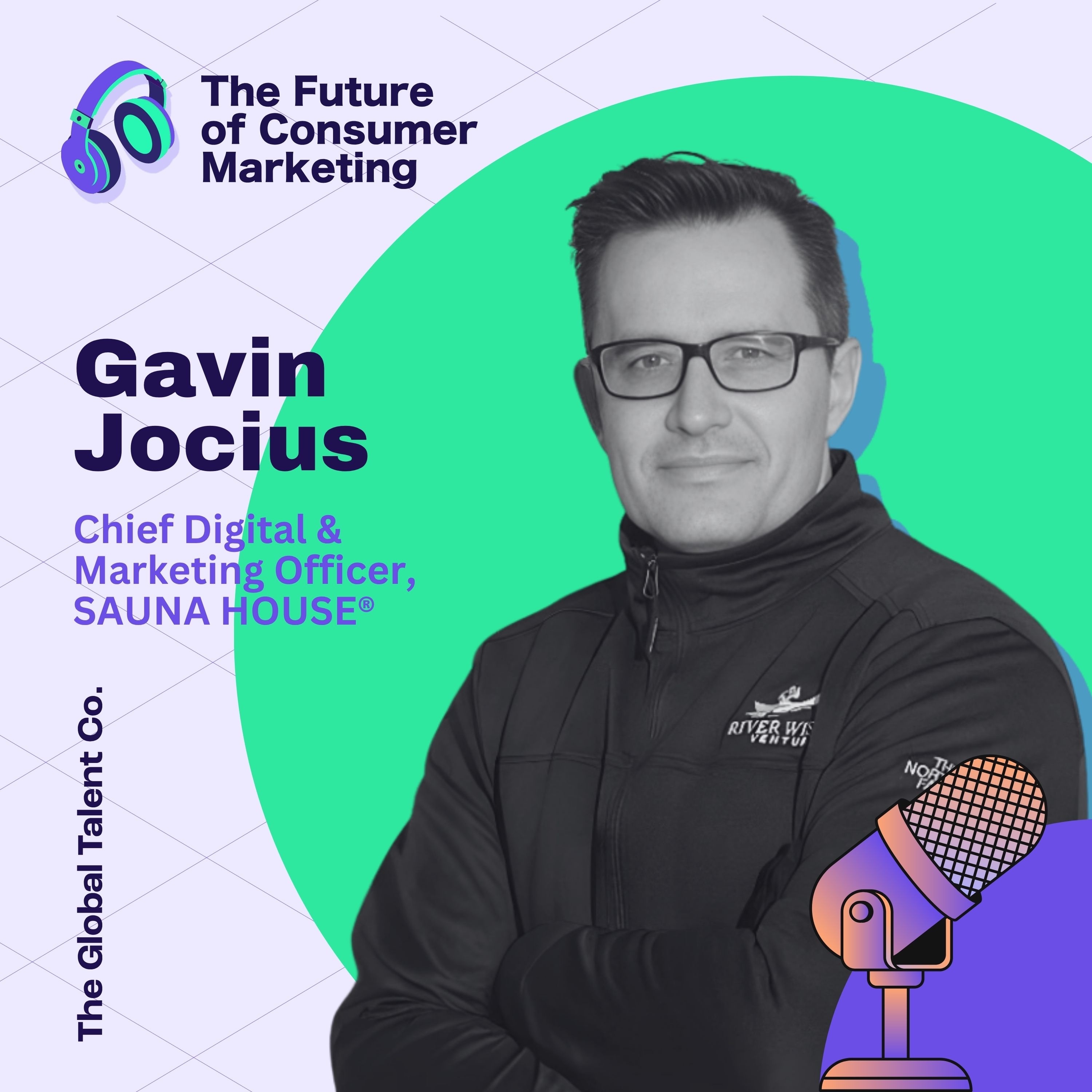
Gavin Jocius, CMO/CDO of Sauna House, explains how Sauna House positions modern communal bathing (sauna + cold plunge/contrast therapy) for U.S. audiences, and why it rejected “wellness bros” in favor of busy working moms and other mainstream customers. He argues the brand’s differentiators are a phone-free digital detox, community “third space,” and intentional education about contrast therapy rather than bro-style performance content.
Gavin Jocius is Chief Digital and Marketing Officer and co-owner/investor in Sauna House’s Durham location. He previously worked in marketing/IT (including an agency tied to Condé Nast), taught/coded in Japan, sold books online at Lulu.com, and ran/ sold online retail ventures (including Canvas on a Man) while earning an MBA at Duke. He’s also an active ultra runner.
U.S. bathing culture is behind Canada; success comes from packaging bathing modalities safely for mixed-gender, non-naked U.S. settings; Gen Z drinks less and loneliness drives demand; education + community beats influencer “bro-tivation.” He says top customers are busy working professionals (including moms/dads), not tech-bro athletes.
“No cell phones” lockers; Asheville opened in 2019; Durham/Charlotte corporate-owned; other markets franchised (Knoxville, Austin, Raleigh, Greenville opening). Mentions Huberman/Rogan search-trend momentum and Tendai “Marathon Monks of Mount Hiei” as an endurance model.
Written by AI. May contain mistakes.
Gavin shares his unconventional path into the marketing world.
“Despite my youthful appearance for anybody listening here, I'm actually quite old.”
Discussion on the mental challenges and experiences of ultra running.
“So sort of a long convoluted answer that started off by like failing at what my dream was as a kid, but then adapting to market conditions and changing.”
Exploring life lessons learned through the experiences of ultra running.
“My experience was with that, you know, that idea of like the pain cave.”
Gavin discusses his role at Sauna House and its mission.
“interested in like the ultimate endurance test to check out the Marathon Monks at Mount Hiep.”
Learn about the significance of communal spaces and their impact on conversation and connection.
“spaces but it's also communal and it's remarkable like you can't bring a cell phone into a sauna or a cold plunge.”
Discover the benefits of digital detox and the shift in social activities post-pandemic.
“I started this habit January 1st, like you typically start them, but somehow it's like stayed.”
Explore how different generations are changing their social habits and the impact on wellness.
“Well, I mean, like I'm a huge fan of Jonathan Haidt and the anxious generation.”
Understand the balance between marketing strategies and educating consumers about wellness.
“are not just for diabetics, it's for everyone.”
Learn how different cultures influence bathing practices and wellness trends.
“So that's sort of the adventure travel aspect of it.”
Discuss the future growth and business model of Sauna House.
“I think it is in Finland, but I feel like that gets the most amount of like attention.”

Get the gist, explore an idea or ask about something said.
 Claude
On Future of Consumer Marketing, what are the key points of this episode?
Searching your listeningAutomatic transcript. May contain errors.
0:00This show is brought to you by the Global Talent Co, a marketing leader's best friend in these times of budget cuts and efficient growth. We help marketing leaders find, hire, vet, and manage amazing marketing talent for 50 to 70 % less than their U.S. and European counterparts. To book a free consultation, visit globaltalent.co. Hey, everyone, and thanks for listening to another episode of The Future of Consumer Marketing. Today, we're speaking with Gavin Jocius, Chief Digital and Marketing Officer of Sauna House. Gavin, what's going on? Brett, I am super pumped to be here. It is a beautiful Friday before Memorial Day weekend.
0:35So this is a great way to kick off what's hopefully going to be a fun time. So I'm excited. Amazing. I'm excited as well. I would like to begin these conversations with the big question of why and how did you end up in this world of marketing? I'm going to take it back. Despite my youthful appearance for anybody listening here, I'm actually quite old. Turning 57 at the end of this. 57, no, no. 47. 47. I was going to say. I'm so old now I just forget how old I am. Yeah, the end of the month here in May. But I did my undergraduate degree in economics and international relations at the University of Toronto.
1:10And at that time, I wanted to get into foreign service. As a kid, my parents took us on all sorts of crazy adventures throughout Russia, Lithuania, and just sort of fell in love with travel. And I was like, okay, I'm going to do international relations and economics. I'm being in the foreign service. and I had this like real baptism by fire that my other classmates spoke like four languages fluently. And especially in Canada, if you want to get in the Foreign Service, you have to speak French. Like it's just table stakes. So that was pretty harsh. And at that time, that was 2001. And I was like, you know what?
1:43Technology is really going to change international relations. And at that point, like not a lot of people were writing too much about the impact that tech would have on the Foreign Service. Thomas Friedman wrote The Lexus and the Olive Tree and The World is Flat, like those two. But outside of that, I was like, you know what? I think this like internet stuff is going to like really change things. And sure enough, like I had no way of anticipating like the Arab Spring or now it just seems so obvious that like you can be on TikTok or DM somebody before a trip overseas. But at that time, it was pretty nascent.
2:22So then after college, did two years snowboarding, teaching in Japan, learned how to code there, spent time learning how to code flash, which was a completely useless skill now, thanks to Steve Jobs and the iPhone for any old school coders out there. And then came back to Canada and did postgraduate work in information technology and IT, We got a job, moved down to New York. Actually, my first real marketing job was working for an agency that had Condonass Magazine. So all of those subscription emails, if you're on Wired or GQ Magazine, I tell people that I was essentially a spammer, which was a great way to get your start is just sending people trying to like hack into their inbox.
3:05And that was a great start and really sort of learn what it took to sort of do good copy, get open rates, and then got kind of burnt out in the city, went further south down to Duke, and took a role as the head of information technology and web services. So all of the data for the alumni affairs, great job, pretty casual. It was nice going from like the startup world in New York to like in the south here in Durham, North Carolina, working at a university. It was like pretty casual, pretty easy. Did that for a couple of years, got a little bored, but also it helped pay for my schooling. So I did a master's degree and my master's thesis was actually through the English department and it was on coding as creative expression.
3:52So writing computer code, basically like creative writing. My thesis advisor is a post-humanist and she was great about it. But with that degree, like you really can't do a whole lot. I toy with the idea of doing my PhD, but my wife, who her date at the time, she's like, dude, you're done with school. You're not going to go do your PhD. So after finishing up grad school, traveled for a year on and off, and then got a job selling books online for Lulu.com. It was founded by Bob Young, who's the founder of Red Hat. That was interesting. We actually promoted, and I'm sure people are familiar with Fifty Shades of Grey.
4:30It was a self-published title. We had that one before it really blew up. That was a little bit of a claim to fame. And then also took over Canvas on a Man, a great big canvas that is an online art retailer, sold that to private equity while doing my MBA at Duke. And yeah, here we are now. So sort of a long convoluted answer that started off by like failing at what my dream was as a kid, but then adapting to market conditions and changing. And then I think if I'd say like my skillset as a marketer, it's being able to like essentially to be a generalist where it's acquisition, lead optimization, lead nurturing, conversion, and being able to like touch every sort of step along the conversion funnel.
5:17Wild journey. And I would say everyone that I've had on the podcast, when I ask them, like, no journey has been the same. Everyone has a completely different journey to get to where they end up. Yours, I think, has a lot more twists and turns, which makes it even more exciting. Something else I want to ask you about, we were just talking about this in the pre-interview. I would say I'm an ex-ultra runner. You're an active ultra runner. When I was doing it, you know, and I was doing these long runs, a lot of my friends would say like, what's wrong with you? Like, why are you doing it? So I'll turn that around to you.
5:44What's wrong with you? Why are you doing these crazy a hundred mile runs? Oh yeah. The catalyst there, honestly, it was started during COVID and I was just like 80 pounds overweight. Almost like I was, like I said, we were running the art business, trying to sell it during Q4. And I was doing my first semester of business school at the same time as a weekend executive MBA. And so we had like Black Friday, Cyber Monday, all hitting while I'm trying to do an accounting exam. So I just got burnt out, overweight, and then COVID hit. We actually sold it like right before COVID. So I cashed out, great timing.
6:19But I was like, man, I got to get in shape. And ultra running just seemed like go big or go home. And I've seen some stuff online that people that are into like ultra sports have some sort of trauma that they're dealing with. I don't know if there's a lot of research behind that, but I'm a middle child. I kind of have a chip on my shoulder. I like setting hard goals. I also liked, I had time on my hand and it was during COVID and we moved up to our lake house. And so I basically would just put in podcasts and go for long runs. And I also like eating. Like if you're into ultra running, I tell people like, it's really just when you start getting to like a hundred milers, It's just an eating contest.
6:56Yeah. And at my age, like to be able to go on these long runs and still like eat a lot of calories and drink a lot of beer. So it's served those three things. And, you know, I still love it. But I think at the same time, I have that restless mind in running. You get that runner's high. It's why I also like snowboarding and free diving and even contrast therapy that we have at Sauna House is just to sort of shut off that restless mind that I think a lot of marketers and people may have nowadays. My experience was with that, you know, that idea of like the pain cave. And when I did my ultra, like just getting to that point, it was probably like 26 miles in, you know, after that first marathon and this like daunting idea of, I have another one to go.
7:38And then this like voice inside my head that was like literally trying to convince myself, like, this is stupid. Just quit. Like, why are you doing this? Like literally just like stop doing this. Like, you don't have to do it. And it was this like crazy voice in my head. And for like, you know, five hours, I had to tame that voice, control that voice, like silence that voice. I feel like I got a lot of value out of that that crosses over into your just like normal life of like being in control of that voice inside your head. That's been the value that I've seen from it. It was very, I love it.
8:03I have a friend who's an ultra runner and she's done like Leadville. She's done like, I think the 240, but she does it all raw dog. Like she doesn't even listen to podcasts and I'm just like, wow. So for me to get out of the pain cave, I have just death metal. Like I just put death metal into like my headphones to just get out of that. But like, I actually found like one thing that was really helpful for ultra running is taking the money ball approach. Like I really am not a huge fan of like the David Goggins just muscle your way through. Yeah, you know, I broke the hundred into manageable chunks.
8:36I built an Excel spreadsheet that looked at like the time that I had to finish the fastest time anyone's ever finished it, worked it backwards, put in my caloric intake, I needed basically 300 calories per hour, and my heart rate, right? So I had my heart rate monitor and then, yeah, broke the race up into all these chunks. And I put in like a little shoe box and gave it for each section of the race and gave that to my pit crew. Ended up like podium, getting third. But what was funny is that like miles one through like 50, people are like, why is that guy so slow? Like I was at the back of the pack, but I was just like, man, I know people are going to drop off like flies.
9:17And sure enough, they did. But that insight came from having a terrible race. like bonking really bad in like a 32 miler. So I think the lesson there is like learn from your failure and ultra running is one of those, yes, you need to have be a little bit crazy in some ways, but at the same time, like be very analytical about it and be good at consuming a lot of calories and being comfortable also with boredom. Yeah, I took the David Goggins approach. That's what got me into this. And like my first 50 miler, I made it to the halfway marks of a marathon and they pulled me out. I missed the cutoff by 10 minutes.
9:51There's like, that probably has to go down as like one of the most like humbling experiences of my life. Like I had my wife's family flew in, everyone flew in and like, we have nothing going on. And I'm like, right, guess we have the day to hang out. And it was brutal, but it was, I think it was a good life lesson. Learned that you need to pair a lot more and like all these factors of like things that I screwed up on. It was a good time to reflect, but love ultra running. I think the benefits of ultra running, you extend far outside of just like the physical benefits. I think it crosses over in every area of your life.
10:18Yeah. Yeah, and one of my real motivators to get into it is this sect of Tendai Buddhism called the Marathon Monks of Mount Hie. And they do what's called the Kaihogyo. And it's a seven-year basically pilgrimage where years one through three, they basically run a marathon every day for a hundred days. And year five, they do all that, but then they also do nine days of no food, no sleeping, no water. And if you survive that, then you finish the rest of it a hundred days, but it's 50 milers. And it's basically running around in a circle around Mount Hiei while meditating. I was fortunate like three weeks ago to go to Japan and meet one of the monks who actually completed it.
11:03So for me, like that's been really rewarding to learn from them and have this like model for like absolute dedication long-term and like only 51 monks have completed it. Wow. It makes that insane. It's not for the faint of heart, but I'd encourage anybody who's interested in like the ultimate endurance test to check out the Marathon Monks at Mount Hiep. I'm going to absolutely check that out. Let's talk a little bit about what you're currently doing. So for Sauna House, what does Sauna House do? Yeah. So we're a modern bathhouse that takes like these ancient modalities and makes it so that it's accessible for a U.S.
11:41audience. So bathhouses, bathing has been around for centuries in all sorts of different cultures. You have the Japanese onsen culture. You have, everyone knows, like Finnish sauna. You know, Iceland has thermal baths. Istanbul is very popular. You have Kirtis, which is like a Lithuanian style of sauna bathing and obviously like Russian banos as well. So it's been part of cultures forever. You know, when I was a kid, we had a sauna growing up and then, you know, I traveled all over. I fell in love with bathing culture, but then I was like, why is this not huge in the U.S.? You know, in Canada, there's Nordic spas.
12:21I'd say that Canada is about 10 years ahead of America where a lot of like these outdoor beautiful facilities and ski towns. And for a lot of different reasons, the U.S. has been quite behind. I won't go into a lot of details here, but my investment thesis was always like, if we can just package this in a way that Americans feel comfortable with, it's going to take off because we have these proof points all around the world. right but you can't take what works in japan and make it happen in the u.s like all the bathrooms are segregated like men go here the women go here it's naked like that's not going to work in the u.s for a larger market so was really passionate about making that happen and then it's one of those like buy build or steal and i didn't really feel like building it and i found Andrew Laughlin, who had opened Sauna House in Asheville, the first location.
13:15And I was like, this place is amazing. It's everything that I could have ever wanted. And so met with Andrew and was like, I want to be an investor. I want to be involved. Sort of pestered him a lot about it. And then came in as the chief digital marketing officer. So responsible for helping grow the brand. And I'm also a co-owner in our Durham location, which is like 7 ,000 square foot adaptive reuse 1940s old basically like garage that we transformed and you know raised the debt and the equity put about three and a half million dollars into it and some beautiful contrast studio but what i was really passionate about the brand and what we're trying to stand for is no cell phones it's like put your cell phone away have a digital detox with our people and we have private spaces but it's also communal and it's remarkable like you can't bring a cell phone into a sauna or a cold plunge.
14:08And some of our saunas are designed so you face each other. And there's just not a lot of instances in modern life now that you can just have a conversation with other people and go through like these hard, you know, vulnerable experiences. And then sure enough with COVID and the explosion of podcasts mentioning contrast therapy with Huberman, Rogan, I mean, just look at the Google search trends. It's through the roof. Yeah. And I'm sure people listening and we get a lot like, is this a fad or is there a staying power? I think there's aspects of contrast therapy that's going to be very much a fad.
14:44But what we're trying to build is these very intentional spaces that are designed with a lot of thought and background and really trying to encourage that sort of quote unquote, you get a lot of this third space, but really a third space focusing on community that you want to go there because you feel great, but you've also sort of stepped back in time to like this, like I look back in the nineties where I was like, man, there's no cell phones anywhere. You can have these conversations with people. So it's been a wonderful and really rewarding journey. You know, there was the Asheville location that opened in 2019.
15:17And then we just opened Durham, Charlotte, Beneath Springs. We're actually opening Greenville this weekend. So we're in Knoxville, then we have Austin, then we have Raleigh. So the market Market demand is very much there. And I think it's, you know, how do we carve out a differentiator of Sauna House versus other brands? And the last thing allowed is just very fortunate and happy to be playing a part in this sort of renaissance of communal bathing in the U.S. I hear you on the no cell phone side. I started this habit January 1st, like you typically start them, but somehow it's like stayed. I bought one of those lock boxes that have a timer on it.
15:56And every day, no matter what, I put my phone in this box at 8 p.m. And I don't take it out until 7 a.m. Like, it's hard to like just articulate how much that's changed my life. You know, just like that, just that time block alone, not wasting it on your cell phone. When you wake up, not getting like punched in the face. It's such a game changer. And I feel like that's a conversation with everyone that I know right now. Like, how do I get away from the screen? So that seems to be happening. The other thing that's probably really interesting that you guys are hot on right now is this idea of like what you used to do with friends is like, go out, get drunk, go out, you know, drink, go out and eat.
16:29Now that's changing. You know, now there's like these run clubs. Now there's, you know, companies like yours where it's people want to go and still have social activities, but they don't want to have the health consequences, the health pain, all of that kind of stuff, or the hangover pain, I should say the next day. So it sounds like you guys are just perfectly positioned for these two. I'm sure there's more trends, but those two mega trends come to mind. Yeah, it's this confluence of the U.S. Surgeon General talked about the epidemic of loneliness. Yeah. And then you also have this remarkable data of Gen Z not drinking nearly as much as other generations.
17:04And then coming out of the pandemic where we were just sort of all locked up, it just all kind of came together. And this was just very sort of the right place at the right time. And I mean, don't get me wrong, I love drinking and I love hanging out with friends. but there's other ways that you can get this like sustained dopamine hit and that sort of communal setting that in some ways is just healthier and better than the bar scene. So yeah, we have a lot, we do great with run clubs and there's tons of them opening all over the place, which is great to see. And I tell folks that endurance sports and contrast therapy, especially with the cold plunge and minimizing inflammation and working on your vo2 max in the sauna so endurance athletes love us and we love them so yeah i don't know the root cause of why there's that sort of need in that generational shift but at the end of the day for me it's like do you feel better physically and do you feel better mentally like people are craving that and yeah it's just all those things coming together at the same time just was like put your damn cell phones away yeah and chat with other people and focus on you know feeling good and to your point about the digital detox like one thing that we found is you literally have to rip it out of people's hands and put it in the locker yeah we are all addicted yeah yeah i have to get my lock by the way like i cannot just put it in a box like i have to lock it and i've caught myself sitting there like googling online how can i break into this box like it's their way in like i don't have the discipline i think most people belt.
18:37Well, I mean, like I'm a huge fan of Jonathan Haidt and the anxious generation. And I also have two young girls that I'm raising, a 13 year old and a 10 year old. And like, ask any parent of like the gravitational pull of wanting to get that first cell phone. And I'm like, I made like, it's so kind of cliched, but like I've made my career in digital marketing, like early, early on Facebook ads, like we had a$13 million annual, you know, budget just with Google and we would do geotargeting and we have Neo4j graph databases of like collecting all consumer data. Like I understand how much access we have to data and how these little slot machines are just trying to rewire our brains.
19:23And I'm both repulsed by it. But at the same time, I'm like, that's how I've made my money in my career. But I'm not typical, like, no, my kids are, you're not going to have a cell phone. I mean, I had to crack a little bit with my 13 year old, but there's no social media on there. And it's also like being mindful of like looking at the algorithm and even like teenager settings or like on YouTube shorts, like you got to go in there and monitor their algos and how quickly that's changing. So, I mean, everyone's talking about AI and what that's going to happen going forward. I think there's going to be, there's this like, Like we're already seeing it, this shift to more analog experiences.
20:03And this just like absolute demand for it, that we're just like this big pendulum shift. It's like, whoa, I need to like step back, put this thing away and re sort of regulate my dopamine and my circadian rhythm. Like I sold my house. I'm on a 34 acre horse farm. I'm looking over horse pastures right now. And I'm just sort of like, I've turned into that dude. You know, I had a company come on the podcast. called Levels. They're the continuous glucose monitors. You mentioned Surgeon General, the founder of that, Casey Means, you probably know that. She's going to be the Surgeon General now going forward.
20:38But when I had them on, we were talking about their marketing playbook. Everything for them really was based on education. They have to go out and convince the world or at least the US consumers that continuous glucose monitors are not just for diabetics, it's for everyone. For you guys, are you in that position where you have to go and take this big education approach? Or is it more just capturing the demand because you have the Andrew Hubermans and all the tech bros posting online about their routines. Like, are they doing that education for you and then you're just capturing the demand? Or do you view it as education is also a key part of your success?
21:10Yeah, I'm glad you brought up the tech bros. And I'm gonna preface this by saying like, I am so one of those like bro-tivation tech bros. And I actually came into this job saying like, all right, we have to partner with, I'm not gonna name them all, but like X, Y, and Z, Brodivation, Influencer. And that's so not the case. That is not our demographic at all. When we look at the top three deciles of our core customers, especially, it's a little more skewed because Asheville, it's like, it's running, reading, and music. And it's busy working professionals. So we have tons of bands that love Sauna House.
21:49And I'll name drop because I went name dropping. But like Noah Kahn, two years in a row, has like come to our Asheville facility when he's on tour. Because, you know, when you're on tour, it's stressful. It's a lot of work. But at the same time, like you need to have like tap into that platonic realm of ideas that you get from being relaxed in a sauna and cold plunge. Yeah. So I would way rather be partnering and sponsoring like who's a cool touring band that's coming through Asheville and Durham. You know, that's not necessarily like this big megaphone. of like, hey, you got to do a cold plunge in the morning and then you got to run 10 miles, yada, yada.
22:30Like I understand that demographic and there's a big correlation, but we found looking at the data, especially like in New York and like the major metropolitan spaces of like the crypto optimization founder. It's like, hey, I need to be on Notion. I need to have my day itemized because I'm very busy and it's all about peak performance. And there's a lot of brands in our space that's like, yes, who are those content creators? And find those folks because I love them. God bless them. I invest in them. Right. But for our brand, there's a much bigger demand out there for like the mom who's busy, who just needs like two hours, who's still struggling to just like find the time to like get her steps in or the dad who's like, you know, I like chess and I like music.
23:22and I got a little bit of a dad bod, but man, I'm stressed and I just wanna chill. I fall into that category too. So that was a major eye-opener for us and I would much rather be going after that audience. But God bless the Bro-tivation bros and keep doing your thing. And then the other thing is I'm a huge fan of Carl Jung's archetypes. So the first thing I typically do when I come in as a marketer is I'm like, what is your archetype of your brand? And for us at sauna house, it was the adventurous sage, right? So this is the person who's done a study abroad in Finland, right? And experienced sauna and goes to what named the university.
24:07So education is important, but at the same time, we're also this aspirational brand of like adventure and freedom. So to answer your question about the education piece of it, the beauty about communal bathing is in every market, top tier market, secondary market, you're always going to have Finns, you're always going to have Russians, you're always going to have Lithuanians, Koreans, people that have either grown up or have been to cultures that have established bathing cultures. and they're like, holy crap, you have sonic cold plunge in the town? I love it, right? And they will be your early adopters and they will tell their friends, right?
24:46So that's sort of the adventure travel aspect of it. And then education comes in as incredibly important, right? Because it's like, what are the health and mental benefits of contrast therapy? So we're always, you know, looking at the most up-to-date research on all the skin health benefits, all the stuff you hear from Huberman and everybody else talking about the benefits of contrast therapy. But we also talk about like the history, like bathing culture in New York city was massive at the turn of the century. Like there was public bathing spaces all over. Why did that change? Like I said, just got back from Japan and Japan has an onsen culture, but there's been this explosion of sauna.
25:26Like traditionally, like sauna is a Finnish import, right? So why is sauna so popular in Japan right now and how are they doing it different? And that's a great example of like that wanderlust of the adventure coupled with the education. And it's been a lot of fun because that for me is that another confluence of things that I love travel and, you know, trying to learn new things. They love these in Finland. I went to Lapland with some buddies about two years ago, and it was like a 10 day trip. We were snowmobiling every day, but the amount of sauna hours I put in, that was more sauna in that 10 days than like my entire life, like probably 10x.
26:01Like it was insane. That's like, it is their life. That's like a way of life there, at least in Lapland. I don't know what the rest of Finland, but that's life. Yeah. And that's the typical, like you always hear like, is there more saunas than people in or cars? I think it is in Finland, but I feel like that gets the most amount of like attention. But yeah, I mean, I love a good Russian Banya. I love the Lithuanian style. There's just all sorts of different flavors out there that we're also trying to expose and bring attention to as well. And there's a reason for it. It's like, yeah, they have the beautiful lakes and that's cold.
26:38It's like building a cold plunge is hard and it's expensive. So there's a geographical benefit there. Like it's a similar geographic layout to Northern Ontario, you know, where I grew up, where lots of lakes and having a sauna like at your cottage just makes a ton of sense. Moving into the final questions here, since I'm saying we're over and I promised you we would not go over. We can go over if you need to, too. That's good. Let's talk to you kind of big picture. Like, where do you see the brand going from here? Is it always going to be owned by you guys? Is it going to be a franchise model?
27:09Like, where do you go from here? Yeah, so we're a combination of corporate-owned stores and franchise. So Asheville, Durham, and Charlotte are corporate-owned. And then the rest that are opening are franchised. So these are big, expensive sort of capital buildouts. So it's trying to find the right partner, not only who can help raise the capital to make it happen, but also has that broad skillset of, you know, getting the doors open, you know, going through the construction phase, ramping, and then ultimately running. Makes sense. All right, we're going to wrap here. We'll have to bring you on for a part two at some point.
27:45I feel like you and I can just like talk for an hour. Sounds like we have a lot of shared interest. So hopefully we can schedule that sometime in the future. Before we wrap up here, if there's anyone that's listening in that just wants to follow along with you, where should we send them? Check me out on LinkedIn. It'd be easy to find there. And I've always tried, if people have questions, I'd like to be supportive and to help out. If you're at any of the locations where we have a sauna house, just go to saunahouse.com and we'd love to share some contrast therapy with you and experience our sauna and cold plunges.
28:12Amazing. Thanks so much for taking the time. Really appreciate it. Thanks, Brett.
28:21Bye.
In this episode of The Future of Consumer Marketing, host Brett interviews Gavin Jocius, Chief Digital & Marketing Officer of SAUNA HOUSE®. SAUNA HOUSE® is building the modern American bathhouse by adapting ancient wellness modalities for US consumers. Operating in a market where communal bathing culture is nascent compared to established markets like Finland, Japan, and Canada, SAUNA HOUSE® has grown from one Asheville location in 2019 to multiple corporate and franchise locations across the Southeast. Through strategic positioning against tech-bro wellness culture and creating intentional analog experiences, they're capitalizing on the convergence of loneliness epidemics, generational shifts away from alcohol, and the growing demand for digital detox experiences.
Topics Discussed:

