In short
Therabody’s marketing and packaging redesign as it moved from athlete-focused “white box” tech branding to distinct identities for sport, wellness, and beauty—plus how the team uses AI, manages reputation, and chooses channels.
Guest backgrounds
John (marketing leader) is a Therabody marketing executive; previously worked at Beats by Dre (CMO experience; mentions Jimmy Iovine and culture/“extra 10–20%” campaign push). He joined Therabody during COVID (around 2021).
Key claims
Packaging was “white box, techie” and didn’t show products on bodies; consumer insights drove new color palettes, darker benefit-forward designs, and separate sport/wellness/beauty identities that still merchandise together. Marketing must launch, then react/pivot in culture; monitor Reddit 24/7; use AI for efficiency, AEO/earned media, and personalized coaching via wearables.
Notable examples
Sequon Barkley using a Therabody mini on an Eagles sideline (ESPN amplified). Garmin partnership at CES; Strava reactivation; “Coached by Therabody” using Garmin/wearable data for protocol alerts.
Written by AI. May contain mistakes. Listen to the episode to check what was said.
Chapters
Tap a time to open that second in VOJohn's Experience at Beats by Dre
0:45 to 2:29
John shares his insights and experiences working with Jimmy Iovine at Beats.
“But before we do that, I saw that you worked at Beats by Dre, and Jimmy Iovine is one of my favorite people.”
Marketing Philosophy and Strategy Insights
2:29 to 3:54
Discussion on the importance of pushing marketing efforts beyond initial launches.
“You launch all your assets, you know, you put it all out there, you do your press release, you launch your videos, your posts, and then you kind of just like go on to the next thing.”
Joining Therabody During COVID
3:54 to 6:00
John discusses his experience joining Therabody and the company's growth during the pandemic.
“When you joined Therabody, roughly speaking, what was the size of the org at that time?”
Therabody's Evolving Marketing and Product Strategy
6:00 to 8:06
Exploration of how Therabody has evolved to appeal to different customer demographics.
“I think that we've also found there's a lot more ways to be efficient, especially now with AI.”
Redesigning Packaging and Branding
8:06 to 8:51
John explains the process of redesigning Therabody's packaging and branding to better connect with consumers.
“So yeah, we kind of completely redid packaging, colors, brand design.”
Creating a Product Ecosystem
8:51 to 11:46
John describes Therabody's strategy for developing a holistic product ecosystem to engage customers.
“which was kind of the completion of it all.”
Retail Expansion and Brand Experience
11:46 to 12:42
Discussion on Therabody's retail strategy and the importance of brand experience.
“But retail is also a very, very tricky business, right?”
Future Marketing Channels and AI Integration
12:42 to 14:01
John shares insights on future marketing strategies and the role of AI.
“If we think about 2025, what are the channels that you're really doubling down on and putting a lot of money and resources into?”
Leveraging AI in Marketing Strategies
14:01 to 16:28
Learn how AI tools are reshaping marketing efficiency and customer engagement.
“The way I look at it is, you know, you have for us this kind of three key areas.”
Managing Brand Reputation in the Digital Age
16:28 to 18:39
Discover strategies for monitoring and responding to customer feedback online.
“There are just so much happening, so much changing all the time.”
Show all 11 chapters
The Future of Consumer Marketing
18:39 to 21:20
Explore how consumer marketing is evolving with a focus on audience-centric approaches.
“Final questions for you as we think ahead to the future of consumer marketing.”
Transcript
Automatic transcript. May contain errors.0:00Brett Stapper:This show is brought to you by the Global Talent Co, a marketing leader's best friend in these times of budget cuts and efficient growth. We help marketing leaders find, hire, vet, and manage amazing marketing talent for 50 to 70 % less than their U.S. and European counterparts. To book a free consultation, visit globaltalent.co. John, how are you doing? Welcome to the show. I'm doing great, Brett. Great to be here. Thanks for having me on. No problem. I'm always excited to have brands on that I'm a customer of, and I can show you here. I have my gun. I have my knee brace. I have my neck brace.
0:35Brett Stapper:I have my mask, and I have my leg things. I don't know what you got at all. You're the super fan. I love that. I'm a super fan. So I'm really excited for this conversation. Look forward to unpacking everything that you're doing from a marketing perspective. But before we do that, I saw that you worked at Beats by Dre, and Jimmy Iovine is one of my favorite people. I think Defiant Ones is probably my favorite documentary of all time. So I have to ask, what's he actually like in real life? He is like that in real life. I mean, as we talked about a bit earlier, I'm from San Francisco. So I kind of grew up more like the tech side of things, the tech boom.
1:05LA being very entertainment, it is exactly how you would imagine. I remember when I was interviewing for Beats by Dre, the CMO literally was like, come follow me, you know? And I just was like following around for hours. And he takes me in a room and it's Jimmy Iovine and there's other guy and he's trying to talk to him about doing the latest commercial. He wanted to have a song in the commercial. And I'm like, who is this guy? Like, I was like under the table. I'm like, you know, Googling who this artist is. He's talking about a song and it's Ed Sheeran. And Ed Sheeran, like before he like blew up, but it was literally like Jimmy Ed Sheeran.
1:40I'm interviewing, I'm in this meeting. Jimmy's like, who's this guy? What's he doing here? And so he was just a larger life character, but he was relentless. He has such a finger on the pulse of culture and basically built that brand from putting headphones around the neck of anyone who walked in his office. I mean, he was kind of the first influencer marketer, you know, especially on socials. Great time and a lot of good memories from that.
2:03Brett Stapper:Is there anything that you took away from that experience in terms of your marketing playbook, your marketing philosophy? Yeah, so I learned a lot. I mean, I think I cut my teeth and that was when I went brand side. So before that, I was at agency side, I was at AQQA, kind of brought up in the digital side of things. And I think really what cut my teeth in was the culture marketing. And what our CMO Omar used to always say is, when you launch a campaign, most brands, they kind of take it to 90%. You launch all your assets, you know, you put it all out there, you do your press release, you launch your videos, your posts, and then you kind of just like go on to the next thing.
2:39You kind of just sit. He was like, push for the extra 10 to 20%. Like uncover every rock, connect the dots, get more talent, seed more product. I think that was just like, you're never done. And there's always something else you can do. There's always something else you can push. And so that's where I kind of, you know, what I was kind of used to. And then when I went from Beats to the Apple side, after they acquired us a few years later, it wasn't, it was just like, you know, launch and then we move on, right? And again, Apple is a massive company with massive media budgets. So you didn't really have to hustle it out.
3:13But I think that's the thing with my team is like launch is just the beginning, right? And then you need to react. You need to respond. You see what's happening in culture. You need to pivot. And so, you know, just this last in the playoffs this year, Sequon Barkley from the Eagles was had the mini on the sideline that he was using. He's a huge fan of the brand. And, you know, ESPN showed it immediately. We're like, took that, put it on social, begged for forgiveness later from the agent, you know, like told ESPN about, you know, and again, it was like this little moment. It's on a Sunday afternoon.
3:45But like, that's the thing. We were relentless. 24-7. And I think that's what you kind of have to do as a brand and culture. So that's kind of, I cut my teeth and learned so much from that.
3:54Brett Stapper:When you joined Therabody, roughly speaking, what was the size of the org at that time? How big was the marketing team? Like what was the state of the business when you joined? Yeah, when I joined, I mean, I actually joined during COVID. So it was, call it, you know, like 2021. And it was just, you know, kind of a rocket ship taking off, right? It was just like people are at home, you know, maybe they can't go to their gym, their chiropractor, physical therapist, you know, getting their Pelotons or Theraguns, you know, sitting on their feet. We had four or 500 people. You know, we also have stores too.
4:25We have over 20 stores, including retail staff. So, you know, it was very much this like, you know, get on the rocket ship. It's kind of taken off. And I think as so many brands found that, you know, as COVID started to end, people wanted to, you know, get out, do experience, things like that. The marketing had to evolve and change, right? And we've really been on a journey on the past couple of years is like, we had these great early adoption, right? And you're one of them, right? With all your products, right? A lot of the coastal, you know, New York, LA, like the really big early adopters, a lot of people who leaned into a lot of these wellness trends early.
5:00So now it was like, how do we build off of that? Right, so then it started to become, how do we think about not only the athlete, but how do we think about, you know, the mom? How do we think about a grandparent? How do we think on the nurse on their feet all day? How do we start to think about, you know, myself, I have a three-year-old. When I had a kid, you know, things started in different places. You know, I'm a huge cyclist. That's how I got into Theragun. But now as people go through different life stages, we started to develop different products. We started to develop different messaging, positioning.
5:27And so we've really been kind of expanding, you know, even so beyond that. Right. And now we've gone from, you know, when I started, it was very much in the athlete and weekend warrior. Right. We were working with Ronaldo, Colin Markawa, James Harden. Right. A lot of them are investors. Now we also lean into wellness. So we kind of have that vertical, a lot about pain, sleep, stress. We've also gone into beauty. So launched a few beauty products. So that's a whole different space. So we've kind of now really evolved the team and a little bit of a long-wind answer, but that doesn't necessarily mean you have to grow the team more either, right?
6:00I think that we've also found there's a lot more ways to be efficient, especially now with AI. So team has stayed, you know, roughly a similar size, you know, from a marketing perspective, we're about, you know, 50, 60 people globally. I like to kind of have a tighter internal team because you can always flex up with freelancers, agencies, and it's kind of sometimes nice to have that tight team. And then you bring in your experts as you need them and some outside perspectives.
6:22Brett Stapper:I was listening to an interview with the founder of RxBar. I can't remember his name right now, but he was talking about how early on they really nailed the niche with CrossFit gyms, and they were doing all the distribution through these gyms. And then as soon as they went to the mainstream, they had to redo everything, basically. The packaging they were using, the messaging, the marketing, everything was no longer relevant. Have you had something similar happen as you've moved from the athletes or the weekend warriors into the more mainstream? 100%. That's exactly what we did. When I started, I'm a big believer in starting with strategy.
6:52So we really went and got insights from potential consumers. And we started to go beyond these athletes. They started and we showed the packaging. They said, it's very white box, techie, very focused on features. It didn't even show it on a body of someone. we were kind of like trying to be Apple-esque, right? Like so minimal. I mean, I actually can show you right here, right? Like this is what we used to be like, right? It was like white black, very simple, right? And now, you know, our performance products, we're like this.
7:28Brett Stapper:Wow. So this is our performance product. So it was like, let's have darker colors, you know, benefits on the front. Triangle is what we lean into. And then a wellness product, or if it's a show and tell, like our mini, you know, more wellness-y colors, right? That different palette shows it on the body. You know, so we did this whole kind of insights work and which led us to, we need to have a specific identity for sport. We need to have a specific identity for wellness. And we also need to have a specific identity for beauty, right? Because that customer is very different, but it still has to sit within the whole brand, right?
8:02It still has to merchandise together. It still has to work together. It has to go on the website. So yeah, we kind of completely redid packaging, colors, brand design. And then we also took that down to the product too. So we launched different products. So the Theragun you showed, you know, is very different from our entry-level relief now, which is actually less amplitude, a lighter weight, less bells and whistles, doesn't connect to Bluetooth, single button, which is great for what we call active aging, which is 55 plus, you know, who might not need, you know, what you need or elite athletes.
8:34So we've really gone down that journey of expanding the portfolio. And then with that positioning, packaging, and everything that's kind of come with it. So we just finished that project. It's about a year and a half project with the relaunch of our website a few months ago, which was kind of the completion of it all.
8:52Brett Stapper:I can tell you my experience as a customer. I started off with the gun, then I started doing ultra running, and I got the legs, and I saw you did everything else. Is that how you try to move customers through the funnel? Is it just the one product after another? Yeah, I mean, we have a whole ecosystem. I mean, we used to be Theragun, you know, and actually, when we first started, it was Theraguns with a Z on it. Good thing Dr. J had the foresight to take off the Z at the end. But when we really evolved about three, almost four years ago now to become Therabody, it was really about, you know, more than just the Theragun and thinking holistically.
9:24So yeah, we are constantly innovating. We're constantly coming out with new products. You know, most people come in through the Theragun still, but then see, oh, we have a product for sleep or we have, you know, product for back pain. You know, you alluded to that product. We just launched our version two of that. And what's cool is we're able to take different technologies and move them across the portfolio. So when we first launched LED light, it was with our beauty device. But we've been looking at LED for a while. And it's obviously it's great for so many things in the body in terms of inflammation and recovery, in addition to fine lines and wrinkles.
10:01So we put that in the latest version of our jet boots, our compression boots. And our latest version of our back product has LED light therapy in addition to heat and vibration. So I think what's really cool is that all these technologies really help your body heal naturally. And that kind of speed up your natural recovery process. and taking it across to these different verticals has been really, really fascinating.
10:24Brett Stapper:What about on the retail expansion side? When you joined, I know you mentioned 20 locations. Did you have 20 locations when you joined? So yeah, we had our own 20 owned stores and then we're in, you know, 10 ,000 doors if you kind of look across Best Buys and Targets and golf clubs. And so we are not expanding our retail footprint as much. I think that we found that we have a good amount, we're in key areas, we're great brand experiences, but it's, I would say it's hard to have like many different business models within one company. You know, so we focus a lot on those as great experiences, I said, but then the growth now is online is, you know, continues to expand.
11:03I mean, we started as a DSC brand, but like what we're seeing on the Amazon now is huge. And then we're continuing to expand into new doors. We're about to announce a partnership with big beauty retailer, and they're going to have kind of beauty and wellness together. And there's still other stores that we're still, you know, not a lot, but there's still other stores on our list that we want to, I still would love to be in, you know, like an REI. You know, that's one of the ones we haven't quite cracked yet. But we have pretty good distribution now. And that's part of the power of the brand is that when we develop something new, we can get it out in front of a lot of people and a lot of retail partners really, really quickly.
11:36Brett Stapper:For the retail footprint that you have of the 20 stores that are owned by you, is the idea of those to have them just make money like a traditional retail business? Or are they more there for advertising and for experience? ideally we don't want them to lose money so that's you know goal number one is they're profitable but yeah they're not meant to be you know huge profit revenue drivers i mean they really are to experience the brand and that's the goal really of them and if you want to you know some of our retail staff or some of the know our brand and products the best and so if you want to go in and you want to get some education information you want to pick up a quick gift you know for someone it's great to have them.
12:16But retail is also a very, very tricky business, right? Like you have to be in the right locations and, you know, it can be challenging too. So we like what we have. It's really worked for us. I mean, we, you know, especially places like New York and LA, we do a lot of, you know, influencer events there. We do press events there with the Olympics and World Cup coming up in LA. It's really a great place. There's a lot of athletes can come through and we can have a lot of great experiences for them. So it's really been great for us, especially in those key cities where you get a lot of activity.
12:46Brett Stapper:If we think about 2025, what are the channels that you're really doubling down on and putting a lot of money and resources into? Yeah, I mean, we continue to find, again, depends on what the audience we're going after. I probably answer that a little bit differently for each of the verticals we laid out. But at a high level, I mean, we're seeing a lot with kind of TV and connected TV. I mean, it's still a great place to be able to get your brand across and a message across. You know, if we look at athletes and that side of it, we did a big partnership with Garmin that we announced this year at CES.
13:16And so we're looking at, you know, marathons and things like that as really big experiences. You know, we reactivated our channel on Strava because that's just a great place to reach, you know, tens of millions, not hundreds of millions of athletes around the world. And then you look at something like beauty, right? I mean, that's TikTok, right? I mean, that's all day and the really important there. So it's really a blend. We start with like, who's that customer and where are they in order to really engage in those right points in those right moments.
13:45Brett Stapper:What about AI? We can't talk about the future of consumer marketing without touching on AI. How are you using AI today or how are you thinking about AI today? So it's such a big topic. It's such a big question. I had my team in town last week and we really sat down for a few hours to really unpack it all. I mean, there's so many components, right? The way I look at it is, you know, you have for us this kind of three key areas. One is how do we use the tools internally to become more efficient? And I think we actually recently did a survey of marketing employees because we're just really curious, you know, like, were you afraid of AI?
14:17Were you excited about AI? Do you have the right tools? You know, most people were cautiously optimistic. I think there are definitely people that are worried about, are we just going to take our jobs and want to make sure that they have the right tools and training. So that's a big focus right now is like getting people access to the right tools in a manner that's not going to make sure people aren't uploading these models, very sensitive information, right? There's a whole enterprise security side of it, and then doing a lot of workshops with people in the industry to really learn. So that's kind of one piece of it.
14:45I think the second piece of it is really this kind of whatever you want to maybe call it AEO, you know, going from like SEO to AEO. And how are you starting to make sure that you're showing up the right way in the models, right? And starting to look at that, what I think is really interesting is like, what are the sources of truth for these models, right? We're starting to see more traffic come in from, you know, know, GVT, Perplexity, Grok, Gemini. So how do you kind of influence these models, right? And so we're starting to see a big part of that is things like Reddit. A big part of that is PR articles.
15:17So we're really looking at like, how do we continue to push on the thought leadership side? So I really think that earned media is going to become even more important. I'm a huge proponent of earned media. And I just think from, you know, influencers, PR, what people are saying and talking about your brand, like is so critical because that's what's shaping a lot of these results. And I think the third area is how do we use it to enhance the customer experience, right? And we launched a product this year at CS is called coached by Therabody. And part of it is like, we take the data we get from Garmin or other wearables and basically able to provide a lot more personalized recommendations using AI.
15:57Hey, saw that you just, you know, did a trail Ron, we know you have a Theragun and we know you have Jetboots. Make sure you do this protocol, get an alert, you know, within two hours, right? And so how do we start to connect the data with the solutions we have? And we're using a lot of AI to make that personalized because before we couldn't do every single permutation, right? And write out texts for everything. But now the models know how to bring that all together in a way that feels highly personal. So those are going to like the three buckets that how we think about it. But I will say it is overwhelming.
16:30There are just so much happening, so much changing all the time. It's truly challenging just to stay on top of it all.
16:37Brett Stapper:I was at dinner the other day with a friend of mine, and he has about 3 million customers. And right now, he's just getting roasted on Reddit, on the internet, everywhere. People are kind of attacking him. And I was talking with him about it. He was like, yeah, if 1 % of this many people hate me, that's a lot of hate. That's a lot of anger. And it's hard to make everyone happy. How is that for you? I would have to imagine that even a small percent of customers being angry. That's a lot of humans that are out there that you have to deal with. How do you manage reputation when a very large number of people can have issues?
17:08Yeah, no, it's a huge issue because all the people that love you are not out there saying how much they love you all the time, right? We do a lot of sentiment tracking. So clearly, one of our key measures is what's the conversation out there. We work very closely with our customer experience team. So the fact that we track all of it, if there is something that is said, For the most part, for us, it's usually someone who's frustrated about a product experience. Maybe it's not, you know, they haven't got their product on time. It's a crazy holiday period. It hasn't shipped on time. Maybe they're frustrated with not working properly.
17:40So most of it, we can kind of like, can we engage them? Can we bring them into a private conversation and triage it? But, you know, we had an issue, you know, maybe a year ago where we weren't really staying on top of Reddit. And then I'm a huge Reddit fan. And I'd be like, people are posting. I'm like, we're not sending anything. it. They're just out there. And then people pile on and pile on, pile on. So what I found is you have to monitor it and you have to nip it. Because if someone sees someone in a brand being pretty responsive and say, let's have a conversation and we'll address it, they're less likely to pile on.
18:11When you kind of leave it out there, then it's just you're leaving yourself out for more people to find it and more people to jump on. People are usually pretty reasonable when you engage with them. When there's silence and then other people see that silence, they really, really jump on. But huge thing we have to be monitoring, you know, 24-7. You know, even when I was at Apple, it was even a bigger problem, right? It was constant. But there are tools now that can pick this up a lot quicker. And so you can get ahead of it.
18:39Brett Stapper:Final questions for you as we think ahead to the future of consumer marketing. And of course, that's what the show is all about. What is the future of consumer marketing? From your lens, from your view, what do you think marketing is going to look like two, three, four years from now? I think the way we've really evolved how we think about it is, I think a lot of companies used to think, or they still do, they really like market through their like, how their org charts set up, right? So when I was at Apple, it was like, we're on an iPhone team, and we have a Mac team, and we have a, you know, iPad team, and a Beats is like, we have an in-ear and an over-ear and a speaker.
19:08I really think that like, that's not how you think about marketing and consumers. I think you really have to think about who is your audience and start with them first and then figure out how to talk to them and relate to them, which I think more and more people are starting to see that and do it. I mean, it makes sense. I just think for bigger companies, it's very hard because they're not, as I always, organized around consumers. But we're starting to really organize around consumers, right? So I have someone who's thinking about a fitness enthusiast every day. And I have another person who's thinking about, you know, a millennial mom.
19:37And I have another one thinking about like a skin enthusiast. You know, they have completely different audiences, but they're still thinking about how our products can work in their lives. So I think that's one you have to be grounded in being really an audience first approach, even how you're organized. And I think now as well, the stuff we're talked about, you can be so much more personal. And I think we've been talking about like one-to-one personalization forever, right? So I still think that like, you're still gonna have some very mass kind of marketing messages and you do wanna reach the most amount of people with something that is relevant to the most amount of people because I still believe that matters.
Read the full transcript
20:12But I do think is you can bring people down the funnel. You have the huge ability to be a lot more personal as you know them. And then with all this technology and AI, what we're talking about, you're going to definitely be able to really have that right product at the right moment with the right message. So I think, you know, we're going to continue to see that happen. I do think you're going to see, I think voice is going to become a huge part of the marketing mix that has never really been before. If you think about what probably Johnny Ive and Sam Altman are probably up to, you think about the movie Her and all these things, like I just have to believe that like we're going to be talking to our devices so much more and they're gonna be constantly listening and that's gonna be a huge interaction model.
20:54So how do marketers think about that, right? Like I didn't start to think about like, I wanna be able to like talk to my Theragun and like tell it to like, you know, what protocol should I do based on what it's seeing my metrics, right? Or I don't wanna have to look at a screen. I don't have to look at my phone. I don't wanna have to control it, right? So I think that that voice is gonna be a big frontier that marketers are gonna have to figure out how to deal with as well.
21:16Brett Stapper:Amazing. John, we're gonna wrap here. This has been so much fun. really enjoyed it. We'd love to have you come back on for a part two if you're ever up for it. But thank you so much for taking the time. But I really enjoyed the conversation. Great questions and would be happy to come back anytime.
From the publisher
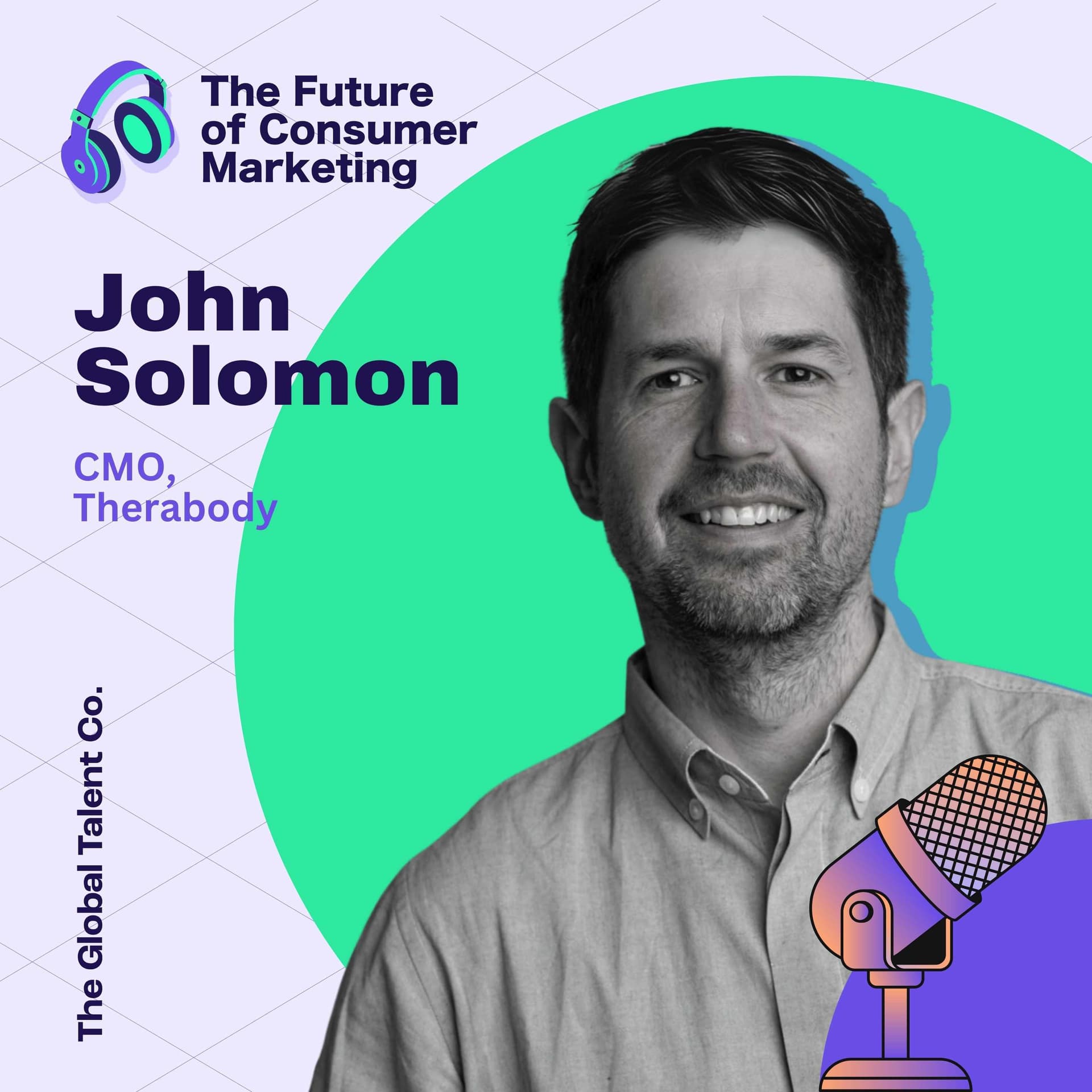
In this episode of The Future of Consumer Marketing, host Brett Stapper interviews John Solomon, CMO of Therabody. Therabody has transformed from a single percussion therapy device company (Theragun) into a comprehensive wellness ecosystem spanning performance, recovery, beauty, and everyday wellness. Under John's leadership, the brand has evolved from targeting elite athletes and weekend warriors to reaching mainstream consumers across multiple life stages - from millennials to active aging demographics. Through strategic brand architecture, product innovation, and audience-first marketing, Therabody has built a multi-category platform that maintains relevance across vastly different consumer segments while scaling from a DTC startup to a global omnichannel brand.
Topics Discussed:- Transitioning from niche athlete-focused brand to mainstream multi-category platform
- Complete brand architecture overhaul: packaging, positioning, and product development
- Building audience-first marketing organization vs. product-centric teams
- Leveraging AI for personalized customer experiences and operational efficiency
- Managing brand reputation at scale across digital platforms
- Retail strategy: balancing profitability with experiential brand building
- Cross-category technology innovation and platform thinking