In short
Scent Hound’s marketing strategy—why user-generated content (UGC) and “real” customer sharing outperform polished ads, plus how they educate the market and scale franchise marketing.
Guest backgrounds
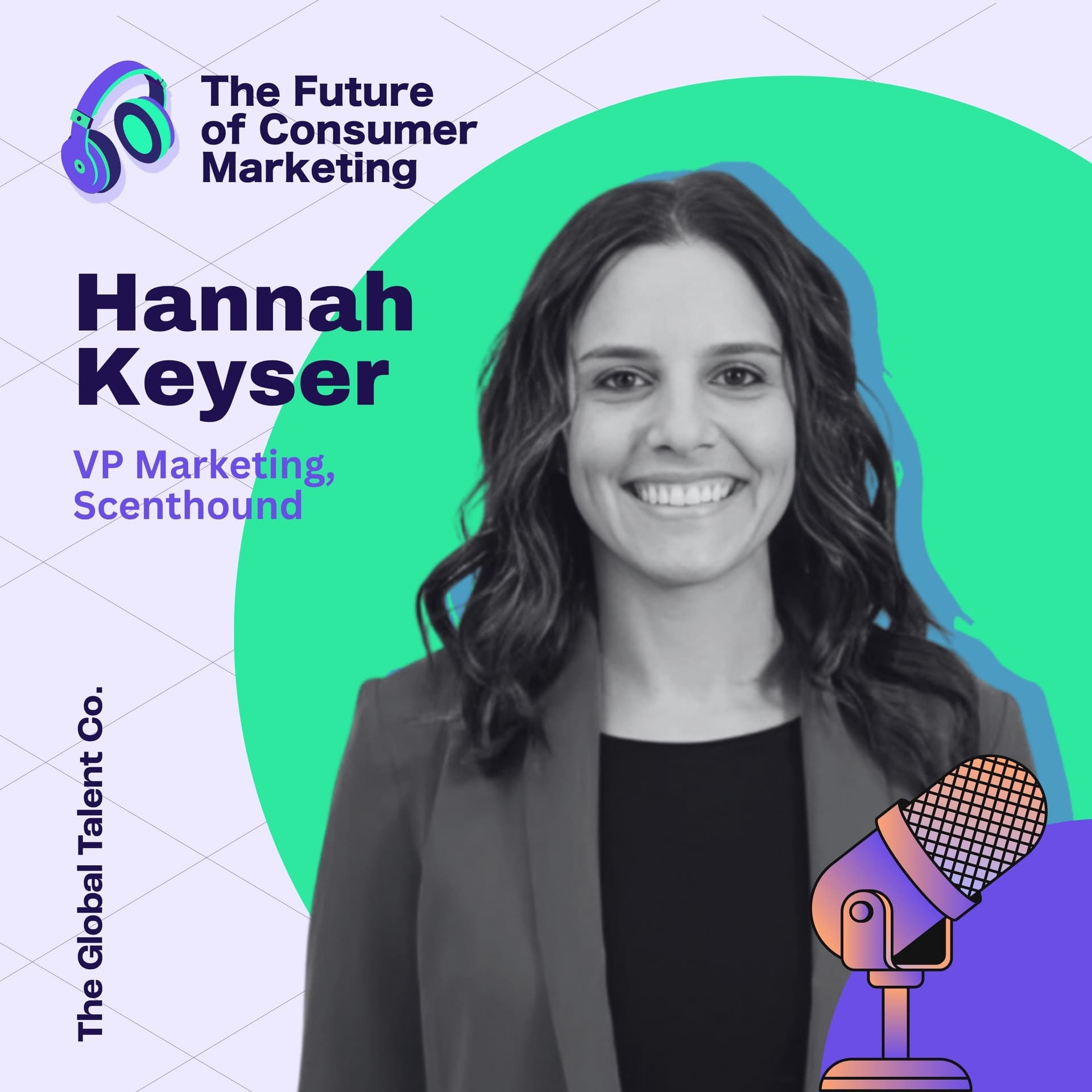
Hannah Keyser, Vice President of Marketing at Scent Hound; double major in psychology; previously worked in agency settings (background mentioned via her connections/agency perspective).
Key claims
UGC performs better than polished ads; testing (“test, learn, test again”) drives results; customer experience creates word-of-mouth/referrals; AI should support efficiency but can’t replace authentic brand content; millennials/Gen Z pet owners respond to convenience/tech, while older owners need different messaging.
Notable examples
“Scent Check” mini report cards emailed/app-shared with an in-app “share” button; social contests like “show us your scent check”; national master social accounts with local Facebook for reviews/comments; early-stage locations lean on Meta for reach, then diversify.
Written by AI. May contain mistakes. Listen to the episode to check what was said.
Chapters
Tap a time to open that second in VOHannah's Journey into Marketing
0:31 to 1:02
Hannah discusses her background and how she fell in love with marketing.
“Of course, really excited for this conversation.”
The Psychology Behind Marketing
1:02 to 2:00
Exploration of the psychological aspects influencing marketing strategies.
“I also had a double major in psychology.”
Overview of Scent Hound
2:00 to 3:34
Hannah explains Scent Hound's mission and services for dog hygiene.
“I feel like you would just sit there and like analyze every single situation to the point that you'd probably drive yourself insane.”
Routine Care and Customer Experience
3:34 to 4:48
Discussion about the importance of routine care and customer feedback mechanisms.
“wellness care for dogs and really preventive care.”
Viral Marketing through User Engagement
4:48 to 6:42
Hannah shares insights on leveraging customer-generated content for marketing.
“So at the end of every visit, you can see how your dog is doing for skin coat, ears, nails, teeth, and glands.”
Connecting with Pet Owners
6:42 to 7:48
Discussion around the emotional connection pet owners have with their pets.
“I mean, as a pet parent, you're a pet parent.”
Marketing Philosophy and Testing
7:48 to 9:22
Hannah reveals her marketing philosophy centered on continuous testing and learning.
“And, you know, you can't even explain how much of an impact we're making and continue to make on a regular basis.”
Targeting Different Audiences
9:22 to 11:58
Insights on how to effectively market to different demographics of pet owners.
“like, how are we making sure that the different audiences are speaking the same language?”
Franchise Support and Education
11:58 to 14:00
Hannah discusses the importance of franchise support and community education.
“Well, I have to ask then what dogs perform best?”
Franchisee Marketing Support
14:00 to 15:00
Learn how providing marketing support to franchisees enhances brand value.
“same messaging that we are doing at a brand level and they're getting out into their local communities.”
Show all 15 chapters
National vs. Local Content Strategy
15:00 to 17:20
Explore the approach to managing national and local content on social media platforms.
“You're not creating your own business, you're not creating all the tools from scratch, you get it.”
Importance of Customer Experience
17:20 to 19:20
Understand how customer experience drives referrals and word of mouth in marketing.
“that we preach all day, every day is your customer experience.”
Marketing Team Dynamics
19:20 to 21:03
Discover the structure and strategy behind a lean marketing team leveraging AI.
“You have to build that trust and you have to build that connection.”
Navigating AI in Marketing
21:03 to 23:09
Gain insights on using AI tools effectively in marketing strategies.
“I think you have to grow a little bit to make sure that you're supporting as your company grows.”
The Future of Consumer Marketing
23:09 to 25:58
Learn about the anticipated shift towards authenticity and personalization in marketing.
“learning to do when it comes to which one's going to be the most impactful and best to help with our marketing.”
Transcript
Automatic transcript. May contain errors.0:00This show is brought to you by the Global Talent Co, a marketing leader's best friend in these times of budget cuts and efficient growth. We help marketing leaders find, hire, vet, and manage amazing marketing talent for 50 to 70 % less than their U.S. and European counterparts. To book a free consultation, visit globaltalent.co.
0:21Brett Stapper:Hey, everyone, and welcome back to the Future of Consumer Marketing. Today, we're speaking with Hannah Keyser, Vice President of Marketing at Centown. Hannah, how are you? Good. How are you doing? Thanks for having me. Of course, really excited for this conversation. How would you like to begin these conversations is with a big question. Why and how did you end up in this world of marketing? Wow, that is a good question. You know, growing up, I didn't know that much about marketing. I always knew I wanted to be in communications. For a long time, I wanted to be in broadcast journalism, sports anchor, news anchor.
0:51You know, it was cool. It was awesome. And then I started college and realized that's pretty hard to do. Pretty hard to get there. and I took some marketing classes, some advertising classes and just fell in love. I also had a double major in psychology. So really understanding the psychology behind marketing, behind how people think, how they operate, got me into being like, this is cool. I love being able to see the results, the impact, what you can do. And you really have that direct impact with marketing.
1:20Brett Stapper:Was that hard studying psychology? Like, did you find yourself like analyzing every person that you interacted with? Yes and no. Well, I mean, you get a baseline level of understanding in classes. It was more of like just really understanding like how much different psychology goes into it and every different behavior and segment, less on studying and analyzing people, but more of like how it can impact you and like the psychology behind my brain. So like why I think about things was really what made a difference. And I didn't get into actually practicing. So I think you get a little bit deeper analysis once you practice that.
1:56Brett Stapper:Yeah, that's fair. I've always wondered that for people who practice. It must be a tough existence. I feel like you would just sit there and like analyze every single situation to the point that you'd probably drive yourself insane. Obviously, people have some way to cope with that, but I've always wondered that. Yeah, I mean, it's good to know for marketing, you know, I mean, as you know, marketing is a lot about how people think and how you can connect with them and how you can connect with them on a deeper level and a different way and the messaging and what they're saying. So it's nice to have that ground and at least that understanding.
2:27But yeah, I'd prefer to put up some good marketing campaigns.
2:31Brett Stapper:Yeah. Now for Scent Hound, can you tell us a little bit more about the company? Yeah, of course. So Scent Hound is focused on routine hygiene and wellness care for dogs. So in Scent Hound is actually an acronym that stands for skin, coat, ears, nails, teeth, but just all the basic care that every dog needs. So come in, we're actually a membership-based model. So you sign your dog up for a membership and your dog gets the basic care it needs on a regular basis. Our founders really started this with their aha moment of realizing that not all dogs need like traditional grooming. You know, grooming tends to be focused on looks and aesthetics.
3:10So those dogs like a Labrador or French Bulldog that are short-air dogs that don't need traditional grooming still need routine hygiene in order to stay healthy and happy and really give them a longer life. So we give all dogs the care that they need. Of course, you can add on haircuts and blow dries and specialty treatments, but everything that we focus on is for routine hygiene and wellness care for dogs and really preventive care.
3:37Brett Stapper:And let's give a shout out to your dog. Tell us about your dog. My dog is an 11-year-old golden retriever. He's actually the perfect Sunhound dog. I'm not just saying that. He is perfect because he needs regular hygiene care. He needs his teeth brushed. He needs a bath. He needs his ears cleaned on a regular basis, but he needs a haircut maybe every third month, let's say. So I bring him in every month for his normal bath and keep him clean and healthy. And then every three months I add on a haircut for him. So it's the perfect mixture of making sure he's getting that care he needs, but also So now giving him the haircut, which is also really good for him as a dog.
4:15And I hear you have a dog.
4:18Brett Stapper:I'm jealous. We have to go every three months to get a haircut. We have to go every month for a haircut. Otherwise, we have to shave her, which is brutal. Yeah, you have the doodle. And yeah, there's nothing worse than having like a shaved doodle. You see like behind the scenes, like what's underneath the dog. And there's that much there. Yeah. So somehow it is really it's same for all dogs. All dogs need routine hygiene. As I said, you get a bath, you're cleaning, nail clipping, teeth brushing on every visit. And you also get a mini report card. It's called our scent check. So at the end of every visit, you can see how your dog is doing for skin coat, ears, nails, teeth, and glands.
4:55So you're getting a report card saying really like this is the areas you should focus on and helping to prevent any issues that could potentially occur.
5:02Brett Stapper:Did you ever get the report cards from your dog when you like put it in? It wasn't a kennel. I can't remember what the name of the company was that I used in San Diego at one point, but they would give me these little report cards when she was a puppy. We'd leave her there for the weekend and they'd come back. Oh, like behavior. Yeah. We didn't do that. But I mean, yeah, this, I guess you can call it similar, except for just looking at making sure that all of those core areas are being taken care of. And if we notice anything so special, like we might see an ear infection coming, we'll call it out and flag it and make sure you get addressed with a vet, which is just really helping.
5:35our mission is to help dogs live longer, happier lives. And so that's really what we're trying to do.
5:40Brett Stapper:Is there a viral component built into that at all? Like when I was taking our dog here, they would give us access to video clips and they would be branded. And they wanted us to, of course, share those on social, which we always did. And same with those report cards, they wanted us to share those on social. It was like packaged up in that way. Yeah, that is what it is. So through our app, well, at the end of every visit, you get an email of your sent check. You also get it through our mobile app. So we've built a proprietary mobile app that has quite a few features, one of them being the scent check.
6:07And right at the top of that says share and it directs you right onto your Instagram or to share with one of your friends. And every visit I send it to my husband and share and brag about the scent check that our dog Bear, his name's Bear, that he got. So, yeah, I mean, we run social contests quite a bit of show us your scent check or tell us why you love our brand. And people love it, right? You love bragging about your dogs and your kids, and especially when they're continuing to improve. It's fun.
6:35Brett Stapper:Yeah, 100%. That's awesome you're doing that. I feel like that's anything with pet owners. I feel like they're going to share it. If you give them anything, they're going to want to share it. So it's very, very smart. Yeah. The pet industry is a fun one to be in. I mean, as a pet parent, you're a pet parent. I'm a pet parent. Like, you just don't even realize how much unconditional love they give you. There's also so many health benefits of like having that dog. and, you know, we just want the best for them. And then they're really like your family. And so you're bragging about them. You just want to continue to make sure that they have the best life.
7:05Brett Stapper:Yeah, I got to the point that I was probably annoying everyone on my Instagram. Like all I was posting were dog pics at one point. Now it's baby pics, which you'll soon be doing. But it was all dog pics for a very long time. And like, in my mind, it's hilarious. She's doing this new thing, but no one cares. You know, it's like every year for his birthday, we make him like a steak dinner. It's like more. It's like better than the way we're eating. I'm like, whenever he wants, that's what he's going to get. Yeah, 100%. I think anyone who has a dog can relate to her, even just in general, they can relate, but especially dogs.
7:36Brett Stapper:I feel like people really love their dogs in the way that people I know with cats, like it's not the same. They really love their dogs. It is. It's true. And that's why it's been a great business to be in and great company, great brand. I mean, I love it. I really am very passionate about what we do. And, you know, you can't even explain how much of an impact we're making and continue to make on a regular basis. I don't want to insult you and say that you have an easy job, but I have to imagine it's a little bit easier because you're probably marketing to yourself in a lot of situations, right?
8:04Brett Stapper:Like you're marketing to another dog owner and you know how they think, you know what they care about, you know what they're going to share. So you have a high level of empathy with your target customer, I would assume. Yeah, you know, marketing is never easy, which I know you're not saying it is. And marketing is fun. And I love marketing for a brand that I really believe in. And I do think it's fun. I think it's fun every single day you learn something new. You know, the interesting thing is it's like millennials, Gen Z, like that's the highest population of pet owners and pet parents. So there's so much opportunity in like millennials.
8:35You know, there's stats around millennials waiting to have kids or not having kids because dogs are their family. And that's what's cool is it's like, cool, we can impact them. Like we know how much of an impact they're making. You know, there's also the audience of those dog parents who are used to traditional grooming who are, you know, maybe a little bit older. They've just been static, like I'm just getting my dog groomed every week or every month or every other month, whatever that looks like. And so there's also that balance of like you got to target to them differently and message them differently because their needs and wants and desires are different.
9:10Some really are focused on what the price is. A lot of millennial and Gen Z want convenience and technology and like, how can I make it as easiest and the connection? So it's fun. It's easy-ish, but it's also like every day is a new like, how are we making sure that the different audiences are speaking the same language? We're saying the right things to the right channels. And so that's kind of what makes it challenging and continues to get exciting every day.
9:36Brett Stapper:Yeah. I don't know. Like I said, never easy, but maybe a little bit easier than if you're trying to market like enterprise cybersecurity software. I like to imagine giving your dog your relationship with your dog. It makes it a little bit easier. You can definitely connect more with the brand that you're marketing for in my situation. Yeah, 100%. Now, what about your marketing philosophy? So let's just zoom out at a high level. How would you describe the marketing approach, the marketing philosophy? Yeah, you know, for me, it's a lot of testing. Like I strongly believe in test, test, test, test quick, learn quick, test again, learn again, continue testing and continue to iterate off of what you're doing.
10:13I think you can get really stuck in like, this has worked for me for so long. And, you know, you experience that, like, let's just keep it going. It's working. And I'm not suggesting you don't change something that's working, but you got to keep trying new channels. There's new audiences coming. There's new channel. There's new creative. There's new tactics. There's new platforms. There's new, I mean, you name it every day, there's something new, right? So however you can best test it. And for me, it's like, just identify clearly, what are you testing? What do you want out of it? What is the KPI or KPIs you really want to measure?
10:47How long can you test it to make it impactful and test, learn from it, admit when the test didn't work, try again, test again, and keep going and going and going. So I mean, it's like, I don't think you can be successful in marketing without constantly testing and constantly evaluating what you're doing and if it's working and if it's successful.
11:08Brett Stapper:Whenever I do testing for my ads, I'm always completely wrong. Like the ads that I think are going to be a complete hit are like just comically bad. The other day I was coming up with some like meme ads that I thought were just like so clever and so funny. And then we compared that to our product ads and it was just a disaster. It's so funny. And you just asked the question about like, I'm marketing to myself, which I partly am. So I'll look at an ad, I'll be like, oh, I love that ad. That's going to be awesome, right? Yeah. And then of course I have a team and we have a lot of ideas. We're like, all right, let's put this one alongside this one.
11:38And sometimes I'm wrong and in a good way. I'm like, we've tested this and just the different language, the different messaging. I mean, for us, it's like what dogs resonate best. And so you can just get into a testing wheel. And I think it's really important. I think that's what makes it better and it also makes it, you know, more impactful, of course.
11:58Brett Stapper:Well, I have to ask then what dogs perform best? It's not as easy as that. I mean, the golden retrievers and this is not biased. Like people just can relate to the golden retriever. It's kind of like America's dog. Yeah. But really, you'd be surprised like different dogs in different markets. And for us, part of our brand is that, you know, we're accessible, meaning we're open to all dogs. So we actually find that often like pictures of big dogs, like a Bernice Mountain Dog or like a big doodle perform well because people are like, oh, that's my dog. I can relate and I can bring my dog in, which sometimes you can't get that at other maybe traditional groomers.
12:36So it's market specific too. So of course, different dogs are popular in different markets based off where you live. And so we tailor some of our content and messaging based off the market.
12:47Brett Stapper:That makes sense. Now, how much of your role is focused on franchise support versus promoting the corporate brand and the corporate locations that you have? Yeah, both. I mean, my job and my team's job is really split into, of course, education. Like that's the first part at a high level. I mean, brand awareness and education is key for us. I mean, this is a whole new space we're really in. Like people know dogs. They don't really know the concept of like routine hygiene and wellness care for dogs. So, you know, we're creating this whole new space, this whole new category. So that requires a lot of education.
13:20You know, it's what are we doing? why does your dog need this? Why should you come in on a regular basis? So education is really important, which is really like high level brand. How do we educate? And then a lot of what we do is local marketing and franchise support. So we're really focused on building the connection with our audience and our communities. And you can't do that unless you're really on the ground and getting out in your community and explaining what you do. And we do that through our franchise partners in all of our locations. So our job is to make sure that they have the support, the training, the resources, tools, everything they need so that they are relaying the exact same messaging that we are doing at a brand level and they're getting out into their local communities.
14:07Brett Stapper:Do they typically have a marketing leader on their team or is that the operator that you're officially training on marketing and helping with the marketing? Yeah, most of them do not have a marketing leader. In the case that they would, it would be maybe if there was a multi-unit, like they owned a few different units and they started to bring that in. But most of the time, it's just your franchisee, their manager, and some of them have a marketing background. Some of them don't at all, don't know any of it. So you're really dealing with diverse portfolio of franchisees and locations. And that's where our job comes in is really reaching them where they're at and understanding how much they know, how much they need to learn and how we can train them.
14:47Brett Stapper:I see. So is that a big part of the value prop then is that you provide that marketing support? Yeah, when we're talking to franchisees and bringing new ones on, I mean, there's a lot of support. And that's kind of part of joining a franchise in general is like, you get that support. You're not creating your own business, you're not creating all the tools from scratch, you get it. So that is definitely part of the value proposition of bringing new franchisees. And I think customers, our franchisees are also partly our customers and they understand the mission we're on together. So we're all working together to educate the marketplace and make sure everybody knows what we're doing.
15:20Brett Stapper:From a content creation perspective, then what does that look like? Are you creating, for example, like a TikTok video and then they can take that TikTok video and push it out on their local TikTok page for that specific location? Or is there like a master page and everything goes through there? Yeah, very good questions. Most of our accounts are master pages that we just run from Scenthound. So TikTok, Instagram, Facebook, Twitter. I mean, X. I'm still back in the Twitter phase. But same by the way. I don't know why, but I still draw Twitter. I can't change. I grew up with Twitter. I'm like, that's what it was.
15:53So yeah, you know what I mean? We do. So we run mostly everything nationally through a national account. We actually ran a test. Speaking of testing of, you know, impact on having different like local pages and just the amount of effort and work that it takes to maintain those. Of course, you need quality content. You need to tell the story. And we felt that effort was better put into different channels. So we run everything at a national level. We do have local Facebook pages, which is a lot due to like reviews, comments. You can structure it that way. And that's how we scale that side of it.
16:29But most of our accounts are done nationally.
16:32Brett Stapper:In terms of driving traffic and driving leads, is there a social platform that you see the most from? Like, is it Instagram, TikTok, Twitter, X? It kind of depends on where our locations are along their journey. And I'm sure that sounds like a really basic answer. Like, it depends. But, you know, for example, when a location first opens, you can get a lot of reach and scale running through Meta. So Facebook, Instagram, I can get a lot of reach. You know, of course, we have dog pictures. The imagery is good. The videos are good. You get a lot of really good reach, which helps you get leads and customers in the door.
17:08As you start to mature, your location starts to mature. You know, you've reached a lot of the audience on Meta and that's where diversifying your channels is really important. And actually the number one thing that we preach all day, every day is your customer experience. So we say, you know, you invest early on some of these channels that get you the mass reach. And then if you can deliver that customer experience, every person that walks in your door, you're going to generate word of mouth, referrals, and a referral engine then helps operate and just run on its own, which is the best form of marketing anybody could ever do.
17:44So, you know, it does vary. And we've learned a lot through the data we have to say, at what point are you? Where are you in your journey? What are your goals? Let's make sure you have the right plan in place. I hope that answered the question.
17:58Brett Stapper:Yeah, it definitely does. And word of mouth, what's interesting about your market is, you know, I can just imagine, you know, whenever I have found a new place to get my dog groomed, it's always at the dog park. And, you know, you're sitting there, you see a dog at 12 rooms, you ask them where to go. And like, that's always been like the guiding path. Whenever I move to a new city, you go to the dog park. So that has to make that word of mouth engine work a little bit better. There has to be like this most built in virality or place where to spread. I'm just where they come in. Yeah. You know, that's part of word of mouth.
Read the full transcript
18:25I think also what you're alluding to is being in your community and getting out there. And that's a huge part of our strategy, too. So digital is so important. I can't even emphasize that. I mean, you probably talk to so many brands, you know, digital, digital, digital. You can track it. You can see it. And we believe fully in that, too. But there's nothing more important than like getting out there and saying, hi, I'm the owner of this location. I'd love to tell you about what we do. I'd love to meet your dog. I'd love for you to come on by and like building that community connection. Like it goes so far and it's a face to the brand, which is what people want, right?
19:02They want to know you're real, you're authentic, they trust you. And so the best strategy and the best marketing is like you get your digital out there, you get out in your community, build those connections, you deliver a good experience and you just have people coming in your door. It sounds basic and it sounds easy, but like that's what's going to be successful, especially for a business like ours where dogs are part of your family. You have to build that trust and you have to build that connection.
19:30Brett Stapper:Yeah, that makes sense. And what about your marketing team? You told us about the philosophy, the strategy, all the testing. What about the team? Yeah, so we have a lean and mighty team. I mean, we keep it pretty small in-house and outsource a lot of our resources. So, you know, we have the basics that we really need to make sure that we're successful in growing our brand. We have somebody focused on digital marketing, somebody who's focused on local marketing, including franchisee support. We have an in-house graphic designer that we're able to make sure that all the creative is on brand, brand consistent.
20:02And then we outsource a lot. So we outsource content creation. We outsource copywriting, SEO. and then we work with a variety of agency partners for paid media. So we've really found that to be successful in finding those experts in the field, in that space to continue to support our team.
20:22Brett Stapper:And when we look ahead, do you view it as that team is going to get bigger or is it not going to change? And the reason I ask, obviously, AI is everywhere. And a lot of the marketers I've spoken to, they say, you know, we're probably done hiring for the foreseeable future. We're going to leverage AI as much as possible. Does that resonate with you? Is that true or is there other hiring plans? Yeah, I mean, as a marketing leader, you want to create the most efficiency with the least amount of resources you can. I don't have an answer if we're going to continue to hire. I mean, we're continuing to grow and we're scaling and growing quickly.
20:52And so there's going to need to be some support there to make sure that just like our customers need a personal interaction, our franchise partners need personal interaction. So there's growth that will naturally happen. But I strongly believe that AI is going to help make it more efficient, more productive, and be able to like really make sure that your team and the dollars you're putting towards people are being best spent and most efficient. I mean, it's a little bit of both. I think you have to grow a little bit to make sure that you're supporting as your company grows. But you need to be ahead of AI.
21:26You need to learn what tools are available, how that's changing, so that you can really make sure you're adapting to that too.
21:32Brett Stapper:Are there any AI tools that you're using outside of the general purpose, OpenAI, Cloud, any AI marketing tools that you're playing around with? I've tried a lot, honestly. I keep learning a lot. I've tried some of the video tools. I've tried the content creation tools, like the ad creation tools. I am a go-to for the, like you said, ChatGPT, mostly because it helps you get started. I don't think it can fully replace your job. I think it gives you a starting point, whether it be the first draft of copy or tweaking copy, making it sound better, you know, even proofreading, stuff like that. It really helps you.
22:08But at this point, I've really just tried and I'm just learning a lot about all the tools that are out there. There's a lot out there and there's a lot that like maybe isn't going to help you. So it's really in the investigation stage at this point of like, what is that tool that's going to help us and still make sure we're delivering on our brand standards?
22:28Brett Stapper:Do you ever listen to Marketers Against the Grain? No, I haven't heard that one. You have to check it out. It's from the CMO and VP of Marketing of HubSpot. But that's my source. I've surrendered because I was, you know, feeling anxiety of like, I'm missing out on all of these tools. Like every all this new stuff is just coming out. It's impossible to keep up with it. They do like, I think a weekly podcast where they just talk about what's happening in AI. And like, I've just surrendered, like whatever they're talking about, I'll just like, assume they know what they're talking about. They're curating it and I can forget all the other noise.
22:55Brett Stapper:So it could be a helpful one to check out. Yeah, that's really good. I'll have to take note of that. And I typically find the AI tools based off of where I'm stuck at that given moment, you know, so do some research, test some things and try it. And I definitely have a lot of learning to do when it comes to which one's going to be the most impactful and best to help with our marketing. I think we all do it. If we're being honest, I think everyone has a long way to go and trying to figure that out. Yeah. For you, where do you go for insights and information? Is it, you know, podcasts? Are there communities?
23:25Brett Stapper:Like where do you go for collaboration, for ideas, for suggestions? Yeah, you know, some podcasts. I like podcasts. I do. I like some books. I like some learning. But I find the most value in peer-to-peer connection. I've built a lot of connections in the marketing field over my career, both for franchise brands, non-franchise brands. I actually have a background in agency. So I worked for agencies. So I have connections and perspective from somebody who's in it every single day grinding away. And so to me, the best success I've had, I've had a few mentors in my career too, that really just help you think about things differently, ask you questions differently.
24:09And that's really been where I find the most success and perspective on marketing and learning and growing.
24:15Brett Stapper:Final question for you. This is the future of consumer marketing. So we of course have to ask you, what's the future of consumer marketing? So if you zoom out, let's maybe go one year, three year, five years, however far you want to go. What do you think the future of consumer marketing going to look like? Yeah, so there's going to be AI. And I think you probably get that from every single person you talk to. But I actually think AI is going to start to diminish a little bit. And you're going to come back to like the personalized, authentic, like real life examples of marketing. I mean, you just think about some AI you see out there, these AI videos that you don't even know are AI.
24:50And they're kind of scary, right? You hear them, somebody say, and you think, I thought this was real. And now it's starting to get to be like, what is real? What is not real? How do I trust this brand? How do I do it? And so I think you're going to start to actually shift back to where we've been, which is like, I want a brand that's real with me, that is like personalized. Of course, like the more personalized you can get and interact with people, the more important it is. But I think you're going to start to see a slight shift of like relying on AI and really start to shift more into the authenticity and what that means.
25:23I think a lot of millennial, Gen Z, they want real. Like we've seen that from our testing, right? Like a user generated content performs better than what looks like an ad. And so all of that is going to start to be telling when you're thinking about AI of like, how can you make it real? You use AI to help you, like I said, but you have to have that real component. And so brands that are ahead of that, that are really understanding their customers and can be focused on what they want and understanding the life cycle are going to be the brands that are going to be ahead.
25:58Brett Stapper:Amazing. I love it. This has been an awesome conversation. You had really interesting insights and really appreciate you taking the time. Yeah, thanks, Brad. It was very nice to meet you. You do. Keep in touch.
From the publisher
In this episode of The Future of Consumer Marketing, host Brett Stapper interviews Hannah Keyser, Vice President of Marketing at Scenthound. Scenthound is disrupting the pet care industry by creating a membership-based model focused on routine hygiene and wellness care for dogs - addressing a gap between traditional grooming (focused on aesthetics) and basic health maintenance that every dog needs. Through their innovative franchise model and community-driven marketing approach, they've built a scalable business that transforms how pet parents think about dog care while creating viral sharing opportunities around pet health "report cards."
Topics Discussed:- Building a test-and-learn marketing philosophy across multiple channels
- Creating viral sharing mechanisms through pet health report cards
- Balancing national brand marketing with local franchise support
- Developing community-based marketing strategies for pet care services
- Managing marketing for both corporate locations and franchise partners
- Leveraging the emotional connection between pet parents and their dogs
- Scaling authentic community engagement across diverse franchise locations