In short
Why “vanity metrics” (likes, followers, impressions, clicks without outcomes) can mislead marketing leaders and cause budget cuts; what to track instead; how to run full-funnel, measurable campaigns; and how to use controlled experiments and analytics maturity to prove marketing drives revenue.
Guest
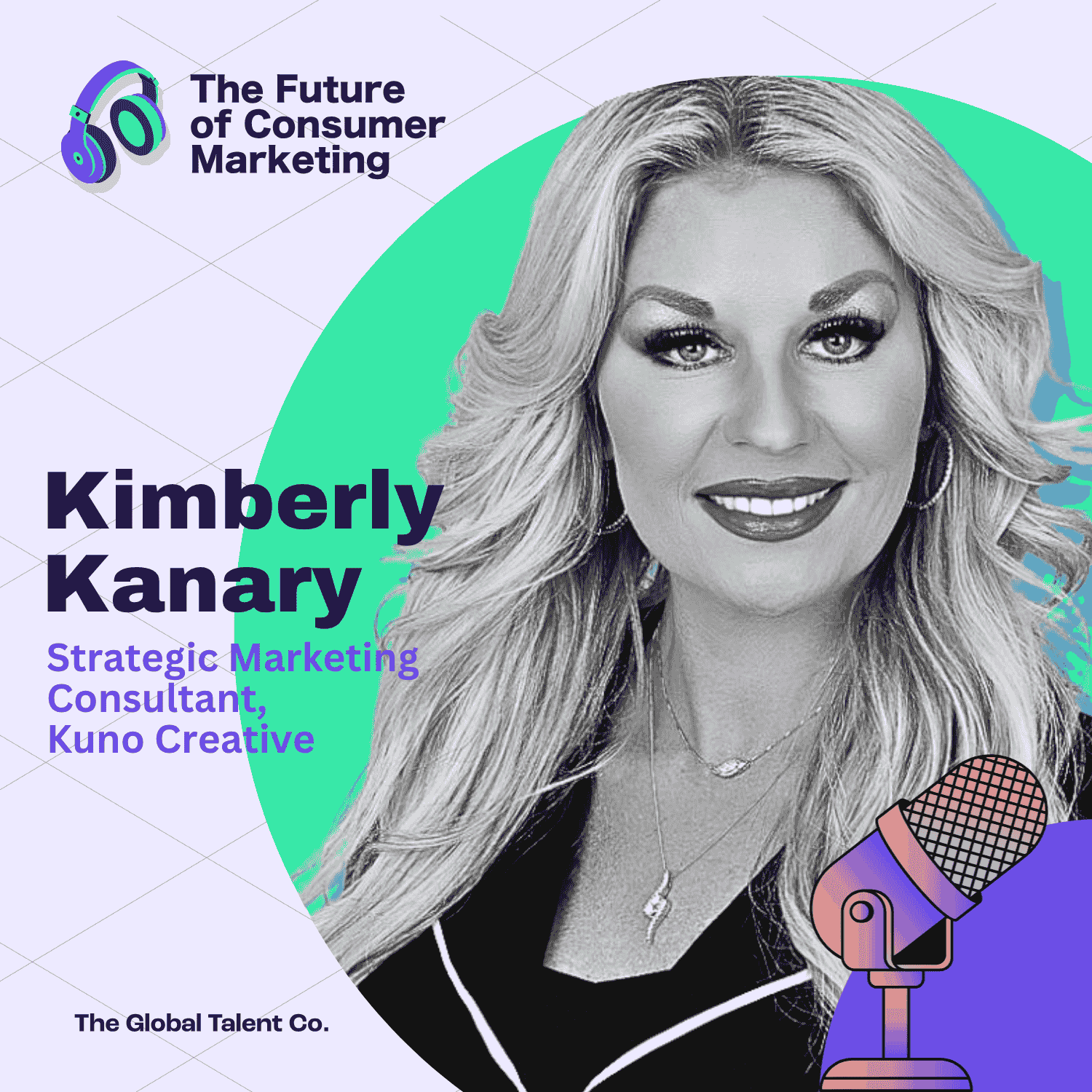
Kimberly Cannery, strategic marketing consultant at Kuno Creative (digital/inbound agency). Background: started in PR/crisis communications and brand building; moved through traditional/digital marketing and analytics; worked across CPG, real estate, jewelry, home improvement; retail/e-commerce/wholesale; B2C and B2B; agency and corporate roles.
Key claims
Avoid spray-and-pray blasting; tailor content to consumer mindset; prove value with business-outcome metrics; use incrementality testing; analytics should mature from ROAS/AOV to MMM/attribution and LTV.
Notable examples
Signet Jewelers test repurposing linear TV spots into digital vs influencer-created digital-native content; influencer content (7% of impressions) produced 10.4% lift in revenue per household and 12% lift in response rate; programmatic + CTV/streaming with AI measurement delivered ROAS and incremental sales.
Written by AI. May contain mistakes. Listen to the episode to check what was said.
Chapters
Tap a time to open that second in VOKimberly Cannery's Marketing Journey
0:44 to 3:19
Kimberly shares her diverse marketing background and philosophy.
“So, Kimberly, it's a pleasure to have you here today.”
Debunking Vanity Metrics
3:19 to 6:00
Discussion on the pitfalls of vanity metrics in marketing.
“I also do take a customer first approach.”
Successful Campaign Strategies
6:00 to 11:10
Kimberly discusses effective marketing strategies and programmatic approaches.
“one may not be a popular opinion, but it is one that I'm pretty passionate about is really making sure you're proving your value.”
Revitalizing Stagnant Brands
11:10 to 14:00
Kimberly outlines strategies for revitalizing stagnant brands through data.
“So that was a great learning of something that didn't work as well.”
Evolving Brand Messaging
14:00 to 14:59
Learn how to adapt your brand message while maintaining core values.
“So maybe we contain and maintain our brand message at its core, but the way we present that message evolves and becomes a little bit more innovative or exciting or fast paced or whatever it may be.”
Leveraging AI in Marketing
15:00 to 18:08
Explore the role of AI as an enabler for efficiency and creative processes.
“And I do feel that a lot of brands can become stagnant when they aren't aligned with their mission, what they want to do, what sets them apart and why you should go looking for that difference that they're selling.”
Team Building and Resource Management
18:09 to 22:33
Understand when to expand your marketing team and the importance of diverse backgrounds.
“And it gives you that little bit of an advantage of being able to move faster and get things, just get things done quicker and keep adding that value to the business.”
Marketing Metrics and Analytics
22:34 to 26:16
Discover how to utilize analytics for scaling marketing efforts and ensuring growth.
“aligned with your story as well, because you've worked in different industries.”
Final Marketing Advice
26:17 to 27:30
Get actionable marketing advice for future CMOs to enhance customer engagement.
“So I think it is very valuable insight to have to whomever is listening here and might be stepping into a CMO, head of marketing position.”
Transcript
Automatic transcript. May contain errors.0:00This show is brought to you by the Global Talent Co, a marketing leader's best friend in these times of budget cuts and efficient growth. We help marketing leaders find, hire, vet, and manage amazing marketing talent for 50 to 70 % less than their U.S. and European counterparts. To book a free consultation, visit globaltalent.co. Hey, everybody. Thank you for listening. My name is Andres Figueira, and I'll be your podcast host for the day. This show is brought to you by The Global Talent Company, a company that's connecting top remote professionals from Argentina, South Africa, and everywhere around the world with leading tech companies worldwide.
0:36So if your team is looking to hire world-class South American or South African talent, just head on over to theglobaltalent.co and see how we can help. And today, right here with me, I have Kimberly Cannery, the strategic marketing consultant at Kuno Creative, which is a digital and inbound marketing agency that's helping out with all of these issues right now when it comes to marketing. So, Kimberly, it's a pleasure to have you here today. Thanks so much. I'm happy to be here. I'm excited to talk about consumer marketing. It's a big passion point of mine. That is amazing. We were so glad when we learned that you were going to be on the podcast here with us, because I do know that you do have a lot of experience with consumer marketing.
1:13So without further ado, Kim, would you let us know a little bit about yourself, your background, what you've done, what you're doing right now? Yeah, absolutely. So I feel pretty lucky, actually, to have a pretty diverse background. I actually started my career in PR and crisis communications and brand building. So really started a little bit more on the earned media side. And then over time, I just kept evolving and adapting and taking on more responsibilities. So I moved into traditional marketing and then digital. And then from digital, really leaning into analytics. And, you know, the digital space, having the right analytics in place to prove that marketing is adding value to the business has been a real big passion point of mine.
1:54And I've also worked on such a diverse range of industries and companies from CPG to real estate, from jewelry to home improvement. So it's been a really exciting journey. I've done retail, e-commerce, wholesale, B2C, B2B. Pretty much have done it all as well as, you know, lots of corporate side, lots of consumer side, but also some agency experience. So it's been a really exciting journey. Wow, that's crazy. Kim, you've been everywhere for real. So you have it in like in all these industries that you have the experience to work with. Do you have like a marketing philosophy that generally applies to what you do or have you had to pivot depending on where you're at?
2:35Yeah, I would say a little bit of both. I mean, in general, what I love about marketing is that blend of art and science. It's one of maybe the few fields where you kind of have to range the full spectrum there. So for me, I love that piece of it. I love tapping into my creative side and thinking about how to generate that emotional appeal and brand loyalty, but then really looking at the performance side and making sure that the data that we have in place is proving out the value of what we're doing. It's all about driving value and making sure that every dollar we spend is as efficient as possible.
3:10And so, you know, I try whether I have a small marketing budget or a big marketing budget to kind of spend it smartly and wisely for the business as possible. I also do take a customer first approach. I think at the end of the day, when you do right by your customer, it pays back to your business. So always having that foundation in place is really important. And then being very data driven. I also, of course, you know, want to do right by the customer, but also want to appeal to them wherever they are. So our ads will reach them in a range of different mindsets on different channels. And so really trying to create that more personalized experience.
3:47And then lastly, I think my philosophy is really about team building. And one of the biggest things as a leader that I find a lot of pride in is seeing my teams evolve and adapt and reach those next levels or even just be highly respected, highly regarded people within the business. So that's definitely my philosophy. No, I love that. And I do know that marketing, sometimes companies can get a bit stingy with the budgets and And it's always like trying to make the most out of what you got. But sometimes the importance of marketing is a bit undervalued. But I do agree with the fact that like we got to make the best of what we can work with.
4:26And team building is so important in order to be able to get farther. Because in these many interviews that I've had, a big general thing that I've noticed in common is that these heads of marketing I speak to and everybody that's become a leader, they usually start out on their own. like just like themselves getting deep in the trenches and then the build the team started to build out. But that's how you actually get it to work right. And Kim, have you ever seen or do you think there is any common marketing best practice that you disagree with or that you think should be changed in order to make things better nowadays with marketing how it is?
4:59Yeah, I definitely think that the first couple of things that come to mind are the sort of spray and pray approach where you just blast it out everywhere without a whole lot of thought. So that's one that I disagree with. I do think you need to customize to the consumer mindset when we're in different places at different times, we're in different modes. So you have to really adapt your content. And then the other one that quickly came to mind is a really vanity metrics as a big pet peeve of mine. And so making, you know, I think it's so important to tie marketing back to business value and business outcomes that, you know, engagements are great and the social space fans and followers are great, but ultimately fans and followers don't directly necessarily tie to business outcomes and even impressions and media metrics like that, which I do think are important to look at as a marketer.
5:51But as far as what you share out with the business, really making sure that you have metrics that tie back to business outcomes. So the vanity metrics, one may not be a popular opinion, but it is one that I'm pretty passionate about is really making sure you're proving your value. Because like you said, you've got to sometimes fight for those dollars and make sure that you're demonstrating the value. Now, I totally empathize with that as well, because the fact that nowadays with so many viewers, it can be easy to inflate metrics and say like, hey, we got two million clicks on this video. But if there's no actual conversion to buying or purchasing whatever is being offered or anything, then it actually didn't go anywhere.
6:29So I do understand that. And Kim, do you have any recent example of a campaign you drove that had excellent results that maybe you can kind of show us and anything you're mentioning right now? Sure. So I do think, you know, Google and paid social are really important parts of the mix. So what I've been finding a little bit more exciting lately is programmatic. So for any of your listeners that might not be as familiar, programmatic essentially follows the audience. So if your target audience spends time reading the news and watching and listening to podcasts and watching a streaming TV, you can reach them through programmatic on any of those platforms.
7:10So it's sort of like the stock market for ads. You know, you have this breadth of opportunities, but it's really tightly controlled by targeting and data. So that's been exciting and kind of pairing. I like to take a full funnel approach with my marketing and advertising efforts. You may have heard of the, I'll call it old rule of seven. So there is this kind of rule of seven in place that you have to have at least seven exposures before your message actually sticks with the consumer. Okay, nice. With the inundation of, you know, the digital space and ads everywhere, that's more like a 10 to 20 touches before that ad really resonates and that message really starts to stick.
7:54So I think that programmatic is exciting because you're kind of targeting your audience, but having that full funnel approach is really powerful because you can combine upper and mid or lower funnel tactics and have them work together. So an example I'll give real quick is connecting programmatic with CTV or streaming. I'll give that example because I think it's a little bit less expected. VTV for, you know, a while, I think, has been evolving and becoming more powerful and programmatic platforms. They're really leaning into like AI and measurement and that kind of thing. So leveraging these tactics together has really been exciting.
8:33it's the power of you know gives you the precision of that highly targeted opportunity and then combining the rich storytelling and rich visuals that you can get through video has been really powerful and so we've seen that not only deliver a strong return on ad spend but also some incrementality that we've been able to measure in incremental sales so that's been fun. Wow that sounds so cool and do you have like as you're describing an experience of something that's working well, do you have something that you think isn't working or that you would prefer to stop doing in order to just like continue with these successes?
9:11Yeah. So I do think that it's important to have a test of learning process in place. And so if you're not having anything that's not working, you're probably not pushing the needle. You're probably not innovating. You're probably not trying new things. So I actually, yes, but I think it's a problem to have those Like marketing is one of the great places where you sort of need those failures. They just need to be controlled. They need to be calculated risks, right? So having that smaller test opportunity so you can continuously kind of feed the pipeline is really important and trying new things.
9:47I'll actually give an example going back a few years. When I was at Signet Jewelers, we had an amazing TV ad presence. So we were big on linear television. And at that time, the company was really evolving in the digital space. And so there was a thought process of we have these beautiful ads that are created for linear television. They're super high quality. They're beautiful content. We know they perform well. They're proven on TV to perform. Let's leverage them in the digital space. So we actually ran a test and we put our TV spots up against. We leveraged those in the digital campaign. And then we actually partnered with influencers to get truly digitally driven, digitally native content.
10:32And we leveraged a conversion lift study because we wanted to understand incrementality. We wanted to know, are these people that would have converted anyway, or are we truly getting that incremental lift? So we ran the test and actually the influencer created content only accounted for about 7 % of impressions. but we were able to drive a 10.4 % lift in revenue per household and a 12 % lift in response rate. And that outperformed the TV repurposed content on both measures. So we knew it was driving value for the business. It was driving incrementality and it was just performing better in that digital space.
11:11So that was a great learning of something that didn't work as well. And, you know, beautifully on TV, performed very well, but needed to be translated to that digital space. And it just really helped us to think about that, you know, consumer mindset, how they're different in different places and making sure that we were tailoring our content to be applicable. I have a little saying that I sometimes refer to as content without context is ineffective or vice versa. Content with the right context will help drive business results. Wow. Okay. No, that is super interesting because one would think that having such a highly created and high level production for ads would work so well on social media, like online or digitally.
11:56But I do feel that it loses part of the authenticity that has people coming back to the social media. And I'm not sure how long ago this was, but it's like nowadays it's still happening. Like I, when I'm strolling down TikTok, Instagram, whatever, I fall for the more authentic and user generated content than ads that feel like an ad. When I see an ad on TV, if it's more user generated, I think like, oh, these guys maybe don't have that much budget to make a high production quality ad. So I totally get what you mean by context. That is super true. That is super true. And I hadn't thought about it in terms of TV.
12:29So super nice that you had that experience. Yeah, well, and even when, if you think about, I don't know what platforms you're most active on, but if you think about what somebody's kind of the mindset, if they're on Pinterest, where they're in more of this discovery and inspiration, and like dreaming, planning type of mindset versus if you're on TikTok, you're probably in more of like an entertainment, like fast, fun. So even within different social platforms or across, you know, social versus Google versus programmatic, the customer is in a different mindset. So adapting your content even within across social platforms is really important to just have the most ability to resonate with them.
13:07So, yeah, for sure. Totally agree with that. Totally agree with that. And Kim, I know that, well, we've talked about it in your intro, that you work with an agency and you're a marketing consultant. And how do you work around revitalizing a stagnant brand when you're tasked with one? Like, what's your first move when you know you got to work with a brand that's actually plateaued or something like that? So I think it always starts with data for me and kind of looking at what's happened. So, you know, what's the foundation? Where's the brand been? Kind of where did it reach that stagnation? Is it just that it needs to be revitalized a little bit or is it really, I mean, every brand does have a life cycle.
13:46And so if it's more of that end stage life cycle, then we need to change something. We need to evolve and adapt or possibly introduce a new element. If it's really just that it's kind of stagnating, but still has a lot of life cycle left, then it's thinking about how do we stay true to the brand while evolving and adapting our approach? So maybe we contain and maintain our brand message at its core, but the way we present that message evolves and becomes a little bit more innovative or exciting or fast paced or whatever it may be. And then I think at the end of the day, you do have to stay true to your value proposition and your brand, but that can evolve again.
14:25So as long as you're not completely shifting and abandoning everything, because you've built equity in that brand. And so as long as you're not just abandoning that and you're evolving it, I think that's a great approach. But really taking a step back, kind of auditing what's happened, where we are, assessing the brand and what may need to evolve and adapt. And then also, I would say working with your partners across the business, because the merchants, your operations team, whatever it may be, customer service, they are going to have some insights probably as well that could be valuable as a marketer to understand and kind of take that back.
14:59And then consumer research, you can't go wrong there, is really asking the consumer, you know, what's resonating, what's not, where we kind of missed the mark or started to, you know, become less appealing to you and then building your campaign around those insights and starting to really just starting to evolve. Of course. Now, I understand that. And I do feel that a lot of brands can become stagnant when they aren't aligned with their mission, what they want to do, what sets them apart and why you should go looking for that difference that they're selling. It's important to have those foundations properly set in order to expand and become innovative and try different things.
15:36Because if you lose yourself in the middle of all that, then I'm not sure if you're going anywhere. So really nice, really nice. And Kim, I'm curious because like I asked this question to everyone, but I just love hearing the different responses. And it's the trending topic of the moment. And it is, are you leveraging AI? Like, are you using AI in your day to day, which I imagine you are? But like, are you using it in any different ways that we might not have heard of? So I definitely think AI is super important. To me, it's more of an enabler. It's not a replacement, but it is an enabler. It enables, you know, efficiency.
16:08see. It enables you to move faster, be more productive. On the ad side, we've actually been leveraging machine learning and AI for quite some time, but it's getting better and smarter. And obviously, generative AI is the whole new, you know, next level to that. So I definitely have been using AI more and more in recent times. I use it for everything from brainstorming. I will sometimes use it to kind of massage messaging or even to give me an outline that I can build up on. And it's always easier to start from something than to start from nothing. So content, it can be helpful. But again, leveraging that human touch, making sure that your brand, your storytelling, the emotive resonance, all of those things require that human touch.
16:53So that's where I kind of see that handoff on the content side. I also do, you know, leverage it, of course, for experimentation, for data analysis, for help with, you know, targeting and that sophistication within, you know, the ad auction and all of those things. I mean, that is sort of table stakes to me as a marketer at this stage. And I do think AI in kind of that bigger impact way will become, if it's not already, table stakes for that efficiency, for that ability to move faster, smarter kind of thing. And again, not as a replacement, it's there to free up time. Things that used to take hours can take minutes or, you know, much less time, freeing up the team's time to really think outside the box or to look for that new testing opportunity or just to dig in deeper on something.
17:43And of course, AI is only as good as the information it gets. So that is that like a little bit of a fact checking piece that kind of comes with it. I do think as marketers and business people in general, we do have to just become, we have to test these things. We have to become smarter at how we use AI and the better you leverage it and the better those kind of handoffs are between the human side and AI, the better your team will be. And it gives you that little bit of an advantage of being able to move faster and get things, just get things done quicker and keep adding that value to the business.
18:18Of course. Now, I love how you framed it because it's actually how I'm thinking about it. nowadays as well. And it's the fact that it's not here to replace us. It's just making us more efficient. It's helping us eliminate those monotonous mundane tasks that we had to do every single day just to keep like the company going. And now we have time to focus on things that matter a little bit more, which is the out of box thinking, getting creative, doing stuff. I'm not sure if AI is quite there yet because our human touch, I believe, is important and is invaluable. But it's so cool that you think it's something that will actually help your team save some time and do other stuff.
18:51And talking about teams, Kim, I know you mentioned that team building is something really important in how you view your marketing and your philosophy and everything. How do you know when it's time to actually expand and build out your team a bit more? And when do you know that you actually need help? Well, I think we always, as humans in general, tend to think that, you know, we tend to feel we need more resources. It's such a fast paced world and marketing is so complex and so fast paced that it is easy to feel like you need more resources pretty constantly. So again, I think it's really taking that step back, kind of trying to look at it objectively, making sure that your team is truly maximized and that they're being fully leveraged.
19:34So once you've really kind of maximized your output and you're either having opportunities to grow the business further, or maybe it's adding new functionality to the team. And then at that point, you need to grow the team and do so smartly. You know, you don't want to scale too fast and then have people board. So being able to scale methodically. And for me, when I add to the team, I would say, of course, in marketing, it is a very specialized skill set, whether it's more of a generalist or a specialist, especially on the specialist side, of course. But because it is a pretty specialized skill set, there needs to be a foundational skill set.
20:12But I would say at the especially at the entry level or even mid-level attitude, ability to learn, that kind of hunger to like absorb and learn and evolve is really important. And EQ is just as important perhaps as IQ at all levels. I would say at the leadership level, I actually have a little bit of contradictory thought process of some people. And that's that I love bringing in people from different industries into whatever industry I'm working in at the moment. So a lot of times you'll see people wanting that same industry experience. And I do think there's some advantages to that. But most businesses have tons of experience and knowledge within their industry.
20:56some bringing in marketers that have some different perspectives, I have found personally hugely valuable, especially at one of those leadership levels where if they have that proven track record across multiple businesses, as long as they have that understanding of consumer marketing, for example, or if it's a B2B business, you know, B2B marketing, I think it's really, really valuable to bring in those different perspectives. If everybody has kind of the same background, the same thought process, you're not going to be as able to kind of think outside the box and push innovation. So I actually love to bring in people from different thought processes.
21:34And then you didn't really ask about this, but I think as leader, succession planning is also super important. So that could be another opportunity to kind of add to your team is when you either need to have kind of that next layer of talent, or you need to have, you know, I've always taken a thought process of the way to my next promotion or next step in my career is making sure that there's somebody to step into my shoes. And that is something I try to instill in my teams is you really want to have the best possible talent. You want somebody if, heaven forbid, you're hit by a bus that can take over and the business doesn't falter.
22:10But on the much more positive side, you know, hopefully that creates opportunities for you to do more to try different things. And so having that succession plan in place and really constantly elevating your talent on your team is not only rewarding, but it's important for the business and important for those people as professionals and as humans. I totally agree. And that's beautiful. And I love how you mentioned that you like to bring people in from different industries, because I feel it aligned with your story as well, because you've worked in different industries. So like you're the exhibit A of the fact that it does work and it does help to bring fresh perspectives from different places to work.
22:47Because I do feel if everybody has been working in the same industry for a long time, then they could fall into the same mindset, the same customs, the same things that had always worked. And then it just doesn't change. So I like that fresh outlook to the way that you create your team. And I know we're almost at time, Kim, but I would love to ask one final question. And this one is more for the audience. And it's if you could give just one piece of marketing advice to head of marketing or a CMO that's stepping into 2026 in whatever industry it is, how would you advise them to get more customer engagement with whatever business they're entering?
23:26Such a good question. It's always hard to give just one piece of advice, but I think I would say, you know, for me, measurement and analytics has always been so poor to being able to scale teams So I've built a lot of teams, whether it's kind of building from the ground up or just adding new functionality, new areas within the marketing team. Sometimes it's, you know, bringing talent in-house to augment what we're already doing and adding those different skill sets. So anyway, I've had that kind of builder mentality. And the way that you prove out and really make sure that marketing isn't viewed as a cost center, but as a revenue generator and growth driver is by having those analytics in place.
24:12So I guess one piece of advice I would give is to have the right analytics in place and just try to make sure everything you're doing ties back to business needs, business goals and objectives. And you have to start somewhere. So whether you're starting with, you know, return on ad spend, average order value, those type of metrics that will help show that you are driving efficiency, that you're driving value to the business, but hopefully getting to more of advanced analytics like media mix modeling or multi-touch attribution and being able to layer on customer lifetime value over time, that's really where you can have a big impact.
24:50I kind of equate analytics to like a health check. So you're breathing. I'll use little analogies, you know, your basic, your ROAS, things like that, AOV, those are your temperature check. You know, you're healthy today, but your media mix modeling, and your multi-touch attribution, those kind of advanced analytics, that's like the MRI machine. That's where you're going to look, you know, what's happening inside, what's really driving the business. And so for me, analytics is all about a maturity curve and kind of pushing up that maturity curve and constantly evolving. So that's one piece of advice.
25:27And I think for if you're newer in your career or just trying to reach that next level, I would just say always learn, always expose yourself to new things, understand, you know, your business, maybe shadow people in other departments, just try to learn as much as possible because that perspective does make you a more well-rounded professional and it will help. And if you're the person that's kind of always raising your hand and there with that positive attitude and, you know, there to step up when needed, that kind of thing goes a long way. It definitely is known if you're the person trying to solve the problems rather than just raise them that's going to resonate with a lot of people in the business.
Read the full transcript
26:07So like I said, I can't just give one. So those are a couple of things that I don't know. I love it. They all come from a very logical and a very wholesome place from your experience that you've had. So I think it is very valuable insight to have to whomever is listening here and might be stepping into a CMO, head of marketing position. I think it's great to know that. And Kim, I'd also love to give you the opportunity before we finalize the episode that I know that you have your like the Kuna creative agency, if anybody wants to contact you to see what the creative agency is, the Q &A agency is about, like how could they go about doing so?
26:40And that way they could maybe get some marketing consulting or whatever. Yeah. So hit me up on LinkedIn. Love to keep the conversation going. Mention the podcast when, you know, send me a connection invite, mention that you watch the podcast. I'd love to connect and kind of hear your thoughts, answer your questions, keep the conversation going. So I think that's the best place. And of course, feel free to check out Kuno Creative. That's amazing. And everybody, thank you for listening. And Kim, thank you so much for coming on the episode. So glad that we got to hear your story and can't wait to see whatever it is that you happen to do next, because I'm sure it's going to be filled with success.
27:18Thank you so much. So fun. Thanks. Likewise, it really was. Bye-bye.
27:29you
From the publisher
In this episode of The Future of Marketing, host Andres Figueira interviews Kimberly Kanary, a strategic marketing consultant at Kuno Creative with deep experience spanning CPG, retail, e-commerce, jewelry, and home improvement. Kimberly brings a unique perspective having navigated the full spectrum of marketing—from PR and crisis communications to advanced analytics and programmatic advertising. Her approach centers on the intersection of art and science in marketing, with an uncompromising focus on tying every marketing dollar to measurable business outcomes. Throughout the conversation, she shares specific tactical examples from her time at Signet Jewelers and reveals why she's betting heavily on programmatic advertising paired with CTV as the next frontier for performance marketing.
Topics Discussed:- Programmatic advertising paired with CTV (Connected TV) for full-funnel marketing
- The evolution from the "rule of seven" to 10-20 touches in today's saturated digital environment
- Building measurement frameworks that prove marketing drives revenue, not just vanity metrics
- Testing digitally-native influencer content vs. repurposed TV creative in digital channels
- Leveraging conversion lift studies to measure incrementality, not just attribution
- Context-specific content adaptation across different platforms and consumer mindsets
- Using AI as an enabler for efficiency while maintaining the human touch for brand storytelling
- Building diverse marketing teams with cross-industry experience to drive innovation
- Analytics maturity curves: from basic ROAS to media mix modeling and multi-touch attribution