 Ask ChatGPT

Hello Alice’s “give first” approach to breaking barriers for Main Street entrepreneurs by improving equitable access to capital, education, and community—especially for underrepresented founders—and how COVID and AI shape their strategy.
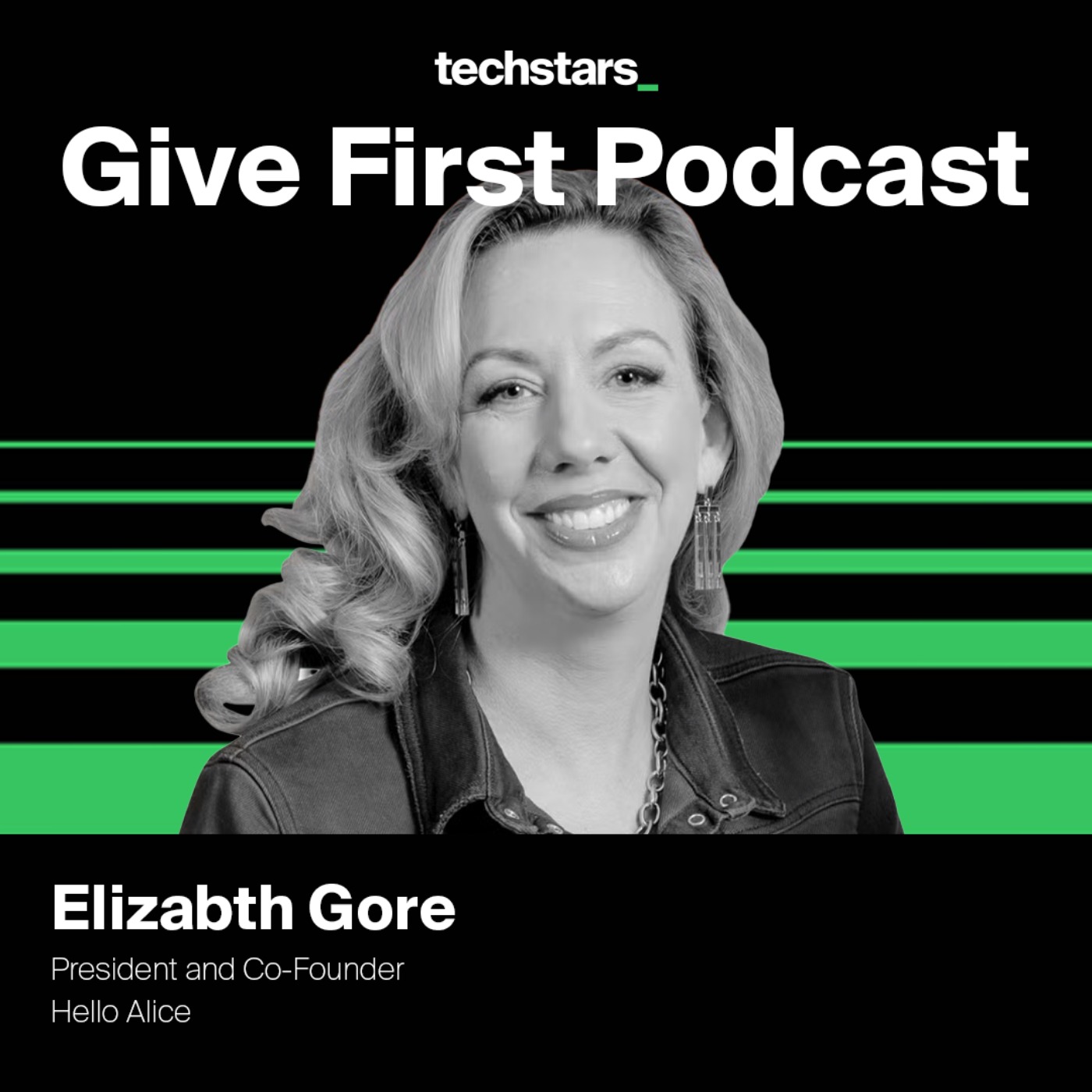
Elizabeth Gore, founder and CEO of Hello Alice (co-founder; Texas roots; previously worked at Dell/Pivotal Labs; background in humanitarian work including Peace Corps/UN). Co-founder Carolyn Rods (Bolivian immigrant entrepreneur).
Hello Alice keeps small-business tools free by monetizing data/AI via an enterprise SaaS model sold to banks/fintechs/enterprise services. They serve businesses in their first 2–5 years seeking aspirational growth (coffee shops, t-shirt shops, etc.). COVID forced a rapid pivot to digital “business centers” and expanded grants; profitability followed. They argue DEI should translate into equitable lending access, and they’re pursuing AI + open banking to approve loans using cashflow/receivables rather than credit scores.
Business Health Score roadmap accelerated after COVID; COVID-19 Business Center built in three weeks with 200,000+ businesses/day; mental health resource center; lawsuit against Stephen Miller’s team (sued 2023, won 2024).
Written by AI. May contain mistakes.
Elizabeth Gore discusses her background and the mission of Hello Alice.
“Certain of Techstars funds own or may own in the future securities and some of the companies discussed in this podcast.”
Discussion on the types of small businesses Hello Alice caters to and their growth stages.
“million in philanthropic or close to it, small business grants at$10 ,000 to$25 ,000.”
Exploration of how small businesses connect and build communities, particularly post-COVID.
“Is there an offline version where people are getting together in person on a regular basis?”
Gore explains how Hello Alice generates revenue while maintaining free services for small businesses.
“I used to be in veterans families groups.”
Gore shares insights on the tension between serving small businesses and monetizing the platform.
“And, you know, maybe talk a little bit more about the dynamic with the community.”
Discussion on the effects of COVID-19 on small businesses and community resilience.
“You know, we never thought we would be providing affiliate discounts and access to things other than capital.”
Learn how small businesses adapted during the COVID-19 crisis and the initiatives launched to support them.
“But I think the tension has changed, but it will always be there.”
Discover how underrepresented entrepreneurs are navigating current challenges in access to capital and support.
“One of the things you highlighted earlier was that a lot of the small business owners that you serve are underrepresented, whether they're women or military, ex-military, people of color.”
Understand how AI can transform small businesses and ease time constraints for owners.
“related to their own business, we we've got to get them capital so we can hire more people We can make more money in our communities.”
Learn about available grants to support entrepreneurs facing challenges.
“We put grants out because tariffs are so hard.”

Get the gist, explore an idea or ask about something said.
 Claude
On Give First, what are the key points of this episode?
Searching your listeningAutomatic transcript. May contain errors.
0:04Hi, everyone. This is David Cohen, and I'm here with my amazing co-host, Brad Feld. Hey, Brad. And this is the Give First podcast. In the startup world, Give First means simply trying to help anyone, especially entrepreneurs, without any expectation of getting anything back. So we'll be talking to mentors and founders about what Give First looks like in action and how it makes great entrepreneurship possible. We polled everyone and they said consistently that their favorite part of the show was the legal mumbo jumbo. So here it is. The following discussion is an expression of personal opinion and does not represent the opinion of Techstars or any company we discuss.
0:38Our conversations for informational purposes only, including any mention of securities or funds. This is not legal business investment or tax advice and is not intended for use by any investor. Certain of Techstars funds own or may own in the future securities and some of the companies discussed in this podcast. Got it?
1:00welcome back to the give first podcast today i'm here with elizabeth gore the founder and ceo of hello alice elizabeth welcome howdy it's great to be with you and i like that you said howdy because i happen to know you're from galveston yeah as we just shared and i'm from dallas so we'll just have a we'll make sure the texas part of this podcast shines through that's right back to our roots. There you go. Elizabeth, why don't you give us a quick overview of you and Hello Alice. Sure. Well, like I said, a great state of Texas. I spent my time between here and California, and I'm super proud to be one of the co-founders of Hello Alice.
1:41We are a financial technology that ensures equitable access to capital for small business owners, so we really focus on Main Street. And Carolyn Rods and I, since our inception, have both ensured access to credit, loans, small business grants, but also we feel it's critical to educate around your financial fitness. So we created the Business Health Score years ago. We've got AI growth tools that are all free for our small businesses. And we dig really deep into communities for those who we call the new majority women people of color u.s veterans people with disabilities folks in rural environments and ag who don't have access to banking and so we have a lending center that has i think right now 91 equitable lenders on it that we work with small businesses who've generally been declined or left out of our financial economy to find them appropriate non-predatory capital.
2:44And then we're very proud that we have distributed almost 60 million in philanthropic or close to it, small business grants at$10 ,000 to$25 ,000. So, but the coolest part of our world is our community. We've kind of an accidental cult community between business owners on Hello Alice. So the million and a half of them create their own communities. We have the Black-owned Business Center within NAACP. We've got a military spouse, digital groups. We've got Bakers in Detroit. So it's really this very cool peer-to-peer network as well. So it's been the honor of my life to serve these small business owners.
3:22That's awesome. Well, you know, a lot of, probably a lot of listeners and obviously companies that go through Techstars tend to be high growth companies. How do you segment in terms of thinking about the companies that you work with. You describe small business, mainstream business. What are the categories of entrepreneurial companies? Yeah, most businesses that come onto Hello Alice, they're within their first two years, two to five years. Most of them have aspirational growth. So they are going to use technology, software, financial capital for growth. They don't tend to move into the extreme growth venture capital stage.
4:04They are your coffee shops, your t-shirt shops. There are 99 % of employers in this country, but they are mostly folks that are looking to employ other individuals. That's another way to think about it. So they are employers versus sole proprietors. And, you know, there are those that do pop out and end up being high growth, but the vast majority of ours are serving your daily community. Tell me more about the communities that evolve, especially, you know, presumably there's an online version of it. Is there an offline version where people are getting together in person on a regular basis? Yeah.
4:49I mean, it was so interesting because pre-COVID we had about, I want to say, gosh, 400 ,000 small businesses on Hello Alice. And those groups would get together in communities and do everything from go to walks, have coffee together, to do small events. We would host summits as a company as well. And now it is, you know, obviously there was a hard pause, But then now there's just hunger and fever to get together physically. So anything we do, we like to do always in partnership with other groups, other chambers, veterans groups, you name it. But we always, the fireman gets called all the time because we, you know, tend to fill up space because small business owners are looking to learn.
5:38They're looking to connect. They're also looking to not be isolated. I mean, being an entrepreneur is incredibly isolating, particularly in the beginning. So that connective tissue is very strong, which is exciting. How do these, in your experience, communities evolve? Are people defining clearly what the rules of engagement is? Are they just sort of people getting together? Do they ever become more structured? Like what happens? Yeah. So interestingly, again, I would say pre and during COVID, groups tended to be a lot more defined, sometimes either demographic focused, geographic industry. Now we're finding a lot more it's about stage of growth.
6:27It's about, you know, where you're at in your journey. geography still plays a significant role with small and medium business folks really want to learn from each other you know because they're dealing with everything from local policy to permitting to what are your customers like a lot of touch points after natural disasters which there's a lot in this country now between small businesses so they're not as defined I would say as they used to be also I groups are I find not wanting to be as in as many silos anymore I mean I used to personally as an entrepreneur be in a zillion women's groups, for example.
7:03I used to be in veterans families groups. And, you know, now I think a lot of us are really looking to branch out and just be with folks that are in a similar stage of growth as our company. And so I would say they're less defined these days personally. Hello Alice is a business, so you have to pay the bills. How does Hello Alice make money? Yeah. So, you know, we're considered a venture backed for profit social enterprise. So it's a big mouthful. And so all of our tools for small businesses are free. We monetize through our data collection and AI serve. We have an enterprise SaaS model to banks, fintechs and enterprise business services who are trying to get better engagement in transactions with their small business owners.
7:55So, you know, they will pay us a monthly fee or big chunky contracts in order to use our software to engage better with their small businesses, which has allowed us for our community to stay free. And I'm very proud to say we became profitable last year, which was as many people say is a huge relief. So we did our Series C, what, two years ago now. and, you know, I don't know any founder these days who are like, I'd love to raise money again. So it's really good to hit profitability, even if it's by the skin of our teeth. Oh, that's great. Well, huge congrats on that. And, you know, maybe talk a little bit more about the dynamic with the community.
8:38I mean, clearly if you're in a place where, you know, for a million, five small business owners, your services are free because you have a monetization model, that's something else. You know, that fits nicely in a lot of ways with a business oriented around this idea of give first in different ways. How do you how do you think about those one point five business owners? Are you thinking of them as, you know, the product that you're monetizing, which, of course, in the social media world, you know, the cliche of everybody that touches and uses social media. we're actually the product that's being sold to somebody else.
9:20Like, how do you reconcile those things in the context of this community and the partners that you're working with? That's a great, great question. I love that you're a give first model because we started with that mindset. So I was coming out of, you know, the Peace Corps and the UN and all humanitarian world. And I was very passionate about how important your economic ability to own your business was. Carolyn Rods, my co-founder, who is from Bolivia, so immigrant, three-time entrepreneur. She failed the first time, was very successful, exited. And then she built a digital growth accelerator for women to give back.
10:03And she just felt like she could do more with that. So both of us kind of met each other and came in with a mindset of why is it so hard to access capital in this country? Why aren't we using technology in a way that is conducive? Machine learning was getting more viable. This is 10 years ago now. I was at Dell working with Michael Dell when we had acquired AMC and a whole bunch of companies, including Pivotal Labs, who robbed me. They were just the foremost on machine learning and now AI. So we ended up getting to build there. And that was the big question early on was if we're going to serve these small business owners, how we don't want to be nonprofit.
10:41How are we going to make money? Who is the ultimate customer? And it was such tension for the first few years when we would try, you know, it was so it's so much less expensive to build tech these days. But back then it was very expensive. So we looked at do we charge the small business owners? but then the barrier to entry is higher. At the time, everything was free. So there wasn't this pay to play anywhere, you know, like we're seeing everything from newspapers to, to NerdWallet, you know, folks are starting to do subscriptions now that was not the, the, the etiquette at the time. So we really started listening on accident and learning how hard it was for enterprise and how expensive it was to acquire small businesses.
11:28And what we figured out is if we figure out the best ways to do that, because we grew really fast early on because we were providing free services. We weren't providing grants till 2019. So this was all access and connective capital, free classes. So we were growing so fast. However, what we learned in the meantime is, or Carolyn, I'm the non-technical founder, is if you really went where small businesses were, gave them access based on their stage of growth, physical location industry versus just treating all small business owners the same, we could lower the cost of customer acquisition and increase engagement and transactions.
12:11So that is really what we built on, built on for enterprise. And we're suddenly able to keep all this free. We were learning from our small business owners because they were our lab, right, essentially, and then able to serve the enterprise. Now, I will tell you that the ability to give back and impact, that tension went down because we figured out a way to really work with partners, dig deep and keep things free for our small businesses. and then we you know so to your question we we still had two customer sets right we were on a social side we wanted to help grow these small business communities from a financial size or monetizing the the enterprise so that became very clear I would say now the tension is we've grown so much that servicing a million and a half small businesses is as much work or more than our enterprise customers.
13:15And those are incredibly different teams, different type of engineering, different type of mindset, different type of acquisition. So, you know, we're still evolving and I don't know that that tension will ever go away because of this dual side model we've created that we really haven't seen effectively. And the tension also might be good. I mean, it keeps us sharp. We are constantly learning from both sides and bringing those together. You know, we never thought we would be providing affiliate discounts and access to things other than capital. And we heard our community desperately need better access to software and tools.
13:54So, you know, we got to bring that over. So, you know, we make mistakes. Sometimes we try to boil the ocean, which we shouldn't have. We should stay focused. But I think the tension has changed, but it will always be there. Slightly different direction. Earlier on, you talked about the dynamics in COVID and sort of what happened, sort of a high level. COVID obviously had a huge impact on businesses everywhere. I was very involved in the Colorado COVID response on a couple of dimensions. and one of the things that I was involved in was something called Energize Colorado, which I helped start. Initially was an initiative from state government, but then we spun it off as a separate nonprofit.
14:45A woman named Wendy Lee ran it. And it was very involved in deploying capital to small businesses during the COVID crisis, including, you know, CARES Act dollars and things like that. How did that impact your business and what did you do and how did you think about like that moment, which was sort of an, you know, existential shock to so many small companies? You're right in the middle of it with your customer base. Oh my Lord, were we ever. What kinds of things did you do that you think in looking back were powerful and unique in that the moment? Well, the first thing my mind went to was, I hope I never have to homeschool my children ever again, to be really honest.
15:29When you say that, that's like the reaction I had. But other than teaching fourth grade math, which was terrible, you know, we were just about to do this massive product build for the business health score, which we had not launched yet. It had been in the roadmap for a while. I'd raised money around it. And we had hundreds of thousands of small businesses coming to us for help. And then we had state governments, city governments coming to us for help. So we actually paused the build, moved money over, and we built the COVID-19 Business Center on behalf of hundreds of organizations and cities.
16:10and it was so purposeful and we built that sucker in three weeks and um we had 200 000 plus small businesses a day at any one time accessing basically we created these digital centers inside of ppp eidl how do i close my business how do i declare bankruptcy how do i pause how do i negotiate rent and then we even built at the time a mental health resource center which you know in millionaires, I would have never thought, you know, we would have something like that, but it would became such a huge deal for our small businesses. So, you know, we certainly, it was crazy because we grew related to, I mean, that's when we suddenly went from to a million small businesses, just boom, just like that.
16:57We did, we did not grow from a financial standpoint, but we grew from an impact standpoint. And we just decided that was the right thing to do for the right time. And, you know, what's interesting is that's when, you know, all these communities kept popping up. We had started doing small business grants in 2019. Thank goodness, because we had a really good mechanism set up for applications for verification and in down to the smallest of grants. So the grant center blew up. And then we, you know, very high profile individuals coming to us. How do I contribute? How do I help my community? So, you know, it was just one of those times where our team, I don't think slept for two years.
17:41It was seven days a week for 24 months serving our small businesses. And I, you know, and I had to also take care of our employees and our team and our, you know, my husband's an elected official. So he was upside down in California, obviously, with all this. So, you know, it was a purposeful time. But we learned so much about our business owners, what their needs were. We stayed focused on them. You know, we it's interesting, the money and thank God, you know, it's interesting. You know, we got a lot of shit for some of our investors for not building the business health score at the time. So two years later, we built it a million times better with better technology.
18:19AI had come along. Thank God we didn't. Right. We would have rebuilt it already. So I think serving your community sometimes, even if there's a shortfall in the moment, you will learn more about your customer. You will be better at what you do. and profitability will find you. And that's certainly what happened to our company in COVID. And the last thing I'll just say is, interestingly, I talked about our mental health center and then creating a whole center to help small businesses close and go bankrupt. In a million years, if you'd have thought that's what we would be teaching on our site, right now, the vast majority of those are coming back, reopening new businesses with more resilience, better understanding of cashflow, So just really using software better, you know, patient capital versus blitz growth.
19:09So these small business owners are now some of the most successful ones on our platform, having had to close during that. So, you know, I don't know that any of us want to do it again, but I think we definitely, you know, looking back on it, I'm very proud of our small business owners' resilience through all that. That's great. That's great. One of the things you highlighted earlier was that a lot of the small business owners that you serve are underrepresented, whether they're women or military, ex-military, people of color. You know, in today's political environment, for lack of a better way to frame it, you know, something that was front and center for some period of time around DEI with many organizations, at least from a federal government perspective, is being aggressively either dismantled or pushed to the side.
20:05Two questions. How do you think about it in the context of your business and the customers that you're serving? And how are you approaching that as a problem, sort of stepping back and looking at what's going on? Again, not from a personal, you know, emotional perspective, because I've got my own emotions about all that stuff. But from a functional perspective in the context of the customers that you're serving, is the language the same? Are you changing the language? Are you changing programs? Are you thinking about it differently than you used to? Just some sense of that. Yeah. So, I mean, it's no secret we were, Hello Alice was one of the first massive federal lawsuits around this.
20:43We were sued by Stephen Miller and won. And, you know, we are capitalists first at Hello Alice. We feel very strong that small business owners need equitable access to capital, however you can get it to them. So if you look at a U.S. veteran who's been deployed, they don't have a strong FICO score. They're not going to get credit or loans unless it's predatory rates. There should be programs getting to these very successful entrepreneurs who have the ability to business plan better than anybody else. And so we have always taken the lane that as a company that's good at marketing and very good at finding, digging deep and finding customers, programs for the fastest growing small business owners in our country, which have different faces these days, are critical to our economy.
21:40And we stand behind that, always will. And as a private company, especially without federal dollars, government dollars, we feel very strongly you should deploy those in a way that's most effective for your bottom line and for the impact of your customers. Now, let's fast forward to now. One thing that I... That lawsuit was 2024, right? We were sued in 2023 and we won in 2024. Yeah. And so now a couple of things that I'm very honest about is, you know, advocacy these days is very difficult for entrepreneurs and CEOs. You can't just lead with your heart, which I've always done, by the way. You know, your head has got to be there, too.
22:26So if a law has changed, you have to follow the law. I mean, that is just it, period. And now all this to say, I am so excited about, we are like hungry and excited about AI. We have been since our inception. We feel so strongly that the combination of data collection, crunching information with AI and open banking, which is big and it's coming and we're excited, is really going to solve a lot of these issues. So take a woman who's been in the care economy. She has not built up a strong credit score or an African-American who's had general racial wealth issue. Maybe one payment didn't happen. So the first 24 months of a small business, those individuals are going to be declined for a small business loan, for lines of credit, unless they're really crazy high interest rates.
23:25If I can use AI and open banking and look at them, look at their account and say, you know what, they've had receivables for 12 months, they have paid back everything on time, they have incredible business planning, they've paid their rent on time, I am absolutely going to approve this loan. that's I think where we are heading so accessibility through data and AI I ironically think this ridiculous debate going on right now is going to be moot and I wish we are we were spending all this time instead of being in litigation and arguing and and actually digging deep and crunching numbers and building these new financial mechanisms because it's it's a waste of time and money.
24:07And, you know, there's an$80 billion with a B gap right now. And just the BIPOC community who've applied and been declined small business loans. I mean, that who wouldn't want that business, right? These are not individuals with bad financial history. Generally, they have no financial history or no access. And so, you know, if I'm a banker, I'd be like, I want that community and to see that community grow. So, you know, so I, we, it is interesting. So I've actually strengthened my opinion on this even, you know, over the last, I mean, I've fought for this since my early days at the UN and Peace Corps.
24:46And now I think it's just more important than ever, as you see the amount of women and Latinos and veterans entering the workforce related to their own business, we we've got to get them capital so we can hire more people We can make more money in our communities. We can strengthen everything from healthcare to service industries. So very strong opinions on this stuff. I know. I love it. And I would say very aligned with my frame of reference. So I love to hear you talking about it the way you're talking about it. Maybe last question just to wrap up because it's prompted by the AI conversation and your use of AI inside Hello Alice, but also, you know, you've got 1.5 million business owners who every day are being exposed to all kinds of, you know, whether it's noise or music about AI, including lots of people saying lots of things that I would categorize as randomized.
25:44How do you talk to those business owners about how AI is going to impact their businesses especially around, you know, not just the context of, well, you know, we're going to be able to use it as a supplier to your businesses to make the banking infrastructure better, but how's it going to impact how they deal with what they're doing on a day by day basis? You know, I, I'm a big proponent of small business owners pausing and really understanding how to integrate it into their business. And the number one reason is time. So small business owners are so time poor. I mean, they are, I mean, our company motto is everyone takes out the trash because there's not a small business in America that's not doing everything in their company.
26:25And the ability to really understand not just new AI tools, but even like look at the tools from if you use QuickBooks or PayPal or Square or any of those groups, are you utilizing their AI tools in their current software? But then are you utilizing new AI tools coming out for scheduling and growth marketing. And, you know, even, I mean, some of those tools are so good, they're down to, you know, how are we doing restaurant reservations? Now, my concern right now, which we are heavily investing is, is there are really good direct to consumer individual AI tools and really good enterprise tools.
27:05Main Street tools are pretty, pretty skinny right now, to be honest. I mean, there's just not been a lot invested there. and the adoption is quite low. Last I looked, it was a 7 % was the formal adoption of AI in your day-to-day business, which is super low, right? So I think we still have catching up to do, and that's not uncommon. Main Street is usually looped in with, you're either an individual or you're over 500 employees. And so software and tools and so on just usually take a while to catch up for small business. And I think that's where we are with AI. But I tell you what, the time poverty that small business owners feel, AI is going to help so, so much.
27:51Elizabeth, thank you for the time. Oh, it's been a huge pleasure. It's inspiring to talk to you and congrats on the business. It sounds like incredible progress. And I'll stay in touch and you stay in touch. All right. We have tons of grants available right now. We put grants out because tariffs are so hard. So folks can go to Hello Alice and look at grant funding to help them through that. Appreciate everything. Thanks a bunch. Thanks. Thanks a lot for listening to the show today. We'd love to hear your feedback, ideas, or who you'd like to hear next on Give First. And please leave a rating and review, ideally a good one.
28:25And reach out anytime to podcasts at techstars.com or on Twitter. I'm at David Cohen. See you next time. Don't forget, Give First.
28:38you
In this episode of the Give First podcast, Brad Feld talks with Elizabeth Gore, co-founder and president of Hello Alice, about what it takes to build and scale a platform serving over 1.5M small business owners.
Elizabeth shares how Hello Alice became a critical lifeline during COVID, launching grant programs, pivoting product builds, and creating community hubs for entrepreneurs in crisis. She reflects on the tension of running a venture-backed social enterprise, the lessons from winning a landmark federal lawsuit, and how AI and open banking could transform access to capital for underrepresented founders.
This conversation shines a light on the entrepreneurs who keep our communities running, and the technology helping them thrive.
Follow Elizabeth Gore here 👉 https://www.linkedin.com/in/elizabethgoreusa/
Check out Hello Alice 👉 https://helloalice.com/
Hosted on Acast. See acast.com/privacy for more information.