Ask ChatGPT
 Give First
6 Oct 2026 · 32m · 13 chapters
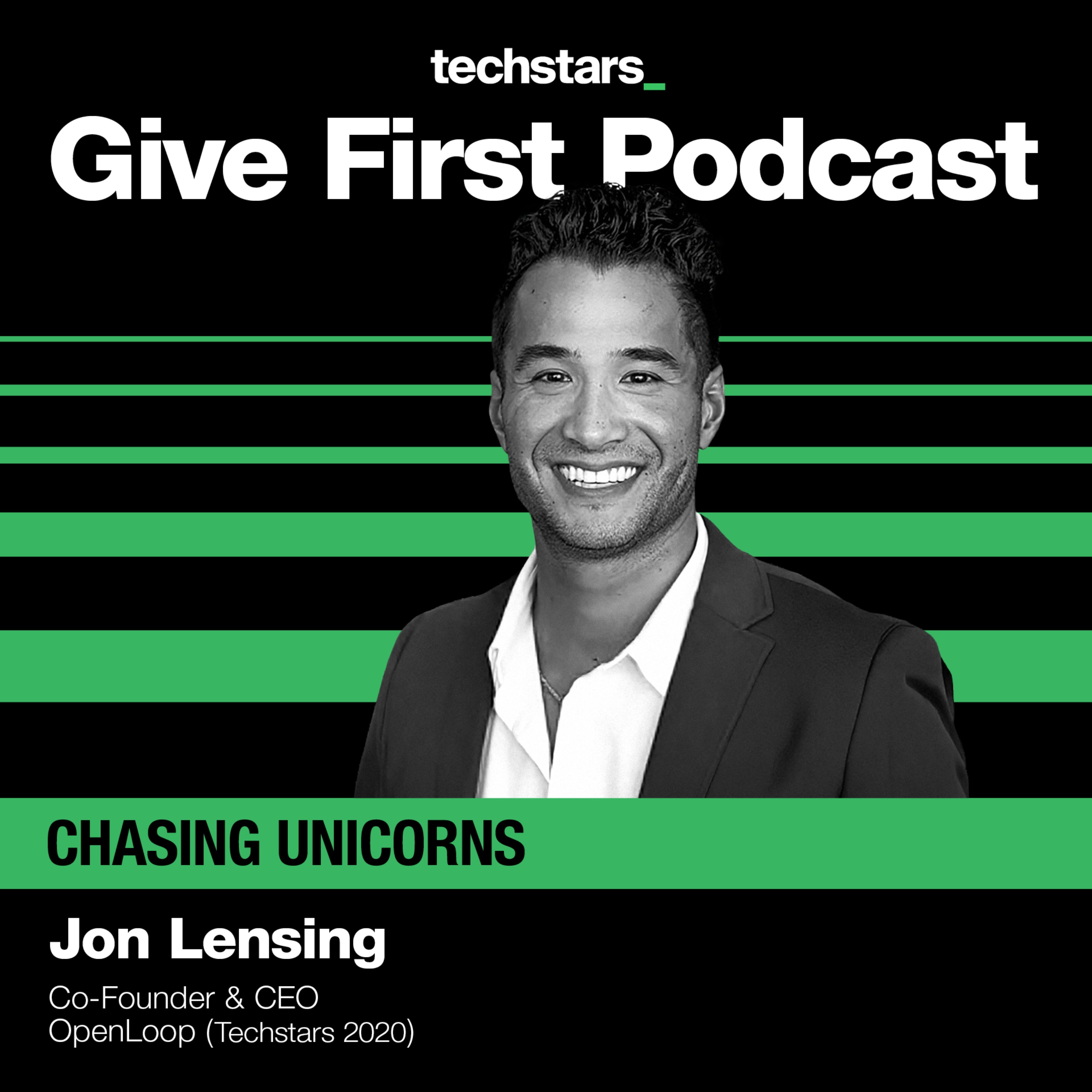
Jon Lensing explains how Openloop is building “embedded healthcare,” an out-of-the-box operating infrastructure that lets non-healthcare brands deliver virtual care (e.g., birth control via dating apps, anti-aging/longevity therapies via gyms, mental/behavioral health for employers). He describes COVID forcing a pivot from a hospital staffing marketplace (“Uber for hospitals and doctors”) to a virtual-first healthcare platform, plus lessons on founder decision-making, fundraising near cash-out, and using regulation as a moat.
Jon Lensing, co-founder and CEO of Openloop (Techstars Iowa cohort, late 2020). Background: grew up in a small Iowa town; his father was a local OBGYN; Jon studied medicine at the University of Iowa and saw rural patients delay care due to convenience/logistics.
healthcare access is fundamentally a convenience problem; COVID was a “forcing function” for telehealth; they hit ~20,000 MRR then sunset the legacy staffing business; term-sheet panic nearly caused payroll failure; board chair pre-mailed pro rata check; later Nava Ventures led a better deal. Openloop is headquartered in Des Moines, Iowa; ~800–900 employees; ~$2B+ revenue; serves ~1M patients/month; aims for an IPO in a few years.
Written by AI. May contain mistakes.
Discover the core values of the Give First podcast and its mission.
“This is David Cohen, and I'm here with my amazing co-host, Brad Feld.”
Why legal disclaimers are important in podcast discussions.
“In the startup world, Give First means simply trying to help anyone, especially entrepreneurs, without any expectation of getting anything back.”
Explore how OpenLoop provides healthcare solutions through technology.
“John, thanks so much for joining us on the Give First podcast.”
Learn about OpenLoop's growth since joining Techstars and current status.
“We enable all of those different things to the infrastructure that we've created fully out of the box and can be deployed in a couple of clicks.”
Hear how Jon's background and family inspired the creation of OpenLoop.
“Pretty amazing to watch that type of a sustained growth.”
Jon discusses how OpenLoop adapted its business model during the pandemic.
“And I think about, I don't know, a couple of years in, I guess, COVID comes along and, you know, you had the original concept, which was about convenience.”
Jon shares insights on securing funding during critical times for startups.
“I mean, I think in that moment, it sort of probably would have been easy to just say, well, you know, we had some stuff working and, you know, let's just wait this pandemic out and, you know, the business will come back.”
Learn how founders face funding pressures and make tough decisions under stress.
“And I'm sure there's a bunch, but you were at one point, I think a few days away from cash out.”
Understand the challenges of decision-making with limited information as a founder.
“And so that's when a moment of sheer panic just sets in.”
Explore how regulatory challenges can serve as a competitive advantage in business.
“I mean, one of my favorite books, I actually think it was, it might've been Curdy or PD at the time who recommended it to me.”
Explore the obstacles in healthcare and the significance of physical presence in the age of AI.
“who otherwise stayed away from anything healthcare related because of the complexities that it involved.”
Discover OpenLoop's mission to enhance the healthcare experience through integration and accessibility.
“billion dollars a year and medication costs saved.”
Learn about the surprising headquarters of OpenLoop and the rise of companies outside traditional hubs.
“Well, thanks for sharing your story in the book, Chasing Unicorns.”

Get the gist, explore an idea or ask about something said.
 Claude
On Give First, what are the key points of this episode?
Searching your listeningAutomatic transcript. May contain errors.
0:00David Cohen: Today on the Get First podcast, my guest is Jon Lensing, co-founder and CEO of a unicorn company called Openloop, which went through tech starters in 2020. Jon's got an amazing story of how he basically threw away the roadmap, threw away every plan he had when COVID hit the company about two years in and asked a different question. He wondered, where is healthcare going next and how can we be part of that? Learn how that pandemic changed everything and lots of other great lessons from John in this upcoming episode of the Give First podcast right now.
0:37David Cohen: Hi, everyone. This is David Cohen, and I'm here with my amazing co-host, Brad Feld. Hey, Brad. And this is the Give First podcast. In the startup world, Give First means simply trying to help anyone, especially entrepreneurs, without any expectation of getting anything back. So we'll be talking to mentors and founders about what GiveFirst looks like in action and how it makes great entrepreneurship possible. We polled everyone and they said consistently that their favorite part of the show was the legal mumbo jumbo. So here it is. The following discussion is an expression of personal opinion and does not represent the opinion of Techstars or any company we discuss.
1:11David Cohen: Our conversations for informational purposes only, including any mention of securities or funds. This is not legal business investment or tax advice and is not intended for use by any investor. certain of Techstars' funds own or may own in the future securities and some of the companies discussed in this podcast. Got it?
1:33David Cohen: John, thanks so much for joining us on the Give First podcast. How are you doing? I am doing excellent. I appreciate you having me on. Awesome. Let's give people some quick context here, just at a high level. What is OpenLoop and what does the company do? Yeah, absolutely. Open Loop is, we call it the operating system, but it's really the operating infrastructure necessary for any company, organization, or individual to turn on virtual health and wellness services or virtual healthcare services into the audience that they have. For example, like a dating app that now wants to offer birth control prescriptions to the female population on their dating app or a large national gym chain that may want to offer anti-aging and longevity therapies to their gym goers or employers that want to offer a mental behavioral health solution to their employees.
2:24We enable all of those different things to the infrastructure that we've created fully out of the box and can be deployed in a couple of clicks.
2:31David Cohen: So I'm familiar with lots of financial products that did that embedded finance. And so now there's this new notion of almost embedded healthcare. Is that pretty analogous? Yeah, that's exactly right. Our thought process has always been that healthcare is very fragmented experience. And so a lot of these individuals have built trust and rapport with these different businesses that they spend hours a day interacting with, within their normal daily routines. And so what better and more convenient place than to actually inject healthcare into those specific spots where people live their normal daily lives.
3:06Great.
3:07David Cohen: And you went to Techstars in 2020, I believe. And then a lot of interesting things happen in that intervening five or six years since then. Tell us a little bit about the state of the company today, size, scale, whatever you're willing to share. Yeah. Yeah, so we ended up participating in the Techstars Iowa cohort, inaugural cohort in late 2020.
3:36At that time, it was just my co-founder and I. I think we actually hired our first employee then during that Techstars cohort. And since then, the company has grown nicely. We've added about 400 % year-over-year growth since then. Um, we're now about eight, 900 full-time folks in the business, uh, doing a little over$2 billion a year in revenue profitable, uh, and have raised a touch over a hundred million dollars, a hundred million dollars or so in, in venture financing.
4:12David Cohen: Awesome. So things are going okay. Okay. Pretty, pretty amazing. Pretty amazing to watch that type of a sustained growth. What's the origin story here? I think maybe your dad was somewhat related, OBGYN. How did that sort of inspire you, or how did the company get started originally? Absolutely, yeah. So I grew up in a really small town. My hometown is actually about 400 folks, and the nearest city close to me was about 13 ,000 people. and my dad was one of the only local OBGYNs servicing a pretty wide radius of patients that would drive far and wide just to come see him. So I mean, it'd be Sundays after church, we'd be walking through Walmart or the grocery store chain and random different individuals would come up to him and thank him for delivering their child or saving their grandmother or a variety of other things.
5:11And so I decided pretty early on that I liked medicine. I liked that aspect of, of helping individuals and through the most challenging parts of their life. And so pursued a career in medicine. And it was during my time, actually at the university of Iowa medical school that I witnessed these patients come in really, really sick, right? They'd have really far progressed congestive heart failure or, you know, untreated type two diabetes. And, you know, when I sat down with these patients, I said, you knew about this problem. Like this has been diagnosed for four or five years now. Why are you just now coming in to get treatment?
5:54And oftentimes the responses surprised me, but the foundational one, particularly in rural America was that they just didn't have anybody close to them. They didn't have doctors in their hometowns. It was such a laborious task, logistics nightmare to coordinate coming in to see a doctor at the university, right? They'd have to find childcare, both them and their spouse would take time off from work. They'd have to procure lodging. It was just a entire ordeal. And so, you know, some of these individuals are driving four to five hours one way. And so when I started digging in more and more of this, it really became this notion for us that health care's fundamental problem is a convenience problem.
6:39It's inconvenient to the average person to access the American health care system. And so OpenLoop was founded on this ambition to reimagine health care in the most convenient way possible for the people that actually have to interact and use it.
6:54David Cohen: Amazing. And I think about, I don't know, a couple of years in, I guess, COVID comes along and, you know, you had the original concept, which was about convenience. And, you know, in the new book that you were kind enough to participate in that I wrote with Amir Higazi called Chasing Unicorns, we interviewed you. And you really talked a lot about this kind of moment during COVID where basically the business was kind of stalling overnight because of what was going on there, like many businesses. And rather than just beating your head against the wall, it seems like you really took a step back there.
7:30David Cohen: And we talk a lot about the order of things in the book that these great companies do. And you were very, I think, deliberate about making sure you had it right before you started scaling. But talk about that moment in time. COVID comes along, kind of makes you rethink things and what you went through during that period. Yeah. That was the first sort of like panic, oh shit moment in the business. And since then I've had hundreds of those. But, you know, definitely the first one in getting our feet wet with those. But the initial business idea was far more simplistic than it was now. It was really a tech-enabled staffing platform.
8:11Hospitals could come in, register, say they need XYZ type of clinical providers, and those same providers can also register, and then the system would match them up. Think about Uber for hospitals and doctors, really simplistically put. And these health systems were so used to working with old-style staffing agencies and paying exorbitant fees. And so our model for them resonated really well. Within a short span of about three months post-launch with that product, we had enrolled 40-ish different health systems across like 70 locations. We had gotten our first about 1 ,000 doctors plugged into the system, and we had already covered about 70 or 80 shifts.
8:54I can't remember anymore. But when COVID really hit the U.S., a lot of those conversations stagnated. I couldn't even get in front of a New Deal prospect anymore. even our current clients that used the product already and loved what we had delivered for them, I couldn't even get in touch with them anymore. Their entire world as they knew it had just been turned upside down and they were busy fighting fires on so many other fronts that that business just completely stagnated in what it felt like overnight. And so around that time, I think we were just starting Techstars and I had made the decision to not pursue residency at this point.
9:41We had just taken our first sort of angel capital into the business. And so I was starting to wonder, did I make the biggest mistake of my life by doing this? But we had patience. We gave it some time. We really thought long and hard about the market and what this pandemic meant for healthcare trends. And a lot of these telehealth companies were scaling pretty dramatically at that time. Right. The health care market shifted overnight into a virtual first sort of approach. And so we we played into that, applied the same sort of business logic and model into this new era, except did it within the area of medicine that was actually growing the fastest and started signing some clients slowly but surely.
10:29And then started building up and getting more and more momentum. And then, you know, once we had felt comfortable, I think we had collectively agreed between my co-founder and I that once we had about 20 ,000 in MRR, we'd turn the switch off on the legacy business. So we wanted some of that balance there just to ensure that we were positioning ourselves in the correct area. And I think within the first 30 to 45 days, we actually ended up hitting that goal and sunset the legacy business. and really haven't turned back since then.
11:04David Cohen: Clearly. Yeah. I mean, I think in that moment, it sort of probably would have been easy to just say, well, you know, we had some stuff working and, you know, let's just wait this pandemic out and, you know, the business will come back. It sounds like you went further than that in your thought process, like, hey, you know, should I go back and, you know, pursue a different career and just call this a day? But you sort of in that moment asked a really different question, right? Basically, like, where is healthcare going and how can we, you know, be a huge part of that? And I think that's a huge lesson for people because everybody, you know, like you said, you've hit a hundred more walls since then.
11:45David Cohen: It's not going to be easy. Things aren't going to go to plan exactly. It's very rare that that happens. And I think when diversity, sorry, not diversity, when big challenges hit, difficulties hit, you know, in that moment, I think you sometimes have to just ask a different question. And it seems like you did that. Yeah, absolutely. I think, you know, we were very fortunate to have some great advisors and mentors around the board. Our program director, Kirti with Techstars really helped us think through these different things. A lot of the advisory panel that she had procured for us also helped us think through these different components.
12:27And, you know, it's really easy to want to stick with an original idea that you built and founded and have raised money on. At the same time, I think in those sort of, you know, once in a generation or once in a century type events, you know, you have to, you have to consider the possibility that things may not ever go back to normal. And I think we have seen the trends, the digital conversion in the consumeristic movement towards digitally native solutions become far and widely adopted across a variety of other industries. So, you know, think about online banking. I don't step foot in a bank any longer.
13:15I do most of my grocery shopping or other retail stuff online. I can have DoorDash delivered groceries in minutes rather than myself have to go do it. So the convenience aspect had really permeated throughout everywhere else. Healthcare as just, you know, the behemoth that it is always lies behind in those things. And so I think we saw the writing on the wall that COVID is going to be a massive forcing function for healthcare to adopt a lot of these more novel technologies. And frankly, we had no idea how long the pandemic would go on. Like that may have been the new world normal. And so, you know, when we made that decision, we moved on it quickly.
13:53swiftly and Alvon Titan kept doubling down on that assumption.
13:59David Cohen: I want to touch on another moment that I think was big in the history of the company. And I'm sure there's a bunch, but you were at one point, I think a few days away from cash out. I think a lot of founders will identify with this. You had investors that were interested, but not over the line yet. Maybe you're close to a term sheet. I feel like a lot of founders are in that position, especially early on in the life of their company, where there's interest from investors. Man, the end looks close and they somehow have to get it over the line and convince that investor. Can you recall that period of the company and maybe any advice for those founders that just have to get it done?
14:45Yeah, I still remember that day so vividly. It must have been, I can't remember the year anymore. 2021, perhaps, we had a VC group that had participated in our prior round. They didn't lead that round, but they participated with a pretty sizable check at the time. They had been keeping in touch with us, getting frequent updates on the business. And when it came time to raise another round, they decided they wanted to lead that round because they had enjoyed the trajectory that we were on and watching the company grow. And so the term sheet at the time, you know, the company was in need of the capital.
15:29And so I think they understood that and they took a few liberties with the term sheet that were probably a little less founder friendly than a standard term sheet would be. And so we weren't set on signing that. We were hoping for a few other sheets prior to that one, but they had time constrained the sheet and was the first one that hit us. And so we knew that I think this is probably a Wednesday, Wednesday when we got it, it expired Thursday night at midnight and we had payroll Friday morning coming out of the bank. And we knew that we were going to make payroll on Friday morning.
16:01David Cohen: Yeah. They knew where you were. They knew where we were. Yeah. Yeah. And so, you know, my co-founder and I stayed at the office late that night. I think he ended up going home about 11 PM or something. And I ended up staying till about 1230, but I ended up signing that sheet out of desperation at 1159, sent it back over to them. The next morning when we had to do payroll, we get an email from this lead saying, Hey, we've actually decided that we're backing out of this deal. We're not countersigning the term sheet, you know, good luck. And so that's when a moment of sheer panic just sets in. I think we had probably 30 or 40 employees at the time.
16:46And, you know, I think the part that nobody ever talks about in a lot of these founder podcasts is just the sheer weight of responsibility that you feel for all these team members in the business. At that size, you have a very strong relationship with every individual in your company. You know their kids' birthdays, you know what they're doing that weekend, you know what their extracurriculars are, and the thought of like, hey, they're not going to be able to afford that vacation that they had planned or afford to be able to put gifts underneath the Christmas tree. Like all of those different horrific scenarios start running through your head.
17:25And so like any good founding story, I think we got a little creative and probably took a few liberties that would be frowned upon. But one of our earliest investors, the very first check into the business was our board chair. And he had invested time and time and time again over into the business to continually support it. He had seen the term sheet already. He had already pre-written his pro rata check and mailed it to us. and so without even asking I went and cashed that check the next morning into the bank to float and fund that payroll I called him directly after doing it and asked for forgiveness and he said I would have done the same thing like you know we'll figure this out the business is going well like we'll get another lead here shortly and then you know whatever fate pure serendipity the next week I get a random LinkedIn message from a founding partner of a group called Nava Ventures out of the Bay Area.
18:28And within 24 hours, he was on a flight out to see us. And then 48 hours that we had a term sheet at our inbox at a higher valuation with a lot more founder-friendly terms in that one that we accepted and closed on within a week and a half after.
18:44David Cohen: Amazing. Yeah, I mean, the ups and downs of that. A couple of things pop out to me. First of all, I noticed you're not naming the original VC, which is fine. I would do the same thing. But I'm sure I'm betting they wish they had jumped on that plane with the other guy. Yeah. You also mentioned, you know, the sheer weight of the responsibility. That's something I've talked a lot about as a founder. It's actually the reason I sold my first company. We didn't need to, but I just felt like, you know, gosh, there's so much responsibility. And, you know, one month of payroll is so much money. And I just felt, you know, early on in my career a lot of responsibility around that and the stability of you know selling the company was was something that we look for so i i identify with that and i think most founders who have grown things you know they feel responsible for so many people that they hire that as you say early on they're your friends but over time they just become you know a larger group that you care about and absolutely there's a lot of weight um so i really identify with that another thing that that I've heard from you that I think is really interesting is you've said the founder only ever has about half the information, maybe 51 % of the information that they want to make a decision.
19:57David Cohen: I've all the time said, well, you know, 80 % is a lot of information. If you're waiting for 100%, you'll never decide anything. But talk about that philosophy. How do you tell the difference between, you know, being early and being wrong when you don't have all the information and And how do you make decisions and not feel like you're locked in place? Yeah. I think being early and being wrong are absolutely fine. I mean, we're early and wrong on a number of different things on a daily basis. It's having the, dare I say, courage to know when you are wrong and cut it off before you suffer any additional losses on that thing.
20:39And I tell our team all the time, if we're not running 30 plus new and different initiatives that we're in early stage testing on, like early stage bets, then we're not doing the business justice. And oftentimes, for our people in the business, that can feel like a lot of external stressors because they're trying to operate the core business while also running and managing these different tests for the business. But the analogy that I always use with everybody is, you know, if you do any sort of cooking, you'll appreciate that the most useful tool in your kitchen arsenal is a sharp kitchen knife.
21:17And the only way that you keep a knife sharp is you put it to friction. You know, an abrasive stone sharpens a knife in a much the same way of our business. like if we don't have this constant healthy pressure on it, thinking through new different ideas, taking small M &A bets, try and move that needle, then you lose that innovative edge. And, you know, for us, a lot of those bets are, you know, you have a gut instinct. You have some maybe early stage data to suggest that there could be a there there. So you probably only have about 51 % of the available information that you would like, particularly somebody like me who comes from a math and science background where I want definitive proof.
22:01And then the rest is just, you know, just, just stall. You just, you just operate with that feeling. But then you have to have the mindset that, you know, 60 % of these things will not work out. 20 % of them will probably return your capital and 20 % of them are probably going to deliver outsized returns for the business. And you need to be opportunistic and agile when incorporating those different things into your core business. And I think you have the ability as a founder to increase the likelihood of success on those things by not being too divergent with your bets. Like if your core business is here, look at the next tier or even the second tier down of what relates to your core business when you're thinking about those different components.
22:48But if you're just going to throw a bunch of stuff at the wall and see what sticks, then your likelihood of success is significantly diminished. So I think we're calculated, how we take those things. But we always like to keep a very healthy amount of, you know, good stress on the business.
23:06David Cohen: Yeah, it's always, I think micro failures are expected. You're trying to avoid macro failure, obviously, but always be experimenting, always be trying things because most of them might not work. The ones that do really, you know, get you to another level. So awesome advice um one more thing i think will help founders listening as around the the you know regulatory hurdles you've faced um you know sort of state by state compliance right and and you know every founder today when they're talking to investors are being asked about their moat you know it's it's not your software right it's not your system it's something else is that sort of state by state compliance really you know part of your long-term defensible position and what do you say to founders that maybe are facing large regulatory hurdles like that?
23:56Yeah. I mean, one of my favorite books, I actually think it was, it might've been Curdy or PD at the time who recommended it to me. The Obstacle is the Way by Ryan Holiday. I read it very early on to the start of Open Loop and it, you know, changed my overall like philosophical view on how we address problems in the business that, you know, if you can actually use that as a moat builder, they become a lot more powerful. And it's just been interesting to see, you know, having been in this business now for six years, the what institutional investors consider to be the ideal moats have changed pretty drastically, right?
24:38Like perfect software used to be considered the gold standard for moat, the replicability of that. But now with AI here, that argument has largely vanished over the past 12 months. Now there's other components, right? I think tech-enabled services had always been frowned upon, but now people understand that the services component of a tech-enabled services, AI can't do much to touch that right now. So it's starting to look at more favorably. So it's just interesting, you know, different dynamics. And so, you know, one piece of advice in all of that is I don't think that founders should get too consumed with trying to build the moats that they hear from VCs and other folks.
25:23Like, at the end of the day, your job as a founder is to build a hell of a business that impacts as many people as possible. And if you do that successfully, you're going to have the outcomes and desires that you set out to achieve. As far as our regulatory components, yes. I mean, it is obstacle after obstacle after obstacle. The different layers of compliance, like for a team of 800, 900 full-time employees now, there's probably 30 to 45 that are in legal and compliance areas of our business. I think there's probably 15 to 20 full-time attorneys in our business now. And that's just in-house legal.
26:04So that's not even what we spend on external legal spend. But clinicians have their own state-by-state regulations. They have their own federal regulations. So you got two layers there. The pharmacies that we run and operate, they have their own state-by-state regulations. They have their own federal regulations. So you got another two layers of compliance there. The legal structure to set up and see patients is its own hassle. The way that you interact with insurance and bill insurance and get reimbursed by insurance has its own hassles. It is exorbitantly complex, the work that we do, probably to the detriment of the American patient, in all honesty.
26:51but by doing that it has one precluded a lot of people from wanting to build in space which which you know minimizes competition and two it speaks to the value proposition that we actually deliver to our customers when we were a very small part of the infrastructure not the entire full stack for them our we required our clients to still compile some of these different pieces of infrastructure. They may have to go find an electronic health record. They may have to go procure their own pair of contracts. They may have to set up some different statewide legal entities. And even that minimal amount of stuff compared to what we were delivering for them prohibited us from getting contracts done.
27:36So we brought everything in house to the point where our clients just have to plug it in. They have to turn it on. It is so simple. They can spend something up in 24 hours and they don't have to lift a finger. They slap their logo and they slap their brand on it and they bring the patients to the table that they want us to service. Everything else is handled by opening up top to bottom. That vertical integration, that out of the box strategy, that is the big mode because it allows us to unlock this entirely new demographic of clients who otherwise stayed away from anything healthcare related because of the complexities that it involved.
28:11David Cohen: A couple of great comments. I think the obstacle is the way that was the name of the book you mentioned. Yeah. Ryan Holiday. Love it. I used to say, you know, another thing that's back in vogue is hardware, right? And in the age of AI, like you have a physical connection to the world, that's suddenly cool again with VCs, right? Because it's something that AI can't copy. And I used to say, you know, I like hardware because it's hard. I like regulation. I remember We're going through that with Uber and it's hard and not anyone can copy, not just anyone can copy it. Right. And so I love the book title, the obstacles, the way I'll link it in the show notes to the, to the wrap up.
28:48David Cohen: I think you're last I heard about half a million patients a month that you're serving. It's about double that now, about a million, you know, billion dollars a year and medication costs saved. Maybe it's called billion now. Where, where does open loop go from here? anything you can share with us about the future of the company? Absolutely. I think, you know, with that vertical integration becoming that one-stop shop, we have opened the aperture, as I was mentioning, to the amount of people that we can service, which is all about providing the most convenient level of access. And I think in doing so, we've stripped healthcare back to the basics, which is a doctor-patient relationship.
29:31and in thinking about how do you enable that in the most convenient way possible to ultimately deliver a delightful healthcare experience. And I truly think that if you survey the majority of people in the U.S., none of them have ever had a delightful healthcare experience. And so that is what we are helping on creating for these individuals. And we think that we do that through these brands, these customers, these partners of ours that have already built that legacy, trust and rapport with these individuals for, you know, be it as their gym provider, be it as their employer, be it as their favorite grocer that they go get their groceries from.
30:08And in doing so, we become this new operating system for how healthcare is delivered. Now, there's a lot of things, pieces of infrastructure that are necessary to accomplish that overarching mission. There's different financial components that we need to be able to rope in. There's different ways that we want to interact with insurance. There's different pieces of vertical integration that allows us to become more robust and deliver more and more of a patient's overall healthcare journey in the virtual sense. And so, you know, there's a lot of big plans that we have and hopefully in the next couple of years, we anticipate an IPO for the business.
30:48David Cohen: Amazing. Well, thanks for sharing your story in the book, Chasing Unicorns. Thanks for sharing a story here with us on the Get First podcast. One of the things I love, love, love about the story is where you started the company, where you're from, where the company is based today. It's not maybe where people would assume. Tell us where is the company headquartered today? The company is headquartered out of Des Moines, Iowa. And I think if you're not noticing that amazing big companies are being built in more and more places. You're just not paying attention. And OpenLoop is an awesome example of that.
31:27David Cohen: So thanks for hanging out, John. And this was great. Thanks for sharing all the information that you've shared and learned over the years. I'm happy to help anytime. I think the world is a better place when it embraces entrepreneurism. Awesome. Thanks, John. Thanks a lot for listening to the show today. We'd love to hear your feedback, ideas, or who you'd like to hear next on Give First. And please leave a rating and review, ideally a good one. And reach out anytime to podcasts at techstars.com or on Twitter, I'm at David Cohen. See you next time. Don't forget, Give First.
In this episode of the Give First podcast, David Cohen sits down with Jon Lensing, co-founder and CEO of OpenLoop, the unicorn building the infrastructure that lets any company offer virtual healthcare to the people it already serves.
Jon shares why he left medicine to reimagine healthcare around convenience, how the company survived a make-or-break pivot when COVID hit, and the mindset he uses to place bold bets without risking the business.
He is one of 13 unicorn founders featured in David Cohen and Amir Hegazi's new book, "Chasing Unicorns," which lays out the PRIDE framework behind Techstars' billion-dollar companies.
Follow Jon Lensing on LinkedIn - https://www.linkedin.com/in/jon-lensing/
Read Chasing Unicorns here - https://www.amazon.com/Chasing-Unicorns/dp/1068476079
Hosted on Acast. See acast.com/privacy for more information.