 Ask ChatGPT

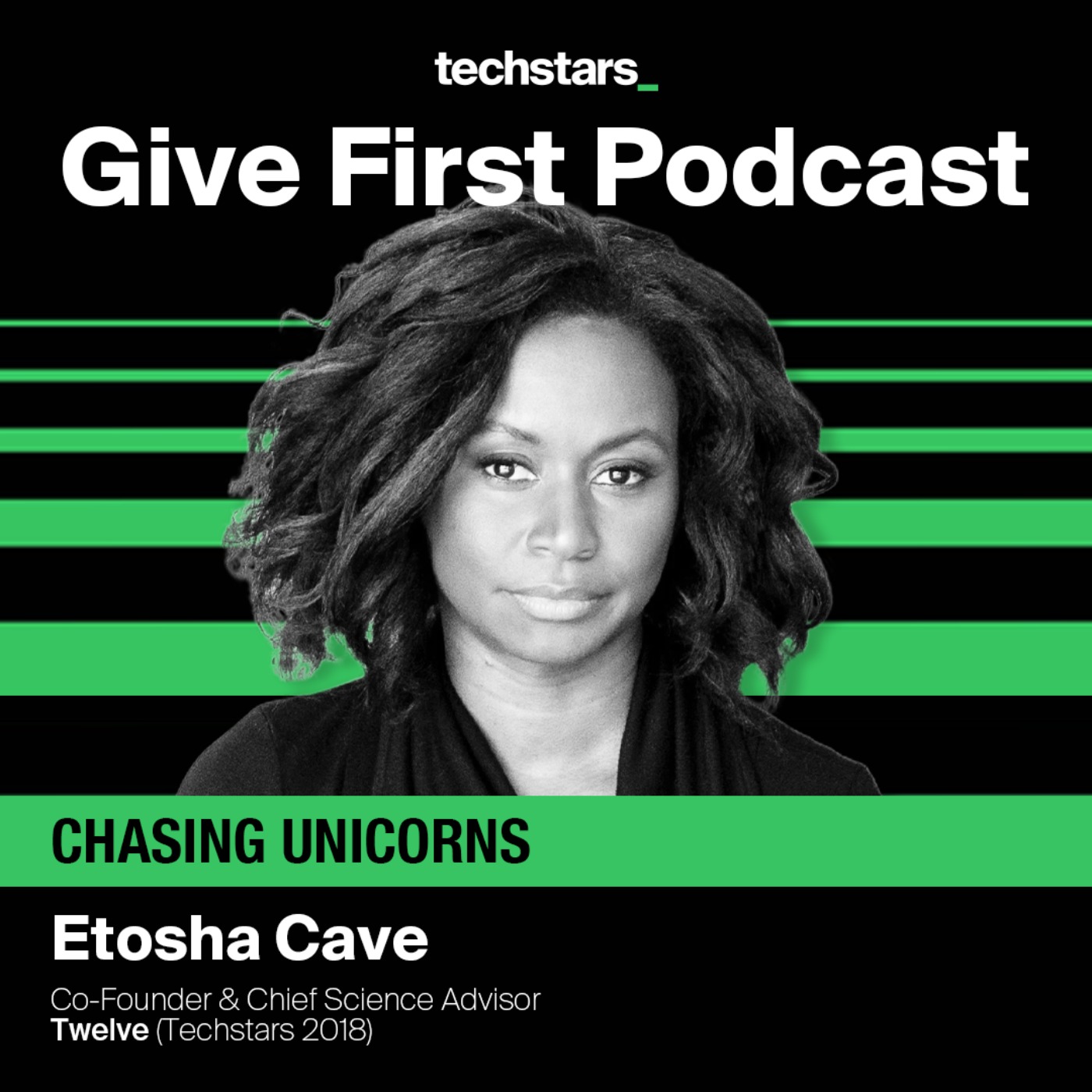
Etosha Cave, chief scientific officer and co-founder of 12, explains how the company (founded from Stanford PhD research) scaled CO2-to-molecule technology into a commercial plant producing jet fuel, and how the story appears in her book Chasing Unicorns. She also covers deep-tech startup lessons: milestones, process discovery for scale, non-dilutive/public funding, and customer discovery via Techstars.
Etosha Cave earned a doctorate at Stanford; her PhD focused on engineering metal catalysts to convert CO2 and water into 16 molecules. She grew up near a toxic oil site in Houston, where water contamination was linked to cancers, shaping her drive to create clean energy without human harm.
For hardware, customer discovery must be paired with process discovery (manufacturing at scale). Use public/philanthropic/patient capital early to reduce dilution. Techstars helped by enabling end-user discovery beyond Fortune 500 executives.
12’s Moses Lake, Washington plant takes CO2 from a local corn ethanol plant and uses water/electricity to make jet fuel. They made CO2-based lenses/sunglasses with Angaya (sold out in 90 minutes) but chose to pivot toward jet fuel due to manufacturing scale inflection points and clearer regulatory pathways. Corporate relationship building included having Microsoft and United Airlines technical teams visit the site.
Written by AI. May contain mistakes.
Etosha discusses his background and the founding of his company, 12.
“We polled everyone and they said consistently that their favorite part of the show was the legal mumbo jumbo.”
Etosha shares how growing up near a toxic site influenced his work and mission.
“Yeah, so 12 came out of graduate research that I did in my time at Stanford, where I got my doctorate degree.”
Discussion on maintaining motivation and funding during R&D phases in deep tech.
“As a teenager, there was a lot of national attention placed on the neighborhood that was adjacent to where my parents live and still live.”
Etosha highlights lessons learned transitioning from academic research to a startup.
“Like how do you get through that kind of R and D phase of a real, you know, deep tech problem like this?”
Strategies for securing funding without significant dilution in early stages.
“Always a big advocate of getting mentors and people who've done it before around you and learning from them.”
Discussion on how Techstars provided support in the startup's customer discovery process.
“You all went through Techstars a while back.”
Etosha explains how to build relationships with large corporate partners.
“In fact, we were housed in one specific company.”
The critical decision-making process regarding a potential sunglass product.
“Was there one that you remember, like relationship building exercise?”
Learn about the challenges of scaling up manufacturing for a new product.
“And so we made a batch, like a kind of intro batch of these lenses.”
Discover the shift from sunglasses to producing sustainable jet fuel.
“And it was already regulatory pathways that were cleared for that.”
Hear valuable tips for deep tech founders considering launching a startup.
“a drop-in component to what you're already using.”
Listen to impactful mentorship moments that shaped the guest's journey.
“I always like those stories to get into the show if you have any that jumped to mind.”
Understand the plans for expanding operations with a second plant.
“Talk a little about that first plant that you built, so people have an idea of what that is.”
Reflect on the importance of creating meaningful change through entrepreneurship.
“So if you're listening, you can help reach out to me or reach out directly.”

Get the gist, explore an idea or ask about something said.
 Claude
On Give First, what are the key points of this episode?
Searching your listeningAutomatic transcript. May contain errors.
0:00David Cohen: Today on the Give First podcast, I'm going to talk with Etosha Cave, who is the chief scientific officer and co-founder at 12, a billion-dollar unicorn. We're going to learn how that company was created and what it's working on, and we're going to talk about how it ties in and is featured in the new book, Chasing Unicorns. That's coming up next on the Give First podcast.
0:26David Cohen: Hi, everyone. This is David Cohen, and I'm here with my amazing co-host. Brad Feld. Hey, Brad. And this is the Give First podcast. In the startup world, Give First means simply trying to help anyone, especially entrepreneurs, without any expectation of getting anything back. So we'll be talking to mentors and founders about what Give First looks like in action and how it makes great entrepreneurship possible. We polled everyone and they said consistently that their favorite part of the show was the legal mumbo jumbo. So here it is. The following discussion is an expression of personal opinion and does not represent the opinion of Techstars or any company we discuss.
0:59David Cohen: Our conversations for informational purposes only, including any mention of securities or funds. This is not legal business investment or tax advice, and it's not intended for use by any investor. Certain of Techstars funds own or may own in the future securities and some of the companies discussed in this podcast. Got it?
1:21David Cohen: oh hey itasha how are you i was just actually reading about you and a new book chasing unicorns what a coincidence thanks for joining me on give first yeah absolutely my pleasure thanks for having me um you co-founded 12 and i think 2015 uh and uh we want to learn about 12 uh the new book chasing unicorns i just wrote we featured you guys you went through tech stars um why don't you start by just telling us a bit about yourself and about 12.
1:50Etosha Cave: Yeah, so 12 came out of graduate research that I did in my time at Stanford, where I got my doctorate degree. And we basically were looking at ways to engineer metal catalysts to convert them into catalysts that convert carbon dioxide and water into one of 16 new molecules. And toward the end of my PhD, when my advisor made it clear that you need to graduate, can't stay here, even though I really loved being a grad student. We decided to, you know, me and two other grad students, we decided to join forces and created a company called 12. And 12 scaled up CO2 transformation to now we've opened our first commercial plant where we're making jet fuel out of CO2 and water.
2:39Etosha Cave: And really excited about that development and looking to create more plants as we move along.
2:46David Cohen: So just another PhD creating a billion dollar company, turning, you know, stuff into jet fuel sounds easy. You know, 10 years to become a unicorn, you know, a pretty amazing story, actually. You grew up near a toxic oil site. We talked about in the book, I believe in Houston or near something like that. How did that impact your worldview and did it influence your desire to start something like 12?
3:11Etosha Cave: Yeah, absolutely. As a teenager, there was a lot of national attention placed on the neighborhood that was adjacent to where my parents live and still live. And it was because this wayside had leached into the water supply and was linked to a higher rate of rare forms of cancers and diseases. And luckily my family was upstream of that. So we weren't directly impacted, but I had a lot of friends and neighbors who were involved in this class action lawsuit. And so it really like, you know, created a huge impact on me of, you know, can we create a world in which we have energy and, but there's not, the waste of that energy is not impacting humans in a direct way.
3:55Etosha Cave: And so I really love math and science. And so I focused my first high school and then university and then graduate work on finding ways to deal with waste streams and produce clean energy.
4:11David Cohen: Awesome. I always say that entrepreneurs just find a thing that sucks and they unsuck it. People have experiences in their life that they care about and attach to, and they want to go and change the world in some way. Great story for motivating you towards doing this. Now, you guys spent a bunch of time with a product that you really couldn't sell. You spent years with something that was like a lab experiment, right? And you keep a team motivated and like, you know, there's no, there's not that much funding early on, or it's a long stretch with no revenue and no guarantee it's going to work. Like how do you get through that kind of R and D phase of a real, you know, deep tech problem like this?
4:51Yeah.
4:51Etosha Cave: A lot of it's setting milestones that can be achieved to get either to the next fundraising event or to, you know, meet a customer spec, and really communicating that to the team in a way that is digestible for them. So if you're working on the membrane that's for electrolyzer, you know, how does longevity of the membrane or the cost of the membrane impact the overall system and the final product and what milestones matter for you in developing that? So we would break down these technical milestones as we moved along. And also too, we were housed at Lawrence Berkeley National Lab for our first few years.
5:34Etosha Cave: And that was a huge way to attract talent because scientists want to be around other scientists and work in labs and have that. There's so much historical cache that comes with the national labs. And so it was really wonderful and a great experience for us to be housed there. And then when we moved into our own space, we had a team of probably about 20 at that point. And so then we had enough folks there to create kind of that ecosystem at aura of working together. But certainly in the early days, having the national lab there was huge benefit. Yeah.
6:10David Cohen: People like to hang out with other people that they respect and can learn from. And, you know, I personally have done tons of membrane analysis, so I know exactly what you're talking about, Tasha. Now, look, you came up through like NSF and NASA and you did a PhD, maybe it's not a typical, you know, founder path. You turn like this lab research into this amazing big company that's changing the world. What do you think that founders, you know, that maybe are coming through a path like that consistently underestimate about making that transition to the startup world?
6:42Etosha Cave: Yeah. Well, one thing I've been talking about lately is, And due to the I-Corps program and Steve Blank, there's a lot of emphasis on customer discovery and understanding what problem are you looking to solve, who wants it, who's going to buy it. But I think for also hardware, you also need to do process discovery. So how are you going to make it at scale? How are you going to make hundreds, thousands, millions of this product? and really talking to the people who make something similar to what you're trying to create and understand where the challenges are, what are the pain points and how do you risk them early.
7:28And so I would say that was like the biggest lesson learned from us of, you know, learning about how to scale up and process, do the manufacturing process for our electrodes
7:44Etosha Cave: and eventually for our chemical plant. And so having people who are knowledgeable who can act as a Sherpa along the way, I also think is hugely valuable.
7:53David Cohen: I hear you on that. Always a big advocate of getting mentors and people who've done it before around you and learning from them. You had DC's past early on. Maybe they were chasing typical apps and not something that was going to be much more complex and difficult. I think you all turned to grants instead. So for founders being told their thing isn't fundable right now, any advice for them if they're listening in?
8:21Etosha Cave: Yeah, definitely look at public funds, philanthropic funds, patient capital, even more nonprofit and topical orientated acceleration incubators that can sometimes give non-dilutive or low dilutive funding early on. and really think strategic about that funding pathway to decrease the dilution. Because it will take a lot of capital to bring these deep tech technologies to market. And so in later stages, to get large chunks of funding, you still oftentimes have to dilute your cap table. And so you want to go with non-dilutive funding in the early days as much as possible. And I also say with grant funding, you know, there's, you know, the National Science Foundation and other kind of agencies are really there to, you know, create innovation in the country and create jobs and create new companies.
9:26So, you know,
9:29Etosha Cave: taking the time of like really telling your story in that context and making it appetizing for an agency before you're ready for venture capital funding or some other type of private funding can just be hugely valuable.
9:45David Cohen: For sure. For sure. And you mentioned Techstars. You all went through Techstars a while back. when you think about that stage of your development? How did a program like that sort of help you?
9:59Etosha Cave: Yeah, with Techstars, there was very topical specific. In fact, we were housed in one specific company. And the thing with big companies is that they can be wonderful partners once you are in partnership with them. But to get into partnership with a big company can take some time. And so what Techstars really did was really pave the way for us to do a customer discovery and not just talk with the CEO of a big Fortune 500 company who might make the ultimate decision, but also talk with the end users, the folks on the ground who actually use our product, talk with the operators, talk with the procurement folks, talk with other people who might have some input or sway in the decision to take on a new technology.
10:44Etosha Cave: We were able to understand their pain points, understand their challenges so that we can present to them a solution that would work and getting access to the, that, you know, different types of people within one company is extremely difficult if you're doing it by yourself. You need a partner, like a third party partner, such as Techstars to really help you get there again, like a Sherpa to help you navigate these.
11:08David Cohen: And you have some really, you know, customers, people haven't heard of, you know, like, you know, Microsoft and United Airlines and people like that. How did you get those early? I mean, those are big names. How do you convince a big name like that to take a chance on something that's newer?
11:23Etosha Cave: Yeah, it takes a lot of relationship building. So having the first meeting, getting the buy-in, getting them excited, getting them excited about the vision and having them come visit our site to see what progress we've made, seeing data, getting... You know, they would have third party technical folks come out and visit our site. So it really took several years of building that relationship. So I would say, you know, especially with a corporate partner, you know, if they're engaged and aligned with a vision, it can be great to start to do little relationship building exercises with them sooner than you might think.
12:06Etosha Cave: so they can see your progress, see how you hit milestones and scale up your technology and know that it can take a couple of years.
12:15David Cohen: Yeah. Was there one that you remember, like relationship building exercise? Like were there any that, you know, tactically maybe somebody could think about using similar to what you did?
12:25Etosha Cave: Well, a lot of it was like seeing people running into people at conferences. So, you know, we had a point of contact in Microsoft and they would be speaking on a panel about a conference. And so, you know, I just say hi to them after the panel.
12:39David Cohen: Womp into them by accident.
12:40Etosha Cave: Yeah, yeah, exactly. It's just me in the area.
12:44David Cohen: Yeah, it's true up there. Totally, totally. In the book, we tell one of the stories, because, you know, the book outlines this framework we call Pride, which is really, we've discovered that what great companies like yours do is they don't just do the right things, they do them in the right order. And that turns out to be as important as anything else. And focus is a big part of that. There was a moment when you guys had to say no to something. I think it's pronounced pangia, sunglasses, or pangaya, sunglasses, probably right? Yeah. And I think, you know, I'd love for people to maybe hear that story.
13:15David Cohen: Was that the right call in the room? Not just in hindsight, you know, how did you make that decision? And why was it important at that moment?
13:23Etosha Cave: We do carbon transformation. So we took CO2 and water and we could make one of 16 new molecules. and from those 16 new molecules, we could, you know, make it a wider array of end products. And so one of the products that we could make was lenses and sunglasses. So, you know, to make a kind of lower carbon sunglass is really challenging to do with recycled plastic because you need clear, transparent material. You need pretty much virgin materials. And so we were providing a way to recycle plastics essentially on the molecular level and creating a clear plastic lens. And so we made a batch, like a kind of intro batch of these lenses.
14:08Etosha Cave: We worked with Angaya to make sunglasses. They sold out in 90 minutes. So it was really popular. There's definitely demand and drive and interest in these sunglasses. And we came to this crossroads where we wanted to do more of that, but we'd have to scale up our manufacturing. You know, as we looked at kind of the manufacturing process, like there's there's just like these inflection points as you make more and more of something where you have to redo the process, get new partners, figure out all the kinks, increase the yield to really make it economical. And as we just saw, you know, that pathway ahead and we're thinking about what that would look like, it became challenging to see how we would, you know, be able to do that in a timescale that would kind of make sense for kind of the volume that we wanted to get to.
15:03Etosha Cave: And especially since there was policy shifts that made it more attractive to scale up the jet fuel. And it was already regulatory pathways that were cleared for that. And there was already other startups that had paved the way in some ways to make jet fuel. We just saw there to be a kind of cleaner, I hate to use the word easier, but a more strategic path.
15:33David Cohen: yeah it it uh i guess ironically the sunglass thing turned out to be like a bright shiny object and you might need sunglasses to protect yourself from that's my dad joke of the day i always get a toss in a dad joke yeah so you're you know you've been pitching something you know that that is pretty different right it's it's this decade-long fuel contracts right it's power agreements instead of like, you know, the typical crude markets, like, why is that something that investors should be paying attention to more, not just like, say, you know, it's a carbon story? What is it about what you're doing that you really got investors to be able to lean in and pay attention to over time?
16:20Etosha Cave: Yeah, I mean, initially, it was a carbon story around, for end users who want to reduce their carbon footprint, but still have the products and materials that they use and love. We can make the same product that you can make using petroleum. We can make it from CO2. As macro environments change, we now can talk about our jet fuel as a way to make local, like domestic supply of jet fuel from local CO2 and local water. And so, you know, it's the same molecules and same purpose of embedding in supply chains without having to change them too radically where you have the same material that's like a drop-in component to what you're already using.
17:17Etosha Cave: That's been a very attractive story. And so, you know, we've, you know, even as the macro environments have shifted and changed, we're able to highlight different aspects of our value proposition to customers to kind of meet what they're demanding or desiring of our product.
17:40David Cohen: Awesome. So I think I probably know the answer to this one, but just to check, if there's a founder out there and maybe, you know, they're sitting on some deep science right now and hanging out in the lab and wondering, you know, should I start this company? What would you tell them?
17:57Etosha Cave: Yeah, I would say, well, yeah, let's talk through the strategy of like, how are you going to do fundraising? I would suggest applying for a National Science Foundation grant. The NSF has really streamlined their grant process to where you do a bit of a pitch and then you do the full proposal. I then, you know, look for other maybe public or government funding sources that could be available. I would have them sit down and talk about customer discovery and, like, how are they going to know their end users want this and what problem and solution that they could. um like yeah the problem solution match or product market fit that they can find then i would talk with them about the process like how are you going to scale this up and what's your process uh product fit that you'd have so you know um are there any major challenges or you're going to have in the future and then and kind of um yeah just kind of be very strategic in those early days of like how to navigate a deep tech um deep tech product
19:06David Cohen: kind of summarizing just do it and pay attention to all these things that matter yeah um maybe rapid fire i got i got two questions that i want to end on here and then uh let you roll because i know you got super important things to do um give first that's the name of the podcast anything in your life or in the 12 story that kind of jumps to mind where somebody you know maybe helped you out or helped the company out in a way that it was really powerful i didn't really expect anything back or maybe sometime you've done that for someone. I always like those stories to get into the show if you have any that jumped to mind.
19:40Etosha Cave: Yeah I spoke with a woman who I might have gotten a warm intro or maybe it was just a cold intro on LinkedIn but she worked at a deep tech company that had essentially folded and she was an executive there and she basically sat down with me and she did this whole strategic thing on the finance part at least because she was a finance person. And she was like, look, you can probably raise a couple of million as like smart Sanford students, but you really need to think about like what your trajectory will look like. And she went to some details and that was like super helpful in the early days. And I've not seen or spoken to her since.
20:21Etosha Cave: So she's out there listening. Thank you so much for your early wisdom. And second, I would say just activate as a nonprofit. So they, you know, it's a fellowship program, but we basically, they gave us access to the Lawrence Brooker National Lab in our early days. We got non-double-less funding from them, and that was really helpful as well.
20:40David Cohen: Well, and there you go, randomly getting a little love back and mention on a podcast in the universe somewhere. That's how it works. You never know how somebody hears about a thing or gets involved with a thing. um you know the the listeners are largely um other tech stars founders you know like yourself mentors investors around our system and then just people are just generally into startups i think they have one thing in common they all want to get first they all want to help each other is there anything that somebody out there listening uh could do to help 12 and what would that be if
21:12Etosha Cave: So, yeah, I mean, we're looking to build our second major plant. And I would say if anyone has any kind of like deep strategic thoughts around that, we'd love to hear if there's any resources that would be useful or helpful on the financing side, site selection side, design, build side. We'd love to hear it.
21:42David Cohen: Talk a little about that first plant that you built, so people have an idea of what that is.
21:47Etosha Cave: Yeah, so it takes in CO2 from a local corn ethanol plant, and it has water as the other input and electricity. It's up in Washington State in Moses Lake, Washington. and um yeah we've built and operating that um that plant and um and yeah that that plant allows us to send fuels to our our initial customers um we're also you know talking with different folks in the there's a couple air force bases nearby and also in that upper northwest that would be of interest to us to talk with. So that actually might be a really good asset. There's folks who are in the Air Force or military broadly who knows of a base that would want to have a domestic supply of fuel.
22:44Etosha Cave: We would love to talk to them. Awesome.
22:46David Cohen: Great. So if you're listening, you can help reach out to me or reach out directly. I'm sure you could find the company online. And I just want to say thanks for taking all the time to hang out with me on the show. And more importantly, thanks for working on something that actually makes the world a better place and changes things for lots of people because I love it when founders go and create things that really make a difference in the world. So thanks for hanging out with us today.
23:09Etosha Cave: Yeah, absolutely. Thanks, David.
23:11David Cohen: Thanks a lot for listening to the show today. We'd love to hear your feedback, ideas, or who you'd like to hear next on Give First. And please leave a rating and review, ideally a good one. and reach out anytime to podcasts at techstars.com or on Twitter, I'm at David Cohen. See you next time. Don't forget, give first.
In this episode of the Give First podcast, David Cohen sits down with Etosha Cave, co-founder and Chief Scientific Officer of Twelve, the billion-dollar company turning carbon dioxide and water into jet fuel.
Etosha shares what it really takes to build a deep tech unicorn, from the funding playbook for hard science to the hard calls about focus that shaped the company.
She is one of 13 unicorn founders featured in David Cohen and Amir Hegazi's new book, “Chasing Unicorns,” which lays out the PRIDE framework behind Techstars' billion-dollar companies.
Follow Etosha Cave on LinkedIn - https://www.linkedin.com/in/etoshac/
Read Chasing Unicorns here - https://www.amazon.com/Chasing-Unicorns/dp/1068476079
Hosted on Acast. See acast.com/privacy for more information.