Ask ChatGPT
 Give First
20 Oct 2026 · 25m · 13 chapters
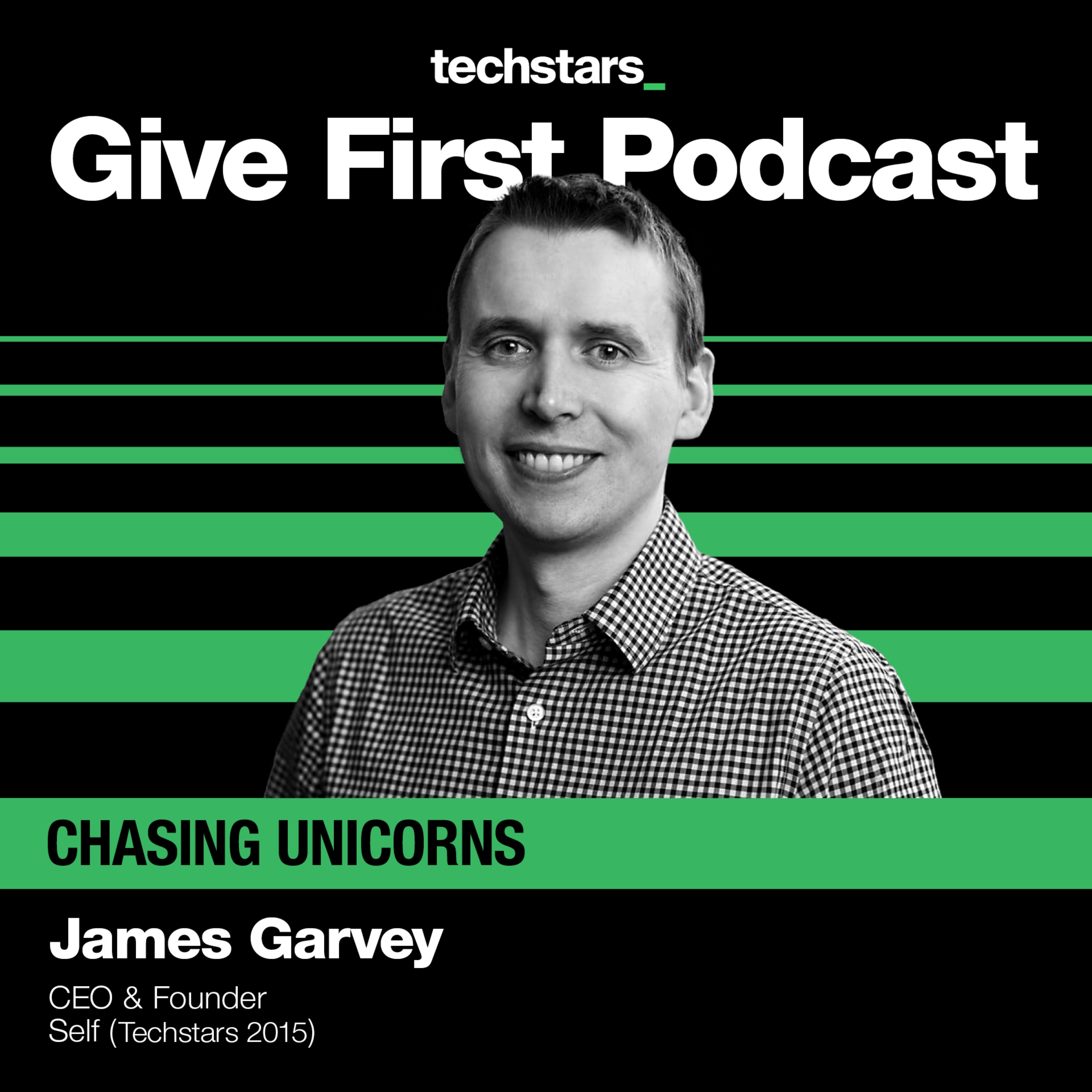
James Garvey, co-founder and CEO of Self (Austin-based credit access platform), explains how Self helps people build or repair credit, his return to the CEO role, and the company’s values-driven approach. Self launched via Techstars Austin in 2015 with $0 raised and left three months later with $2M venture plus a bank partner.
credit building can be made cheaper and clearer than traditional secured cards; Self’s “Credit Builder Account” uses a small loan plus required savings in a CD, unlocking funds as payments complete; building the bank backend early enabled bank-agnostic partnerships and strong unit economics; consistent weekly stakeholder updates improved alignment.
his credit score drop from 800 to 590 after an unpaid autopay; meeting ~100 banks to find a tiny Austin partner; rebranding from “Self-lender” to “Self” after investor feedback.
James Garvey (main guest). Hosts: David Cohen and Brad Feld.
Written by AI. May contain mistakes.
Clarification of the nature of discussions and legal disclaimers.
“So we'll be talking to mentors and founders about what GiveFirst looks like in action and how it makes great entrepreneurship possible.”
David introduces James Garvey, the co-founder and CEO of Self.
“James, hey, thanks for joining us on the Get First podcast.”
James shares the inspiration and origin of Self as a credit access platform.
“Founded the company in 2015 and today we're based in Austin, Texas and we're a Series E company.”
James discusses the challenges individuals face in building credit and how Self addresses them.
“And that was the original product that we had when we launched with Techstars.”
James explains how he established bank partnerships to support Self's mission.
“because it's a nice alternative and significantly cheaper.”
Discussion on the necessity of building a custom backend for banking operations.
“And so, yeah, we've been here since 2015.”
James emphasizes the importance of ethical values in building Self and helping customers.
“but also unit economics are really, really good.”
Discussion on the significance of maintaining founder’s values as a business grows.
“And so I'm super grateful that I stumbled into this problem where I hurt my credit score.”
Learn why holding onto your core values is crucial for business success.
“I want to not let it go, this sort of values thing, right?”
Discover how to manage investor feedback while maintaining your brand identity.
“And if you're not careful, it can spiral out of control too.”
Understand the benefits of maintaining consistent communication with stakeholders.
“And, you know, I've, I've just found that if you, if you follow that rule, it, it's more often than not usually right.”
Explore the impact of Self on millions and the importance of messaging.
“It's the longest I've ever gone without talking about AI, it seems, lately.”
Hear about the future goals of Self in revolutionizing credit access.
“So Self has now helped, I don't know, something like 4 million people.”

Get the gist, explore an idea or ask about something said.
 Claude
On Give First, what are the key points of this episode?
Searching your listeningAutomatic transcript. May contain errors.
0:00David Cohen: What happens when a founder and CEO leaves a company and then comes back to take over the CEO seat again a few years later? We're not talking about me. We're talking about James Garvey, who is the co-founder and CEO again at Self, which is an amazing unicorn company. They walked into Techstars in 2015 with$0 raised and left three months later with$2 million in venture and a bank partner. you're going to hear that story early on james focuses a lot on values focuses a lot on communication and i think you don't want to miss it coming up right now on the give first podcast
0:45David Cohen: hi everyone this is david cohen and i'm here with my amazing co-host brad philb hey brad and this is the give first podcast in the startup world give first means simply trying to help anyone especially entrepreneurs, without any expectation of getting anything back. So we'll be talking to mentors and founders about what GiveFirst looks like in action and how it makes great entrepreneurship possible. We polled everyone and they said consistently that their favorite part of the show was the legal mumbo jumbo. So here it is. The following discussion is an expression of personal opinion and does not represent the opinion of Techstars or any company we discuss.
1:18David Cohen: Our conversations for informational purposes only, including any mention of securities or funds. This is not legal business investment or tax advice and is not intended for use by any investor. Certain of Techstars funds own or may own in the future securities and some of the companies discussed in this podcast. Got it?
1:41David Cohen: James, hey, thanks for joining us on the Get First podcast. Great to be here, David. Tell the audience a little bit about Self and what the company does. So Self is a credit access platform. We help consumers that are new to credit or people that have had damaged credit get access to credit building and ultimately be able to get a credit card. Founded the company in 2015 and today we're based in Austin, Texas and we're a Series E company. E is an echo. So Series E company. Yes. Pretty, pretty far along. You are doing great. And you have, you have some news. You, you, you are back in the CEO seat, which is really exciting.
2:25David Cohen: We're recording this in September of 26. When, when did you come back? Yeah. So I, I originally stepped down at the end of 2023 and I took about two and a half years off. The board asked me to come back in March of 2026. so um yeah we're we've we've been in this um exciting time of refounding the company and uh you know i the one thing i'll just i'll share is um uh it's been pretty crazy and intense for the last few months and so this is like uh you picked a great time for us to have a conversation and and uh yeah i feel like the company's in a really strong position today cool awesome and of course you co-founded it.
3:08David Cohen: Uh, it was in the tech stars, Austin program in 2015. When was it founded? That's right. Yeah. Founded basically a little, a little bit before 2015. Right. And, uh, Jason seats, I know you're in Austin. Jason's still in Austin, good friend. So, uh, he was the MD in that program. Um, what prompted you to want to start the company? Like what, was the problem that was nagging at you? So I'm a software engineer by trade and I got married and I had this credit card that I thought was on autopay and turns out it wasn't on autopay. So two months into my billing cycle, I realized that this credit card went unpaid for two months and the result was my credit score went from 800 to 590.
3:59I mean, just a massive decrease. And I was trying to understand, well, how do people build credit? How does the whole thing work? And it's not rocket science, but somebody has to give you credit and then you have to repay it. And the challenge can be is if you have a low credit score or no credit score, just getting somebody to give you credit in the first place can be tough. So the idea for Self was, well, what if we could create this product that doesn't have credit risk so that anybody can use it? And essentially, we make it really easy to build credit, but also save money at the same time.
4:37So we basically have this product we call the Credit Builder Account. It's a small loan. We lend you money, but you have to save it. So the money goes into a CD. as you make payments to pay down the loan, the loan is paid off and the CD unlocks. And so the flagship product feels like a savings plan that builds credit. But it's just a really nice tool for people to get started or get restarted to build credit. And that was the original product that we had when we launched with Techstars.
5:08David Cohen: And in that moment, what was the alternative for somebody that was struggling with this same problem that you had? How would they get out of that sort of loop if they didn't have self? Yeah, it was tough. So if you applied for a credit card and you got rejected, your choices, basically, I could get a secured credit card, which typically means I have to take like$500 and give it to a big bank. They hold the money and they give me a credit card that's secured by the deposit I put up. So that's been the way that people have typically established credit history who can't normally establish it because they got rejected.
5:54So it's expensive. It's a little clunky. And frankly, the barrier to entry is super high, which is one of the reasons why Self has been so successful because it's a nice alternative and significantly cheaper.
6:08David Cohen: And how did you, out of the gate, get it? I mean, I imagine you have to sort of work with banks or try to find a bank to take a chance on you. Is that how it went early on? And how did you get that first relationship, if so? Yeah. Yeah. So early on, I had previously founded a company, but in a totally different space. And so I knew that this company was going to require raising venture capital, first of all. And so at the time, I think I had like 80 LinkedIn connections. You know, I didn't really know anybody. And so, you know, my thought was, hey, I could go through an accelerator, applied for Techstars, got rejected on the first time.
6:53And then on the second round, got accepted in Techstars Austin in 2015. So essentially, I realized that a raised venture capital, we checked that box during Techstars, but the second thing was to find a bank partner. And so I started talking to any bank that would respond to me. And I think all in, I ended up meeting with about 100 banks early on. them. We found one bank that was a tiny bank based in Austin. And it turns out that we also raised venture capital from an Austin-based investor, Silverton Partners. And so, you know, we had raised venture capital in Austin. We found a bank that's actually in Austin that was going to work with us.
7:39And, you know, we were in Techstars Austin. So we're like, hey, we're going to stick around in Austin. And so, yeah, we've been here since 2015. team.
7:48David Cohen: And with that early relationship, I love the origin stories and sort of how did it get going, because that's what a lot of people listening are doing with their own companies. Did it just fit right into that bank's model? It was really easy and you just used their normal model? Or did you have to invent something really new with them? Because banks are pretty risk averse, right? That's right. That's right. Yeah. So what was so fascinating was that I just figured, being a software engineer, I just figured that all I have to do is just connect into the bank's APIs and it's going to be super simple.
8:21But it turns out it doesn't work that way. There's only a couple of companies that control the bank software market and they make it very expensive to connect into the bank's backend, their core system. So essentially, the bank we partnered with was really tiny. They had 10 employees. But they're very, I'd say, you know, mission-driven. And as a result, we came to this problem where essentially we couldn't use their backend systems. We couldn't go into the traditional, you know, way to how you normally to connect. So what we had to do was we had to build the entire back end of the bank. We had to build everything from scratch because at the time, it just, it was going to be so expensive.
9:19The unit economics would have been upside down and the timing would have been forever. So the choice was we could either, you know, pivot the business and do something different, or we could build the backend of the bank, we could build all of the software ourselves that does, you know, loan origination and calculates interest and credit reporting and payment processing, all the compliance. And, you know, it's crazy even to sing it out loud because, you know, most, I think most banks and most founders will look at this problem as like, this is crazy. You know, you don't want to build, you don't want to build everything.
9:53And what's been pretty fascinating is the fact that we did that early on has been a huge blessing. Our unit costs, our unit economics are really strong. We have the flexibility to work with any bank we want, basically. And so it's bank agnostic, but also unit economics are really, really good. And it gives us control to deliver a great product for the customer.
10:18David Cohen: And I got to imagine if that first bank partner was a really big established bank, they wouldn't have even considered doing something like that or using something like that. But the fact that they were small and taking some chances and mission-driven, as you said, worked out. And that gave you credibility to do it with bigger banks and bigger partners over time. It's a great story. You mentioned kind of mission-driven. You were kind enough to contribute with Amir and I and the new book that we created called Chasing Unicorns where we sort of talked to, I think it was 13 or so, of the tech stores unicorns.
10:53David Cohen: and there was something that popped out for me from that which you call i think the ethical ceiling i don't know if you call it that we call it that in the book uh my guess is those are your words but it's it's the idea that you had a set of values about how you wanted to build this company and other companies in this space maybe weren't coming at it with the same set of ethical uh ceilings or values talk about what that is and why that was important to you as a value system Yeah. So, you know, coming from a different field, I think has given me a lot of perspective because, you know, at the end of the day, I just want a good product.
11:31I want a good experience. I want things to be simple. I think I want things to be easy to understand. And, you know, what self does, we truly help people get access to credit. We help people We'll build credit and it can be transformational for our customers. The problem is the financial services industry can be pretty challenging. And, you know, if you look at whether payday loans or you look at high interest loans or there's a lot of predatory players out there. And, you know, I wanted to build a company based on certain core values that, hey, we're here to make money, but we can do it responsibly.
12:08We want to be super clear to the customer. We want to be transparent. We want to be candid. And, you know, just those types of simple principles are totally within the company, but also within the design and within the customer experience. And yeah, I mean, I want to build products that I'm proud of. I want to build products that help people. You know, there's so much opportunity to help people and make money and do something responsibly. And really, that's what self is. And, you know, that's one of the really special things, you know, as a founder is you can, you know, your core values are going to drive your business.
12:51And so, yeah, I've been super lucky because the mission of self, the vision, where we are, where we want to go. It's just, it's not often where you can do something really special and help people and also be a successful business. And so I'm super grateful that I stumbled into this problem where I hurt my credit score. I was trying to find a solution to my own problem.
13:22David Cohen: We should hang out more. We have a lot in common. You came back, CEO. I did that also a few years ago. And for me, it was very much a return to pushing, you know, values or in our case, it's different, you know, give first and name of the show and, and, you know, just being there to help entrepreneurs succeed. Right. Versus, you know, forgetting who your customer was. We went through a little bit of that. And, you know, I find that it's like, you know, coming back, it can be really empowering and you can kind of go into founder mode a bit. And it's exciting that you're doing that itself. And not that the company was having any issues at all.
13:56David Cohen: It's obviously been growing really well, but it'd be fun to hang out offline, talk about that more outside the show. I want to not let it go, this sort of values thing, right? Because I feel that strongly in every company I've been a part of. And I think it's easy for something that you really believed in, like this ethical ceiling, which I think was really about, like, we're not going to charge the sorts of, you know, gouging rates that some of the players in this market have done. That's just not something we're going to do. we're going to make money, do it the right way and be valuable to people.
14:29David Cohen: And that obviously founding principle of self. I think every founder needs to pay attention to what really matters to them and who they are as a founder. And anytime you go away from that, you risk the whole business, right? Like these values that you're founded on are so important to think about early on and to hire and fire around. I know you know that, but I always like to emphasize that when I hear stories like that to the audience because it's really, really important to hold on to those values as you grow, especially. Absolutely. And if you're not careful, it can spiral out of control too.
15:12That's right. People you hire are a reflection of you. And you've got to do the right thing.
15:18David Cohen: one thing right to talk about value is nothing to live those values and actually internalize them in the company and um it's it's very key to you know why the market is is buying from you why the market wants to work with you um somewhere along the line series b i think there was a a closing dinner with your new investor uh who maybe said hey uh you should change your name um and you know Founders are constantly getting advice from their smart investors and maybe mentors. How do you know when to ignore something like that and when to pay attention to it? Yeah. And also, it's like having your baby be called ugly, right?
16:02It's an interesting subject. So prior to be calling self-financial, we were called self-lender. The idea was we lend you money to yourself to build credit. And, you know, that name made sense when you're a one product company. But, you know, today, Self has got lots of products. And so, you know, at the time, we found this great investor, you know, Altos Ventures. They came on at the Series B and then they co-led or led the C, D, and E. So they've been fantastic partners. and you know essentially Anthony Lee said hey I love what you're doing um I I obviously believe in you believe the company but the name is not the right fit and it's no good and and he encouraged me to explore you know trying to find a new name um and what's interesting is as I was raising the Series B, you know, I found that when I would talk to investors I didn't know, the name self-lender, the lender part would always confuse them.
17:11And because, you know, our flagship product, it's, yeah, it's technically a loan, but, you know, we're not lending club, you know, we're not marketplace lender. So I think like there was the, you know, immediate assumption that, okay, if your name has lender in it, you're obviously lending, which is reasonable. Logical, yeah. So, yeah, it was a function of getting some feedback from investors who said no to me and also getting feedback from investors who said yes to me. And so, you know, people like the name Self, but they didn't like the name Lender. And, you know, ultimately we landed on, hey, let's just go with Self.
17:50And, you know, here we are. But, you know, when you're getting feedback from investors, it can be sometimes like you're picking up rocks and, you know, hey, go pick up this rock. You bring the rock over here. And not necessarily super valuable. and you know I think that one of the hardest uh conversations you know from from our um investor at the time was probably he's probably that he was probably like hey I don't I don't want to offend him but in the same time I just wrote this big check so you know I'm assuming it's okay to tell him this you're on the team yeah yeah so it was it's just it's great when somebody that you care about, you know, when somebody you care about gives you feedback, even when it's hard, you know, that's, that's when you really got to listen.
18:41And, you know, I've, I've just found that if you, if you follow that rule, it, it's more often than not usually right.
18:49David Cohen: And in terms of getting feedback, I know one of the things that you've been strong out over the years is, is sort of very regular communication with, with your team, your investors. And I'm imagining that opens a lot of feedback loops. And I know you're a big proponent of that type of communication rhythm. Maybe talk about why. Yeah. So during TechStars Austin, Jason Seitz was like, hey, you got to send out a weekly update. And a weekly update would go to the board, the shareholders, employees, advisors, to our lawyer at the time. I sent a very large distribution. And I kept up that habit for years.
19:34So from 2015 to probably 2022, I did it every week. At the end of 2023, I stepped down. And when I rejoined in March of 2026, I started to practice up again. So So it's been fun because I get to send a note to all of our employees and our investors and our board. And man, when you have a regular opportunity to communicate with your stakeholders, it sure makes it easy. People know what's going on in the business. Everybody knows what I'm thinking. And frankly, it's fun. I actually enjoy writing it, and it's a practice that I'm going to do for the foreseeable future. It sounds crazy, but I really like it a lot.
20:32David Cohen: And I think something's changed in the world, too. I mean, we're 19 minutes into a conversation. It's the longest I've ever gone without talking about AI, it seems, lately. but you know this this sort of thing now i think what people like me are doing and investors are doing is that just goes right into a session about the company and when i am trying to think about that company or help that company i've got that context right yeah i'm not i'm not feeding it to the llms all your confidential information it's an enterprise account it's okay uh but but it helps me just stay organized and that that was much harder to do before i had to try to follow that in my brain or read through all kinds of stuff now it's sort of easy to you know show me the trajectory of employees or MRR, and I can sort of see that really quickly visually just because you've been talking about it over time, or what are the trends in what the CEO is talking about.
21:23David Cohen: So it's really helpful to be on the receiving end of that, even if I'm not using it necessarily every week, because people get a lot of emails and they don't always read them, as you know. But I think that builds up context for people in today's world. So it is kind of different to be on the receiving end of it as well. Yeah. Yeah. And, and also, you know, from the employee perspective, I mean, there's nothing like having a clear vision and, you know, everybody rolling in the same direction. So yeah, I'm just, I, I really love this practice. I, every entrepreneur I speak with, I, I, I tell them like how successful it's been for me and, and, you know, I encourage everybody to do it because it's, it, you know, the first one or two updates it's, yeah, it's a little awkward writing it.
22:09But, you know, after, After that, you get in a rhythm and it's the best thing ever.
22:15David Cohen: And it's probably a chance to repeat the key messages, right? You have to say something over and over. So Self has now helped, I don't know, something like 4 million people. It was probably more by now, build credit. It's helped them bump their credit scores in a positive way. That's a lot of people you've helped. Where does the company go next? What can you tell us about what things look like, say, five years out? Yeah. Yeah, so we started as a company purely around credit building. And over time, as I had the opportunity to come back in March, I feel like I've been re-energized and been able to re-found the company.
22:57And so today, we want to be the credit access company. We want to be able to help people not only build credit, but continue on the journey. And so we have a credit card that helps our customers and grows with our customers. So as customers use the card more and as they build credit over time, the credit limits grow. And it's a product that you can keep for many years to come. And so what I imagine where Self is in a few years, we are going to be synonymous with people that need credit and people need to get started with credit. We want to be the card for them. We want to be their partner. We want to grow with them.
23:45And, you know, I imagine a world where we've got, you know, tens of millions of customers and, you know, a really powerful brand that, you know, is synonymous with responsible and fair access to credit.
24:01David Cohen: Awesome. And by the way, I love the brand and I'm glad you didn't drop the word self. I think you dropped the right word of the two that you dropped. James, thanks for hanging out on the show. It's always good to catch up and congrats on all the success and welcome back. Thank you, David.
24:46Thank you.
In this episode of the Give First podcast, David Cohen sits down with James Garvey, co-founder and CEO of Self, the credit access unicorn that has helped millions of people build and rebuild their credit.
James opens up about stepping away from the company and returning to the CEO seat to refound it, and the values and communication habits he credits for keeping Self on course.
He is one of 13 unicorn founders featured in David Cohen and Amir Hegazi's new book, Chasing Unicorns, which lays out the PRIDE framework behind Techstars' billion-dollar companies.
Follow James Garvey on LinkedIn - https://www.linkedin.com/in/jkgarvey/
Read Chasing Unicorns here - https://www.amazon.com/Chasing-Unicorns/dp/1068476079
Hosted on Acast. See acast.com/privacy for more information.