Ask ChatGPT
 Give First
15 Sep 2026 · 30m · 14 chapters
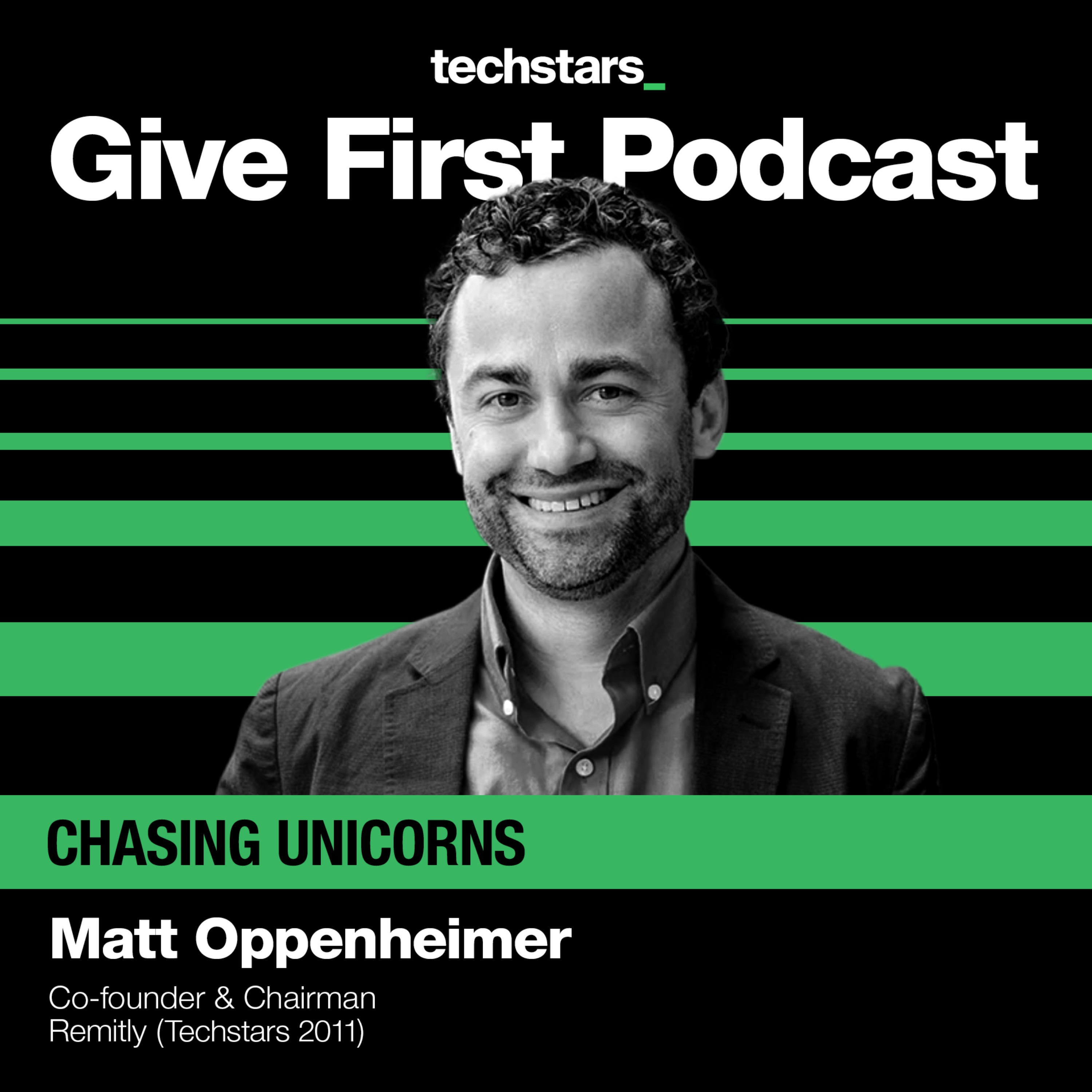
Matt Oppenheimer (Remitly) shares Remitly’s origin and scaling lessons—staying obsessed with the problem, pivoting the solution, focusing on specific corridors/geographies, using non-scalable marketing to learn customers, and leaning into heavy regulation—then discusses his founder-to-chair transition in 2026.
Matt Oppenheimer is the founder of Remitly, a former Techstars Seattle 2011 participant, and became chairman after serving as CEO for 15 years (transition announced Feb 2026). He previously worked at Barclays Bank in Nairobi, Kenya, leading mobile/internet banking initiatives.
Focus on the problem + flexibility on the solution; “focus, focus, focus more” by starting narrow (Washington State to Philippines) before expanding; find marketing channels that don’t scale to validate product-market fit; regulatory challenges should be treated as serious from day one; persistence through many VC “no”s; succession works best when the company is already strong.
South Center Mall booth in Seattle to learn why customers didn’t want GCash; pivot from mobile-wallet-only to broader disbursement (now 400,000+ cash pickup locations, 5B bank accounts/mobile wallets); expanded from 3 corridors over 4 years to 5,000+; chose successor CEO Sebastian Gunningham (Oracle/Apple/Amazon/WeWork background).
Written by AI. May contain mistakes.
Hosts explain the concept of 'Give First' and its relevance to entrepreneurship.
“This is David Cohen, and I'm here with my amazing co-host, Brad Feld.”
Matt shares his background and the early days of founding Remitly.
“When you think back to the beginning, what was the original idea?”
Matt discusses the initial problem he aimed to solve with Remitly and the challenges he faced.
“entrepreneur, and I always knew I wanted to start a company was find a problem that for me made a difference in the world.”
Discussion on how Remitly pivoted its solutions based on market feedback and customer needs.
“Like, I think you have to be obsessed with the actual problem.”
Matt explains the importance of understanding customers and building trust in the early days.
“of resources we had as an early stage startup on marketing very targeted to that customer base We got to know our customer base much better.”
Matt shares insights into handling regulatory challenges in a highly regulated industry.
“You got to be planted near the border crossing in my experience, right?”
Learn about the challenges of building trust in financial services and the regulatory landscape.
“It's part of, in financial services, the trust ecosystem, as I call it, with banks, with regulators, with ultimately customers.”
Explore the importance of persistence and resilience in overcoming challenges as an entrepreneur.
“and it was super hard, but I think that's ultimately what set us up for success.”
Understand the fundraising process and the frequent rejection entrepreneurs face from investors.
“It's hard because at least for our business, capital in the early days before we shifted to being very profitable was the lifeblood for growth and we were investing in a growth, you know, in, in, in a growth story.”
Discover the strategy behind maintaining relationships with investors who initially passed on funding.
“But you can either leave and be like, oh, that feedback for why they said no, which is not very good and they don't get our business.”
Learn about the challenges and strategies involved in transitioning from founder to chairman.
“Yeah, I was founder and CEO for 15 years up until this February of 2026.”
Understand the importance of personal development and scaling leadership in a growing company.
“some change is necessary and inevitable.”
Learn about the complexities of scaling a company while prioritizing team relationships.
“And so how to scale with any entrepreneur relationship to this with a team that you deeply care about.”
Discover the value of sharing lessons learned and supporting startup communities.
“I know that a lot of people helped you along the way and should have us about give first.”

Get the gist, explore an idea or ask about something said.
 Claude
On Give First, what are the key points of this episode?
Searching your listeningAutomatic transcript. May contain errors.
0:00David Cohen: Today on the Give First podcast, I've got Matt Oppenheimer, a friend and amazing founder of a company called Lamently, went from the South Center Mall talking to customers to a$5 billion public company. He transitioned recently into a chair role. We're going to learn about that transition. We're going to learn about the origin story of Remitly and some really valuable lessons during scaling it relating to the team and values and just focus and some lessons that relate to my new book, Chasing Unicorns. So that's coming up right now on the Give First podcast.
0:39David Cohen: Hi, everyone. This is David Cohen, and I'm here with my amazing co-host, Brad Feld. Hey, Brad. and this is the Give First podcast. In the startup world, Give First means simply trying to help anyone, especially entrepreneurs, without any expectation of getting anything back. So we'll be talking to mentors and founders about what Give First looks like in action and how it makes great entrepreneurship possible. We polled everyone and they said consistently that their favorite part of the show was the legal mumbo jumbo. So here it is. The following discussion is an expression of personal opinion and does not represent the opinion of Techstars or any company we discuss.
1:12David Cohen: Our conversations for informational purposes only, including any mention of securities or funds. This is not legal business investment or tax advice, and it's not intended for use by any investor. Certain of Techstars funds own or may own in the future securities and some of the companies discussed in this podcast. Got it?
1:35David Cohen: All right. Matt Oppenheimer joining us from Remitly on the show. Great to see you. It's been a little while. so great to see you David yeah happy to happy to have this conversation really excited about it we're going to talk gift first but we want to talk about remotely um it's an amazing story um was in the tech stars program in Seattle 2011 if I remember correctly there were what three unicorns in that class you were one of them um that wasn't yeah what are the odds that three different companies out of ten are going to grow to be giant companies you guys are something like what, 5 billion valuation days, a public company, incredible story.
2:11David Cohen: When you think back to the beginning, what was the original idea? Is that what you're still doing? And talk about the very early formation of the company. Yeah. Yeah. Well, you know, my view as an entrepreneur, and I always knew I wanted to start a company was find a problem that for me made a difference in the world. And two, one made a difference in the world. And then two, it was just a big enough problem to make a, you know, to build a venture back company. And so for me, I took the road less traveled really in search of that problem. So I was working for Barclays Bank in Nairobi, Kenya, and I was running, I was head of mobile and internet banking initiatives for Barclays Bank, Kenya.
2:52And the problem, not the solution, but the problem that I saw was that sending money myself was expensive, inconvenient, all stuff that we know. But for a lot of my Kenyan friends, getting money from their family members from the US, Europe, et cetera, was incredibly critical for their lives and equally, if not more expensive and inconvenient. And at the same time, there was a mobile wallet. This was 15 years ago, but called Mpesa that's transformed domestic financial services in Kenya. And so it seemed like the right time to build a new way to send money internationally. And there's$2 trillion that's sent every year.
3:27Now, to your point about how the solution, not the problem, but the solution has evolved and changed. At first, I was like, oh my gosh, it's so highly regulated. Consumer businesses are tough. Let's just build like a search engine to make it more transparent. And we pivoted in the first month for reasons that I can get into. We then pivoted from just mobile wallets to a wide range of financial services, I mean, it's a wide range of disbursement options. And then we've expanded our vision to transform lives with trusted financial services that transcends borders, which is broader than just payments.
4:02And so I highlight that because the problem was what I faced in Kenya and what my friends faced. But the solution, I think, is incredibly important for entrepreneurs to be very agile and nimble on the solution. but to have this like grit and tenacity on a problem that they're super passionate about. And for me, it was cross-border financial services were just broken.
4:24David Cohen: I think it's so key. Like, I think you have to be obsessed with the actual problem. You almost have to be willing to just toss the solution out and do something different, right? And see what you did through it. And that's the homework of pretty much every successful company. And when it's not, it's kind of like you just hit a seam and got lucky right away. And you very often don't have it. I mean, beam it. Right. You get to beam it. Yeah. That's what I remember. And so even the name didn't stick. But what I, you know, you were in Kenya and you were experiencing kind of this problem. And I know you were, you guys were really hyper-focused in the early days.
5:00David Cohen: I can't remember, but maybe still are in some ways on one or two places that you were sending, you know, a message to. Why was that not Kenya? Or what did you learn about that? And why was that focus so important in the book? we talk a lot about pain lock, really locking in on a thing that is a real problem for people. And you guys clearly did that. I remember you being really focused in the early days. Yeah, totally. Totally. So yeah, there are going to probably be a few principles that we talk about. One is like tenacity, grit, resilience is critically important to focus on the problem and then to have a lot of flexibility on the solution.
5:37Big red flag for me when an entrepreneur comes and is like, I've got this idea. I'm not going to tell anybody. It's so proprietary. area. And most listeners on this podcast probably know that that's not about some magical idea. It's about grit and tenacity to solve a problem and then pivoting on the solution. The second, though, that ties to the Philippines being our first country is focus. Focus, focus, and then focus more. And for us, that meant, well, we had a broad vision. And honestly, I could have told the vision more boldly and effectively when fundraising, which we can come back to later.
6:11But But where we were going to start is not only in international remittances, but not only just U.S. to the Philippines, but because we pivoted to becoming the money transmitter and having to get licenses. We started just with Washington State, where we got our first license, to the Philippines. And the reason the Philippines is because it was a much larger market. There was a mobile wallet there called GCash that was in the early days of growth. So there were some parallels to Kenya, but it was just a much larger market and slightly more digitized at the time. And we focused just on Washington State and then eventually U.S.
6:43as we got more licenses to the Philippines for two years. Then we added India for a year. Then we added Mexico for a year. So we're four years in. And for context, we're in like 5 ,000 corridors, meaning country pairs. Now over 5 ,000. We were in three for four years. and that really helped us because it helped us really just like the engineering principle of like hey, you know, if you build something wrong the first time it's so much harder to go back and clean it up that was very similar with building our product which is much more complex than the meets the eye so we built it right in the US, the Philippines really understood our customer really were able to focus the really limited number of resources we had as an early stage startup on marketing very targeted to that customer base We got to know our customer base much better.
7:32I joined the Filipino Chamber of Commerce of the Pacific Northwest. And we nailed it for that customer segment, and then we grew from there. And I think that's somewhat counterintuitive in a, you know, blitzscaling, grow really fast world. And some businesses certainly require that. But I think most require focus and then building up from that really strong product.
7:51David Cohen: And, you know, I think about even companies like Uber, right? Yeah. that they did really a very similar thing, right? Like get it right here and then you grow. They obviously go faster sometimes because they have more capital or whatever. How do you know when you're ready to leave the Washington to Philippines core? Yeah, yeah. It's a great question. I think some of it comes down to, I mean, if you look at a consumer business, I think really understanding the unit economics. So we started to understand what's the, And first, we started to see retention in the core product, which is critical. And then we started to understand our customer acquisition costs and lifetime value.
8:31And we really understood that equation. So we knew if we raised more capital, we could spend more on marketing in the Philippines. And we could take the foundation that was working because the repeat behavior was strong and then expand it to other countries. And that's a journey for any startup. And it was a journey for us. But I think it would have been a mistake, especially before we had early signals of strong retention and strong unit economics where our customer acquisition cost was low enough to where we really felt like there was a differentiated product. If we would have expanded before then, I think, you know, companies ultimately fail because they run out of time, resources, money.
9:02And I think we would have run out of time, resources, and money because we would have been, you know, it's like the board game risk. I was talking with an investor that actually passed on a round, but he's a good friend of mine. And I sent him the board game risk when he passed. And I said, you know, the way you win risk is you go like all in on certain geographies. You can't spread yourself too thin. And I think that's one of our absolute keys to success.
9:26David Cohen: You got to be planted near the border crossing in my experience, right? To the, to the, I think that's key. Yeah. Yeah, exactly. You got it. Yep. Yep. Yeah. A little bit sounds like you're kind of just watching the analytics dashboard, but I know you to be someone who really gets out and you got to, you got to build trust and, you know, from nothing in a business where you're sending people's money around, somebody doesn't get that money, their family doesn't eat. How did you figure out how to build that kind of trust with your customer base? And I love the story of hanging out, just trying to understand what people wanted at the South Center Mall that's in the book.
10:06David Cohen: So talk about maybe early on building that trust and how you learned what you need to build with tons of people. Yeah, yeah. Yeah.
10:15It ties into, before you can get into trust, understanding what customers wanted. And so I'll credit Brian Chesky for teaching me the phrase, use marketing channels that don't scale out of the gate. And the reason for that is because those tend to help you really understand your customers. And so what we did is we rented a booth in South Center Mall, which is south of Seattle, next to like a legacy remittance provider. And at the time, we were just sending money from our app or website to the mobile wallet that I mentioned in the Philippines, which is now one of our largest disbursement partners globally.
10:57But as is the case for a lot of early stage startups, timing is everything. And the market in the Philippines just was not ready in the sense that people weren't ready to send money yet 15 years ago to GCash. And so we had to broaden our network to include hundreds of thousands of cash pickup locations, instant bank deposits. We now send money to over 400 ,000 cash pickup locations, 5 billion bank accounts and mobile wallets. But we had to make that really important pivot, which actually pivoted us closer to a competitor that we eventually kind of blew by, which made it harder to raise capital.
11:31but it came from listening to customers in South Center Mall. Like, you know, we would say, you want to send money to a GCash wallet? And customers don't really want to offend an entrepreneur and be like, no, that's dumb. No one sends money to a GCash wallet. Now people do, but then they did not. But what we ultimately saw via that face-to-face interaction is we could say, well, why? And tell us more and what are you looking for? And that ultimately caused us to make a pretty like big pivot because it wasn't mobile to mobile and part of our early pitch would not have learned that if we did not pursue marketing channels that did not scale.
12:08And it also was critical in terms of joining the Philippine Chamber of Commerce of the Pacific Northwest because they were helping us staff that booth. And they were obviously friends with a lot of folks. So that tended to help customers be more open with us. So critical to our success. And my advice is in those early days, when you're still getting a product market fit, you're not seeing that repeat behavior. find marketing channels that don't scale.
12:34David Cohen: And I'm just going to wild guess, did Remindly outlast the self-centered mall? Is it still going? Do you know? It's no longer. I don't, I think the marketing, although we do have a lot of community partners, we have actually still quite a bit of equivalent, but it's a lot more scaled now. But no, we're not going to have a booth. Yeah, it's more events and things like that. Influencers, things like that. Yeah. Cool. Cool. You know, you at that time, I imagine we're also facing like a massive regulatory wall, like, you know, gosh, how are we going to figure out how to get compliance and do this in so many different corridors, as you call them?
13:14David Cohen: What would you say to a founder who's facing those kind of regulatory challenges today? I mean, part of it would be in the world of AI software. Those are probably good challenges to have because they're hard, right? Software can't solve them. It's got to solve them. But, you know, what's your advice for dealing with that kind of challenge? You know, I think to some extent it depends on the business model in the sense that, you know, when in the early days of crypto, there was a lot of gray area. And so I think that takes a different approach than for us, which was we were a digital money transmitter.
13:45There was no question about it. And so my advice and I think most businesses honestly fall into the category we're in than than regulatory gray area. But my strong advice for companies that are highly regulated is lean into it and recognize, to your point, it has advantages from a business model perspective over time. It's part of, in financial services, the trust ecosystem, as I call it, with banks, with regulators, with ultimately customers. And that means taking it really seriously from day one. and it's super hard. Like I'm making these things sound really easy, but we had all these chicken and egg problems where like we couldn't get a license until we had a product to show the regulators.
14:24We can get a product until we actually had, you know, capital to build it. We couldn't, that changed a little bit in the AI area, but even if you can build a product, you can't offer it until you get a license. And then there's all these other like disbursement partnerships, bank partnerships, because they don't want to work with money transmitters. The business is full of what I call chicken and egg problems. And I don't think our business is unique in that there are a lot of highly regulated and complex businesses out there similar to ours. Ties back to the focus point. You got to focus to get through all of those if you can't spread yourself too thin.
14:55And it really ties to like the grit and tenacity point. I mean, that is where plowing through those barriers and just not giving up and kind of, you know, it's the underrated but most important thing of entrepreneurship is applying that grit and tenacity in the right place. and it was super hard, but I think that's ultimately what set us up for success. And the challenge with companies that take the quote easy way and don't lean into the regulatory or other complex elements is if you're trying to build a lasting large business, it will catch up with you. And for us, we just leaned into it in a big way, including like, good thing I took state capital lessons when I was in elementary school, because I went to like, I wasn't required to, but I went to Springfield, Illinois to like meet our regulators.
15:39I went to Sacramento, California to meet our regulators and just explain to them, listen, we're a technology company. We're trying to do the right thing. This is our application that's going to be coming in. Here's what we do. Here's why it's good for customers. I think things like that go a long way.
15:52David Cohen: Now, that Springfield, is that the one where they're eating the dogs and the cats or is that a different Springfield? That is not good. Oh boy. No, this is Springfield, Illinois, where Abraham Lincoln was born. I got to go to Abraham Lincoln's grave site or his birthplace when I was there. So I learned a lot more about various state capitals. on the resilience point, dozens of VCs said, no, I want you to name them all right now. No, I'm not going to ask you. Instead, you know, I think it's just another point on resilience. Like it, you know, everyone said, Oh, you built this huge business. It must've been so easy to raise capital.
16:29David Cohen: Right. But everyone struggles to raise capital. It's just hard. And you figured it out at some point, but you know, how did you, how did you have the sort of patience and resilience to get through, you know, no no everybody's saying no and then someone finally believes comes along and backs you yeah well you're very nice to say dozens of vcs said no because i would say it was greater than over like eight rounds or whatever we did i bet it was i've never actually counted i should i bet it was greater than 50 less than 100 i mean we got we got more no's than i can count and i think that's really what's that part of the process right?
17:09It's totally part of the process. And I think it's really important for entrepreneurs to hear that because the headlines always look good. But yeah, it was really hard. People said no for a variety of reasons that, you know, in our business that I can go into, it's probably less relevant because it's remotely specific. But we are in a lot of anti-portfolios, which means VCs that said no to us and regret saying no. And I've stayed in touch with a lot of those folks, given how relational I am. But yeah, to the heart of your question, it's super hard. It's super, super hard. And it's hard because I think investors want to see confidence.
17:50So you have to maintain that confidence and bullishness, even though you've gotten, even though we had gotten so many no's along the way. It's hard because at least for our business, capital in the early days before we shifted to being very profitable was the lifeblood for growth and we were investing in a growth, you know, in, in, in a growth story. And so there were moments for one of our rounds where we were getting close to running out of cash and it was so stressful. I mean, I remember sitting on the couch of like the Macy's clearance couch that we had bought and picked up ourselves and put in our early stage startup office and just crying, honestly, because it felt like the walls were closing in.
18:28All these investors had said now it was responsible for all these customers and all these people. Um, we were close to running out of cash. It was hard. And I'd say what I did in those moments is two things. One, I've had amazing partners and advisors, and I think I tend to be pretty vulnerable and, you know, reach out for help, even if that's just somebody to listen. My co-founder Josh and co-founder Shavass, critical in that during the highs and lows. And then other external mentors, um, including folks like Mark Solon, who used to run Techstars Ventures and has been a mentor of mine for years.
19:01Folks like that were invaluable in those moments to kind of normalize how hard it was. And then I believe in putting your own kind of, you know, mask on first. And so I tried in my best days, not always to sleep, get exercise, take care of myself. So I was mentally acute, but it's hard. That's one of the, I mean, building a business is incredibly hard and normalizing how hard it is, despite the headlines, I think is super important, but take care of yourself, whatever that means for you and reach out for help to people that you respect. And, and that's what helped get me through it.
19:35David Cohen: Great tips. Um, you know, all those DCs got to pass and they're going to have to be named here. You're not an RA in 540, which I'm thankful for, but our job is so easy. We just pick awesome people before there's anything, right? So it's like, Oh, this guy's great. Let's just work with this guy. And then sometimes it, you Three out of 10 and then we got a card set. Amazing. Well, the flip side, let me pause there too and say the flip side is the investors we brought on, including Techstars, were critical for our success. And so even though we ended up having a lot of tough rounds, there was one or two rounds.
20:10We did not take the highest valuation because I did deep references. We didn't always have two options, to be clear. But when we had multiple options, we did references. And there was one distinct moment where we took a lower valuation for clean terms and a partner I really wanted to work with than a higher value. It wasn't light years difference, but we did not just automatically take the higher valuation because investors like Techstars. I mean, you mentioned our class. It was unique in terms of the number of unicorns. But the mentors, a lot of them I still stay in touch with in Seattle. Yourself, David, in terms of the give first mentality.
20:43You surround yourself with great investors that do say yes. And it really increases the probability of success of the company too. Oh, and one other fun story that I'll tell you is every entrepreneur that's raised funds can relate with what I'm going to say. You kind of leave an investor meeting and either you're like, wow, even for us, most of them said no. But you can either leave and be like, oh, that feedback for why they said no, which is not very good and they don't get our business. And then there's like 10 % of them where you're like, okay, they said no, but gosh, I really want them on my cap table.
21:18And they're just super good. That helped.
21:21David Cohen: Yeah, that was good feedback, right? And so what we did with that 10%, it wasn't the scientific, it was just gut of like, all right, that was an investor I really want to stay in touch with. And I'm going to implement their advice, because I actually agree with it. Again, you got to filter the ones you don't, otherwise you're randomized with all this advice. And you've got to just like customers give VCs the psychological comfort to give advice, because they don't want to offend an entrepreneur, they want to stay around for the next round or for the future. And so we asked with a real growth mindset, help teach us.
21:49And here's the fun fact. Every one of our rounds, except our first round by definition, was led by a venture firm that passed on the previous round. And so that's also really important is to play the long game with VCs, especially the 10 % that you respect because you implement their smart advice, does wonders for the business, and they now kind of feel like this is an entrepreneur they want to work with. That is a great tip, and it's an amazing little step for the history of the company that those relationships paid off even when they weren't involved the first time.
22:25David Cohen: so fast forward 15 years i think uh here we are uh it's about how old or mitley must be now and and you are now chairman uh maybe help people understand a little bit about how that evolved and and that transition because i've been through that as well uh it isn't always easy uh it can it go not great and you know i think in your case uh maybe it's gone pretty well and Talk about how you managed that and thought about that. Yeah. Yeah, I was founder and CEO for 15 years up until this February of 2026. And I went to the board well before the actual decision. We found someone and all of that. But I went to the board because I felt like the company, first and foremost, was at a point that was the right time for a successor.
23:23Like we weren't dependent on the next fundraise. We were profitable. The core payments business was humming. The business was getting a lot of leverage. The business was just humming. And I think oftentimes entrepreneurs wait until the business isn't going as well because it's a lot more fun when things are going well. But I wanted to do succession when the company was doing really well because I knew we could attract an amazing CEO. And I personally was ready after 15 years. But I also think that you look at the next stage of financial services that transcend borders, it was teed up to really take this platform and expand.
23:59And I don't think I have enough hubris or ego to think that I am the only one that can do that. But it did drive what we wanted in our next CEO. Someone who shared similar values around everything comes back to the customer, which actually for scaled companies is somewhat unique because you get more financially focused or other things. So somebody who was maniacally customer and product focused and someone who really understood and had the experience to be able to take the company to the next level. And so what's interesting is I went to the board and I had a fair amount of conviction before I went to the board.
24:36I think that's one mistake that entrepreneurs make is they're still processing it themselves before they go to the board. I knew I wasn't in any hurry, but I went to the board and said, it's time to really think about this and then partnered with the board to find someone. But it took a while to find somebody. We looked at internal and external candidates and found a CEO that is amazing. His name is Sebastian Gunningham. And he, I won't take up the time with his full background, but the guy is fascinating. I mean, he's from Argentina, Scottish by descent, worked for Oracle for 15 years, eventually reported directly to Larry Ellison.
25:10Then he went to Apple. He worked directly for Tim Cook and closely with Steve Jobs for a couple of years. Then he went to Amazon, built the marketplace business, was there for 10 years. Then he went to WeWork and basically helped save that company. He was a vice chair, but then got pulled into being co-CEO. And then he was CEO of another company called Material Bank before he joined us. So just really unique in terms of the founder perspective, the different cultures he'd been part of. And, you know, it wasn't like it came down to him and a few other candidates. It was like we were waiting until we found someone great.
25:42We found Sebastian. And while he shares the product and technology and customer focus, he's very different stylistically, which I also think is very important, especially in a founder succession, because I think different leadership styles are required for different chapters and some change is necessary and inevitable. And so, yeah, it's been great to be chair. And I'm doing a portfolio of boards, training for a half Ironman. I've got a young family and we had a board meeting last week and it's been really good in terms of how the transition's gone. And I'm super grateful for Sebastian and grateful that we were able to do it in the right way.
26:22David Cohen: Amazing. I'm sure he's figured out how to carry the culture and the values that you established. And it's always a key thing as well. And I kind of want to listen in on Sebastian. I want to hear this accent, this sort of static. Maybe there's a fascinating accent. Which is pretty cool. Can I say one other thing on just team scaling in general? Because that, I think, if I reflect on my own leadership style, was one of my biggest growth areas. And I had a lot of growth areas. I think that first, being a CEO of like an early stage startup is, could not be more of a different job description than being CEO of a public company.
27:03There are some threads that are similar, but it is very different. And I think I came more and more into my sweet spot as the company grew for a variety of reasons. But I had to invest so much in my own personal development. And one of the things I did is I would do a 360 every year. And that 360, I would usually have led by the new director that just came on our board. And then I would turn that into a development plan. And then I'd share the development plan with the entire company. And I think that set the right growth mindset. Because when a company is doubling every year, you have to grow quickly, both as CEO and the team.
27:43And that was honestly one of the hardest parts for me is with the team. how to continue to kind of reinvent and without judgment, because I think our society has judgment that like being the, an executive or CEO of a bigger company is better than having a skill set of being like a kick-ass early stage chief blank officer. And so how to scale with any entrepreneur relationship to this with a team that you deeply care about. And at least, you know, I just deeply, deeply cared about these individuals while making the tough calls around continuing to scale for what the company needs, both for yourself as CEO and the rest of the team is really, really complicated, but I think really, really important to get right in order for the company to continue to scale.
28:27David Cohen: Amazing and well said. I know that a lot of people helped you along the way and should have us about give first. I got a shout out uh, you and D sack and Christopher and see how I know they're listening to this episode. Well, not a person. Um, but I also want to thank you for, you know, kind of giving back your, your lessons and, you know, helping startup communities, uh, not only in Seattle, but in other places and, uh, congrats on everything you built. It's been awesome. Just kind of being able to watch a journey, maybe helping in some small way here and there. And, um, it's a, it's a great, great story and appreciate you spending a little time sharing your lessons with us.
29:08Thanks for having me.
29:10David Cohen: Thanks a lot for listening to the show today. We'd love to hear your feedback, ideas, or who you'd like to hear next on Give First. And please leave a rating and review, ideally a good one, and reach out anytime to podcasts at techstars.com or on Twitter. I'm at David Cohen. See you next time. Don't forget, Give First.
29:36Thank you.
In this episode of the Give First podcast, David Cohen sits down with Matt Oppenheimer, founder and chair of Remitly, the cross-border payments company he grew from a mall booth into a billion-dollar business.
Matt reflects on the focus and grit it took to scale Remitly across borders, the fundraising road that tested him, and knowing when it was time to hand off the CEO seat.
He is one of 13 unicorn founders featured in David Cohen and Amir Hegazi's new book, Chasing Unicorns, which lays out the PRIDE framework behind Techstars' billion-dollar companies.
Follow Matt Oppenheimer on LinkedIn - https://www.linkedin.com/in/mattoppenheimer/
Read Chasing Unicorns here - https://www.amazon.com/Chasing-Unicorns/dp/1068476079
Hosted on Acast. See acast.com/privacy for more information.