 Ask ChatGPT

Landon Young discusses building startup ecosystems from early-stage investing and community “give first” principles, connecting his work in Indiana with Kansas City’s early startup culture, Pledge 1%/Donate Equity, and his PhD research on complex adaptive systems and resilience.
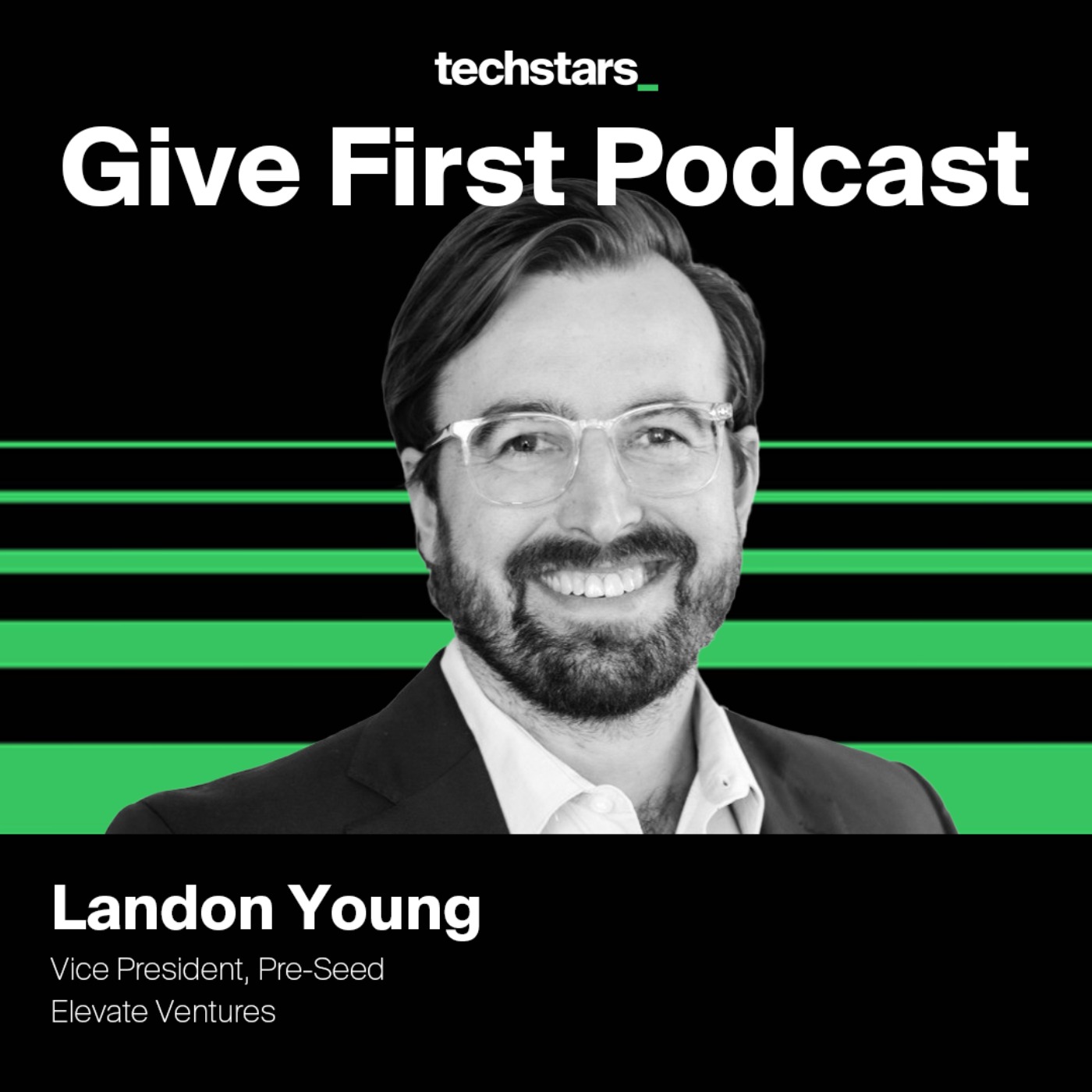
Landon Young leads pre-seed investing at Elevate Ventures (Purdue-adjacent, Great Lakes focus). Elevate is a venture development org backed by the State of Indiana; it has invested in 600+ companies, writing $20k–$2M convertible-note checks. He previously participated in Kauffman’s global scholar program (2013) and worked with/around Lisa Mitchell and Kauffman’s Rolodex ethos.
“Give First” is operationalized through transparent founder-friendly convertible notes and open templates; power law returns can come from small checks; startup communities adapt like complex systems.
Socio (pivoted to virtual conferencing; acquired by Cisco); Kansas City’s “Startup Village” around early Google Fiber; Pledge 1% sparked complex-asset donations via Kansas City Startup Foundation; DonateEquity.com automates equity donations to nonprofits. His dissertation studied engineered water systems in Malawi and how human complex systems choose infrastructure under drought/flood shocks.
Written by AI. May contain mistakes.
Discussion about the Global Entrepreneurship Congress and networking opportunities.
“This is David Cohen, and I'm here with my amazing co-host, Brad Feld.”
Landon Young shares his current work in pre-seed investing at Elevate Ventures.
“Just reconnecting from years past, right?”
Landon discusses investment strategies and shares a success story of Socio's growth.
“And so we're investing in every community, county, part of Indiana, even in companies that are global, but have a strategic presence in the state of Indiana.”
Landon reflects on his time at Kauffman and the importance of mentorship.
“You know, we've speaking of the student at the coffee shop, when I was a student at Purdue, I used to grab coffee and sit in the shop with a guy named Yarkin, who at the time was hustling.”
Discussion on building startup communities and the creation of hacker houses.
“In 2013, I was selected as one of 13 global scholars, and that was a program that ran for a number of years.”
Exploration of the Pledge 1% initiative and its evolution since inception.
“And just part of this community that was literally around the first fiber install in the world.”
Discussion on the origins of Pledge 1% and its impact.
“I think that was the first chance you and I were able to chat was the Big Omaha talk.”
Exploration of how startups can donate equity and support foundations.
“But I think even at Big Omaha was probably 2016, 2015, 2016?”
Insight into how startup communities function as complex adaptive systems.
“We help founders donate equity to nonprofits that traditionally haven't been able to accept them.”
Discussion on the relevance of academic research in real-world applications.
“Well, I haven't read your dissertation, but I'm motivated now because I'm a giant reader and I like to read anything.”
Reflections on the future perspective needed in startup ecosystems.
“Well, you may need to add a third chapter and finish it up, right?”

Get the gist, explore an idea or ask about something said.
 Claude
On Give First, what are the key points of this episode?
Searching your listeningAutomatic transcript. May contain errors.
0:00Hello, Give First listeners. It's Brad Feld. We're here today with Landon Young for another episode of the Give First podcast. Landon and I connected for the first time a dozen years ago, but relatively recently reconnected at the Global Entrepreneurship Congress. So I hear about a bunch of things regarding startups, Indianapolis, Indiana more generally, where Landon spends his time. Some stuff about Kaufman and Lisa Mitchell, who if you listen to the last podcast we have with Lisa, you've got a sense of her. a pretty awesome build on pledge one percent that Landon operationalized after hearing about it from me for the first time in Omaha at the big Omaha conference in 2015 and also a little twist at the end on Landon's doctoral research and how it overlaps with the startup community way and some of the things that Ian Hathaway and I came up with so enjoy and thanks for listening
1:11Hi, everyone. This is David Cohen, and I'm here with my amazing co-host, Brad Feld. Hey, Brad. And this is the Give First podcast. In the startup world, Give First means simply trying to help anyone, especially entrepreneurs, without any expectation of getting anything back. So we'll be talking to mentors and founders about what Give First looks like in action and how it makes great entrepreneurship possible. We polled everyone and they said consistently that their favorite part of the show was the legal mumbo jumbo. So here it is. The following discussion is an expression of personal opinion and does not represent the opinion of Techstars or any company we discuss.
1:45Our conversations for informational purposes only, including any mention of securities or funds. This is not legal business investment or tax advice and is not intended for use by any investor. Certain of Techstars funds own or may own in the future securities and some of the companies discussed in this podcast. Got it?
2:07Hey there, Landon. It's nice to see you again. Good to see you again, too. Welcome to this edition, everyone, of the Give First podcast. Landon and I were just together not too long ago at the Global Entrepreneurship Congress in Indianapolis, which was awesome. Tell us about what was your experience with GEC this year? That was amazing. Yeah. Just reconnecting from years past, right? From Kauffman days to higher ed days, right? GC is always a chance for all those folks from around the country, around the world to be together in one place. When we think about startup communities, ecosystems, right?
2:55All converging in one place. That's amazing. Yeah, it was a great time. And hats off to Jonathan Ortman and his team for just putting together an incredible convening of startup community leaders from all over the world. As we get started, Landon, why don't you give a quick intro to the audience? Talk about what you're doing today and sort of how you got to where you are. Sounds great. Today, I am heading up pre-seed investing at Elevate Ventures. We are the most active early pre-seed and seed investor in the Great Lakes region, according to PitchBook, and one of the most active in the country.
3:34we are a venture development organization. So a little bit different from when people normally think of VC. We have our largest LP, the state of Indiana, that looks to see Indiana companies grow and thrive. And so we're investing in every community, county, part of Indiana, even in companies that are global, but have a strategic presence in the state of Indiana. So to date, we've invested in over 600 companies. And just since I've been here, we've had the chance to invest in hundreds of pre-seed and seed stage companies, which is amazing to see power law play out right over volume. And so yeah, day to day, getting to spend time at the wild top of the funnel of pre-seed.
4:29Talk a little bit about maybe elevate, describe sort of obviously what you're doing, scale of it. How do you all evaluate companies? What kind of investments are you making? Are they purely pre-seed equity investments? Are you doing other types of structures? And maybe spend a little time on companies that have gotten well past the pre-seed stage and have turned into something. Brag a little. Yeah, sounds great. We invest at the earliest stage. Think ID on a napkin, right? I'm at Purdue University and I meet a student at the coffee shop and they're sketching out their idea. They've just been vibe coding and they're onto something.
5:08Maybe no customers yet, but they have a hunch. We're able to put in a$20 ,000 check, but we can invest all the way to 2 million in a single check in a round. So really quite a broad range. Most of those are convertible notes and convertible instruments. We are, you know, I would say neutral in the best way from a founder's perspective and transparent. We post all of our convertible note templates on our website. So you can see exactly what you're walking into ahead of time, which as a founder myself, I appreciate. You know, we've speaking of the student at the coffee shop, when I was a student at Purdue, I used to grab coffee and sit in the shop with a guy named Yarkin, who at the time was hustling.
6:01I guess I can say this. Sorry, Yarkin, like in his PJs, right? Like at the coffee shop. And he started something called Socio, which pivoted over the years. but that was a great example of timing sometimes being everything right because they had a great product but when COVID hit it exploded and what they were doing was virtual conferencing right and so pre-COVID yeah they were getting traction and it was great and that's why we invested great team. But COVID hit and just exploded the market. And so you're able to see serendipity as being in the right place all the time. And they were just consistently in the right place until, boom, something happened.
6:51And they were acquired by Cisco, which was, it's just fun to see, again, 20K check. When you look at fund dynamics, power law, your smallest investment sometimes turns out to be a returner. So just great to see that timeline. That's awesome. Any sneaky terms in those convertible notes? No, no. Well, I'll tell you, you can check them out yourself. I'll provide a link, but no. Cool. Well, we overlap or had interactions with Coffin Foundation where you spent some time there. And I think anybody that's listened to past podcasts or listened to podcasts with Lisa Mitchell that we recently released has a sense of Lisa, has a sense of Kauffman.
7:42But I'd love to hear your experience at Kauffman, your experience with Lisa, and, you know, sort of dynamics of how that fits into some of the ideas around Give First and the philosophy of it in the context of trying to help founders at very early levels. Yeah, that's great. In 2013, I was selected as one of 13 global scholars, and that was a program that ran for a number of years. They flew us to Kansas City, put us up in Kauffman Housing, and then opened up their Rolodex and sent us around the country to hotbeds of entrepreneurship. And I was able to meet people like Lisa. And one thing I heard over and over again was, we are opening up our Rolodex for you.
8:30We expect you to do the same for others. And I don't think anyone embodies this as well as Lisa does. And I've never seen her ask for anything in return. She's the most generous person with her time, her connections. And it really embodies that Kauffman ethos, I think. um when I when I landed at Kauffman there was you walk in the the doors and there was a library there of books they had helped you know sponsor support or that they books they just loved and were wanting to share um and one of those was about tech stars and I learned about this mentality of giving first and and mentorship that was key to tech stars I remember sitting in the Kauffman house, like reading the tech stars.
9:21And, and again, those were experiences that were foundational for me at the same time. I think this was 13. Yeah. 12 or 13 Google fiber launched in Kansas city and in this place called the startup village. And, and I was there at Ben Barrett's house, the home for hackers. And he handed me this book called startup communities. He's like, Like this just came out. You have to check it out. And Brad, I think you ended up like buying a house there or something too later. I met Ben at Big Omaha around the same time. I went out and gave a talk. I don't think it was 2013. It feels like what it was. I had published Startup Communities.
10:07And actually, it was not Big Omaha. It was Think Iowa. Oh, okay, yeah. So I subsequently then did a talk at Big Omaha. but the Think Iowa conference that is where I met Ben. And it was an awesome day. Like I had a great time in Des Moines. There's some very funny stories. Anybody that knows Des Moines, there's a group of us sitting around late at night, about me and 15 other founders eating Fong's pizza. Yes. It still exists apparently. So I have an open invite from my friends in Des Moines to come back and have some more Fong's pizza, which I intend to do at some point. And the Ben was telling me about, you know, this hacker house and Google Fiber and stuff like that.
10:53And I said, you know, well, you know, like what would be cool? Like what would be additive? He says, well, it'd be really cool if we had a couple of houses. And I said, all right, how about if I buy one and I let people stay in it? He's like, OK, that sounds like something that somebody would say and never do. Right. Right. And then so I went and I started hunting around. Actually, Lisa was helpful because I didn't really know how Kansas City was laid out. And I said, so tell me about how things work around, you know, 45th and Mainline. And like, what does it actually mean? What am I what am I getting into here?
11:31And she helped me find a house, a couple of houses to choose from. uh i bought a house i didn't tell amy actually uh about it at all i just kind of did it quickly and then said to amy hey i bought a house in kansas city and her response not surprising was some version of what the fuck right right but then we um steel case donated some furniture like there's a whole thing around startup culture at that point yeah google provided the fiber a subsidiary. I think it was a subsidiary of Steelcase. I can't remember the name of it, but they provided a bunch of furniture. We renovated the house some, not a ton, but we made the basement functional and cleaned it up and made it not awful.
12:18It was a pretty run-down house. And then I think for about the next five or six years, we had people stay in it. And for the first couple of years, it was companies that would sort of apply and then And I'd let them stay in it for six months to a year. Yeah. And use it as their home and their house. I didn't charge rent. It was just like a thing to use. And just part of this community that was literally around the first fiber install in the world. The first gig fiber install anywhere. Yeah. It was really amazing. I mean, I go there a couple of times and I'd sit there with my computer and you'd look at the performance.
12:54You just go, what? I don't understand. This does not make any sense. And, of course, today we take that for granted. Right. And yeah, I had that house for six or seven years. And then eventually Techstars, when Techstars had a Kansas City program, some founders would stay in it. Yeah. And then, you know, as time passes, you know, it wasn't as novel anymore. Yeah. Yeah. It was fun. It was fun for a while. That was amazing. The symmetric gig up and down. I remember that was like the tagline. Yeah, it was a total magic trick. And it was fine. I mean, you know, people say, oh, a gig, you know, what's the big deal about a gig?
13:28Well, in 2013, I think my internet that I was getting was still like 10 meg or something like that. The broadband rating in the US was 25 down, but it was like four up. And I mean, four up takes a long time to move some data. And all of a sudden, you're like a thing that's a gig up and a gig down. It's like, boom, everything just happens immediately. Right. No, it was transformative for that community. I don't think that's an overstatement for the startup community there at that time. You mentioned Big Omaha. I think that was the first chance you and I were able to chat was the Big Omaha talk.
14:10And David Hauser was the emcee that year. And you mentioned Pledge 1%. And that kind of struck a chord with David and led to some of the stuff we're working on today. Well, let's talk about that some because I think most people that listen are probably aware of Pledge 1%. And if you've got a copy of Give First the book versus Give First the podcast, I have a short section on what Pledge 1 % has turned into. But I think even at Big Omaha was probably 2016, 2015, 2016? 2015. 2015. So, you know, by that point, I think Pledge 1 % had been launched as a national organization. The thing we had started, Entrepreneurs Foundation of Colorado, that turned into Pledge 1 % Colorado, that eventually became part of the overall Pledge 1%, was still sort of in its pretty formative stage.
15:10But Amy Lesnick, who runs that, was, you know, was out and about. And I was, you know, evangelizing it in different places. And I remember that moment. Um, what, what did, you know, my goal, my goal with stuff like that, by the way, is not to try to capture the idea, but to try to spread the idea. So lots of people do their own thing with it. And I know that you have a great example of you just taking it and running with it. So give us a sense of what that was. Yeah. So in that, in that conversation, I remember it was, it was you, David Hauser, who sold Grasshopper and me and maybe one other person.
15:44And, and you had, you had shared this pledge 1 % concept and David's mind was blown. You know, he was, I just sold this company and how can I take advantage of something like this to help entrepreneurs and save on taxes? Right. And, um, and so I met with him afterward. I ended up setting up an LLC business donation advisors and, uh, and, and helped him donate some other startups he had invested in to the Kansas City Startup Foundation, which I think Adam Arradondo and Matthew Marcus were running at the time. And I don't know that they had made any money yet at that point or any donations. And all of a sudden, they had this complex asset, like a piece of a company.
16:31And they were able to later find a buyer for that company. And it worked out great. It was their, I think first, one of their first donations was actually a complex asset, which is kind of wild. They posted that in a local newspaper, a startup newspaper. And someone came out of the woodwork, a couple, and said, well, we have this insurance company. Can we give you part of that? We also have some real estate and other stuff. And so it started this snowball in the startup village. But it really came from that first conversation at Big Omaha. Over the last 10 years, I've continued that work. And Greater Kansas City Community Foundation, NCF, and CICF, and others, kind of these large community foundations, private foundations, working with them to accept donations of companies.
17:31Not just even pledges, but actual asset transactions. And that's led to now software that does that. That's fabulous, I think. And the software company name is? Donate Equity. Yeah, donateequity.com. It is how it sounds. We help founders donate equity to nonprofits that traditionally haven't been able to accept them. And so through workflow automation, we're able to do what the largest five foundations do in the country, except in your community and in your town. I think that's incredible. So DonorEquity.com will certainly be in the show notes. But if anybody's interested, interested in that, interested in Pledge 1%, drop us a note.
18:19Either Landon or I would be happy to get you connected in. If you want to get connected to Landon, just send a note to Bradenfeld.com. Happy to plug into that. Well, let's finish up with another overlap that we have, which is your dissertation research. This is something that's new information to me, but when we were going back and forth, it was kind of fun to hear it. But it's an overlap that is part of the framing that Ian Hathaway and I ended up with in the second startup community book, the book, The Startup Community Way, where we decided to use the idea of complex adaptive systems and complexity theory to describe how a startup community evolves.
19:05And we really, you know, like you work on a book, you're trying to come up with like, what's the conceptual framing for this? And I give Ian all the credit for that one because there were lots of different things we were trying to puzzle together now that we had, you know, eight or nine years of data post this first startup community book. And maybe it wasn't quite that much, six or seven years, I guess, 2012 to 2020, where we'd learned a lot from that. But, you know, I'd learned a lot from my own experience and all the things I was doing. Ian, also from his own experience, but then also looking backwards at all the research that had been being done.
19:41And he landed one day on this idea that basically startups were complex adaptive systems. And, you know, that was the aha at the point that we had a whole bunch of stuff written, but then we could orient the book around it. Tell us about your research and how it overlaps with that, because it's kind of a fun connect. Yeah, yeah, I love that. But, well, I went through my PhD program and had two advisors. Usually you just have one, but I had two. One was a social scientist, people, right? And one was an engineer. So think running mathematical analyses and agent-based modeling. Like we were programming agents before.
20:18Before agents were a thing. Yeah, before that was invoked. And we were studying how communities, which are complex systems, right, human systems, engage with other built environment complex systems, think engineered systems, right? And how those interactions, how communities can leverage innovation, right, to improve those interactions. So I studied this in Malawi in Africa, looking at water systems. So I was able to interview the woman at the well to the village chief to a member of parliament to see, like, how do they make engineered decisions? Why did they choose one system over another? And it really comes down to a very complex web of decision making in human complex systems.
21:09So they're just trying to adapt to the drought or the flood, right, and are making decisions. But you can look at that in a startup, to your point. And why are we adapting? Well, it's usually for resilience, which people tend to think of resilience as like you're strong and withstand stuff. But in this context, you're changing and adapting and you might end up new and different, coming out of a shock, right? But you survive. And that's obviously so much of a startup is coming through to the other side, even if you have a scar or two and you look a little different when you come out. That's awesome.
21:50Well, I haven't read your dissertation, but I'm motivated now because I'm a giant reader and I like to read anything. And I especially like to read things that have some connection. You could be the first.
22:05I'll one-up you after I read your dissertation. I'll send you my working paper from my doctoral program. I didn't finish because they threw me out because I was a crappy doctoral student, but I did generate a working paper out of it. I did it in 1989. And when I read it, it's about the sort of intersection, user-driven innovation in software. And I read it, it's still pretty relevant. Yeah, it was definitely ahead of its time, because my advisor was a guy named Derek von Hippel. And he's famous for a bunch of things, including this idea of the lead user, and that you want your users to be telling you what to do, not some research lab when you're building a product.
22:47And then he was really foundational in his research around everything to do with the evolution of free and open source software. And how that as a thing as a digital innovation was a way to really show user-driven innovation because, of course, open source software is mostly built by people who use the software and then have a real interest in trying to use and evolve something. So it's kind of fun to think about those research moments and how they smash into the practice of the real world. And when they do smash into the practice of the real world with relevance, kind of cool. Absolutely. Well, you may need to add a third chapter and finish it up, right?
23:26Include generative AI or something in there in the feedback loop. I'll just let generative AI tell us the answers and they'll be wrong and we'll disagree with them. And, you know, the hallucinations will entertain us. Right, right. Landon, thanks for the time today. This was fun and great to like, you know, again, dig into a different dimension of things. Somebody else doing great stuff in the world with the ethos and the philosophy of Give First with lots of fun overlaps in terms of things like all that activity in Kansas City back in the early 2013-14 time frame. It's good to sort of remember it, reflect it, and just talk about it.
24:07And also, you know, think about one of the things that, you know, we'll sort of end with is this game that we're in that is, you know, startups and startup communities. The arcs are long and they have lots of ups and downs. But that notion that you have to always be looking forward. And my statement now is you always have to look forward from 20 years from today. So it's not like you have an endpoint. I mean, we all have an expiry date as humans. But the thing that we're doing, if you take this long term view, some magic can happen and, you know, elevate doing 600 companies and being deeply woven into the fabric of all early stage investing in Indiana is awesome.
24:47We're on the next 20 year journey. I love that. Thank you. Yeah. Well, thank you. Thanks a lot for listening to the show today. We'd love to hear your feedback, ideas, or who you'd like to hear next on Give First. And please leave a rating and review, ideally a good one, and reach out anytime to podcasts at techstars.com or on Twitter. I'm at David Cohen. See you next time. Don't forget, Give First.
25:14working your idea in using business
In this episode of the Give First podcast, Brad Feld reconnects with Landon Young, pre-seed investor at Elevate Ventures and a longtime builder of startup ecosystems. Landon shares stories from both sides of the table, as a founder and investor, including what it means to write the first check when a company is still just a sketch on a napkin.
They revisit the early days of the Kansas City Startup Village, the ripple effects of Google Fiber and Techstars, and how a single idea sparked a movement in startup philanthropy.
From coffee shop meetings to complex donations, this conversation is a powerful reminder that the smallest bets, on people, on timing, on place, can shape entire communities.
Check out 👉 donateequity.com
Elevate Ventures 👉https://elevateventures.com/
Follow Landon Young on LinkedIn 👉https://www.linkedin.com/in/landonyoung/
Hosted on Acast. See acast.com/privacy for more information.