Ask ChatGPT
 Give First
9 Sep 2025 · 32m · 18 chapters
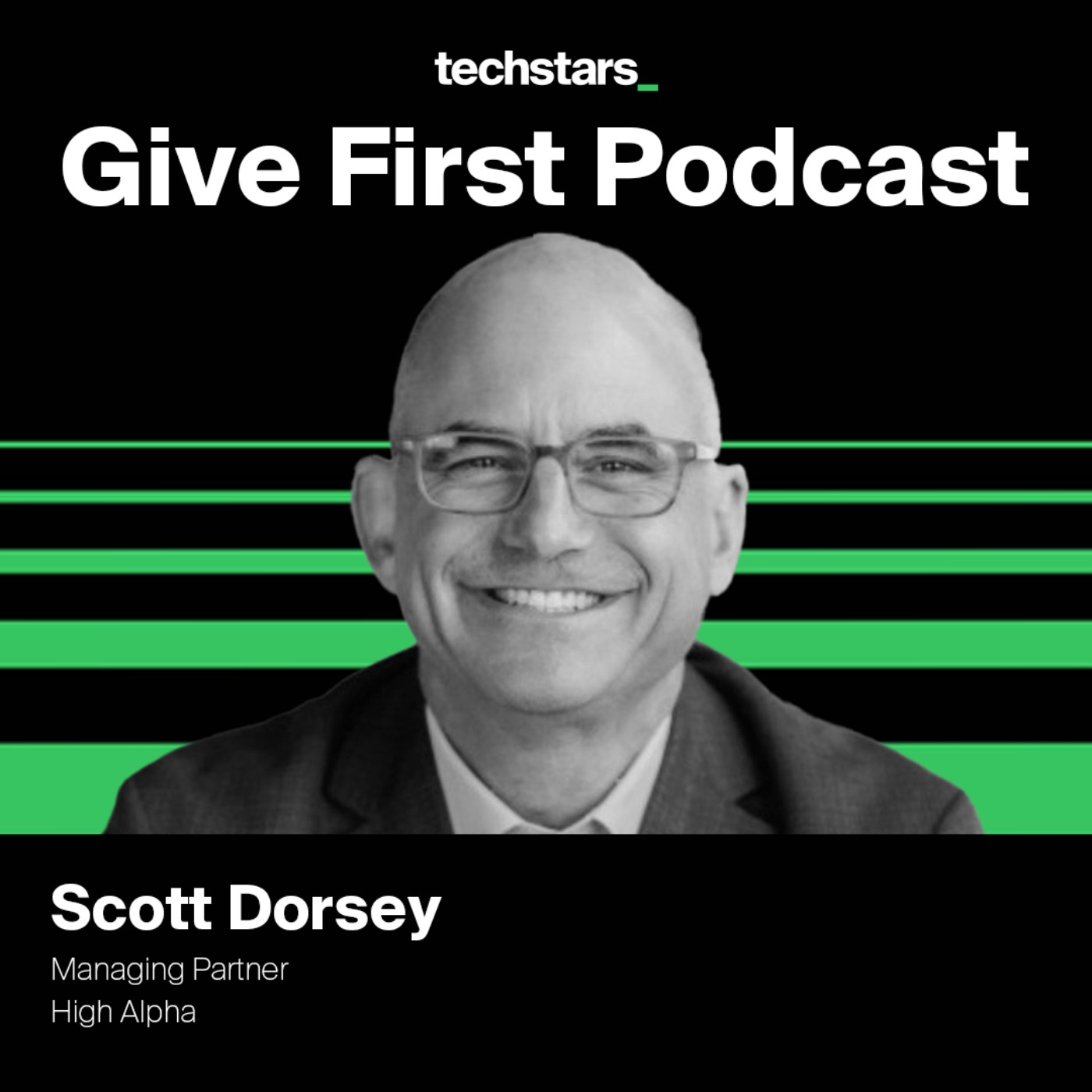
Scott Dorsey (High Alpha; former ExactTarget/Salesforce Marketing Cloud) discusses “Give First” in entrepreneurship: treating people well, building long-term relationships (multi-turn games), mentoring without controlling, handling startup failure with empathy, and using EQ to assess founders.
Scott Dorsey is co-founder of High Alpha, a decade-old Indianapolis startup studio and venture fund. He co-founded ExactTarget, grew it to ~2,000 employees, took it public in 2012, and exited to Salesforce, where he worked on the Salesforce Marketing Cloud.
Relationships and character matter; lead with questions as a mentor; give advice but respect founder decisions and require “closing the loop”; acknowledge mistakes and learn; “give first” reduces transactional behavior and builds reputation; founders can mentor early and still seek mentors later.
ExactTarget’s early customers and employees came from personal relationships; High Alpha tours/mentoring a seventh grader; Scott’s collaborative leadership style at Salesforce Marketing Cloud.
Written by AI. May contain mistakes.
Discussion about the philosophy of giving without expecting anything in return.
“This is David Cohen, and I'm here with my amazing co-host, Brad Feld.”
The hosts give a legal disclaimer regarding the opinions shared in the podcast.
“The following discussion is an expression of personal opinion and does not represent the opinion of Techstars or any company we discuss.”
Scott shares his journey from college to becoming an entrepreneur.
“So, well, let's talk for a few minutes to a quick intro and two things.”
Scott recounts the founding of ExactTarget and its growth trajectory.
“I think they were one and two or two and three.”
Discussion on how relationships impact business success and entrepreneurship.
“people, which is like, you know, hi, hi, good to meet you.”
Scott and Brad discuss how they first met and the importance of collaboration.
“Talk a little bit, just riff on how it's impacted, how you approach the studio and new companies and new ideas and new people that you meet and sort of bring into the mix.”
Scott explains how the Give First philosophy affects his work and relationships.
“If they have co-founders, what that co-founder dynamic is like.”
Scott discusses the balance between guiding and controlling in mentorship.
“So perhaps a little bigger voice into the direction that we're setting, but we're very much kind of equal partners.”
Learn how to effectively support founders in their decisions as a board member or investor.
“sounding board and be more of a guide than one who's just kind of ultimately providing the answer.”
Understand the importance of acknowledging mistakes and leading with empathy during failure.
“Let's shift to failure or extreme challenge or stress.”
Discover behind-the-scenes aspects of podcast preparation and a special giveaway.
“I want to describe something that I did in advance of starting this with you.”
Explore the challenges of public speaking during significant life events, like weddings.
“I'm lucky to have an amazing wife and four daughters.”
Learn how emotional intelligence plays a vital role in leadership and team dynamics.
“And, you know, if your IQ is not that high, you need to really flex into the EQ side.”
Understand the value of fostering long-term relationships over short-term gains in business.
“as you're getting to know a founder or a leadership team and trying to make that early investment decision.”
Discuss how to engage in giving without being taken advantage of in business.
“And very much consistent with the way that I've thought about the world for many, many years.”
Learn how younger founders can practice giving without fear of exploitation.
“say younger founders, but not always founders who are not in the position of having a big success under their, you know, behind them.”
Discover the importance of mentorship for both new and experienced professionals.
“We had a seventh grader in our office today getting a tour.”
Reflect on the value of shared experiences and support in entrepreneurship.
“halfway point of my career, I view you as a mentor.”

Get the gist, explore an idea or ask about something said.
 Claude
On Give First, what are the key points of this episode?
Searching your listeningAutomatic transcript. May contain errors.
0:00On today's episode of the Give First podcast, I spend 30 minutes with Scott Dorsey, the co-founder of High Alpha, a venture capital firm and startup studio in Indianapolis that's been around for now about 10 years, and also the co-founder and CEO for many years of ExactTarget, one of the companies that was instrumental in creating the email marketing business, got bought by Salesforce, and ended up being a core part of the Salesforce Marketing Club. So Scott's a delightful guy, a good friend, and super insightful on a whole bunch of stuff around mentorship. Enjoy.
0:39Hi, everyone. This is David Cohen, and I'm here with my amazing co-host, Brad Feld. Hey, Brad. And this is the Give First podcast. In the startup world, Give First means simply trying to help anyone, especially entrepreneurs, without any expectation of getting anything back. So we'll be talking to mentors and founders about what GiveFirst looks like in action and how it makes great entrepreneurship possible. We polled everyone and they said consistently that their favorite part of the show was the legal mumbo jumbo. So here it is. The following discussion is an expression of personal opinion and does not represent the opinion of Techstars or any company we discuss.
1:13Our conversations for informational purposes only, including any mention of securities or funds. This is not legal business investment or tax advice and is not intended for use by any investor. Certain of Techstars Funds own or may own in the future securities and some of the companies discussed in this podcast. Got it?
1:35Today, I am delighted to get some time with Scott Dorsey. Scott, welcome to the Give First podcast. Thank you, Brad. Thanks for having me on the program. We saw each other within the last 30 days when I spent some time out at the Global Entrepreneurship Congress. Chris, you hosted, I think it was the very first big public event for Give First, not in Colorado. Yep, it was. And at your office at High Alpha, we had 150, 200 people there. It was an awesome evening. Do you have fun? It was so fun. It was so fun, Brad. I think the largest crowd we've ever had inside the building at High Alpha, definitely over 150 people.
2:14And we bought boxes full of books and gave them all away. I've actually, I've actually, I kept a couple copies. Oh, Brad, that was a magical evening. And we felt really honored to be on the early curve, actually pre-release of the book, talking about all these powerful concepts that I believe so wholeheartedly as well. So that was a treat. Really fun to be together. And thanks for doing that. Well, it was a wonderful evening. And Brad, the book salesman, really appreciates you. That part of my alter ego. Very happy. You jump-started sales. That was good. There we go. So, well, let's talk for a few minutes to a quick intro and two things.
2:53One, talk about a little bit about your story, but then how we connected, because I have a very specific memory of it and who connected us and sort of what the context is. So let's do that, because I think that's a good explanation of how relationships unfold. Super. Well, just a little bit about my background, Brad, kind of Midwestern guy. I was born in Cleveland, grew up in Chicago, went to Indiana University undergrad, and then lived out west for a number of years and then went back to graduate school and got my MBA at Kellogg over at Northwestern. And it was a magical time to be in school from 96 to 99, just as the Internet was coming of age.
3:34and I went in thinking I wanted to be a management consultant and came out convinced I was going to be a tech entrepreneur and just fell in love with entrepreneurship and studying what a profound impact the internet would have on the world and on businesses. And I was very fortunate to have a co-founder, uniquely my brother-in-law, very talented guy named Chris Baggett, who spent his career in database marketing and was convinced that email and digital marketing would revolutionize small businesses. And in many ways, I was a prepared mind. I had been studying Internet business models through the graduate school lens.
4:13Chris had the idea for ExactTarget. I was thrilled and delighted and said, if you let me run it, I'll move to Indianapolis. Let's give this a shot. So I moved to Indianapolis and my wife was from Indianapolis. So it was a big win for us personally. We had two young daughters. I think they were one and two or two and three. So it was a big risk to jump into entrepreneurship with such a young family. But my wife, Erin, was so delighted to get back to her hometown with her sisters and her parents. She was supporting me every step of the way. And we just had a magical journey, you know, as a first-time entrepreneur.
4:46Three of us, no technical background to speak of, you know, first-time software entrepreneurs, you know, starting this company in the digital marketing space. and through a lot of ups and downs and good luck and fortune. We grew the company to 2 ,000 employees all around the world. We went public in 2012, had an awesome IPO in the New York Stock Exchange, and then we had a big exit about a year later to Salesforce and had the good fortune of staying in Salesforce for a little over a year, worked directly for Mark Benioff and ran the Salesforce marketing cloud and then left and kind of quickly rebooted and launched High Alpha, which we've been running for the last decade, which is one part startup studio, one part venture fund, and in many ways, an extension of the Give First philosophy of building a platform instead of tools and a team to support entrepreneurs.
5:39Awesome. How did we meet? What's your recollection of how we got connected? Boy, Brad, I think you're going to have to maybe unpack it because I felt like we were introduced by a number of different people in kind of rapid succession. And I'll tell you my most striking memory is kind of you and I knowing of each other, but not really knowing each other. And we had a wonderful first conversation and you really took the conversation to, let's start working on some things together. Let's find a project. Let's find a board. Let's find an org we both care about. And it was very action oriented, which was really quite lovely.
6:20And now it's led to an incredible relationship that's very, very multifaceted. But I'd be curious to know your recollection. It's good. The thing you pulled out of it, though, is telling, is for me, you know, 30 years later in venture founding company thing, and 40 years later in entrepreneurship, I've really concluded that, you know, the 90 % of the interactions that I have with people, which is like, you know, hi, hi, good to meet you. Good to get to know you, blah, blah, blah. The networking stuff is generally useless. What's really useful is figuring out something to do together. Right. Even if it's lightweight, because once you start doing stuff together, then things start happening and they might not actually turn into anything substantive, but you really get to know people.
7:11And I remember that. I think the person that I have in my head as the primary connector of us that finally sort of jumped up and down and said, Brad, get your shit together and spend some time with Scott was Matt Blumberg. And I had heard of, you know, I was on the return path board and I'd heard of exact target for many years. And I'd heard of you through different things. And I knew, I knew Pardot also, and you had bought Pardot. Yes, correct. And of course I knew Salesforce. So like there's just all these linkages that I, you know, you kept showing up sort of a little bit detached. And Matt's like some version of not just Brad, you should know Scott, but Brad, you and Scott would love to work together.
7:49And I think that's that's what I remember. I love it. That's perfect. I think Matt, Matt's probably it was our strongest pre-relationship connection for sure. So thank you, Matt, if you're listening and if you're not listening, thank you anyway. So let's let's talk a little, you know, give first. well. You've read the book. You've been living this philosophy for as long as I remember. You're an example of somebody, I think, that really embodies this in how you approach work and relationships. Talk a little bit, just riff on how it's impacted, how you approach the studio and new companies and new ideas and new people that you meet and sort of bring into the mix.
8:29Yeah, no, thank you, Brad. I truly, I love the philosophy and aspire to live the give first philosophy every day. And I love the words and the framework and the meaning that you brought to it. I've always felt that relationships are extraordinarily important. I think they're kind of the glue that hold societies and families and companies together and like genuinely investing in relationships always pays incredible dividends. And it was interesting. When we started ExactTarget, we started with core values. And I always feel like core values are kind of foundational elements to build great company cultures.
9:09But our first core value was treat people well, essentially the golden rule. And it was just be kind, be a good person, treat others well, whether it's a client or a coworker or a vendor or supplier. I generally just think that's a really, really great way to live. And it's just extraordinary over the course of your life, how these relationships and use the give first framework where you're helping somebody somewhere, somehow with no expectation of anything in return that so often the returns are multifold and they come back to you in very, very unexpected ways. and just even an early one from ExactTarget.
9:54All of our first customers were friends, colleagues, people we had known, people we worked with, folks that were willing to take a chance on us. And so were many of our employees. So kind of fast forward to high alpha, when I look at making investments or founders we want to start companies with, I really tuned in to how they manage relationships. If they have co-founders, what that co-founder dynamic is like. How do they speak about one another? How does that CEO introduce the rest of his team or her team? And I care a lot about product technology and market, but I really, really care about character, leadership, and getting a little preview into the kind of culture that a leader might be building.
10:40It's awesome. I think that leads to one of the key tenants of the mentor manifesto that I think is challenging for mentors generally. Also is an interesting dynamic as a CEO. You're one of the founding partners of High Alpha. I don't know whether the four founding partners have a hierarchy, but I think of you as the CEO also of High Alpha, so the sort of driver of the dynamics of what you're doing. Obviously, there's a venture fund. There's a partnership dynamic in the venture fund as well. One of those key tests, so you're in a lot of different places in your role. You also, by the way, you know, in having been acquired by Salesforce, had to work for a CEO that has a very strong personality.
11:30And you've done acquisitions where you've had CEOs of companies you've acquired that also had very strong personalities. the the tenant of mentorship one of the mentor manifesto dynamics is this not idea of uh guiding without controlling trying to not tell people what the answer is but help them get to their own answer and it's a cliche in for example product development right like if you're an engineering manager you don't say i want this done with these features um at this date with this high quality. That's not a particularly effective management style. There are some people that try to do it that way, but it's not very effective.
12:11It's much more effective to get the team to come up with what they can get done by a certain date with a certain quality. Again, cliche, but when you step back from it, how do you balance guiding with this idea of controlling or dictating or telling others what you want to get done? Such a good question, Brad. It's a struggle. It can be a challenge. I think it's helpful that when I was running ExactTarget of the Salesforce Marketing Cloud, just by my nature, I'm a very collaborative leader. I like to pull ideas from everywhere, like to build consensus, like to really put the extra work in on the front end to make sure that we're hearing all ideas, considering all dimensions of a decision, and then really building alignment.
12:58So I have a collaborative nature to begin with. Interestingly, when we started High Alpha, and this is, I think, a page probably out of your playbook, we did end up creating equal partnership across me, Christian, Mike, and Eric, although I have the managing partner title. So perhaps a little bigger voice into the direction that we're setting, but we're very much kind of equal partners. So that was an adjustment, but one that I've really enjoyed and embraced. and the mentorship piece is a really, really interesting because it's very tempting as a former CEO and operator to just want to, you know, take control of the steering wheel, you know, or give the CEO the answer.
13:38And that's often not the best thing to do, you know, as a mentor. So I would say my, I'm still learning how to be effective, but I'd say my style has evolved. I generally start by asking questions just to try to help the CEO or the founder maybe think more deeply about an issue and kind of form their own point of view or maybe pull out what they're thinking about it and just be a helpful kind of sounding board and be more of a guide than one who's just kind of ultimately providing the answer. If the founder asked me what I think they should do, I'll absolutely give them a clear answer because I will have a perspective, but I try to be more of a sounding board and do so through asking thoughtful questions, maybe more than providing the answer.
14:26If a founder asks you what they should do, you give them a direct answer. And then the founder, you know, thinks about it, decides to do something else. And let's assume the founder does a good job of communicating that. Says back to you, you know, I really thought about what you said, Scott. And, you know, I considered some other things. And, you know, I'm going to actually do B instead of A, or I'm going to do A prime instead of A. Yeah. What's what's your reaction to that? Totally fine. Totally fine. What I really respect and appreciate is them coming back and closing the loop, you know, one way or another.
15:00I think that's a class move. If you get advice, it's a little counter to the direction you ultimately take going back and explaining. Here's what I've decided and why. Perfect. Super happy. And then, you know, delighted to kind of support that. as long as it's a decision that, as long as it's more of a decision around business or business strategy, maybe even personnel, there are certain lines I don't think you should cross around, just character, integrity, how to care for others within the business. But let's say it's not kind of one of those issues or decisions, then absolutely supportive. And there's no question it's, you know, the CEO is running the business and our job as a board member or investor is to offer our best advice and perspective, but really to support them and be clear, they're the ones running the company, you know, not me, not us.
15:54Let's shift to failure or extreme challenge or stress. You know, I have this view that a creation of a company is an endless series of experiments, many of which fail. and of course as you know you've had this dynamic in the studio where you've killed lots of companies and you've had you know as an investor you've had companies that seem promising but then ultimately didn't go anywhere right how do you deal with those moments as a leader especially when you're complicit in the failure the part of the sort of looking at the failure was yep, I was part of bad decisions. I was part of going in the wrong direction.
16:41I was part of whatever. Yeah. It's a great question, Brad. I think it's important to acknowledge your mistakes. It's important not to have, you know, kind of corrective memory, if you will, but, you know, kind of acknowledge where you were part of the decision, or maybe you were accountable for a decision that didn't go well. And you've got to really take responsibility for And I think when you do, it just builds more credibility with the team that you're working with or leading or maybe investors that you're managing because we're all not perfect. We're making a lot of mistakes. We're moving quickly.
17:14And you've got to acknowledge when you make a mistake and then learn and adjust. When we have a company that doesn't work out, I always try to lead with empathy. It's really, really difficult to be a founder. It's really, really hard to build a successful startup. failure rates much higher than the success rate. And I, I was lucky, Brad, I was essentially one for one. Yeah. Much better batting average than me. My investor batting average, you know, not so good. So you kind of dig in and take the wins and losses. But I really, I try to, I try to be as caring and empathetic for the entrepreneurs I can just knowing I've walked in their shoes and, And it's difficult and challenging.
18:01And as long as they give it their best, put their best effort forward, a supportive kind of win or lose in the outcome. Let's take a kind of mid-podcast shift, slow down a little bit. I want to describe something that I did in advance of starting this with you. And it was five minutes before we hopped on. and then it kind of consumed the first five minutes before we started recording. And this is an Easter egg in the middle of the podcast. So for those of you listening, this is your chance to get a free copy of Give First signed by me and Scott. So I'll actually deal with the logistics of getting that done.
18:42I love it. So for the very first person that emails brad at Feld.com with the answer to which LLM did Brad use to generate the questions for this podcast. Here's what I did. But if you email me that, the first person that emails me that is going to get a free copy of Give First signed by both Scott and I. Super fun. The way I did it was I opened up Gemini five minutes before the podcast. I uploaded the preprint of Give First to it. I said I'm about to interview Scott Dorsey, CEO and founder of ExactTarget and High Alpha. Look on the web for information about him. Generate 10 questions for me that I can ask him about things in his world that relate to Give First.
19:35Yes, I did then have to take that answer and ask another question and tune it a little bit. And then I got a bunch of questions which I am not reading because they're kind of sterile, but using to sort of guide us through it. So that's the Easter egg. The other Easter egg, so this is not for an award, which by the way, the award of a free copy of Give First from Scott, signed by Scott and I, I realize this isn't much of an award. What the hell? You've got a big life event coming up. Let's talk about that for a moment. Oh, no, thanks, Brad. I'm lucky to have an amazing wife and four daughters. And my oldest daughter is actually getting married in a week and a half.
20:13So that's a big step. So I've done a lot of public speaking and given a lot of talks over the course of my time. But the father of the bride talk or remarks is making my knee shake a little bit here. So it's in a week and a half, and we're super excited. Are you going to do it extemporaneously or are you going to write it out in advance? I have absolutely written it out and I have a feeling notes will be close by for sure. That's awesome. Well, congratulations. Thank you. Thank you very much. That's a wonderful moment. Let's talk about a phrase that may or may not be one that you use. I don't know.
20:54but it's one when I think about my interactions with you rings true, which is emotional intelligence. You know, I've been with you in plenty of challenging situations. I've seen you interact with founders trying to work through things. I've seen you work with your partners trying to work through things. And I've always felt like not just your style, but the way that you sort of hold yourself in the context of any situation has a lot of what I would label emotional intelligence. What do you call it? How do you cultivate it at high alpha? How do you think about it in terms of, you know, your own showing up and doing things on a day-by-day basis?
21:38No, no, thanks, Brad. I appreciate the compliment. And, you know, if your IQ is not that high, you need to really flex into the EQ side. Maybe leverage your strengths. But I think EQ is - That would be called humility. I think that's when we saw that one. I think EQ is really important. And my interpretation of EQ is kind of being tuned into the needs of others and being calm, being relationship oriented, staying optimistic, but understanding how to bring out the best in others and understanding maybe how to read between the lines of what someone's trying to communicate or trying to accomplish.
22:21and then also I think a lot of EQ is required to get teams working well together you know there are a lot of different personality types and backgrounds and it's fun to build diverse teams and I think as a leader that EQ is really important to be tuned into the needs of everyone as an individual understand your own strengths and then what gaps do you have and kind of how do you fill those in in others around you and then really work to optimize the overall team's performance, probably more importantly than each person's individual performance. So there's a lot of art, I think, that goes into leadership and EQ.
22:57And I do feel like it's an essential ingredient for leaders to be highly effective and to build breakout companies. I do find it's hard to discern as you're getting to know a founder or a leadership team and trying to make that early investment decision. What are some of the things that you do to try to discern it? I mean, you can't really say to somebody, do you have EQ? No, no, exactly. Exactly. I think it's spending time together, building a relationship, asking lots of questions, and then seeing how they show up in maybe a variety of different settings or situations. I mentioned earlier, but I do think how they interact with other team members, even how they speak about team members, I think is quite telling as well.
23:47You might have a founder who takes pride in churning through the team. They're reckless and they started the company of two founders who are no longer there and they're turning over their sales team regularly. And there's some kind of an underlying issue there that is probably problematic or you need to dig and understand. So it's probably as much as anything, how they conduct themselves and then how they speak about team culture values and others that they're working with. Super important for some founders, not very important for others. And I certainly are going to gravitate, I'm going to gravitate more toward the founders who are very relationship oriented and really care about values and culture and, you know, great, great leaders like Matt Blumberg.
24:33Let's talk about single turn versus multi-turn games for a second. I mean, our experience, you know, working together over a decade has very much been a multi-turn game. You know, my experience with Matt now is we've known each other for 26 years, I guess, and worked together on a number of things, very much a multi-turn game with success and failure, all sort of interwoven amongst each other. we're living in an environment right now where I think culturally at a global level there's a lot of examples of single-term games being played sometimes under the guise of long-term multi-term relationships but really very transactional very one-time very win-lose kind of thing how do you how do you step back in the context of what you're trying to build with high alpha and I was thinking about this in the context of like when I was at your office and we were outside on the balcony and we were sort of talking you know talking about the outdoor space and the event space and you know trying to get people rejuvenated back in the downtown core or not the downtown core but the part of Indy that you're in I don't remember the name of it that you know you can kind of see the downtown it's this renovated area how do you think about this idea of multi-turn and how does that play into what you're doing, especially at this stage in your career where you for sure could enter into lots of things that are one-time single turn transactions?
26:04I love the phrasing and terminology. Brad, before reading the book, I'm not sure I'd really thought of it through that language, but it's playing the long game around relationships and always trying to treat people well, kind of coming back to that core value, treat people the way you'd want to be treated and know that business and life is a long-term game. And you may not be able to optimize for the short-term win, but you're going to optimize for the long-term benefit. And I feel like I've really learned that from you and the Foundry team, Brad. We've been in some tough situations where portfolio companies are in a bad spot.
26:42And sadly, many investors play a single-term game and could be super owner's terms, or hostile behavior and the Foundry ethos. And I think your ethos is we're going to kind of founder first and we're in this for the long run. And our reputation and spirit of how we support entrepreneurs is what's ultimately most important. So sometimes you have to make maybe a short-term decision that has a long-term in mind. But sadly, I find many in business and certainly many in venture don't really have that mindset. But I ultimately don't think they're going to be they're going to be the winners and those that have the best reputation with entrepreneurs over the long arc of time.
27:26Thank you for the kind words. That's nice. Very true. Appreciate it. And very much consistent with the way that I've thought about the world for many, many years. Maybe let's end on something that's come up a number of times in some of the public talks that I've given as a question that I'm starting to sort of mull over more. And part of the way that I to figure out answers to these things is, you know, not just to sit down and write about them, but to talk to people about them, to ask the question, to try to explore it rather than like, no, I know the answer to this. And the specific question that keeps coming up is from, I would say younger founders, but not always founders who are not in the position of having a big success under their, you know, behind them.
28:17They haven't had that big win yet. They say, how do I engage with this concept of give first without being taken advantage of? That's a good question, isn't it? I have the same answer, which is like, you know, kind of my first, I'll tease it out a little bit. My first response to it is don't worry about it, right? Like, you know, I've been taken advantage of by a lot of people. I've had a lot of situations that, you know, I didn't optimize for myself or I didn't, you know, I didn't get the best outcome because I, you know, I didn't come in with an approach that, you know, I was going to get a 10 out of 10.
28:55But, you know, when I looked at it over time, I was still pretty satisfied with what happened. And every now and then, yeah, I get taken advantage of. And if I get taken advantage of in an abusive way, I kind of like, I don't want to deal with that person anymore. But I realized that's not that satisfying to the founder who hasn't yet been successful. It's like, yeah, good for you. I'm glad you could do that, but I'm still fighting to have my first win. We'll tease that out a little bit. No, that's great, Brad. I'll tell you where my mind goes is that I think everyone can be a mentor and everyone can be a mentee.
29:26For young professionals who are just at the early part of their career, and certainly as a founder, you've got to be really focused in how you spend your time, but you should still be able to make time to give first and guide others who might be even a little earlier on the journey. No kidding. We had a seventh grader in our office today getting a tour. And this young man, young boy is going to be a phenomenal entrepreneur. And you can just see it. He's an idea factory. And his mom, who is someone who's within our network, wants to foster his spirit of entrepreneurship. And so we literally gave him a tour of high alpha.
30:08And boy, if you're, you could be a high school student or a college student or three years into your career, and you could, you can still be mentoring, coaching and helping other people. The flip side of that, I think quite a bit also, Brad is even at, you know, maybe the, I hate to say later stage of my career, but, you know, let's say maybe I'm more than past the halfway point of my career, I view you as a mentor. And I still like to put myself into situations where I'm uncomfortable. I'm learning something new. I'm stretching myself. I'm entering into a new domain where maybe I have limited knowledge.
30:42And I think it's important in life that you don't get to a point where you're only the mentor and your learning gets stunted. I think it's important at any age to find mentors who can still help you grow and help you learn maybe about a whole new area of life or business in which you just had no experience. Beautifully said. We're going to end on that. That's a big exclamation point at the end of that. And Scott, thanks a ton for spending a half hour today and sharing your experience and wisdom with some of the listeners here on the Give First podcast and spend some time with me. It's always awesome to see you.
31:18I loved it, Brad. Thank you. Thanks for everything you've done for me and the Alpha team as well. Thanks a lot for listening to the show today. We'd love to hear your feedback, ideas, or who you'd like to hear next on Give First. And please leave a rating and review, ideally a good one, and reach out anytime to podcasts at techstars.com or on Twitter, I'm at David Cohen. See you next time. Don't forget, Give First.
In this episode of the Give First podcast, Brad Feld talks with Scott Dorsey, co-founder of High Alpha and former CEO of ExactTarget, the email marketing pioneer acquired by Salesforce. Scott shares his journey from launching a startup with no technical background to building a company of 2,000 employees, going public, and running Salesforce Marketing Cloud.
The conversation dives into why relationships and core values matter as much as product and market, how emotional intelligence shapes leadership, and what it means to mentor by guiding rather than controlling. Scott also reflects on failure, empathy for founders, and the importance of playing multi-turn games in venture.
For founders wondering how to practice give first without being taken advantage of, Scott offers timeless advice: everyone can be both a mentor and a mentee, no matter where they are in their journey.
Scott Dorsey ➡️ https://www.linkedin.com/in/scott-dorsey-096b393/
Hosted on Acast. See acast.com/privacy for more information.