Ask ChatGPT
 Give First
20 Jan 2026 · 23m · 14 chapters
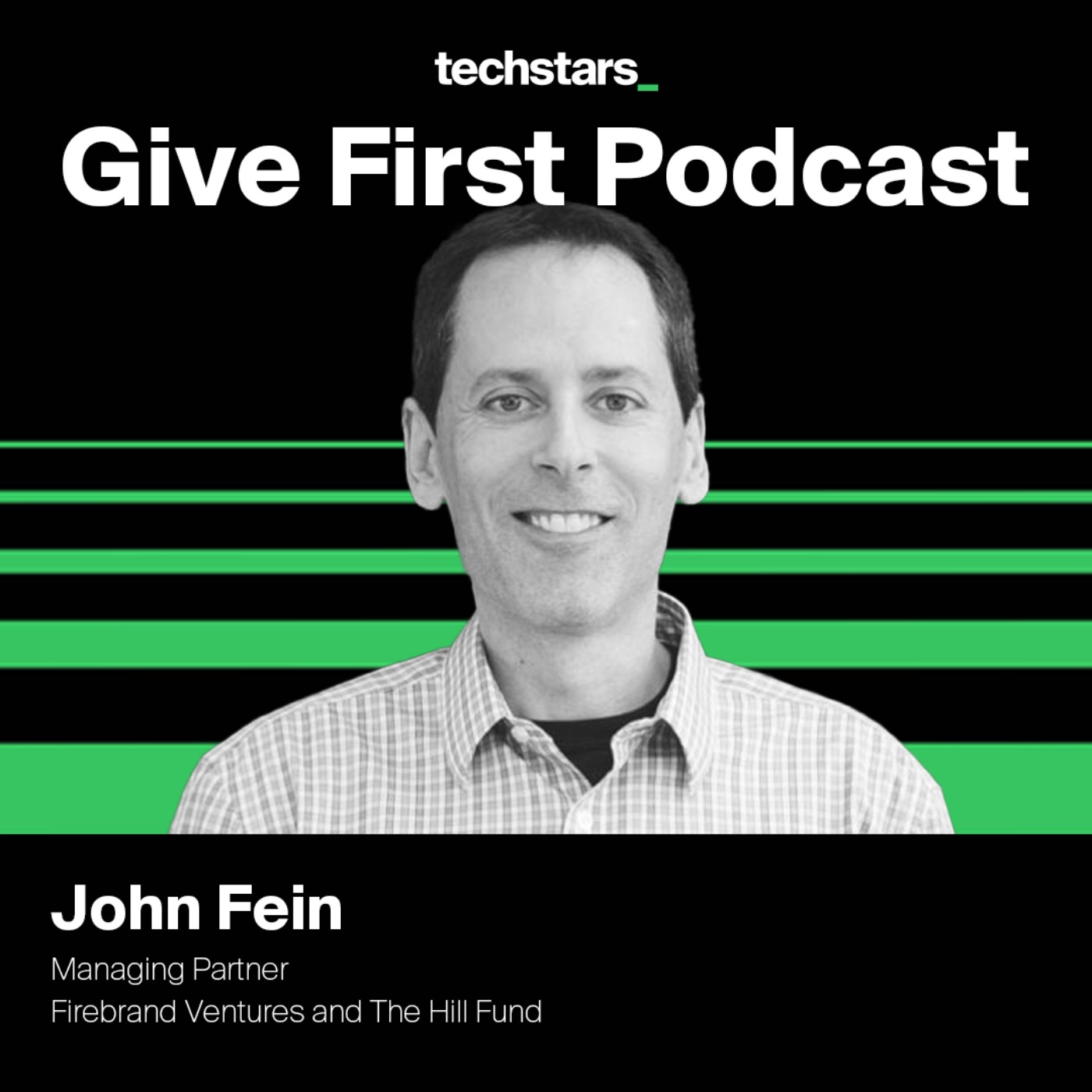
John Fein explains how “give first” helped him return to startups after a difficult personal period, then discusses his venture career and his Kansas City/KU-focused investing via Firebrand Ventures and the Hill Fund.
John Fein is from near Boston, grew up in Brookline, worked in San Diego for 15 years across five startups (co-founded one), then moved to Kansas City for a healthcare company that scaled from 0 to 1,500 employees and was acquired by a Fortune 10 firm. He previously served as a Techstars Managing Director. He co-runs Firebrand Ventures in Kansas City and the Hill Fund, a University of Kansas-connected venture fund.
Cold outreach and helpful networks create “asymmetric impact.” Give First (helping without expecting return) can restart careers and build founder relationships. KU is an underserved startup ecosystem.
Brad Feld introduced John to Lisa Mitchell, leading to Kansas City connections. At Techstars he invested across three programs (~30 companies total). Hill Fund criteria require meaningful KU ties (e.g., Jayhawk founder/CEO). First Hill Fund investment: a KU alum CEO (2008) and software company Olbright Scholar raising Series A.
Written by AI. May contain mistakes.
Hosts David Cohen and Brad Feld explain the concept of 'Give First'.
“This is David Cohen, and I'm here with my amazing co-host, Brad Feld.”
Hosts provide a legal disclaimer regarding the podcast content.
“discussion is an expression of personal opinion and does not represent the opinion of Techstars or any company we discuss.”
John Fein shares his career journey from Boston to Kansas City and his experience in startups.
“Yeah, I'll condense my long and winding road.”
John discusses the impact of his father's passing on his career and decision to return to startups.
“And I was really personally reeling from it for a couple years.”
John emphasizes the importance of reaching out and networking, illustrating how it transformed his career.
“Everybody was just incredibly helpful, welcoming.”
John recounts how he joined Techstars and his transition into the investor role.
“startups and you know now venture investing right comes from the fact that this guy answered this email and connected you to some people and he didn't have to do that and that to me is you know Brad's magic, right?”
John reflects on his early days at Techstars and the excitement of working with founders.
“And, you know, getting off my butt and and reaching out to people.”
Discussion on the relationships formed during John's tenure at Techstars and their importance.
“And so we talked about PillPack and just everybody that I met with that day at Techstars, everyone said the same thing.”
John narrates the creation of Firebrand Ventures and his partnership with Chris Marks.
“And talking about the value that the founders got out of it.”
Learn about the transition from a generalist fund to a KU-focused fund.
“Yeah, it was an LP in Blue Note and had known him that way.”
Discover the criteria and focus areas for investing in KU startups.
“Well, that's a big shift, I guess, a big bet too, in a way.”
Explore the plans for collaboration with other investors in the KU ecosystem.
“We can be a lot more efficient in who we target.”
Understand the changes and challenges in Kansas City's startup community over the past decade.
“You know, the 10 years you've experienced, 10 plus years, I guess now you've experienced a Kansas City startup community and the broader entrepreneurial ecosystem.”
Learn about the importance of community and continued engagement in the entrepreneurial network.
“Well, it's always awesome to be in the middle of these things and watch them come so far, even if it does take decades.”

Get the gist, explore an idea or ask about something said.
 Claude
On Give First, what are the key points of this episode?
Searching your listeningAutomatic transcript. May contain errors.
0:00David Cohen: Today on the Give First podcast, we have my friend John Fein of Firebrand Ventures in Kansas City. They also run the Hill Fund, which is a Kansas University-connected venture fund. John is a former Techstars Managing Director, and it's really interesting to hear all of the intersections with Techstars and the network in his career and how Give First benefited him in getting back into what he loved and entering a period of his life that was pretty hard. That story coming up right now on the Give First podcast.
0:31David Cohen: Hi, everyone. This is David Cohen, and I'm here with my amazing co-host, Brad Feld. Hey, Brad. And this is the Give First podcast. In the startup world, Give First means simply trying to help anyone, especially entrepreneurs, without any expectation of getting anything back. So we'll be talking to mentors and founders about what Give First looks like in action and how it makes great entrepreneurship possible. We polled everyone and they said consistently that their favorite part of the show was the legal mumbo jumbo. So here it is. The following discussion is an expression of personal opinion and does not represent the opinion of Techstars or any company we discuss.
1:05David Cohen: Our conversations for informational purposes only, including any mention of securities or funds. This is not legal business investment or tax advice and is not intended for use by any investor. Certain of Techstars funds own or may own in the future securities and some of the companies discussed in this podcast. Got it?
1:27David Cohen: hey john welcome to the get first podcast great to be here thanks for having me yeah it's good to see you and uh we just saw you at founder con which was really fun we had uh here in boulder and had a whole bunch of former uh tech stars managing directors show up and and you're in that group uh you you your your story did not start or end with tech stars it was somewhere in the middle but tell us a bit about yourself and maybe some of the things you've worked on in your career. Yeah, I'll condense my long and winding road. So originally from right outside of Boston called Brookline, Massachusetts, grew up there, went to college in Central Mass, moved to Southern California a couple of years after I graduated, mostly because living in San Diego seemed like a cool idea at the time.
2:11And it was, and ended up staying out there for 15 years. And that's when I got the majority of my startup experience. So I was a part of five different startups, while I was in San Diego, one of which I co-founded. Our son was born after the fifth one. And I told my wife, I just needed to get like a regular job for a while. And so I got a job with a healthcare company that at the time was not a startup, but not a big company. They're probably about 300 employees. And that's actually the company that took me from San Diego to Kansas City. And that was an amazing project. In fact, I think I may have sent you photos of it way, way back in the day.
2:53Basically, my job was to spin up their new operation in Kansas City. And so I knew I needed to be here for that. And so we built this, went from zero to 1 ,500 employees and billions in revenue in just that one operation. And then it was acquired by a fortune 10 company. And, uh, so that, uh, change everything like, like it usually does and, uh, became a very different, different environment. But, um, uh, so that was sort of the, a lot of what led up to, uh, me joining tech stars, but then there was a lot of sort of, uh, personal things that happened between, between then as well.
3:35David Cohen: Yeah. So tech stars comes along, like, what's the story? How did you get connected to it and what was going on in your life at that moment? Yeah, so my dad had been sick for a while with a terminal illness, and he passed away in 2011. And I was really personally reeling from it for a couple years. And so it really took me a couple years after that to realize I was really unhappy in my job. Uh, it, my job was awesome in the beginning, but it wasn't entrepreneurial anymore. I didn't feel like we were building anything exciting. And, uh, just that combined with, you know, my dad's passing and I, after two years, I kind of just snapped out of it and was like, I got to get back to startups.
4:27And the first thing I did, I'd been following Brad's blog at phil.com. And I really appreciated he wasn't just like pulling back the curtain on VC and startups. He also interjected a lot of like mental health stuff in there, which I thought was great and unusual for that time. And I just really sort of gravitated towards that. And so I just decided to email him one day. I was just like, hey, listen, here's my situation. Like I was I was a bunch of I was part of a bunch of startups. I got into this job, got, you know, miserable. I have to get back to startups. I know you have ties to Kansas City.
5:05Can you introduce me to anybody? And he introduced me. The first person he introduced me to was Lisa Mitchell. And so I met with Lisa. She introduced me to a bunch of people. Everybody was just incredibly helpful, welcoming. They didn't know me, but they helped me anyway. And sort of those connections that, ironically, that Brad had initially made for me, I think circled back to Techstars. And I think that's how you eventually found out that I existed and you reached out to me and then that whole process, which was interesting in and of itself. So I think that was the whole lead up sort of going through this personal struggle, which really prompted me to reach out to Brad and then just kind of all went from there.
5:51David Cohen: So a couple threads to pull on there that I think are super interesting. I mean, first of all, that's your own random story with Brad. to have the whole founding of tech stars is a similar random story you know i i reached out to him and you know tech stars grew out of that random outreach um you sort of getting back towards startups and you know now venture investing right comes from the fact that this guy answered this email and connected you to some people and he didn't have to do that and that to me is you know Brad's magic, right? And his huge network, but also his willingness to, you know, react to a random email and actually try to be helpful.
6:31David Cohen: It is asymmetric impact, right? It has enormous impact on the other side of the email, but it takes Brad probably, what, a couple of minutes, right, to be willing to do that. So I think that's the epitome of give first. And I know that people that receive that pay that forward. I know you've done a lot of that. So that's one area. The other is just, you know, not just knowing what you want to do, right? Like if you sort of being unhappy with something, knowing you want to be in the startup world and taking the initiative to change your life, it sounds simple, but it's sometimes hard to kind of get out of the status quo, right?
7:08David Cohen: So those are the two things that I'm hearing and the way you tell the story. Yeah, spot on. And, you know, I worked with there's this stereotype of big company employees that they just kind of punch the clock. Right. They clock in and clock out. And that's I worked with a lot of really smart, really driven people on our teams. They work startup hours. And but, you know, at the end of the day, they weren't they weren't happy. And I think a lot of them just really struggled to figure out what should I do? How do I get out of this? How do I start a new chapter? And I had just had the benefit of knowing that it was startups because that's what I had already experienced in my life and knew that's what sparked my passion.
7:55And so, yeah, it was just a matter of waking up for me, really. And, you know, getting off my butt and and reaching out to people. And and, you know, it's scary sometimes to reach out to people cold. Right. They don't know you. You're afraid they're going to maybe say I'm not interested or even just that they won't respond. And so, yes, the fact that, you know, Brad and everybody in Kansas City that I met with was just so incredibly helpful when they, again, like they had no idea who I was, was amazing. And that's what my new chapter wouldn't have started without that, for sure.
8:36David Cohen: So you get into this new chapter and somehow you are on the radar of Brad and eventually we talk and it's like, oh, you know, this guy would be a great managing director to run a Techstars program we happen to have interest from at that time Sprint. in Kansas City to bring Techstars there as a new location for us and ended up bringing you into the Techstars family at that point. Talk about that experience of kind of jumping back in, but maybe a bit more on the investor side now. Yeah, yeah. I'll start with when I first flew out to Boulder to meet you and the rest of the team. So at that point, I had still in my head thought I was going to be a founder again.
9:17And so this accelerator thing was all new to me. I obviously knew about Techstars and knew what accelerators did, but I didn't visualize myself doing that right away. Obviously, I was incredibly excited to meet everybody. And at that time, the Techstars team wasn't super big, right? And so I met everybody in the senior team in a few hours. And you and I went out to lunch and I still remember, you probably don't remember this, but we're talking about PillPack because I had a pharmacy background and, you know, PillPack was still sort of growing.
9:52David Cohen: Sorry, I was just saying, I was showing you PillPack, which is the - Oh, yes, yes. The pills I'm going to take today at two o 'clock. That's awesome. Don't worry, I'm fine. It's just vitamins. But I still am a customer of that today. That's fantastic. Do we remember that conversation? I think the lunch was barbecue, if I remember correctly. That's right. Yeah, it was good memory. And so we talked about PillPack and just everybody that I met with that day at Techstars, everyone said the same thing. It was just like how much everyone cared about founders, how much they that was their mission in life, right, to help founders, to help entrepreneurs.
10:26course. And I just, after that, I was so energized. My wife, when I got home, she was like, oh my God, you have to pursue this because you're a different person now than you've been for the last couple of years. So that's how it started. And man, just coming in from the investor side was great, was scary. I had to learn a ton. It felt like a sink or swim in a good way. and and also like I had to I had to really um continue to improve on on how to be a great mentor and for myself or for the founders and so um that was another journey right that started but I tell this story all the time like you know starting in 2013 my first day at Techstars was November 25th 2013 and starting on November 25th I would wake up with an adrenaline shot like every morning and that didn't stop because it was just such an incredible experience.
11:28David Cohen: It's a, I'm sure in those moments and I think everyone in startup land feels that it's a little bit of the imposter syndrome, right? Like what am I doing investing and stuff? Like I haven't done that before, but it's just like anything else. You, you do it and you learn and you were surrounded by people that were willing to, you know, give you some coaching and the benefit of their experience. And so you had how many classes or companies roughly did you invest in through Techstars? So, yep, three programs. So 10 each over three years, so 30 total. And I imagine, you know, here it is like what, 10 years later, you're probably still in touch with some of those folks that are still building and going.
12:05Oh, yeah, definitely. Made great friends, lasting relationships. Also ended up investing in a few out of Firebrand. So it was, yeah, it was just whenever I each, you know, we do this sort of debrief at the end of every cohort we did. I don't know. I'm sure MD still do this. And talking about the value that the founders got out of it. And as much as Techstars is an incredible network, which it is, the mentors were amazing. The content's amazing. It was always the relationships, right? Like it was always the bonding that they took away. And it was the same for me. So it was great.
12:44David Cohen: Yep. And that led you to, after doing that, there's another interesting story of sort of intersecting networks, which is one of your partners, who was someone that I had previously invested with here in Boulder. So how did your partnership come together around Firebrand? Yeah, again, started with Techstars. You know, we met through the Techstars network. When we first met, we were both investing out of our respective first funds. So that was Chris Marks we're talking about. And he had raised Blue Note Ventures. And we ended up co-investing in four companies together. And so it was another great excuse to come back out to Boulder on a regular basis and catch up with Chris.
13:28And we just were very similar in our approach to how we invested, how we helped founders, you know, being present, being responsive. and then we were both raising our second funds at the same time and just started talking. It was me that called him. And I was like, hey, do you remember when you said, you know, we were sitting in a coffee shop on Pearl Street and you remember you said that we should do something together? Like, what if we do this? And so that's how it started. And we joined forces for what we ended up calling Firebrand 2.
14:01David Cohen: Yeah, it was an LP in Blue Note and had known him that way. and he's been a mentor around Techstars for a long time. You're right, very good first guy, great guy. And of course, that would lead to today, the motion is that of course, Techstars is a small investor in your funds and you've now also got the Hill Fund. So talk about the evolution of the firm and kind of what you're focused on today. Yeah, it was definitely not the plan to do a KU focused fund that we're calling the Hill Fund for Fund 3. We were initially gonna do a similar type of fund, sort of a generalist seed stage fund that invests between the coasts.
14:38But my initial idea was to do maybe like a little carve out. We wanted to double down on investing where we physically are, which of course includes Kansas City. I had had a relationship with KU for many years just through guest speaking and guest lecturing there. And so I went to a person I knew at the endowment and said, hey, what if we carve out just like a little$5 million piece or something like that of our new fund? Just dedicate that to Jayhawk startups. And he said, he was like, yeah, I love the idea. But I said, I have no data to back this up whatsoever. I don't know if the Jayhawk universe could even support this.
15:14And so he said, OK, go back and get your data and we'll talk again. And so it was this sort of two month data gathering and validation process that led us to realize that KU was a top 15 university in the US for exit value. that they had had Jayhawk founders that had$13 billion plus exits since 2016. So this is a formidable ecosystem and one that I felt was underserved. And so I went back to the endowment and that's where it went. And long story short, we just decided to dedicate the whole fund to KU alumni startups. And so that's what we're doing.
15:54David Cohen: Wow. Well, that's a big shift, I guess, a big bet too, in a way. And what does that mean in terms of the focus of the fund? You have to be connected to KU or do you have to be working in specific verticals or industries? Yep. Great question. So the first criterion is there has to be some meaningful KU connection. And typically that's going to be an alumni founder. So the first investment we made was back in June, right in our wheelhouse. Jay Hawk, founder, CEO, had graduated KU in 2008. Olbright Scholar, you know, software company raising a Series A, that's right in our wheelhouse. Now, if sometimes the CEO isn't a Jayhawk, maybe it's a co-founder, maybe it's someone else, a senior member of the team that has a meaningful amount of equity in the company.
16:44And so that's really what we're looking for is that meaningful KU connection. And we're investing a little bit later stage than we did before. So late seed Series A versus seed with our previous funds.
16:55David Cohen: No specific industry or vertical focus? No. I mean, we're going to be tech first for sure. And within tech, software's our sort of zone of competence, I guess. But yeah, if we need to be flexible, we will be. But certainly it has to fit some of the other criteria we have, including exit horizon and things like that. Sure. But if Chris or somebody finds a, I don't know, you know, CU buff company or God forbid, like one from Manhattan or somewhere, you just would not, that's not your strike zone. No, it's not our strike zone. So, so we, it's, it's the, it's the sort of both sides of being hyper targeted.
17:37Yep. So, so we, we will, we can occasionally make an exception that there's no meaningful KU tie if it's really, really super compelling. But yes, you're right. Most of the time it will be some KU connection there, which is, it's also a very different way for us to source deals because we're not, we're not going to get nearly as much deal flow, but that's okay. And probably good. We can be a lot more efficient in who we target.
18:04David Cohen: Makes sense. Makes sense. Yeah. I mean, it's very clear targeting. And of course, like any venture investor, you know, maybe you just hand them one of the little flags to wave and they become a fan of the team and say, that's pretty meaningful connection. but you're not going to normally do that, of course. That's right. Cool. And do you ever co-invest with other, I don't know, managing directors? There's a bunch of them running their own funds now. Are you going to be able to draw any of them in to maybe invest a bit more in sort of KU activity? Yeah, I certainly hope so. That's definitely the goal.
18:34We're not going to do this ourselves. We want to bring plenty of co-investors to the table. So we certainly plan on drawing them in. Obviously, a lot of the former Techstars MDs that we all hung out with in Boulder a couple of weeks ago. They're very much at the top of the list. And so that's definitely part of the plan is to bring in other co-investors, bring in more capital to this ecosystem. Because the other part of the data we discovered is even though KU is a top 15 school, any school, even in the neighborhood of KU, has raised multiples of the amount of capital that KU founders have. And so we feel like there's definitely opportunity to bring more capital to the table.
19:10David Cohen: Maybe spend a couple of minutes on, You know, the 10 years you've experienced, 10 plus years, I guess now you've experienced a Kansas City startup community and the broader entrepreneurial ecosystem. How has that changed and sort of what's still missing for the next wave? Yeah, great question. So, you know, I know Brad has famously said, you know, it's a 20 plus year process to become a really self-sustaining startup community. You know, I think Kansas City is still getting there, but it has grown by leaps and bounds, which is great to see. I started engaging in 2012. In fact, one of the first ways I did, even before I reached out to Brad, was I was mentoring the company that was living in Brad's house that had won this contest to live there.
19:54So that was back in the sort of Kansas City startup village days, which is where that house was. It has grown immensely since then. So I think from a density, just sort of a quantity of founders, the amount of capital that's been invested, it's night and day in those 10 years. I think there's, you were going to say something?
20:16David Cohen: I was going to say, it's sort of like raising kids, right? It's the days are long, but then years go past when you think back on all that's changed, right? It really, it's completely true. And so it's sort of everything, like, for example, everything used to be in the Kansas City startup village. Startup village doesn't exist anymore. It sort of disbanded because I don't think that wasn't, it wasn't really needed anymore. And there were so many other pockets of startups around Kansas City. I think one of the things that still needs to be worked on, and I've talked about this a lot with other folks in the community is, you know, Boulder has downtown Boulder, you know, Austin has downtown and Capital Factory.
20:58There's no real like center of gravity, physical center of gravity. And in Kansas City, it's pretty spread out. There's been also a lot of growth in the area that I live, which is Johnson County on the Kansas side. So I think that's one thing that would be great to have is a little bit more concentrated density in the physical space. But, you know, and I would say seed stage is great. There's not a ton of pre-seed. There's not a ton of Series A. So it's getting better. So those are some of the things I think that they can still be worked on, but it's getting there.
21:34David Cohen: Cool. Well, it's always awesome to be in the middle of these things and watch them come so far, even if it does take decades. That's almost to be expected. And I know you're a huge part of that in KC and really excited about Firebrand and the Hill Fund and all the things you're doing. And thank you for continuing to engage in the Techstars network. I know you're still in touch with the portfolio and still offering time across the system and showing up for stuff. So I'm glad that some of these intersections have helped us make progress in Kansas City and the broader network. And thanks for all you do.
22:09Absolutely. And, you know, if it didn't come through already, you know, there was a former MD who was there in Boulder with us. She did a great LinkedIn post and really just just reemphasizing the community. great communities don't go away you can rely on them and you can get help from them and you can help them in return and that's what Techstars has been to me so extremely grateful for that initial opportunity when you and I went out to lunch and just as grateful today that it's an incredible support system.
22:44David Cohen: Awesome John, great to catch up with you I appreciate you taking the time and good luck with the new fund. Thank you, thanks for having me Thanks a lot for listening to the show today. We'd love to hear your feedback, ideas, or who you'd like to hear next on Give First. And please leave a rating and review, ideally a good one, and reach out anytime to podcasts at techstars.com or on Twitter, I'm at David Cohen. See you next time. Don't forget, Give First.
In this episode of the Give First podcast, David Cohen sits down with John Fein, partner at Firebrand Ventures and former Techstars managing director.
John reflects on the winding path of his career, from moments of uncertainty to finding renewed purpose through startups, venture, and community building. He shares how small acts of generosity, like answering a random email or making an introduction, can create lasting impact and open entirely new chapters.
The conversation explores John’s journey through Techstars, the evolution of Firebrand Ventures and The Hill Fund, and his long term commitment to the Kansas City startup ecosystem. Along the way, David and John discuss imposter syndrome, paying generosity forward, and why Give First is less a philosophy and more a practice that compounds over time.
John Fein LinkedIn ➡️ https://www.linkedin.com/in/johnfein/
Hosted on Acast. See acast.com/privacy for more information.