Ask ChatGPT
 Give First
29 Jul 2025 · 32m · 13 chapters
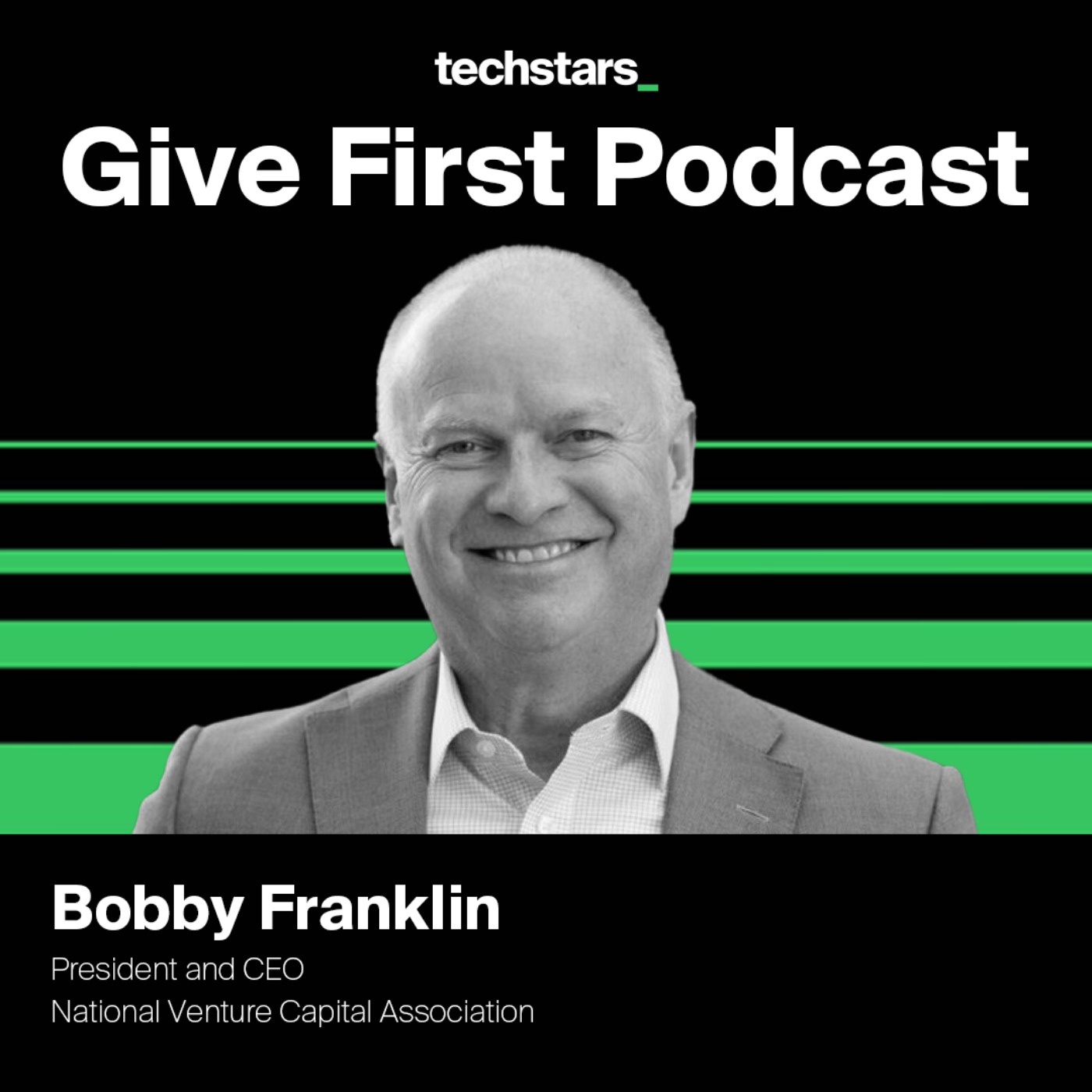
Bobby Franklin, president of the NVCA, explains how U.S. public policy and regulation affect venture capital and startups, arguing Washington often misunderstands venture’s structure (many small, early-stage funds). He also discusses NVCA’s 501(c)(3) Venture Forward mentorship and education programs for emerging VC managers.
Bobby Franklin grew up in Arkansas and moved to Washington in 1989; he spent 30–40 years at the intersection of public policy/lobbying on Capitol Hill. He became NVCA president in 2013. Hosts: David Cohen and Brad Feld.
Policy changes can unintentionally harm founders and the VC ecosystem by reducing liquidity/exits and increasing compliance burdens. Fundraising is constrained by fewer distributions to LPs.
2017 Tax Cut and Jobs Act proposal taxing stock options at vesting; FinCEN anti-money-laundering rules requiring exempt reporting venture funds to create AML programs (starting January 2026); SEC exempt reporting advisor/RIA compliance issues for funds-of-funds and secondaries. Venture Forward examples: VC University (~5,000 participants), emerging manager office hours, and mentor matching (mentors rate it higher than mentees).
Written by AI. May contain mistakes.
Bobby Franklin shares his background and role at NVCA.
“Certain of Techstars funds own or may own in the future securities and some of the companies discussed in this podcast.”
Franklin discusses the significance and impact of the venture industry.
“And I said, well, I got a finance degree in college.”
Challenges of educating policymakers about venture capital.
“National Venture Capital Association, that sounds like, you know, some organization that tries to support the venture capital business.”
Discussion on unintended consequences of stock options taxation.
“And so we're all about trying to make sure that startups and entrepreneurs can do what they do, take risk, swing for the fences, take chances and build something amazing.”
Franklin elaborates on current regulatory issues affecting venture funds.
“I think that's a really useful thing for people listening to understand.”
Discussion on the importance of mentorship within the VC industry.
“And it's often against the backdrop, as you explained, of people perceiving venture capital as something different than what it actually is.”
Franklin discusses efforts to improve diversity in the VC industry.
“So talk a little bit about how MVCA thinks about mentorship and some of the programs that you've put in place.”
Learn how mentorship enhances the VC community and benefits both mentors and mentees.
“And the most important part, and back to the point of your question, is all of that has come alongside mentorship opportunities.”
Discover the mission and future plans of Venture Forward in supporting VC managers.
“I get to see venture investors all over the country.”
Understand the perspective that true success in venture capital is determined by raising multiple funds.
“I know a lot of a lot of my friends and peers who have been in venture for a very long time that carry around the idea that they still haven't made it even when they have.”
Examine the current challenges in the VC industry, including fundraising and regulatory hurdles.
“podcast are are founders but i expect this a few venture capitals will listen to it and i think founders are always interested in venture industry.”
Learn about the regulatory challenges faced by the venture capital industry and their impact on liquidity.
“That shouldn't be non-qualifying investments.”
Discover personal anecdotes and a fun Easter egg challenge for listeners involving the hosts' backgrounds.
“We lost our exemption in 2016 when we started investing 30 % of our funds in other venture funds.”

Get the gist, explore an idea or ask about something said.
 Claude
On Give First, what are the key points of this episode?
Searching your listeningAutomatic transcript. May contain errors.
0:04Hi, everyone. This is David Cohen, and I'm here with my amazing co-host, Brad Feld. Hey, Brad. And this is the Give First podcast. In the startup world, Give First means simply trying to help anyone, especially entrepreneurs, without any expectation of getting anything back. So we'll be talking to mentors and founders about what Give First looks like in action and how it makes great entrepreneurship possible. We polled everyone and they said consistently that their favorite part of the show was the legal mumbo jumbo. So here it is. The following discussion is an expression of personal opinion and does not represent the opinion of Techstars or any company we discuss.
0:38Our conversations for informational purposes only, including any mention of securities or funds. This is not legal business investment or tax advice and is not intended for use by any investor. Certain of Techstars funds own or may own in the future securities and some of the companies discussed in this podcast. Got it?
1:00Well, today I am delighted to get to spend some time with Bobby Franklin. Bobby is the president of the NVCA, the National Venture Capital Association. We've been friends for a long time. Bobby, welcome. Thanks, Brad. Thanks for having me. Why don't we start off with just a quick intro. Tell us a little about yourself and the National Venture Capital Association. Well, the short intro on me is I grew up in Arkansas and came to Washington for a six-week internship in 1989, and I still haven't left. So I've been at the intersection of public policy and lobbying and working on Capitol Hill for the last 30, 40 years.
1:37And I found my way to the NVCA through an executive recruitment firm who called me back in 2013 and said, NVCA. I said, I've never heard of that. What's that? And they described it. And I said, well, I got a finance degree in college. So that's somewhat familiar. And so the more I learned about what the role entailed, the more excited I got. And they hired me in 2013. 12 years later, what do you think the most surprising thing about the NVCA has been? You know, I guess the most surprising thing is how important the venture industry really is and how seminal it has been a part of so many of the most iconic and important companies in the world.
2:25not just the U.S., but the entrepreneurial ecosystem that exists, and even the venture model that was really born here in the United States, just how impactful it has been and can be and how little so many people know about it. Well, for somebody who says, okay, cool, National Venture Capital Association, that sounds like, you know, some organization that tries to support the venture capital business. What are the real initiatives of the NVCA? When you think about how you partition your time and energy, how do you think about that? Here's the way I think about it, and it's sort of a reflection on Washington and the lack of understanding that Washington has about startups and where big companies come from and things like that.
3:14And if you ask me to describe kind of our day-to-day, in Washington, public policy obviously is debated each and every day on Capitol Hill, in the administration, at agencies, all over the place, even in states. And at the end of the day, the challenge that we have is that we get lumped together with lots of other groups that look nothing like venture. And so most of our days are filled with trying to educate policymakers about the unintended consequences of what they're about to do. In other words, many times they will have in their mind the idea that we need to do something around private funds.
4:01And in their mind, their fact pattern is some big hedge fund or some big private equity fund. And that really doesn't look anything like the median size venture fund. And just to remind your listeners, in 2024, there were between 400 and 500 venture funds raised in the United States. And the median size fund was like$21.3 million. And if you take out California, New York, and Massachusetts, that median drops down to$10 million. And so trying to help policymakers understand what most venture funds raised in the U.S. actually look like and what they are and how they're impacted by public policy is the typical day and the typical challenge.
4:51Getting people to understand that it's not just these gigantic asset management things, but instead a whole bunch of small, mostly early stage companies that are really helping at the very beginning formation of our venture funds helping at the very early stage formation of companies. That's right. And you look at our sort of public policy agenda, I'm very proud to say that when we lay out that matrix, almost all, there's a few exceptions, but almost all of the policy issues we're focused on really go to help the portfolio companies and not venture funds at all. And so we're all about trying to make sure that startups and entrepreneurs can do what they do, take risk, swing for the fences, take chances and build something amazing.
5:47Give us give us an example of that. I think that's a really useful thing for people listening to understand. As I said, Washington doesn't understand how companies are formed or anything else. And many times what they're thinking about, again, has nothing to do with venture. So case in point, 2017, the first Tax Cut and Jobs Act, when it was going through, one of the biggest issues we had to spend the most time on was a proposal that was on the table that would have changed the taxation of stock options to when they vested versus when they were exercised. And the havoc that that would have caused in the entrepreneurial ecosystem when so many people forego salaries for stock options, and then all of a sudden Washington's saying, oh, you're vested.
6:38You've been there long enough. Sorry, now you owe Uncle Sam. And you're like, wait a minute, these companies, I mean, some studies show 75 % of all venture investments go to zero. It's like you're asking somebody who has no real income to pay taxes on something that at the end of the day is more likely to be worthless than worth something. So you're asking people who are really the backbone of driving innovation in our country to give a free loan to the government. And, you know, that was a classic example of how Washington doesn't understand. They were focused on big executives at Fortune 500 companies and somehow raising taxes on them.
7:19And they had little idea of the unintended consequence. So that's, I'd say that's a classic tax example. And then when you get into your regulatory issues and like we're dealing with one right now and it's less about the entrepreneurs and more about those small, median size venture funds where FinCEN, the Financial Crimes Enforcement Network, did a rulemaking last year and they said, we want all venture funds. So including the very small ones who enjoy what's called the exempt reporting advisor status to come up with an anti-money laundering program. And we're like, wait a minute. So let me get this straight.
8:02A median size fund that has, call it$400 ,000 to run the entire fund, which probably means that nobody's taken a salary as the general partner, managing partner. you want them to spend what little dollars they have creating something that would be useful to law enforcement and let me remind you that they're not holding cash they've gotten a promise from an lp to do a capital call at some point that then they pass on and by the way that money is coming from a bank who has robust anti-money laundering programs and bank secrecy rules and all this sort of stuff. So it's like, you don't understand who you are regulating.
8:43And, you know, that's one we're fighting right now because unless something changes, a lot of check writers are going to have to come up with something starting January, 2026. And so, you know, that's another example. And although that one is more towards the venture fund or the check writer, unless the entrepreneur, it absolutely impacts all entrepreneurs, particularly early stage, because if these median size funds that will write smaller size checks have difficulty in getting those checks of the entrepreneurs, the whole ecosystem suffers. I think those are great examples. And, you know, I've seen many things like that over the years, some of which I've been more or, you know, more less deeply involved in trying to understand and navigate, but appreciate not just the effort, but the complexity, because it's not just one person you have to help understand, but a whole bunch of people.
9:39And it's often against the backdrop, as you explained, of people perceiving venture capital as something different than what it actually is. Let's shift gears a little bit. An area that I've been involved with NVCA over the years is around this concept of mentorship, not just of other VCs, but of founders and sort of thinking about how people in the ecosystem broadly, Rick, can help each other. So talk a little bit about how MVCA thinks about mentorship and some of the programs that you've put in place. Well, I love the question because if you think about venture as an industry going back, you know, 50 years and more, this has really been about an apprenticeship type business.
10:30And then the history shows that that's how everything was created. And so there had to be mentors inside venture funds or there wouldn't be a next generation of check writers. And I think, and you could speak to this more than I, but that's evolved over time. And it's a little bit harder, I think, for, you know, particularly think about through the pandemic and people weren't really in this office together. And that sort of changed the way the world works. And as you think about how the industry will be a better version of itself, it has to learn from those that came before it. And it has to, it's not, I don't think it's something that you can just, you know, read a book about and then suddenly go out and be a, raise a fund and be a check writer.
11:14You've got to learn. Wait, you're suggesting my Venture Deals book is not enough? I, Liz, I think it's an absolute requirement, but you might need a little more guidance from mentors to do it. And so, you know, we started, actually, when I interviewed for the job back in 2013, one of the recommendations I made at the Times, I said, as somebody that's been in Washington a long time, and at that time I was coming from a very large trade association, and we had a 501c3 sort of connected entity and it was a great way in that case that was the wireless industry to show policymakers what wireless service could do how it could save a life stop a crime do things like that and that was back when you know you had to pay for your minutes and if you roamed on somebody else's network it was even more expensive and so it was a way to demonstrate value.
12:14And I said, I'm not sure what it should be, but I feel like every trade association should have some sort of 501c3 arm to it. And after a couple of years, we came to realize that, wait a minute, I mean, this industry is so white male dominated. You know, we've got to change that. And if you care about public policy, then you should want this industry to be more diverse because there are diverse policymakers. And you can't go to Nancy Pelosi at the time and, you know, say, here's what's important in this industry if she looks at your industry and says, well, wait a minute, you're not doing anything to try to improve what the diversity looks like.
12:58Now, I say that, and I know now in today's political climate, DEI is a bad word, and And you're not supposed to say that in front of anybody. But I think that it is so important to make sure that you have the best that the country has to offer. Be engaged in supporting entrepreneurs of all stripes, of all colors, of all backgrounds. And by the way, of all geographies. There aren't that many venture funds in Arkansas where I grew up. And even getting a finance degree from the University of Arkansas, I don't even remember talking about venture capital in the 80s. And so, you know, as it became clear that we had these great needs, then the mission of what Venture Forward was all about started to take shape.
13:52And so very proud of sort of helping start this organization, looking at what we've accomplished over, we'll celebrate five years this year. And with folks like you and others that helped us get off the ground, we've been able to have almost 5 ,000 people go through something called VC University, which is just democratizing information education about VC investing. We've been able to hold, you know, hundreds or thousands of emerging manager office hours where new managers can learn from experienced GPs and LPs, not to pitch for a fine, but to help get advice or to throw a thesis on the table or to, you know, lay out a plan and say, here's what I intend to do to try to be a participant in this industry and get real world advice from these folks.
14:51And the most important part, and back to the point of your question, is all of that has come alongside mentorship opportunities. And so we make it very easy for those in the industry to donate an hour of their time a month over a few months. And we match them with new emerging managers. And those established GPs can just share with what has helped them and give these mentees kind of feedback. And actually what we found is the mentors actually score this in an after-action survey higher than the mentees. So the mentors are actually getting more out of it, according to our data, than the mentees are, although the mentees are still over 90 % positive with what's happening here.
15:44And so watching the community and just kind of at the end of the day, I think of ourselves as facilitators and conveners. And as long as we're putting the right people that want to be helpful with folks that need help together, we're doing our job. When you think about the last comment, which is that the mentors rate this even higher than the mentees, and you know many of the mentors, so you understand the different characteristics of the people participating as mentors. What do you think their motivation in the absence of having the experience is? So, you know, day one, I haven't had the experience of being a mentor in these programs, but what the hell, I'll do it.
16:26Like that's stage one. So what's that motivation? And then stage two is I had this, you know, mentor mentee experience or I had them multiple times and I'm rating them really highly. What do I think now about the value of it and what's my motivation for continuing? That's a that's a really good question. I think on stage one, they haven't done it yet. I think some of them, because they appreciate the work that we do, either at NVCA or putting out model legal documents freely to the world to help facilitate investing or what we've been able to venture for. They've heard about it. They appreciate kind of the work that we've done.
17:07And I think in some cases, I think it feels like a little bit of an obligation on their part, willing to give back, willing to do something, you know, kind of positive. And it gets enough in the door. And I think once they have that then very positive experience, it's a lot easier to get them to come back that second time around, which has been, you know, fantastic. Now, obviously, schedules and family obligations and everything else, work gets in the way. And sometimes they can't sort of sign up for a certain period of time. But it's been, I think, something that has been remarkable to watch the industry really take care of its own and really help the next generation.
17:54And that's so good to see. And I think that, you know, the other part of what I think is great about it is I get the impression sitting at the seat that I do. I get to see venture investors all over the country. But I know that venture investors all over the country don't know all those other venture investors. And so when I, you know, I think part of the beauty of this is that they get to meet somebody that's not in their network. They get to meet somebody that's coming from a different perspective. And I think they get to learn as much as anything else. And I think that's the cool thing that makes it work.
18:32If you were describing to somebody today, Venture Forward five years later, and somebody said, all right, I got it. Venture Forward is a 501c3 arm of the MVCA. It's involved in a bunch of activities, you know, with a mission of blah. And the activities are, you know, activity one, activity two, activity three. How would you describe it to somebody? So, I mean, the way we like to talk about it is expanding, educating, and empowering a vibrant VC investor community in all senses of those words. and between vc university which is sort of a 101 between emerging manager office hours some of the research we do about what's happening inside the industry how we think about the history of the industry and make sure that the legacy of the folks that help get it started you know kind of stays stays out there and we've got a partnership with the computer history museum to make sure that many of those oral histories of some of the founding fathers are out there and see what people can learn from that.
19:51Those are sort of the programs, but what's even more exciting to me is what's on the, what's the next phase? Where does this evolve to? And if we think about VC University being kind of a 101, I think our sort of time and attention and focus of the board now is on, all right, what about 201? Like, let's think about, let's think about the industry and think about all the money that was in the industry in 2021, 22, and lots of first-time fund managers were able to raise a fund and get started. But as you and I know, the data shows they're not able to raise fund two in today's environment. And so what can we do to help those folks?
20:35we can't you know just automatically create more capital and we know that that's many times just a result of what cycle you're in or where interest rates are what's happening in public markets and how the downstream impact kind of finally gets down to early stage investing and how much capital is available and all that sort of stuff but what is it we can do to really support fund two, fund three, fund four type managers, because I don't think anybody thinks they've made it in this business until they've raised their fourth fund. At least that's my observation. And that was crazy to me. I first thought, well, you raised a fund, you made it.
21:19And they go, no, no, no, no. You've got to get to fund three or four before you really feel like you've made it. And so, you know, I think venture forward is really trying to develop an arm that can be a real muscle to those folks that are trying to get over that kind of fun three, fun four hump. I think that's great. I know a lot of a lot of my friends and peers who have been in venture for a very long time that carry around the idea that they still haven't made it even when they have. and this notion that I have a line I use regularly when people talk about venture capital as a thing or a career.
22:00And my short version is venture capital is the ideal example of a get rich, slow industry. It's that you work for a long time and it could be as long as a decade and you really don't know if you're any good at it. And then suddenly you know. and you may not be any good at it when you find out or you might be good at it but it takes it takes a long time it's not something that you get continual and and rapid feedback on i think that's very well said well let's shift gears as we're finishing up i i want to just talk about uh uh venture capital industry more broadly i think most people that listen to this podcast are are founders but i expect this a few venture capitals will listen to it and i think founders are always interested in venture industry.
22:48When you step back and think about the next year or two years, maybe two parts to the question. One is, what are the biggest challenges that you think face the industry if you sort of viewed the industry as a canonical thing? And then from your perspective at the NBCA, what are your priorities for the next year or two? I mean, looking at the industry, it feels like the biggest challenge is having that steady stream of capital that's available, right? So if it's so difficult right now for fundraising, unless you're in the top quartile, unless you're on fund six or 10 or whatever, I mean, that's the biggest challenge is fundraising.
23:37And why is that? We make the argument to policymakers that the challenge in fundraising is the lack of liquidity and distributions back to those that provide the capital in the first place, the LPs. And we certainly had to argue with the previous administration over sort of mergers and acquisitions and this just sort of damp blanket that was put on everything. And it got it was when the what it was, what's the adage when the elephants are dancing? You know, you've got to. You got to not get stepped on, get out of their way. Exactly. And so this big fight about, you know, big tech and little tech and big tech can't get bigger and all this kind of stuff.
24:21even though the FTC and the DOJ of the previous administration were sort of taking this approach of can't let big tech get any bigger, it was having a dampening effect on mergers and acquisitions of everything else as well. And so that was problematic. I think without IPOs and yeah, there've been a few lately, which is great and hopefully an IPO window of some sort, But I also think there have been structural changes in the IPO market where it's just going to be more difficult for companies to make it on public markets. And there's a whole host. I mean, we had NASDAQ into our last board meeting here in D.C.
25:04and we were talking through. They put out a white paper about what else can we do. And certainly in the current environment with the new chair of the Securities and Exchange Commission, I think there's an open door to explore things that could be helpful for companies going on to public markets. But when you put all that together, what you observe is that there just aren't many exits. And when there aren't many exits and you don't have that liquidity to give those distributions back to your LPs, then you yourself can't go back and raise another fund. And or maybe you can, but, you know, the half of the funds that were raised over the last couple of years aren't able to.
25:44So fundraising, lack of distribution, lack of liquidity, you know, I think that's what's really hurting and going to continue to hurt for a while. The industry, you know, you wish you just had this perfect level of capital. It doesn't take a lot in the grand scheme of things, but you had this perfect level of capital coming in. It's like you wish for normal weather, right? You don't want crazy weather or droughts and too much rain. It's like you just want normal weather. There's no such thing, right? And there's no such thing as just normal levels of capital. It's always influenced by something else.
26:18And I think that's probably the biggest challenge to the industry that I see and everybody else sees. We're certainly trying to do what we can around those issues. And that sort of bleeds into the second question, which is what are our priorities? And I think, you know, for one, it's if there are things that policymakers can do that could be beneficial or helpful to that liquidity challenge, those distributions, kind of getting money back to LPs, then we should be exploring those options. Again, I don't think there are a lot of easy answers there. And so it's a question that I've continually asked our board and others in the industry.
27:02Like if you know of something that Washington should be doing to help an M &A or IPOs or something, let me know. And we want to be, you know, kind of in the midst of having those conversations. And I think the other part of our priorities are right sizing regulation where it doesn't make sense. I mentioned earlier this FinCEN requirement that anti-money laundering programs should be created by all venture funds. That just doesn't make any sense. And so we need to address that. We need to work on other regulatory challenges, like if you're a small venture fund and you enjoy the exempt reporting advisor status at the SEC, great.
27:50But the reality is more people, I think Foundry had to become a registered investment advisor because you like to provide funding to others. You like to be a fund of funds. That shouldn't be non-qualifying investments. Neither should secondaries. And they're, you know, with an industry that is hurting for liquidity and distribution, secondaries are a very important part of making sure this whole thing functions well. And if you have this regulatory burden that you're facing because your 20 % non-qualifying bucket at your venture firm is getting filled up with secondaries or you're trying to help other funds get started, then you have to go spend a ton of money on regulatory compliance that was not created and has no public policy benefit for you in mind.
28:43It was created for some other part of the market and a line was drawn and too much of the venture industry got swept into that. And we've been working hard to try to get that right sized so that more funds can raise capital to deploy to entrepreneurs, which is the most important part of this story. Well, I love that you put an exclamation point at the end of that one because Foundry did become an RIA very early on in that cycle. We lost our exemption in 2016 when we started investing 30 % of our funds in other venture funds. And having now lived with those regulations for almost a decade, the overhead of them is non-trivial and the value of them is, as far as I can tell, zero from a sort of regulatory compliance perspective.
29:37It is. I mean, it's, again, going back to the very start of this conversation, Washington doesn't understand our industry at all. And they, when they came up with these rules in the wake of, you know, Dodd-Frank or whatever it was, it was focused on somebody else that doesn't look anything like the venture industry. And there is no public policy benefit whatsoever. Well, Bobby, thank you for the tireless leadership and work that you and the NVCA do. I'm going to end our discussion with an Easter egg for anybody to see if anybody actually listens all the way through these podcasts. I have no idea if they do or don't.
30:20I presume there's statistics somewhere in our podcast system that we can figure that out. But here's the Easter egg. And the first person who sends Brad at Feld.com an email with the Easter egg information, it will get a copy of Give First signed by the two of us, which requires some logistics. So, you know, I have to sign the book and then I'll send it to you to sign the book and then we'll send it to the person. But the Easter egg is this, which always warms my heart whenever I hear it. I grew up in Dallas and went to J.J. Pierce High School. And your wife went to Richardson High School, which was the competing high school to J.J.
31:01Pierce in Dallas. And we were both born in Arkansas. I was born in Blyville and I don't remember which town you were born in. Well, technically, I was born in Memphis, Tennessee, but I, my parents. But the people in Blyville think Memphis is part of Arkansas. Exactly. We lived in West Memphis. So I went home from the hospital to West Memphis, Arkansas. So I think that counts. So that's the Easter egg. If you send bradenfeld.com, Dallas, Texas, Arkansas, or any of the additional information, and they're the more the merrier, I'll share it with Bobby and we'll go from there. but only the first person.
31:39So you actually have to listen, I guess. I'm sure somebody will blog it on the web or stick it on LinkedIn and then the Easter egg won't be the Easter egg. In any event, Bobby, it was a delight to see you. And thanks for spending time on the Give First podcast. Brad, thanks so much for having me. Thanks a lot for listening to the show today. We'd love to hear your feedback, ideas, or who you'd like to hear next on Give First. And please leave a rating and review, ideally a good one, and reach out anytime to podcasts at techstars.com or on Twitter, I'm at David Cohen. See you next time. Don't forget, give first.
In this episode of the Give First podcast, Brad Feld sits down with Bobby Franklin, President and CEO of the National Venture Capital Association (NVCA). They unpack the disconnect between Washington, D.C., and the startup world, and why that gap poses a growing threat to innovation in the U.S.
Bobby shares stories from the front lines of venture policy, illustrating how small regulatory changes can have major consequences for emerging fund managers and founders. From the unintended impact of tax reform to upcoming anti-money laundering rules, this conversation reveals the hidden obstacles that could stall the next generation of startups.
Brad and Bobby also discuss how mentorship, education, and smarter policymaking can strengthen the startup ecosystem and why the venture community needs to lead that effort.
Bobby Franklin ➡️ https://www.linkedin.com/in/bfranklindc/
Hosted on Acast. See acast.com/privacy for more information.