 Ask ChatGPT

Sameer Dholakia’s leadership journey at SendGrid—how he joined during slowing growth, stabilized culture, re-accelerated performance, navigated an acquisition offer from Twilio, led the company to IPO, and later grew SendGrid inside Twilio; he connects these events to a “give first” philosophy from his mother.
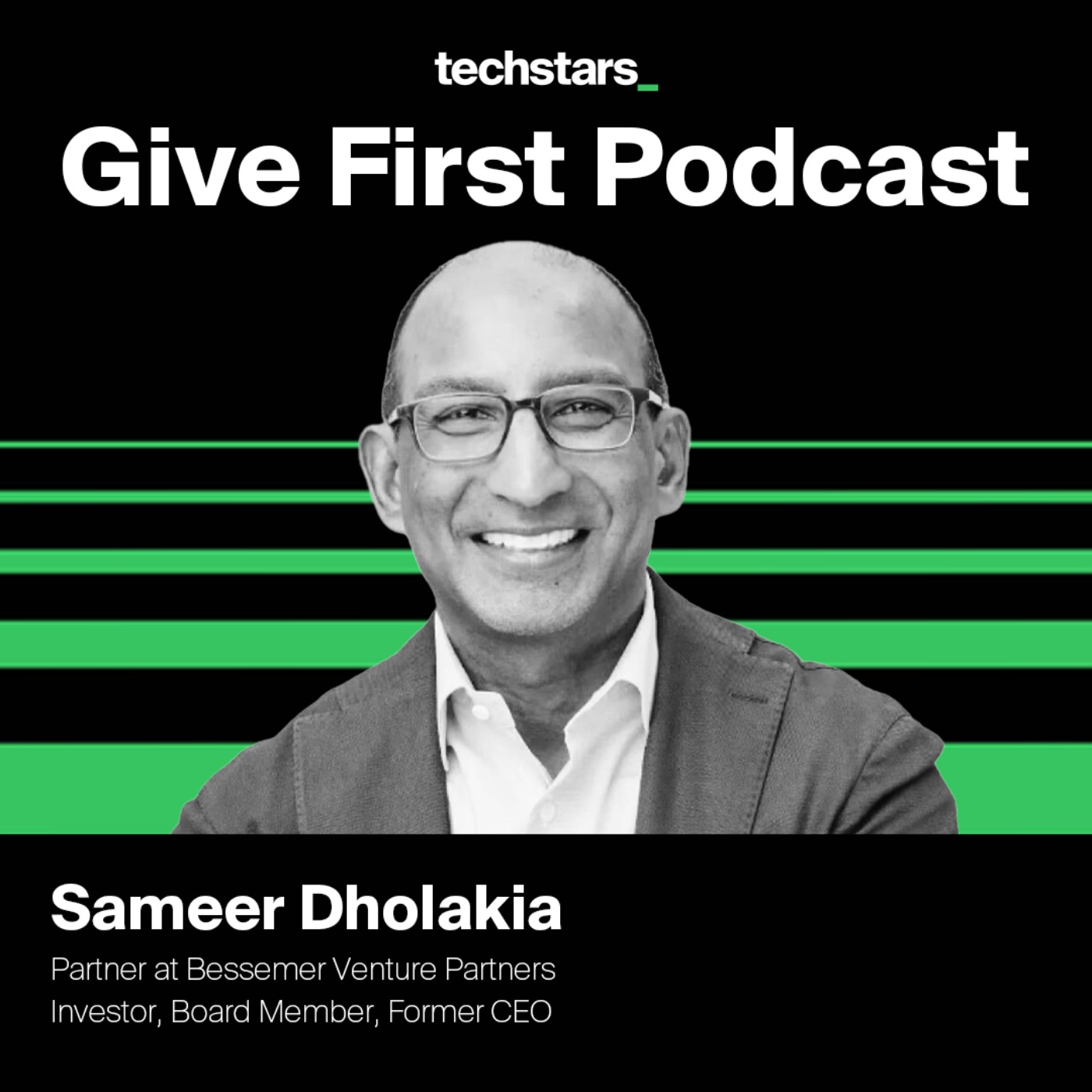
Sameer Dholakia is a partner at Bessemer Venture Partners and former CEO of SendGrid. Earlier roles include Trilogy (Austin) as first product manager, a startup acquired into Citrix, and leadership experience at Citrix at Mark Templeton’s company.
He says culture fit mattered more than numbers early on; SendGrid’s “4 H’s” (Happy, Hungry, Humble, Honest) guided his approach. He frames IPO as a “re-recruiting” and emotional reconnection moment.
SendGrid’s uniform (blue hoodie) symbolizing “company first.” IPO moments at NYSE: gridders watching the banner unfurl and chanting “Send, you say Grid.” Near-death stress: Twilio’s pre-IPO acquisition push, which they initially declined.
Written by AI. May contain mistakes.
Discussion on the philosophy of giving first and its importance in entrepreneurship.
“This is David Cohen, and I'm here with my amazing co-host, Brad Feld.”
Sameer shares a meaningful story from his mother about life and giving.
“When we leave this world, we all leave with our hands open, that breast and that piece.”
Sameer reflects on his career path, including his time at Stanford and early experiences in tech.
“But since that was her philosophy, that became my philosophy.”
Discussion about Sameer's experiences at Trilogy and Citrix, and their influence on his leadership.
“in the universities in Bombay, India in the 60s.”
Sameer discusses the pivotal moments that led him to become CEO of SendGrid.
“So I had a great, great experience down in Trilogy seven years before business school.”
Sameer recalls his first meeting with Brad and the discussions about SendGrid's culture.
“And that led me down the center group journey.”
Learn about the process and insights from choosing a new CEO for SendGrid.
“So we kind of had both of those go in the wrong direction.”
Discover how Sameer Dholakia adapted to SendGrid's existing culture as its new CEO.
“I mean, tell us about, tell the people listening about your first week.”
Understand the role of uniforms in fostering a strong company ethos at SendGrid.
“And tell me what's your reaction to the – tell people the uniform and tell me your reaction to the uniform and then sort of how you dealt with the uniform.”
Explore the challenges and considerations Sameer faced regarding acquisition offers from Twilio.
“So talk about an oh shit moment that you had, because, you know, no path is easy.”
Hear about Sameer’s experiences and reflections leading up to SendGrid's IPO.
“Obviously, it all worked out in a way that I did not anticipate.”
Learn about the emotional experiences surrounding SendGrid's IPO and the celebrations that followed.
“That, that SendGrid went public and what that felt like for not obviously just you, but for everybody involved in, and with dynamics around that.”
Discover Sameer Dholakia's transition from CEO roles to venture capital and his insights on supporting founders.
“You have a good run as a public company.”
Understand the impact of giving first in leadership and the importance of shared values in business.
“And my timing again, I just I have a guardian angel.”

Get the gist, explore an idea or ask about something said.
 Claude
On Give First, what are the key points of this episode?
Searching your listeningAutomatic transcript. May contain errors.
0:00Welcome to the Give First podcast. I'm Brad Feld and today I'm joined by Sameer Dholakia, partner at Bessemer Venture Partners and former CEO Sengrid, a tech service company that my firm founder group also invested in. Sameer took Sengrid from a$40 million company when he joined as CEO, which had slowing growth to a quarter billion dollar business that went public and was ultimately acquired by Twillian. But before we dive into that incredible journey, I want to start with a story that shaped how Samir leads. It's a story his mother told him about why we're all here and what we're meant to give in the world.
0:43Hi, everyone. This is David Cohen, and I'm here with my amazing co-host, Brad Feld. Hey, Brad. And this is the Give First podcast. In the startup world, Give First means simply trying to help anyone, especially entrepreneurs, without any expectation of getting anything back. So we'll be talking to mentors and founders about what Give First looks like in action and how it makes great entrepreneurship possible. We polled everyone and they said consistently that their favorite part of the show was the legal mumbo jumbo. So here it is. The following discussion is an expression of personal opinion and does not represent the opinion of Techstars or any company we discuss.
1:17Our conversations for informational purposes only, including any mention of securities or funds. This is not legal business investment or tax advice, and it's not intended for use by any investor. Certain of Techstars funds own or may own in the future securities and some of the companies discussed in this podcast. Got it?
1:40Samir! Brad, what's happening? You look all grown up in that fancy pants office of yours behind you. I'm in the Big Apple. I'm a small, small fish in this very big pond now. Well, why don't we start off with a story? Because on the Give First podcast, we love to tell stories. And one of the stories from the time we spent together when you were CEO of SendGrid was a story, the mom's story, the story your mom told you. and I know she's passed and a while ago I know that it was important to you and you carry it around I'd love to hear it yeah I appreciate it it's a great opportunity for me to share her lessons because they've been very shaping for me and the way I've lived my life and also inform and I know I'd so much with with the gift first philosophy that that you've been such a great advocate for and and it taught me so much about so the story was simple it goes like this It says, when we enter this world, all of us enter this world as babies, fists clenched, kicking and screaming and crying.
2:51When we leave this world, we all leave with our hands open, that breast and that piece. The point of life, what we're holding as babies coming into this world is some unique gift that we have. The purpose of your life is to go determine what that gift is. and then you give of that gift to the rest of the world. And when you are done giving, it'll be your time. You'll pass. And I always love that story. This is an old Indian parable that mom heard somewhere relayed to my brother and I when we were young. And it was definitely the way she lived her life with a very much it was the orientation was all about being.
3:32It was always about giving and giving without expectation and giving because it felt good to give and that it was right to you. And then all things worked out in the end. And anyways, that has always informed my worldview. Mom shared that with us when we were young. I lost her when I was 15, but that philosophy. And when I lost her, I said, I want a little life that my mom would be proud of. I still wake up every day trying to do that. But since that was her philosophy, that became my philosophy. And I know it's my brother's philosophy. And we try hard to do that all the time. I think that's beautiful.
4:13And for anybody that's listening, I encourage you at the end of the podcast to listen to the first three minutes again. Because it's so aligned with so many things around Give First, so many things around my own sort of view of the world. and as a kid with a Jewish mother, I would tell you that one is always hoping their mother is proud of them. Amen. I know that's not unique to kids that are Jewish with mothers, mostly with kids with mothers, not many mothers, but many kids with mothers. But beautiful, beautiful way to start and something that I'll carry around from this point forward too. uh samir tell us a little about your origin story i mean we met i remember the day very very well the first time i met you um and so we can jump to that but spend a couple minutes just sort of how did you get to where you are today is uh one of the one of the uh key partners uh sitting on top of bessemer and making byron deeter listen to everything you have to say uh because of your wisdom.
5:27Oh, man. I learned a lot from all of them. We've got 23 great partners here at Best of the World. I'm very lucky that they are willing to help teach me this craft. And now three and a half years into my second career, I say. And spent the first 25 of them in software and building. And you ask, like, how did I get there? And I often tell people, like, I don't luck. Because when I was 17 years old, when deciding which college I was going to go to, I happened to choose the one that had me in the heart of Silicon Valley from 1991 through 1995, and I graduated from Stanford in 95. And as a function of that, my first job out of college ended up being at a startup software company named Trilogy down in Austin, Texas.
6:14But I wasn't a software guy. I never wrote a line of code, hadn't taken a computer science class. I was a kid that loved business. And I just fell in love with technology during that era. And I just often think, by the grace of God, I ended up in that exact right place, the exact right moment in time, to end up stumbling into this industry that has created more value than any other industry in history of mankind in a 30-year window. And it just happened to overlap almost perfectly with when my career started. I mean, that's just a dumb one. So that's how I ended up in software. And I never looked back.
6:53It's been a real, I think of just a real privilege and a gift that I get to work in this industry that is constantly reinventing and inventing new and changing the world. Obviously, we're all living through this AI super cycle right now. I never could have imagined what was coming after cloud mobile. I had no idea, but this one is unquestionably. I think, factors larger and bigger and more impactful than the preceding couple and bigger by the internet. So it's been a lot of, just a lot of dumb luck. I often say it's luck because I always turn to my dad who runs intellectual circles around me, has four degrees in chemical engineering, but the playing field that he had for his career was manufacturing in of polyurethane foam and rubber because that's what they were teaching in the universities in Bombay, India in the 60s.
7:54And I came out and I happened to be taught about the promise of software and technology in the 90s. And those are very different playing fields. And so by dumb luck, here I am. I'm out of 25 year career building. And now a handful of years, I've been able to retirements for a couple of years. I tried that, that didn't really stick. And then, and now a few years of venture capital, co-leading our growth fund here at Best America. It's been super fun. No better time than before. Cool. So what, give us, give us like the quick hits of Samir from Trilogy in Austin, Texas to today. Yeah. So I had a great, great experience down in Trilogy seven years before business school.
8:43I was the company's first product manager. Got to work with Joe Limont, who's one of the most extraordinary software founders and operators I've ever known. And I've known a few. Learned an immense amount from him. And he was absolutely world class. A lot of things, in particular, at recruiting and assembling a great group of people. And that network of then colleagues that very quickly became teammates and have now become lifelong friends, I just learned a tremendous amount from us. We built that great company. After business school, I went back to Trilogy for a few years. and really I think I had about a decade tutoring under Joe how he thought about building and running software companies and so then I did my first startup was back in 2007 and worked on that for three or four years and that got acquired into Citrix.
9:50I met another great CEO named Mark Templeton, who was just an extraordinary human who led a company that was multi-billion in revenue scale, thousands and thousands of employees, but had humility as one of its core values. And that just really resonated with me. He was an extraordinary, a great business leader, and also just a great human. and watching the way he led so authentically, it really sort of inspired me to try to become the leader that I was meant to be. I remember Mark had this great phrase. He just said, you know, the most powerful thing in the world that you can be, Samir, yourself.
10:39And that was it. And it was just such an extraordinary life lesson. I'm so grateful to him for it. I've stayed at Citrix for four years. I got to learn about how do you operate at big company scale. And it is a whole different thing than running a small startup. And so I just was soaking it in. Mark was so supportive of me and gave me opportunities. I had no right having, and I tried to do my best. I made a bunch of mistakes, learned a lot. But I always had his and their support. And then ultimately, I wanted to go back to being a CEO again. And that brings us to our breakfast conversation in Boulder.
11:23That was obviously very instrumental in my life. And I loved getting to know you. And that led me down the center group journey. Well, you remember the same first day. So why don't you keep going and I'll add in my details. What do you remember about that morning other than it was sunny? And we were at Jill's Restaurant in Boulder, which is at the St. Julian, which is, I would consider of all the breakfast places to eat in Boulder, the one that's in the profoundly mediocre category. But it's very convenient because it's attached to the one of two hotels, although there's a couple more now in Boulder.
12:01It was, I remember it was beautiful, exactly as you said, like what a stunning city and the flat irons in the backdrop and crisp, crisp air. And I remember just thoroughly appreciating your questions, which were all about motivation and like, why did I want to do this? and how would I do this? Because I think you very astutely understood that Sendrick had a very deep culture that he was either going to work or be organ rejection if it were the wrong person. And anyway, so I just remember thinking, Brad's a very insightful and intuitive person. Like you weren't pressing me on numbers and analytics and market maps and wrote, you know, what would I, it wasn't about that.
13:01You were trying to get to know me as a human and what drove me and why and how I was going to act when I showed up. That's what I remember. I remember having a couple of moments that were delightful. For context, SendGrid at the time was about a$40 million company. It had been growing very, very fast, but growth had slowed and was decelerating. It was still reasonable, but year-over-year growth rate was slowing. and the expense base of the business to generate that growth was increasing, which if you're a SaaS business, you kind of want your growth rate to accelerate or stay constant on an ever-increasing or ever-decreasing cost base, although depending on how you allocate dollars in terms of growth and what percentage growth, you make different choices.
14:00So we kind of had both of those go in the wrong direction. um my uh one of my partners at foundry um ryan mcintyre had been on the board for quite some time and foundry we shuffle boards around that's just sort of the nature of how we've done things um and he had gone on sabbatical and then asked me to when he went on sabbatical for a month to just sort of catch his breath asked me to uh take over saying grid as a board for a while so i just recently joined the board um and or maybe i i was just getting ready to like whatever it was in that moment. But I knew SendGrid well because we have a small partnership.
14:37So we all work on things together. I'd also been involved in email stuff for a very long time. So technically, you know, I understood the business quite well. And I knew, you know, I knew the people, you know, not everybody on the team, but a number of people on the team from having worked with them in different places before. And so with that, like, I mean, I was very interested in, and the process of finding a CEO to take a company to the next level had been going on for quite some time. It was not a new process. And I remember sitting down with you, knowing your background and having worked with a few other people that had backgrounds from Trilogy and sort of understanding sort of that as a starting point and having, I would say, a positive bias to you before meeting you at all.
15:27but like having a pretty sort of hard like what is the right person for this company given that it's been a while and they've been having a hard time finding the right person for this company and I would say within kind of 15 minutes of our conversation the way you approached the answers were ones where my reaction was this is you know assuming all other things, Samir is the right person, which is you didn't say I once in the first 15 minutes. And you didn't work for SendGrid yet, but you would talk about SendGrid as though you worked for them. When I was asking you questions about yourself, you were not asking them as though you were detached from the thing.
16:18You were already trying it on in the way you were answering the questions, which is different than a lot of the interviews for a CEO coming into a business. And it's not just that it's like you talked about, we instead of I. It wasn't just that. It was just you're able to sort of teleport yourself into the future and have the business and your motivation line up. So that was one thing I remember from the first 15 minutes. And then I remember there was a period of time, like we went longer than we were supposed to. And you had your bag, So I knew you had to get to the airport at some point to catch a plane.
16:54And you didn't look anxious at all. You looked like just totally, you know, whatever. And I said something to you like, hey, you know, if just tell me, I know we've gone longer. Tell me if you need to get going. And you said, no, I'm happy to sit here. You know, I got time to sort of sit here and talk as long as you want. And it was another of, in that moment, you didn't feel the need to make me feel more comfortable about the time. You were just clear. No, you had time. And we kept going. It wasn't like, oh, I'm making this big sacrifice. And if I miss my next flight, if I miss the flight, well, I'll just get the next flight.
17:34to zero anything back to me about the fact that we'd gone longer. So I remember those two things as just really powerful moments where in the context of coming into a new company that did have a very strong culture, set of cultural norms that worked well, notwithstanding the current state of the business. So, you know, a couple weeks later, you get hired and join. I mean, tell us about, tell the people listening about your first week. What was the magic things you did as a new CEO coming into, I don't know how many hundreds of people, in a business that, you know, kind of scary to have a new person come in at that stage?
18:19Hadn't really had a CEO dynamic change at all to that point, other than at the very beginning when the founder kind of raised his hand and said, let's bring in somebody because I don't know, I want to be the technical founder, not the one running this thing. What was that first week? It was stressful, but it was also made so comfortable because of the genuine warmth of the culture at Centrid, which was a big part of the appeal to me joining the company. Like, I just felt like I fit with the SendGrid culture, with the four H's that Jim had put in, I thought was a great reflection of Techstars, where Isaac started with Tim and Jose.
19:07Like, it was from the beginning, right? Like, SendGrid was incubated at Techstars with those three founders. And that give first mentality, Isaac's humility carried through those four H's. And so when I was joining, the people that were there reflected those 4-H values for the listeners that don't know those happy, hungry, humble, and honest. And I remember in the first kind of all hands, I got up and I just said, people have asked me a couple times now, like, oh, the culture had been these 4-Hs. What's your culture going to be? and I said no no no I'm joining our culture I don't you know when when Hewlett and Packard retired it wasn't like they said we need something other than the HP way like it's the organization I'm joining this organization with you to serve you and to serve it like we should all be in service of that organization to go make our mission actually happen.
20:15And I remember at the end of the all day, and I remember saying, I kind of named it a little bit too, like what I thought was going on in people's heads. And I said, and I know I could be perceived as like the scary Silicon Valley guy that's being parachuted in to this Colorado-based company. And I assure you, I am cognizant of the fact that you have forgotten more about what you know about Zengrid and this business than I have yet to learn. And so I am going to be trying to learn from you. And I hope that you all will help me because with your help, I believe we can make this a very special company, app scale, public worthy, and, but it's going to take all of us.
21:06And I remember at the end of that all hands, I can still remember like a couple of folks came up to me afterwards and said, I just want you to know whatever you need from us, we are here. Whatever you need us to do, however we can help, we are here to help you. I got hugs after that first hour introduction. And it kind of set the tone. I just felt welcomed from the jump. So, Sengrid had a uniform. Yes. And tell me what's your reaction to the – tell people the uniform and tell me your reaction to the uniform and then sort of how you dealt with the uniform. Well, I love the uniform. Sengrid had a uniform.
21:52It's not dissimilar to the one you're wearing, actually. And it was handed out. when any of your employee joined, you got your laptop, your key card, and a SendGrid blue hoodie. And it was kind of like a prized possession because we would give out 10 ,000 blue SendGrid t-shirts every year at developer conferences all over the world, but a blue hoodie. And everybody would ask like, hey, can I get, how do I get a SendGrid hoodie? And we would say, no, no, the only way you get that is if you come work for us. And I, anyways, I love the uniform because again, the uniform was all about your plan for the name on the front, not the name on the back.
22:34And, you know, that whole sports team analogy, everybody was part of Sengren. And you would walk into the lunchroom in our Orange County office and you would see pegs and they would pull like dozens of Sengren hoodies all sewn up by the kitchen. And I loved it. And so it was a big part of our ethos all along was, hey, we've got a uniform. Actually, it's kind of fun. If you fast forward to the end of how we ended up with Twilio, Twilio also had a uniform. They had Jeff's red track jacket. And that was, yeah. But I think there was something about that. Like companies that really embrace a uniform that says, company first, me second, I think works.
23:21As the couple of years while SendGrid was private unfolded and the business re-accelerated under your leadership, growth rate percentage increased, company became breakeven, started to think about and wander up to an IPO. So talk about an oh shit moment that you had, because, you know, no path is easy. And SendGrid's path was certainly like every other successful company I've ever been involved in, had at least one near death experience and had lots and lots of oh shit moments. What's one that you remember? Well, the one that was, I think, the most stressful for me at the time during that window that I remember was when Twilio, when Jeff had approached us about acquiring SendBrid before we went public and said, this is the time.
24:26I know you guys are thinking about it. Don't go out as an independent. It'll be much easier if we do an acquisition while you're still driving it, et cetera. And Jeff is an extraordinary human. If you've ever spent a lot of time with him, he's a great guy, an incredible entrepreneur. I built an amazing business. I had a ton of respect for him. And I still wanted Zengrid to be an independent business. I wanted to keep it building and scaling And, and, but it wasn't clear what the right answer was. It was, it was a reasonable offer. You know, you get into all these, into the headspace of what's the right answer for the business, for shareholders, for investors, for management, for employees.
25:13And I must have walked, you know, laps in my neighborhood, dozens of miles, just walking and thinking, trying to process on what the right answer was. and it was stressful and there was this and i knew part of the way any any of the listeners out there that don't understand why this would be such a stressful decision is if you you know if you're playing you know multi-move chess you understand that if you say no they he is going to go on to the next competitor that you have and you have to imagine how am i going to be able to compete with a combination of twilio that is three times my size with one of my competitors and how is that going to play?
25:55Obviously, it's not that stressful, the decision in the, you know, that was the thing. In hindsight, it's not, but in the moment, it's quite significant. That's right. And I was very concerned about it. And so anyway, that was particularly stressful. But, you know, we had a great set of advisors around us. Our board was amazing. I had a great management team where we could really debate these things with, you know, because you really have to have conviction. Hey, if we say no, this is what you have to assume happens. But are we going to be able to withstand whatever that inevitability may be? And can we still go build a very big business, you know, for many years to come?
26:42And it all worked. Obviously, it all worked out in a way that I did not anticipate. in some sense. I thought they would go buy another competitor as Jeff and I have talked about it after the fact. I learned that they were very close in fact to doing precisely that. And then ultimately in both final hours decided, hey, actually I think Singred is still the right answer. Let's try to make that happen again. And they re-approached us after we were public a few years later. uh let's talk about a day in in your life uh that was a special one uh which was the ipo i i don't know i i think this is true i don't know if it's on a wikipedia page somewhere which would make it more true um although still wouldn't guarantee it might be in an llm somewhere which still wouldn't make it true um uh but you know might make it more validated but i i think you were the CEO of the first company to come out of an accelerator to go public.
27:53I think that's true. I think that could be true. And, you know, there have been plenty since, but I think, I think you were the first CEO. So, so talk about that day. That, that SendGrid went public and what that felt like for not obviously just you, but for everybody involved in, and with dynamics around that. well by the way i'm going to use this as an example to talk about yet another gift first example um while we were getting ready to go public i hadn't taken a company public before i wanted to learn from others who had just gone down the path and so i reached out to a number of ceos who were recently public businesses in our world and uh scott um one of the co-founders co-ceos at atlassian um generously offered up some time and was giving me his lessons learned about taking atlassian public and one of them though that he said he was like you know be sure to um think realize that the ipo events obviously that's a financing event obviously there's a little bit of a market it's a marketing event but it's also a re-recruiting event it's an opportunity to remind your employees of the journey that they have been on and try to you know try to get them really re-emotionally connected for the next leg of the journey because it's going to be hard being a public company and he said one of his great regrets was that he didn't have more of his Atlassian teammates while they were in Australia so it's kind of far and expensive difficult so they didn't have a huge swath of people from Atlassian fly out for the IPO and he wished that they had they had huge parties of course but they got home but so as a result of that lesson that he shared with me, we had any gridder, we would call their Sengren employees, any gridder who had been with us for, I think, four or five years, got to come on an all-expense pay trip to New York to celebrate the IPO.
29:47And so I want to say we had like 40 or 50 people from Sengren who had been all the early folks who had built the place brick by brick from the beginning, in some cases, many cases, long before I got there. And I just really wanted them to have that experience um and you know when you go public the night before i think it's around four o 'clock in right in front of the new york stock exchange the banner that uh it's for the ipo the next day gets unfurled and uh it happened that there was a group of our gridders that were standing there outside of the new york stock exchange when this enormous banner that covers the entire front of it with Sengren on the front rolls down, the front draping the New York Stock Exchange.
30:32And they're all tears. The emotional energy of like, wow, look at what we built. Like that was, and it was absolutely one of my favorite moments from the IPO was just watching that small group of traders get that moment, that that acknowledgement in some sense of like what they had built uh was really cool uh to see and then um and then the other favorite moment from the ipo was the next day um you know the new york stock exchange they have that little balcony and you can only put 10 or 12 people up on the balcony um but we brought 50 critters so what do you what do you do and so what we did We asked the New York Times Stocks, can we just have all of our gridders on the floor?
31:20We had like 40 or 50 people on the floor. Our management team, some of our board members are up on the balcony. We had this tradition. Then we're waiting, the anxious two minutes to hit the button to open the market. There's just this, you're all set, you're all assembled. And we have this extra two minutes. We have this tradition at Semgrid where he did a callback to wake up the audience, to get everybody fired up at an all-employee meeting or something like that. And so I used it at the IPO from the balcony. And the callback was, I say send, you say grid, send, grid, and you just go back and forth.
31:58And it just filled the room of the New York Seminary Exchange with this chant of send, grid, send, grid. It was awesome. And again, it's like one of those moments I will never forget. It was a career high, a life high, a sense of team and unity that had done something really special. And just as we finished doing our callback, we got rid of the button. It was awesome. Just like kind of a movie script. It was fantastic. I almost feel like I'm teleported back to that moment. So as we come to the end, you know, SendGrid goes public. You have a good run as a public company. And then Jeff and Twilio show back up and you get a deal done.
32:46SendGrid becomes part of Twilio. You hang out at Twilio for a couple of years and grow SendGrid to quite substantial business within Twilio. I don't know if it's public data, but probably it's long enough in the past or it doesn't matter. How big was the SendGrid business when you left? It was certainly at least a couple hundred million, maybe a quarter of a billion, I think, in the year that I was leaving. And I'm sure from what I understand, much greater thereafter. But yeah, from the small little company in Boulder to doing a quarter of a million dollars of ARR and candidly, very, very, very confidently at that scale.
33:33Yeah, it's fun to watch. It was fun to be a part of. Fun to watch, fun to be a part of. I mean, a$40 million business losing more money each month and slowing its growth rate down. for everybody listening that hears from somebody once your growth rate starts decelerating, you can never turn that around. Fortunately, I have other data points, so it's not an end of one in my world, but here's another data point for you, hopefully to inspire. Absolutely do. Tell me what I know, but tell the audience what you're doing today and some of the things that you're most excited about. Well, it's really fun.
34:10And I tried taking a couple of years off and happened to line up with COVID wonderfully. So my family stuck with me, my wife, Laura, and our two kids had no choice but to spend 24-7 with me for a long time, which was awesome. And then, you know, about 18 months in, I was a walking cliche. I picked up hobbies like golf. But I can still remember vividly where I was in this moment of, you know, standing on the tee box of a golf hole that overlooked this beautiful hole. I'm playing by myself because everybody else is working. And I just had this moment of, this doesn't matter. I'm not adding any value to anyone other than myself.
34:54Everything I'm doing is super fun. I get to sleep in. I can do whatever I want. I can play a lot of golf. but it all felt just very selfish. It was all about me and I just wanted to try to get back to doing something where I could be useful and helpful hopefully to other folks and so I thought I would go back and be a CEO one more time. I talked to dozens of companies about that looking for a CEO role and ultimately I ended up realizing that I was enjoying that process but the talking to dozens and dozens of companies and learning about new industries and new technologies. And my wife who's much smarter than I am says to me one day, yeah, honey, there's a job where you do that.
35:37It's called venture capital. You should check that out sometime. And so long story short I ended up joining Bessemer to co-lead this growth fund and try to try to, you know, be useful and of service to founders who are going through this, that same kind of journey, you know, from, How do you get from tens of millions to hundreds of millions and navigate that? And everything is different about that than it is from zero to one, one to ten, ten to twenty five, tens to hundreds. I mean, every one of those is so wildly different. I hope that I could be helpful to founders like that. And so I've been here now for three and a half years.
36:19And my timing again, I just I have a guardian angel. My mom, we talked about the jump of this call. Um, I, life just seems to line up and work, work pretty well. And so I joined Bessemer in May of 22, um, made my first investment in a great marketing AI company named Jasper. Got a, you know, built on GPT three. I got to learn about the technology, um, deeply six months before the chat GPT moments when the rest of the world kind of really woke up to it. And, uh, and so I had an early look to now we've invested. I've invested personally in seven or eight different, just really awesome AI native companies that are growing at astronomical rates and encountering all the problems I encounter, but in 12 month increments.
37:08Like when I had four years, they got in 12 months. So it's really been fun to work with those really great founders, really great CEOs and try to be all. Fantastic. Samir, thank you for spending so much time telling your story, sharing your wisdom. And thanks to your mom for that wonderfully inspiring way to think about the world. Give first. Thank you, Brad. Thank you for everything you do to spread that message. The more leaders out there in the world that run that way, the better this world is going to be. Thanks a lot for listening to the show today. We'd love to hear your feedback, ideas, or who you'd like to hear next on Give First.
37:51And please leave a rating and review, ideally a good one. And reach out anytime to podcasts at techstars.com or on Twitter, I'm at David Cohen. See you next time. Don't forget, give first.
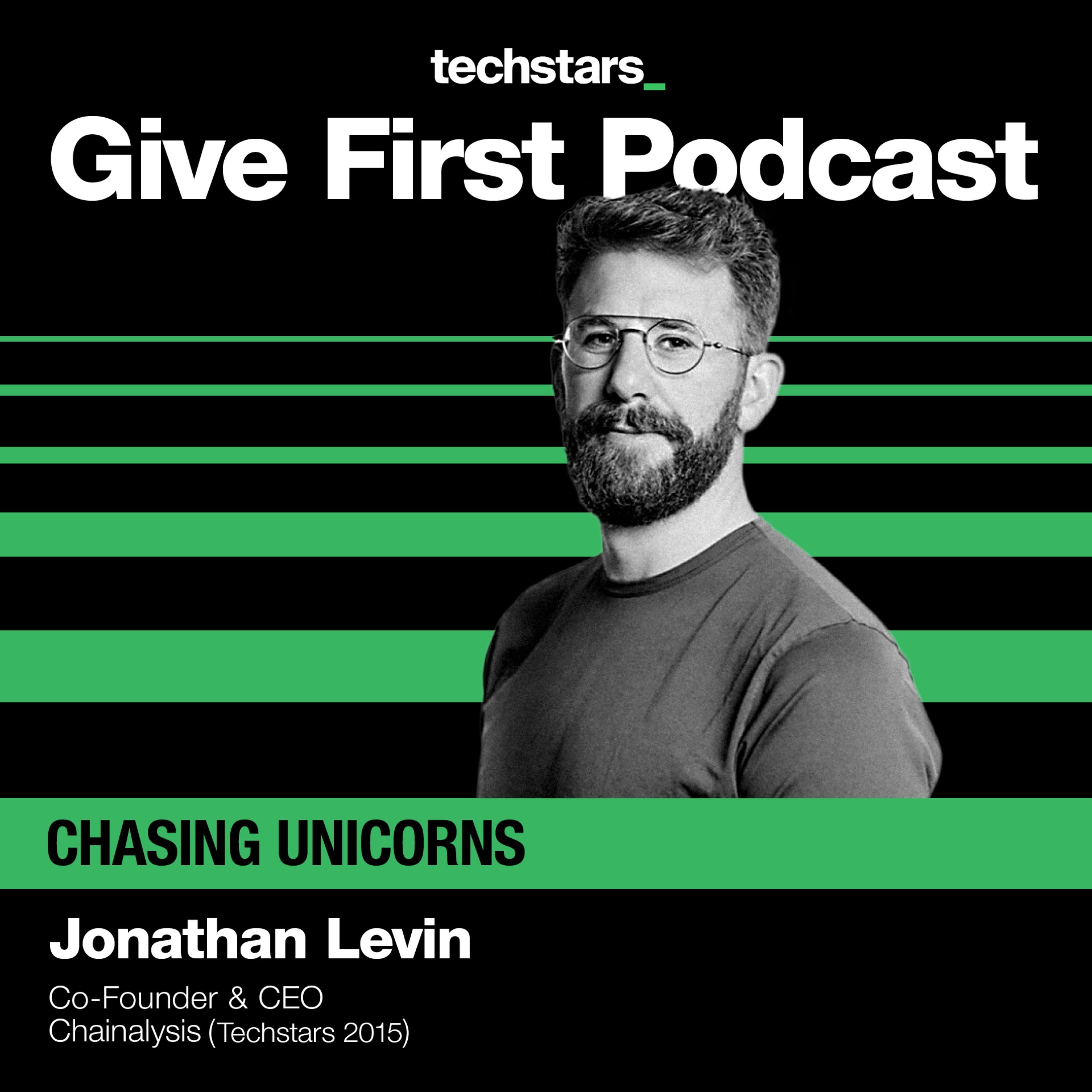
In this episode of the Give First podcast, Brad Feld sits down with Sameer Dholakia, partner at Bessemer Venture Partners and former CEO of SendGrid, the first Techstars company to go public.
When Sameer joined SendGrid, growth was slowing and the company was losing money. Under his leadership, it became a $250M business, went public, and was later acquired by Twilio.
Sameer shares the story of how his mother’s advice shaped his approach to leadership and why empathy and clarity became his greatest tools as a CEO. From his first days stepping into a nervous team, to navigating “oh sh*t” moments on the path to IPO, Sameer reflects on the lessons that defined his career, and how they continue to guide his work with founders today.
Sameer Dholakia ➡️ LinkedIn
Hosted on Acast. See acast.com/privacy for more information.