 Ask ChatGPT

Seth Godin discusses leadership without ego, the difference between “founder mode” and true leadership, and how saying no (and giving first) protects both personal work and community trust. He also addresses how leaders should speak truth amid fear and polarized systems.
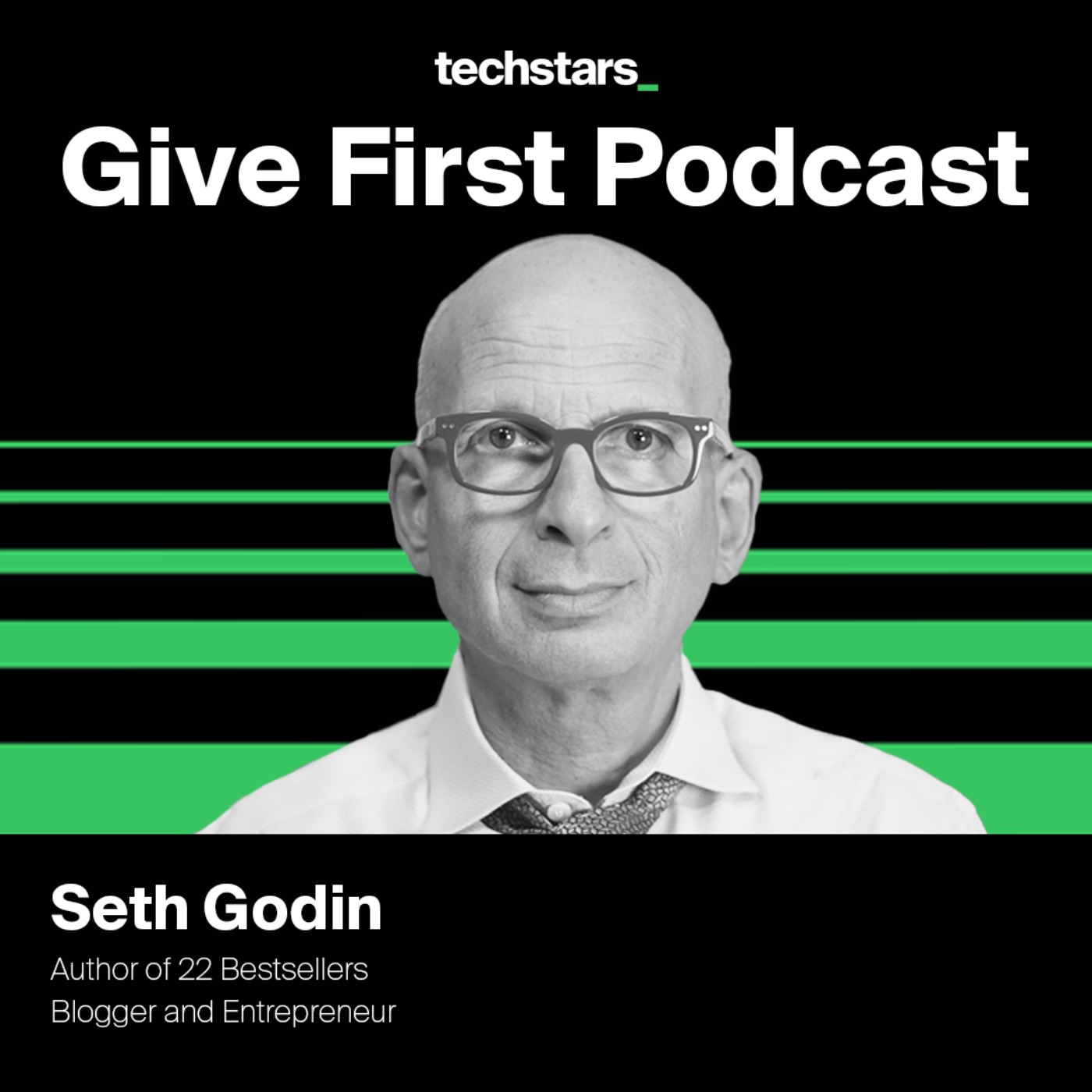
Seth Godin (author/marketing and leadership thinker; known for books including “Leadership” themes and “The Song of Significance”; long-time mentor figure). Interviewers: David Cohen and Brad Feld (Techstars co-hosts; startup investors/mentors).
Leadership is voluntary “turning on a light,” not doing all jobs or belittling others. Default yes/no and “immediate yes” can be abused unless requests are mutually beneficial. No is a gift; avoid thoughtless yes. Polarization rewards clicks, so leaders should choose hard decisions and long-term standards over performative flags.
Godin’s early “instant yes” relationship with Jerry Colonna; his “default no” language; Sheryl Sandberg/Facebook algorithm critique; Tom Friedman’s controversial NYT piece; climate work done unpaid to create lasting change.
Written by AI. May contain mistakes.
David and Brad reminisce about their first meeting and its impact.
“Certain of Techstars funds own or may own in the future securities and some of the companies discussed in this podcast.”
Seth shares his early experiences with angel investing and notable meetings.
“It's a testament to how many lives you've already changed, including mine.”
Brad recounts his first encounters with SoftBank and the people involved.
“Of course, we made, the company created three products instead of one product.”
Discussion on the importance of genuine connections in business.
“that bought mine, Ameridata, but I was now consulting for them more than I was working full time.”
Exploration of the Give First philosophy and its significance in relationships.
“some people end up in an instant yes category.”
Learn how to handle requests respectfully while maintaining personal boundaries.
“And if they ask for something, I can eagerly say yes, because I know they thought twice.”
Explore the shift in leadership dynamics and how to redefine success.
“a quick no than suffer from a thoughtless yes.”
Understand the challenges leaders face in expressing their beliefs amidst fear.
“And so we need to walk away from the false proxies of easy metrics where we're just competing with that guy down on Sand Hill Road or wherever.”
Explore the importance of perseverance and community in leadership.
“That's part of, to get back to your book, the magic of what you're talking about, the community that you built.”
Wrap-up of the discussion with reflections and a hint at future topics.
“I don't know if people are listening or watching this one on this podcast, but you're - If they're watching, they can see our smiles.”

Get the gist, explore an idea or ask about something said.
 Claude
On Give First, what are the key points of this episode?
Searching your listeningAutomatic transcript. May contain errors.
0:04Hi, everyone. This is David Cohen, and I'm here with my amazing co-host, Brad Feld. Hey, Brad. And this is the Give First podcast. In the startup world, Give First means simply trying to help anyone, especially entrepreneurs, without any expectation of getting anything back. So we'll be talking to mentors and founders about what Give First looks like in action and how it makes great entrepreneurship possible. We polled everyone and they said consistently that their favorite part of the show was the legal mumbo jumbo. So here it is. The following discussion is an expression of personal opinion and does not represent the opinion of Techstars or any company we discuss.
0:38Our conversations for informational purposes only, including any mention of securities or funds. This is not legal business investment or tax advice and is not intended for use by any investor. Certain of Techstars funds own or may own in the future securities and some of the companies discussed in this podcast. Got it?
1:01Seth Godin: two cannibals and a clown huh does this taste funny to you does this taste funny yeah that's cute i like that how are you i'm great it's so good to see you man you too i love your glasses mine are green they're not quite as pronounced well but you make up for it in other ways thank you
1:26uh i just want to have a conversation with you today so let's just do that
1:30Seth Godin: we're in the right place at the right time i got a hard stop in 52 minutes well we can stop sooner than that because i just want 30 minutes of brad and seth content looking forward to it let's start with uh two things one uh since this is you know for an official podcast and stuff tell the world what you remember about the first time we met i'm going to tell the world what i remember but you tell me what you remember before i talk about this vivid memory which i would testify on a bible in court about i don't i there are very few memories from that year but this one is very vivid um i just want to say for the record out loud your book is terrific thank you it is not your life's work, but it deserves to be in that section of the library.
2:23Seth Godin: It will change lives. It's a testament to how many lives you've already changed, including mine. You've changed mine in a very big way. I didn't ask you for a blurb, but that is way better than a blurb because - Well, it's all true. Blurbs are useless. They are useless. But thank you. Okay. So, Jerry Colonna had met me when he was part of a VC firm, but he left, and joined Fred Wilson. And Fred and Jerry came up to Irvington, New York, to have lunch at a little cafe near my office. And the restaurant served Fred undercooked chicken. I almost killed him. But the lunch seemed to go well. They had not made any investments at any time.
3:11Seth Godin: They were new at this. And they said, we'd like to meet your tech team in Boston. and we're going to bring Brad to do some due diligence. I have no idea who Brad is. And we're sitting in the basement of this place in Boston where I've got six tech people, and I'm pretty nervous. I'm out of my depth. I've never done anything like this before. And in walks this guy. He isn't the big Lebowski. He's much more fit than that. he's uh more mellow than that but he's a sight to behold he is the coolest person i've ever seen in my entire life he's wicked smart he goes up to the whiteboard dan and brad are back and forthing with the you know the paper clips and sticks that were holding together our software and i have no clue if he is completely uh annoyed by the whole thing or amazed doesn't i don't know and then the next day, Jerry says, okay, we're in.
4:12Seth Godin: So that's my memory of meeting Brad. That's a good memory. It's pretty close to mine. So that was the very first meeting I did for SoftBank. And so I was now living in Boulder. We'd moved to Boulder, maybe that was like 1994, four three five god i can't believe in the time it was it was 95 it was maybe maybe end of 95 early 96 it was 30 years ago yeah yeah 30 isn't that amazing and um i uh i had kind of i'd already met jerry um and the way i knew jerry was i was the chair at the time of a company in Boston called NetGenesis that Raj Bhargava had started. It was my very first angel investment. I had no idea what I was doing.
5:10Of course, we made, the company created three products instead of one product. Mistake number one for a tiny mistake at the very beginning of the internet. One of those two products was something called NetThread, which was basically the first threaded discussion group manager something or other thing um and so on a web page you could actually have a discussion back and forth a break um and uh jerry had invested in this tiny little company at the prior fund he was at at cmgi called e-share and i don't know if it was called e-share then and they had like a chat thing and somehow we ended up like meeting through that and that company eShare bought the NetThread thing.
6:04And I ended up joining the board of eShare as well. And all of these things were happening at the same time that I was still CTO of the company that bought mine, Ameridata, but I was now consulting for them more than I was working full time. And I had met, I had known this guy, Charlie Lacks. Oh, Charlie Lacks. I remember Charlie. I'd known Charlie and from just the Boston community and investing and stuff like this. And he, you know, he he'd looked at investing in that Genesis and didn't and looked at something else and didn't. And he called me up one day and said, hey, I'm working with this company called SoftBank.
6:51I don't know who the hell soft bank is. And I'm looking at doing an investment in this company called Yo-Yo Dine. And I knew what Yo-Yo Dine was from my science fiction past.
7:09Seth Godin: Exactly. And I, when are you in Boston? I just happened to be in Boston. And so he said, I'm doing it with, I'm doing a thing with Fred Wilson and Jerry Colonna. Do you know them? And I'm like, yeah, I know Jerry a little bit. You know, will you go to this place? I think it was in Framingham or something or Newton. It was in Medford. Medford. Can you go to this place in Medford? I'm like, fuck, I don't have a car in Boston. Okay, I'll figure out how to get to Medford. That's like a million miles away. and they didn't have Uber then of course so like how do you get to Medford from Boston is like trains and that's the first time I ever met Fred and so I walk into this place same thing I walk into this place and I kind of felt immediate kinship with Fred but in a different way because we're you know like our brains work differently but we both had an MIT background and you know He didn't really feel like the venture capitalist that I'd met in Boston.
8:08He didn't really feel like that.
8:10Seth Godin: Right. And then I kind of had a similar but different reaction to you where you were doing something in a domain I really didn't know much about, which is publishing. And it wasn't really publishing, but it was kind of the intersection of publishing and the web. And you had like a bunch of books somewhere on the wall or something and it's games. But that was very comfortable to Jerry. because of his background. And I remember walking out of that meeting. I walked into the meeting. I had a lot of fun. Like it was the first time I'd done that. I'd done a bunch of technical diligence for Ameridata, but I'd never done any for, you know, for Fred and Jerry or for SoftBank.
8:52I didn't really know what the fuck they wanted from me. I just showed up and did shit. And, but I left thinking, I like this guy Seth a lot. and that that begat a 30-year friendship which is kind of fascinating like i think about all the people over the last 30 years that i've gotten to know through something like that and uh fortunately and i want to you know play back the other direction you think about people you've gotten to know over the last 30 years through something like that like that interaction where you really didn't have an expectation you didn't really know what was going to go right um for me it's been profound to have the journeys interwoven where the think about the right word it's friendship's not the right word um kinship yeah we don't live in
9:42Seth Godin: the right zip code to have the kind of friendship people traditionally we're not together all the time we don't have dinner we don't like hang out which i miss a great deal but the thing is some people end up in an instant yes category. So when Techstars reached out, even though it wasn't you reaching out, and they said, well, you mentor. It's like, well, Brad's involved, sure. And the whole mindset, many of the people that I met during those heydays, and it was so fast, everything that happened, they were self-centered, short-term thinking. They wanted to have drinks and cigars, and they were playing a transactional game.
10:23Seth Godin: And if I had to transact, I was going to transact, but there was no connection beyond that. And then there were other people. After I sold the company to Yahoo, I went back to Jerry and Fred as a volunteer. And I worked there for a year, and I refused to let them give me a job because I didn't want that. I wanted to be in the room with them. And every single time you and I have had a chance to dance together, I've come out ahead. And are there a hundred people on that list? Probably, but there aren't a thousand. Yeah. Yeah. One of the things I think, when I think about the journey that, you know, we've had over that period of time, which has been from a distance, there's a couple of moments in time where we're in person.
11:14And those moments in time you know maybe they're separated by a decade um uh i remember uh you'll remember the restaurant it was in new york city it was a korean lunch place what was the name of the place do you
11:28Seth Godin: remember the place it would i'm guessing we went for sundu bujige uh tofu stew but it could have been hungawi okay words i can't even spell yeah and and uh i was just in new york city and i sent you a note saying hey i'm in new york city you want to get together and the next thing was uh Yes, here, tomorrow, this time. I had something. I canceled it. And those moments where it's like, you know, yes, sure, I've seen you. I've talked to you on the phone. I've sent you emails or whatever. You know, our paths crossed. But, like, you're in a room with somebody, and it's like time didn't pass from the last time you were with them.
12:07And yeah, maybe I do have 50 or 100 people like that too in my world. And you gave me language that I didn't have before this call. I would use default yes and default no as challenges. You know, and I'd be, you know, kind of naturally in default yes. I say no a lot all day long. You say no a lot all day long. I say to Amy sometimes, you know what, the reason that she says, why did you agree to do that with that person? I said, they were the 51st person I talked to. I just needed to reset my no counter to zero. I was so tired of saying no. I just needed to say yes to something. She's like, well, that's random.
12:46I'm like, yeah, that's kind of fun, isn't it? But then there's this idea of immediate yes, which are automatic. It's like, Jerry Colonna asks me for anything. Even a kidney. Doesn't matter. Always. Yes. I need you here tomorrow for this reason, because yes. And one of the things that's magical, I feel that in our relationship, but it is linked to this notion of give first that I didn't weave into the book very well is the people who are immediate. Yes. I have never felt anyone in that category abuse that.
13:30Seth Godin: that's part of the deal that's where i was where i'm going with this is the people who hustle me some of whom aren't i'm not gonna say bad people but some of them even though they mean well don't understand that if your motto is well it can't hurt to ask you've just walked away from the instant yes category you can't have it both ways yeah so the reason that both of us are willing to eager to give jerry an instant yes is because jerry self uh censors himself all the time doesn't ask for things just because he wants them he waits until it's of mutual benefit and that kind of community and culture is so important and the internet has eaten away at it and i fight against it every day i want to be in a circle of people who think twice before they ask for something.
14:24Seth Godin: And if they ask for something, I can eagerly say yes, because I know they thought twice. How do you deal with the inverse of that, especially given the visibility that you have? I mean, the number of people in my world, when I run into something or you and I do something together or send me a note saying, how do you know Seth? And can I get you to Seth? And the The answer, of course, is I'm not the person to get you to Seth. You know, it's not a gatekeeper dynamic. It's just like, look, if you're asking me to get you to Seth, that's not an authentic reason to get to Seth kind of dynamic. Just the person.
15:05What I often say is, you know what, go read some more of Seth's stuff and then figure out how to get to Seth. How do you deal with it on the front line of that where everybody wants a piece of you continually? You are incredibly accessible. I like to think I'm incredibly accessible. How do you do that without it getting you down, without it making you tired, without it sort of starting to wear you out? The negative parts that I talk about around give first, how do you modulate for that?
15:40Seth Godin: Well, so the word no seems negative, but no can also be a gift. And what I try to do is treat everybody I encounter with respect and offer them dignity. And if somebody says, will you do something? I have zero problems saying to them, no, I'm sorry, I can't. I don't feel bad about that at all, unless it's somebody who had an expectation that I would say yes. Then I start to feel bad about that. But most of the time, a rational person isn't going to have that expectation because no, I'm not going to get on a plane and fly to Dubai and have lunch with your brother-in-law. No, sorry, I can't do that.
16:20Seth Godin: And so what I do is I'm very clear with people about the things I haven't flown for work in five years. If you want me to blurb your book, I'm going to explain to you in a long blog post that I wrote why it's not going to help and what the gig is if you persist. And I blurb a lot of books because I appreciate what people did for me a long time ago. But what I don't do is say yes in the short run to make me feel better and then have to struggle with the consequences that yes for time afterwards. I would rather give someone a quick no than suffer from a thoughtless yes. And that lets me do my work, which is the reason you wanted to reach me in the first place.
17:04Seth Godin: And if I become a wandering generality, then I have not been able to do my work. You've written recently a couple of things on leadership that I would say were pretty profound. Oh, thanks. You know, especially in this moment because the way you talk about leadership is very different than I think the way a lot of people, certainly in the tech industry, are modeling leadership right now. And I would say I'm finding a lot of things very difficult to relate to. A lot of people I had respect for, I question what is going on, what their motives are. I'm not sure I question their motives. I make assumptions about their motives that are not very generous.
17:59And I really struggle with what a bunch of people are doing and then how to essentially not change my behavior, because I'm not gonna, but explain clearly in a way that's useful to people what that is without just kind of continuing to go down that path. When you think about the last couple of long form things you've done, separate from the everyday message you put out into the world, which is, you know, wonderful discipline. How do you think about taking that against the backdrop of this current moment? And I'll weave in a very specific example in a sec, but I want the generality of it to get your reaction.
18:51Seth Godin: Well, let me try the generality because you're talking about a bunch of different things. So I'll break it into two pieces. For people who are on their way to success, there's a trap. This trap has been around since you and I started, which is founder mode. Founder mode is seductive. It's really good for your ego. It will burn you out and it's not how you build an institution that matters. Leadership is not the act of you doing all the jobs and belittling everybody else. And finding the patience, you know, so I was in founder mode when we met at Younger Dine. I had, we grew to the point where I had 85 employees and 52 of them reported directly to me.
19:34Seth Godin: And because I was an amateur, I had no idea what I was doing. it. And so what leadership is, is leadership is voluntary. It's not management. It's not power. It's turning on a light and saying, we're going over there. Do you want to come? And the song of significance is about leadership. The song of significance is about how do we show up with and for other people, with and for our customers, with and for our industry in a way that we're happy to put our name on. Because if you're not, there's no prize at the end that's worth you giving up what you stand for. The second half of it though, is what about after you have traditional measures of success?
20:15Seth Godin: You know, you and I, between us, probably know 40 billionaires and most of them are deeply unhappy. And the reason I think is not that unhappy people become billionaires. It's that, uh, And if you've played a game for a very long time where the only way to win is to go to 11, and then you're at the other end, you're out of 11s. And so you find these other arenas to play in, whether it's drinking a bottle of olive oil every day or trying to change the world economy. And because it feels like the only thing you know how to do. You know, these people don't have something that Bradfeld has, and it's enough.
20:59Seth Godin: and to be okay with enough and to live with the privilege that you have to write a future, not just for you, but for a lot of people. It's really hard to look in the mirror and realize you could do that. So I weave all of these things together when I think about what do we mean by leadership. And the shortest version is, is your mom going to be proud of what you're doing? Are you building something that the future you will thank you for? These are really easy compasses to go find. And so we need to walk away from the false proxies of easy metrics where we're just competing with that guy down on Sand Hill Road or wherever.
21:40Seth Godin: That doesn't get you anywhere. The sort of logical extension of that, Jerry and I had a dynamic. he wrote he wrote about it in his first book uh reboot um where we're having a conversation and uh it was probably seven or eight years ago now and i was a little exasperated with something in my life uh at the time and i just sort of blurted out i think i'm done striving i just fucking had it with striving like you know i don't need another whatever it doesn't mean you're not going to do stuff it doesn't mean you're going to accomplish stuff, but it's like this big mental reset of like what the, and I sat on that.
22:23We talked about it for a while. I sat on that and I really incorporated that in my early fifties into my way of being. I'm watching and observing a lot of people right now. I just had a conversation with, with somebody prior to this who I have a ton of respect for, has been a successful investor, has been a successful founder, is a good friend. And the conversation was, you know, a little bit about what he was working on, but mostly about what's going on in the world. And how unsettled he is, how unsettled I am on certain things. And we sort of talk about it. And it led to then this thing, which is he asked a question, why aren't more people talking out?
23:07And I pointed him to an article that Tom Friedman wrote yesterday in New York Times titled, This Israeli Government is a Danger to Jews Everywhere. And it's an example, Tom being a Jew, Tom being very high profile publicly, him being a fantastic writer, a really good thinker. You can agree or disagree with him, but he had the bravery or the fearlessness to write his view about something that right now so many people are afraid to talk about. And we know what the side effect or the cycle effect of that is in terms of what's going on in the U.S. right now, and that's causing people to be afraid.
23:50How does a leader get through that fear? How does somebody that wants to be true to themselves, but is now fundamentally afraid of how it's going to impact them, whether it's their business or their stature or something exogenous that they're just unknown, they make up in their mind? Like, I feel you're a person who has worked through those things often and has spoken their mind, even when it's not comfortable, is not afraid to challenge whatever the norms are in a way that's constructive versus destructive? How do you stay on that over a long arc versus just saying, oh, fuck it, I'm tired of dealing with this?
24:37Seth Godin: Well, you're giving me way too much credit. I don't think so. We're surrounded by systems. The wedding industrial complex is a system. the reason a wedding costs$100 ,000 in New York is because your best friend's wedding costs$96 ,000. The front lawn in front of most people's houses is a system artifact of status and everything else. So if one person in a gated community lets their lawn grow, it's a giant travesty because they have rules against this because people like us do things like this. And the system that has been amplified by the media of turning politics into a sporting event has created this idea that everyone has to take sides, either with me or you're against me, that no one could have anything good about them if they disagree with me about anything.
25:34Seth Godin: Because that attitude sells newspapers or the equivalent gets clicks. And I think one of the biggest mistakes that Sheryl Sandberg made was not building into Facebook's algorithm something that would reward advertisers and users for seeing each other as opposed to dividing each other. And the system would be different if someone architected the system differently. So with all that said, for the last bunch of years, people come to folks like me who have a platform and say, why aren't you speaking out on this litmus test issue and that issue. It's urgent. And the challenge we have, if we buy into that system, is we're going to increase a cacophony, but we're not going to lead to actual long-term change.
26:29Seth Godin: The system outlasts us. And I learned this in high school when I was the only student on the super witness, whatever they call that, advisor on the school board. It became very clear to me that the school board's mindset was just listen to what these kids are saying and ignore them because they'll be gone and they were right right yeah and and so instead what i think we can do is do what we can do and do things that frighten us but we have agency over that we can figure out how to treat the people in our circle we can establish standards for what people like us do without it turning into a sign-waving, rock-throwing sort of thing.
27:16Seth Godin: So what I've tried to do on my blog is write posts that five years later still make sense. And you can read them five years later without knowing what the urgency of that moment was. So I'm not in Tom Friedman's line of work, and Tom Friedman has won way more Pulitzer Prizes than me as a result. but if you're leading a group of 50 people you have to make hard decisions about what proxies are you measuring you have to make hard decisions about how do you hire how do you reward what are your biases when you do x y or z you have to make hard decisions about whether you're going to do something that will make you money in the short run or proud in the long run and it's so easy to avoid those decisions by just saying, I agree, we're putting up a flag somewhere and dividing.
28:03Seth Godin: But it's those hard decisions. That's part of, to get back to your book, the magic of what you're talking about, the community that you built. How many people have been through Techstars so far? Founders. We've had 4 ,000 companies. So let's say 10 ,000 people. So 10 ,000 people had their lives transformed by an ethos, an ethos that just a couple people stuck with even and especially when it was hard to stick with it. And that's the key to the whole thing is what are you going to do when it's not obvious? The thing about Ayn Rand's juvenile rantings is there's no guts in it. It's just, oh, this is what's good in the short run.
28:49Seth Godin: Go ahead. Do it. well that's not leadership that's laziness and so i think what we've got to do is establish these patterns and stick with them and so you know my case with the climate if i was going to talk about climate change it wasn't going to do for it to be performative it had to be something where i was going to have to extend myself and bring leverage and light so that people would change over time and it turned out the 1900 people i worked with for a year and a half i didn't get paid a penny it was my full-time job that's expensive but worth it because it changed my life it changed their lives and now a million people have touched it when we put building blocks into the world like that that is worthwhile whereas when we say oh i'm going to pretend the algorithm does x but it really does y because i'll make some more money for my investors i don't get why you signed up to do all this work if all you're going to do is be a cog in that system.
29:49Seth Godin: Seth, I adore you. You're way too kind. That was a rant. That was awesome. We're going to end on that. Thank you. It's great to see you. I don't know if people are listening or watching this one on this podcast, but you're - If they're watching, they can see our smiles. And you and I have a surprise in store, but I'm not going to spoil it. We do. We'll talk about it as it gets closer. But thank you for making this. Thanks for the time and gigantic virtual hug from Boulder, Colorado. Back at you from New York. See ya. Thanks a lot for listening to the show today. We'd love to hear your feedback, ideas, or who you'd like to hear next on Give First.
30:32And please leave a rating and review, ideally a good one. and reach out anytime to podcasts at techstars.com or on Twitter, I'm at David Cohen. See you next time. Don't forget, give first.
In this episode of the Give First podcast, Brad Feld is joined by 22-time bestselling author and entrepreneur Seth Godin for a conversation that cuts to the core of leadership, impact, and what founders often get wrong.
Seth reflects on his early days as an entrepreneur, the first time he met Brad, and what he’s learned since about ego, ambition, and the trap of "founder mode." Together, they explore why saying no is a gift, how systems shape behavior and the difference between building for metrics versus building for meaning.
They also dive into the long-term vision behind Techstars, the value of doing hard things for the right reasons, and how real leadership starts when the spotlight fades.
If you’ve ever felt pulled between doing what scales and doing what matters, this one’s for you.
Check out Seth Godin's website and LinkedIn
Follow Brad Feld on LinkedIn and Twitter
Hosted on Acast. See acast.com/privacy for more information.